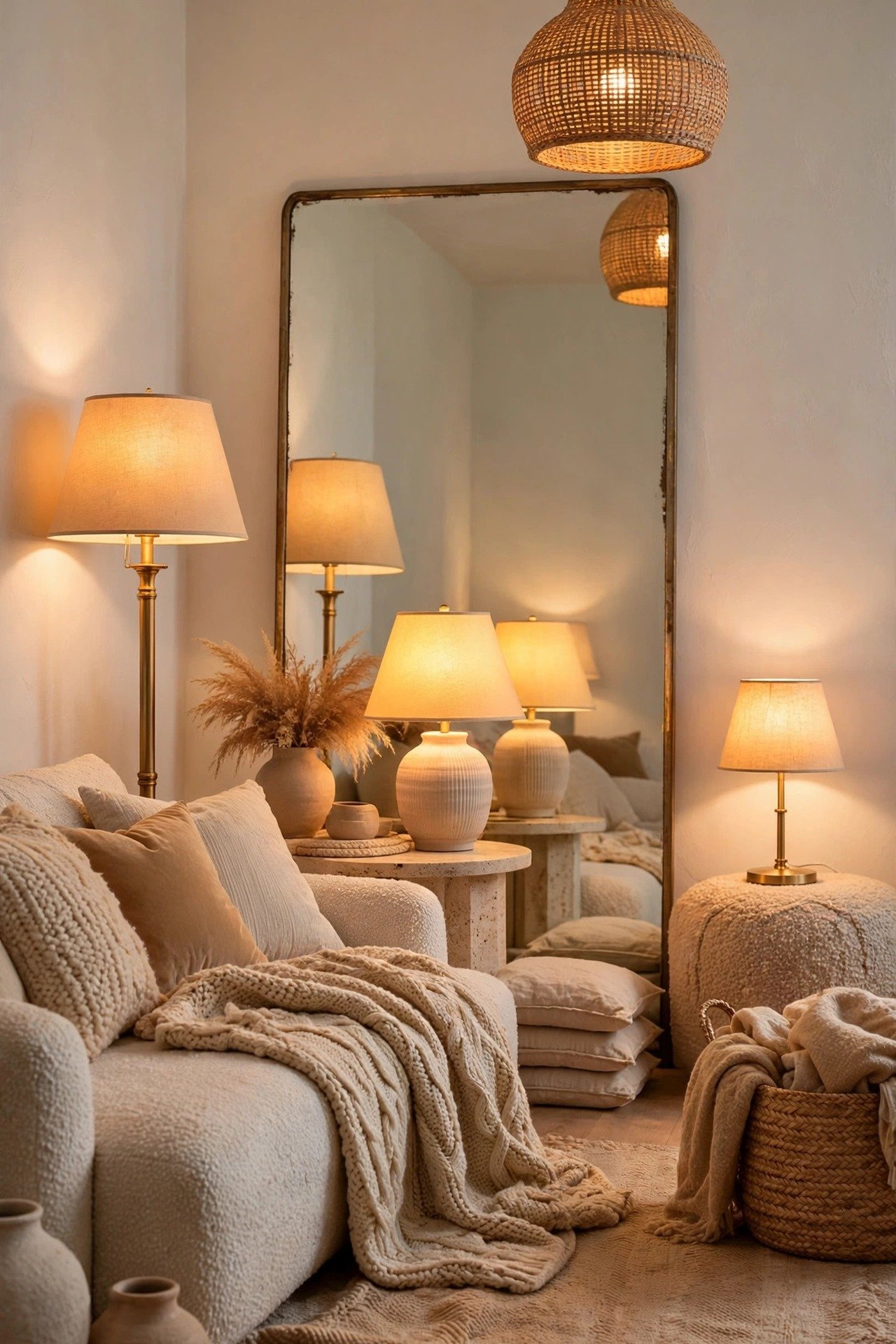
A room with no windows is a decorating challenge nobody asks for. Internal bedrooms, basement rooms, windowless bathrooms and converted spaces can feel dark, flat and a little airless, no matter how nicely they are furnished. Without daylight, colours look dull, corners disappear into shadow, and the room never quite feels awake.
You cannot add a window, and if you rent, you cannot add one even in theory. But you can change how the room handles light, and that changes almost everything. This guide explains how to build light in layers, choose colours and finishes that multiply what light you have, and add the details that make a windowless room feel bright and alive instead of cave-like.
Quick Answer
If your room with no windows feels dark, stop relying on one ceiling light. Build light in layers instead: a warm overhead light for general brightness, lamps at different heights for the middle of the room, and small lights for tasks and corners. Use warm white bulbs, pale colours with a warm undertone, and at least one mirror or glossy surface to bounce light around. Add texture and a living plant so the room feels alive, not just lit.
Why One Ceiling Light Always Fails
In a room with windows, daylight does most of the work and electric light just helps. In a windowless room, your lights do everything, and a single ceiling fitting cannot do it well. It throws harsh light straight down, leaves the walls and corners in shadow, and creates the flat, tired look you are trying to escape. Worse, a cool white or bluish bulb makes the room feel like an office or a hospital corridor.
The fix is to think like daylight. Natural light comes from several directions at once and changes in warmth through the day. You can copy that pattern with lamps: several smaller, warmer light sources spread around the room will always beat one bright one in the middle of the ceiling.
Build Light in Three Layers
Layer one: general light
Start with the overhead light, but make it work harder. Choose a warm white bulb with the highest brightness you are comfortable with, and if the fitting allows, use a shade that spreads light sideways onto the walls rather than only downward. Light that washes the walls makes the whole room feel bigger and brighter than light that pools on the floor.
Layer two: lamps at living height
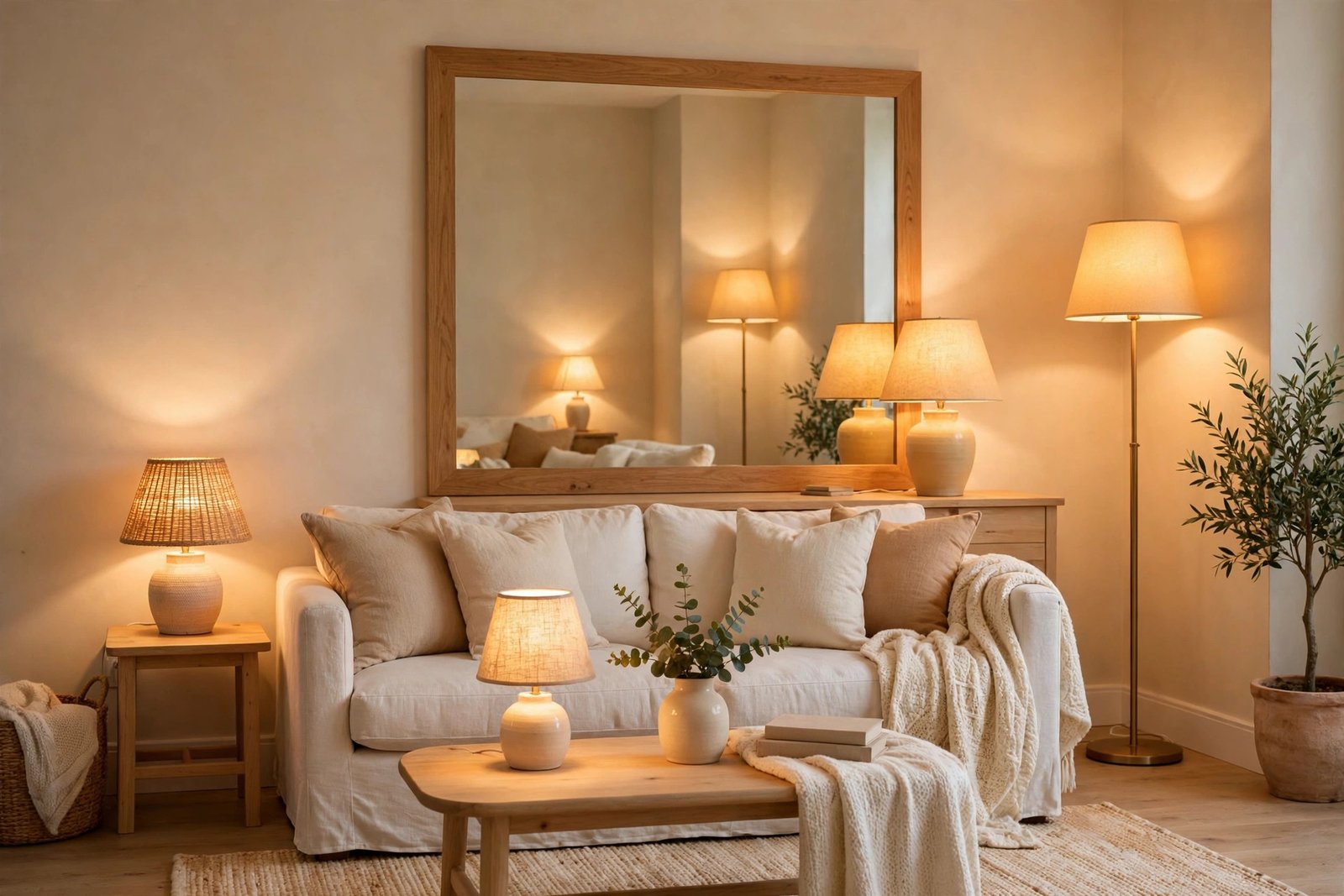
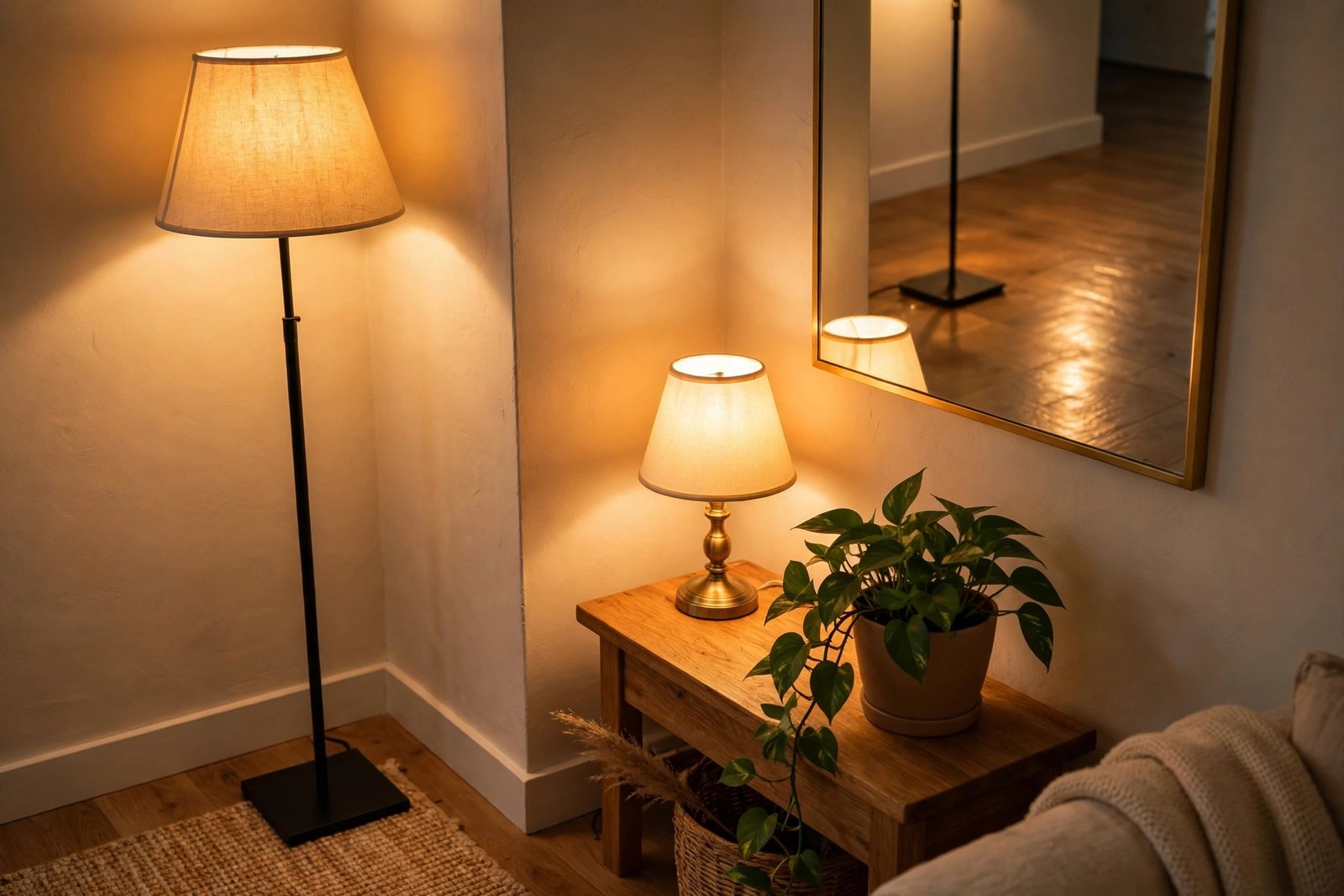
Add at least two lamps at different heights: a floor lamp in the darkest corner and a table lamp on a desk, dresser or side table. This middle layer is the one that makes a room feel welcoming, because it lights the space at the height where people actually sit and move. Put lamps in corners rather than against one wall, so the light spreads evenly and no corner stays in shadow.
Layer three: small and task lights
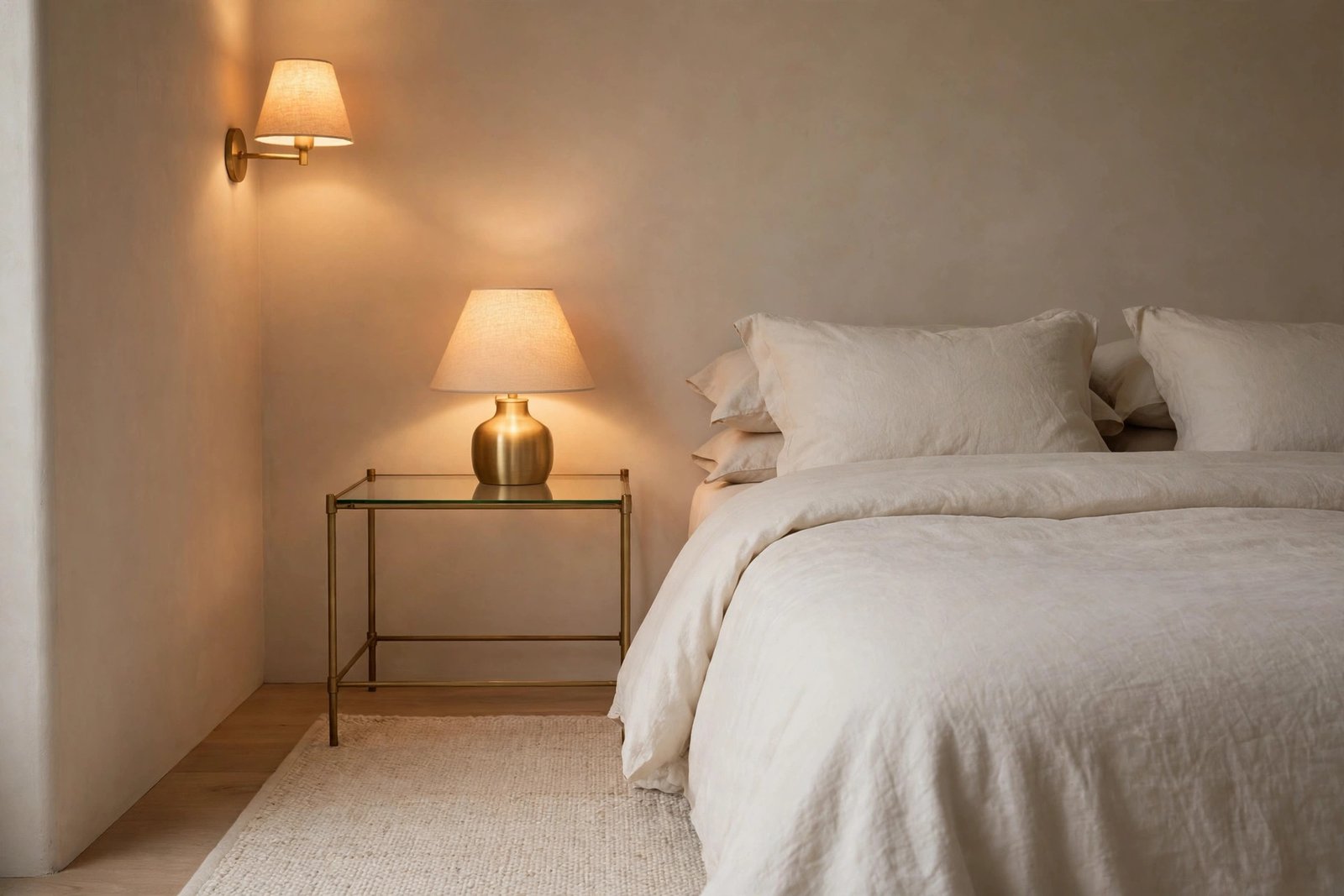
Finish with small lights for jobs and glow: a desk lamp where you read or work, a strip light under a shelf, a small lamp or candle-style light where you want softness. Battery and plug-in options mean renters can add these without any wiring. Our guide to lighting tips that make a small room feel bigger and brighter has more layering ideas you can borrow for a windowless space.
One rule runs through all three layers: choose warm white bulbs everywhere, and match the colour of the bulbs to each other. Mixed bulb colours, one warm and one blue-white, make a room feel unsettled and cheaper than it is.
Choose Colours and Finishes That Multiply Light
In a windowless room, every surface is either helping your light or eating it. Pale colours reflect light back into the room; dark, matte colours absorb it. You do not have to paint everything white, and in fact a cold, bright white can look grey and stark under electric light. Warm whites, soft cream, pale sage, light warm grey and gentle blush all reflect light while keeping the room friendly.
Finish matters as much as colour. Satin and eggshell paint reflect a little more light than flat matte, and small glossy touches, a glazed vase, a lacquered tray, glass frames, catch and throw light around the room. If you rent and cannot paint, you can still change the balance: pale bedding, a light rug, light curtains or a large pale throw over a dark sofa all raise the amount of light the room holds.
If you love dark colours, use them low and in small doses, such as cushions, a throw or one piece of furniture, and keep the walls and the largest surfaces light. For more renter-safe ways to raise brightness, see these rental-friendly lighting upgrade ideas.
Use Mirrors and Glass to Borrow Light
A mirror cannot create light, but it can double the light you have. Hang or lean a mirror opposite a lamp and it will bounce that light into the rest of the room, as well as giving the eye a sense of depth that a flat wall cannot. In a windowless room, a mirror also plays the visual role of a window: a bright rectangle on the wall that the brain reads as an opening.
Place mirrors thoughtfully. Opposite or beside a light source works best. A mirror facing a blank dark wall only reflects the darkness. Glass and clear acrylic furniture help too: a glass-topped table or clear chair lets light pass through instead of blocking it, which keeps the room feeling open. More placement ideas are in our guide to small apartment lighting ideas that make rooms feel bigger.
Add Life: Texture, Plants and Warmth
Brightness alone can still feel flat. Windowless rooms look dull partly because nothing in them changes: no moving light, no shadows shifting, nothing growing. Add texture to give your layered light something to play on: a woven throw, a textured cushion, a natural wood surface, a patterned rug. Light falling across texture creates the small highlights and shadows that make a room feel real.
Then add something alive. Many plants tolerate low light well, such as pothos, snake plants and peace lilies, and even one healthy plant changes the mood of a room without windows. If light levels are truly zero, a good-quality artificial plant is a perfectly respectable stand-in. A warm-toned lamp lit during the day, a candle in the evening, and something green in the corner together do more for atmosphere than any single expensive change.
Mistakes to Avoid
- Relying on one ceiling light. A single overhead source leaves walls and corners dark and makes the room feel flat. Layer your light instead.
- Mixing bulb colours. Warm and cool bulbs in one room clash quietly and make everything look off. Pick warm white and match them all.
- Painting in cold, blue-toned white. Under electric light it reads as grey and chilly. Warm whites and creams stay friendly.
- Hanging a mirror opposite a dark wall. Mirrors reflect what they face. Aim them at light, not at shadow.
- Blocking lamps with big dark furniture. Light needs a path. Keep the areas around lamps open and pale where you can.
- Giving up on plants. Low-light plants or one good artificial plant stop the room feeling like a box.
Frequently Asked Questions
What colour bulbs are best for a room with no windows?
Warm white bulbs are the safest choice. They mimic evening sunlight, make skin, wood and fabric look healthy, and avoid the cold office feel of blue-white light. Use the same warm tone in every lamp in the room.
How many lamps does a windowless room need?
Aim for at least three light sources besides or including the ceiling light: one general light, two lamps at different heights, and a small task or glow light if the room is used for reading or work. Spread them around the room rather than grouping them together.
What is the best paint colour for a room with no windows?
A warm white or a pale colour with a warm undertone reflects the most light without looking stark. Avoid blue-based whites and dark matte colours on all four walls, and test a sample under your actual lamps, because electric light changes how colours look.
Can a mirror really replace a window?
Not literally, but it does two useful jobs: it bounces lamp light deeper into the room, and it gives the wall a bright focal point that the eye reads a little like an opening. Opposite a lamp, it is one of the most effective tricks a windowless room has.
Conclusion
A windowless room feels dark because of how it handles light, not because it is hopeless. Layer warm light at three heights, keep colours pale and warm, bounce light with a mirror, and add texture and something green. Do those four things and the room stops feeling like a cave and starts feeling like a calm, cosy space that simply has its own kind of light.