
Lighting is the secret weapon of interior designers, especially when dealing with limited square footage. In a small apartment, the right light doesn’t just illuminate a room; it pushes back the walls, lifts the ceiling, and creates a sense of airy luxury. By eliminating dark corners and creating visual layers, you can transform a cramped studio into a multi-dimensional home. Here are 26 expert-backed lighting ideas to make your small apartment feel significantly larger.
1. Layered Lighting
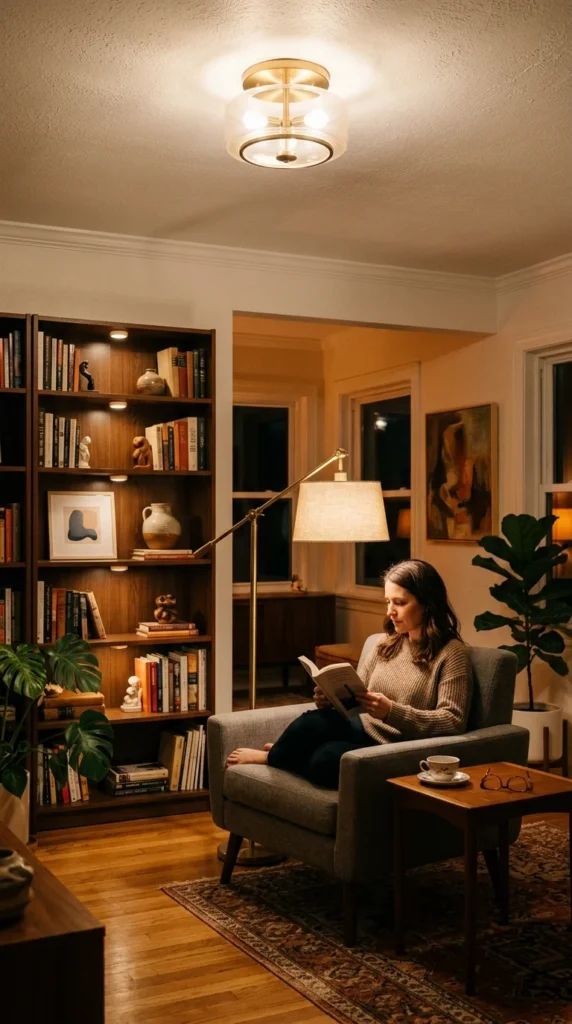
The most important rule in small-space design is to avoid relying on a single overhead source. Layering involves combining ambient (general), task (functional), and accent (decorative) lighting. When you have multiple light sources at different heights, the eye moves around the room more frequently, which creates the illusion of a larger, more complex space.
2. Wall Sconces
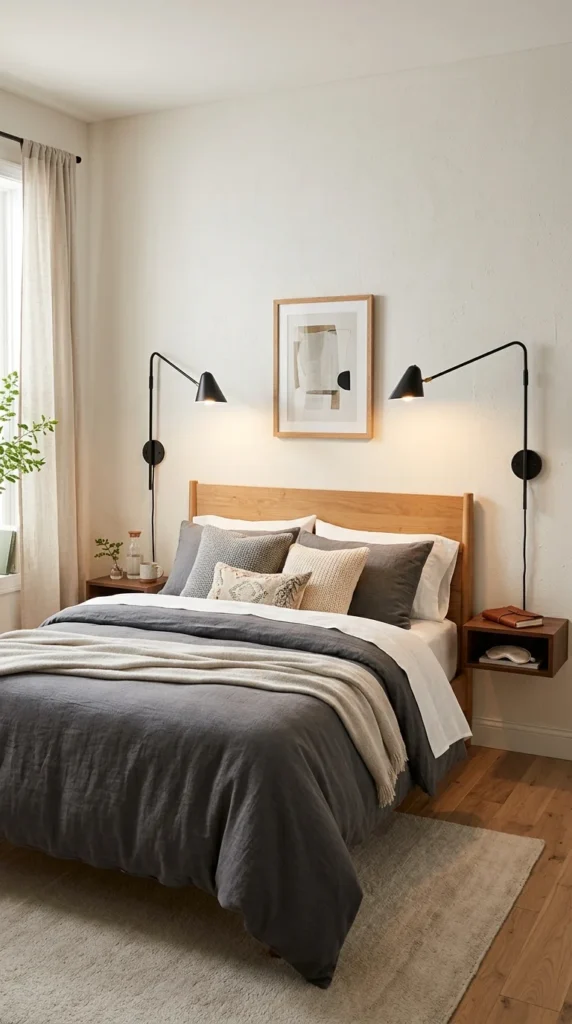
Floor space is a premium commodity in small apartments. By opting for wall-mounted sconces instead of table lamps, you free up the surfaces of your side tables and nightstands. This lack of “visual clutter” on horizontal surfaces makes the room feel much less cramped and more intentional.
3. Vertical Floor Lamps
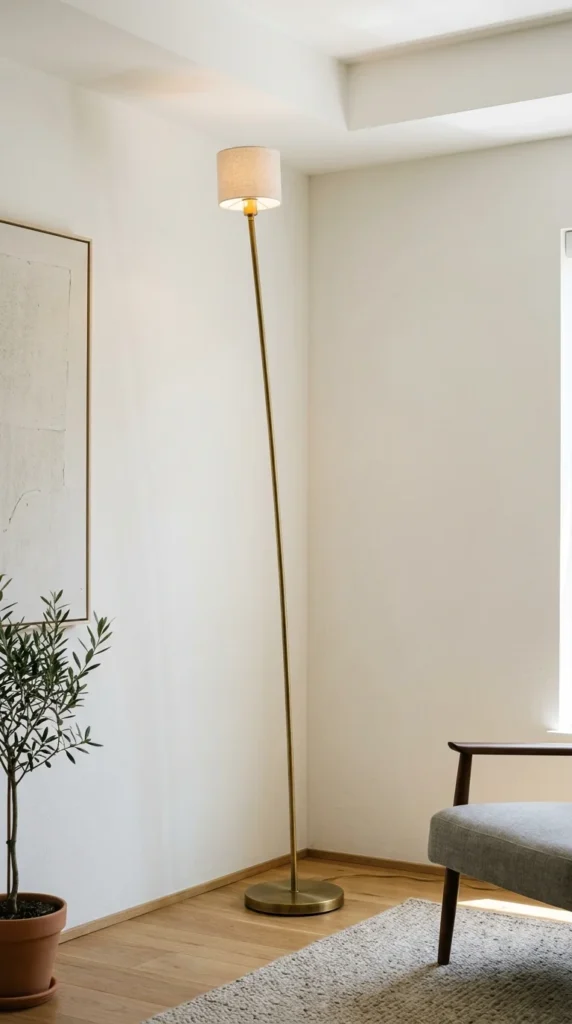
To make a room feel bigger, you need to draw the eye upward. Tall, slender floor lamps act as vertical lines that emphasize the height of your walls rather than the limited width of the floor. Choose a “torchiere” style that bounces light off the ceiling to further expand the perceived volume of the room.
4. Under-Cabinet LEDs
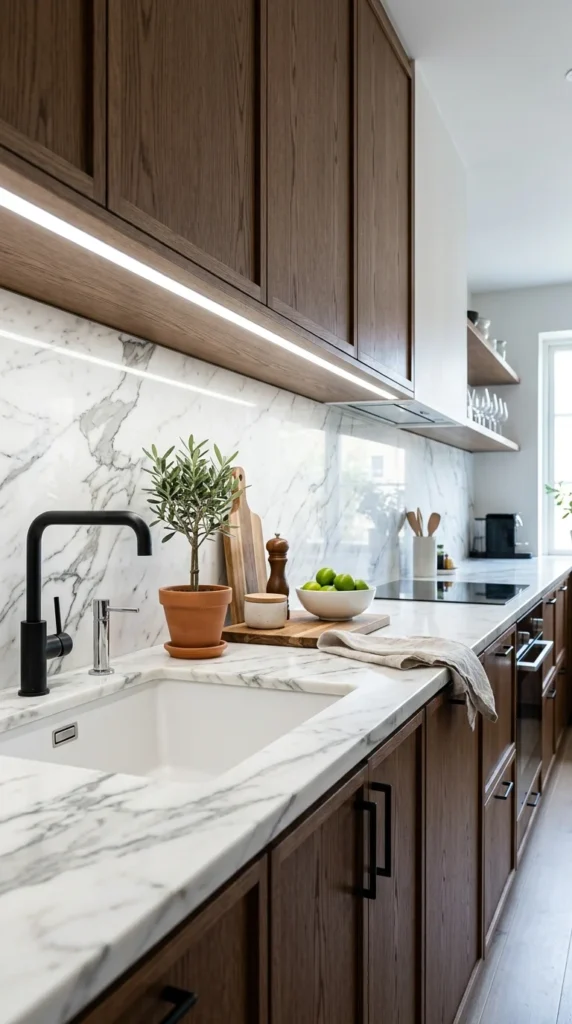
Dark shadows under kitchen cabinets or shelves can make a room feel like it’s closing in on you. Installing slim LED strips or puck lights underneath your cabinetry eliminates these “dead zones.” This brightens the workspace and adds a layer of depth that makes the kitchen area feel twice as large.
5. Backlit Mirrors
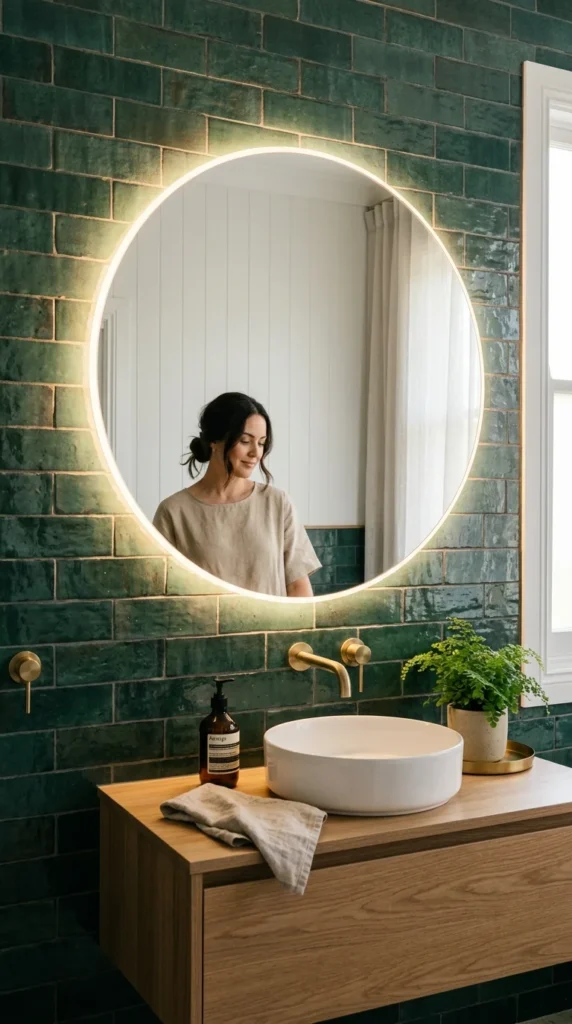
Mirrors are already the oldest trick in the book for expanding space, but adding backlight takes it to the next level. A backlit mirror creates a “halo” effect that pushes the mirror away from the wall visually, adding a sense of three-dimensional depth that tricks the brain into seeing more space than there actually is.
6. Transparent Fixtures
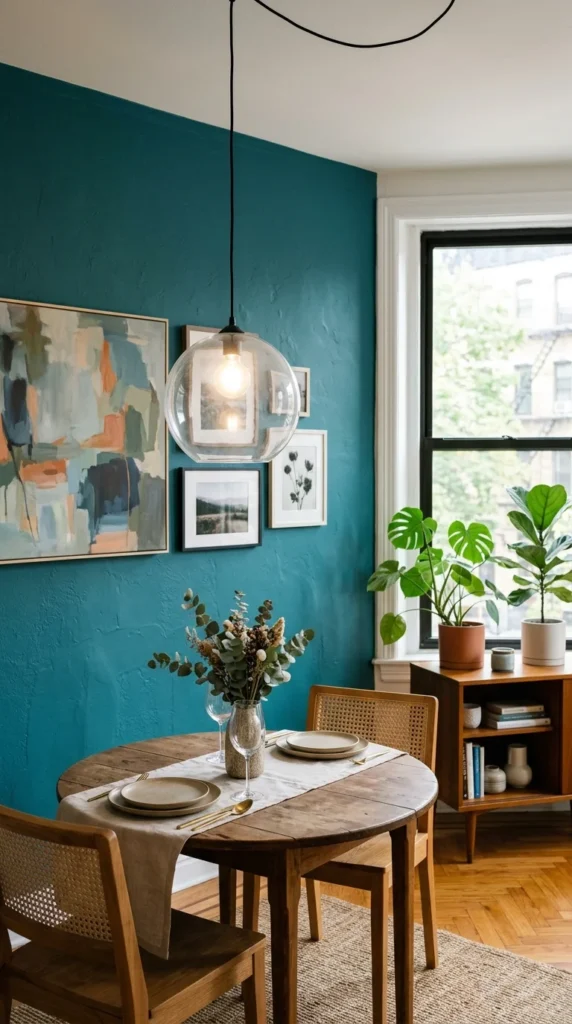
In a small room, heavy or solid light fixtures can act as visual roadblocks. Transparent or “ghost” fixtures—made of clear glass, acrylic, or thin wire frames—provide the necessary light without taking up “visual weight.” They allow the eye to travel through them to the walls beyond.
7. Uplighting Techniques
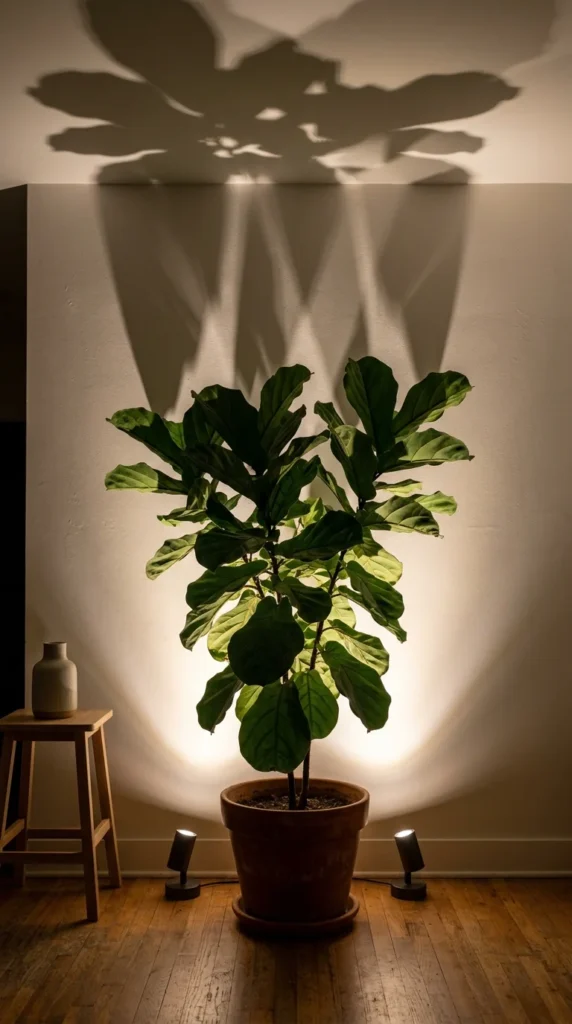
Most people focus on pointing light down, but pointing it up is far more effective for creating space. Placing small spotlights on the floor behind furniture or plants (uplighting) catches the ceiling and the tops of the walls, making the vertical boundaries of the room feel like they are receding.
8. Flush Mounts
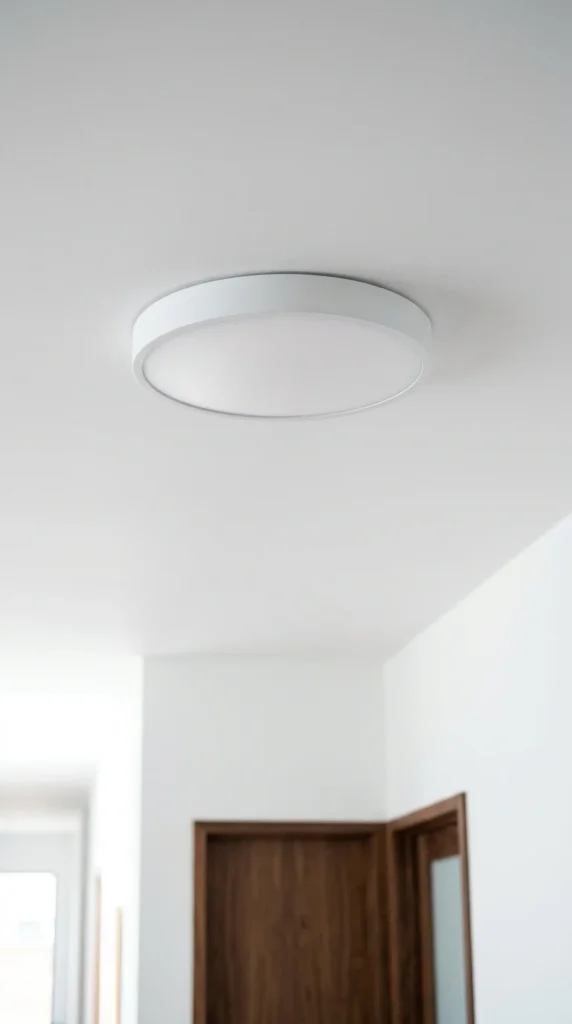
If your apartment has low ceilings, a hanging chandelier can feel like it’s “attacking” the room. Modern, low-profile flush mount or semi-flush mount fixtures hug the ceiling. This keeps the center of the room open and prevents the “closed-in” feeling that bulky hanging lights can cause.
9. Track Lighting
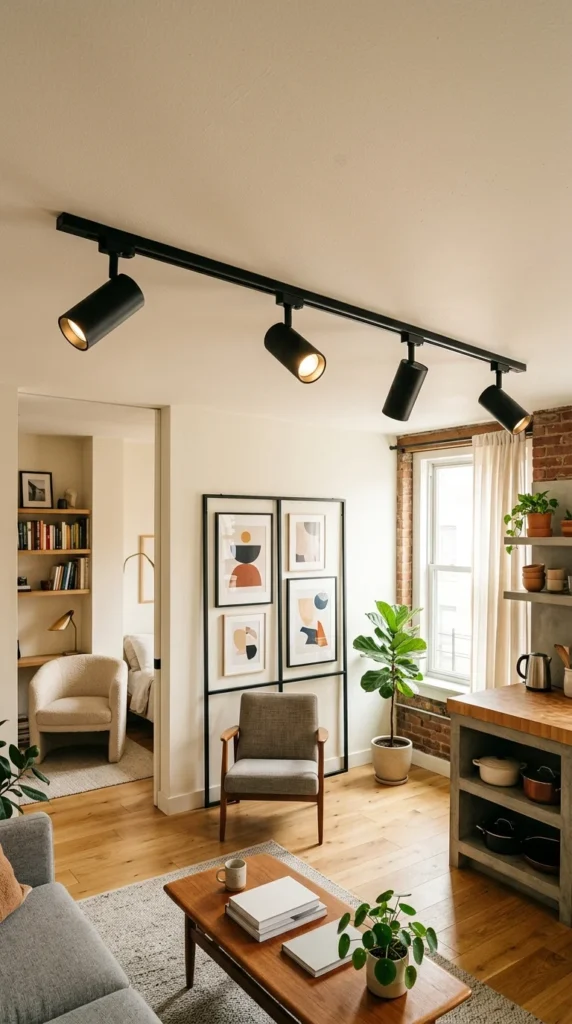
Track lighting is no longer just for 80s offices. Modern, slim tracks allow you to aim light exactly where you need it. You can point one head toward a dark corner, one toward a piece of art, and one toward a workspace, ensuring that every square inch of the apartment is utilized and visible.
10. Picture Lights
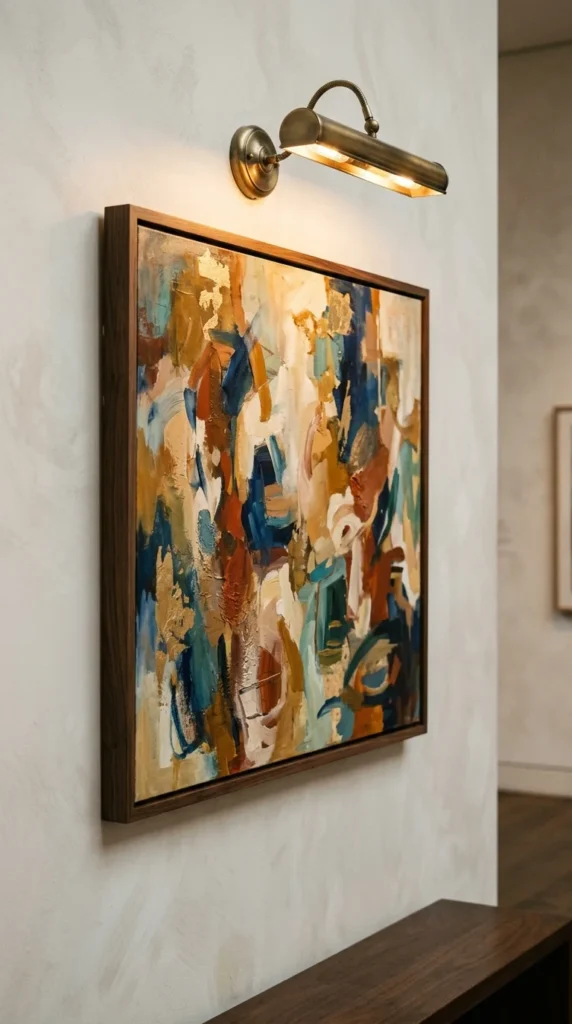
Highlighting art does more than just show off your taste; it creates focal points that draw the eye to the perimeter of the room. When the walls are illuminated through accent lighting like picture lights, the boundaries of the apartment feel more expansive and the room gains a “gallery” feel.
11. Smart Bulbs
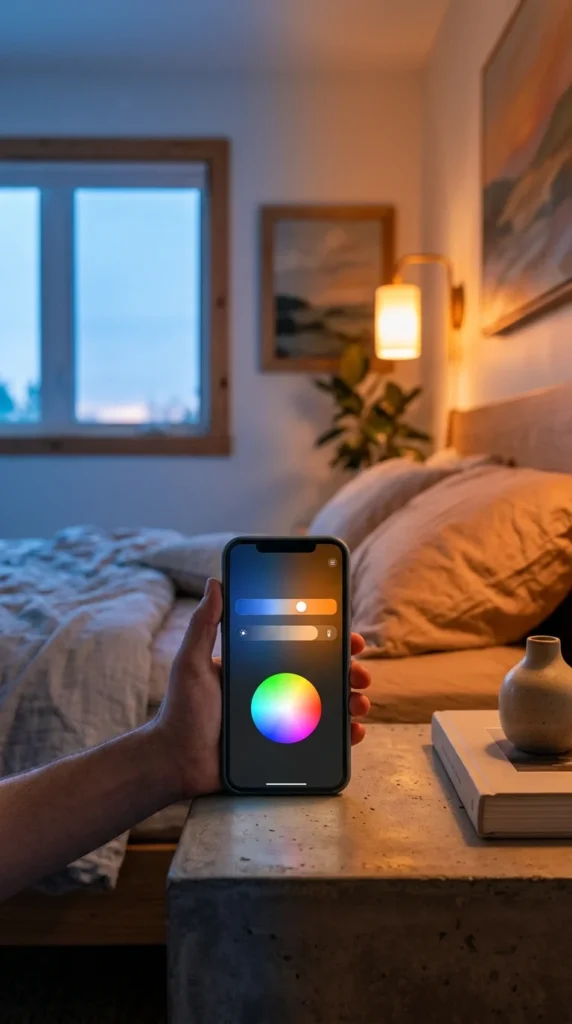
Space perception changes with color temperature. Smart bulbs allow you to switch to cool, bright white light during the day to mimic natural sunlight (which expands space) and warm, dim tones at night to create depth. Being able to change the “vibe” of the room without moving furniture is a massive advantage in a small home.
12. Arc Lamps
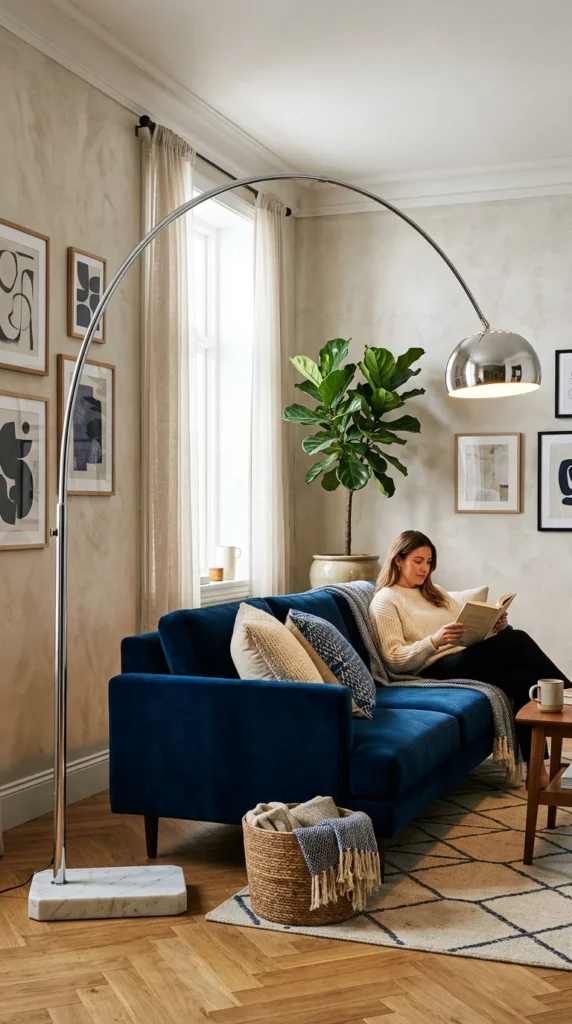
An arc lamp provides the benefit of an overhead light without the permanence of a ceiling fixture. Because the base is tucked away in a corner and the light “hangs” in the center of the space, it creates a sense of flow and architectural interest that breaks up the boxy feel of a small room.
13. Pendant Zoning
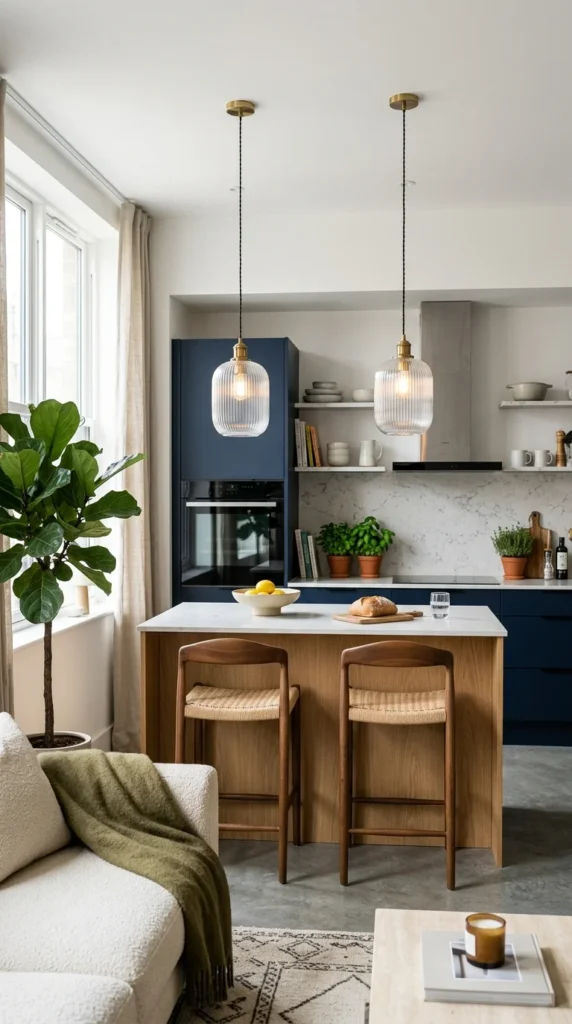
In a studio apartment, you often don’t have walls to define rooms. You can use hanging pendant lights to create “zones.” A pendant over the dining table and another over the “office” desk signals to the brain that these are distinct areas, making the single room feel like a multi-room suite.
14. Shelf Strips
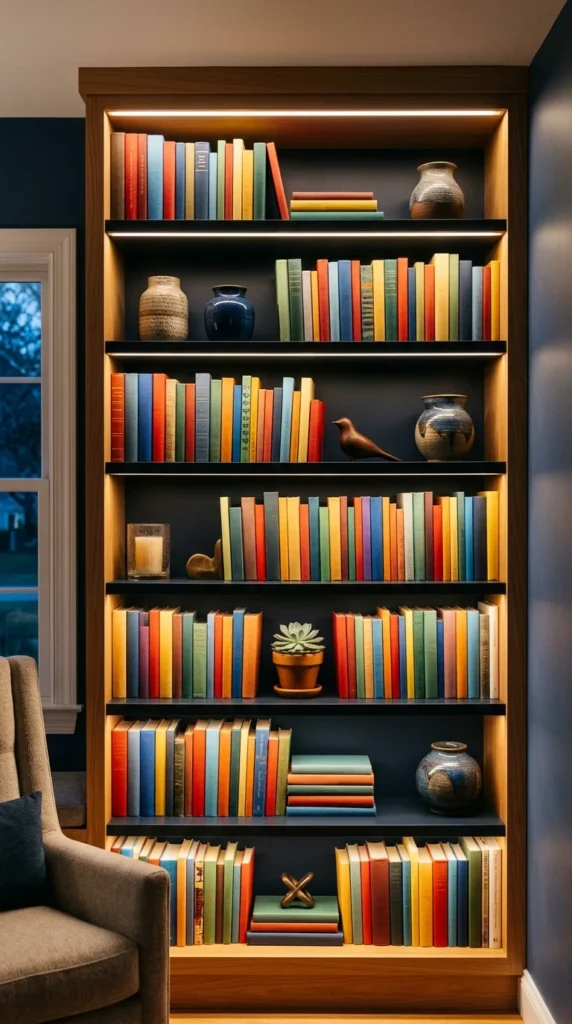
By installing light strips at the back of bookshelves or open shelving, you add a layer of luminescence to the very back of your storage. This prevents shelves from looking like dark “holes” in the wall and instead turns them into glowing features that add depth to the room’s perimeter.
15. Metallic Finishes
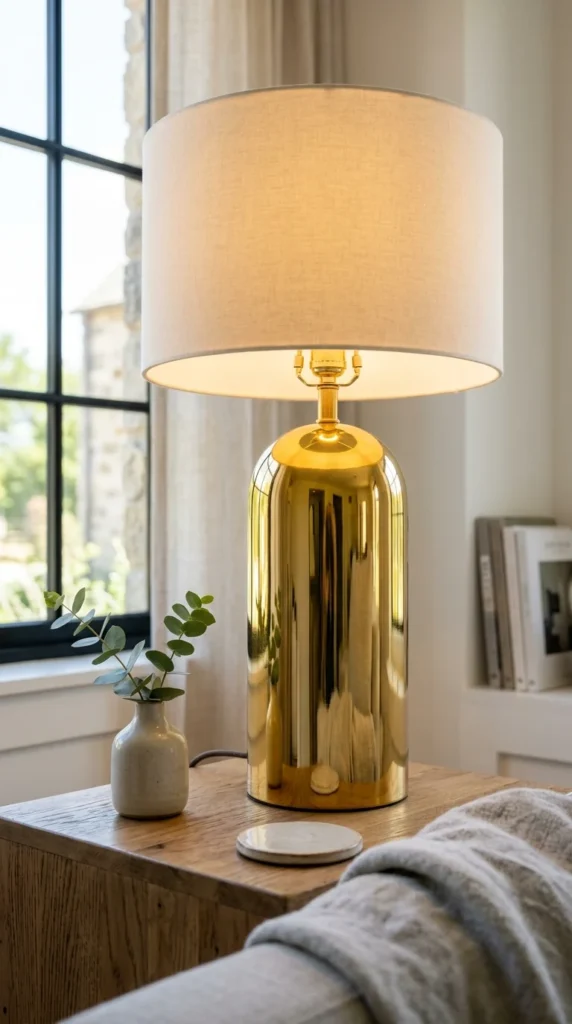
The material of your light fixture matters as much as the bulb. Fixtures with metallic finishes—like polished chrome, brass, or copper—act as mini-mirrors. They catch and bounce light around the room even when they are turned off, contributing to a brighter and more open environment.
16. Window Mimicry
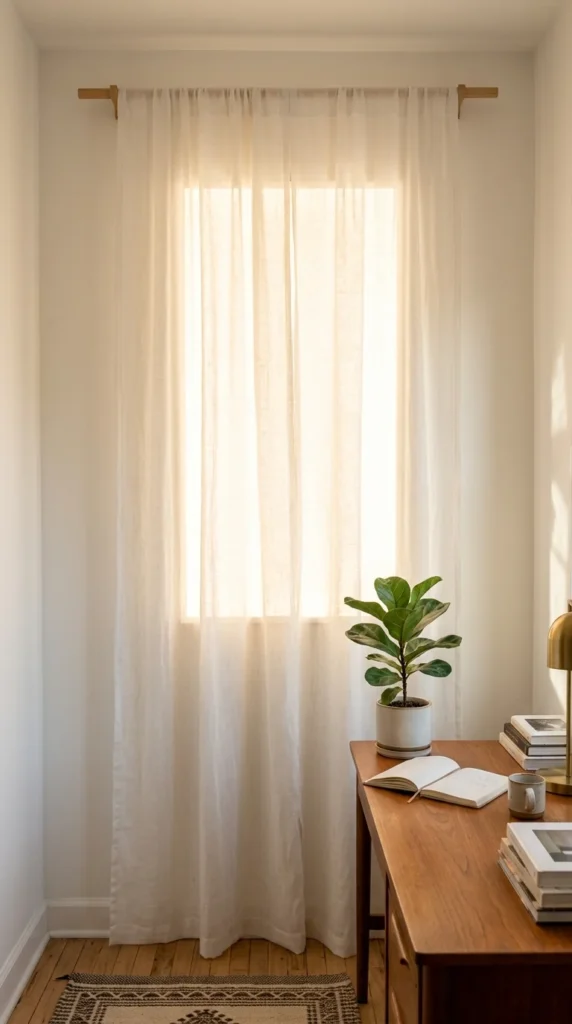
If you have a windowless corner, you can “fake” a window using light. Placing a floor lamp or a flat LED panel behind a sheer curtain can mimic the soft glow of natural light coming from outside. This psychological trick makes the room feel like it has more openings to the outside world.
17. Corner Focus
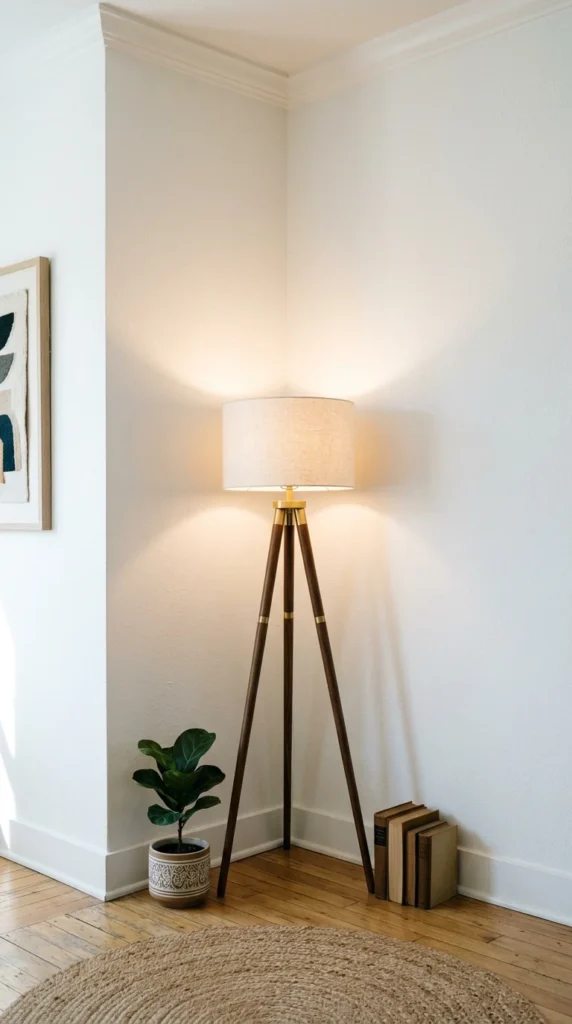
Shadows thrive in corners, and shadows make a room feel smaller. By specifically placing a light source in the furthest corners of your apartment, you “push” the corners out. A well-lit corner removes the visual “stop” and makes the floor plan feel more continuous.
18. Dimmers
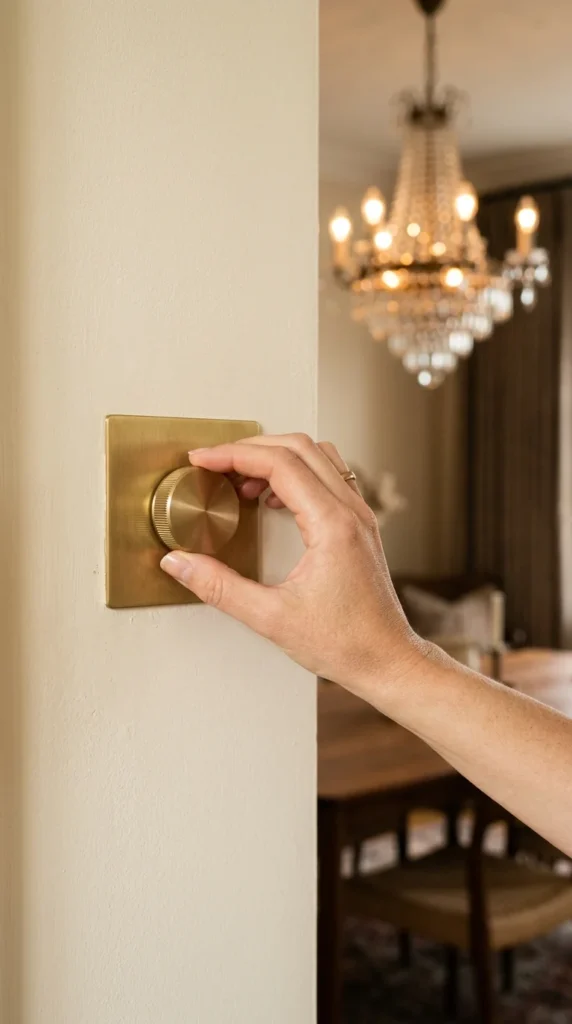
Harsh, static lighting can make a small room feel flat. Dimmers allow you to control the intensity of the light, creating shadows and highlights that provide architectural interest. Dimming the lights at night creates a sense of “infinite” space beyond the pools of light.
19. Task Lamps
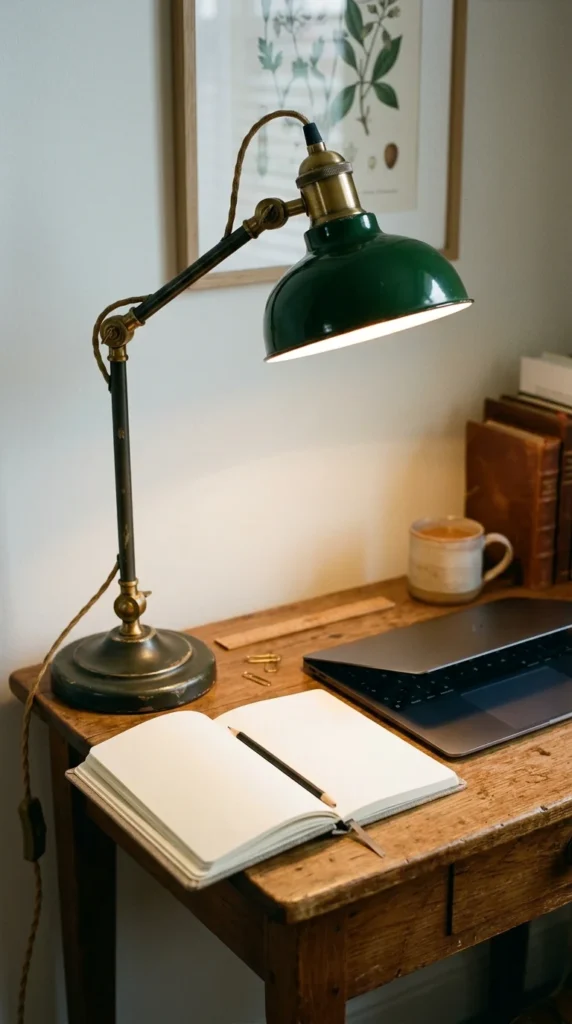
Using specific task lamps for reading or working allows you to turn off the big overhead lights. This creates a “cocoon” of light in one area while the rest of the room falls into a soft, hazy background. This contrast makes the dimensions of the room feel more mysterious and vast.
20. Plug-In Pendants
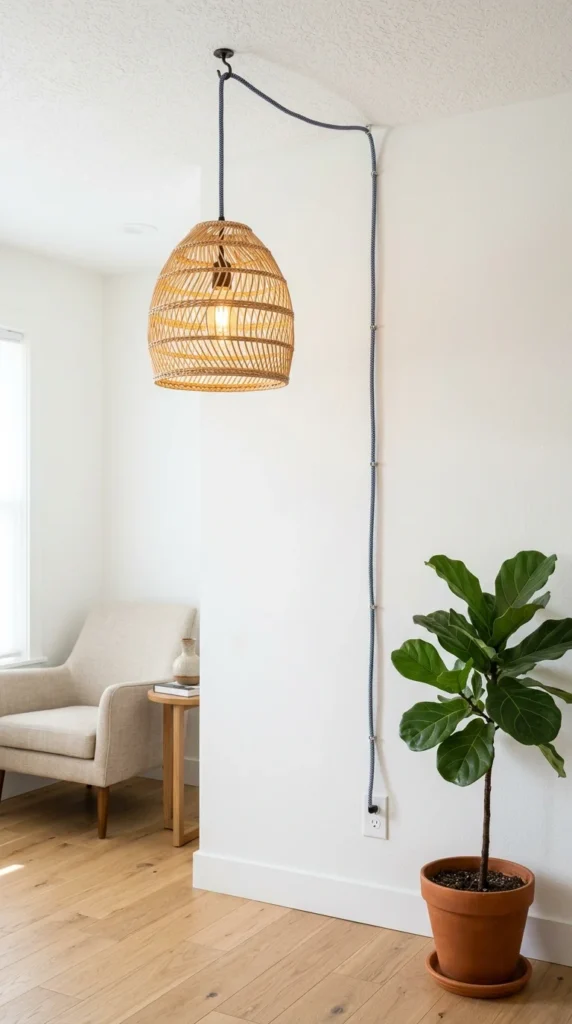
Renters often can’t change their hardwired lighting. Plug-in pendants are the perfect solution. You can hang them high in corners or over tables to draw the eye upward and add high-level lighting without needing an electrician, instantly making the ceiling feel taller.
21. Toe-Kick Lighting
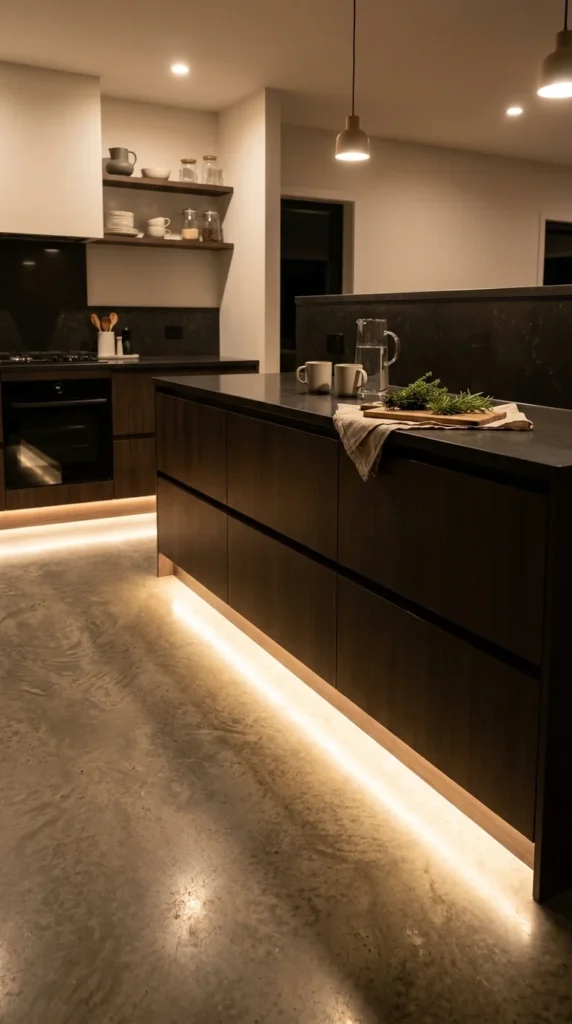
Toe-kick lighting is installed at the very bottom of cabinets or vanities. By illuminating the floor space underneath the furniture, you create a “floating” effect. This expands the visible floor area and makes the room feel much lighter and less grounded.
22. String Lights
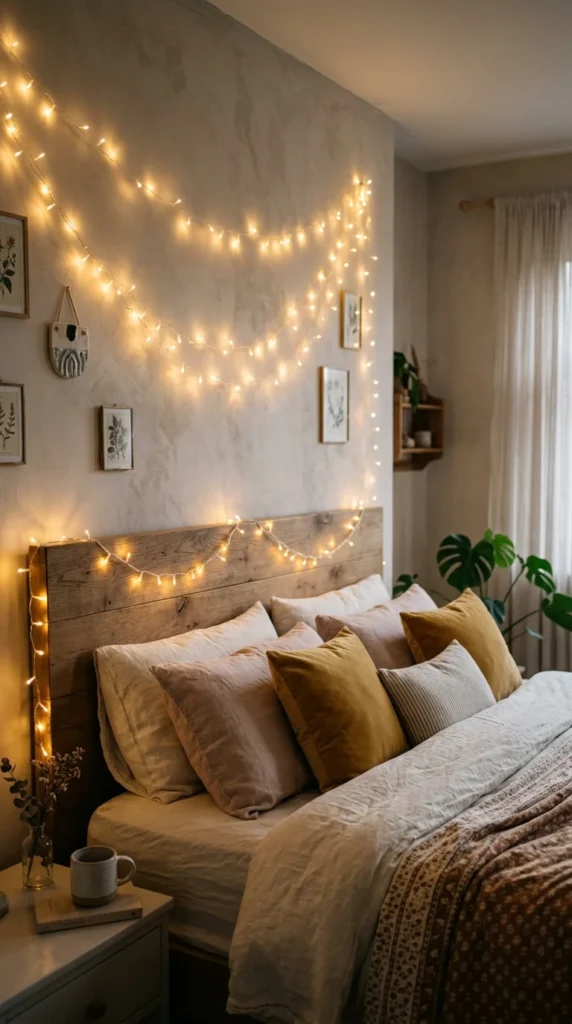
While often associated with dorm rooms, high-quality “fairy” or string lights can be used sophisticatedly to trace the architectural lines of a room. Running them along the top of a wall or a window frame highlights the perimeter and adds a soft, ambient glow that softens the room’s boundaries.
23. Mirrored Lamps
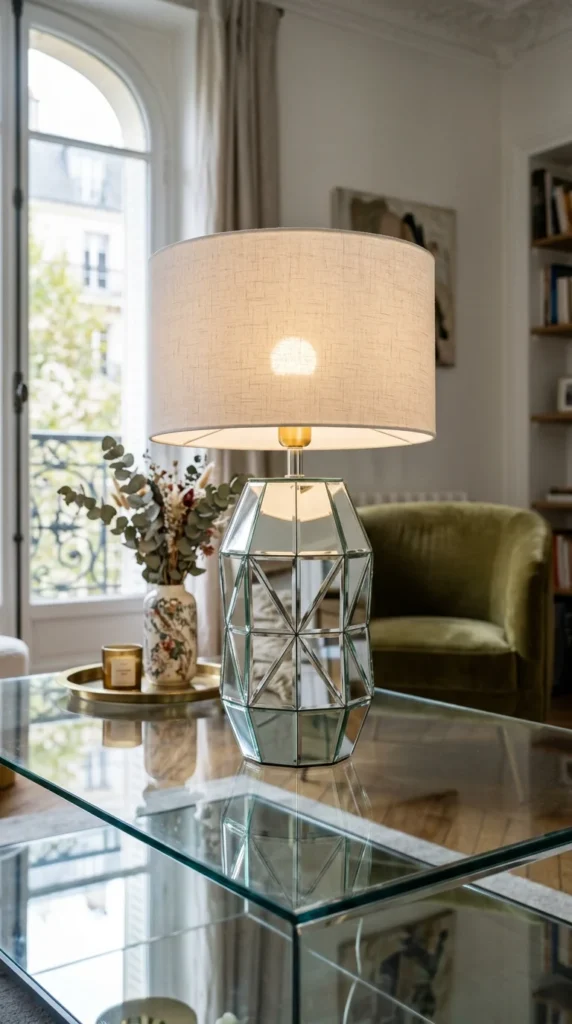
A lamp with a mirrored or mercury-glass base doubles the amount of light it produces by reflecting its own glow. These fixtures act as jewelry for the room, providing bright spots of interest that distract from the small dimensions of the space.
24. Skylight Panels
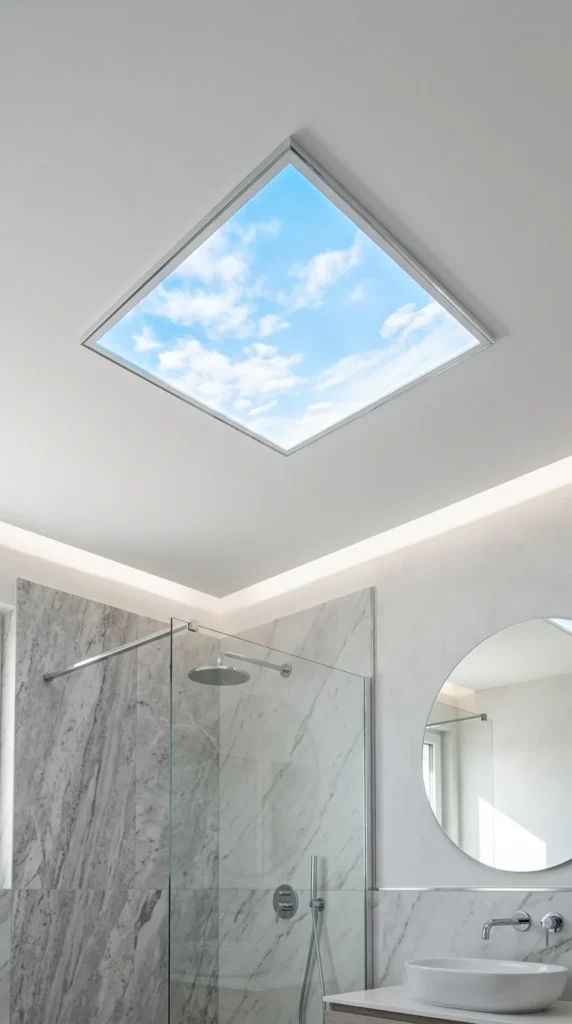
For bathrooms or hallways with no natural light, LED “skylight” panels are a game changer. These fixtures mimic the color temperature and diffusion of the sky. Looking “up” into a light that feels like the outdoors provides an immediate sense of relief from a cramped interior.
25. Minimalist Designs
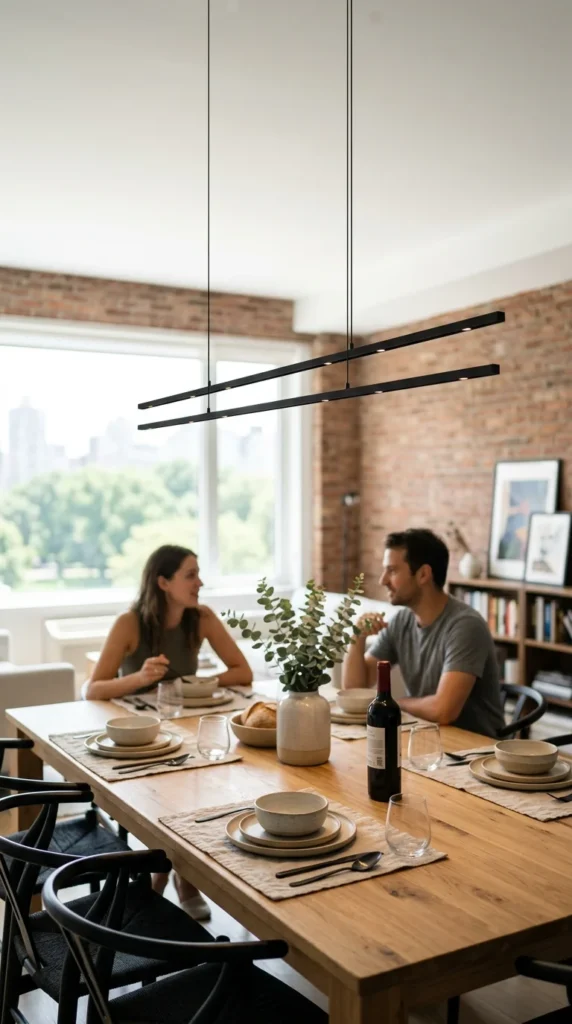
In a small apartment, “less is more.” Fixtures with very thin profiles or minimalist designs disappear into the room’s decor. By choosing lighting that doesn’t demand all the visual attention, you allow the room’s layout to feel more open and uncluttered.
26. Reflective Shades
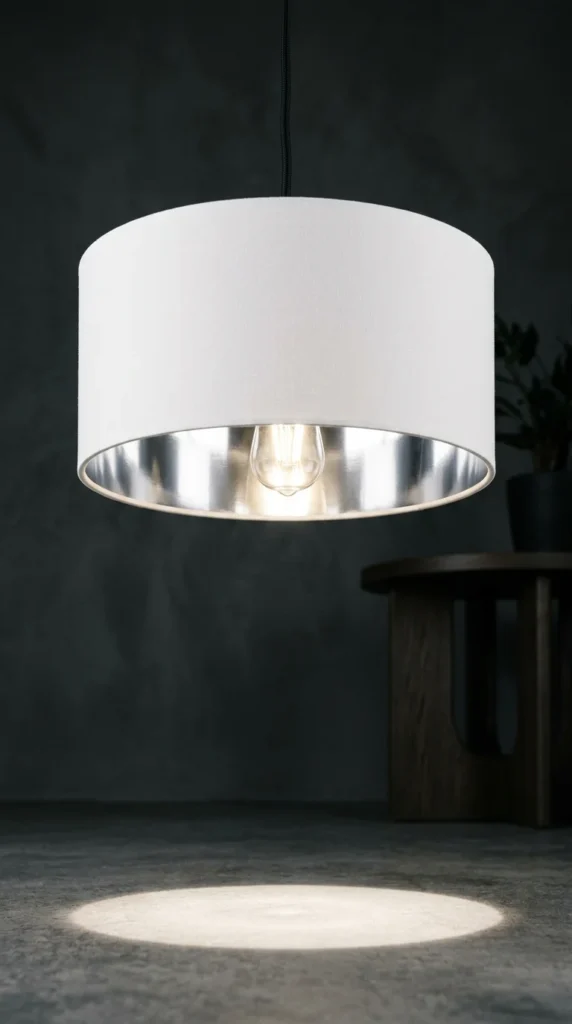
Check the inside of your lampshades. If they are dark, they are absorbing light. Shades with white or metallic silver interiors reflect the light back out into the room much more efficiently. This small detail ensures you get the maximum “space-expanding” power from every single bulb you use.