Not every home has an entryway. Many small apartments and houses open straight from the front door into the living room, with no hall, no closet and nowhere for anything to land. So everything lands anyway: shoes by the door, coats over the nearest chair, keys and post wherever they fall. Within a week, the entrance looks messy, and because it is the first thing you see, the whole home feels messier than it is.
The answer is not more space. It is a drop zone: one small, planned spot where everything you carry in and out of the house has a home. A good drop zone can fit on half a metre of wall. This guide shows how to build one in a tiny entryway, including renter-friendly options that leave no damage behind.
Quick Answer
To create a drop zone in an entryway with no storage, claim one small stretch of wall or floor beside the door and give it four things: hooks at hand height for coats and bags, a defined spot on the floor for shoes, a small tray or bowl for keys and post, and a mirror or picture to make it feel intentional. Use vertical space, keep it to what you use daily, and clear it back to basics once a week.
Claim Your Spot and Mark the Edges
Every drop zone starts with a decision: this small area, and only this area, is where things land. Stand inside your front door and look at the wall or corner you naturally turn toward when you come in. That is your spot, even if it is just the wall beside the door frame or the end of a hallway.
Mark the edges so the zone does not creep. A small rug or mat under the shoe area does this beautifully: it catches dirt, protects the floor, and tells everyone, including you, exactly where the entryway ends and the living space begins. A slim bench, a low shelf or even a painted line of floor baskets works the same way. When a drop zone has clear edges, it stays tidy almost by itself.
For a wider set of layout ideas for awkward entrances, our guide to small apartment entryway ideas shows how other tiny homes divide the door area from the room beyond it.
Go Up: Hooks Are the Heart of a Drop Zone
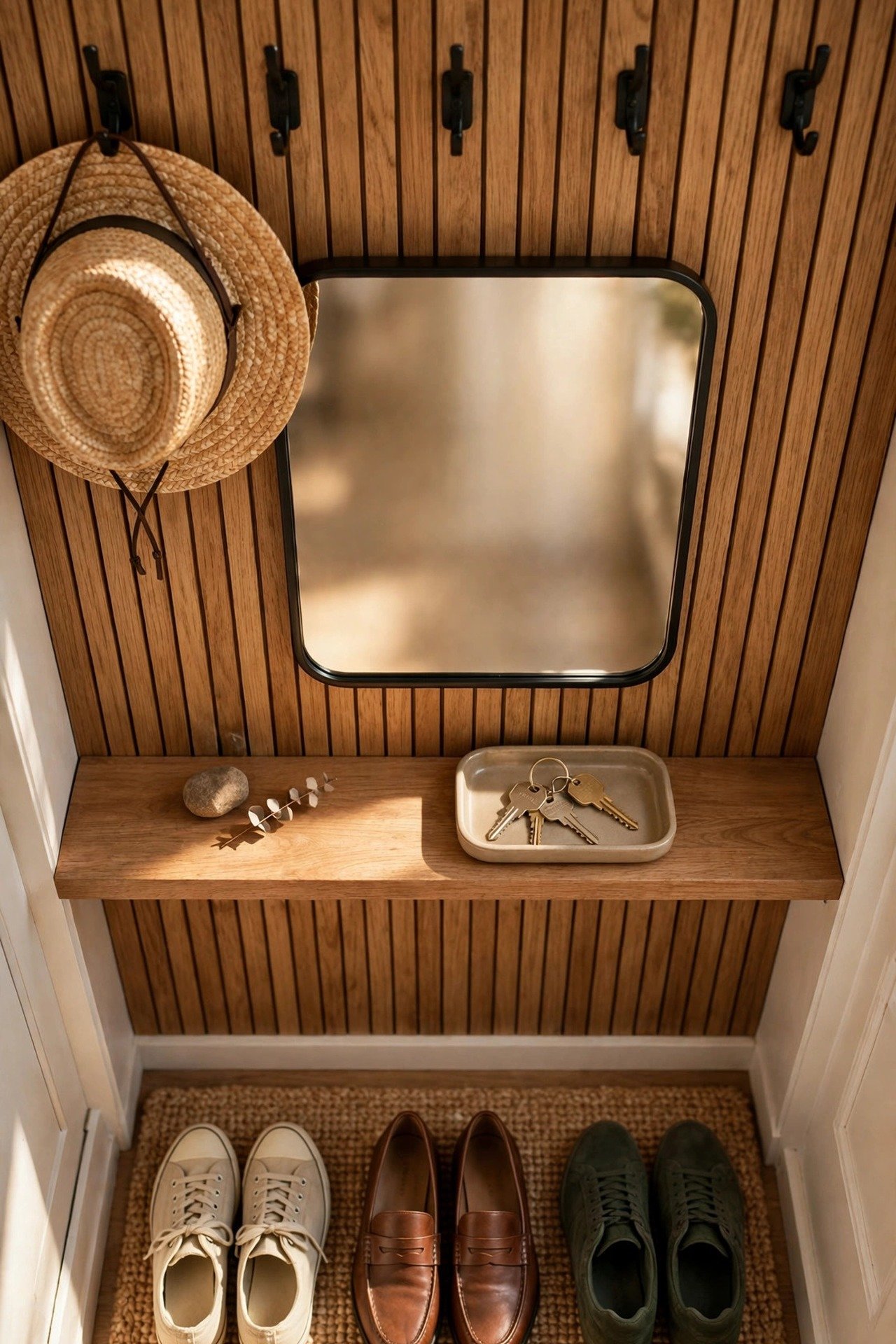
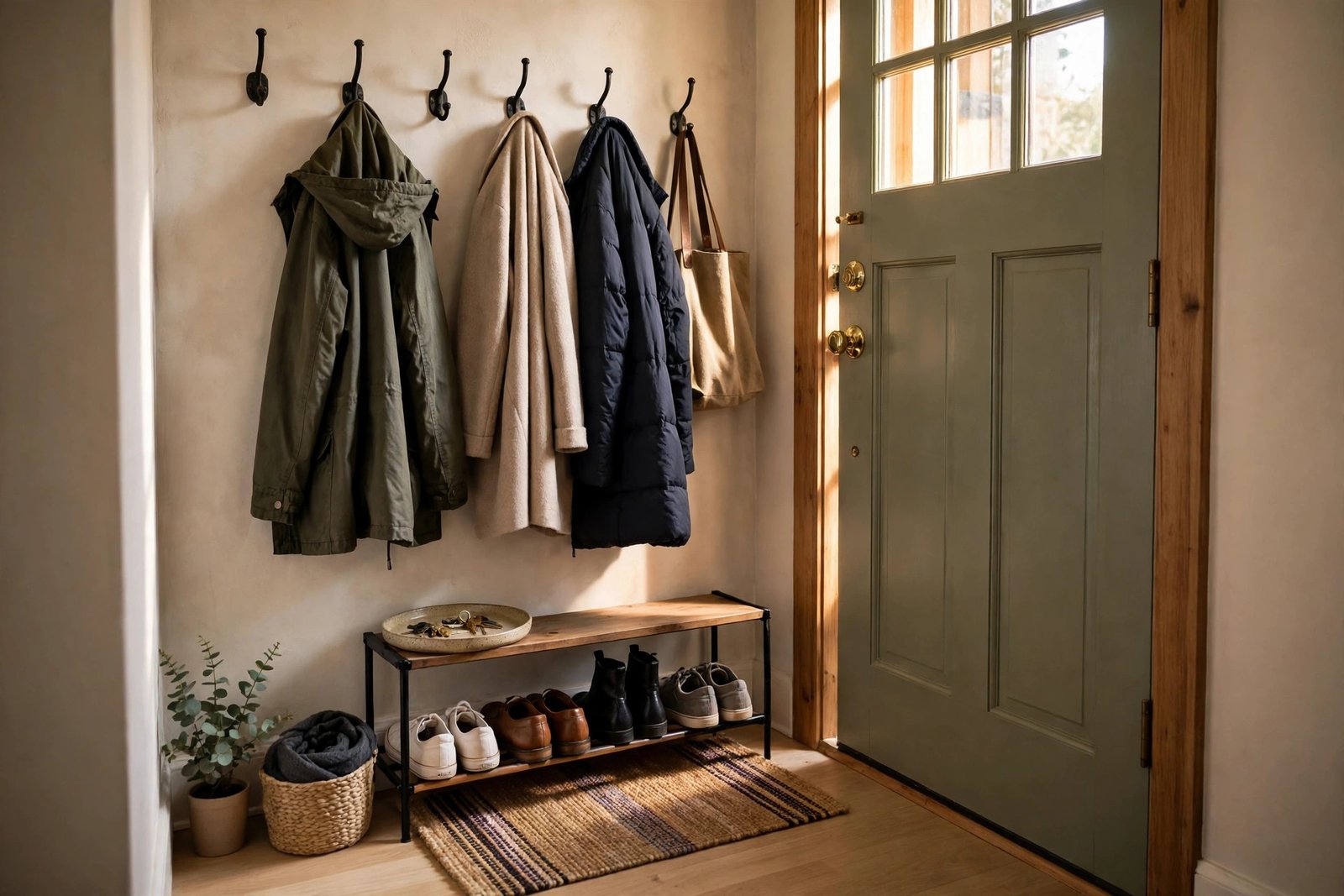
In a tiny entryway, the floor is precious and the wall is free. Hooks are the single most useful thing you can add. A row of hooks at shoulder height holds coats, bags, hats and the dog lead, all in the space of a hand’s width from the wall. Put everyday items on the easiest hooks and keep it to one or two items per hook, so nothing gets buried.
If you can drill, a simple rail with hooks is sturdy and cheap. If you rent, you still have good options: over-the-door hooks on the front door itself, adhesive hooks rated for heavier weights, or a leaning coat stand in the corner. Whichever you choose, add one lower hook if children use the door, so their things stop ending up on the floor.
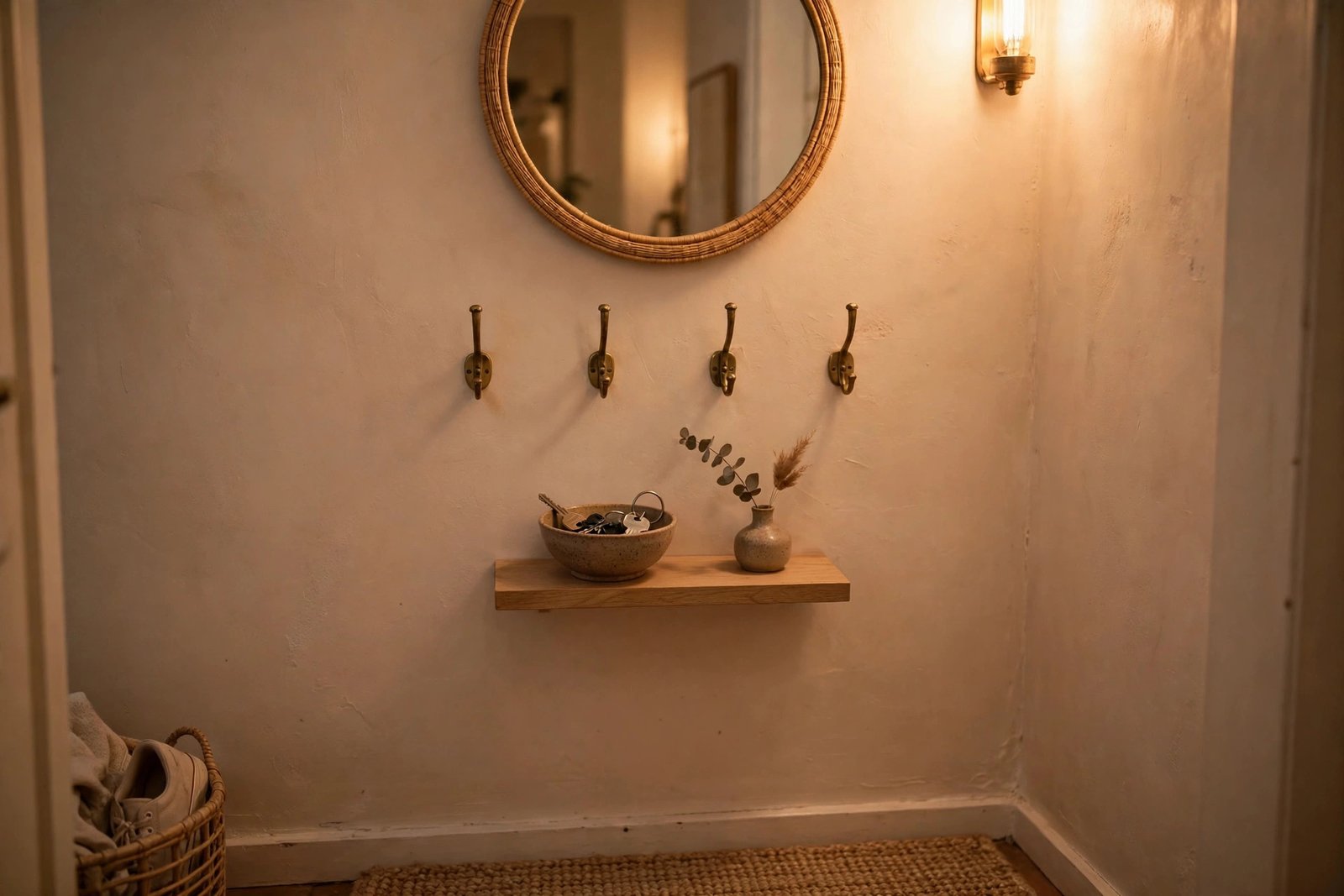
A mirror above or beside the hooks earns its place twice. It is useful for a last check before you leave, and it makes the small zone feel like a designed entryway rather than a storage corner. For more ways to combine hooks, shelves and seating, see our roundup of entryway organization ideas.
Give Shoes a Small, Strict Home
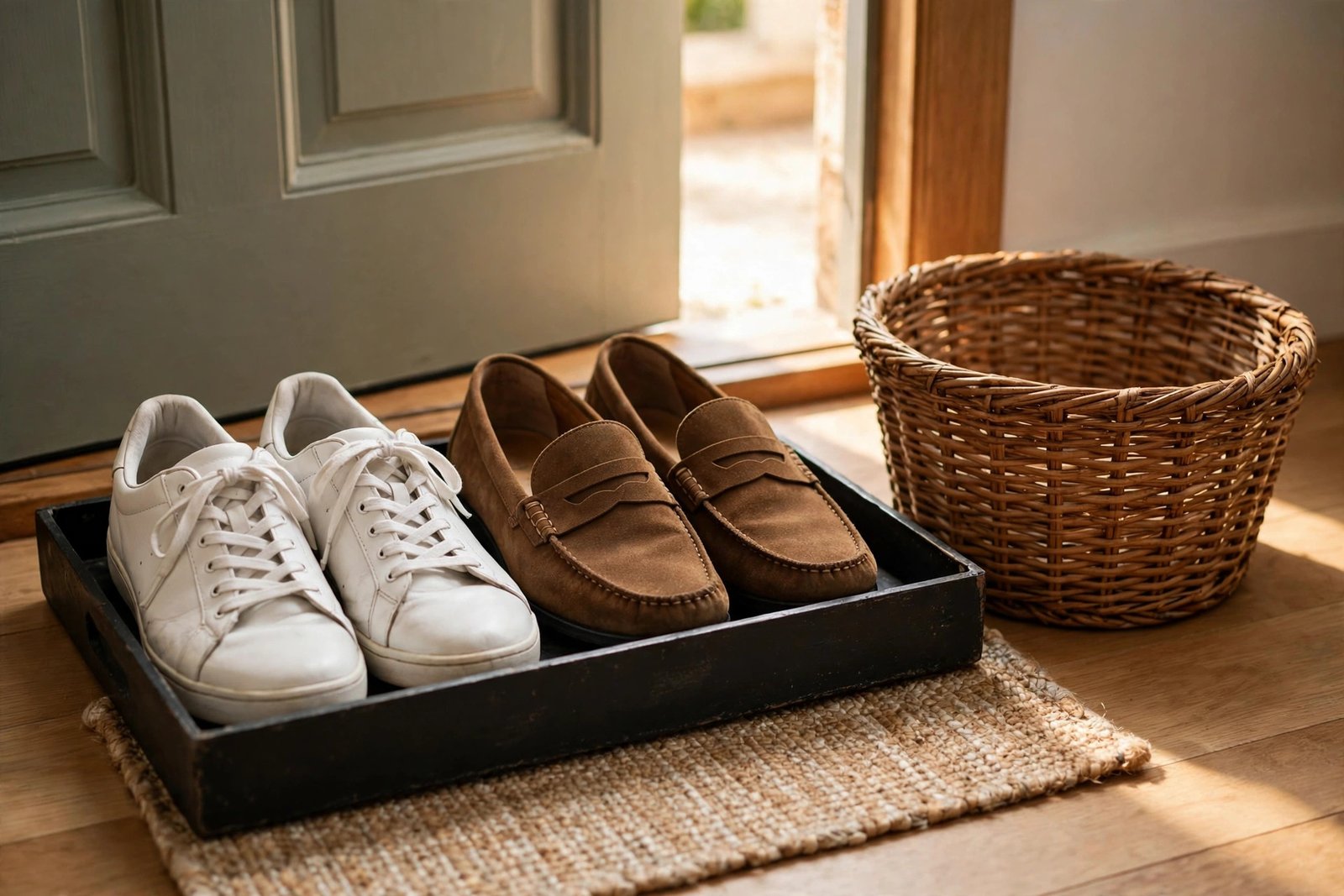
Shoes are where tiny entryways fall apart. Without a rule, pairs multiply by the door until you are stepping over them. The fix is a small, strict boundary: one slim shoe rack, one low basket, or one tray that holds only the pairs in current use. Two or three pairs per person is a workable limit for most homes. Everything else lives in a wardrobe or under the bed.
A boot tray is a humble hero in wet climates: it keeps mud and water off the floor and draws a clear line around the shoe zone. A narrow rack that fits behind the door or along the wall is better still if you have the depth for it. If shoes are your biggest struggle, our guide to small space shoe storage ideas covers slim racks, over-door options and other ways to keep pairs under control.
Add a Landing Strip for Keys, Post and Small Things
Coats and shoes are only half the problem. Keys, sunglasses, post, receipts and loose change are the small things that scatter across every surface near the door. A drop zone needs one small landing strip for them: a shallow tray, a small bowl, or a little wall-mounted shelf with a lip.
Place it at the height your hand naturally reaches when you walk in, usually just beside the hooks. The rule is simple: if it comes in through the door in your hand, it lands here, not on the kitchen counter or the sofa arm. Sort the post over a recycling spot once or twice a week so the tray never becomes a paper pile with keys buried underneath.
If your wall space allows, one small shelf does double duty: tray on top for keys, hooks underneath for coats, and a basket below for shoes. That single vertical stack is a complete drop zone in less space than a doormat.
Keep It Small on Purpose
The secret of a drop zone that stays tidy is that it is slightly too small. When the hooks are full, a coat goes to the wardrobe. When the shoe tray is full, a pair moves to storage. The zone holds only what you use every day, in this season. Swap items as the weather changes: umbrellas and heavy coats in winter, sun hats and sandals in summer.
Do a two-minute reset once a week. Return stray items to their real homes, shake out the mat, and wipe the tray. A drop zone is a habit with a place to live, and the reset is what keeps the habit alive.
Mistakes to Avoid
- Letting the zone spread. Without clear edges, the drop zone quietly becomes the whole room. A mat and a fixed shoe limit keep it contained.
- Storing everything you own by the door. Only daily items belong here. Off-season and rarely used things need a home elsewhere.
- Skipping the small-things tray. Keys and post without a home will colonise every nearby surface within days.
- Using only floor space. In a tiny entryway the wall does the heavy lifting. Hooks and a small shelf multiply your storage without touching the floor.
- Choosing looks over the daily routine. A beautiful basket you never use loses to an ugly hook you use every time. Build the zone around how you actually come home.
Frequently Asked Questions
How small can a drop zone be?
Very small. A row of hooks, a tray and a shoe mat along one short wall is enough for most homes. The zone works because everything has one set place, not because it is big.
What if my front door opens straight into the living room?
Use the wall beside the door and a small rug to draw the boundary. A slim console, a low bookcase or even a curtain can also separate the entry zone from the seating area and make the drop zone feel like its own little room.
How do I make a drop zone in a rental without drilling?
Use over-the-door hooks, strong adhesive hooks, a leaning coat stand, a boot tray and a small freestanding shelf. All of them can be removed cleanly when you leave, and together they give you the full drop zone system.
How do I stop the drop zone getting messy again?
Keep it deliberately small, limit shoes to the pairs in daily use, and do a two-minute weekly reset. When something does not fit, that is the signal it belongs somewhere else in the home.
Conclusion
An entryway with no storage is not a lost cause. It just needs one planned spot: hooks on the wall, a strict little home for shoes, a tray for the small things, and edges that keep it all contained. Build it around your real routine and reset it weekly, and the first steps into your home will feel calm instead of chaotic.