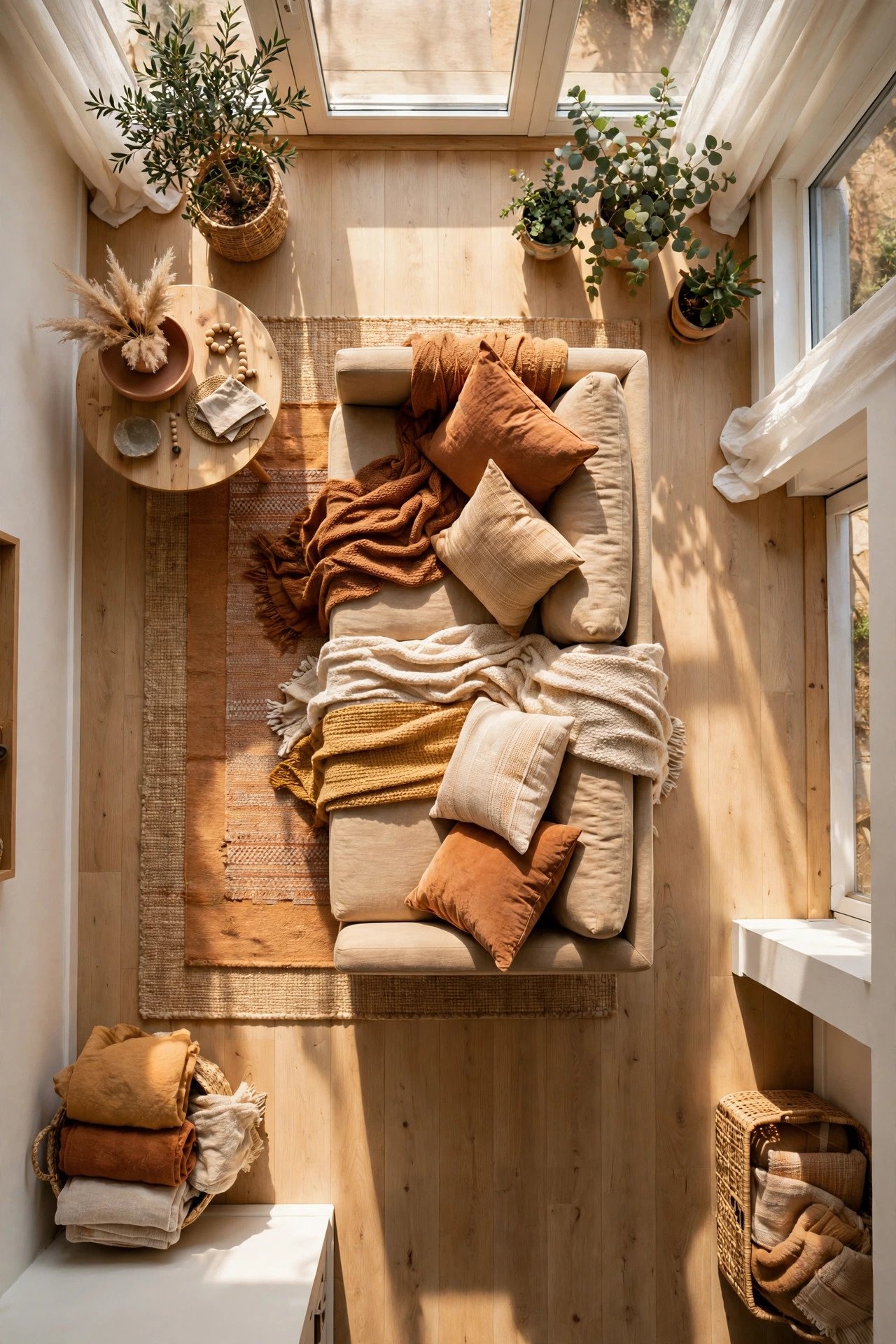
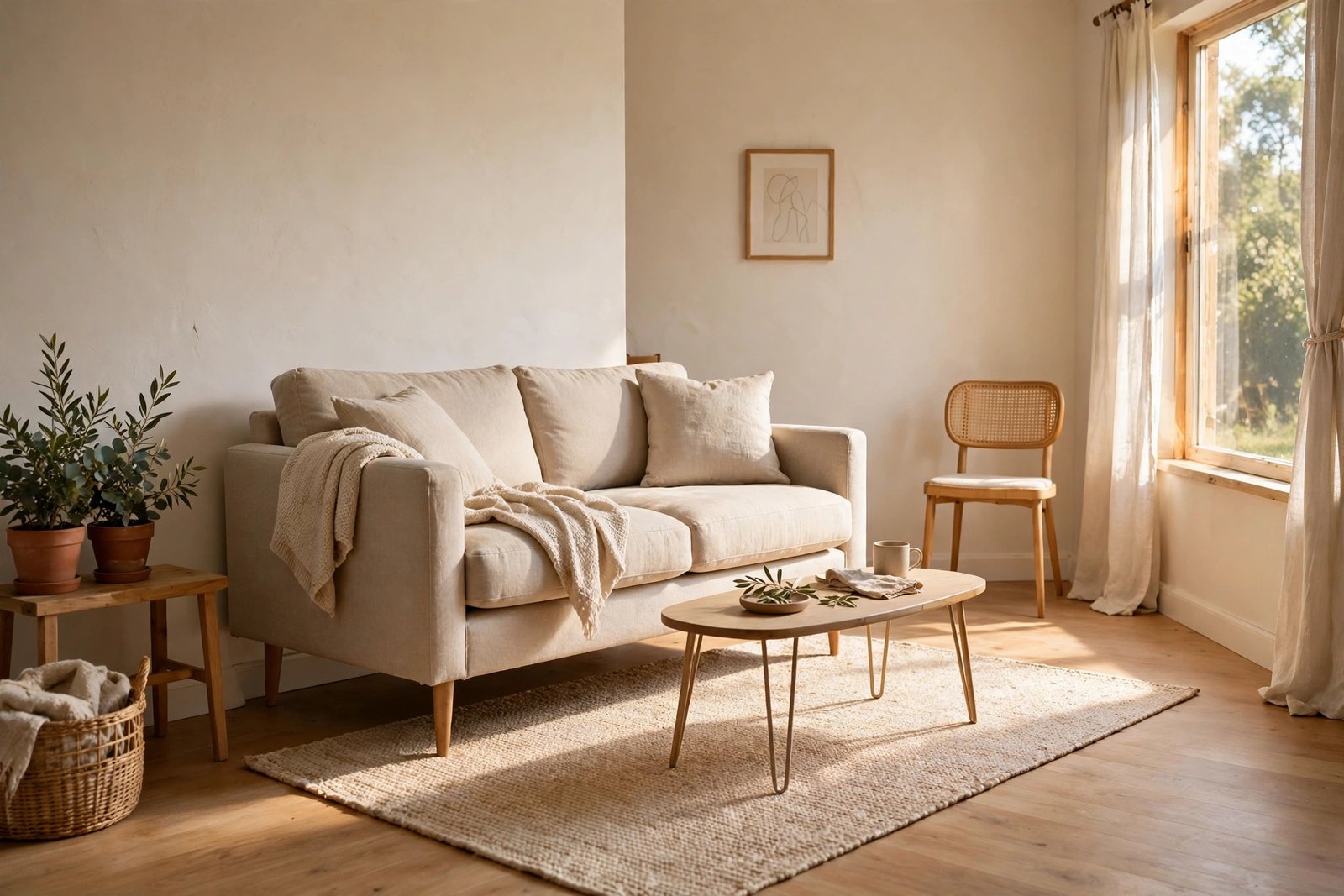
A small living room can feel cramped even when it is tidy. The sofa touches the wall, the coffee table sits in the middle like an island, and every walk through the room means turning sideways. The problem is rarely the size of the room itself. Most small living rooms feel tight because of layout: furniture pushed into the wrong places, walkways that are too narrow, and pieces that are simply too big for the space they are in.
The good news is that layout is free to change. Before you buy anything or give anything away, try rearranging what you already own. This guide walks through the fixes that make the biggest difference, in the order that is easiest to try them, so you can stop when the room starts to breathe again.
Quick Answer
If your small living room feels cramped, start with the layout. Pull the sofa a few centimetres away from the wall, clear one straight walking path through the room, and remove one piece of furniture you do not truly need. Then swap heavy, solid pieces for lighter ones with visible legs, keep the floor as visible as possible, and arrange seating around one clear focal point. These changes alone can make the same room, with the same furniture, feel noticeably bigger.
Start by Pulling Furniture Away From the Walls
It feels backwards, but pushing every piece flat against the walls usually makes a small room feel smaller, not bigger. The furniture forms a hard frame around an empty middle, and your eye reads the room as a box with things stuck to its edges. Floating the main pieces slightly changes that picture.
Move your sofa forward just a hand’s width from the wall. That small shadow gap behind it creates a sense of depth, and the room instantly feels less like a waiting room. If you have armchairs, angle them slightly toward the sofa instead of lining them up in a straight row. Angled seating opens up the corners, and corners are where cramped rooms lose the most space.
For more ideas on how placement changes the feel of a room, our guide to furniture layout tips that make small rooms feel bigger goes deeper into spacing and balance.
Clear One Honest Walking Path
Every living room needs at least one clear path from the door to the seating area, and ideally to any windows or doors beyond it. In cramped rooms, that path usually zigzags between a coffee table, a side table, a plant stand and a basket of blankets. Each obstacle is small, but together they make the room feel like hard work.
Stand at the door and walk to the sofa. Notice every time you step around something. Then move, shrink or remove whatever blocks you until the walk feels natural. Aim for a path you could cross carrying a tray without thinking about it. When movement through a room is easy, the room itself feels calmer and more open, even if nothing else changes.
Remove One Piece Before You Add Anything
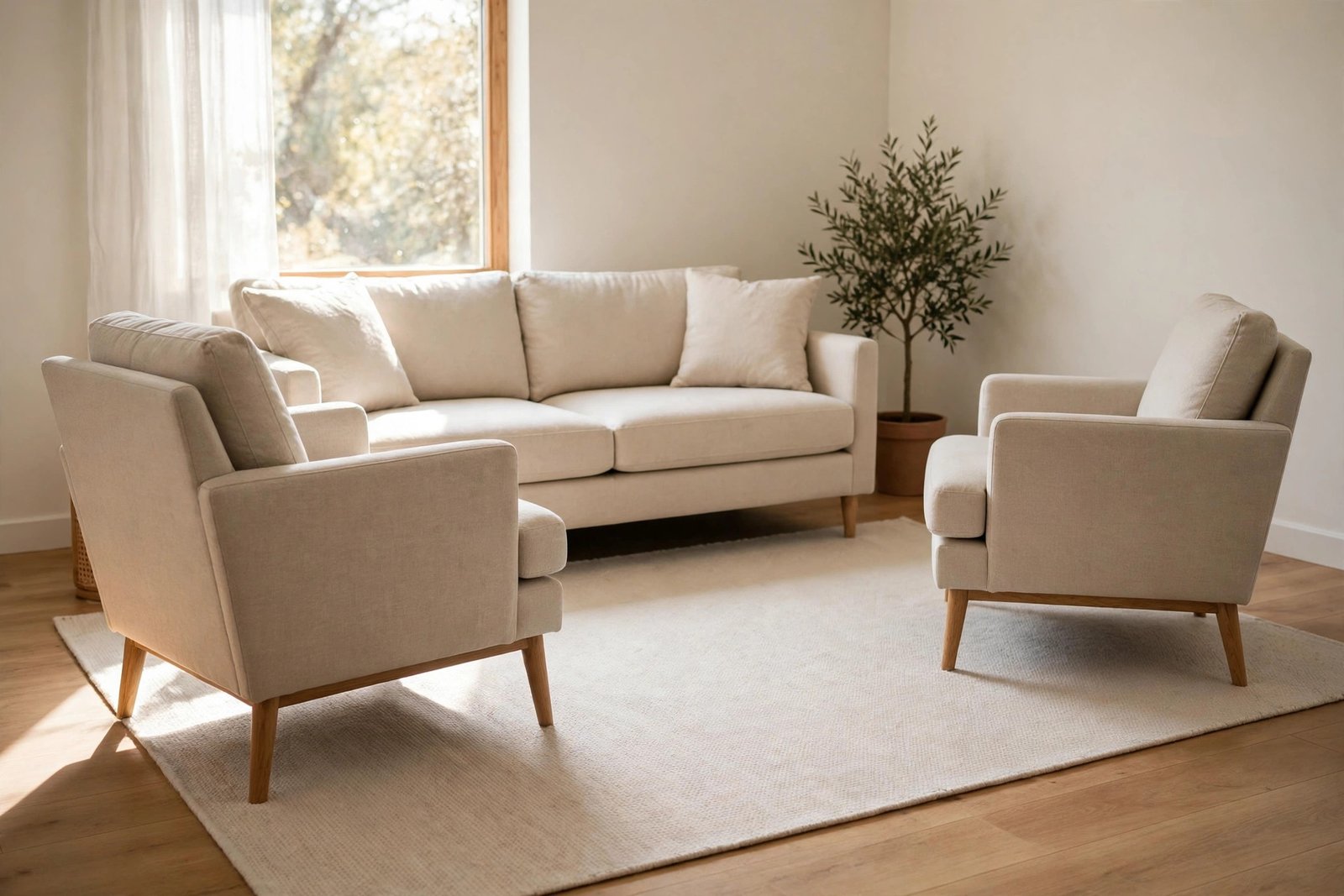
Most cramped living rooms are not under-furnished. They are over-furnished by exactly one piece: the extra side table, the second bookshelf, the chair nobody sits in. Each piece seemed useful on its own, but together they eat the floor space that makes a room feel open.
Try a simple test. Move the piece you use least into another room or a hallway for one week. If you do not miss it, the living room is better without it. If you do miss it, swap it for something smaller or something that does two jobs, like a storage ottoman that works as a seat, a table and a place to hide blankets.
This is also where a lighter visual style helps. Rooms with fewer, calmer pieces almost always feel larger, which is why minimalist small living room designs that feel bigger are such a useful source of ideas when you are deciding what can go.
Choose Furniture That Shows Its Legs
You cannot always replace furniture, but when you do buy or swap a piece, look at its base. A sofa or cabinet that sits solidly on the floor hides the floor beneath it, and your brain reads the room as smaller. The same piece raised on legs lets you see floor running underneath it, and the room feels lighter straight away.
The same rule applies to coffee tables. A solid block table in the middle of a small room is a heavy anchor. A table with slim legs, a glass top, or even two small nesting tables you can separate takes up far less visual space. Our roundup of small living room coffee table ideas that save space shows plenty of lighter options that still give you somewhere to put a cup down.
While you are looking down, check your rug. A rug that is too small makes the seating area look squeezed onto an island. A rug big enough for at least the front legs of the sofa and chairs to sit on pulls the group together and makes the whole zone feel more generous.
Give the Room One Clear Focal Point
In a cramped room, every object competes for attention, and that competition creates visual noise. A clear focal point gives your eye somewhere to rest. It might be the window, a fireplace, one larger piece of art, or the television if that is how the room is used. Arrange the seating so it faces or frames that point, and let everything else be quieter.
Keep surfaces near the focal point simple. Move tall items, like bookcases and floor lamps, to the edges of the room rather than the middle of walls, and hang curtains as high and wide as you reasonably can so the window reads bigger. Small changes in where the eye lands make a small room feel planned instead of packed.
Use Light and Colour to Support the Layout
Layout does the heavy lifting, but light finishes the job. One ceiling light in the centre of the room flattens everything and leaves the corners dark, which pulls the walls in. Add a lamp at seating height in the darkest corner and the room gains depth. Keep window areas as clear as you can during the day so natural light reaches the back of the room.
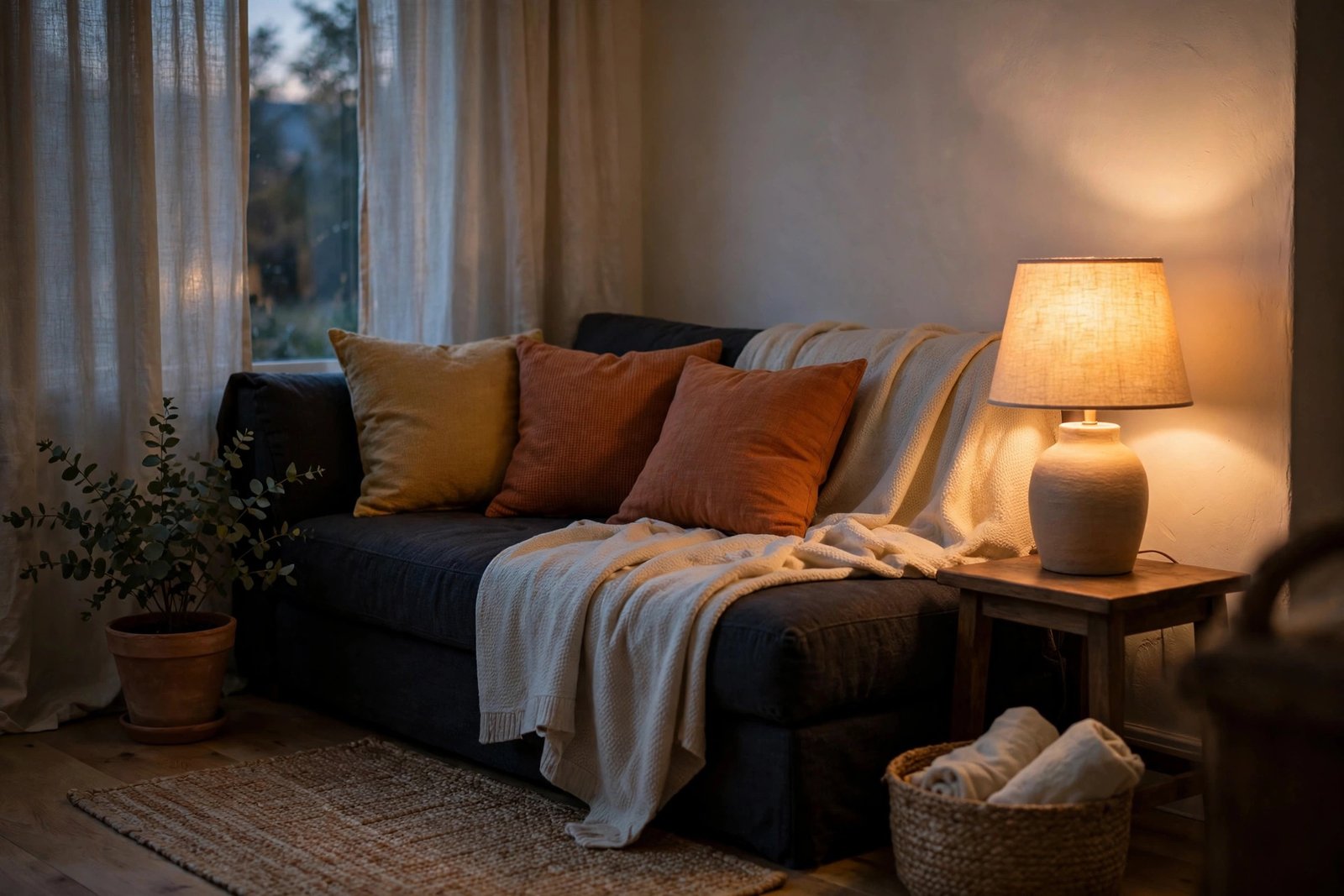
Colour matters less than people think, but heavy contrast does close a room in. If your furniture is dark, lighter cushions, a pale throw and a light rug can lift the whole seating area without painting a single wall. If you rent and cannot paint, this kind of soft contrast is often all you need.
Mistakes to Avoid
- Pushing everything against the walls. It leaves an empty middle and makes the edges feel crowded. Floating pieces slightly gives the room depth.
- Blocking the path from the door. If you have to weave through furniture every day, the room will always feel cramped, whatever its size.
- Keeping furniture you never use. One unused chair can take up the space that would have made the whole room work.
- Choosing solid, floor-hugging pieces. Furniture on legs shows more floor and reads as lighter and smaller.
- Using a rug that is far too small. A tiny rug under only the coffee table makes the seating area look squeezed and unfinished.
- Filling every corner. Empty corners are not wasted space. They are what make the filled parts feel comfortable.
Frequently Asked Questions
What is the first thing to try if my living room feels cramped?
Rearrange before you buy. Pull the sofa slightly off the wall, clear the walking path from the door, and take one unused piece out of the room for a week. Most people feel a real difference from those three free changes alone.
How much space should I leave between the sofa and the coffee table?
Leave enough room to walk through comfortably and stretch your legs, roughly the length of your lower leg. If you are squeezing sideways between them, the table is too big or too close, and a smaller or narrower table will help more than any decor change.
Can a small living room have a big sofa?
Yes, if it is the only large piece. One generous sofa with slim arms, raised on legs, often works better than several small chairs scattered around. Keep everything else light and low so the sofa feels like a calm anchor rather than one crowd among many.
Does painting the room white fix a cramped feeling?
Light walls help, but they do not fix a layout problem. A white room with blocked walkways and too much furniture still feels cramped. Sort the layout first, then use colour and light to support it.
Conclusion
A cramped living room is usually a layout problem, not a size problem. Float the furniture, clear the path, remove one piece, and let the floor show. Work through the fixes in order and stop when the room feels easy to move through and easy to sit in. That feeling, more than any particular style, is what makes a small living room feel like a good place to be.