
Creating a sanctuary for your new arrival doesn’t require a sprawling suburban floor plan. In fact, some of the most charming, intimate, and highly efficient nurseries are found in the compact footprints of city apartments. When square footage is at a premium, every design choice must pull double duty—blending aesthetic warmth with clever engineering. Whether you are converting a walk-in closet, carving out a corner of your master bedroom, or optimizing a tiny secondary bedroom, these 27 ideas will help you maximize your space without sacrificing style.
1. Mini Cribs
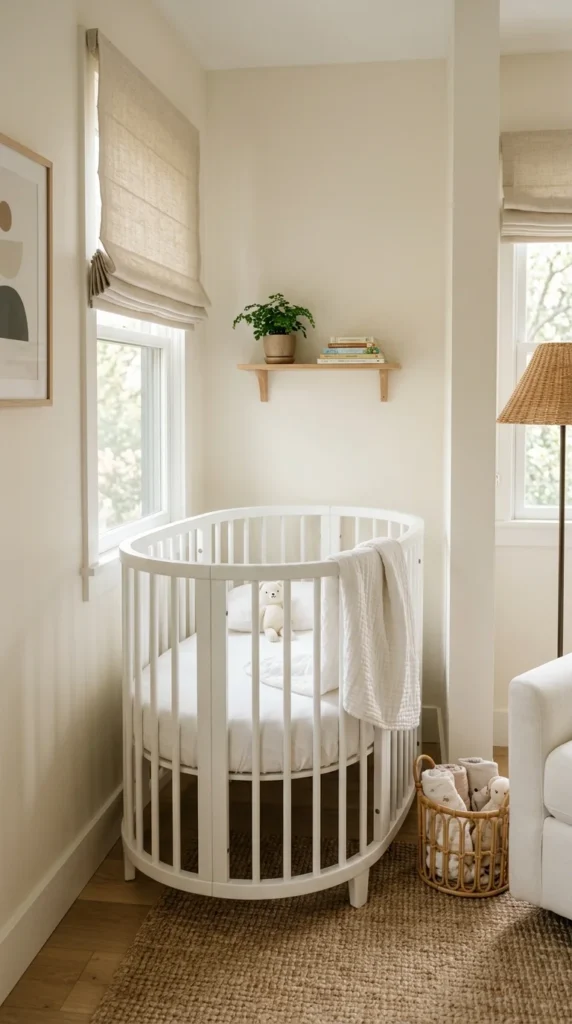
The standard full-size crib is often the biggest space-hog in a nursery. For apartment dwellers, the mini crib is a game-changer. These scaled-down versions provide a safe, cozy sleeping environment for your baby while occupying significantly less floor space. Many models come with wheels, allowing you to move the sleep station from the nursery nook to your bedside with ease. Because they are narrower, they can often fit through standard doorways without being disassembled.
2. Vertical Shelving
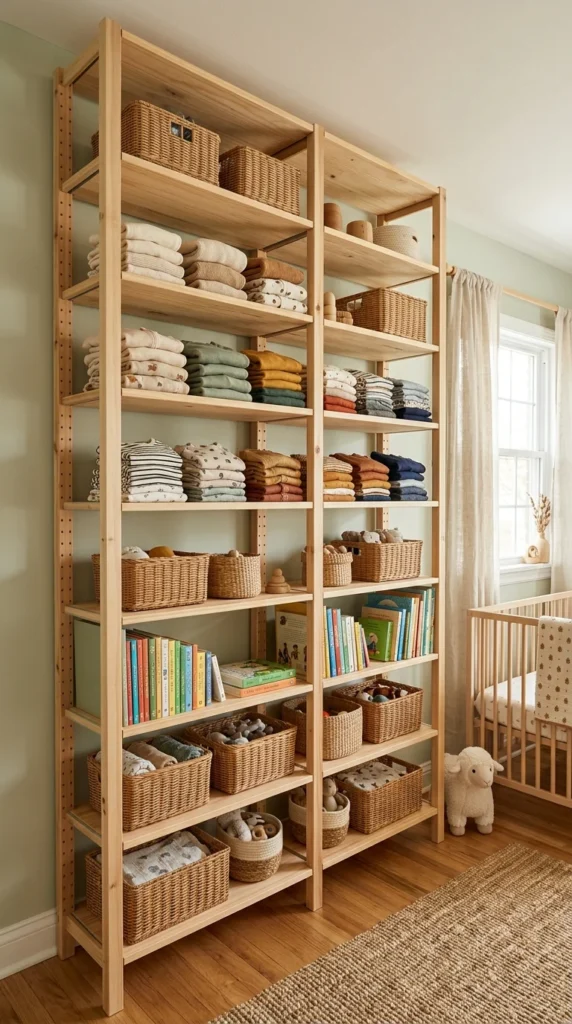
When you can’t grow out, grow up. Vertical shelving utilizes the “dead space” near the ceiling that is often ignored. Install tall, slender bookcases or wall-mounted shelving units to house everything from diapers and wipes to keepsakes and toys. By keeping the footprint small and the height tall, you draw the eye upward, making the room feel more expansive while gaining vital storage real estate.
3. Closet Conversion
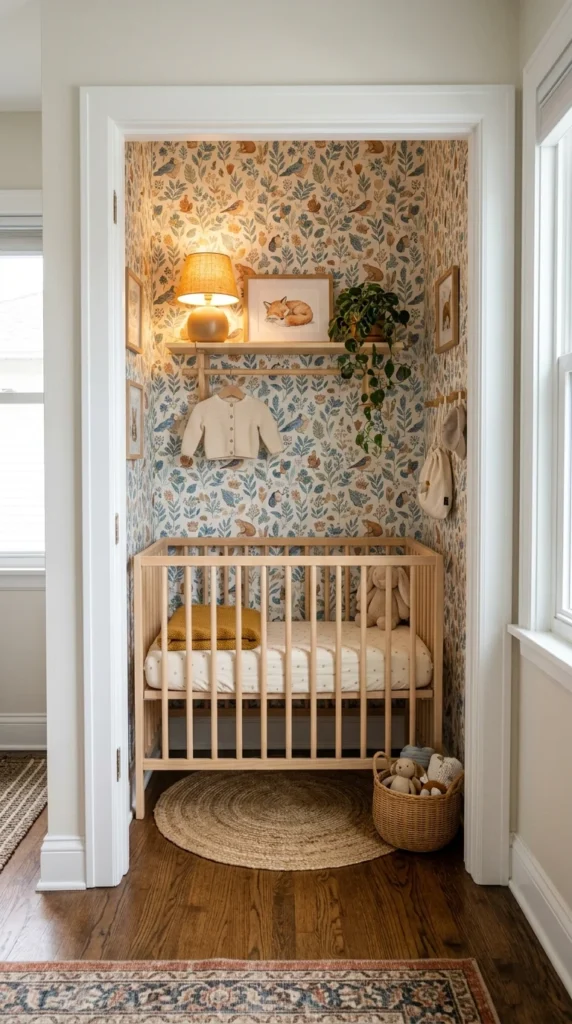
Commonly known as a “cloffice” (closet-office) or in this case, a “clursery,” removing closet doors can instantly add several square feet to a room. By nesting the crib inside the closet cavity, you free up the main floor area for movement or a rocking chair. You can paint the interior of the closet a contrasting color or add a whimsical wallpaper to define it as a distinct, “room-within-a-room” space.
4. Neutral Palettes
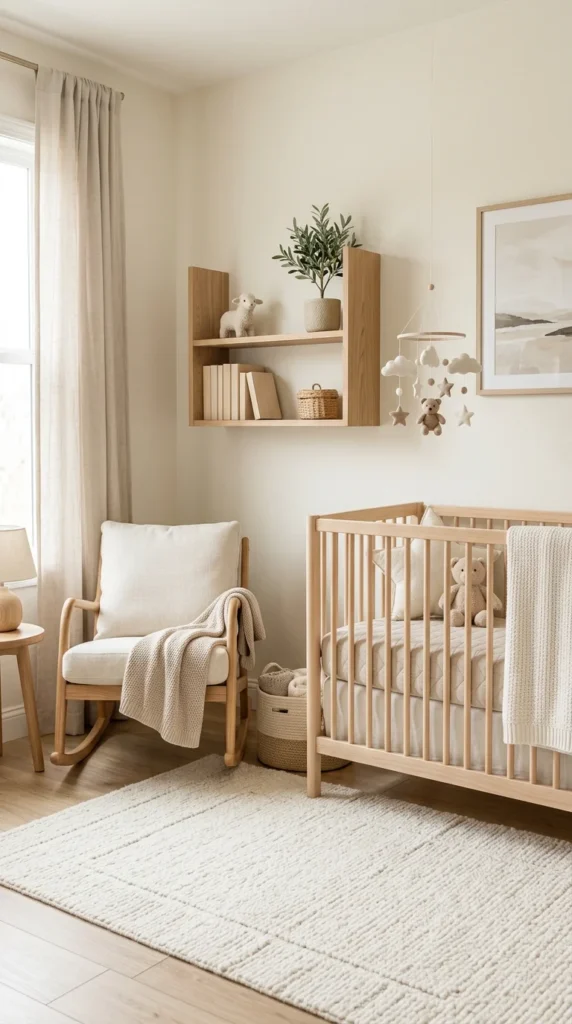
Color psychology plays a massive role in how we perceive space. Dark, heavy colors can make a small room feel cavernous and cramped. On the other hand, a monochromatic neutral palette—whites, creams, soft greys, and warm wood tones—reflects light and creates an airy, open atmosphere. Use different textures like wool, linen, and wood to add depth so the space feels cozy rather than clinical.
5. Pegboard Organization
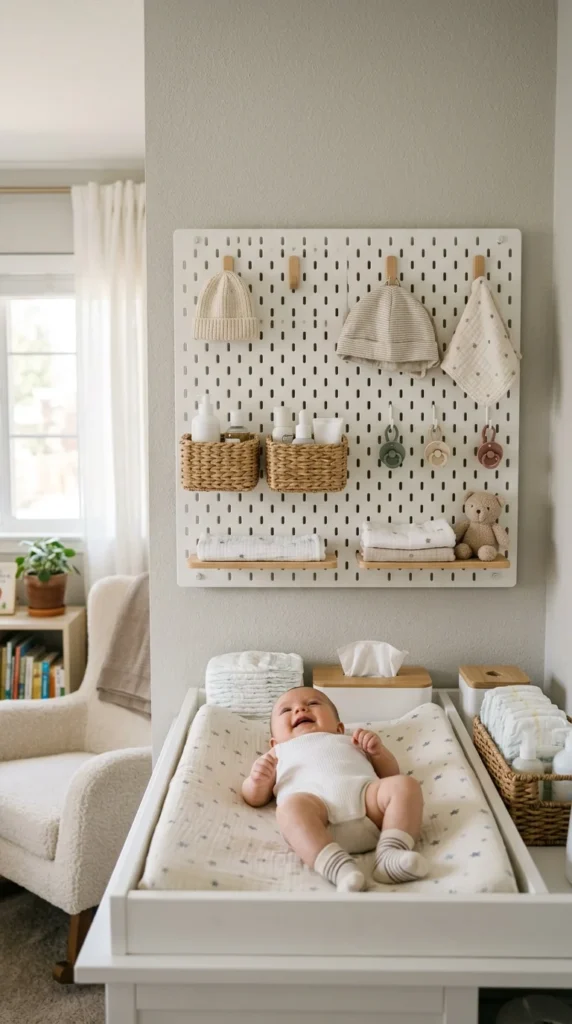
The pegboard is the ultimate modular storage solution for a small nursery. It allows you to customize your storage based on your immediate needs. You can hang baskets for frequently used items like diaper cream and burp cloths, hooks for swaddles or hats, and even small shelves for lightweight decor. As your baby grows, the pegboard can be easily reconfigured to hold art supplies or school accessories.
6. Multipurpose Dressers
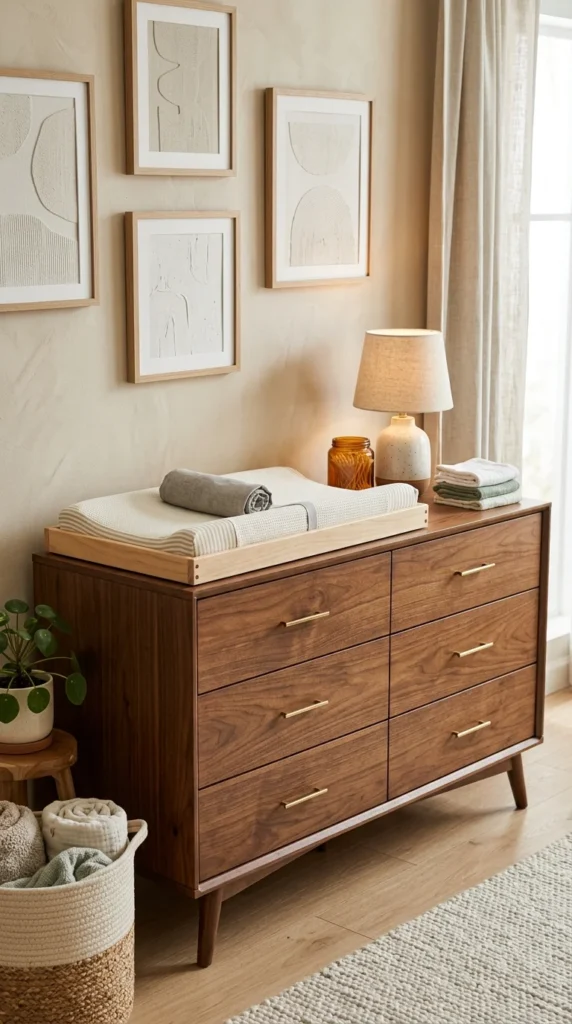
In a small apartment, every piece of furniture must earn its keep. Skip the standalone changing table, which has a limited lifespan and takes up valuable space. Instead, opt for a sturdy, waist-high dresser and secure a changing pad to the top. This provides you with ample drawer space for clothes and linens while serving as a functional diaper-changing station.
7. Over-the-Door Storage
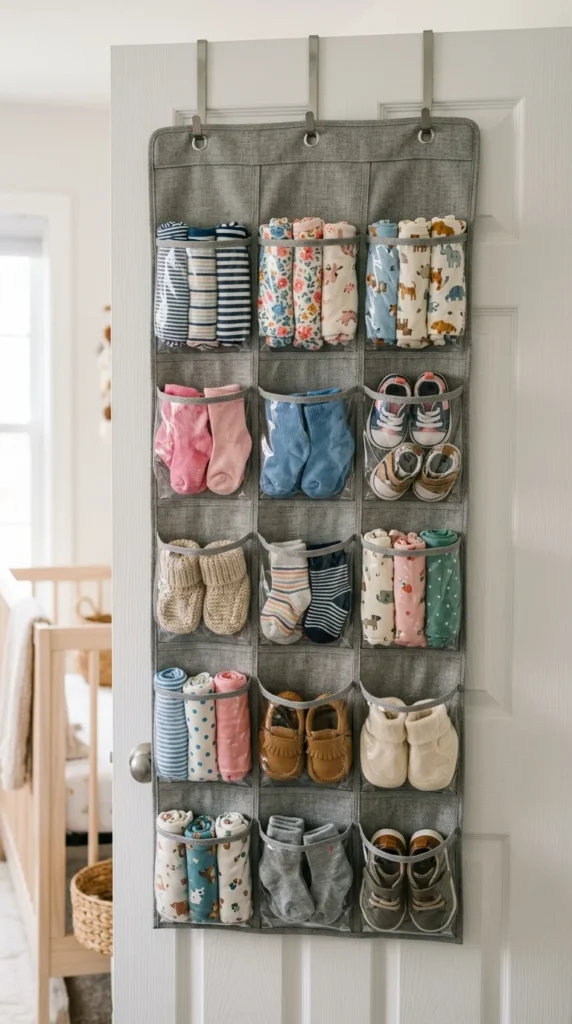
The back of the door is often overlooked as storage territory. Heavy-duty over-the-door organizers are perfect for stashing items that you need to grab quickly but don’t want cluttering up your surfaces. Use the pockets for shoes, socks, bows, or even extra packs of wipes. It keeps the “visual noise” hidden behind the door while keeping essentials at arm’s reach.
8. Floating Bookshelves
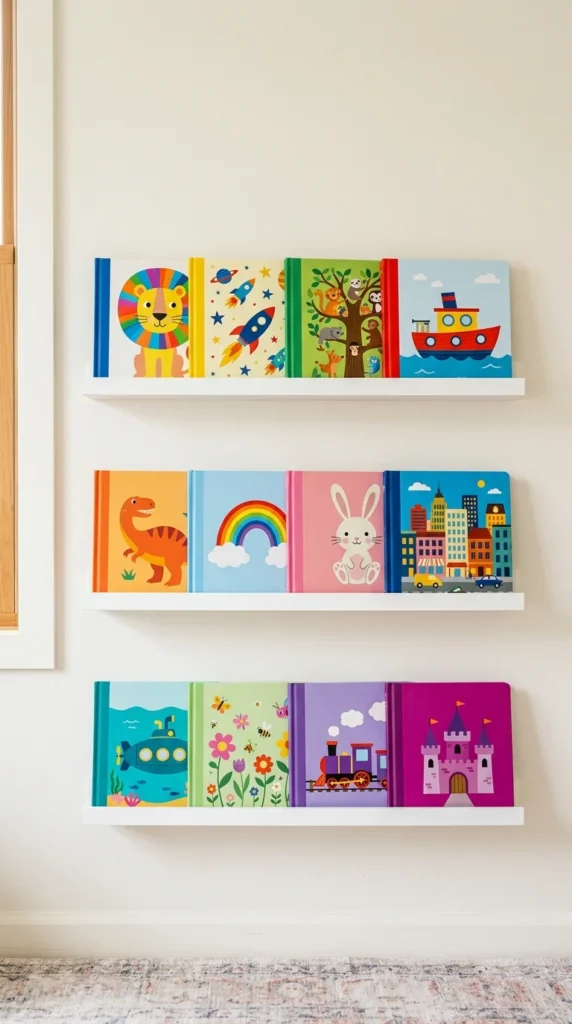
Traditional bookshelves are deep and bulky. Floating “picture ledge” style shelves are incredibly shallow, making them ideal for narrow hallways or the space behind a door. By displaying books with the covers facing out, you turn the books themselves into wall art, adding color and personality to the room without needing extra floor space for a bookcase.
9. Acrylic Accents
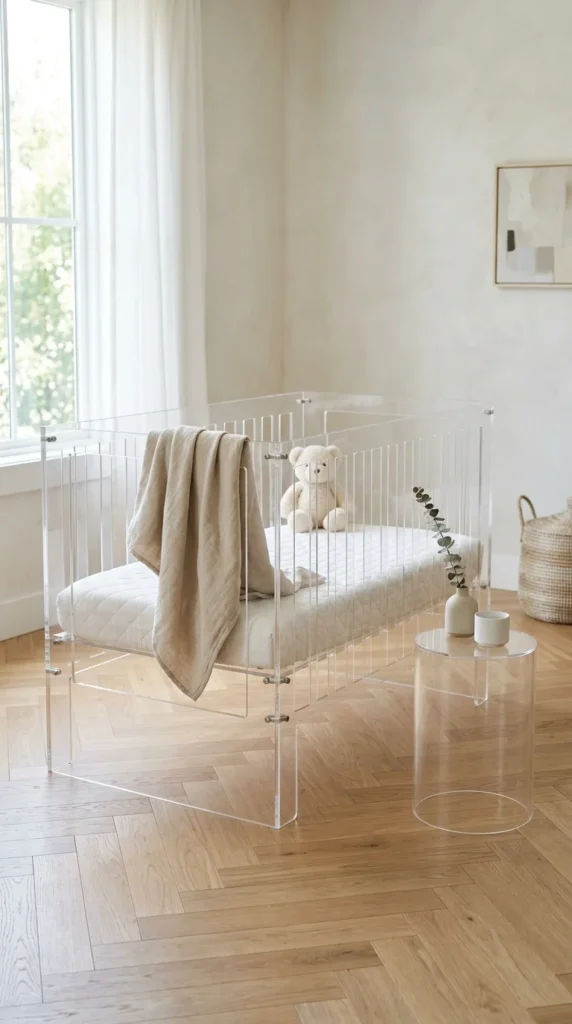
Acrylic or “ghost” furniture is a designer’s secret weapon for small spaces. Because the material is transparent, it doesn’t create a visual break in the room. An acrylic crib or side table allows the eye to travel right through it to the walls and floor, creating the illusion of more square footage while still providing the necessary functionality.
10. Corner Rockers
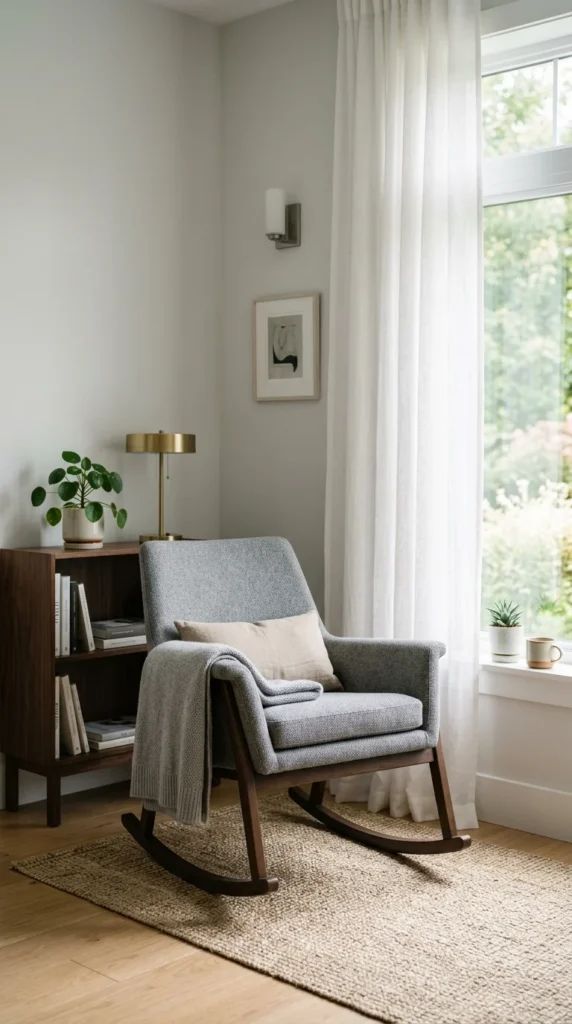
You don’t need a massive, overstuffed recliner to have a comfortable place for late-night feedings. Look for “small space” gliders or rockers with a narrow profile. Placing the chair in a corner maximizes the floor plan and creates a dedicated “nook” for bonding, leaving the center of the room open for play mats or tummy time.
11. Under-Crib Storage
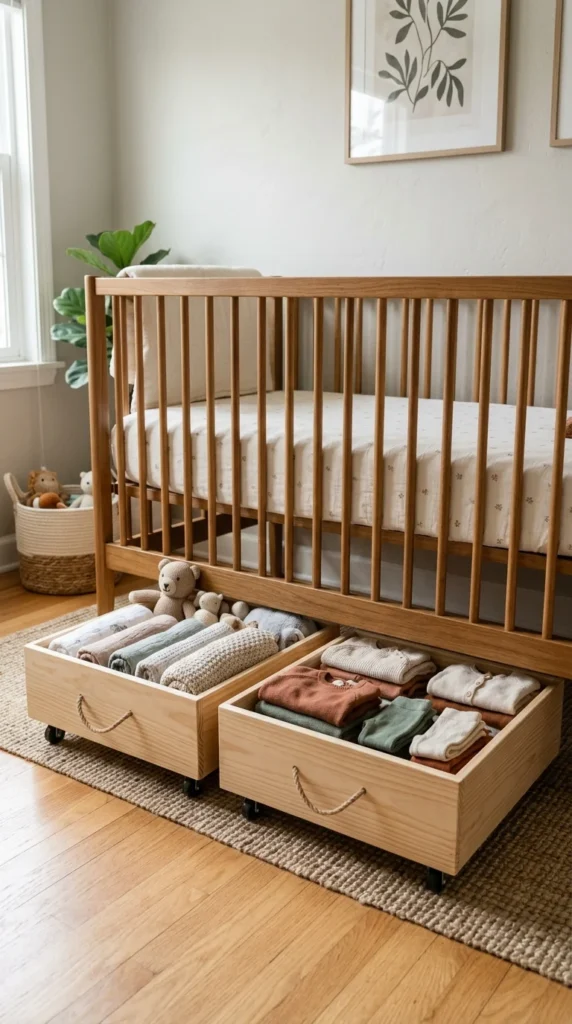
The space beneath the crib is prime real estate. Many modern cribs are designed with enough clearance to fit low-profile storage bins. Use these for items you don’t need daily, like next-size-up clothing, extra packs of diapers, or seasonal blankets. Opt for bins with wheels or handles for easy access.
12. Removable Wallpaper
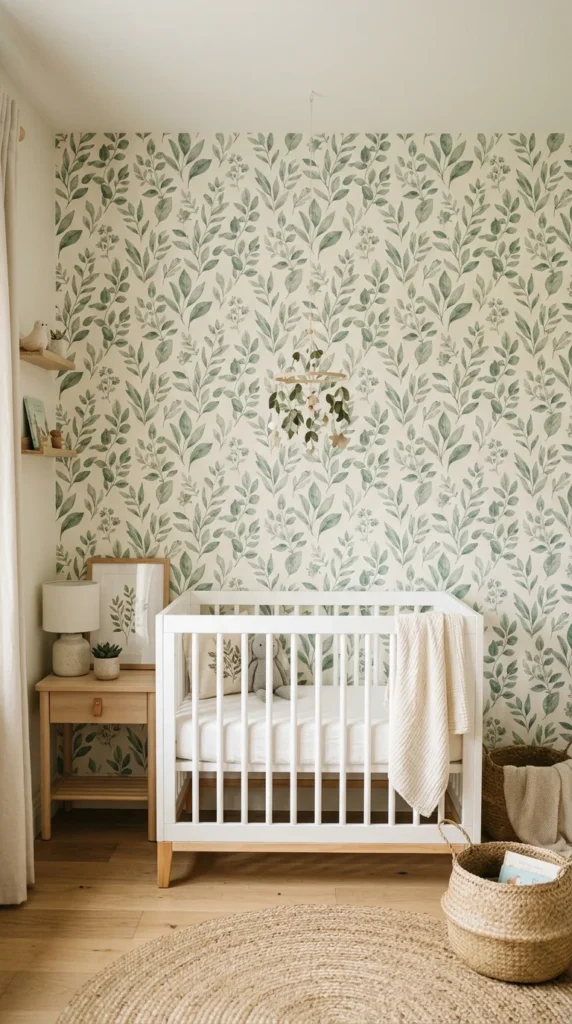
In many apartments, you are restricted by rental agreements. Removable “peel-and-stick” wallpaper is the perfect way to add a big personality to a small space without permanent changes. A bold accent wall can define the nursery area in a shared bedroom and add a sense of luxury and intentional design.
13. Folding Stations

If you are truly strapped for space, consider wall-mounted furniture that can be folded away when not in use. A wall-mounted changing station can be flipped up against the wall after a diaper change, clearing the walkway. This is especially useful in high-traffic areas or multi-purpose rooms.
14. Rolling Carts
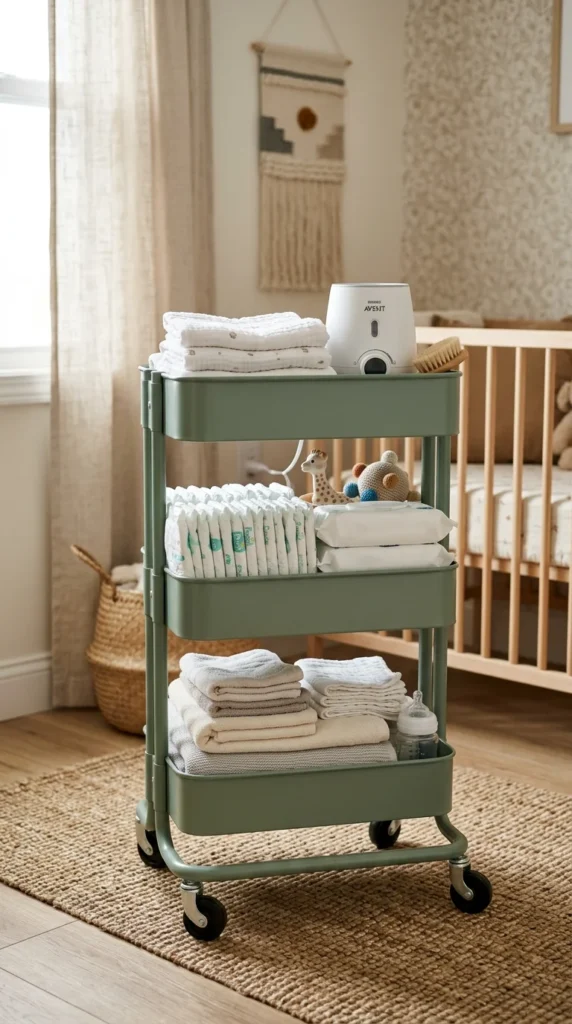
The utility cart is a staple of organized small nurseries. Because it’s on wheels, you can move your “diapering station” or “nursing station” from the nursery to the living room or bedroom as needed. It prevents you from having to have multiple sets of supplies scattered throughout the apartment.
15. Built-in Nooks
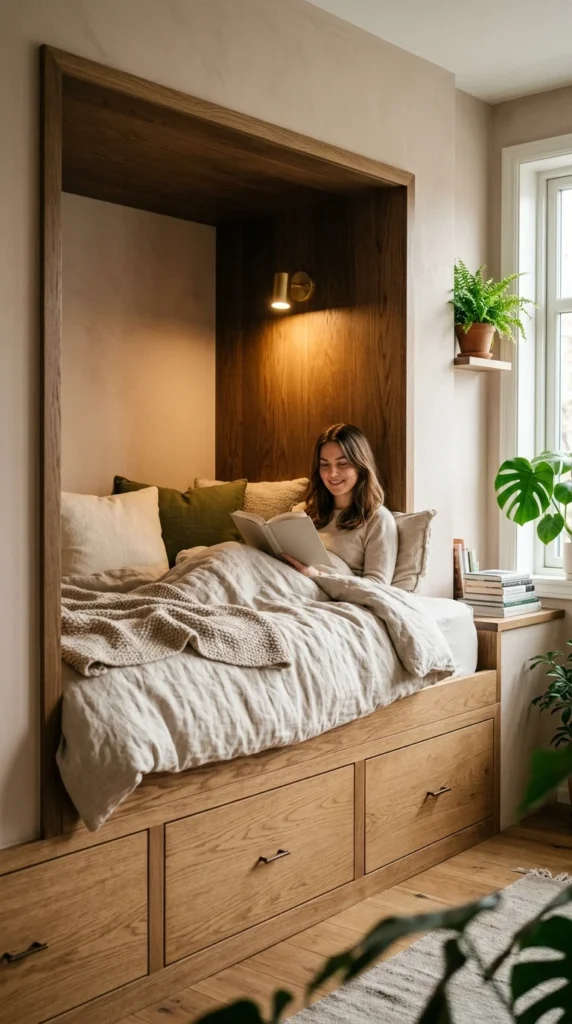
If your apartment has an unusual layout—like a bump-out or an alcove—embrace it. Use custom or semi-custom shelving to turn that architectural quirk into a functional nursery zone. A built-in feel makes the space look more expensive and utilizes every available inch of the wall.
16. Mirror Magic
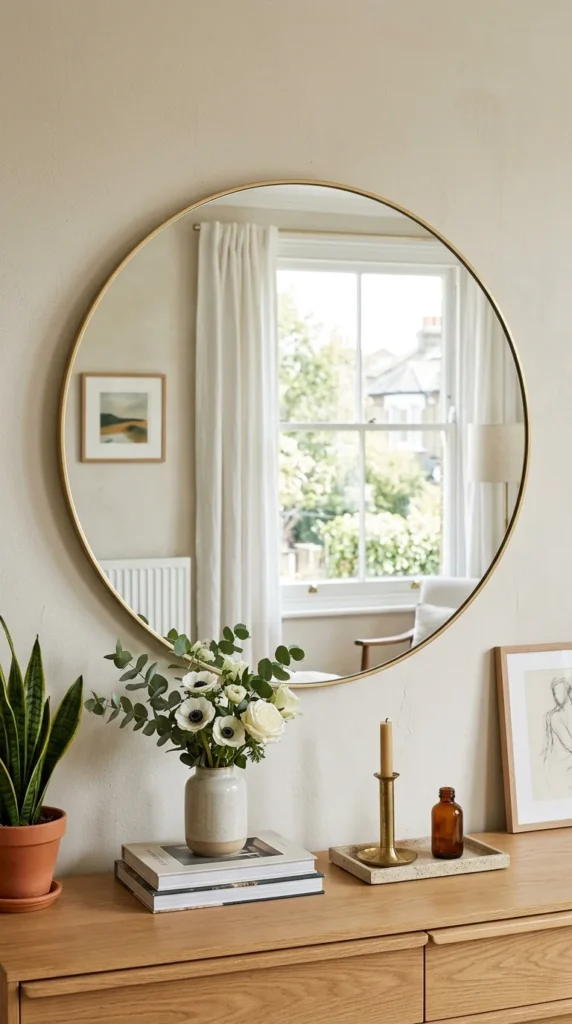
It’s the oldest trick in the book because it works. A large mirror reflects light and the rest of the room, instantly making a small nursery feel twice as large. Placing a mirror opposite a window is particularly effective for brightening up a dim apartment corner.
17. Soft Lighting
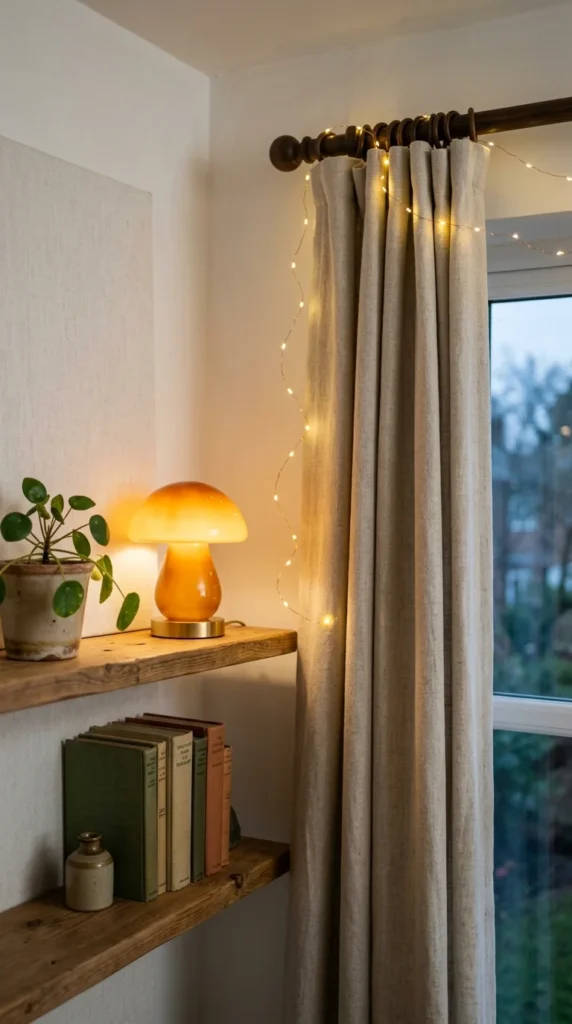
Harsh overhead lighting can make a small room feel flat and clinical. To create a cozy atmosphere, layer your lighting. Use a combination of a dimmable floor lamp, a small table lamp for the changing station, and perhaps some soft string lights. Warm, low-level lighting makes the nursery feel like a soft, safe cocoon.
18. Rug Layering
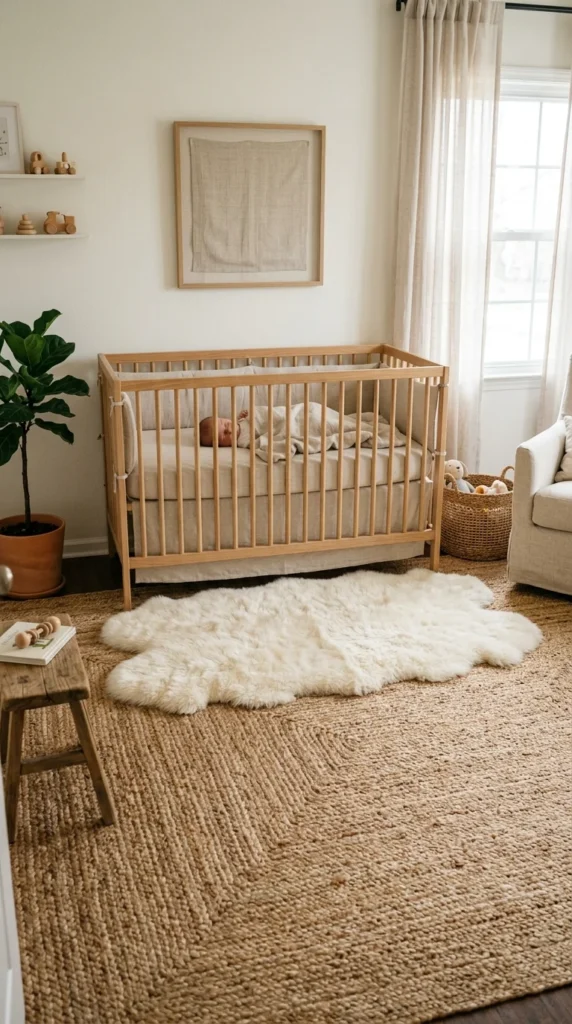
Rugs help define a space, which is crucial in studio apartments or shared rooms. Layering a soft, plush rug over a larger, flat-weave rug or hardwood floor adds a sense of “zone” to the nursery. It also provides a soft spot for the baby to eventually crawl while adding sound dampening—a must for apartment living.
19. Window Sills

In older apartment buildings, window sills are often deep and sturdy. Don’t let this space go to waste. Use it as a natural shelf for decor, a baby monitor, or a sound machine. Just ensure that any items placed there are out of reach of the baby and that cords are safely secured.
20. Ceiling Decor

When floor and wall space are at a premium, look to the ceiling. Hanging a beautiful mobile or even a lightweight canopy adds a sense of verticality and whimsy. It draws the eye upward and provides visual stimulation for the baby without taking up a single inch of functional floor space.
21. Sliding Doors
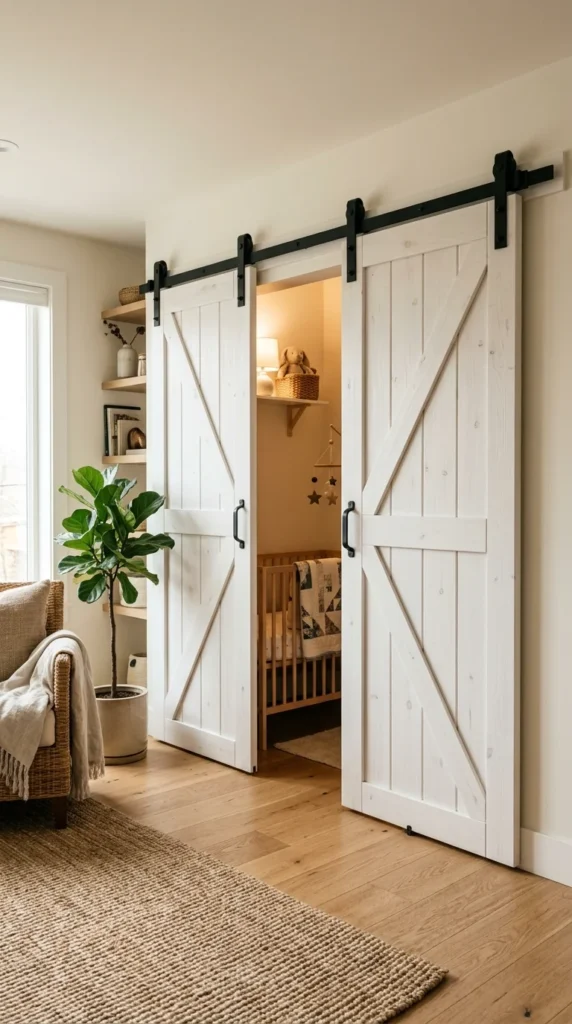
Traditional swing doors require a “clearance arc” that can waste a lot of space. If possible, replace a standard door with a sliding barn door or a pocket door. This allows you to place furniture right up to the door frame, significantly increasing your layout options.
22. Hidden Hampers
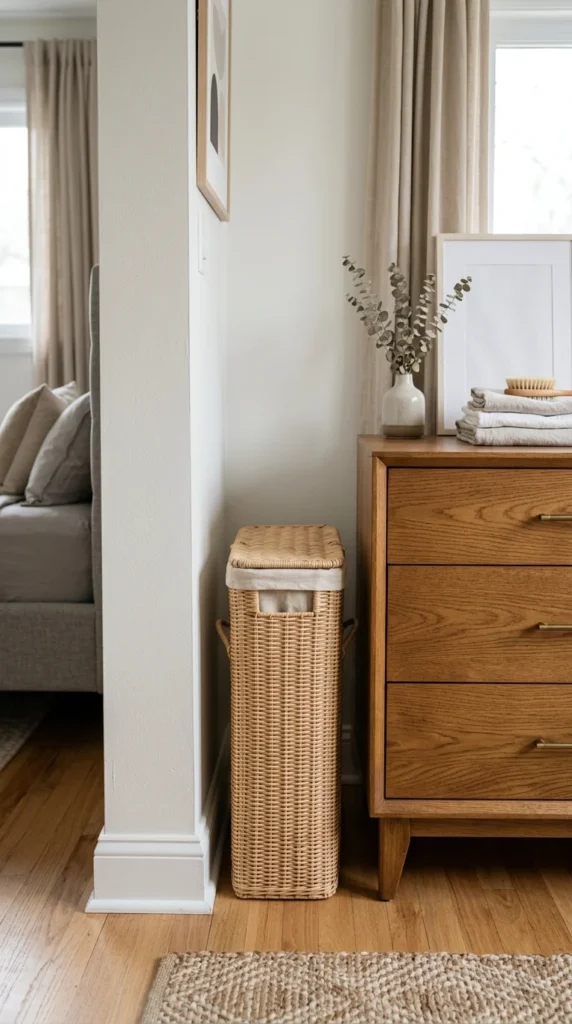
Baby laundry accumulates fast, but a bulky hamper can clutter a small room. Look for slim-profile hampers that can fit into narrow gaps or even inside the closet. A hanging laundry bag on the back of the door is another excellent way to keep dirty clothes out of sight and off the floor.
23. Wall Decals
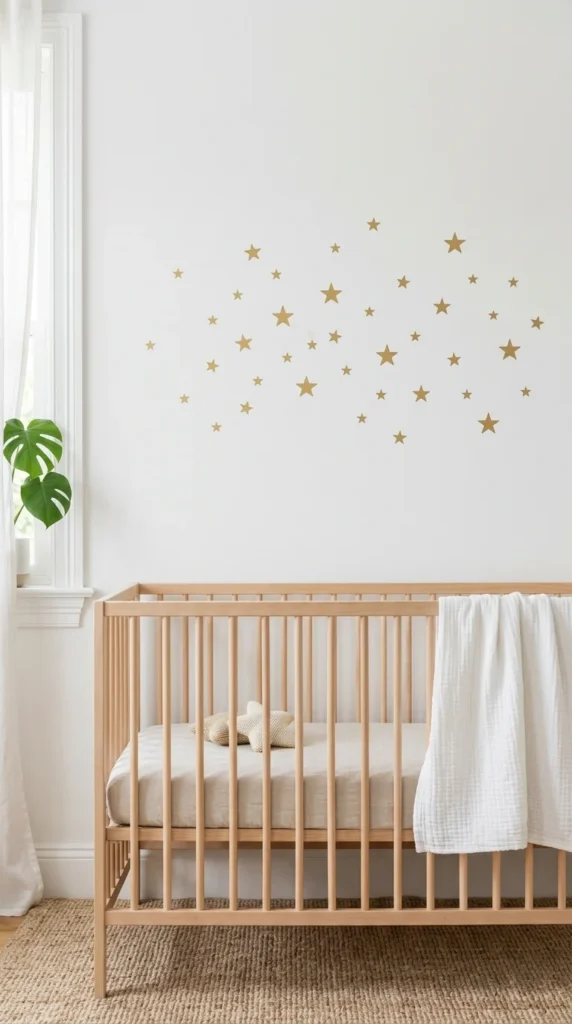
If wallpaper feels like too much of a commitment or too busy for a small space, wall decals are a great middle ground. They add visual interest and “vibe” to the nursery area without adding physical bulk. Because they are flat, they don’t impede movement in tight quarters.
24. Minimalist Gear

It is tempting to buy every gadget on the market, but in an apartment, “less is more.” Focus on high-quality, minimalist gear that can be folded or tucked away. A foldable baby bouncer or a high chair that clamps onto a dining table can save you from a cluttered living space.
25. Shared Spaces
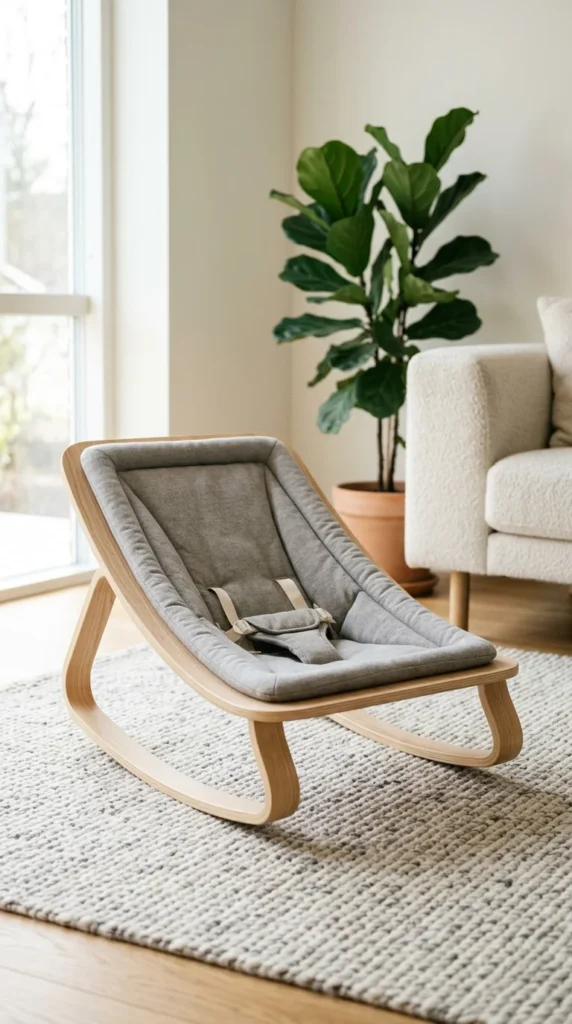
If you don’t have a separate room for the nursery, the key to a shared space is cohesion. Choose nursery furniture that complements your existing bedroom decor. Using the same color palette and wood tones makes the nursery feel like an intentional part of the room rather than an intrusion.
26. Hanging Plants
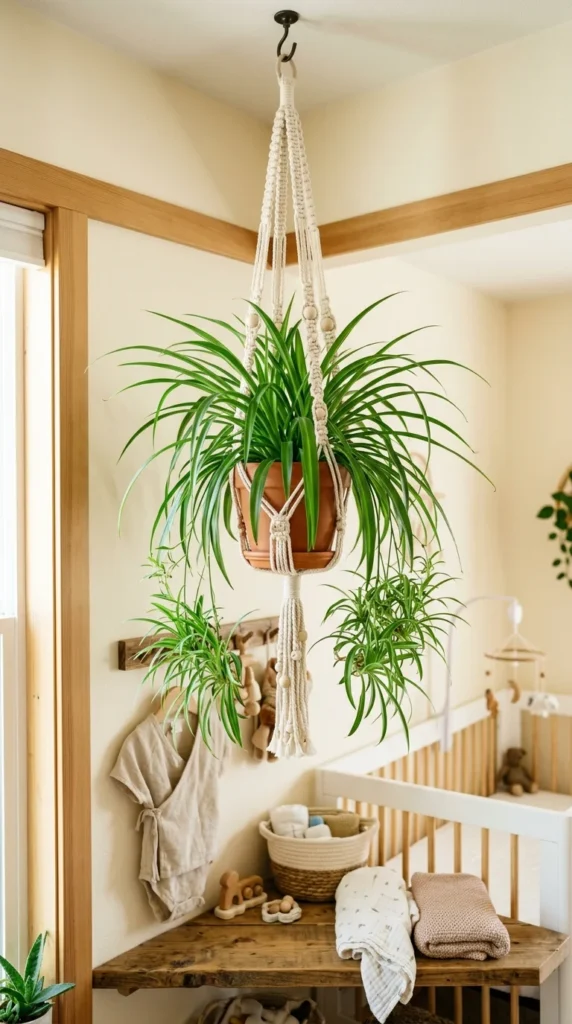
Greenery makes any room feel more alive and fresh. In a small nursery, use hanging planters to keep the plants out of the baby’s reach and off the limited shelf space. Air-purifying plants like spider plants or Boston ferns are excellent choices for maintaining indoor air quality in an apartment.
27. Zone Lighting

Instead of one bright light, use “zone lighting” to define different areas of the nursery. A dedicated reading light by the rocker and a soft nightlight near the changing table allow you to perform tasks without waking the baby with a full-room light. It also adds a layer of sophisticated design to the small footprint.