
Living in a small apartment shouldn’t mean sacrificing your professional productivity. As the world shifts toward remote and hybrid work models, the “home office” has become a necessity, even if your home is a studio or a one-bedroom flat. The secret lies in thinking vertically, utilizing neglected corners, and choosing furniture that serves more than one purpose. Here are 23 innovative ways to carve out a functional, stylish workspace in a compact footprint.
1. Floating Desk
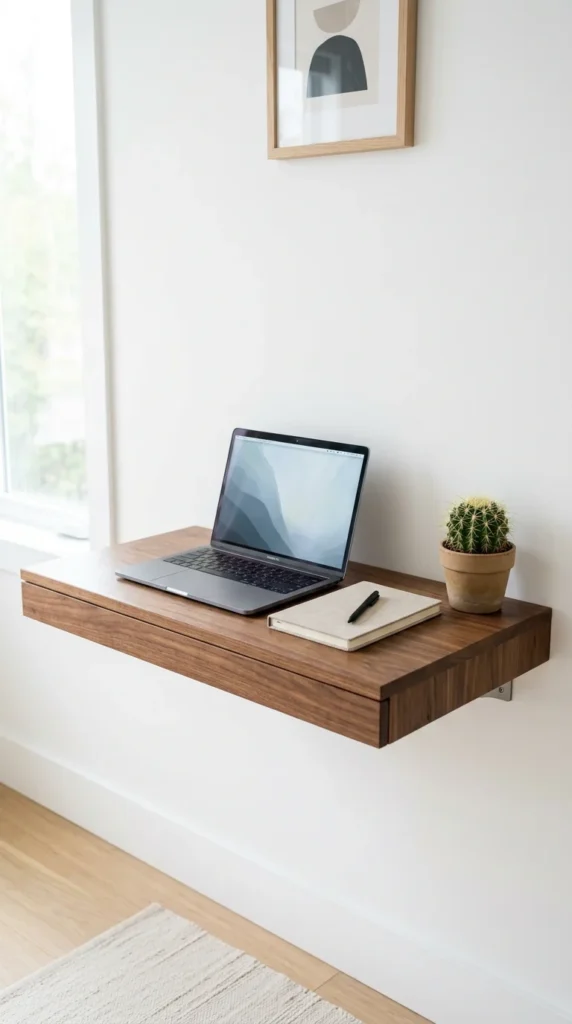
Floating desks are the ultimate space-savers because they eliminate the visual clutter of furniture legs. By mounting a desk directly to the wall, you keep the floor space clear, which makes a small room feel much larger. This setup works perfectly in hallways, bedrooms, or even a small slice of the living room. Since there are no legs to navigate, you can easily tuck a stool or a small storage bin underneath when not in use.
2. Cloffice
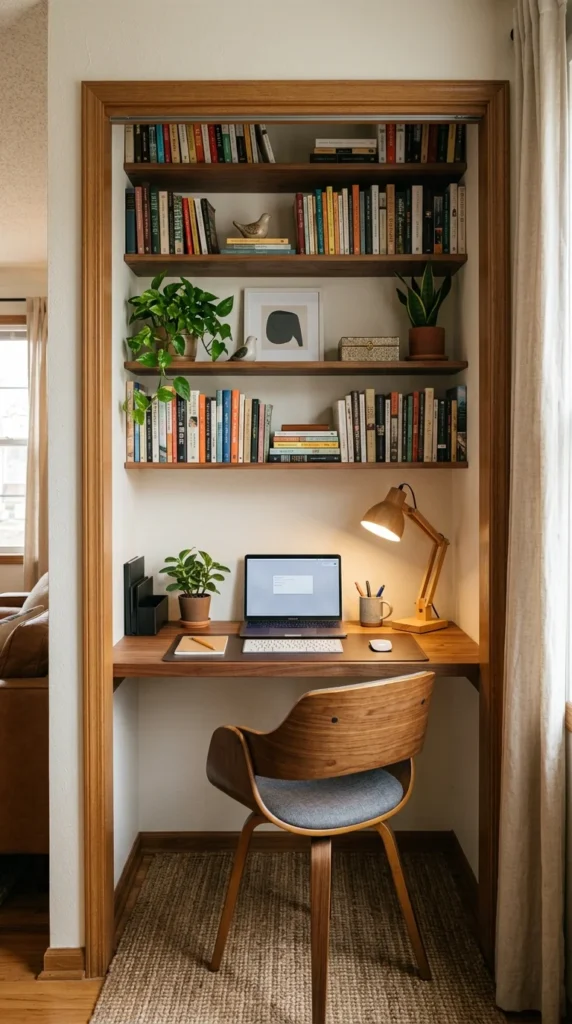
The “cloffice” (closet-office) is a classic small-space hack. By removing the doors of a standard reach-in closet, you can fit a desk and shelving inside. This creates a distinct “zone” for work that doesn’t bleed into your living space. If you prefer to hide your work at the end of the day, you can replace the doors with a sleek curtain or keep the original bifold doors to literally “close shop” when your shift ends.
3. Ladder Desk
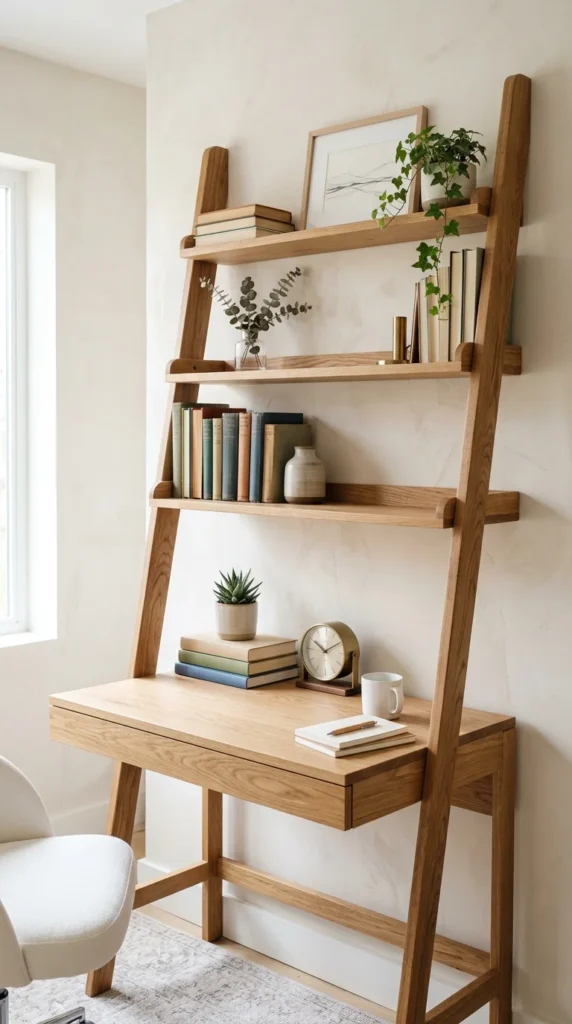
Ladder desks utilize vertical real estate beautifully. These units lean against the wall or stand tall with a very small footprint. The desktop is usually wide enough for a laptop, while the shelves above provide ample room for books, decor, and office supplies. Because they are open and airy, they don’t overwhelm a small room like a traditional heavy mahogany desk might.
4. Corner Nook

Corners are often wasted space in apartments. A dedicated corner desk or a custom-cut triangular surface can turn a dead zone into a high-productivity hub. Corner desks provide a surprising amount of surface area because they utilize the depth of the corner, allowing you to have your computer in the center and documents on either side.
5. Sofa Console
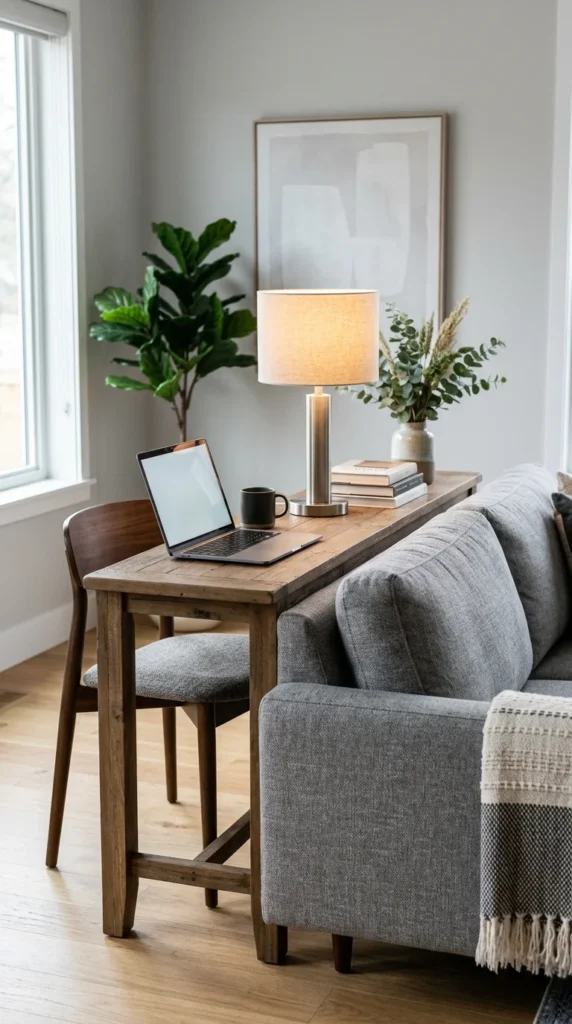
If your living room is narrow but long, try placing a thin console table behind your sofa. This serves as a divider between the “relaxing” zone and the “working” zone. When you aren’t working, it functions as a decorative sideboard for lamps or plants. When it’s time to log on, it’s a perfectly functional desk that keeps you facing the room rather than staring at a wall.
6. Murphy Desk
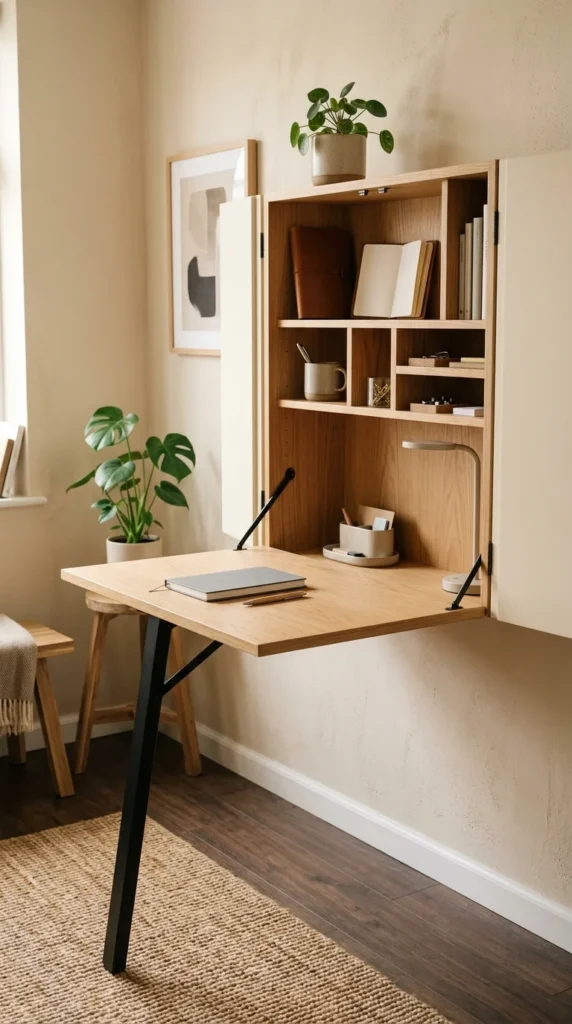
Similar to a Murphy bed, a Murphy desk folds up flat against the wall when not in use. Some models look like a simple cabinet or even a piece of wall art when closed. This is the perfect solution for studio apartments where you want your “bedroom” to feel like a bedroom at night, without a computer screen staring at you while you sleep.
7. Window Sill
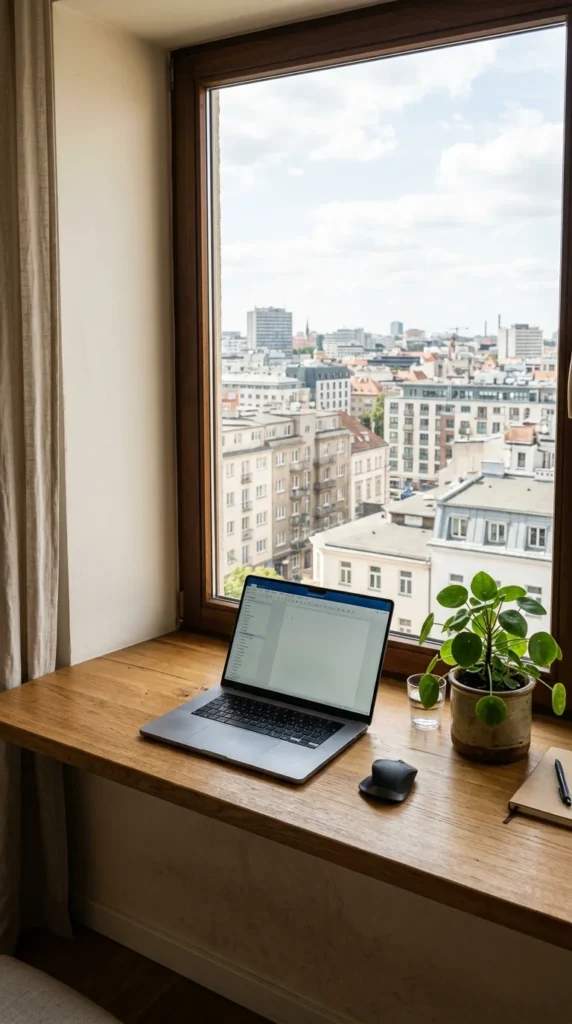
If you are lucky enough to have deep window sills, you already have a built-in desk. If not, you can extend a window sill with a piece of finished wood. Working in front of a window provides natural light and a “view break” for your eyes, which can significantly reduce fatigue. Just ensure you have good blinds to manage glare during peak sun hours.
8. Mobile Cart
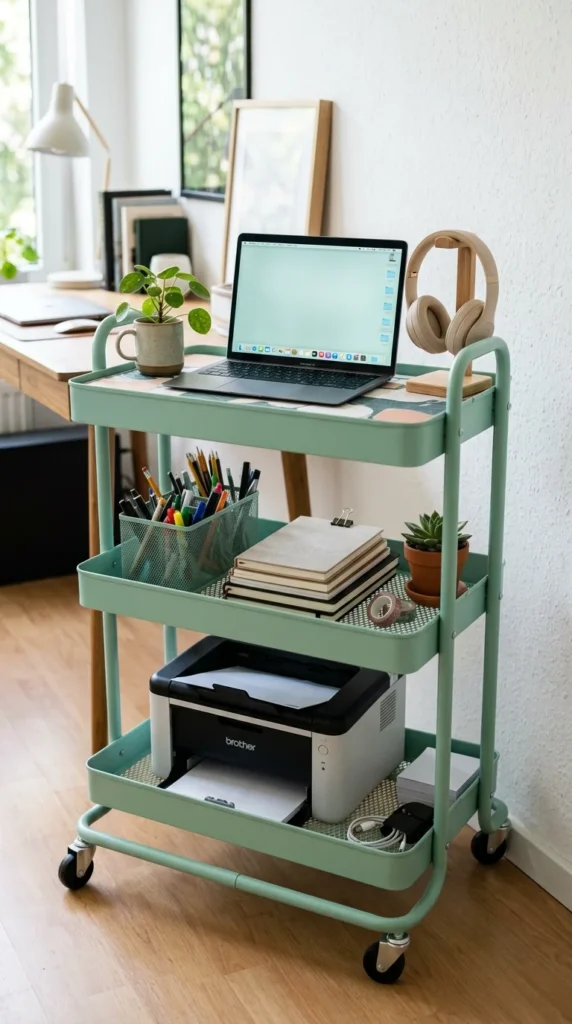
For those who don’t have space for a permanent desk, a mobile “office on wheels” is a game-changer. Use a tiered rolling cart to store all your essentials—laptop, chargers, notebooks, and files. You can wheel it to the dining table during work hours and tuck it into a closet or behind a door when you’re done for the day.
9. Room Divider
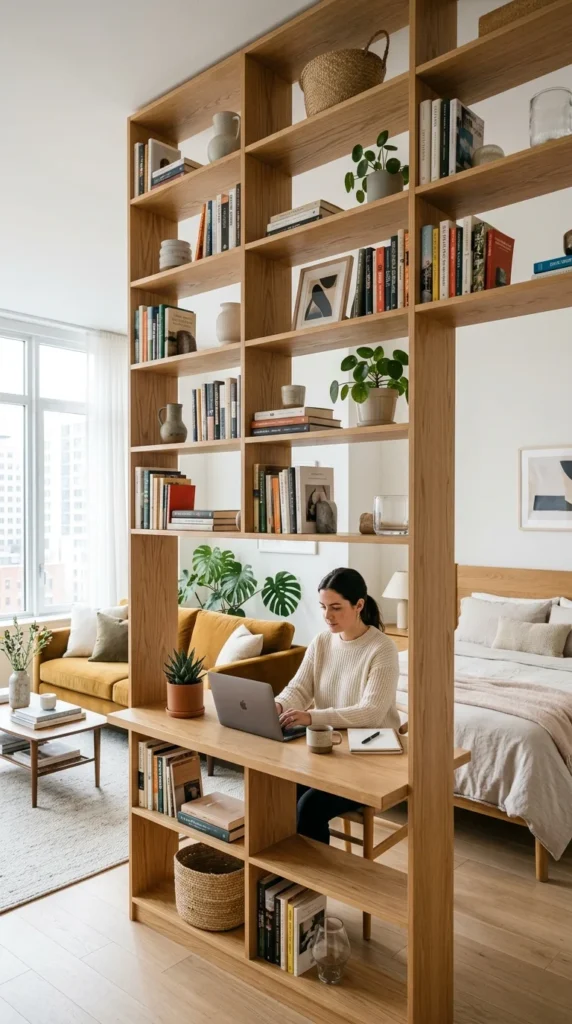
Using a bookshelf as a room divider allows you to create a “cubicle” feel in an open-plan apartment. Choose an open-backed shelving unit to keep light flowing through the space. You can mount a desk surface into one of the middle shelves, creating a workspace that offers both storage and privacy from the rest of the apartment.
10. Kitchen Extension
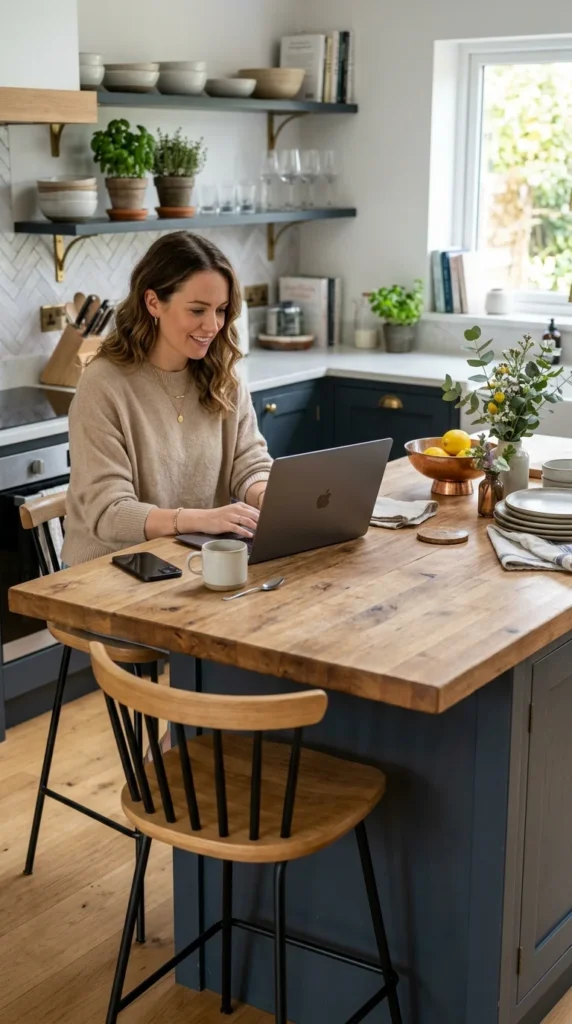
In many modern apartments, the kitchen island is the largest flat surface available. You can claim one end of the island as your “office.” To make this work, use a high-quality seat cushion or an ergonomic bar stool, and ensure you have a dedicated box to quickly clear away your work gear when it’s time for dinner.
11. Fold-Down Table
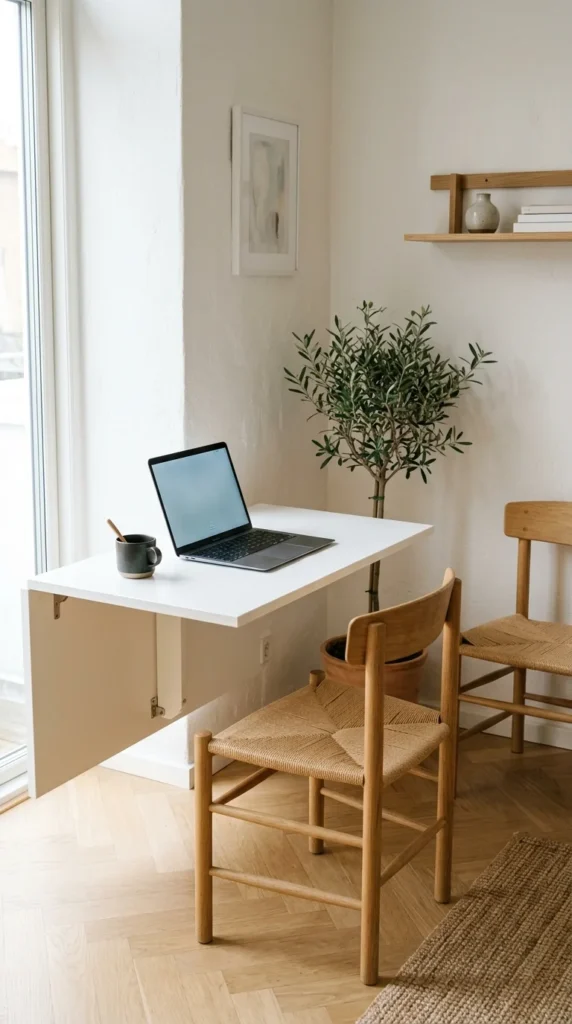
A wall-mounted gateleg or fold-down table is a versatile hero for small spaces. It can serve as a dining table for two and then expand or fold out to become a spacious desk. Because it can be collapsed almost entirely flat against the wall, it’s ideal for high-traffic areas where a permanent desk would block the path.
12. Under-Loft Space
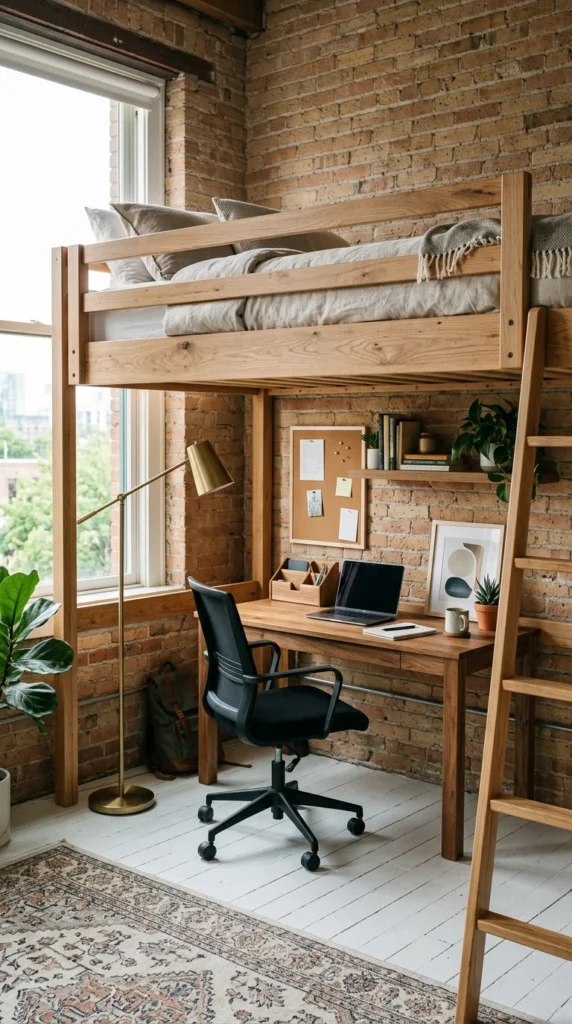
If you have high ceilings, a loft bed is the ultimate way to double your square footage. By elevating your sleeping area, you free up the entire floor space beneath for a large, expansive desk and shelving unit. This creates a clear psychological boundary: “up” is for sleep, “down” is for work.
13. Acrylic Furniture
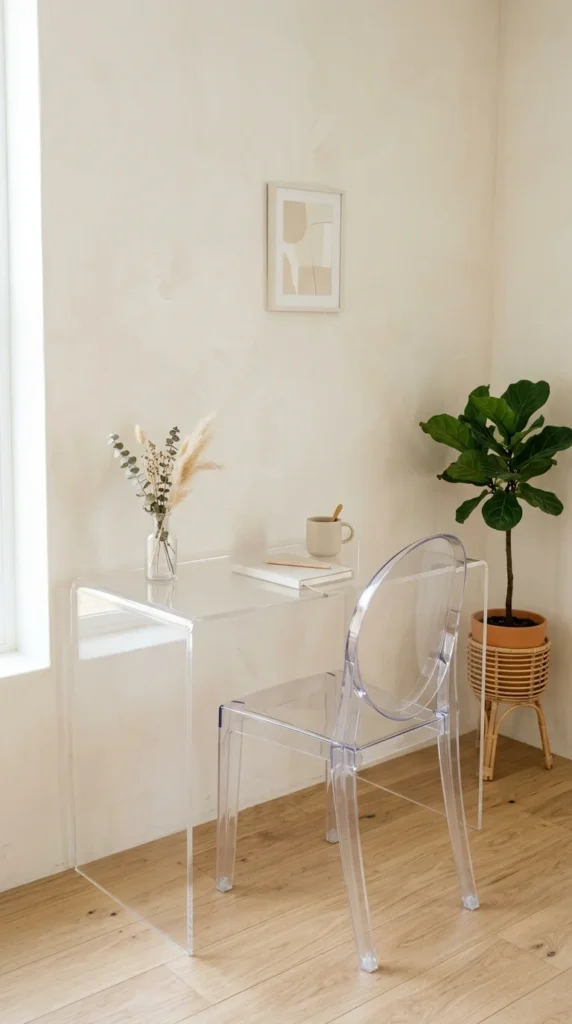
Visual weight matters in small apartments. Thick, dark furniture can make a room feel cramped. Clear acrylic (often called “ghost” furniture) provides all the functionality of a desk and chair without taking up any visual space. It’s a great way to have a full-sized workspace that seems to disappear into the room.
14. Pegboard Organization
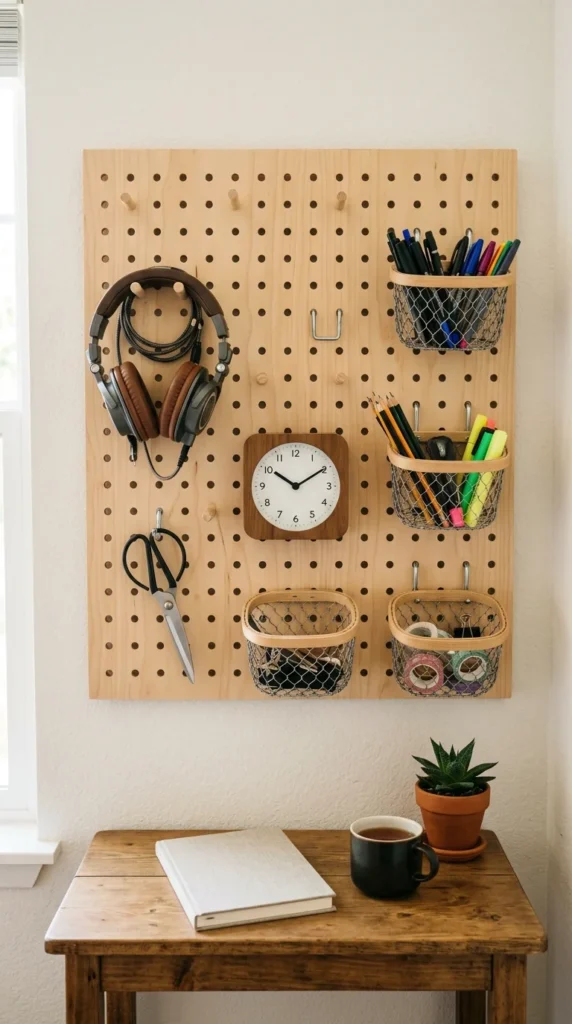
When desk surface area is limited, you must move your storage to the walls. A pegboard is a highly customizable way to keep your tools within reach without cluttering your desktop. You can hang everything from tablets and headphones to stationery and plants, keeping your actual work surface clear for your computer and mouse.
15. Nightstand Desk
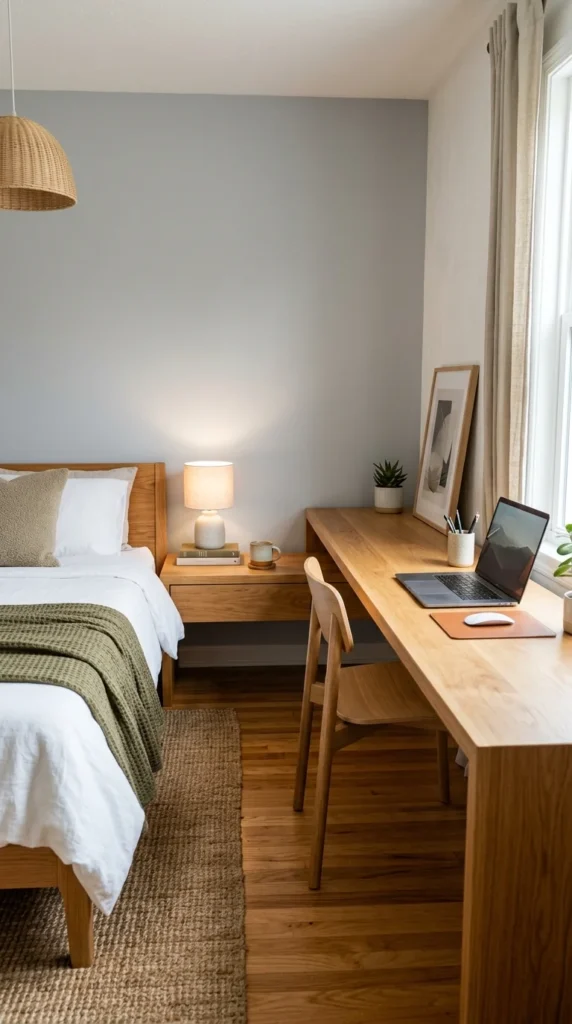
Why have a nightstand and a desk when one piece of furniture can do both? Replace your bedside table with a slim desk that overlaps the side of the bed. You’ll have plenty of room for your phone and a lamp, plus a dedicated area to work. This works especially well in long, narrow bedrooms.
16. Behind-the-Door Office
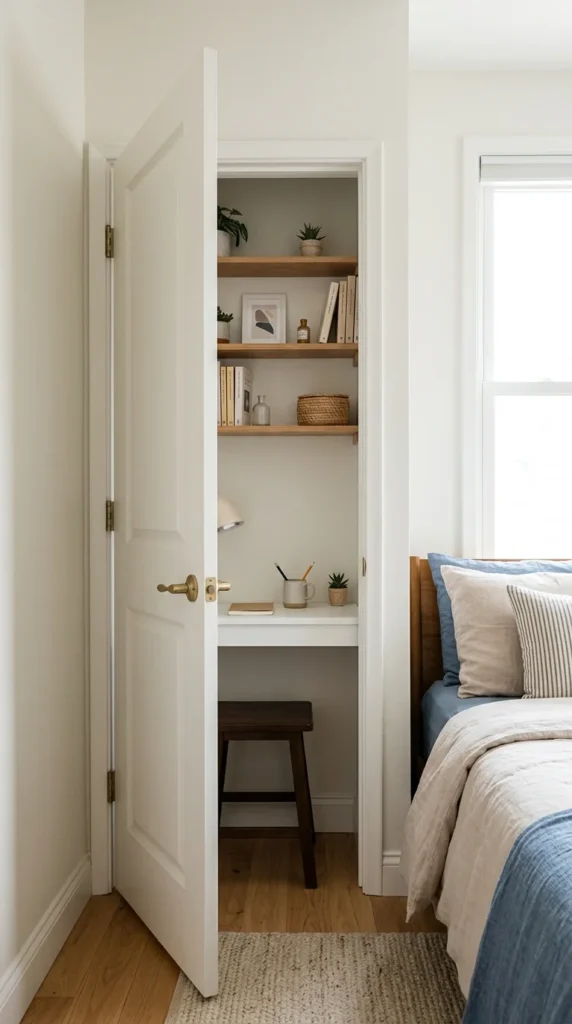
The space behind a door is rarely used. If you have about 10-12 inches of clearance, you can install a shallow ledge or a laptop-specific desk. It’s a “hidden” office that stays out of sight as long as the door is open, making it a clever use of otherwise dead space.
17. Bookshelf Integration
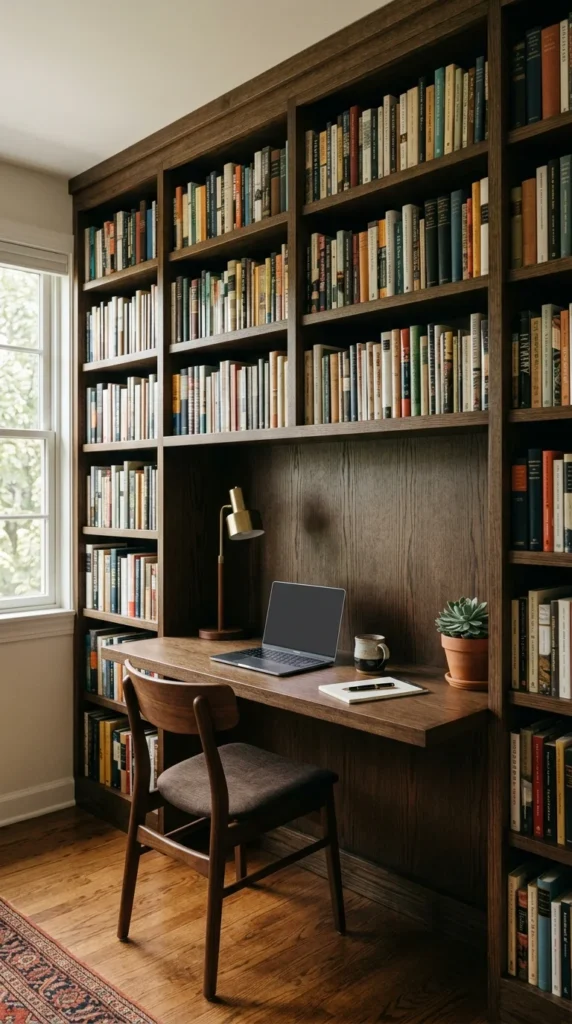
If you already have a wall of books, consider modifying one of the shelves to be deeper and set at a comfortable typing height. This integrates your workspace into your existing decor. Surround yourself with your favorite books for an inspiring, academic vibe that feels cozy rather than clinical.
18. Secret Armoire
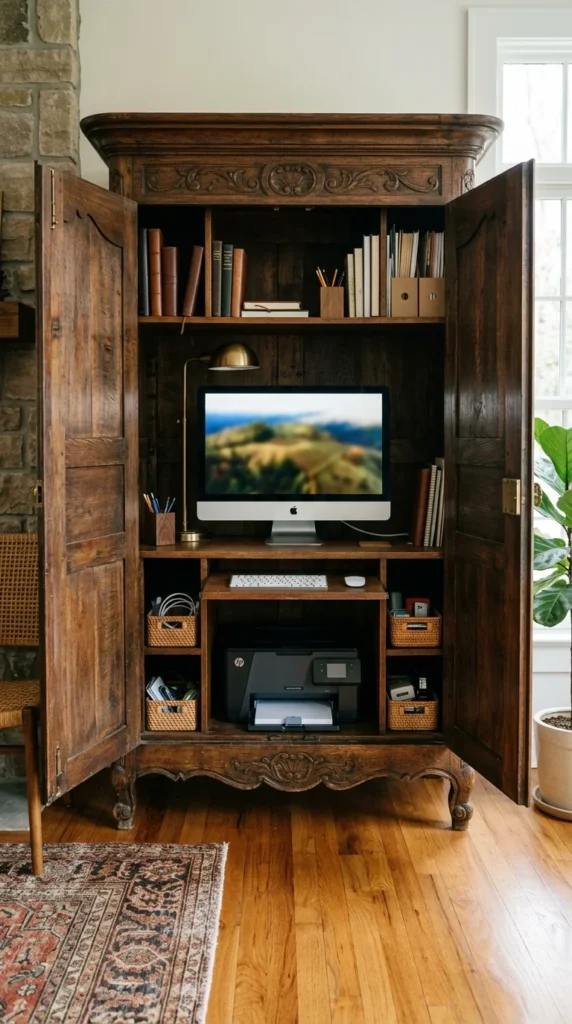
For those who love a vintage aesthetic, a modified armoire or “computer cabinet” is perfect. You can house a full desktop setup inside, and when the workday is over, you simply close the doors to hide the technology. This is particularly effective in traditional or eclectic apartments where modern tech might clash with the decor.
19. Hallway Gallery
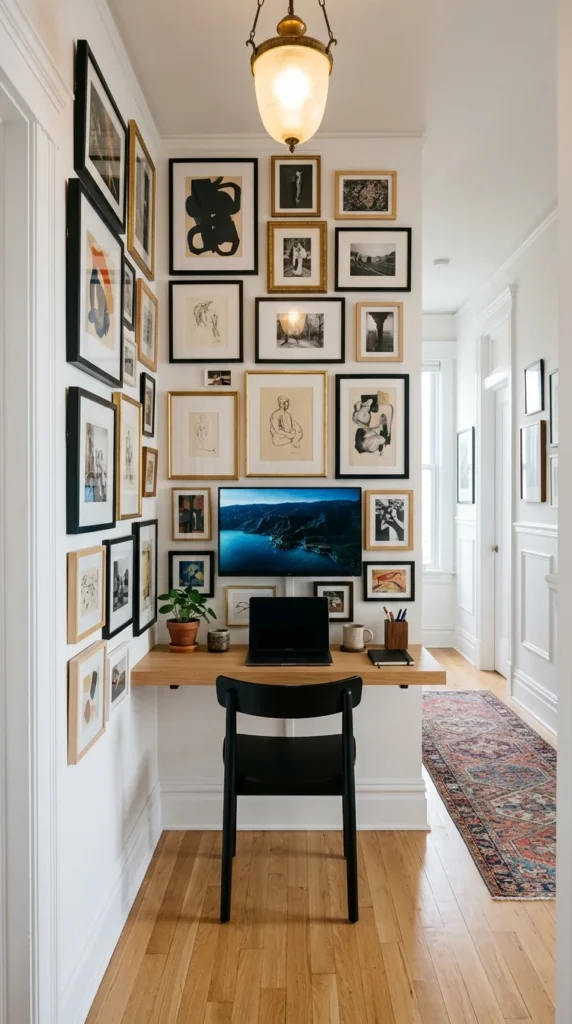
A wide hallway can easily accommodate a slim desk. To prevent it from looking out of place, integrate the workspace into a gallery wall. Frame your monitor with art, photos, and mirrors. This makes the desk feel like a deliberate design choice rather than a cluttered afterthought.
20. Privacy Screen Partition
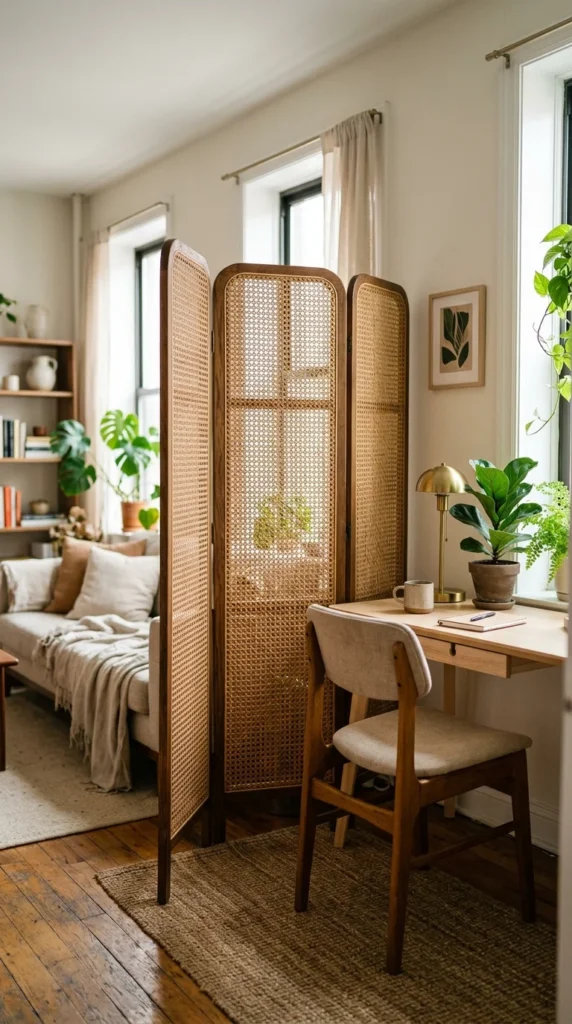
If you need to separate your work life from your home life mentally, a folding screen or room divider is a low-cost, high-impact solution. It provides a visual barrier that helps you focus on the task at hand and blocks the view of your “office” when you’re trying to relax on the couch later.
21. Multi-Purpose Dining Table
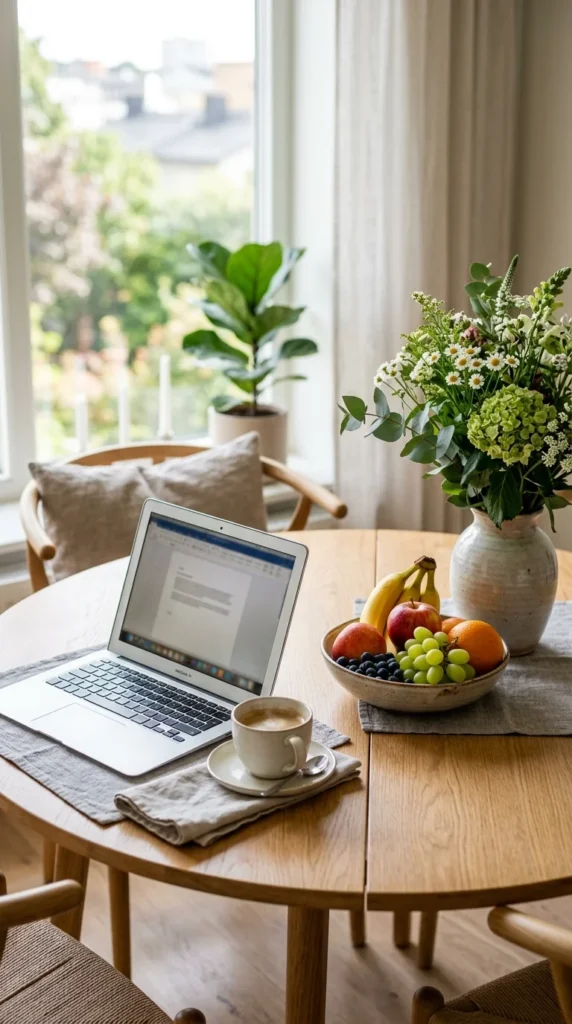
Sometimes the best workspace is the one you already have. If you use your dining table as a desk, the key is “easy transitions.” Use a large desk mat to define your workspace while you’re on the clock. When it’s time to eat, roll up the mat, put your laptop in a drawer, and the space instantly transforms back into a dining area.
22. Narrow Console Desk
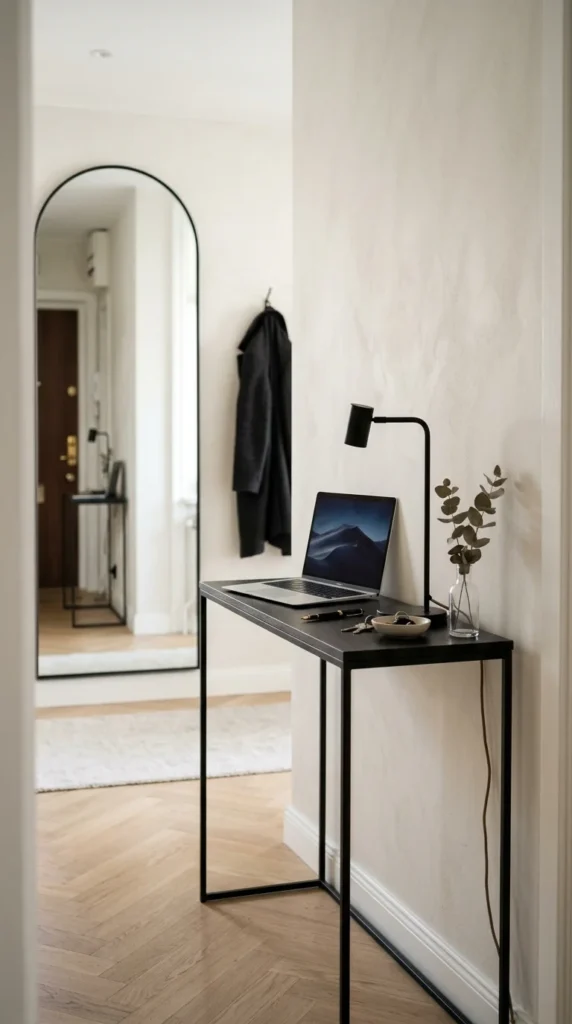
Entryway consoles are usually just for keys and mail, but if you choose one that is slightly deeper (around 15-18 inches), it can serve as a perfectly functional laptop station. This is a great “touchdown” spot for quick tasks or for those who don’t need to sit at a computer for eight hours straight.
23. Balcony “Office”
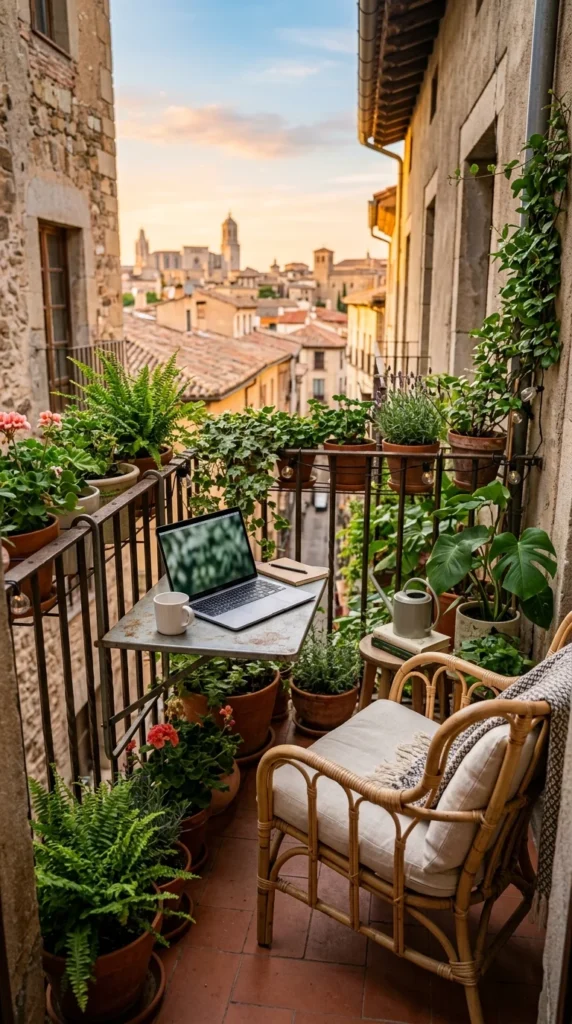
If your apartment has a small balcony or “sunroom,” consider making it your primary workspace during the warmer months. Fresh air and natural light are proven productivity boosters. Use weather-resistant furniture and a portable power bank to keep your devices charged while you work alfresco.