
Living in a small apartment doesn’t mean you have to sacrifice your interior design dreams or your pet’s comfort. The “pet-parent” lifestyle often conjures images of bulky plastic crates, neon-colored toys scattered across the floor, and oversized scratching posts that clash with your aesthetic. However, with the rise of “pet-friendly minimalism,” it is entirely possible to create a sanctuary that serves both you and your furry companion.
Whether you are navigating a tiny studio or a cozy one-bedroom, the key lies in multi-functional furniture, vertical space utilization, and clever concealment. Here are 20 ingenious ideas to help you maintain a stylish, clutter-free home while giving your pet the royal treatment they deserve.
1. Built-in Crates
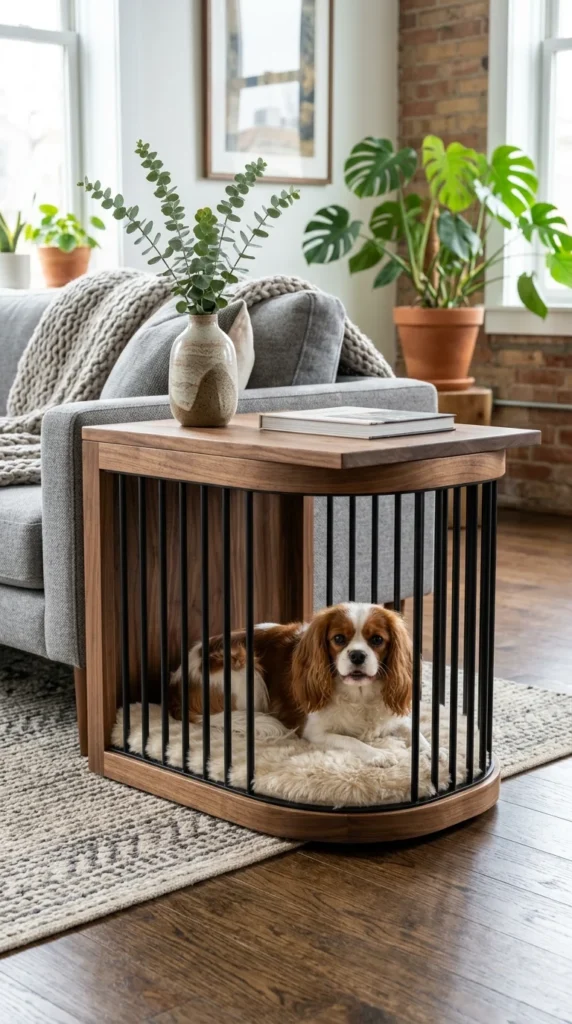
Traditional wire crates are eyesores and consume valuable floor space. Instead, opt for “funiture-style” crates. Many designers now offer end tables, nightstands, or even entryway benches that double as a secure dog den. By integrating the crate into your existing furniture layout, you eliminate the need for an extra bulky item while providing your dog with a cozy, den-like atmosphere that feels integrated into the home.
2. Vertical Shelves
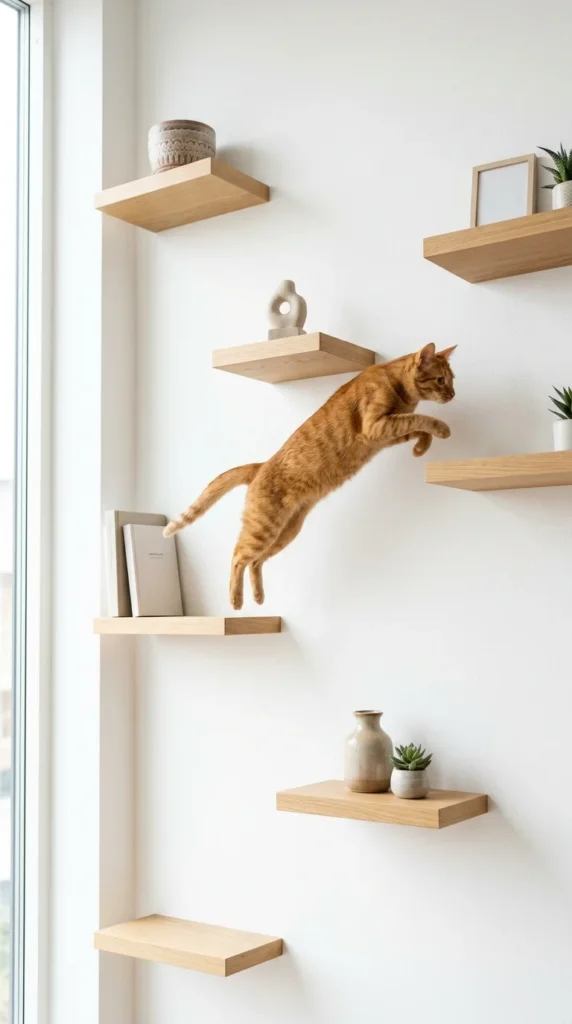
When floor space is limited, look to the walls. Cats naturally crave high vantage points to feel safe and observe their territory. Instead of a massive carpeted cat tree, install a series of sleek, floating shelves. You can arrange them in a staircase pattern, leading to a high perch near the ceiling. This provides your feline friend with exercise and a “superhighway” across the room without taking up a single square inch of walking space.
3. Hidden Litter
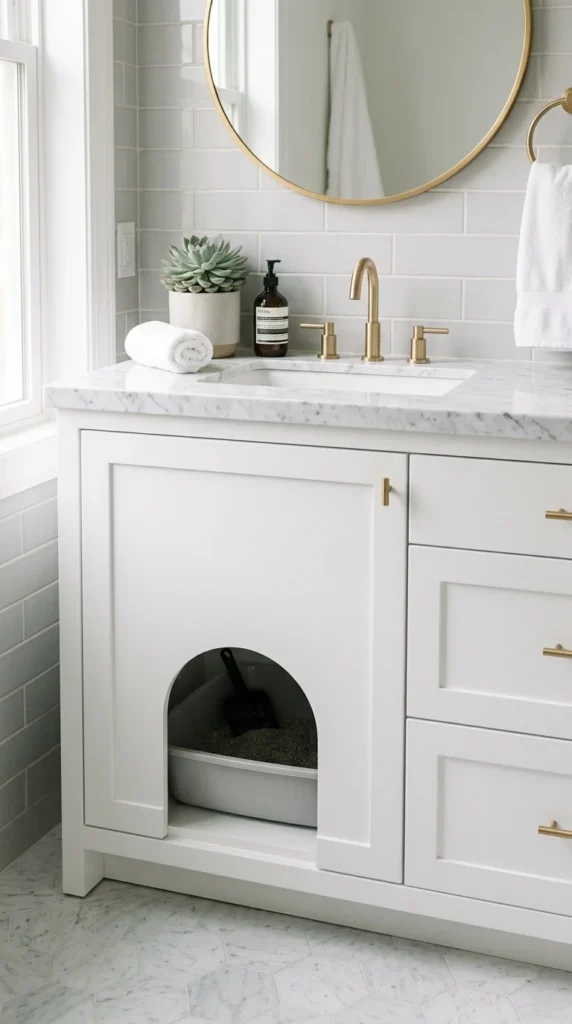
The litter box is perhaps the biggest design challenge for cat owners. The solution is concealment within existing cabinetry. You can modify a bathroom vanity or a hallway cabinet by adding a small pet door or cutout. Inside, the litter box stays out of sight, and the cabinet helps contain odors and tracked litter. It’s a seamless way to hide a necessity while keeping it accessible for your cat.
4. Murphy Beds
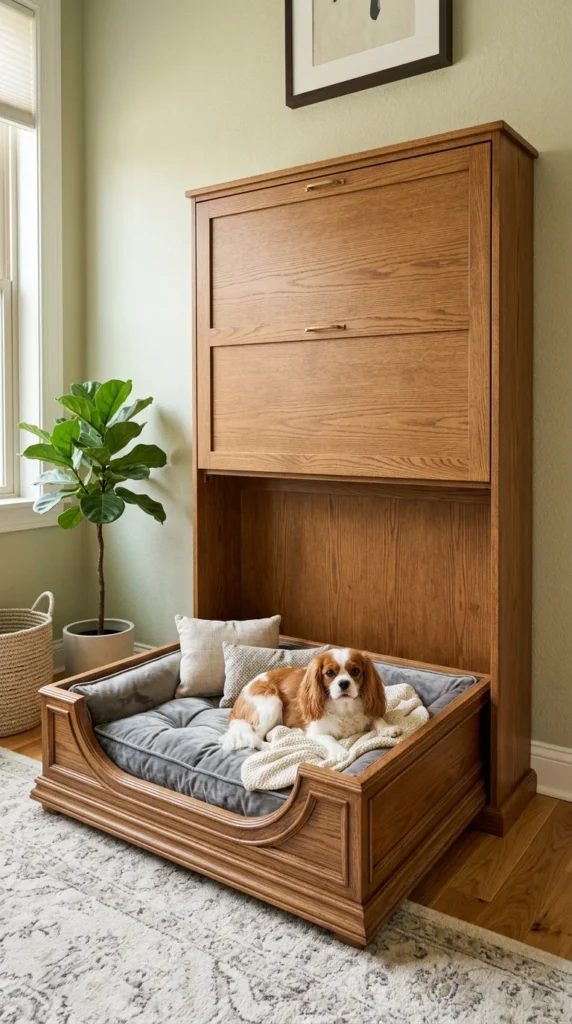
Just like the human version, a Murphy dog bed is a game-changer for tight quarters. During the day, the bed folds up into a slim wall cabinet or a decorative wooden panel, looking like a piece of high-end millwork. At night, you simply pull it down to provide a luxurious sleeping spot. This is especially useful in studio apartments where the floor needs to remain clear for movement during the day.
5. Feeding Stations
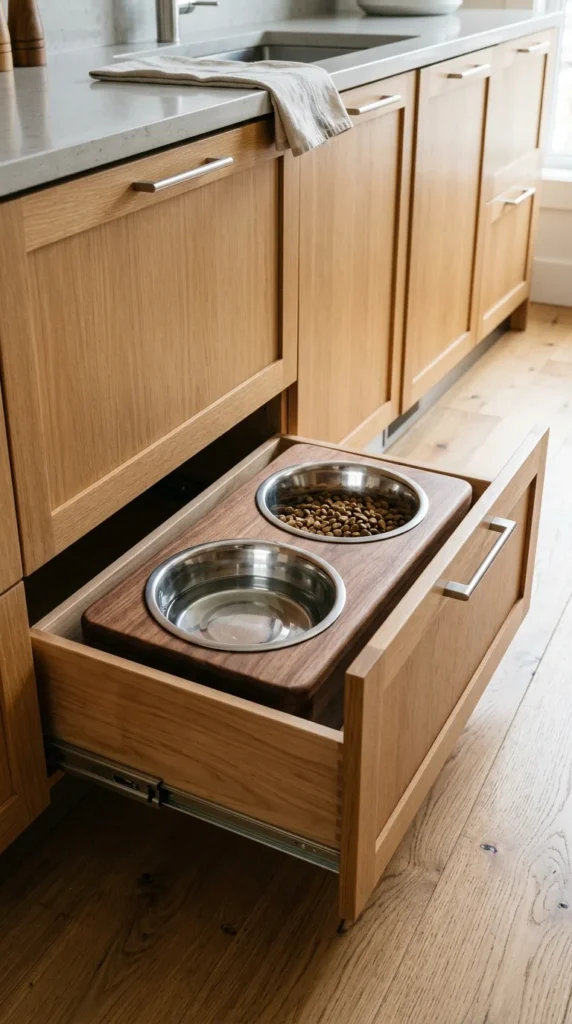
Tripping over water bowls in a narrow kitchen is a common struggle. Integrated feeding stations—often built into the “toe-kick” or bottom drawer of kitchen cabinetry—allow you to tuck the bowls away when mealtime is over. This keeps the floor clear and prevents the “messy eater” splash zone from becoming a permanent fixture in your kitchen walkway.
6. Window Perches
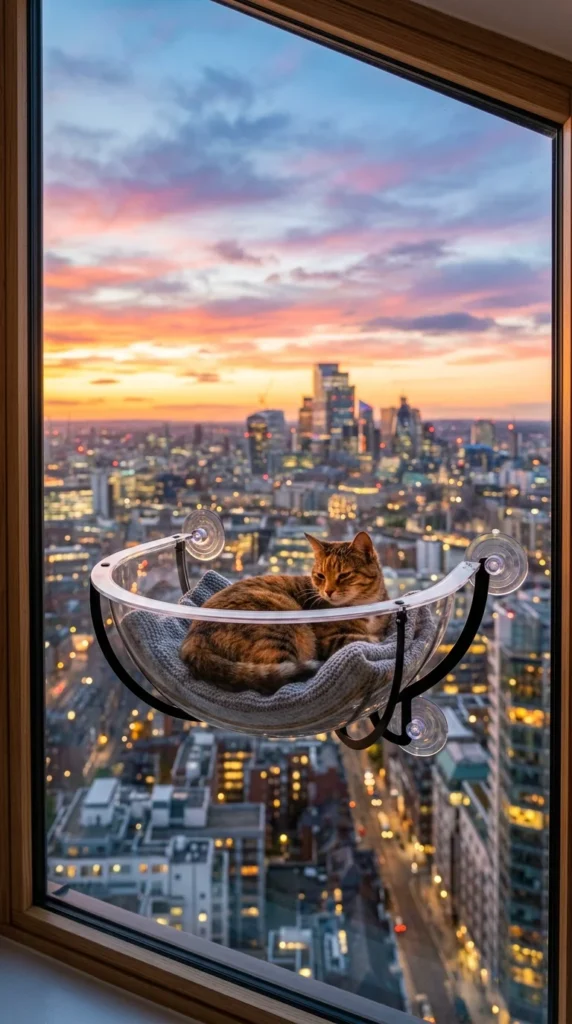
For pets, a window is better than a television. In a small apartment, you might not have room for a chair by every window. A suction-cup or sill-mounted window perch provides a “room with a view” for cats or small dogs. Choosing a clear acrylic model keeps the visual profile low, ensuring the perch doesn’t block the natural light entering your home.
7. Storage Ottomans
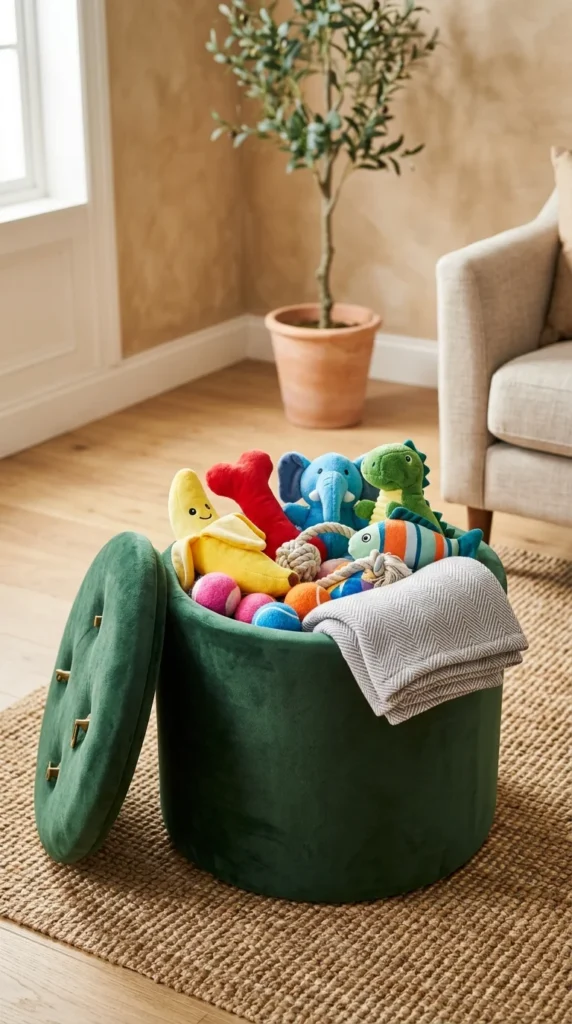
Clutter is the enemy of a small space. Pet toys, leashes, and grooming tools can quickly take over. Use a stylish storage ottoman as your coffee table or extra seating. Inside, you can hide all the “pet chaos.” It’s an easy way to perform a two-minute “sweep” of the room before guests arrive, tucking everything into a piece of furniture that actually adds to your decor.
8. Acrylic Gates
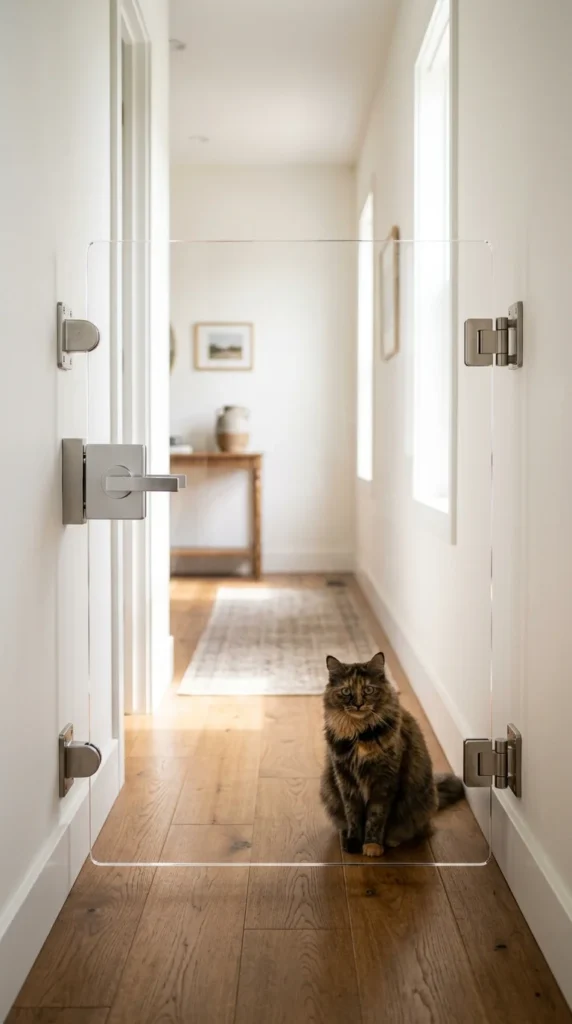
Traditional wooden or metal baby gates can feel heavy and intrusive, making a small apartment feel even smaller by visually “chopping up” the space. Clear acrylic gates provide the necessary boundary for your pet while maintaining an open line of sight. Because they are transparent, the room feels larger and more cohesive, and the gate itself becomes a nearly invisible architectural detail.
9. Scratching Decor
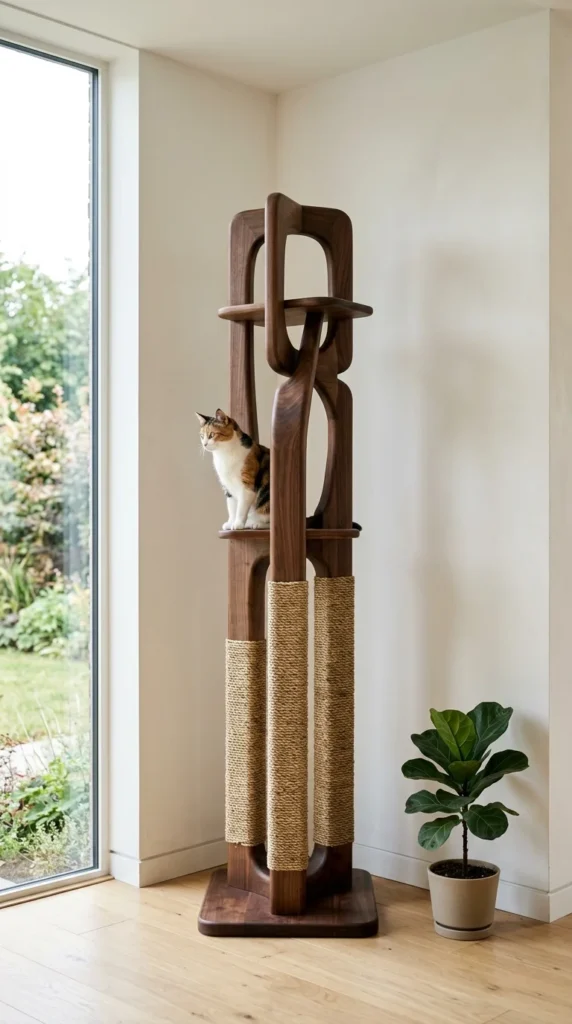
Standard carpet-covered scratching posts often look tattered and cheap. Swap them for “sculptural” scratching posts made of sisal, seagrass, or wood. Some designs resemble pieces of modern art or organic towers. By choosing a post that matches your color palette and material preferences, you turn a functional necessity into a focal point rather than something you want to hide in a corner.
10. Corner Beds
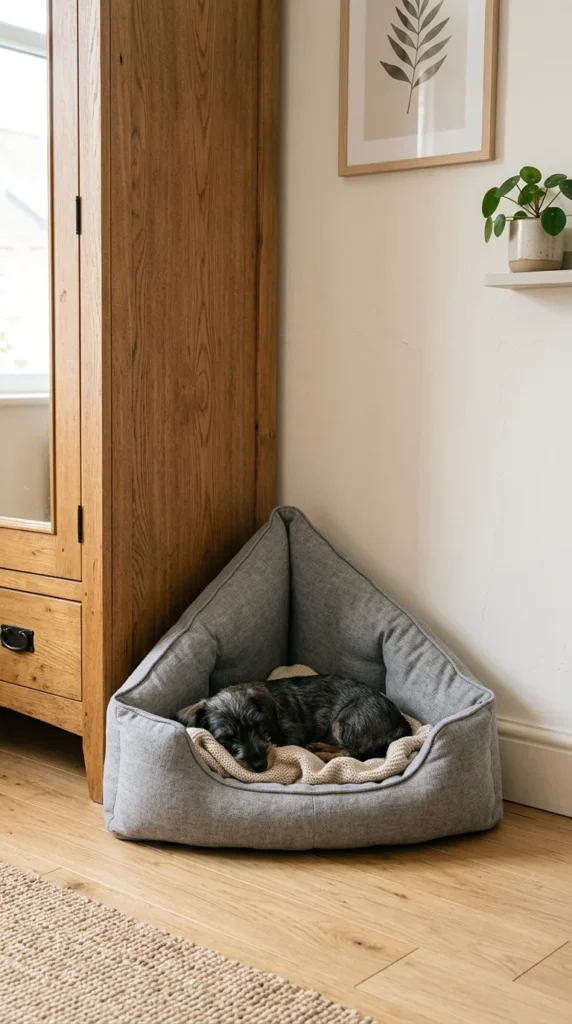
Corners are often underutilized in small layouts. Most pet beds are round or rectangular, leaving awkward gaps when pushed against a wall. A corner-shaped pet bed fits snugly into 90-degree angles, reclaiming that “dead space” and keeping the center of the room open. This is a simple but effective spatial hack for cramped bedrooms or living areas.
11. Over-the-Door Organizers
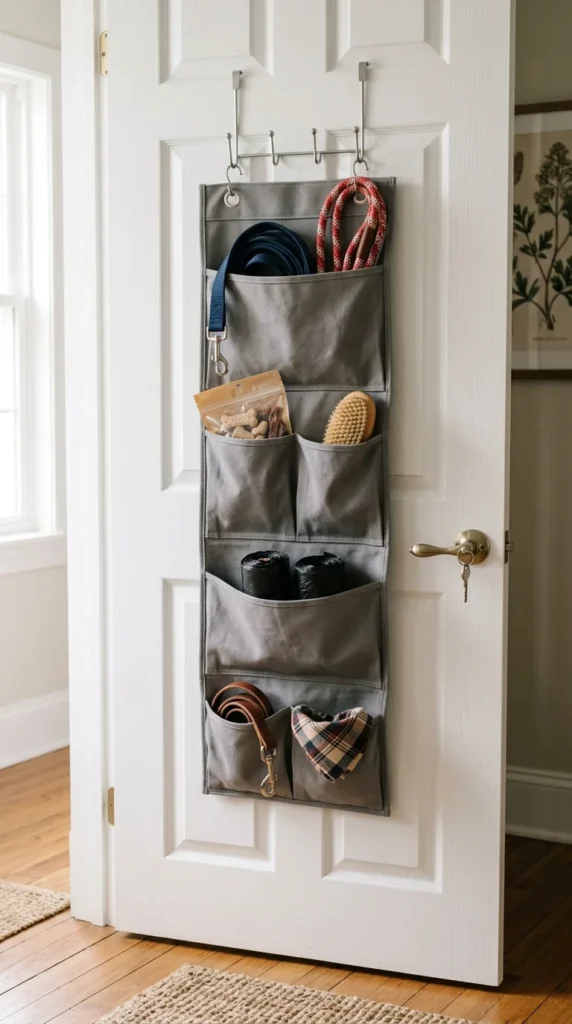
Don’t let your entryway become a dumping ground for pet gear. An over-the-door organizer provides a vertical home for leashes, harnesses, poop bags, and treats. By utilizing the back of a closet or front door, you free up drawer space and keep your essential walking gear organized and within reach, preventing that frantic “where is the leash?” search.
12. Nook Conversion
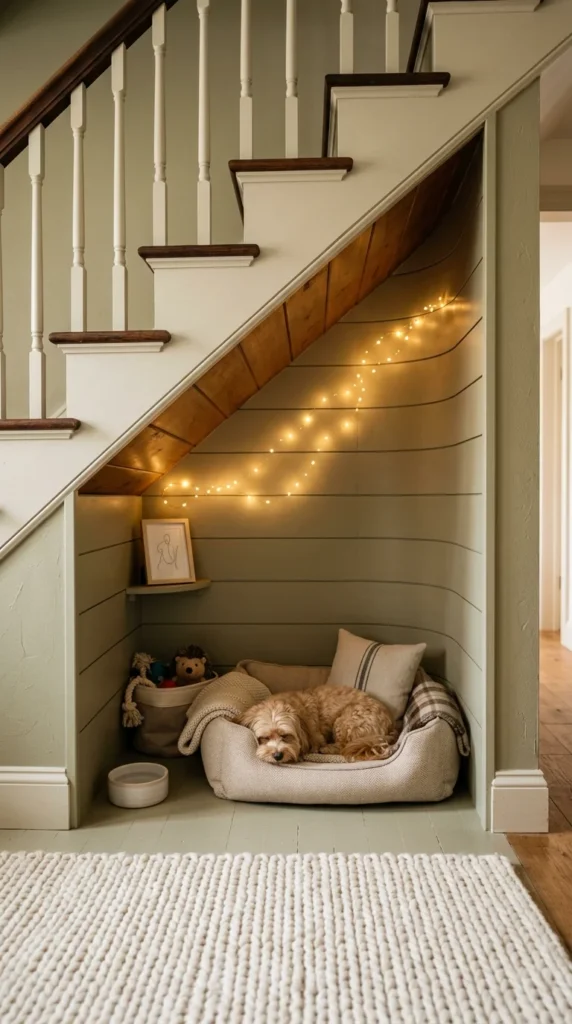
If your apartment has an awkward architectural nook, a small closet with the doors removed, or even the space under a desk, claim it for your pet. Transforming these “odd spaces” into a dedicated pet zone prevents their gear from spilling out into the main living areas. A bit of paint, a soft rug, and a few hooks can turn a useless corner into a stylish pet suite.
13. Washable Rugs
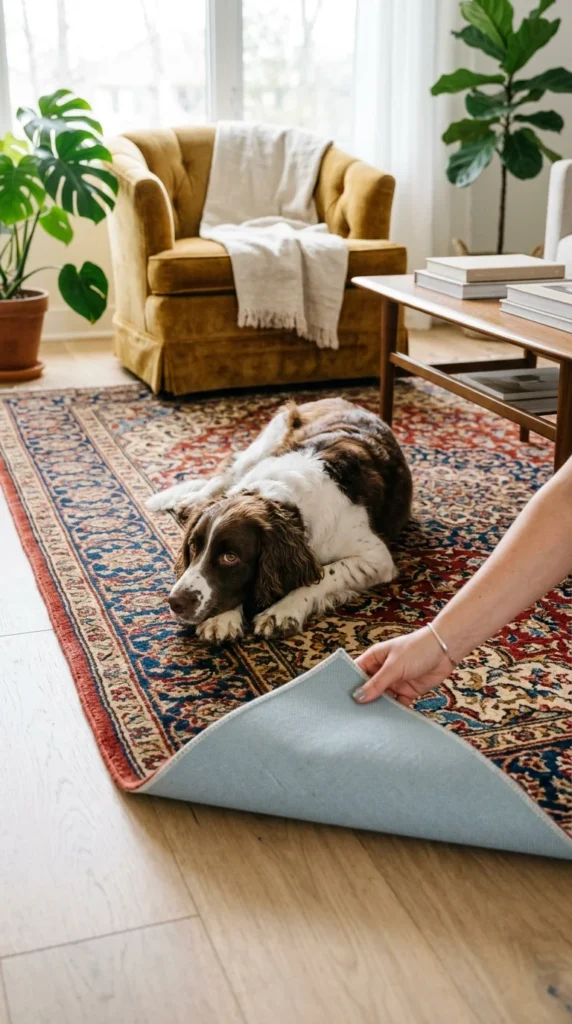
Living with pets usually means dealing with mud, fur, and the occasional accident. In a small space, a stained rug is impossible to ignore. Opt for low-pile, machine-washable rugs. Many modern brands offer stunning designs—from bohemian to traditional—that can be tossed in a standard washing machine. This allows you to have the high-end look of a luxury rug without the constant stress of pet damage.
14. Toy Baskets
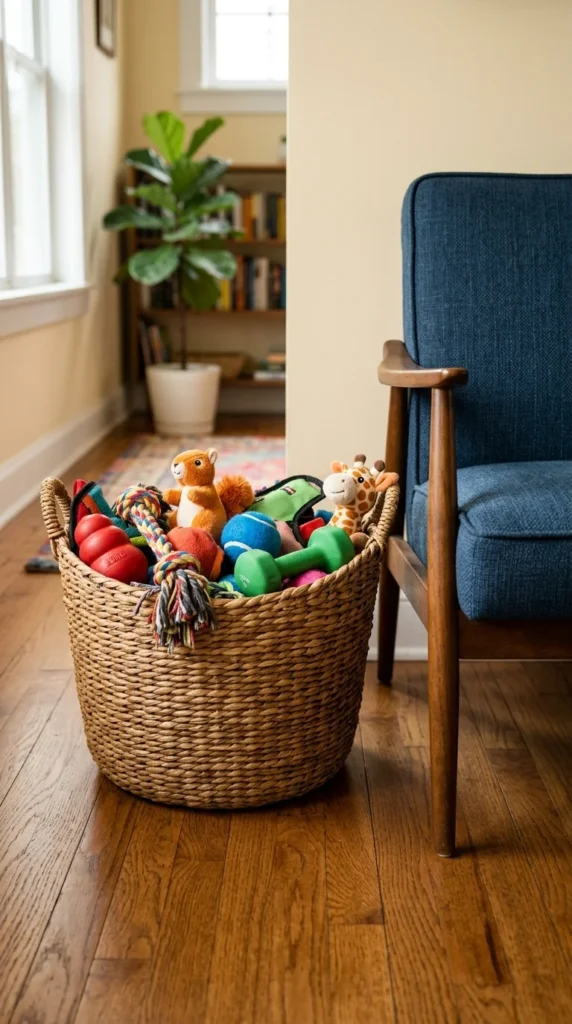
Instead of a plastic bin, use aesthetic baskets made of natural fibers like jute, wicker, or felt to store toys. Choose a basket that complements your furniture. Not only does this look better, but it also makes it easy for your pet to “self-serve” their toys. At the end of the night, a quick toss of the toys back into the basket restores your adult living space in seconds.
15. Safe Plants
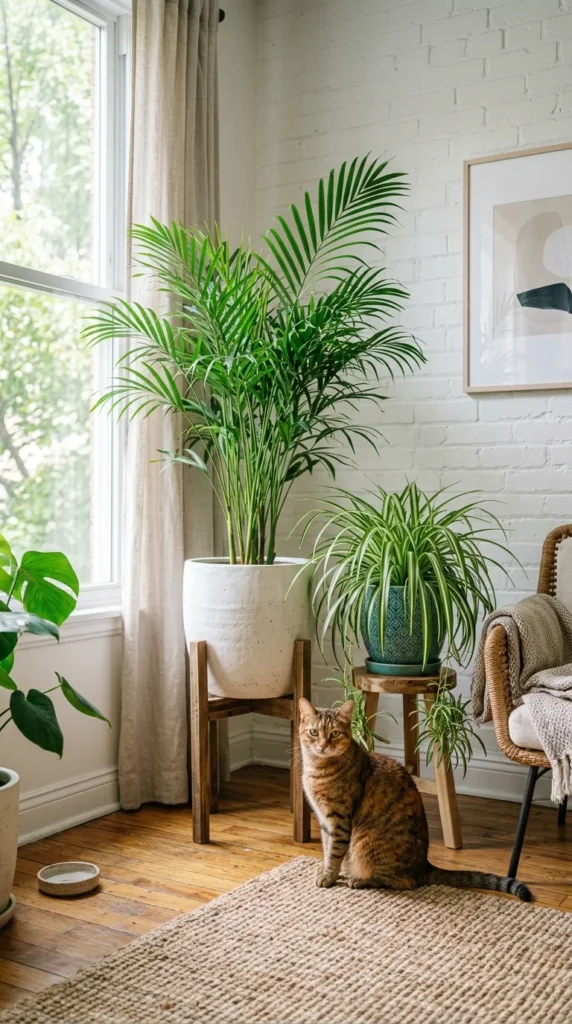
Plants make a small space feel alive and fresh, but many are toxic to pets. To keep your apartment stylish and safe, stick to pet-friendly greenery like Spider Plants, Parlor Palms, or Calatheas. These add a pop of color and improve air quality without posing a risk to your curious cat or dog. Using plant stands also helps elevate the greenery out of reach while adding vertical interest to your decor.
16. Sofa Protectors
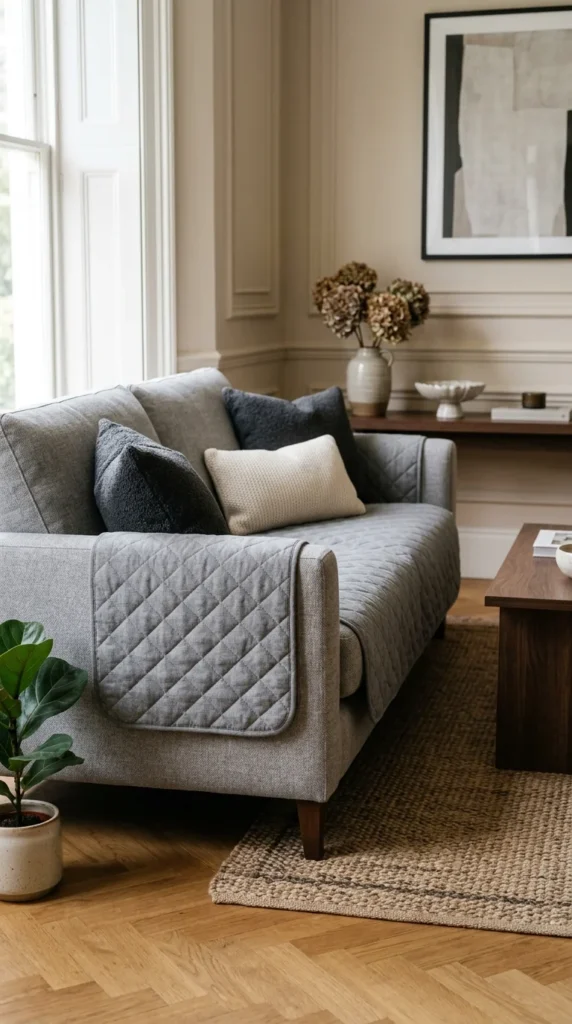
If your pet is a “couch potato,” protecting your upholstery is vital. Rather than using an old bedsheet, look for sophisticated furniture protectors or “pet throws” designed to match your sofa’s fabric and color. Some even come in faux fur or velvet textures that look like intentional decor accents while shielding your expensive furniture from claws and shedding.
17. Integrated Fountains
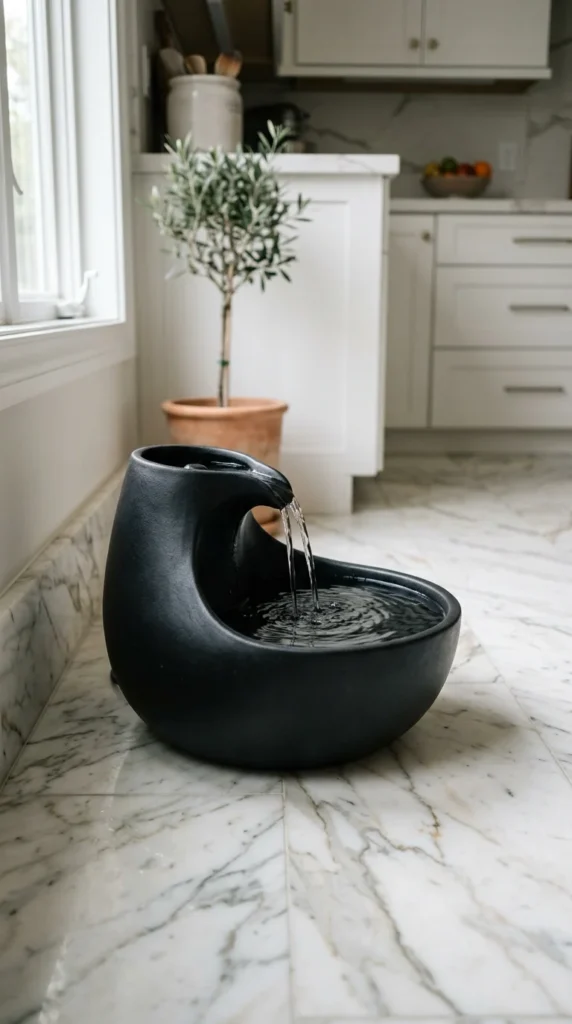
Proper hydration is key, but plastic water bowls can get slimy and look cluttered. A ceramic or stainless steel water fountain provides filtered, flowing water for your pet and looks like a piece of minimalist decor. The quiet hum and sleek design fit perfectly in a modern kitchen or hallway, providing a cleaner aesthetic and a healthier option for your pet.
18. Pet Steps
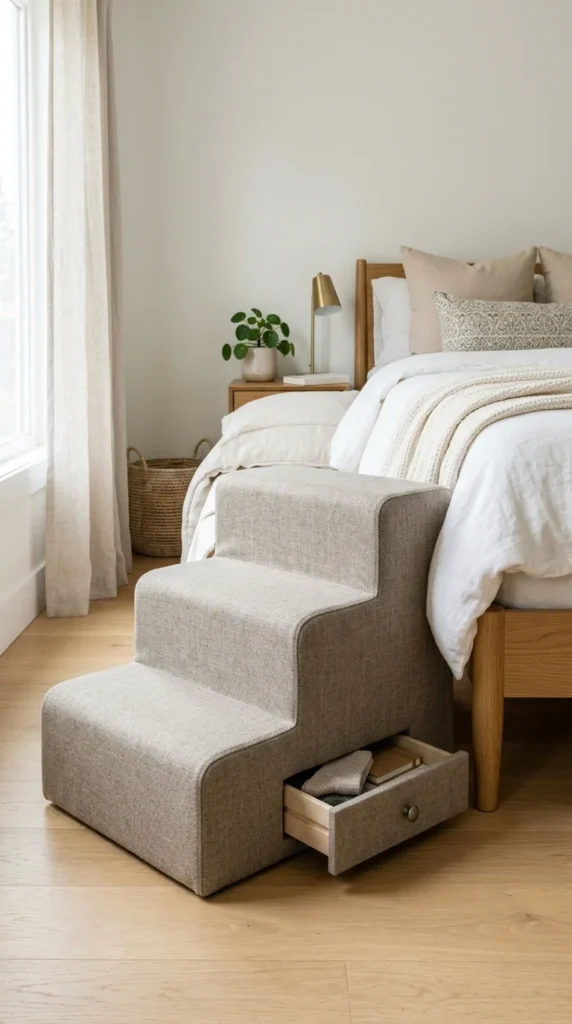
For small or senior dogs who need help getting onto the bed or sofa, steps are a necessity. To save space, look for “storage steps.” These are designed so that each step is actually a lid for a storage compartment. You can store extra blankets, seasonal pet clothes, or toys inside the very steps used to help your pet reach their favorite nap spot.
19. Sliding Doors
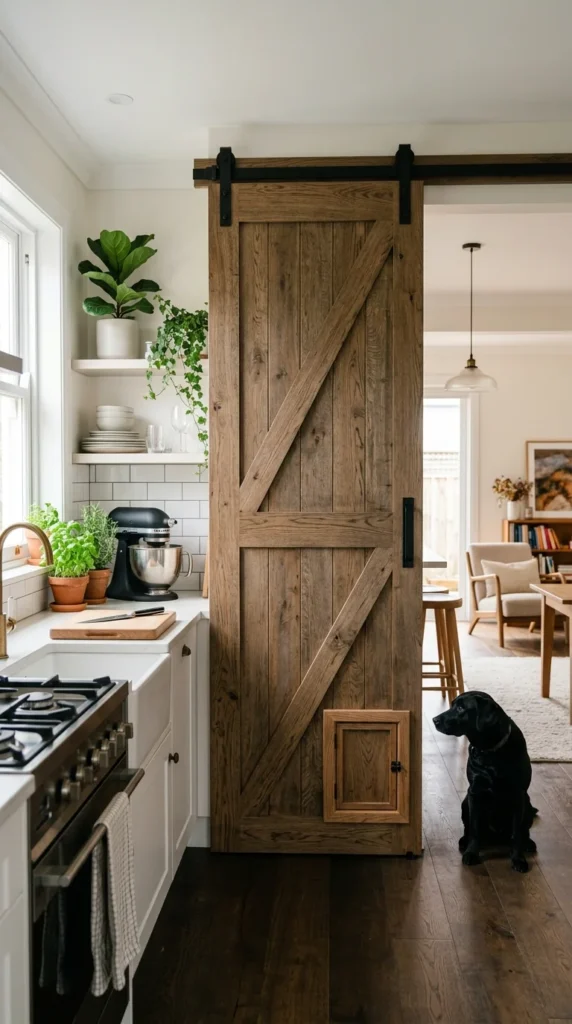
If you need to section off parts of your apartment (like the kitchen or a home office), swinging gates can be clunky. A sliding barn door is a space-saving alternative that adds a rustic or modern architectural element. Some custom barn doors even include a built-in “doggie door” at the bottom, allowing you to close the large door while still letting your pet move freely between rooms.
20. Modular Playpens
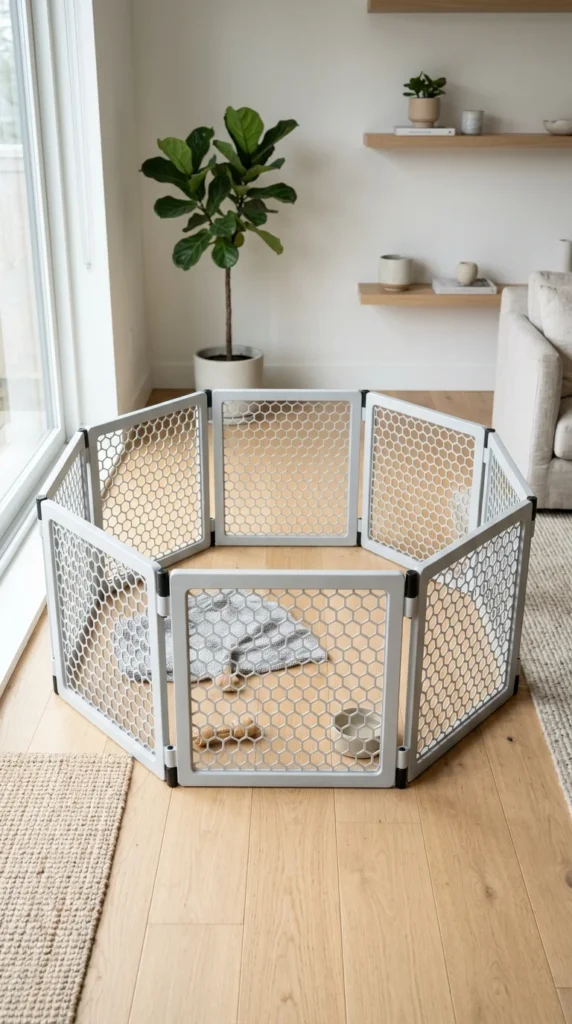
Sometimes you need to contain your pet, but a permanent fence is too much. Modular playpens consist of panels that can be configured into various shapes to fit your specific floor plan. When not in use, these panels fold flat and can be tucked under a bed or behind a sofa. Choosing a model in a neutral color or clear material ensures that even when it is set up, it doesn’t overwhelm your small apartment’s visual space.