
When dealing with a small bedroom, every design choice carries significant weight. You want to create a cozy sanctuary without feeling claustrophobic. One of the most overlooked tools in your interior design arsenal is the humble curtain. Window treatments do far more than just provide privacy; they manipulate light, draw the eye upward, and can visually expand the square footage of a room. By choosing the right fabrics, colors, and hanging techniques, you can transform a cramped space into an airy retreat.
Here are 24 curtain ideas specifically curated to make your small bedroom feel significantly larger.
1. High Hanging
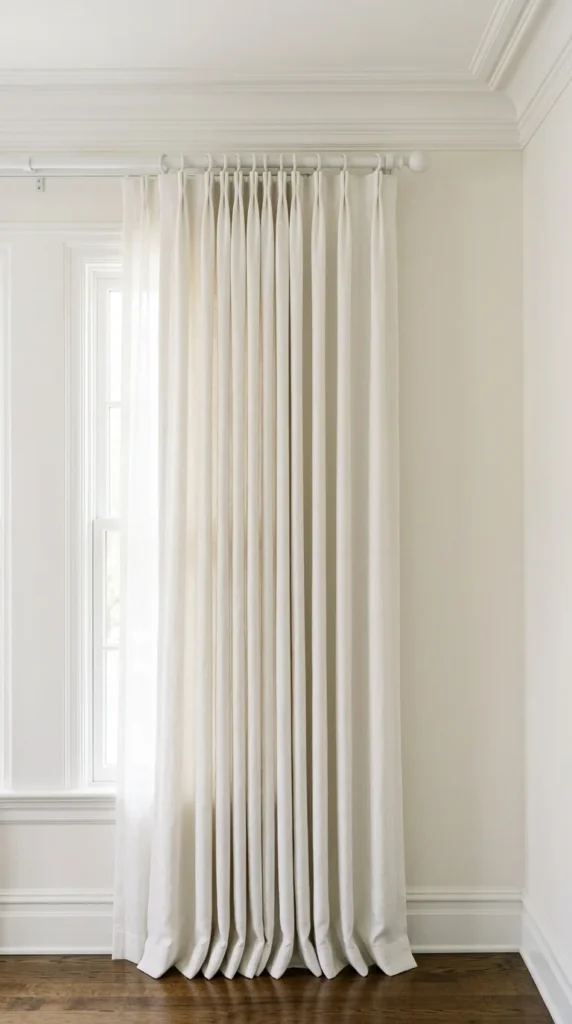
The oldest trick in the book is often the most effective. By installing your curtain rod as close to the ceiling as possible—rather than right above the window frame—you trick the eye into thinking the walls are taller. This vertical stretch pulls the gaze upward, making the ceiling feel elevated and the entire room feel more cavernous.
2. Sheer Linens
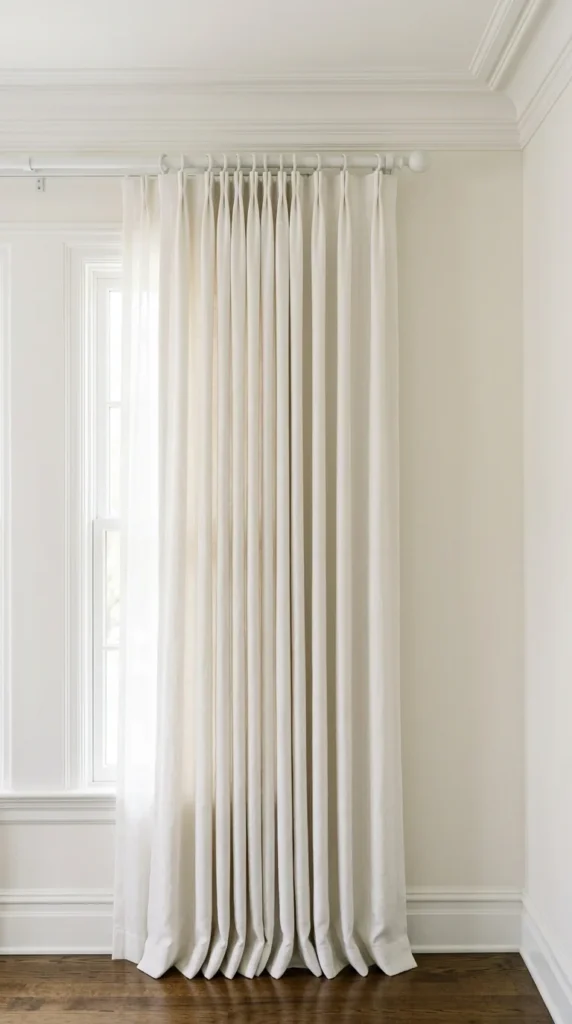
Heavy fabrics can “eat” a room by absorbing light and creating a visual barrier. Sheer linen or voile curtains, on the other hand, allow maximum natural light to penetrate the space. Light is the best friend of a small room; the more of it you have, the more open the space will feel.
3. Wall-to-Wall
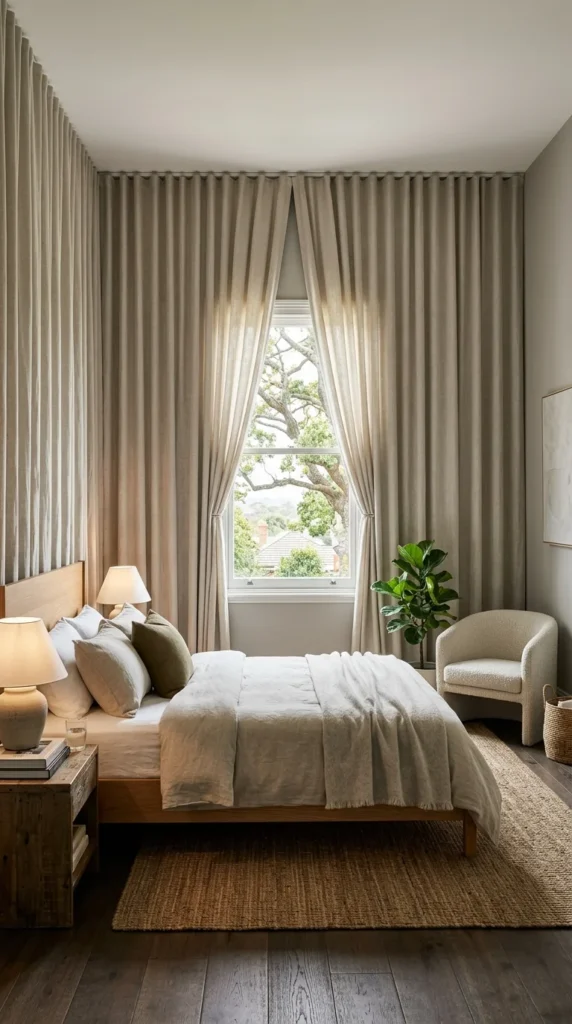
Instead of framing just the window, extend your curtain rod from one side of the wall to the other. This creates a “wall of fabric” effect that blurs the boundaries of where the window ends and the wall begins. It provides a clean, continuous line that makes the room feel wider and more intentional.
4. Monochromatic Matching
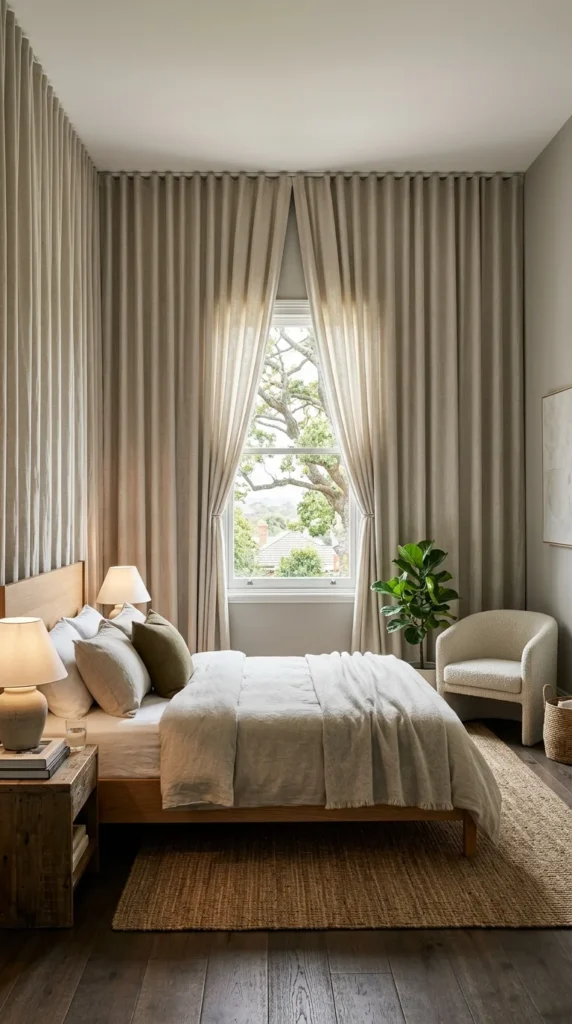
When your curtains match your wall color exactly, they “disappear” into the background. This lack of visual break prevents the room from looking choppy. By reducing the number of contrasting elements, you create a streamlined environment that feels expansive and calm.
5. Floor-to-Ceiling
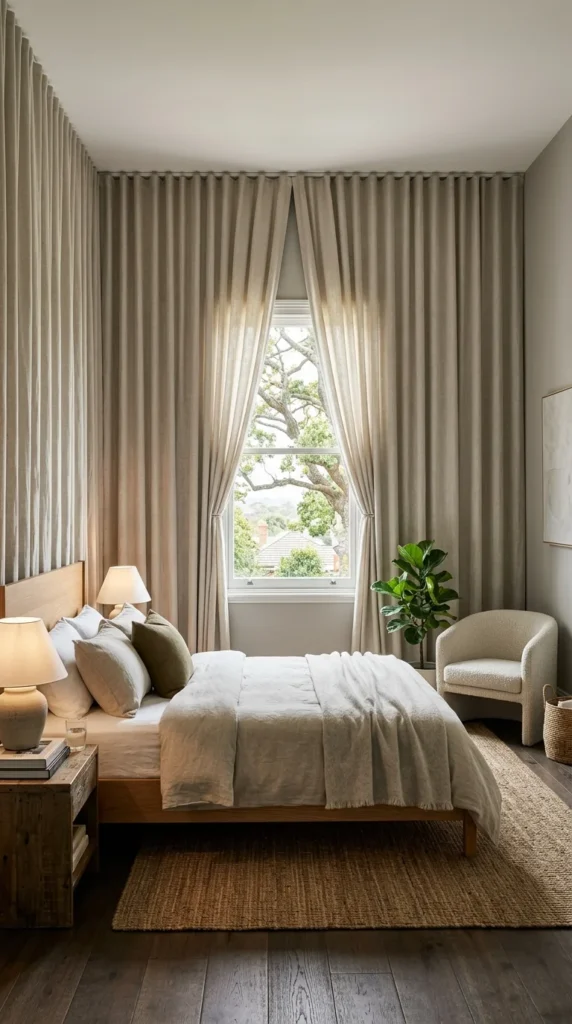
Even if you have a small window, don’t use small curtains. Short curtains (like cafe style or those that end at the sill) can “cut” the wall in half, making the room look squat. Floor-to-ceiling drapes ensure a continuous line of sight that maximizes the perceived volume of the space.
6. Lucite Rods
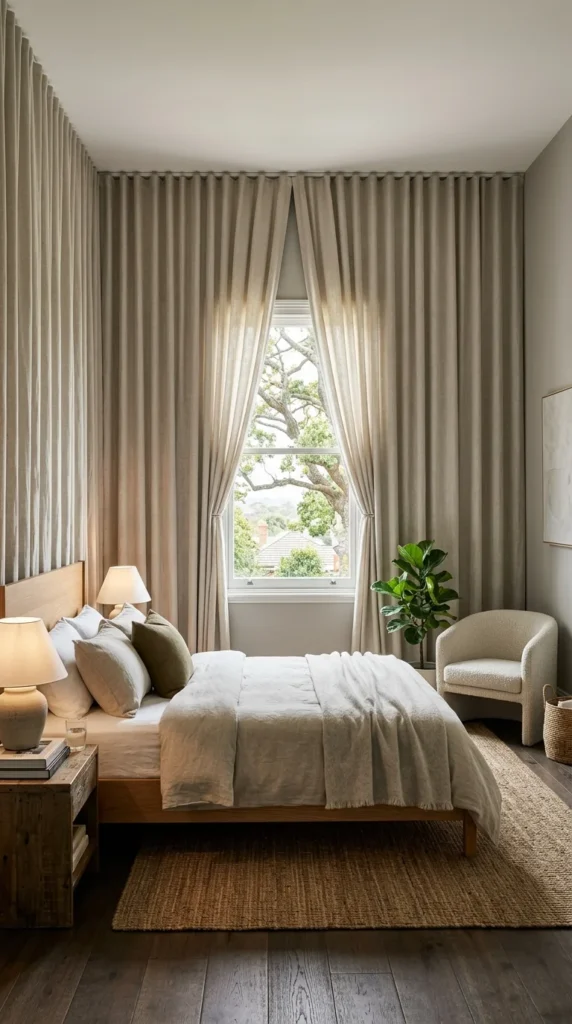
Visual clutter is the enemy of a small room. Heavy, dark, or ornate curtain rods can feel bulky and intrusive. Choosing clear lucite or acrylic rods provides the necessary support without adding any visual “weight.” It’s a chic, modern solution that keeps the upper half of the room feeling light.
7. Vertical Stripes
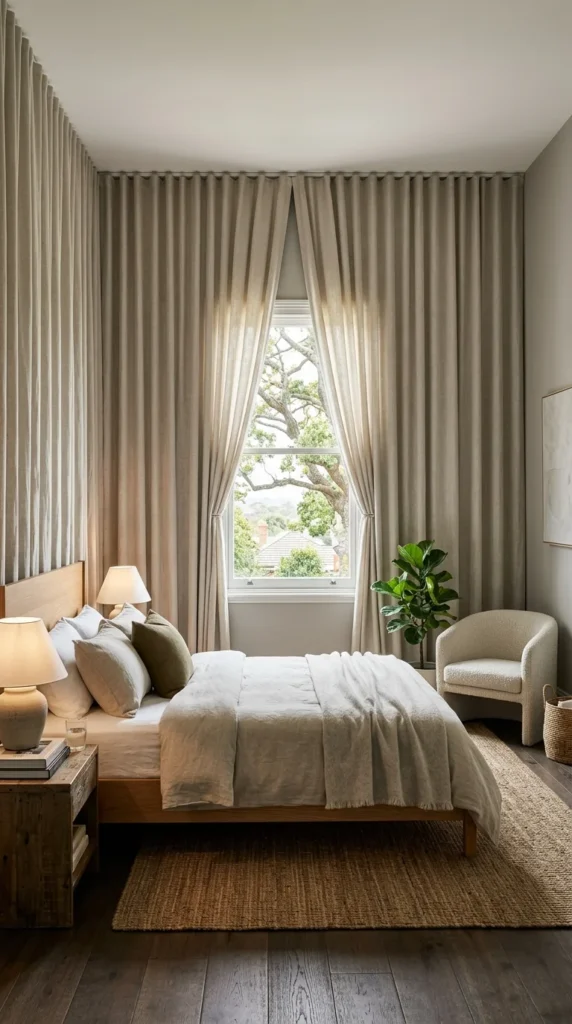
Just like a pinstriped suit makes a person look taller, vertical stripes on curtains do the same for your bedroom. The pattern forces the eye to travel upward, emphasizing height. Stick to thin, subtle stripes to keep the look sophisticated rather than overwhelming.
8. Wide Rods
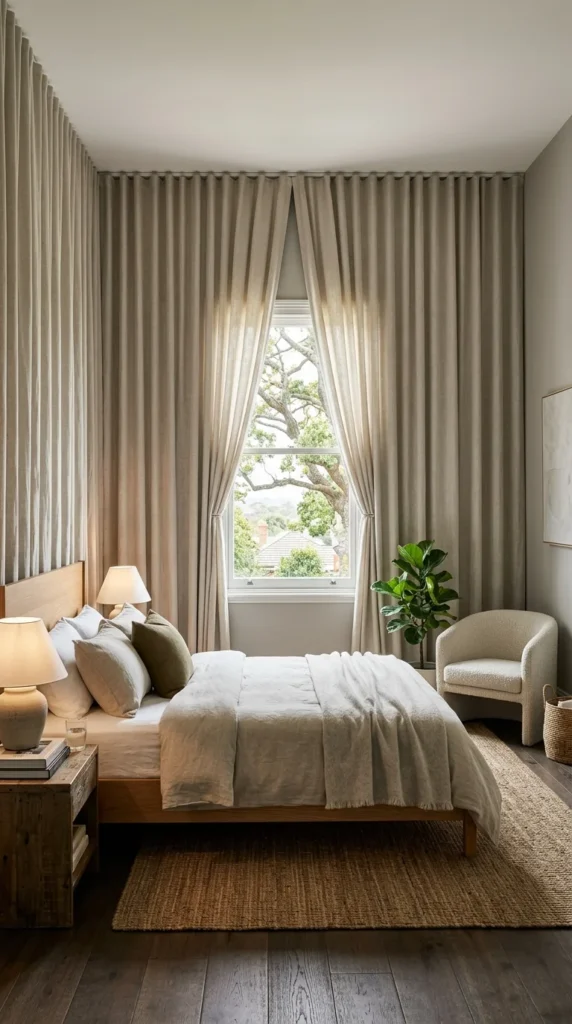
Mount your rod so that it extends significantly wider than the actual window frame. This allows you to pull the curtains back completely, exposing the entire window and allowing every drop of light to enter. It also gives the illusion that the window itself is much larger than it actually is.
9. Hidden Tracks
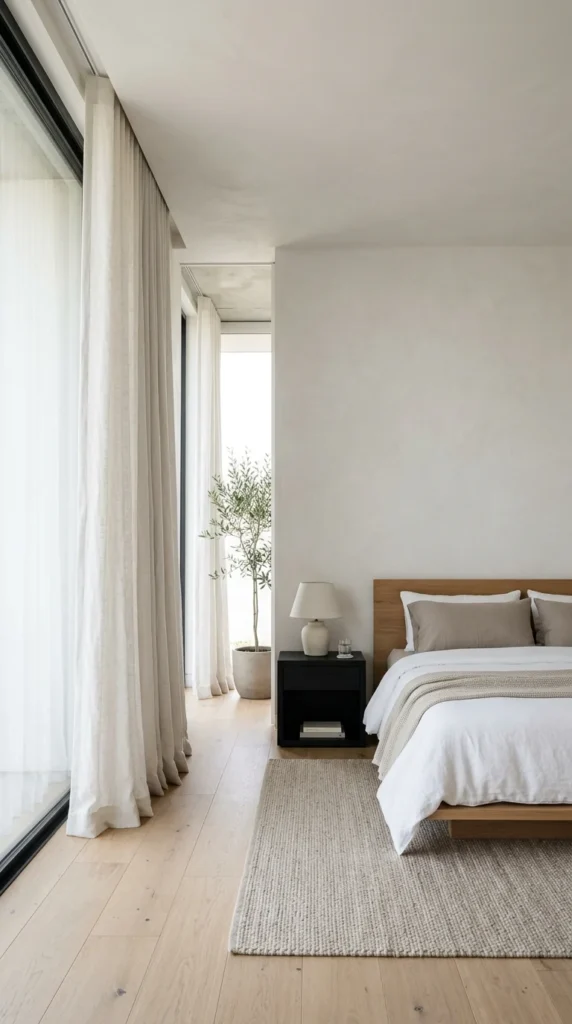
Removing the visual distraction of rings, clips, and rods can make a world of difference. Hidden tracks installed inside a ceiling cove create a seamless transition. This architectural detail is perfect for modern or “scandi” style bedrooms where clean lines are a priority.
10. Receding Colors
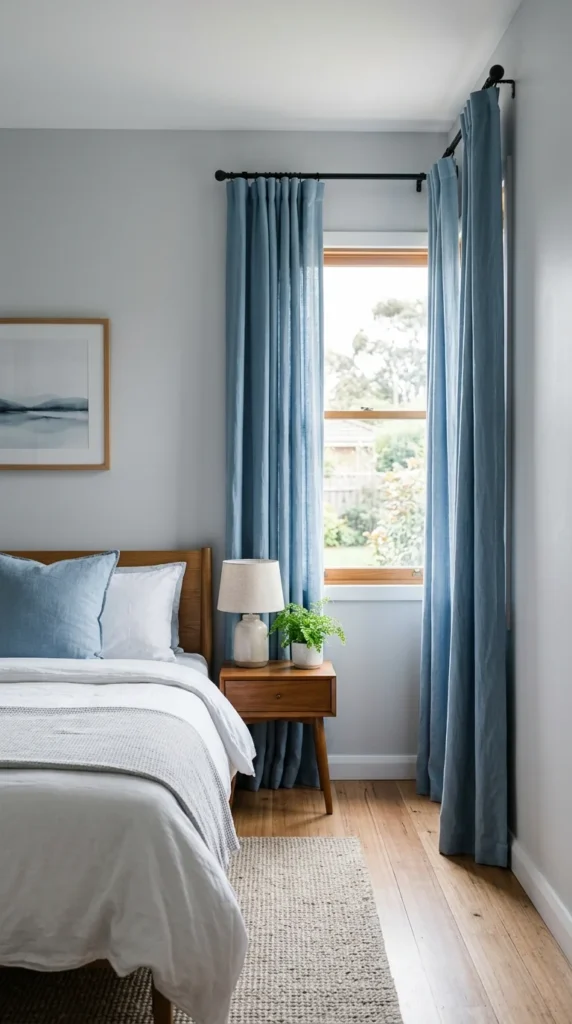
Colors like light blue, soft green, and pale lavender are known as “receding” colors. Unlike warm tones (red, orange, yellow) which appear to move toward you, cool tones appear to move away. Using these shades for your curtains can visually push the walls back, making the room feel deeper.
11. Roman Shades
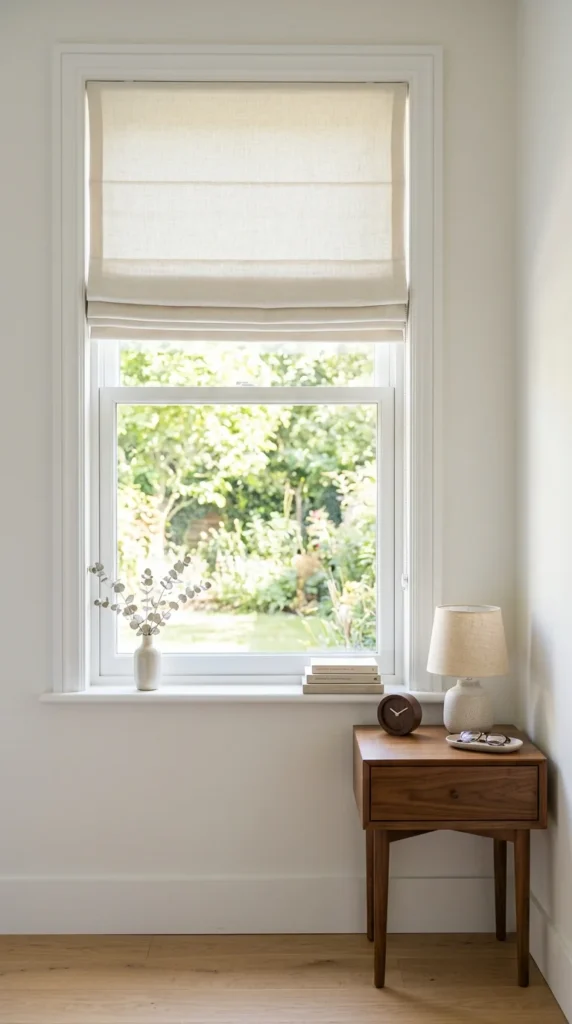
If your bed is positioned directly under the window, long drapes might be impractical. In this case, an inside-mount Roman shade is your best bet. Because it fits snugly within the window frame, it leaves the surrounding wall space open and prevents the room from feeling “stuffed” with fabric.
12. Lightweight Cottons
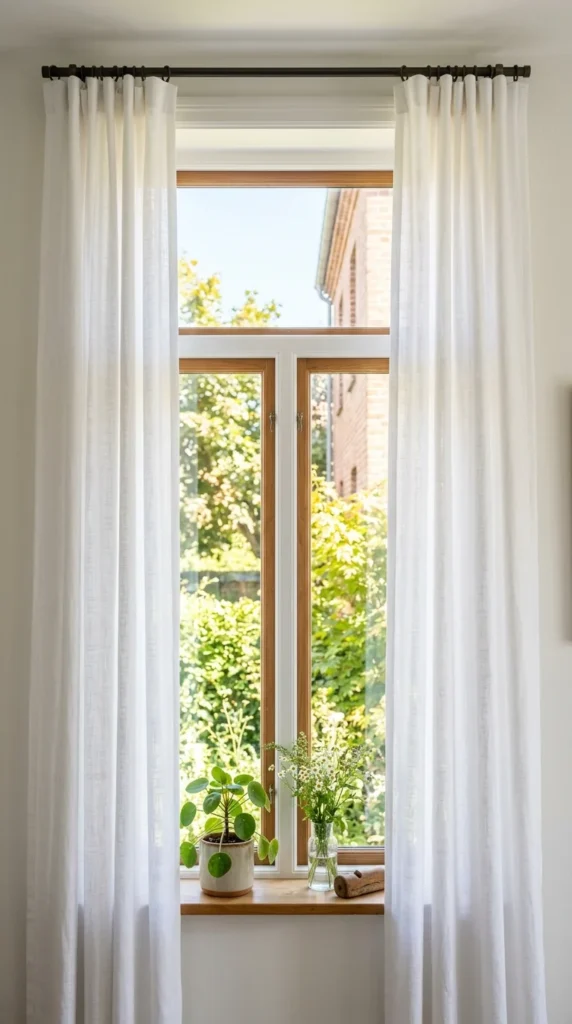
Heavy velvets or brocades can feel suffocating in a small room. Lightweight cottons offer a crisp, clean look that breathes. They provide enough privacy and light filtration without the bulk, making the space feel more flexible and less formal.
13. Ombre Effects
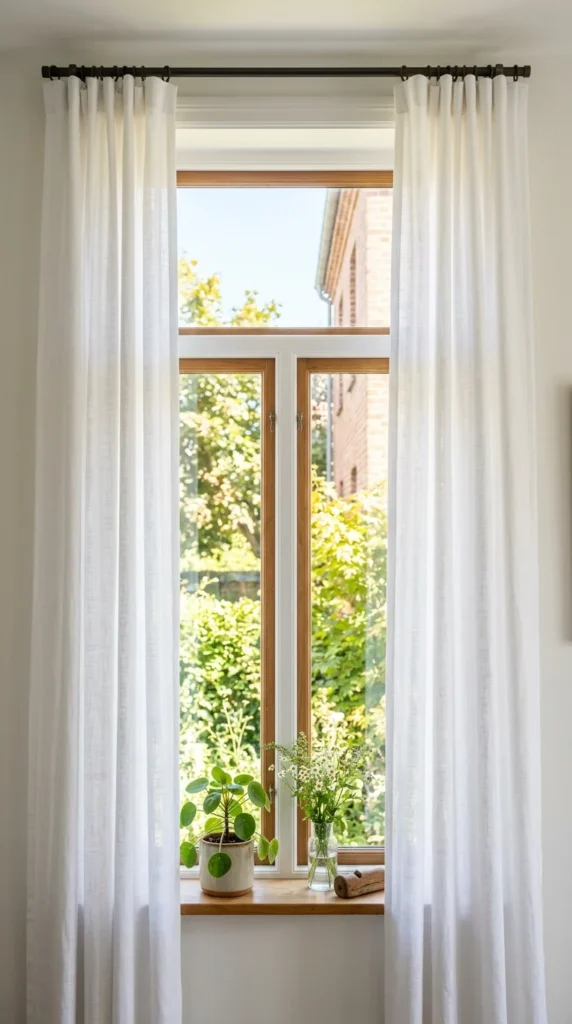
Ombre curtains that are lighter at the top and darker at the bottom are excellent for small rooms. The light color at the ceiling level helps the top of the room feel open and airy, while the color at the bottom adds interest without closing in the space.
14. Minimalist Hardware
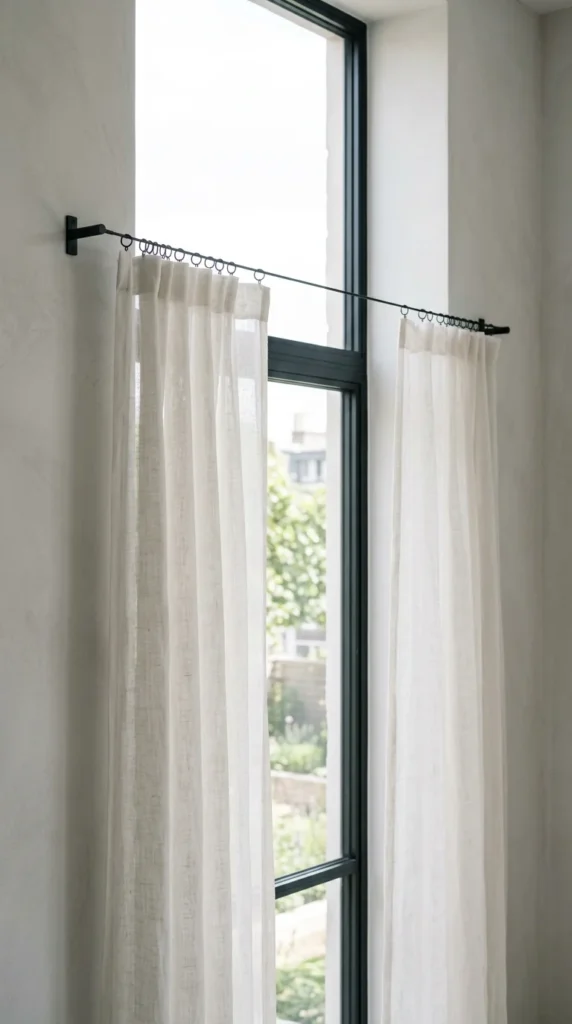
If you don’t want to go the lucite route, choose the thinnest metal rods possible. Matte black or slim brass rods provide a modern edge without the bulk of traditional wooden poles. The goal is to make the hardware almost invisible so the focus remains on the light and the fabric.
15. Double Rods
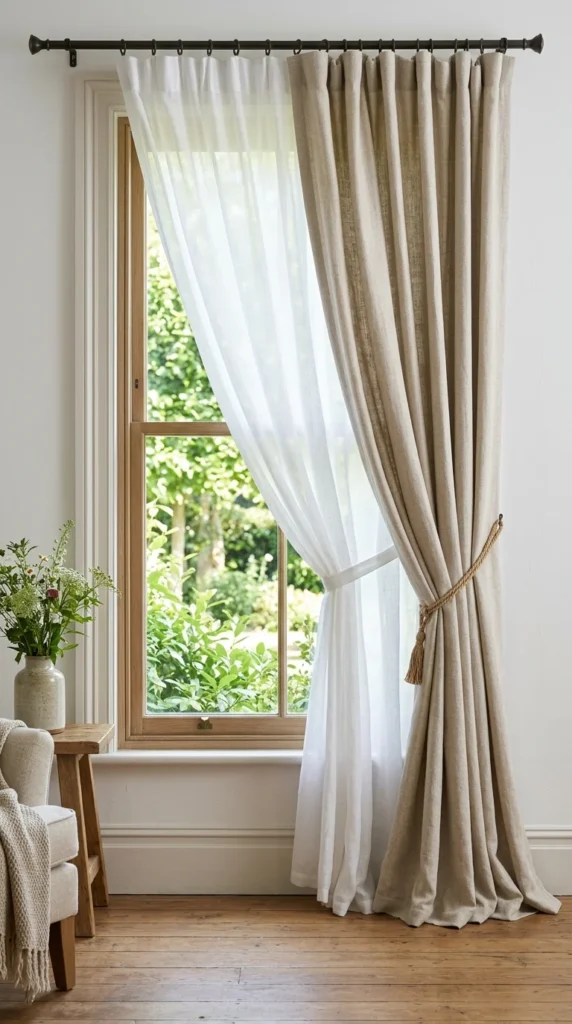
Using a double rod allows you to layer a sheer curtain with a more opaque one. This gives you total control over light and privacy. During the day, you can leave the sheers closed to blur the outside world while maintaining a bright, open feel, and close the heavier drapes only when you need total darkness for sleep.
16. Match the Trim
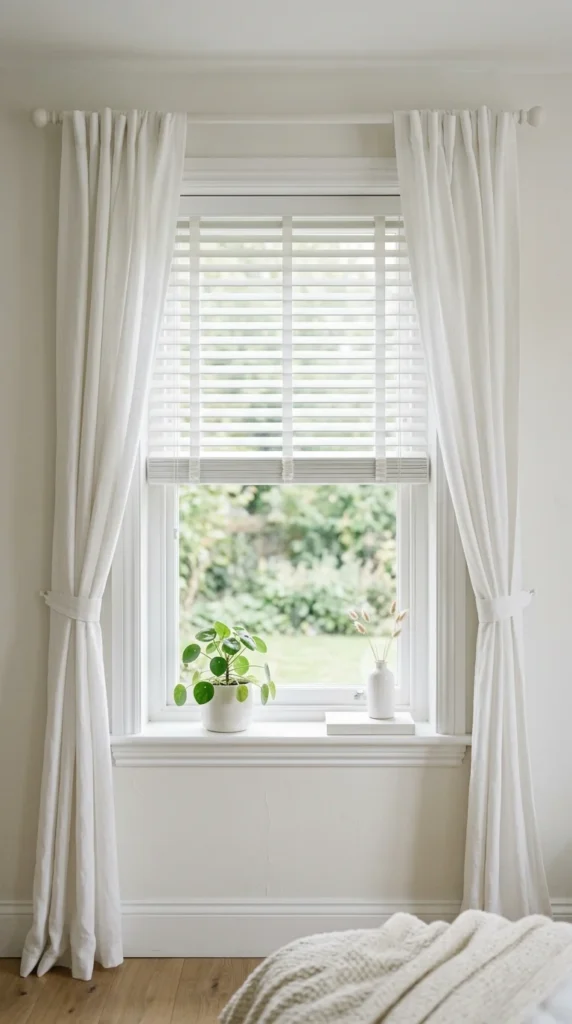
When the curtains, the blinds, and the window trim all share the same color, the window unit becomes one cohesive block. This reduces the “visual noise” in the room. A monochromatic window area feels like a single architectural feature rather than three or four separate items competing for attention.
17. Delicate Tie-Backs
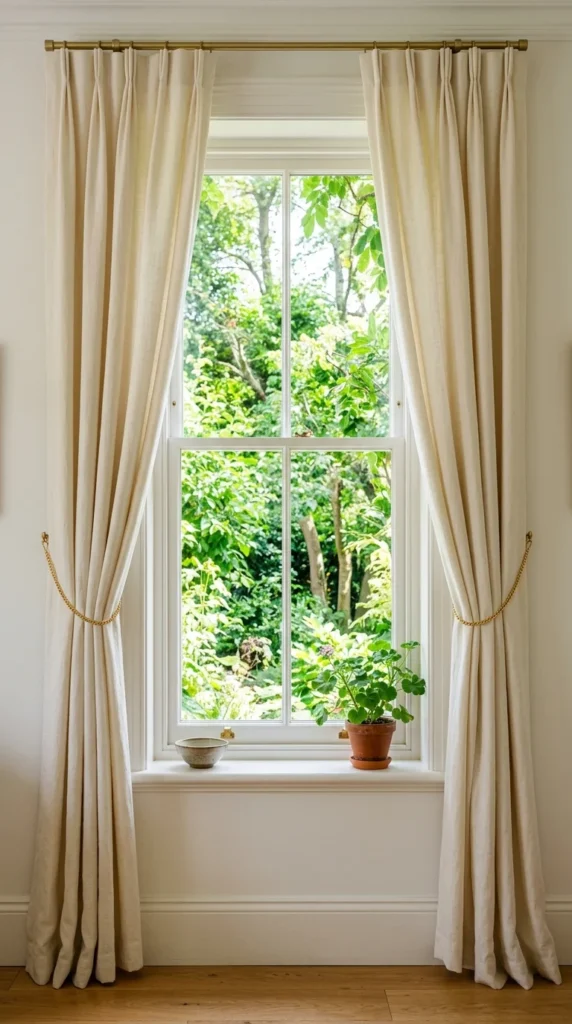
In a small room, you want to see as much of the outside world as possible. Tie-backs are essential for keeping curtains from fluttering into the room and taking up physical space. Use delicate hooks or fabric ties to pull the panels wide, creating a “frame” for your view.
18. Small-Scale Patterns
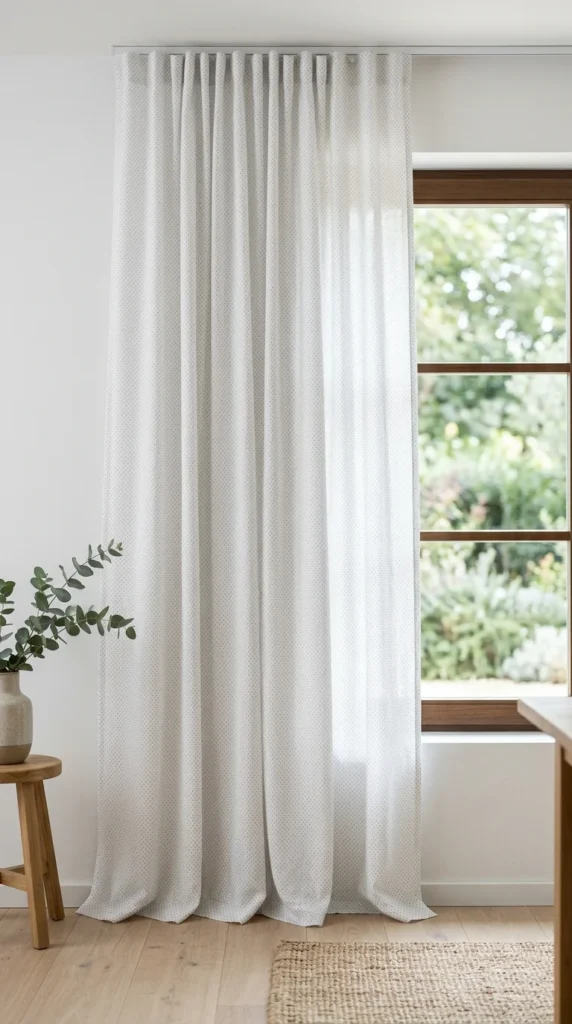
Large, bold patterns can overwhelm a small room and make the walls feel like they are closing in. If you want a pattern, choose something small-scale—like a tiny floral, a micro-stripe, or a subtle geometric print. These add texture without dominating the visual field.
19. Unlined Panels
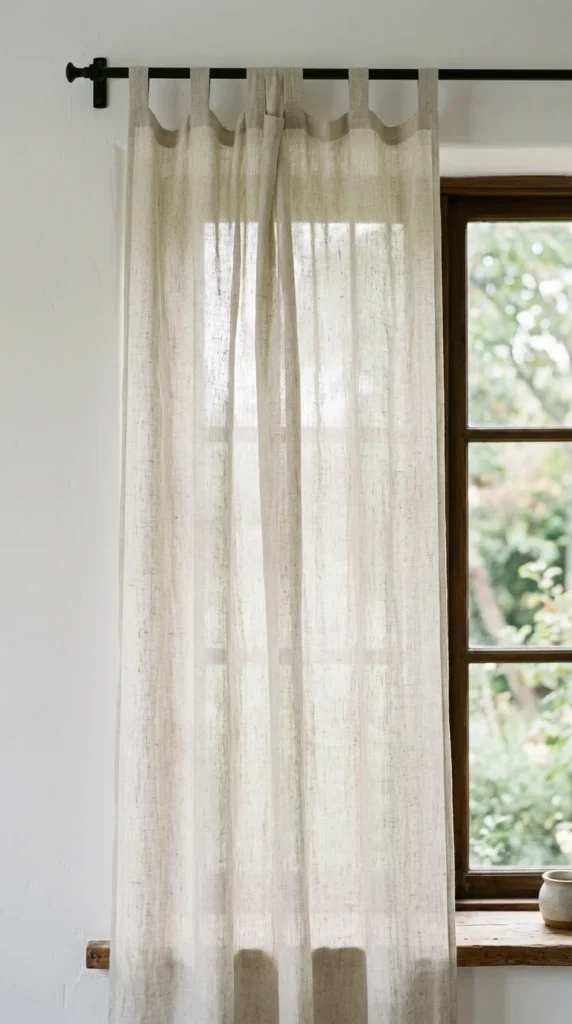
Lining adds bulk and stiffness to curtains. In a small bedroom, unlined panels drape more naturally and take up less “stacking space” when they are pushed to the sides. They also allow more diffused light to glow through the fabric, which keeps the room feeling bright.
20. Reflective Sheen
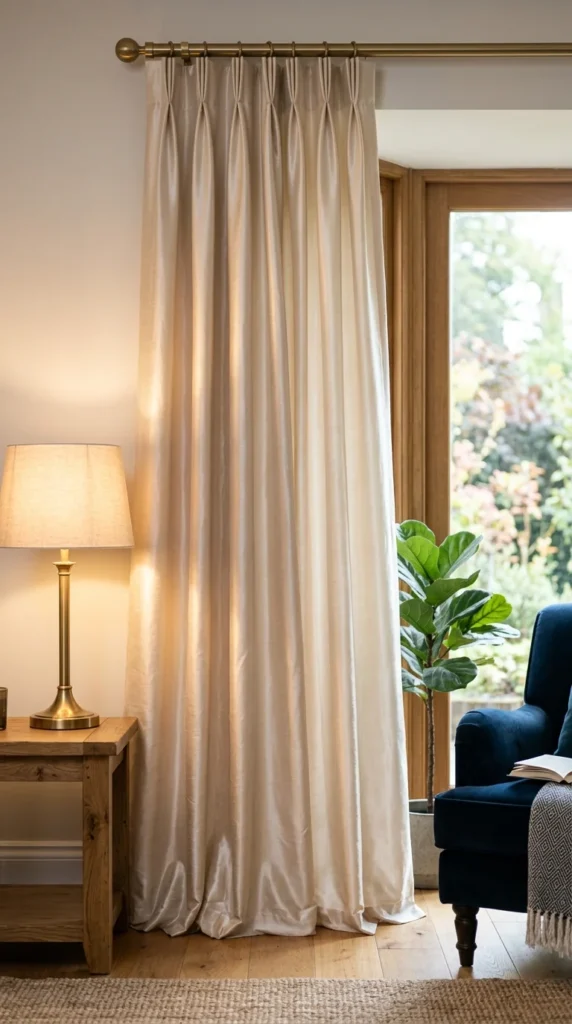
Fabrics with a slight sheen, like silk or certain polyesters, can help bounce light around the room. Much like a mirror, reflective fabrics contribute to a sense of brightness and depth. Avoid anything too shiny or “glittery,” but a subtle satin finish can make the room feel more expensive and expansive.
21. Corner Wraps
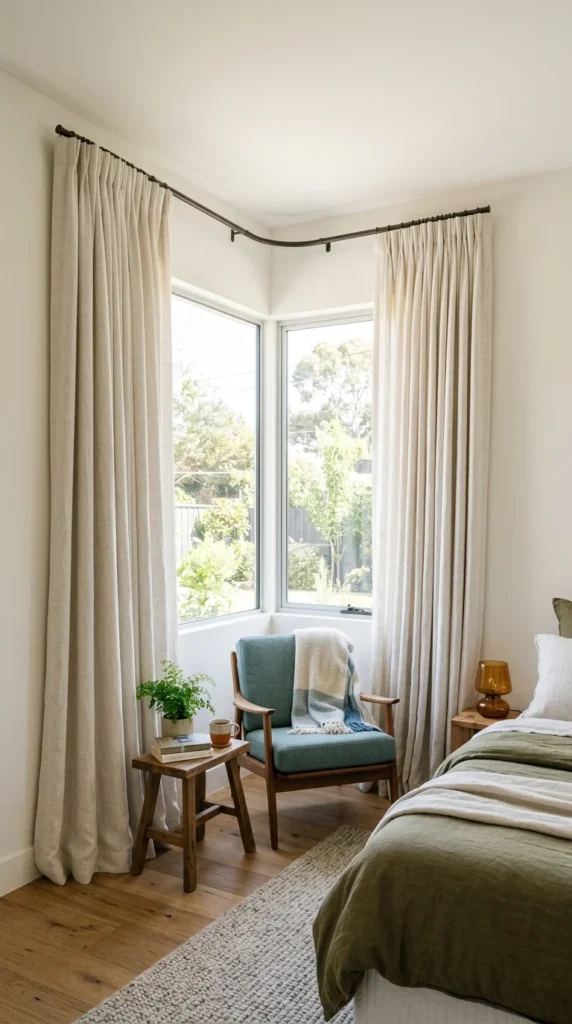
If you have a corner window, don’t use two separate rods. Use a curved corner rod to create one continuous flow of fabric. This softens the corners of the room, making the boundaries feel less rigid and the layout feel more fluid.
22. Tension Rods
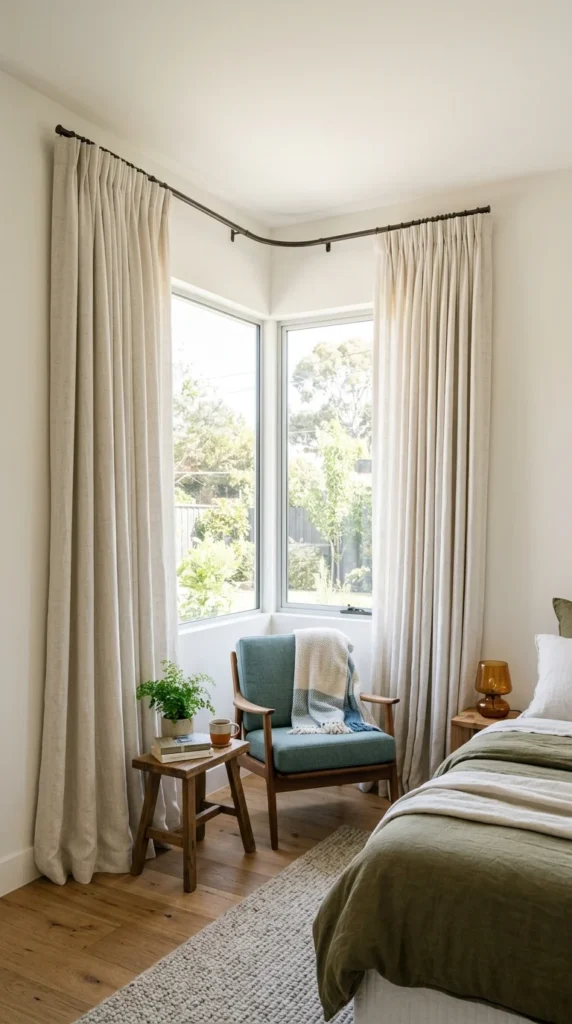
For the ultimate space-saver, use a tension rod inside the window casing. This is perfect for very small “nook” bedrooms where every inch of wall space is needed for furniture. It keeps the fabric contained within the window’s footprint, leaving the surrounding walls completely clear.
23. No Valances
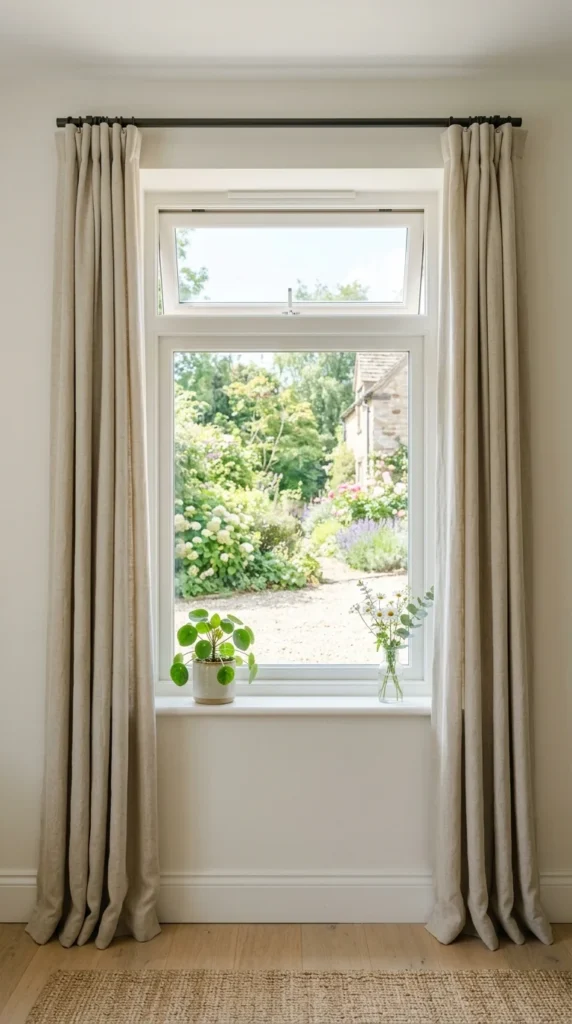
Valances and swags are a relic of maximalist design that can make a small room feel dated and crowded. By skipping the valance, you keep the top of the window clean and open, which helps maintain that all-important sense of height.
24. Box Pleats
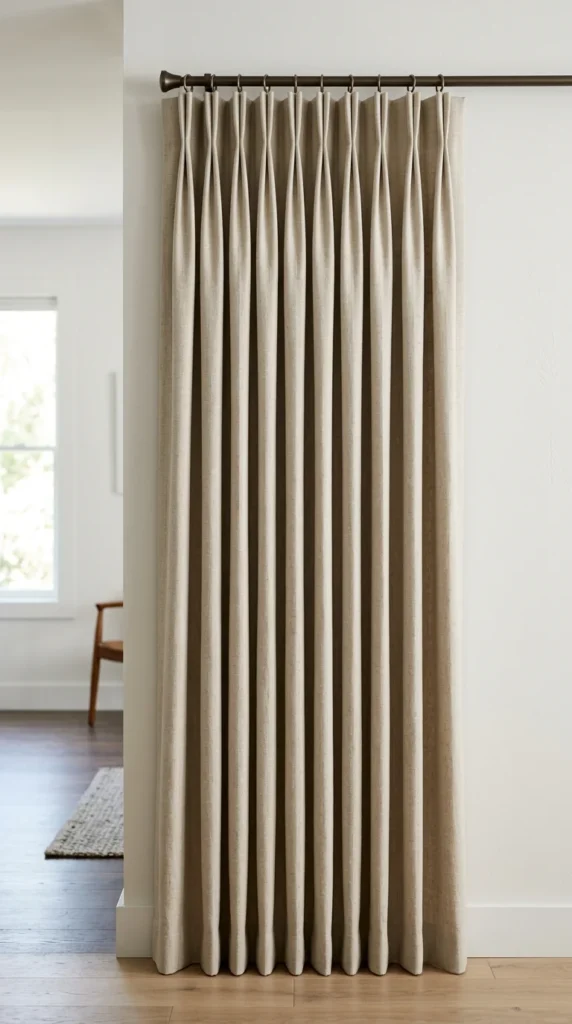
The way a curtain is pleated affects how it hangs. Box pleats or “tailored” pleats create very straight, vertical folds. This structured look mimics the lines of the walls and ceiling, providing a tidy, organized appearance that prevents a small room from looking “messy” or over-decorated.