
Living in a small space doesn’t mean you have to sacrifice the convenience of a bedside surface. Whether you’re dealing with a literal “closet-sized” bedroom or just want to embrace a more minimalist aesthetic, the traditional bulky nightstand is often the first thing that needs to go.
The secret to a successful small bedroom is thinking vertically, choosing multi-functional pieces, and embracing “visual lightness.” From floating surfaces that clear the floor to repurposed vintage items that add character, here are 20 creative nightstand ideas to transform your tiny sanctuary.
1. Floating Shelves
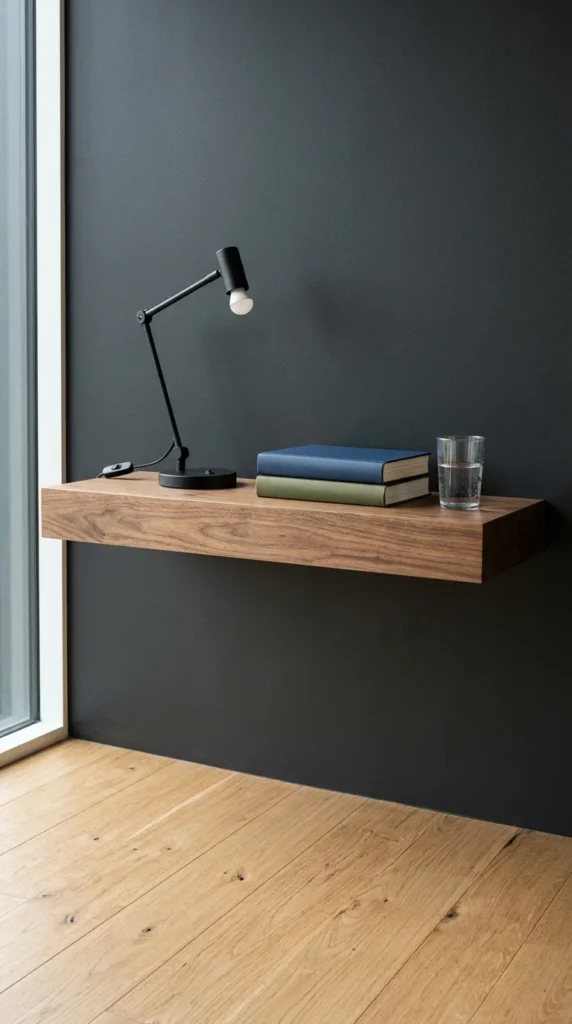
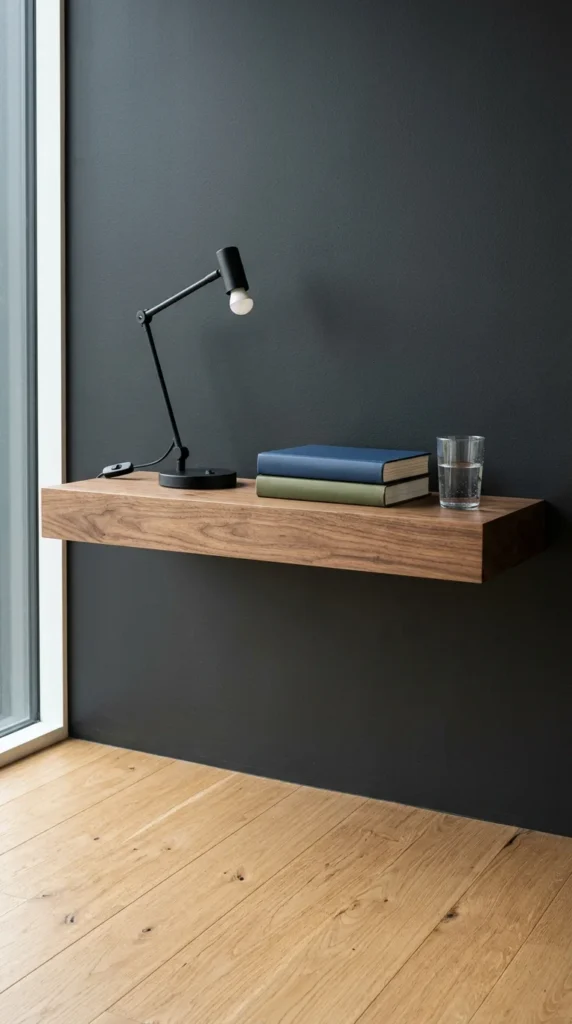
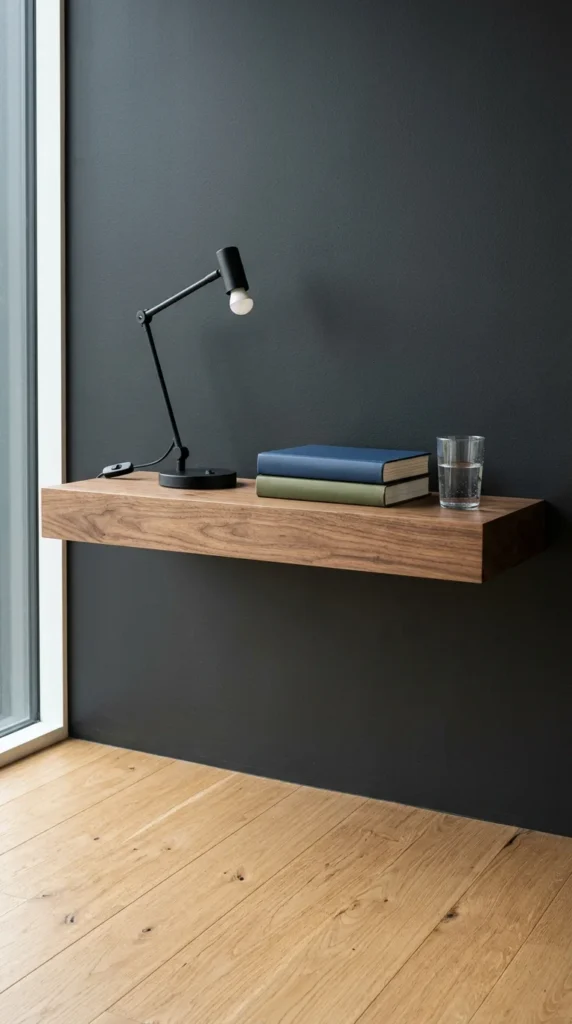
Floating shelves are the gold standard for small bedroom design. By removing the legs, you create an “airy” feel that makes the room appear larger than it actually is. You can mount them at the exact height of your mattress for ergonomic ease. To maximize this look, choose a shelf that matches your wall color to make it “disappear,” or go for a thick, chunky wood slab to add a touch of organic warmth.
2. C-Shaped Tables
C-shaped tables are engineered for tight quarters. Because the base is designed to slide underneath the bed frame, the top surface can be brought right up to your pillow. This is particularly useful if your bed is squeezed between two walls and you only have a few inches of clearance. They are lightweight, easy to move, and offer a modern, architectural silhouette.
3. Wall-Mounted Drawers
If you need to hide clutter—like charging cables, sleep masks, or medication—but don’t have floor space for a chest, a wall-mounted drawer is the perfect compromise. It provides the “closed” storage of a traditional nightstand while maintaining the floor-clearing benefits of a floating shelf. It’s a clean, sophisticated look that works exceptionally well in mid-century modern or contemporary interiors.
4. Ladder Shelves
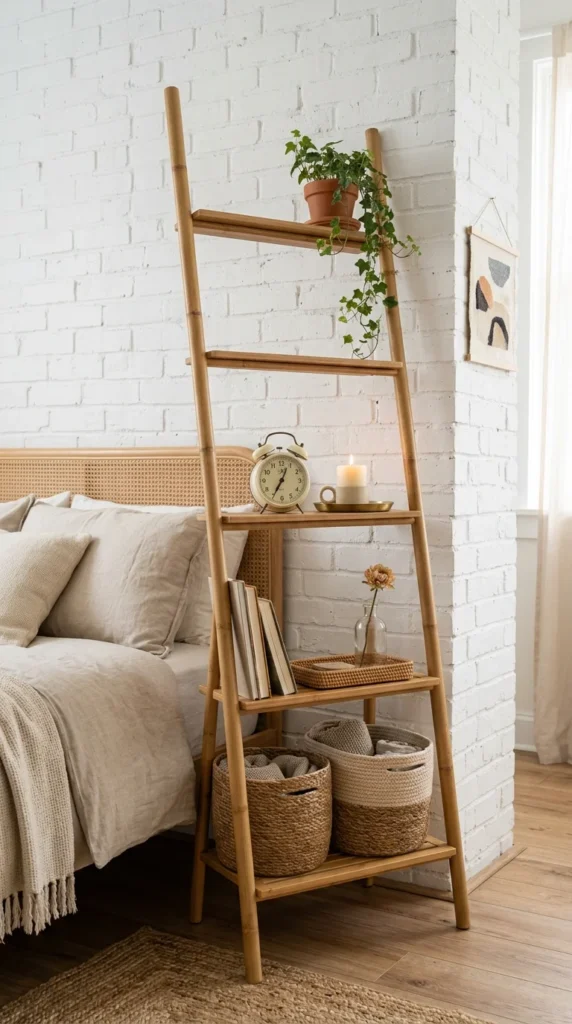
When square footage is limited, go up. A leaning ladder shelf uses vertical space to provide multiple levels of storage. Use the rung closest to your bed height for your essentials, and use the higher rungs for decorative items like trailing plants or framed photos. This prevents your bedside area from feeling cluttered while adding a rhythmic, architectural element to the room.
5. Bedside Pockets
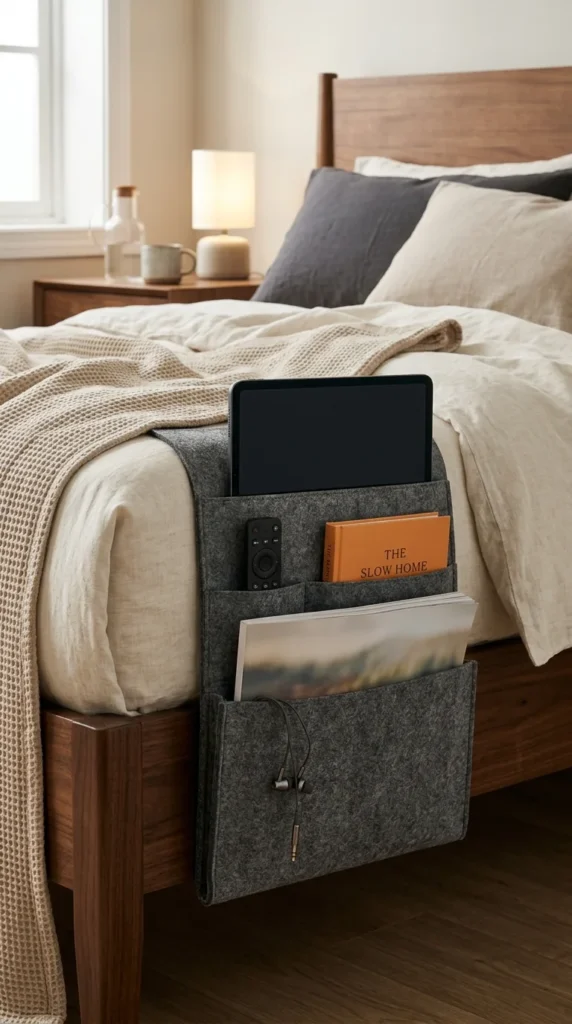
For the ultimate space-saver, skip the furniture entirely. Felt or canvas bedside pockets (also known as “bed caddies”) hang directly off the side of your mattress. They are perfect for dorm rooms or extremely narrow rentals where there isn’t even an inch to spare between the bed and the wall. It’s a purely functional choice that keeps your tech and reading material within arm’s reach.
6. Stacking Crates
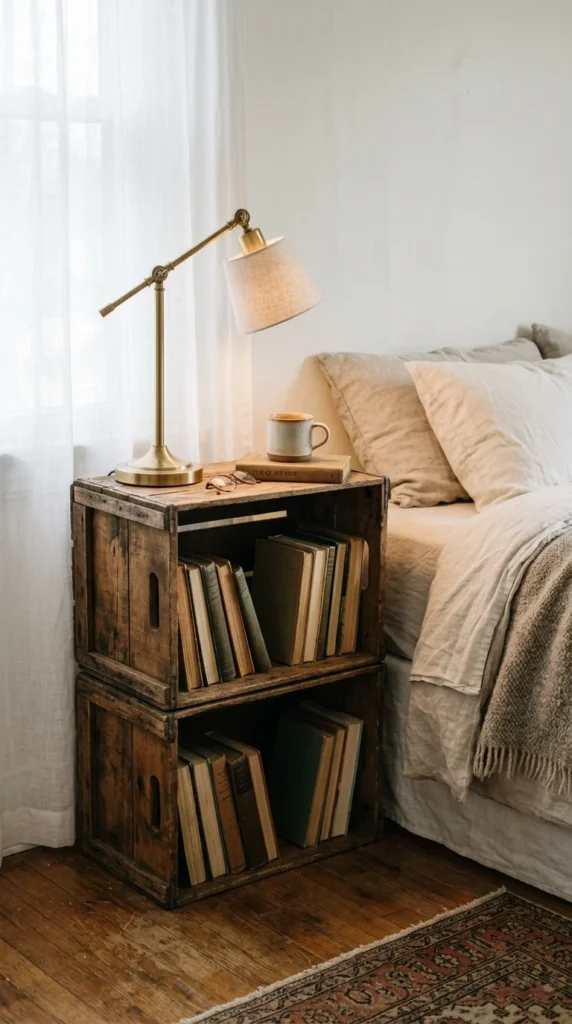
Stacking crates offers a modular, bohemian approach to bedside storage. You can adjust the height by adding or removing crates, and the open-front design provides easy-access cubbies for your favorite reads. For a more polished look, sand down the wood and apply a dark stain, or paint them a vibrant accent color to make the “nightstand” a focal point of the room.
7. Slim Pedestal Tables
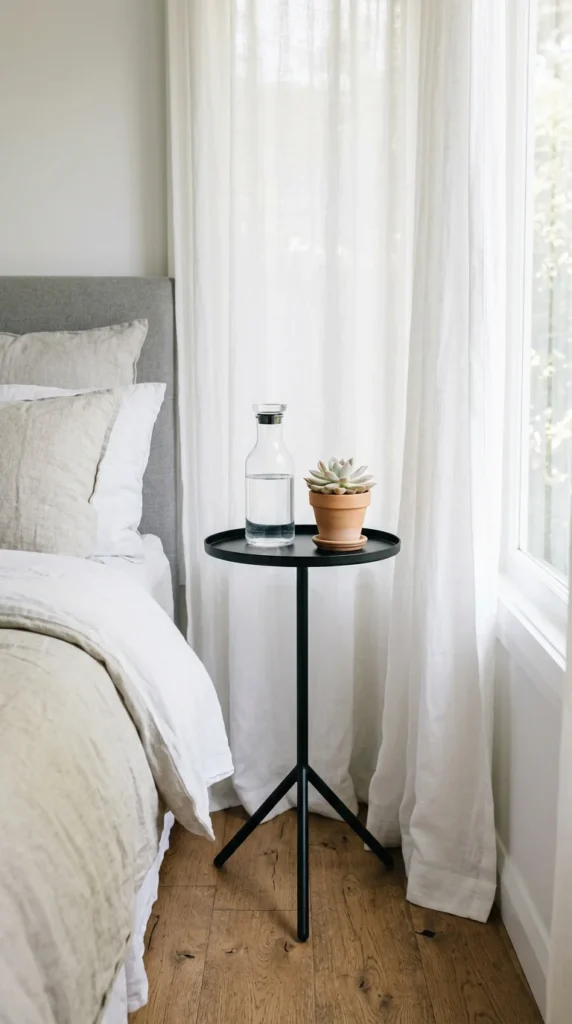
Pedestal tables are prized for their tiny footprints. A classic “martini table” or a slim plant stand can serve as a surprisingly effective nightstand. Since they usually feature a single center leg or a very narrow tripod base, they don’t visually crowd the floor. They are ideal for those who only need enough space for a phone and a glass of water.
8. Swing-Arm Lamps with Trays
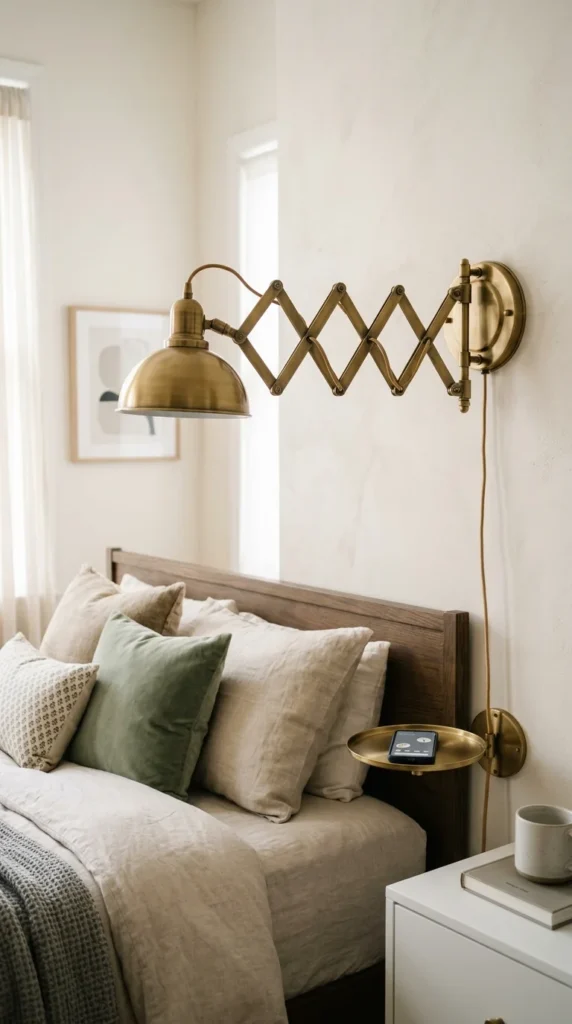
Why buy two pieces of furniture when one will do? Some modern wall-mounted light fixtures come with built-in shelves or trays. This “2-in-1” solution handles your task lighting and your storage needs in a single footprint. It’s an ultra-clean look that works perfectly in industrial or minimalist bedrooms, leaving your floor and wall space feeling open and airy.
9. Floating Cubes
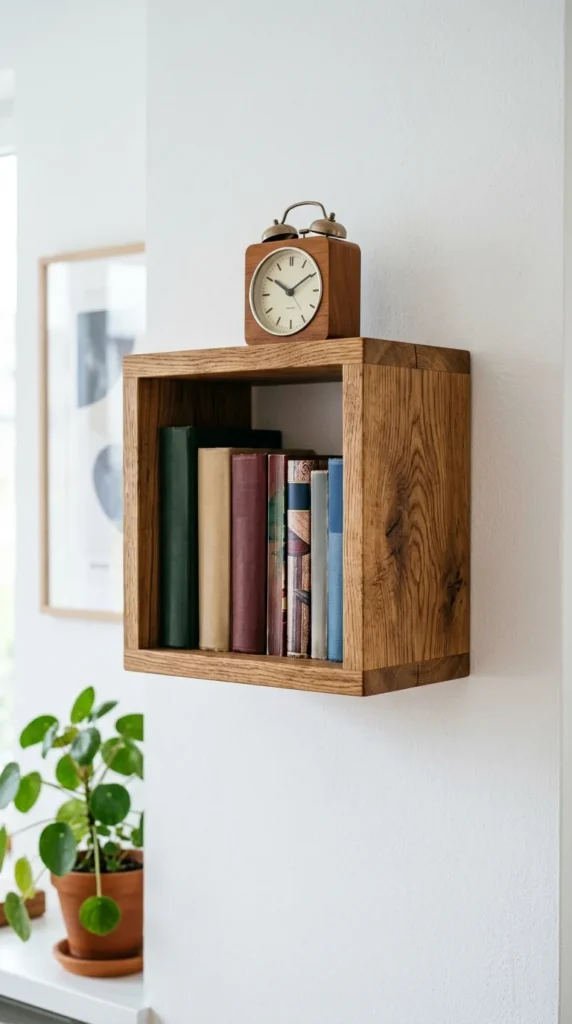
Floating cubes provide two surfaces for the price of one: the interior “floor” of the cube and the exterior top. This allows you to categorize your items—perhaps keeping your “to-read” pile inside the box and your morning coffee on top. Mounting a series of cubes in a staggered pattern can also create a unique geometric art installation on your wall.
10. Bar Carts
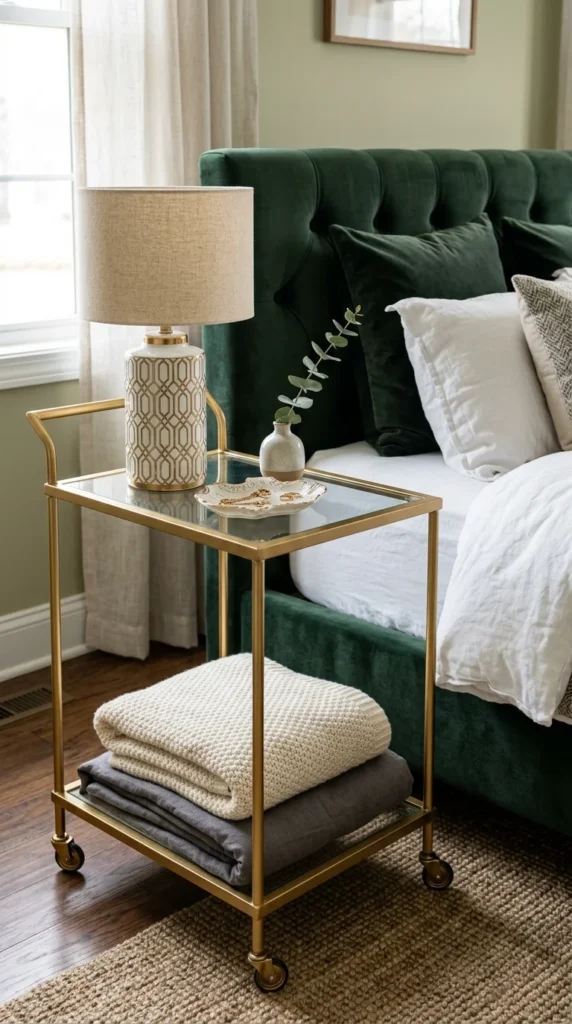
Bar carts aren’t just for cocktails. Their multi-tiered design provides ample storage, and the wheels make them incredibly versatile. If you need to access a closet behind your nightstand, you can simply roll the cart out of the way. The glass and metal construction of most bar carts adds a touch of “glam” and prevents the piece from looking too heavy in a small space.
11. Repurposed Chairs
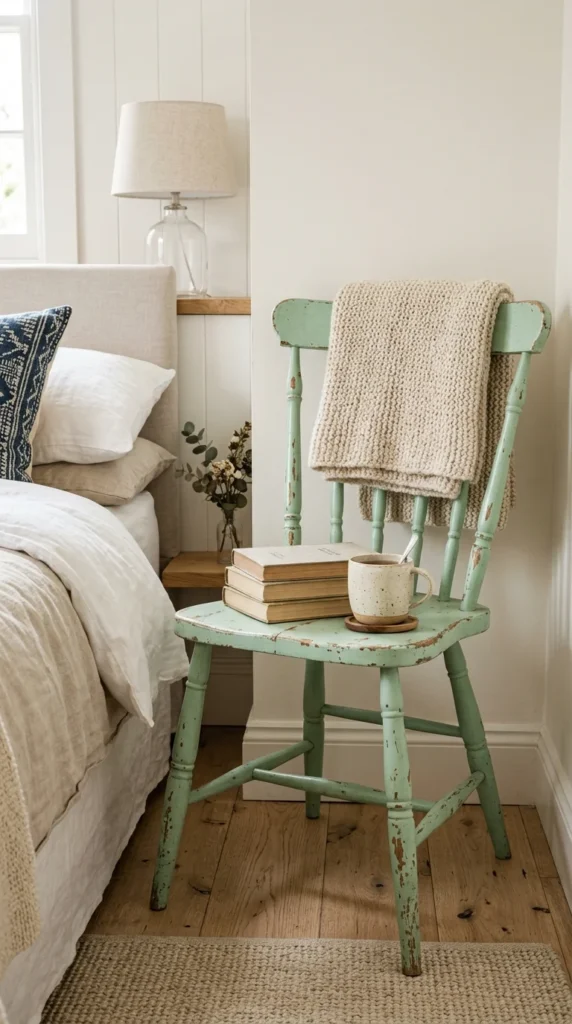
Using a chair as a nightstand is a classic “shabby chic” or Scandinavian design trick. It adds instant character and a sense of “lived-in” charm. The back of the chair can be used to hang a robe or a reading light, while the seat provides a flat surface for your essentials. If you have guests over and need extra seating, your “nightstand” is already prepared to move to the living room.
12. Narrow Console Tables
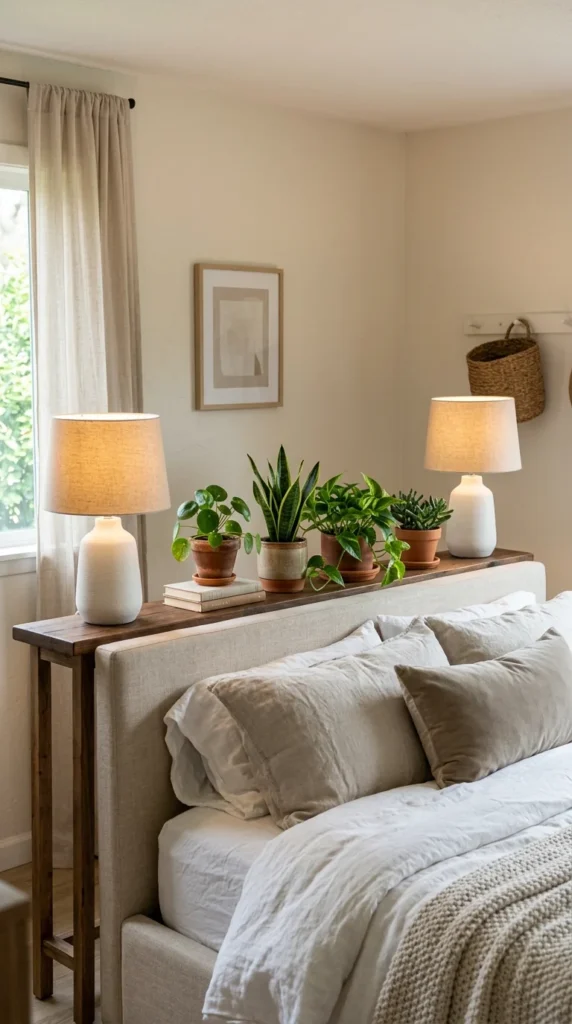
If you don’t have space on the sides of your bed, look behind it. A narrow console table placed between the headboard and the wall creates a long, continuous shelf. This is perfect for “floating” your bed in the middle of a room or for bedrooms where the bed takes up the entire width of the space. It provides a massive amount of surface area without widening the bed’s footprint.
13. Integrated Headboard Shelving
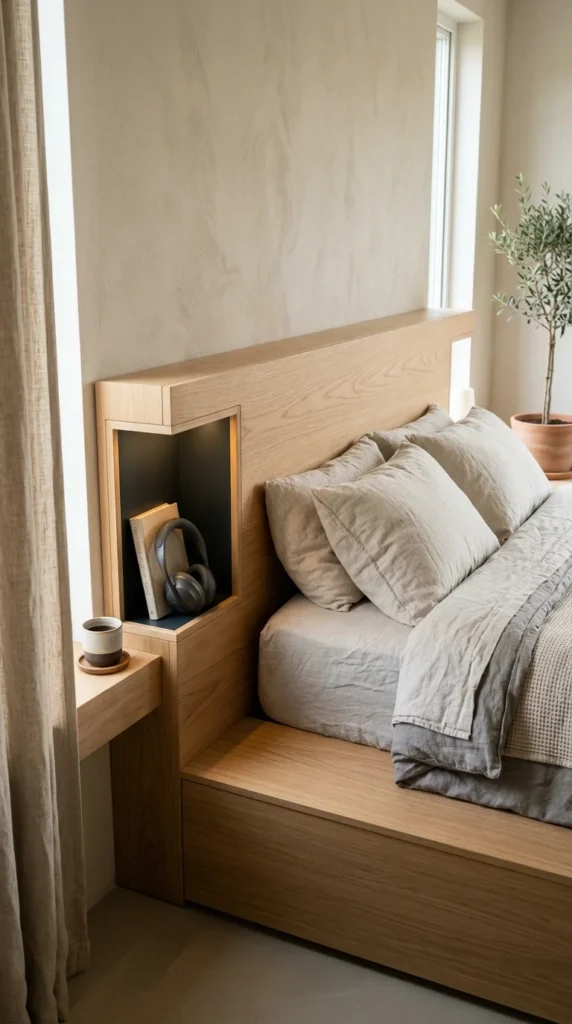
For the ultimate seamless look, choose a headboard with built-in storage. These designs often feature “hidden” shelves that pull out from the side or recessed niches built directly into the frame. Because the storage is integrated into the bed itself, you eliminate the need for any additional furniture pieces, making the room feel incredibly streamlined and custom-built.
14. Accordion Side Tables
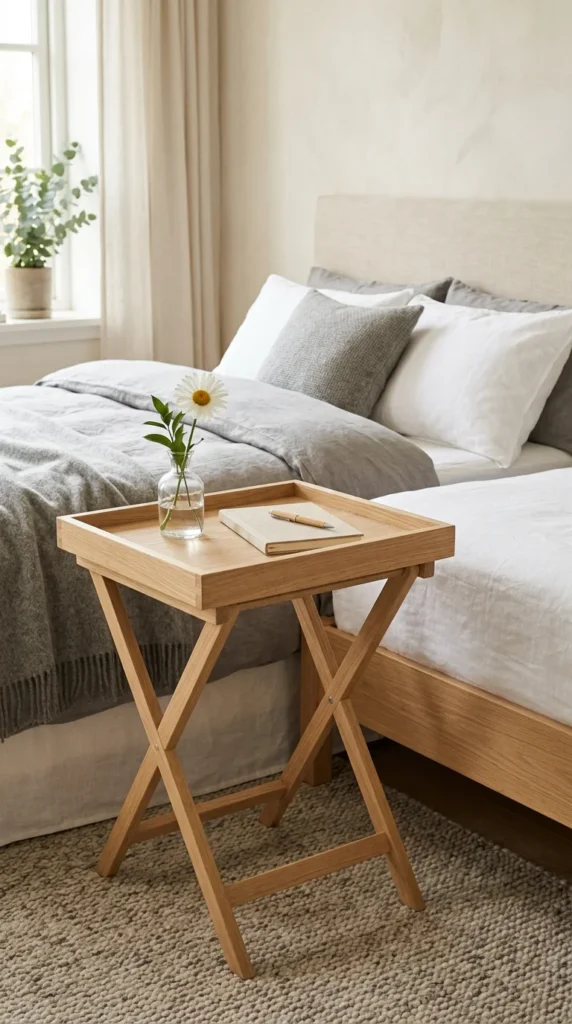
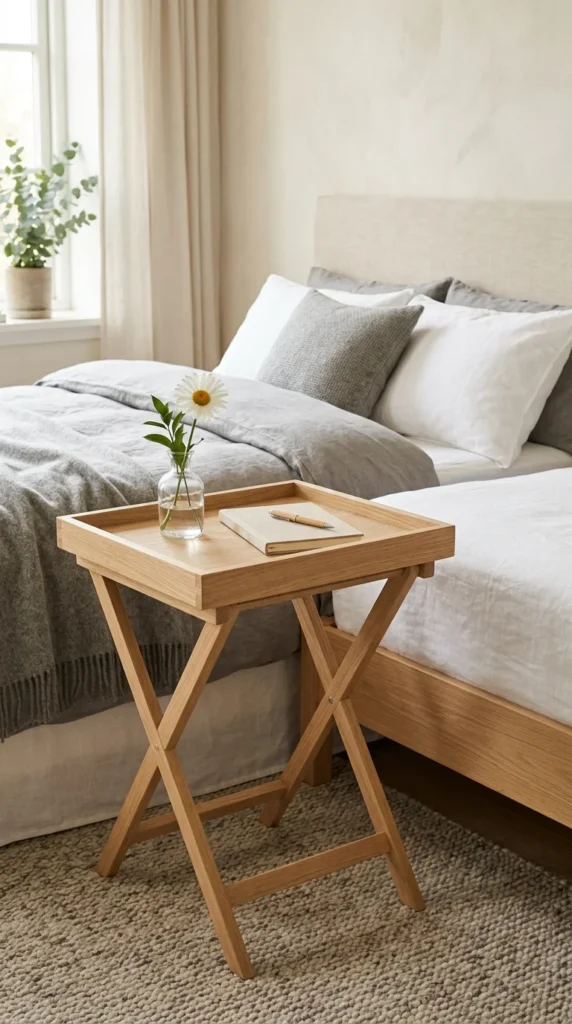
Accordion or folding tables are the ultimate “temporary” nightstands. If you live in a multi-functional space—like a studio where your bedroom becomes your living room—being able to fold up your nightstand and tuck it under the bed is a game changer. They are often lightweight and come in a variety of styles, from rustic wood to colorful metal.
15. Vintage Trunks
A vintage trunk or a stack of old hard-shell suitcases provides a “boxy” surface that doubles as deep storage. This is an excellent way to hide away bulky items like extra winter blankets or out-of-season clothes that won’t fit in a small closet. The heavy, grounded look of a trunk adds a sense of history and “soul” to a bedroom.
16. Mirrored Tables
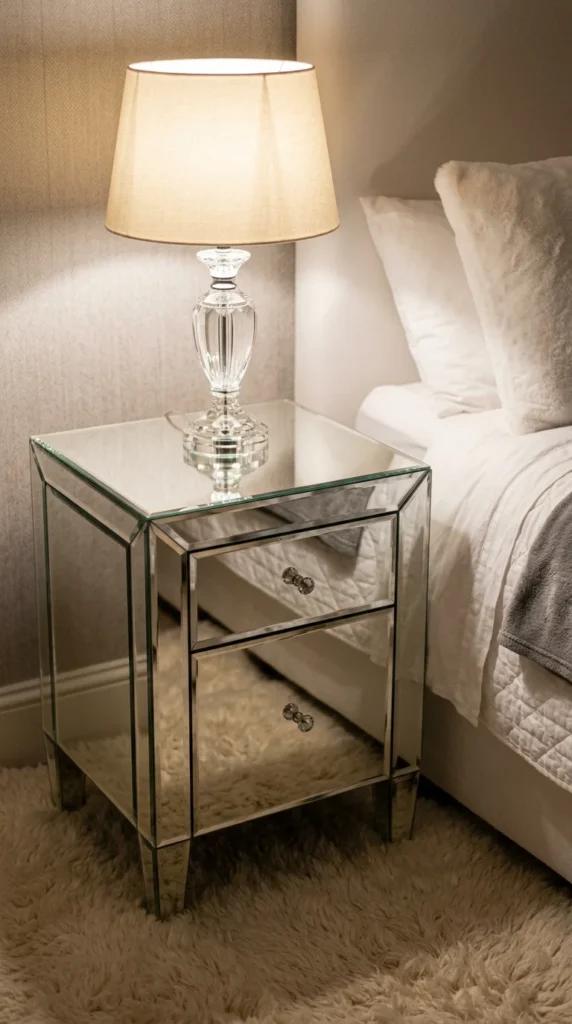
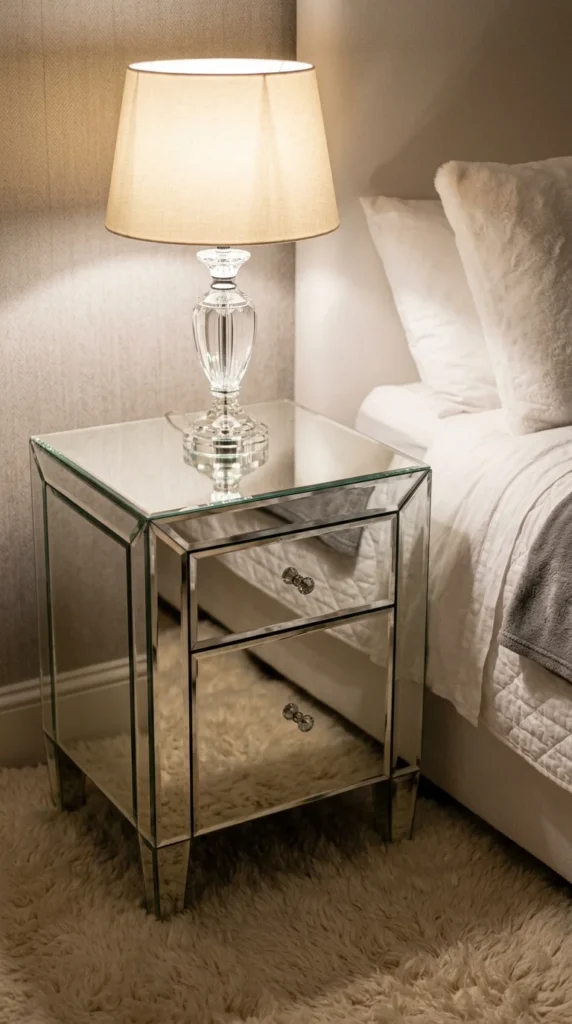
Mirrored furniture is a well-known designer secret for small spaces. Because the surfaces reflect the room back, the furniture piece almost becomes “invisible.” It bounces light around the room, making a dark corner feel much brighter. A mirrored nightstand adds a touch of Hollywood Regency luxury while serving a practical, space-enhancing purpose.
17. Hanging Rattan Baskets
If you want to keep your floor absolutely clear and add some “boho” texture, try a hanging nightstand. A sturdy basket or a wooden disc suspended from a ceiling hook creates a whimsical, floating effect. This is perfect for lightweight items and adds a sense of height and vertical movement to the room, drawing the eye upward and making the ceilings feel taller.
18. Acrylic Tables
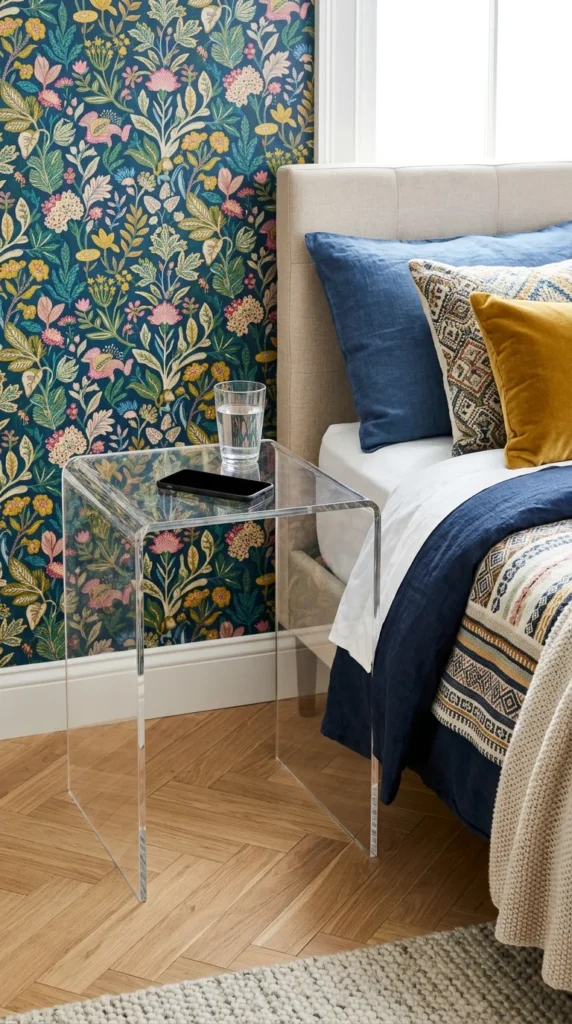
Acrylic or “lucite” furniture is the pinnacle of minimalist design. Because these pieces are completely transparent, they take up zero “visual weight.” You get the full functionality of a solid surface without the visual clutter. In a tiny bedroom, an acrylic table keeps the sightlines open, preventing the space from feeling cramped or “boxy.”
19. Built-in Niches
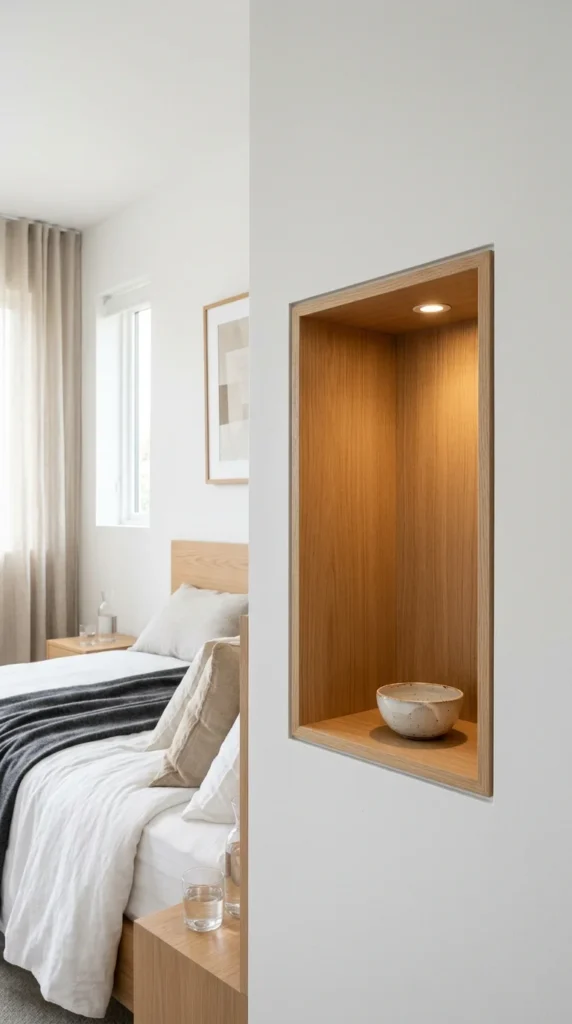
If you are renovating or have the ability to modify your walls, a built-in niche is the most space-efficient nightstand possible. By carving into the “dead space” between wall studs, you create a storage pocket that protrudes zero inches into the room. It’s a high-end, architectural look that provides a permanent home for your bedtime essentials without using a single square inch of floor space.
20. Stepladders
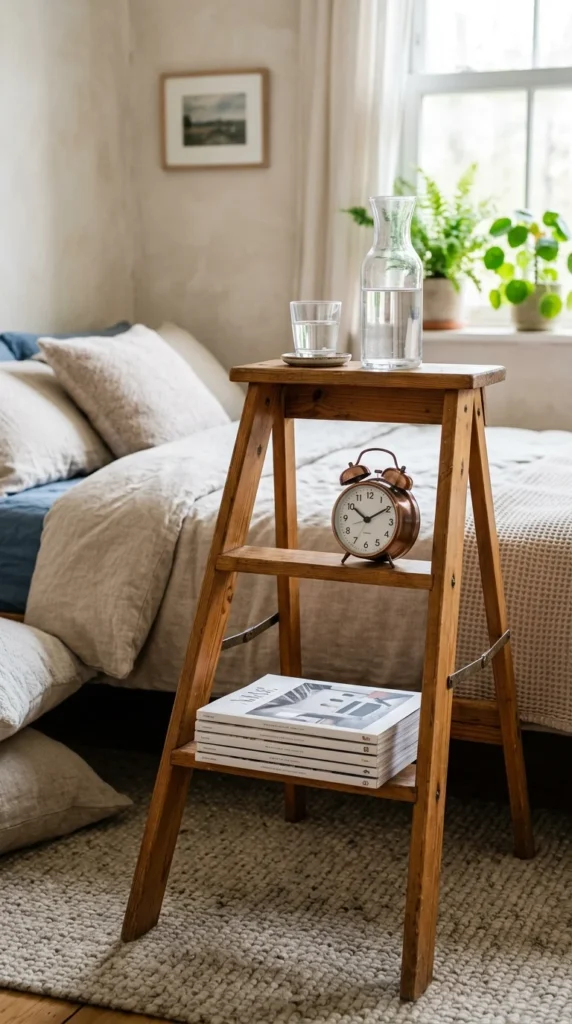
A small wooden stepladder provides a charming, tiered platform for your belongings. The different levels allow you to separate items by frequency of use—keep your phone on the top “step” and less-used items on the bottom. It’s an unexpected, quirky choice that fits perfectly in farmhouse, industrial, or eclectic bedroom designs.