
Living in a small apartment shouldn’t mean sacrificing your professional goals or your personal style. As the boundaries between home and work continue to blur, the challenge of carving out a functional “office” in a limited square footage has become a creative endeavor for many urban dwellers. Whether you are working with a studio flat or a cozy one-bedroom, the secret lies in “zoning”—the art of creating a mental and physical boundary for work without cluttering your living space.
The following 24 ideas prove that with a bit of ingenuity, even the tightest corners can become high-performance command centers.
1. Floating Desk
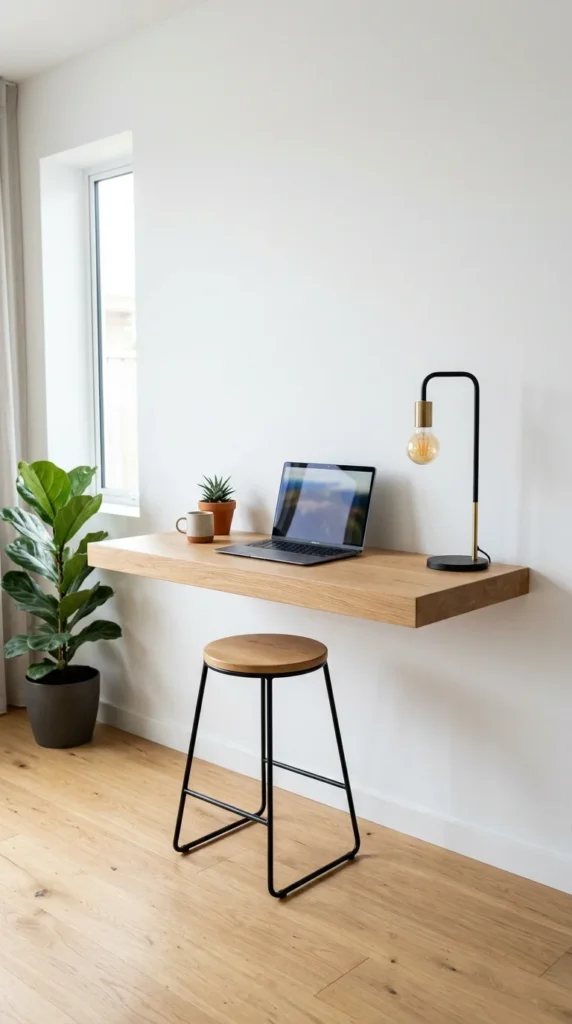
When floor space is at a premium, the best direction to go is up. A floating desk eliminates the need for bulky legs, which instantly makes a room feel larger. By keeping the floor visible beneath your workspace, you maintain the visual flow of the room. These wall-mounted units can be as simple as a single deep shelf or as complex as a fold-down secretary desk. Pair it with a stool that can be tucked away when not in use to keep your walkways clear.
2. Corner Nook
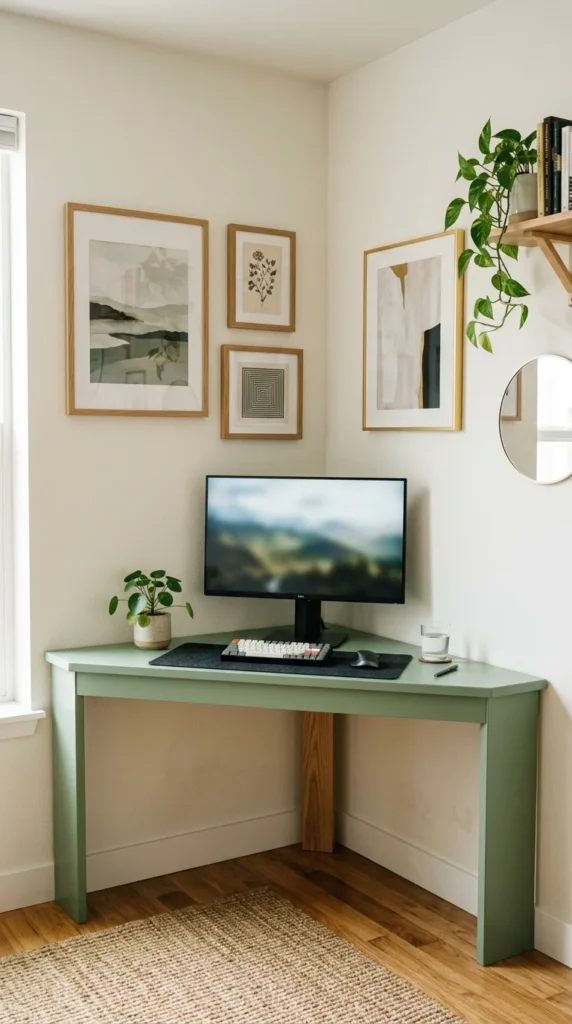
Don’t let your corners go to waste. A corner desk is one of the most efficient ways to utilize “dead” space in an apartment. By nesting your workspace into a corner, you naturally create a sense of privacy and focus. To make it feel like a deliberate design choice rather than an afterthought, decorate the surrounding walls with art or floating shelves that follow the angle of the desk.
3. Closet Office
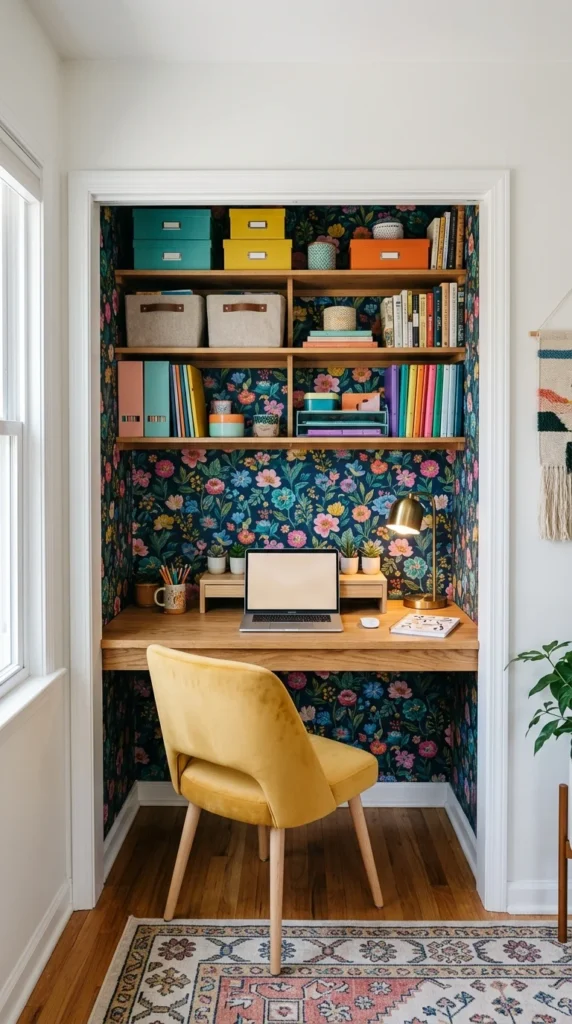
Commonly known as a “cloffice,” converting a closet is the ultimate space-saving hack. By removing the doors (or keeping them to hide the mess at the end of the day), you create a recessed workstation that doesn’t bleed into your living area. It provides a natural boundary that helps you “leave work at the office” simply by closing a door or drawing a curtain.
4. Fold-Down Desk
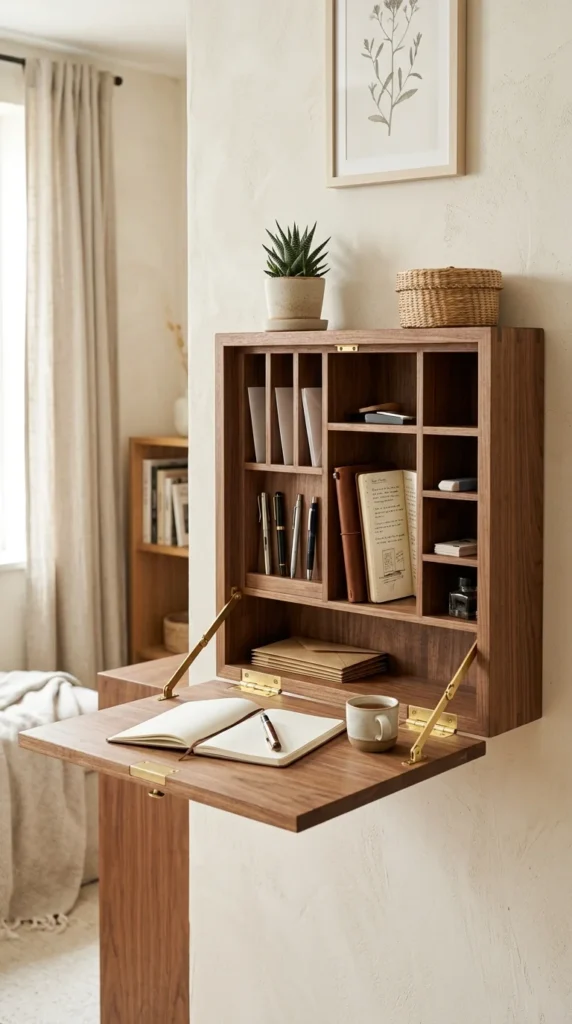
For those who truly lack space, a fold-down or “murphy” desk is a game-changer. These units provide a sturdy work surface during the day and disappear into the wall at night. It is the perfect solution for multi-functional rooms, such as a bedroom or a dining area, where a permanent desk would feel intrusive.
5. Ladder Desk
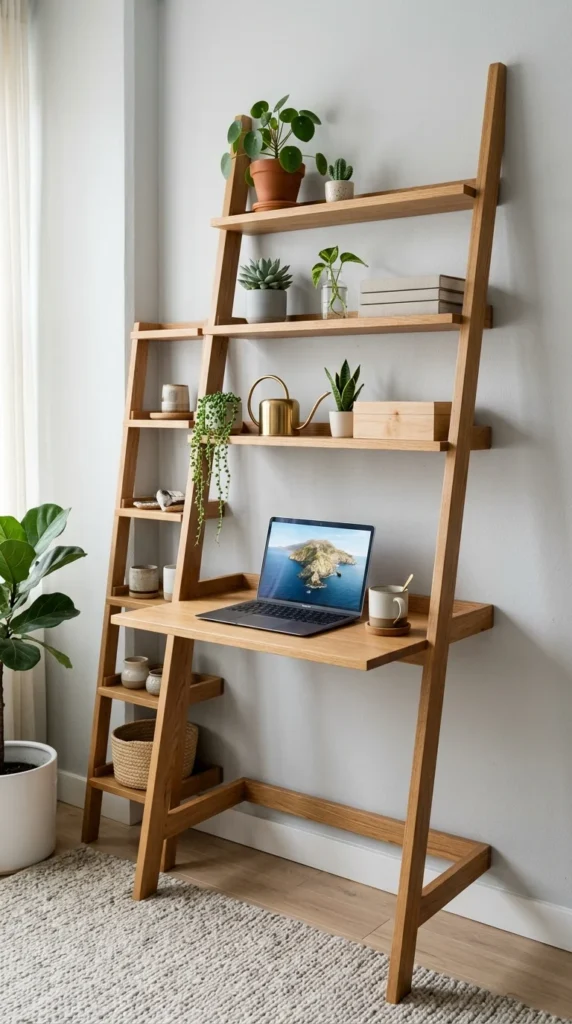
Ladder desks are excellent for small apartments because they offer vertical storage without the visual weight of a traditional bookshelf. Their slanted profile makes them feel less bulky, and the tiered shelving allows you to store office supplies, books, and decor in a way that feels curated and airy.
6. Room Divider
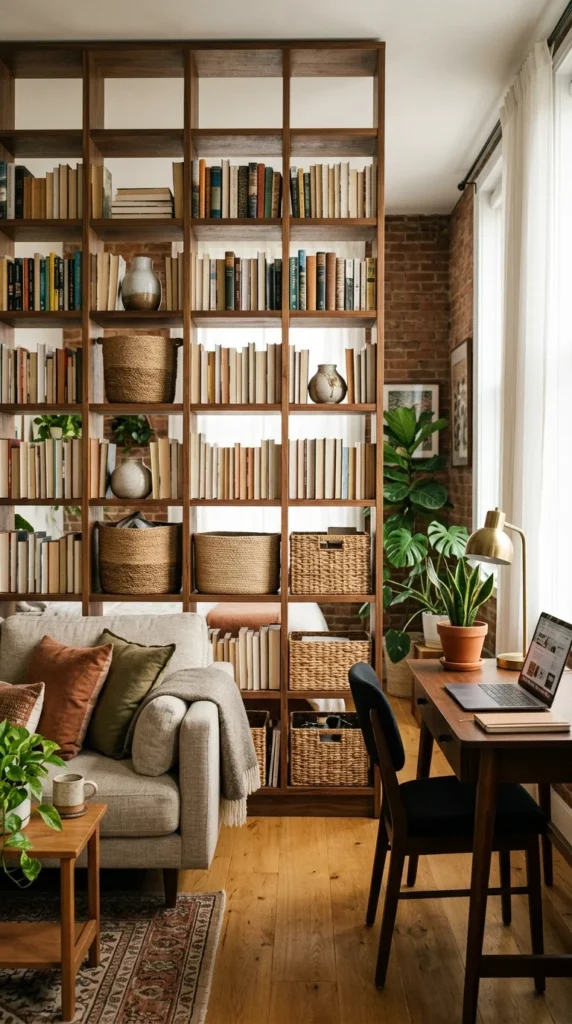
If you live in a studio, the lack of walls can be a productivity killer. Use an open-back shelving unit as a room divider to separate your “office” from your “bedroom.” This creates a psychological barrier that helps you focus. Because the shelf is open, it doesn’t block light, keeping the entire apartment feeling bright and connected.
7. Window Sill
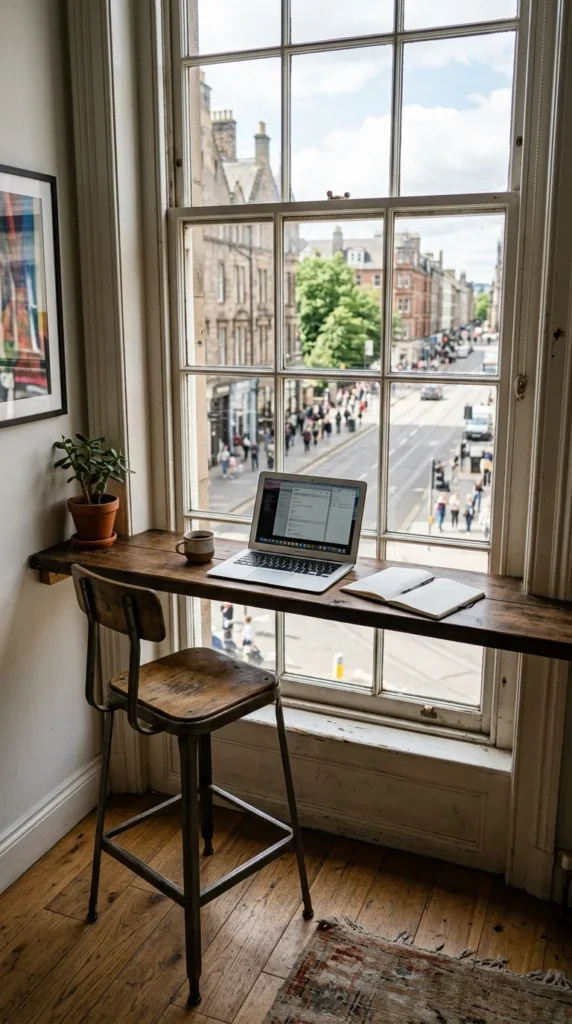
If you have deep window sills, you have a built-in desk. Working by a window provides ample natural light and a view to rest your eyes on during breaks. Even if your sills aren’t deep enough, placing a slim console table directly in front of a window achieves a similar effect, turning a redundant architectural feature into a focal point.
8. Vertical Storage
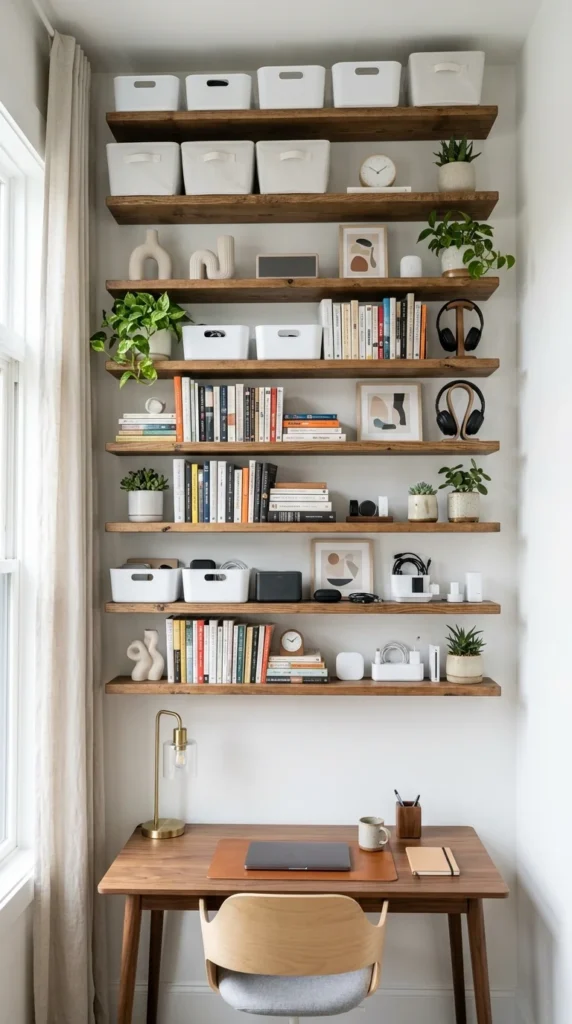
In a small apartment, your walls are your best friend. Instead of a wide desk with drawers, opt for a simple table and utilize the vertical space above it. Floor-to-ceiling shelving can hold your printer, files, and reference books, keeping the desk surface clear for your actual work.
9. Behind Sofa
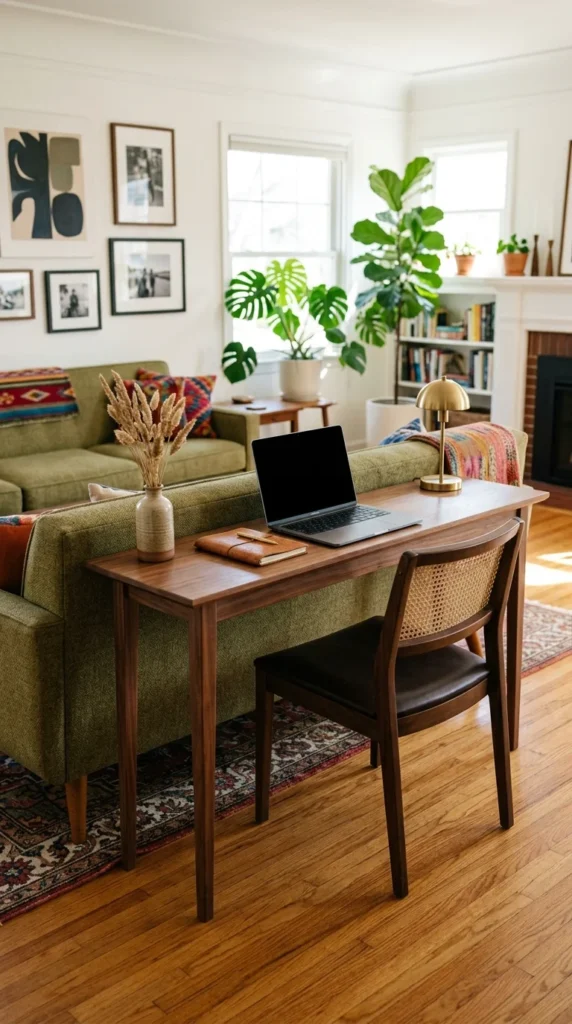
The space behind a sofa is often underutilized. By placing a long, narrow desk there, you create a functional workspace that integrates seamlessly into your living room layout. This “sofa table” approach is perfect for people who like to stay connected to the rest of the household while they work.
10. Bedside Desk
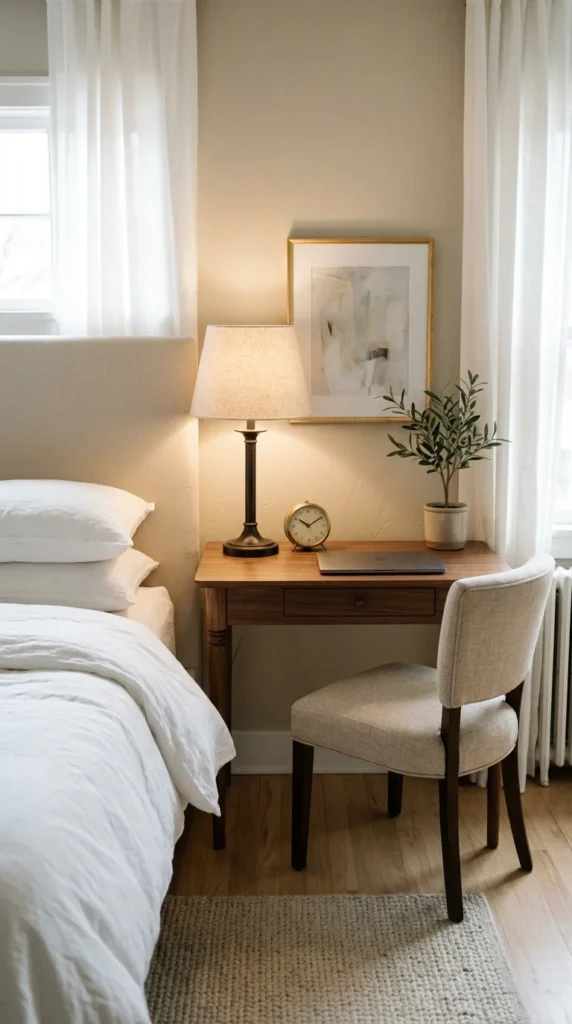
If you don’t have room for both a nightstand and a desk, let one piece of furniture do both. A small desk next to the bed can hold your lamp and phone at night and serve as a productive hub during the day. Choose a desk with a drawer to hide away work items before you go to sleep to maintain a restful atmosphere.
11. Minimalist White
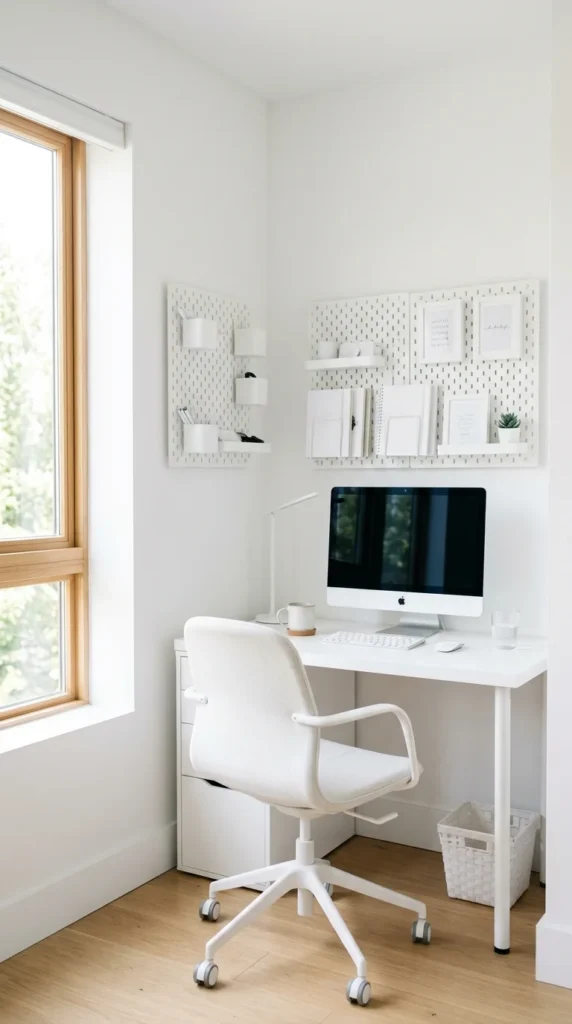
Visual clutter can make a small room feel claustrophobic. By choosing a desk and chair that match the color of your walls (usually white or light grey), you make the furniture “disappear” into the background. This monochromatic approach creates a clean, serene environment that is conducive to deep work.
12. Gallery Wall
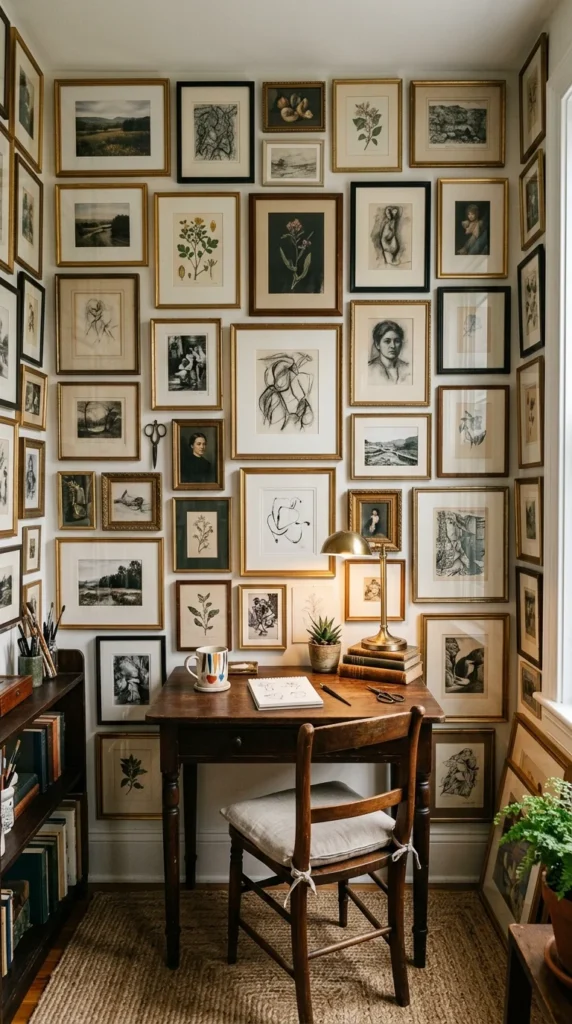
Make your office feel like a part of your home by surrounding it with art. A gallery wall around your desk helps to define the space and makes the functional furniture feel like a curated design element. It also provides a beautiful backdrop for video calls.
13. Plant Haven
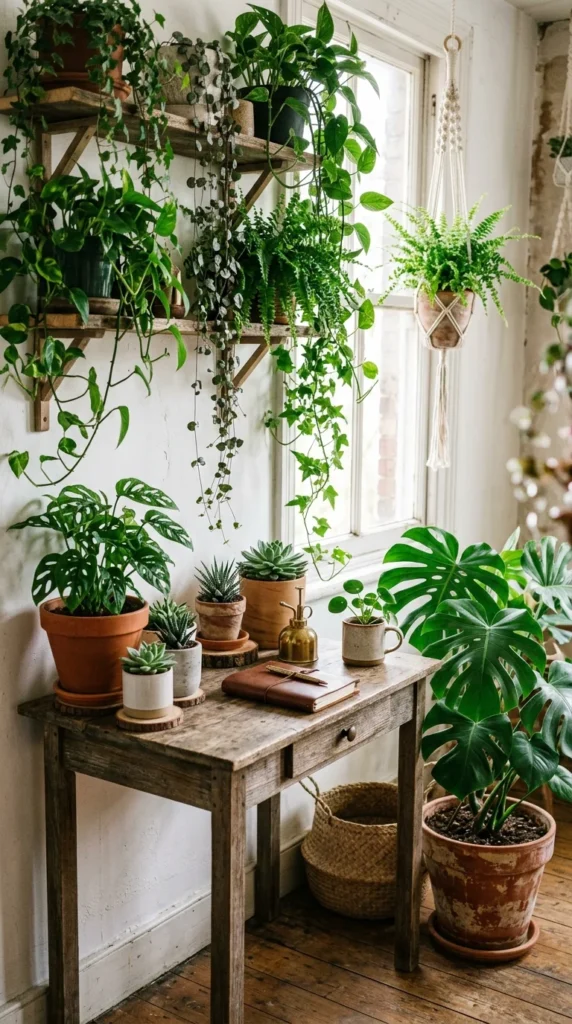
Plants aren’t just decorative; they are known to boost productivity and reduce stress. In a small apartment, “jungle-fying” your workspace can make it feel more vibrant and alive. Use hanging planters or wall-mounted pots to save desk space while still enjoying the benefits of nature.
14. Rolling Cart
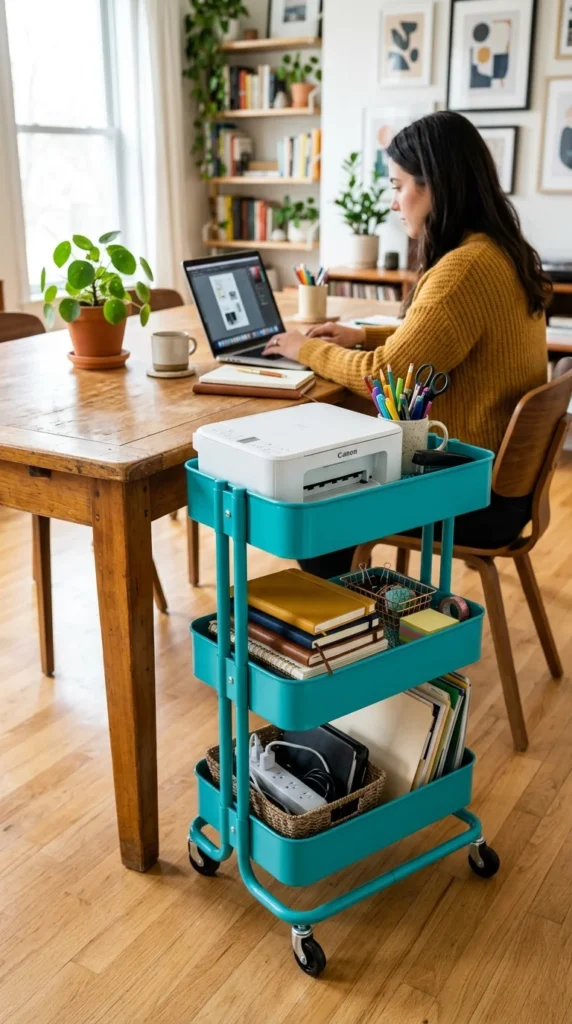
If you don’t have a permanent spot for an office, a “mobile” office is the solution. A rolling utility cart can hold all your essentials—printer, paper, stationery—and can be wheeled to the dining table or sofa when you’re working, then tucked into a corner or closet when the workday ends.
15. Hidden Storage
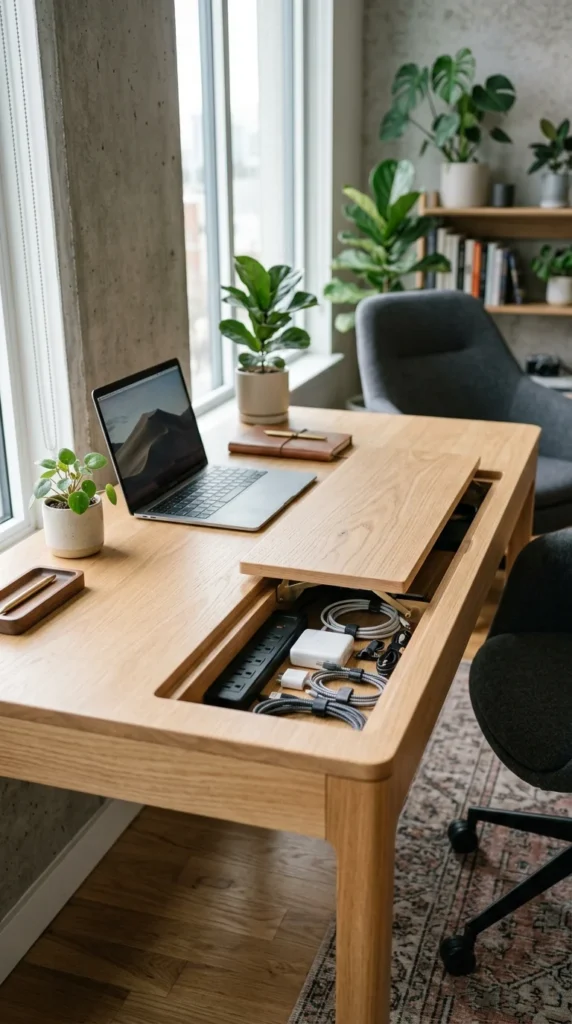
Cables are the enemy of a clean aesthetic, especially in small spaces where every detail is noticed. Look for desks with built-in cable management or hidden compartments. Keeping your tech tucked away makes the workspace feel less “techy” and more “homey.”
16. Pegboard Walls
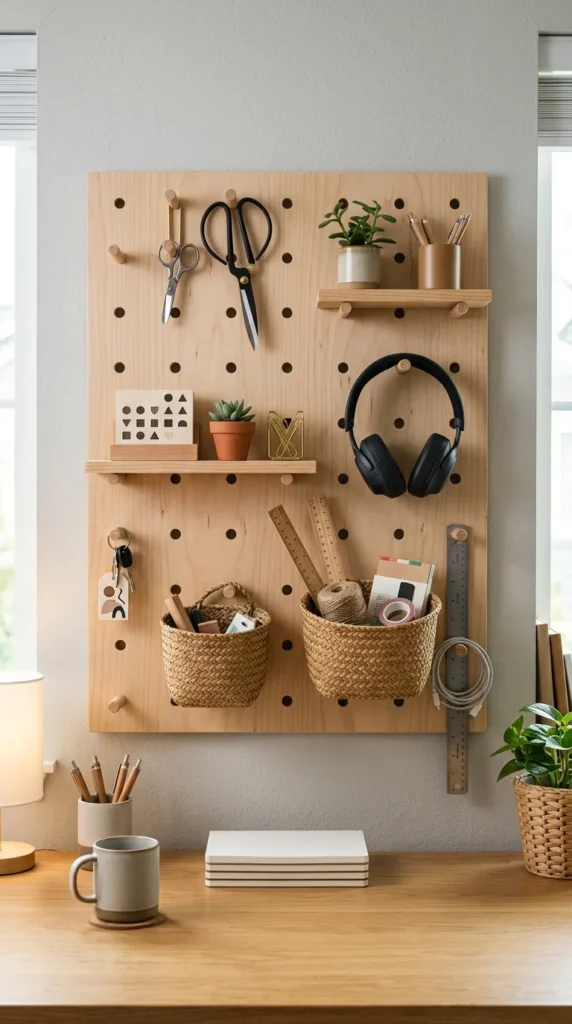
Pegboards are the ultimate customizable storage solution. They allow you to move shelves and hooks around as your needs change. By hanging your supplies on the wall, you free up valuable desk real estate and keep everything you need within arm’s reach.
17. Mirror Trick
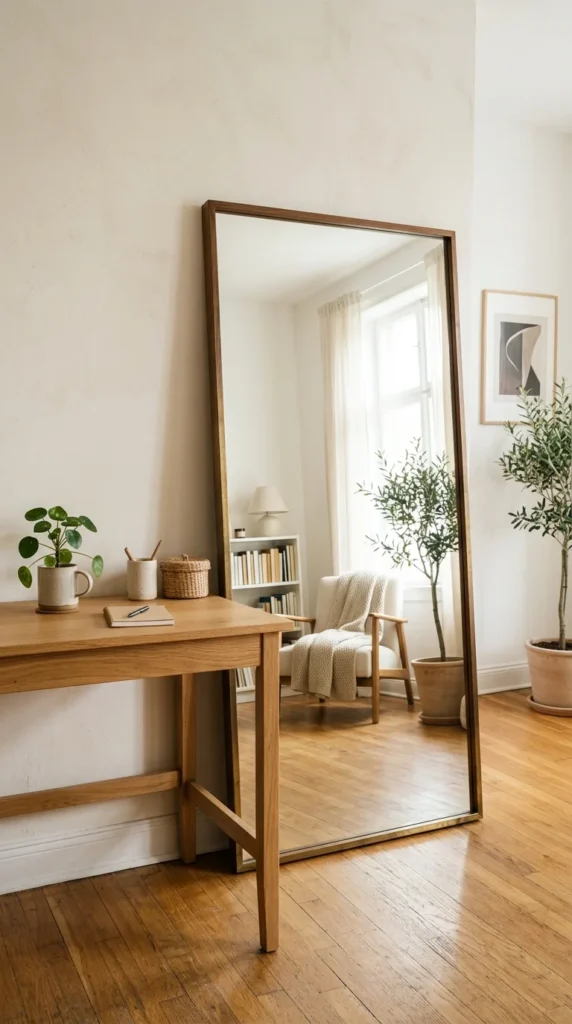
Mirrors are a classic interior design trick for small spaces. Placing a mirror behind your desk or on the opposite wall can make your office nook feel twice as large. It also helps to brighten the space by reflecting whatever light is available.
18. Rug Zonation
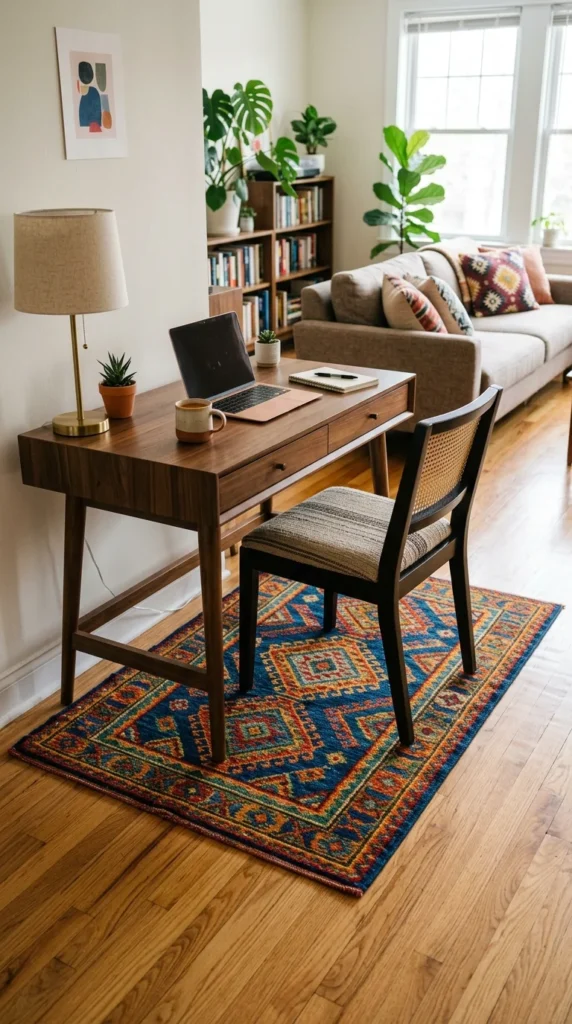
Sometimes, all you need to define a space is a change in floor texture. Placing a small area rug under your desk and chair physically and visually “zones” the office area. This helps your brain recognize that when you are on the rug, you are at work.
19. Tech Drawer
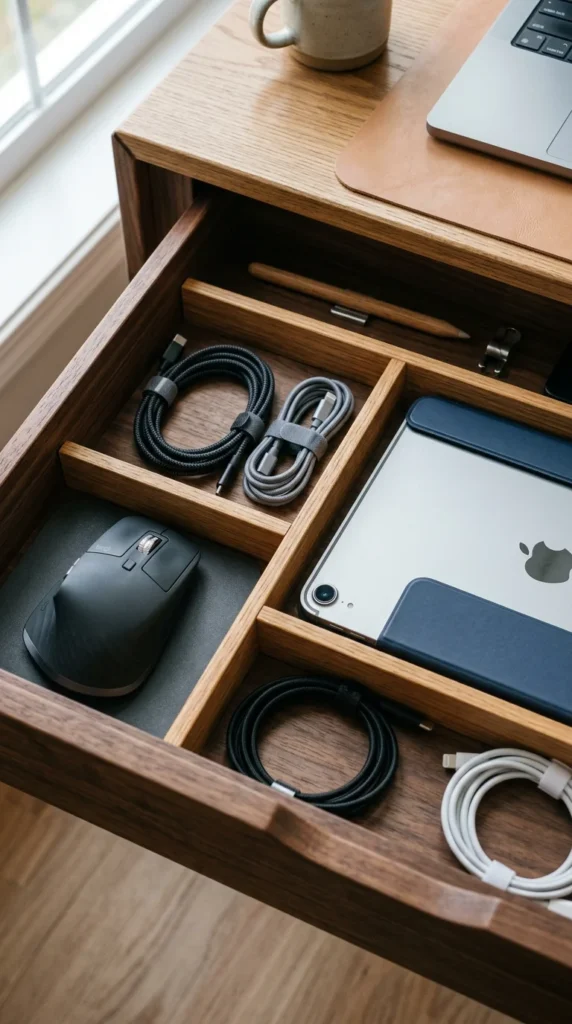
In a small apartment, every surface counts. Avoid the “tech sprawl” by designating a specific drawer for your electronics and peripherals. When you finish work, put your laptop and mouse in the drawer to reclaimed your living space.
20. Ergo-Stool
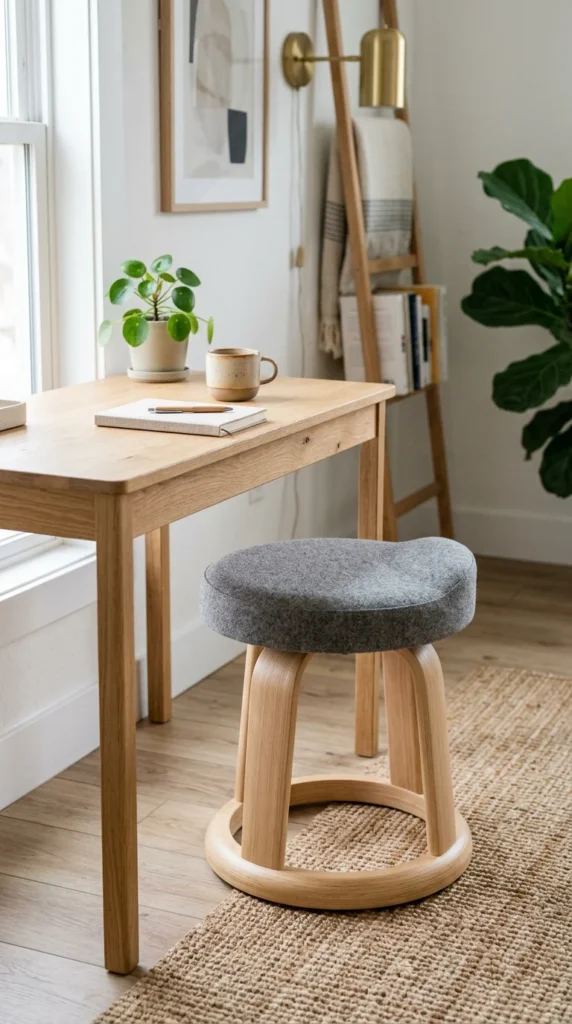
Traditional office chairs are often bulky and visually heavy. For small spaces, consider an ergonomic stool or a “sit-stand” perch. These take up significantly less room, can be tucked completely under the desk, and often look more like furniture than office equipment.
21. Natural Light
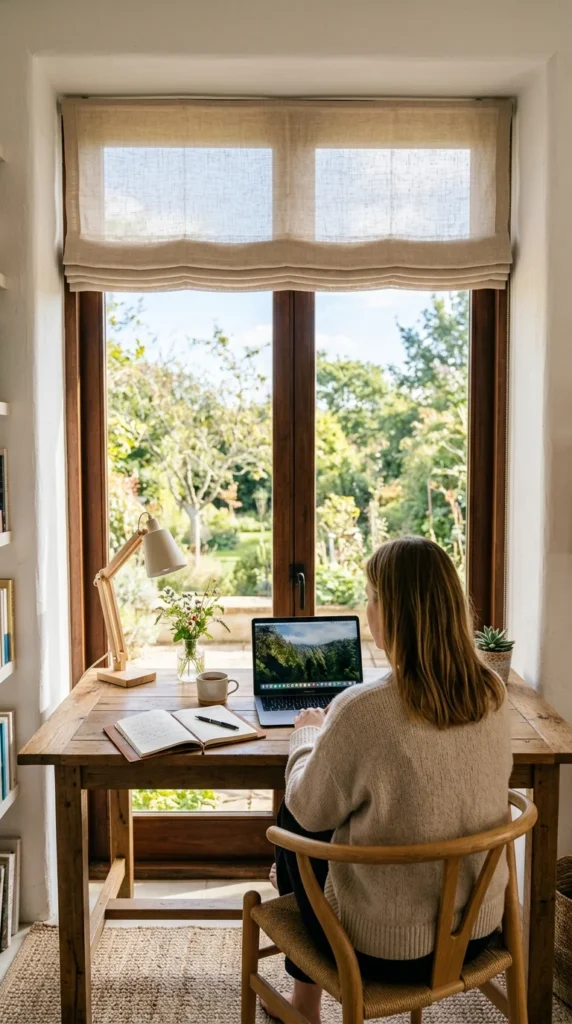
Positioning your desk to face natural light is one of the best ways to keep a small space from feeling gloomy. If possible, place your desk directly in front of or perpendicular to a window. This not only helps with productivity but also makes the “office” feel more expansive.
22. Monochromatic Palette
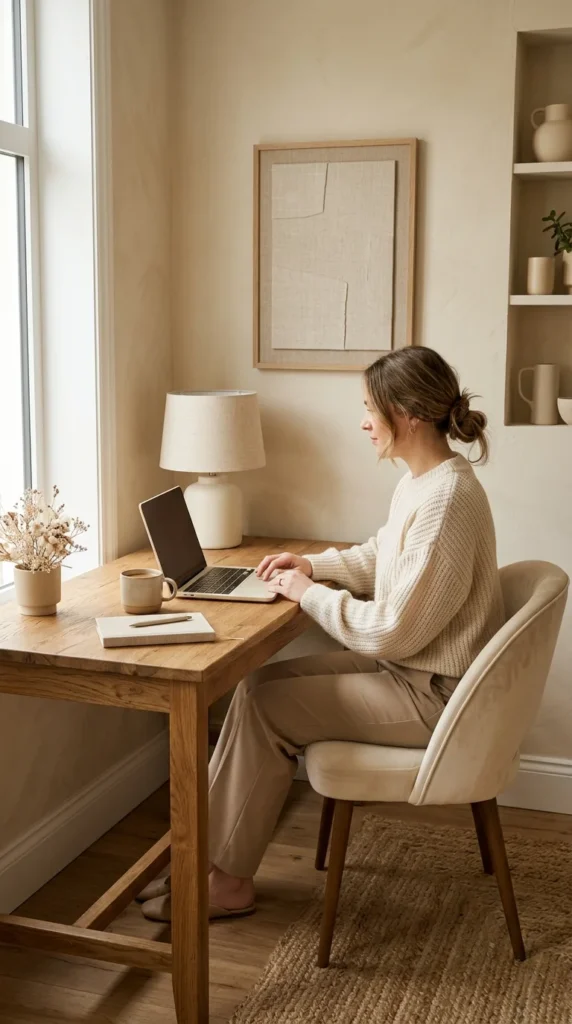
A monochromatic color palette reduces visual noise. By using different shades and textures of the same color, you create a sophisticated, cohesive look that makes the workspace feel like a deliberate part of the room’s architecture rather than a cluttered addition.
23. Built-in Shelves
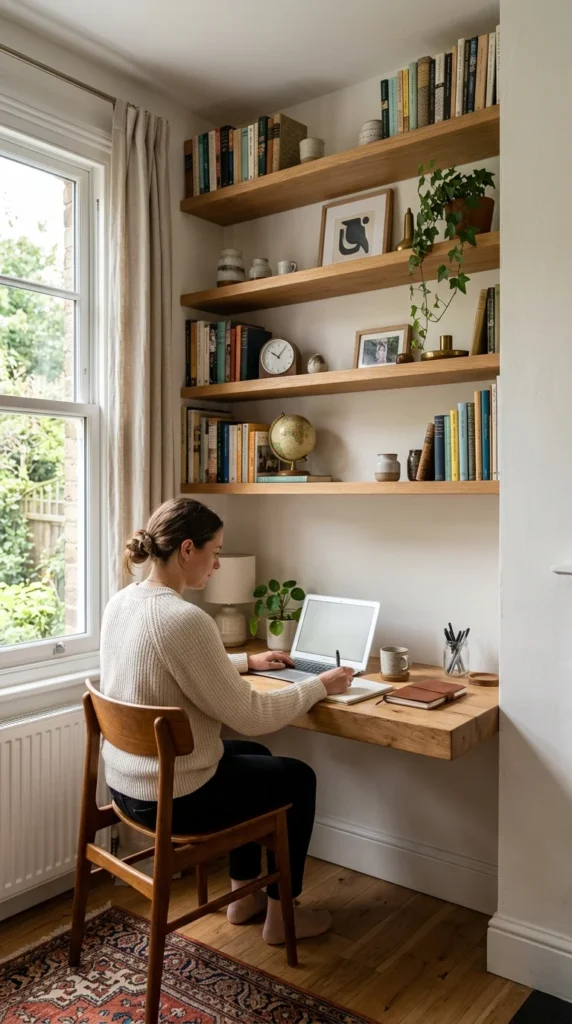
If your apartment has any alcoves or recessed walls, these are perfect for built-in desks. Custom-fitting a desktop and shelving into an existing niche creates a streamlined, “high-end” look that maximizes every inch of available space.
24. Acrylic Furniture
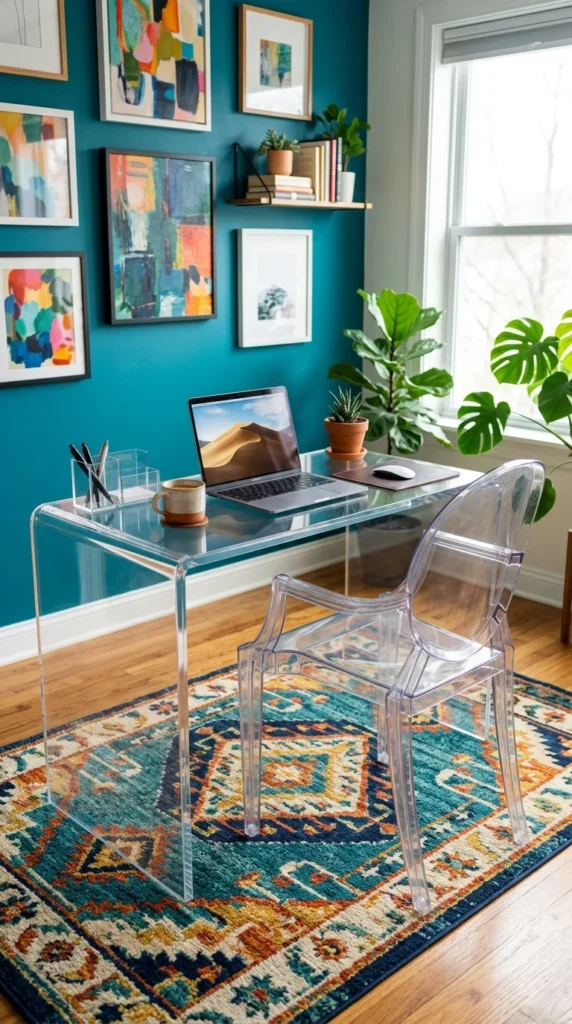
Acrylic or “ghost” furniture is the ultimate “invisible” solution for small homes. Because you can see right through these pieces, they don’t block your line of sight. This allows you to have a full-sized desk and chair that don’t make the room feel crowded or heavy.