
Living in a small apartment often feels like a constant game of Tetris. You want a place to sleep, a place to work, and—most importantly—a place to enjoy a meal that isn’t your sofa. While a formal dining room might be out of the question, a stylish and functional dining area is entirely within reach. Whether you have a tiny alcove, a narrow hallway, or just a spare corner in the living room, these 22 ideas will help you carve out a dedicated space to eat, entertain, and thrive.
1. Folding Tables
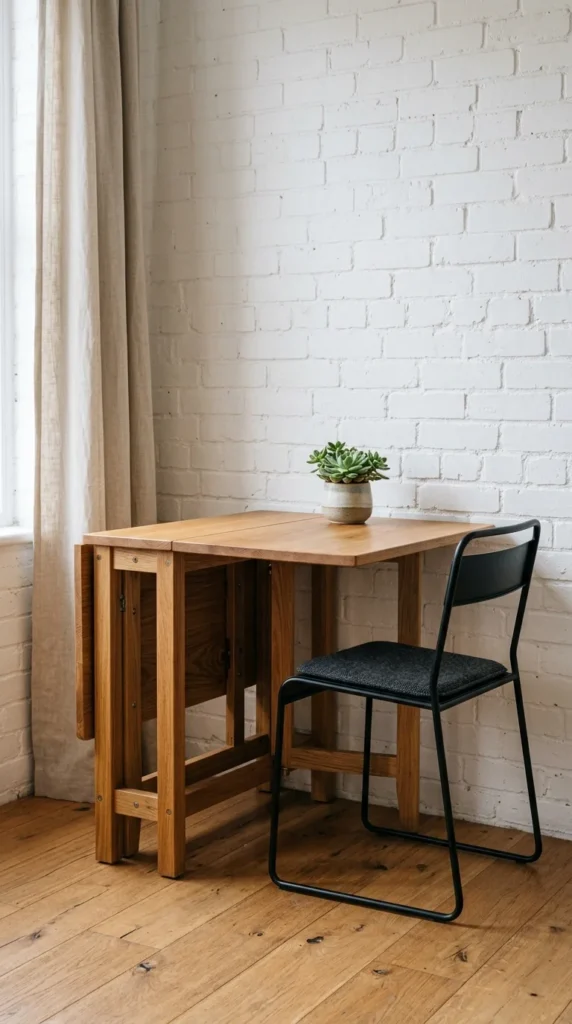
When floor space is at a premium, furniture that can disappear is your best friend. A folding table or a gateleg design allows you to have a full-size dining surface when guests over, but it can shrink down to a narrow console or disappear entirely when the meal is over. This flexibility is essential for studio apartments where the “dining room” needs to double as a walkway during the day.
2. Built-in Banquettes
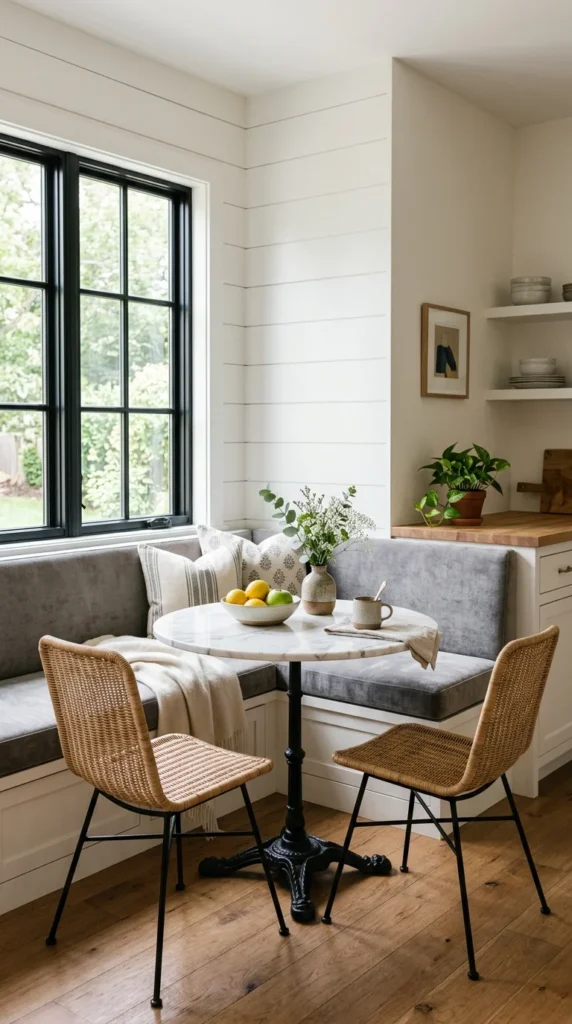
Banquettes are the ultimate space-saving secret. By pushing the seating against the wall (or into a corner), you eliminate the need for the “walk-around” space that traditional chairs require. Plus, many built-in benches offer hidden storage underneath the cushions—perfect for stashing seasonal linens or bulky kitchen gadgets.
3. Ghost Chairs
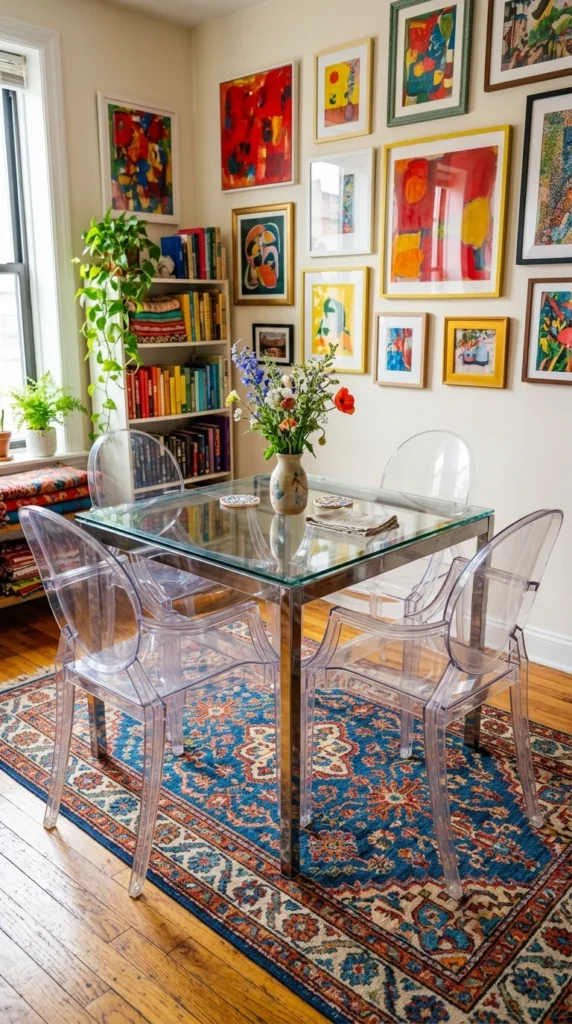
Visual clutter can make a small room feel claustrophobic. Ghost chairs, made of clear acrylic or polycarbonate, provide necessary seating without taking up any “visual” space. They allow light to pass through and keep the sightlines open, making your dining nook feel significantly airier and larger than it actually is.
4. Round Tables
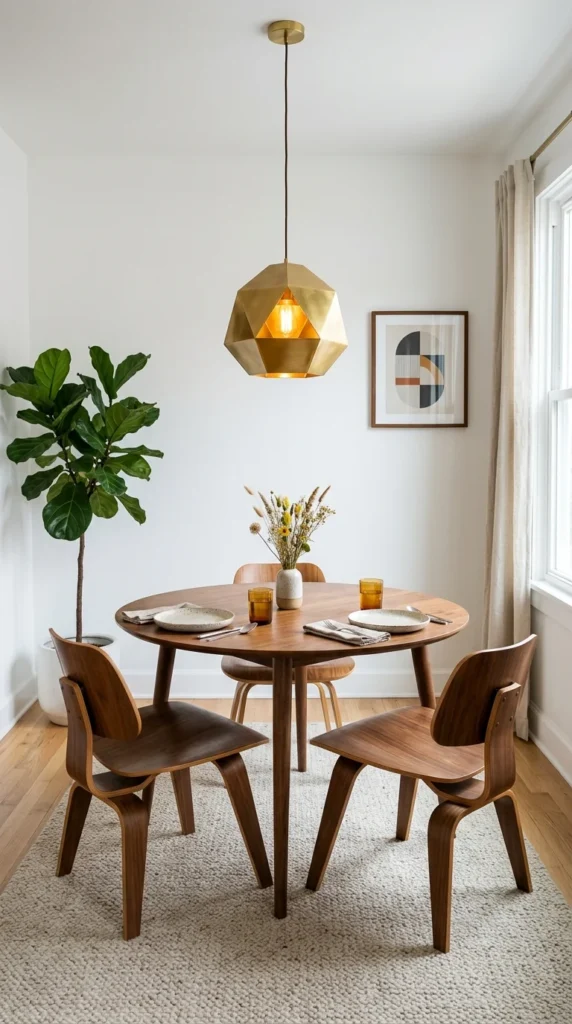
Sharp corners are the enemy of flow in tight quarters. A round table has a smaller footprint and lacks the harsh edges that can obstruct traffic in a small apartment. Because there are no corners, you can often squeeze an extra person around the table more comfortably than you could with a square or rectangular design.
5. Bistro Sets
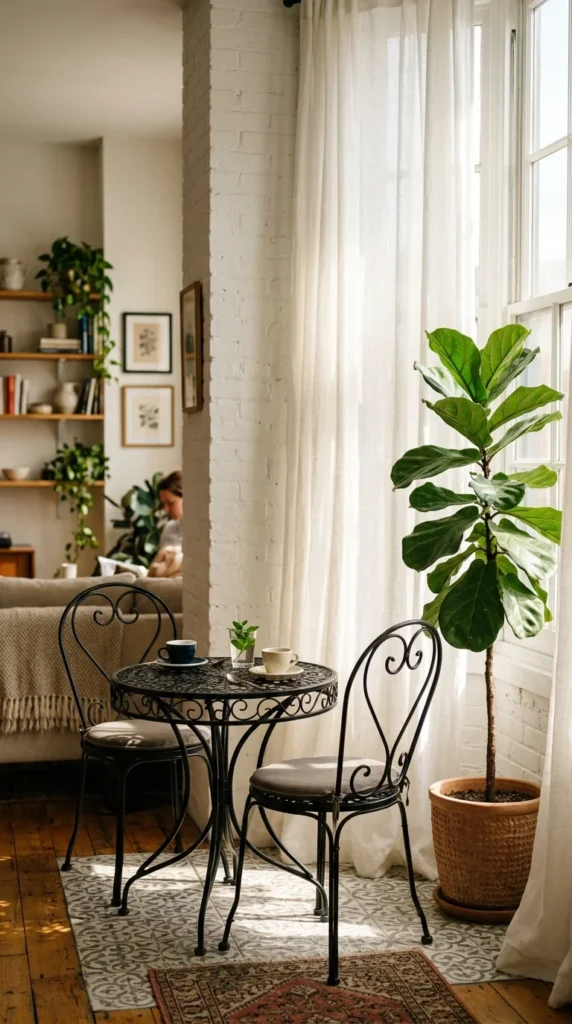
Borrow a page from the Parisians. A classic bistro set is designed for narrow sidewalks and tiny cafes, making it perfectly suited for apartment living. These sets are lightweight, often foldable, and add a touch of romantic charm to even the most utilitarian kitchen corners.
6. Wall-Mounted Desks
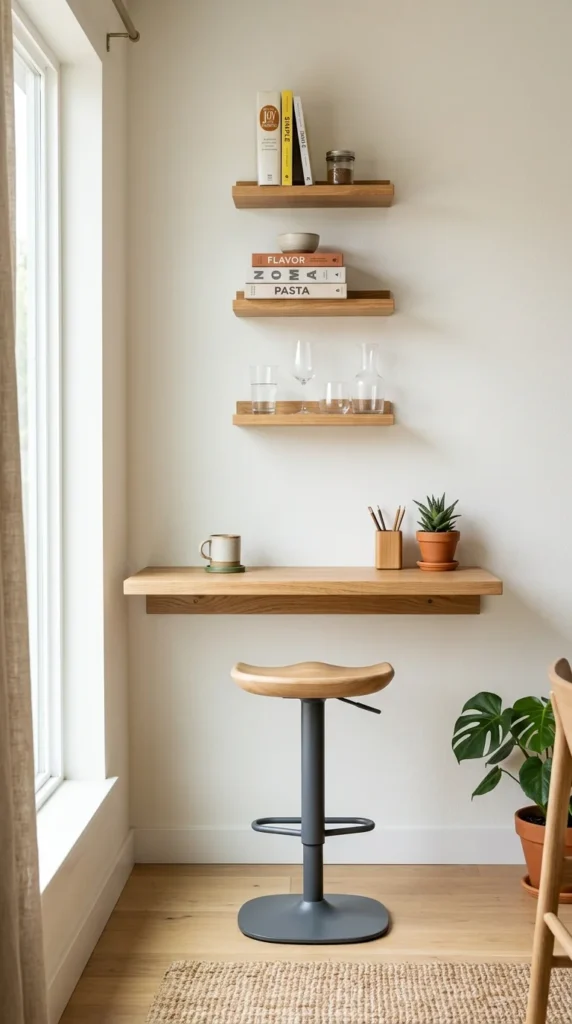
If you don’t have room for a standalone table, look to your walls. A wall-mounted “floating” table or a drop-down desk provides a sturdy surface for dining without the leggy clutter of a traditional table. When not in use for dinner, it serves as a perfect laptop station or a prep surface for cooking.
7. Pedestal Bases
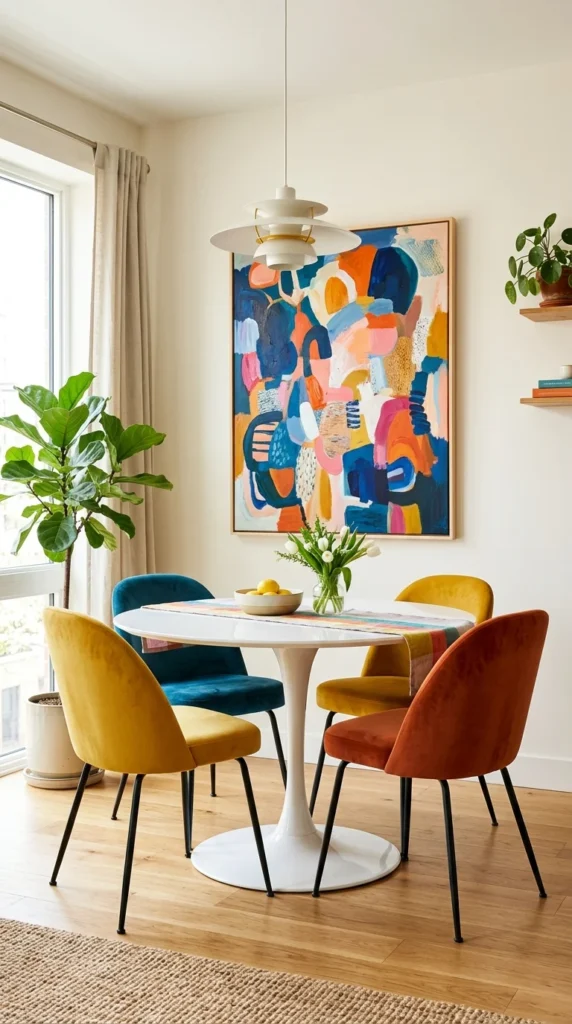
Traditional four-legged tables can be a nightmare in small spaces; legs get in the way of your own legs and prevent chairs from being tucked in fully. A pedestal table solves this by centralizing the support. This allows you to slide chairs in all the way, saving precious inches of floor space when the table isn’t in use.
8. Mirror Magic
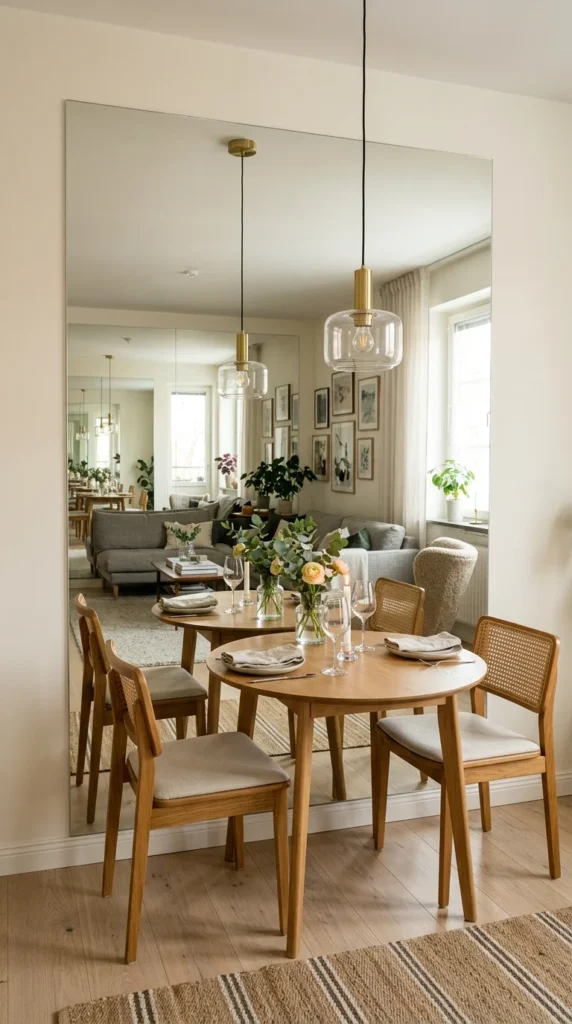
Mirrors are an interior designer’s favorite trick for a reason. By placing a large mirror adjacent to your dining area, you bounce light around the room and create the illusion of a much larger space. It transforms a cramped corner into an expansive-feeling “room” and adds a touch of sophistication to your meals.
9. Window Nooks
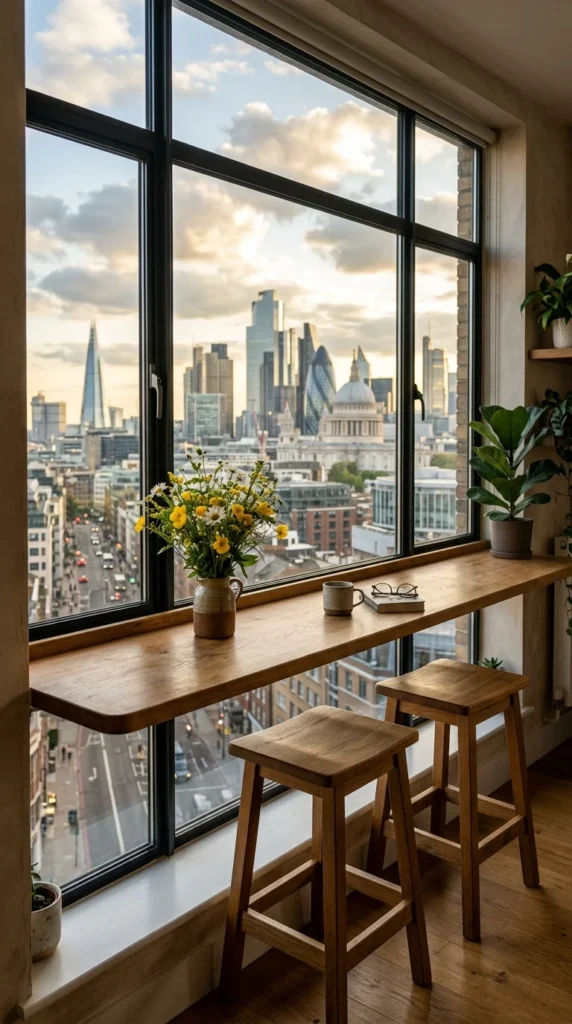
Turn a view into a feature. Installing a narrow shelf or “breakfast bar” along a window allows you to dine while looking outside, which naturally draws the eye outward and makes the interior feel less confined. It’s a great way to utilize the often-wasted space beneath a window frame.
10. Bench Seating
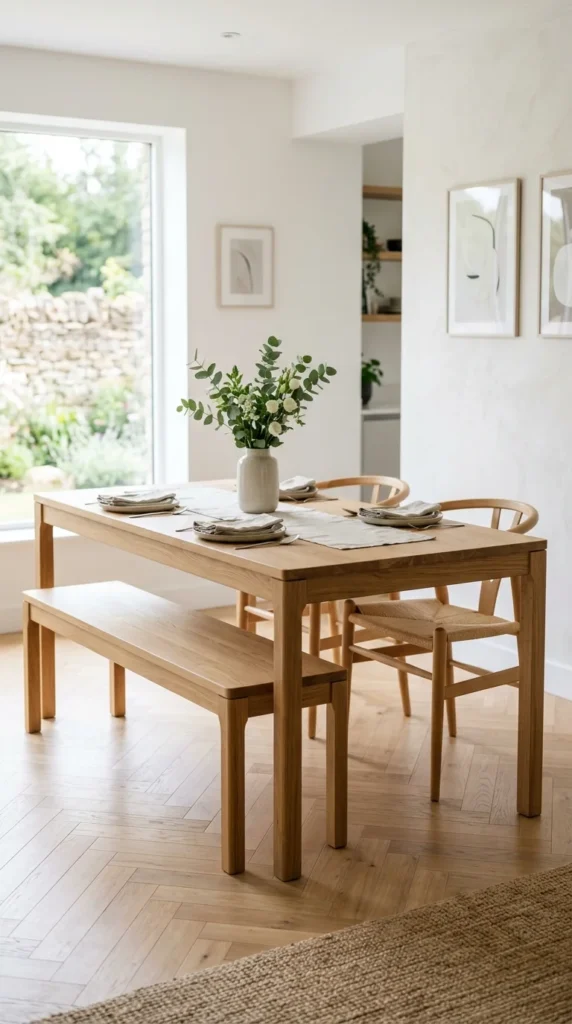
Benches are incredibly efficient because they can seat more people in a smaller footprint than individual chairs. Even better, a backless bench can be tucked entirely under the table when you’re done eating, clearing the walkway and keeping the room looking tidy.
11. Kitchen Islands
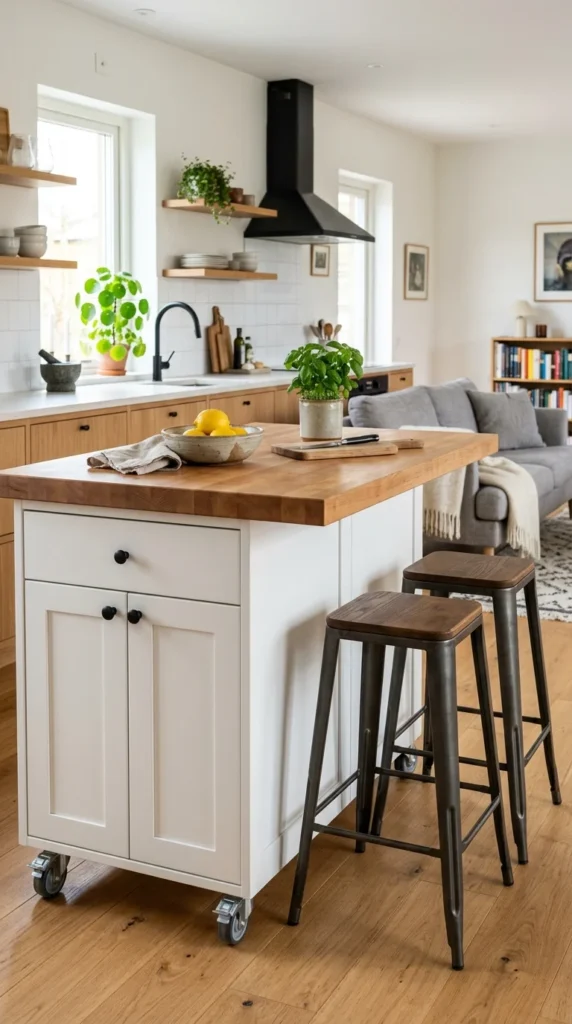
In a small open-plan apartment, a kitchen island can serve triple duty: as a prep station, a room divider, and a dining table. If your apartment didn’t come with one, a rolling kitchen cart with a slight overhang for stools can provide the same functionality with the added bonus of extra storage.
12. Rug Zoning
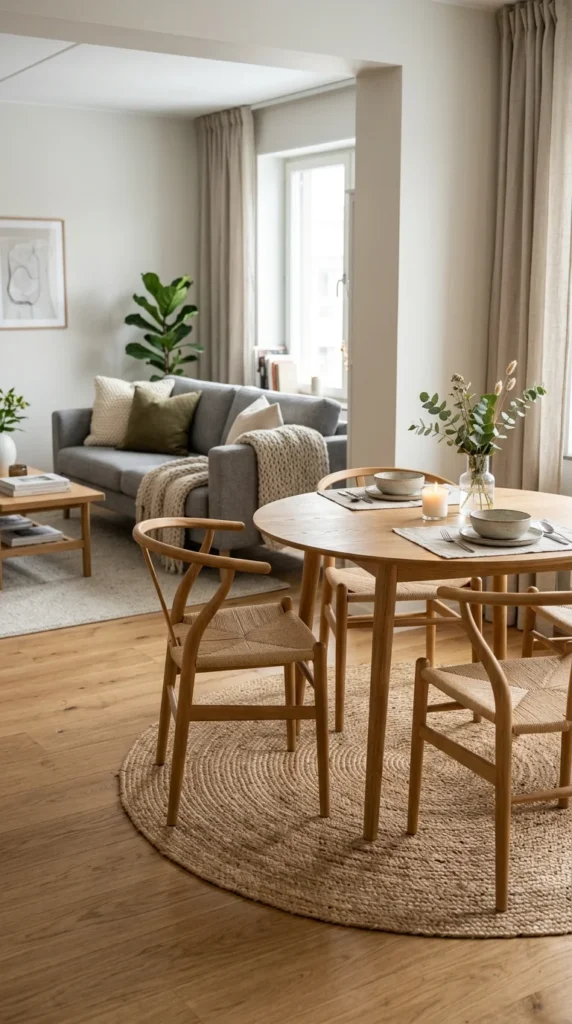
When your dining area is just a corner of your living room, you need to define the boundaries. A small area rug helps “zone” the space, mentally separating the eating area from the lounging area. This prevents the furniture from looking like it’s just floating aimlessly in the middle of the room.
13. Narrow Trestles
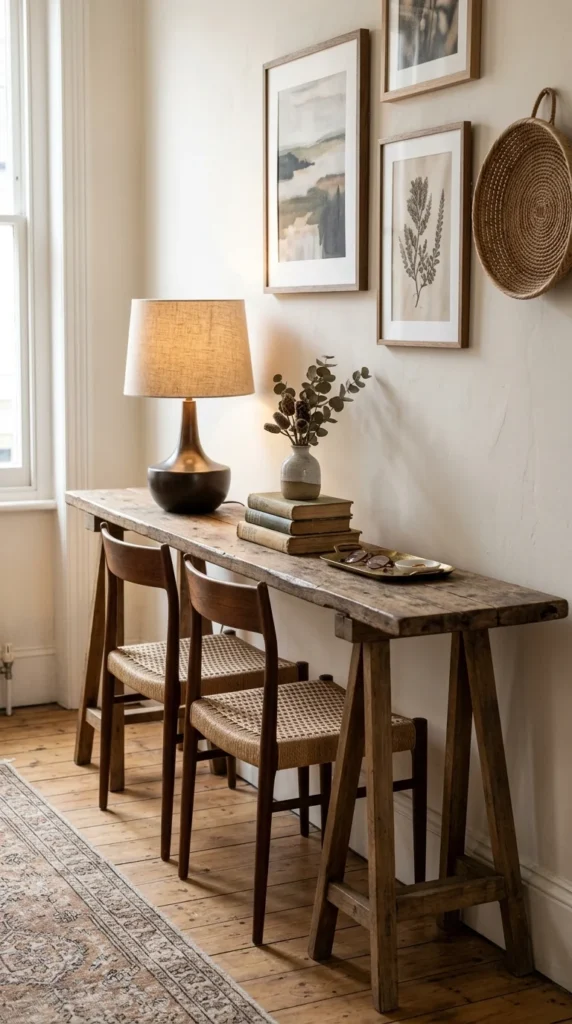
If your apartment is long and narrow, look for a “skinny” trestle table. These tables provide plenty of length for multiple people to sit side-by-side but have a shallow depth that doesn’t encroach on the main thoroughfare of the room. They are perfect for “hallway” dining setups.
14. Pendant Lighting
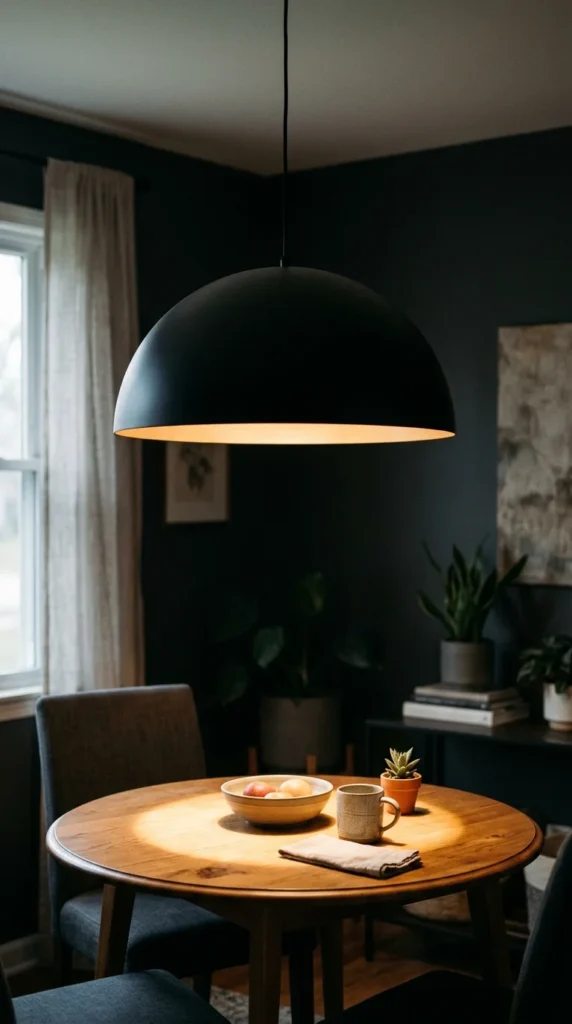
Lighting is key to creating atmosphere. A low-hanging pendant light over your dining table acts as a visual anchor. It draws the eye to the center of the “zone,” making the dining area feel like a deliberate, permanent room rather than an afterthought.
15. Monochromatic Palettes
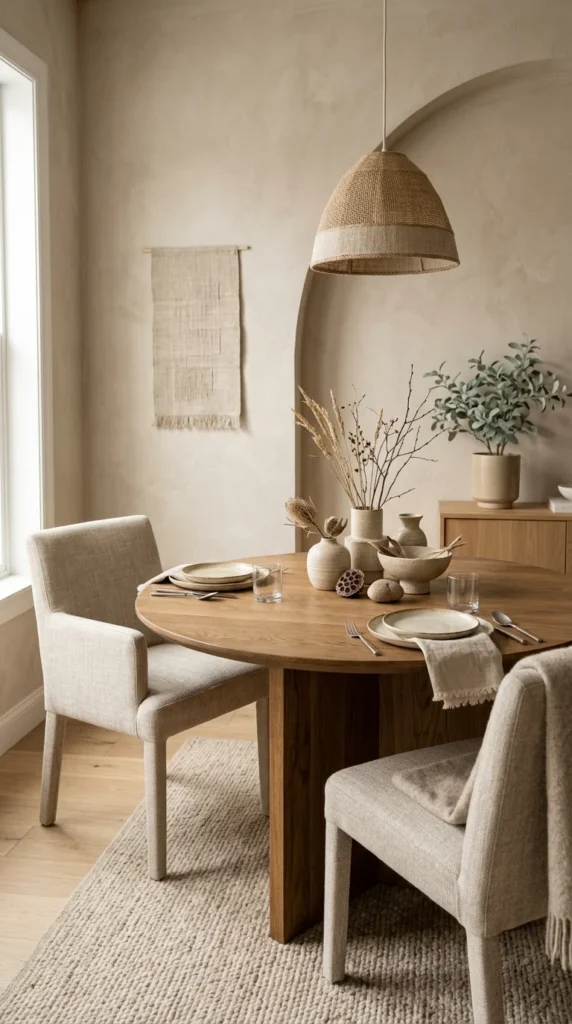
Using a monochromatic color scheme for your dining area helps it blend into the walls, reducing visual noise. When the furniture matches the wall color, the boundaries of the room seem to blur, making the entire apartment feel more cohesive and less cluttered.
16. Floating Shelves
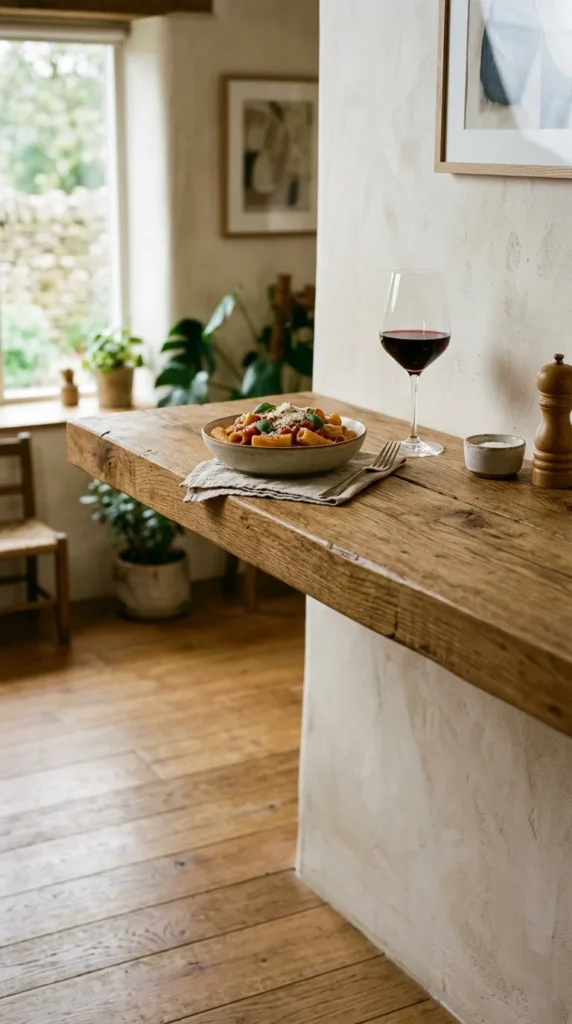
For the ultimate minimalist, a thick floating shelf mounted at bar height can serve as a “perch” for quick meals or morning coffee. Because there are no legs or bulky furniture pieces on the floor, the floor space remains completely open, which is the gold standard for small-space living.
17. Stool Seating
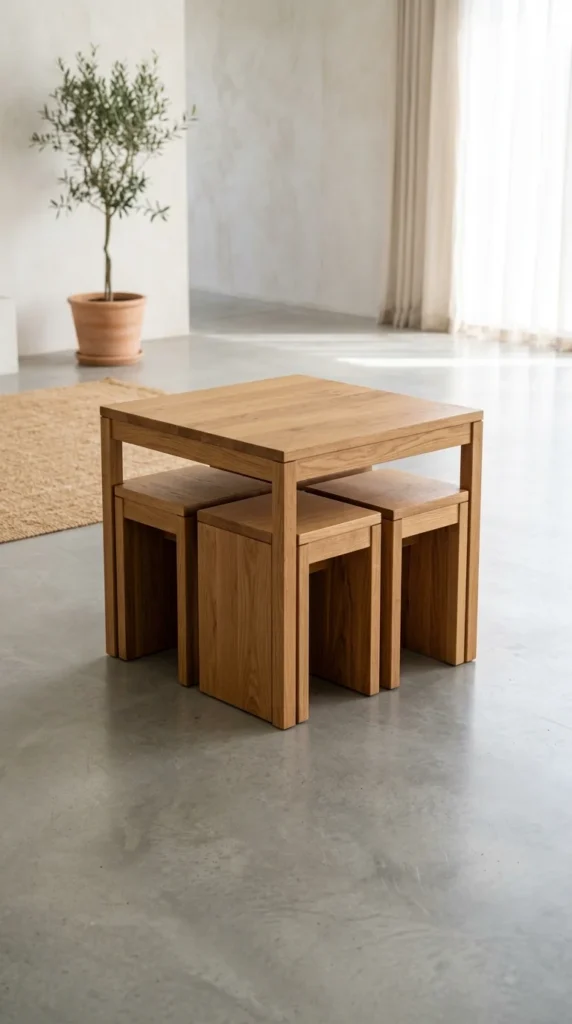
Backless stools are the champions of low-profile living. They don’t provide a visual “wall” the way high-backed chairs do. You can slide them entirely under the table, and they can easily be moved to the living area to provide extra seating for guests when needed.
18. Multi-functional Desks
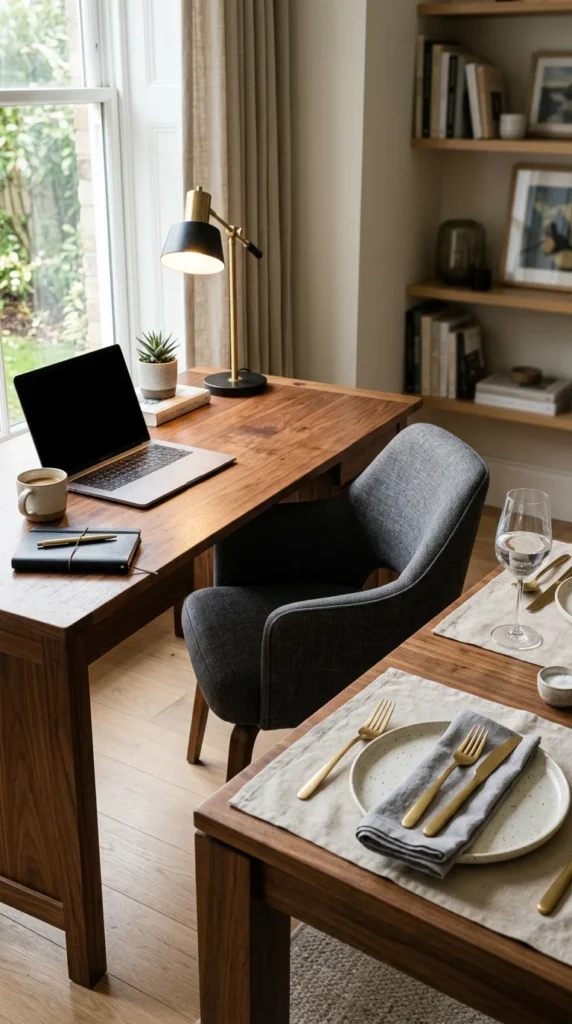
If you work from home, don’t feel obligated to have both a desk and a dining table. Invest in a high-quality, larger desk that can comfortably accommodate your work setup on one end and your dinner on the other. A beautiful “library” style table can make this dual-function feel intentional and chic.
19. Corner Nooks
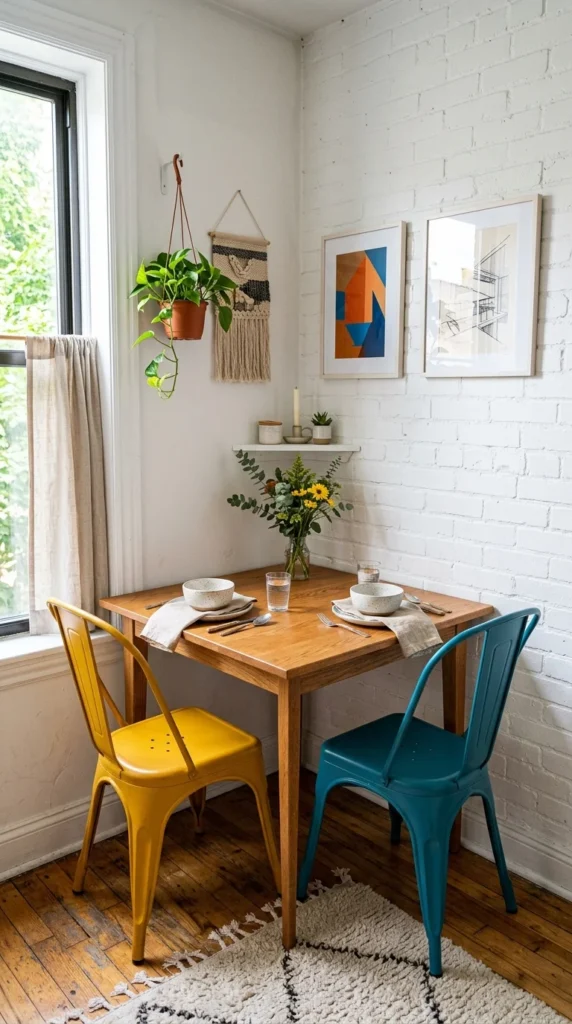
Don’t let awkward architectural corners go to waste. A custom-built triangular table or a small corner-wedge desk can turn a “dead” space into a functional dining spot. It’s about fitting the furniture to the architecture, rather than trying to force a standard rectangular table into a weird space.
20. Under-Table Storage
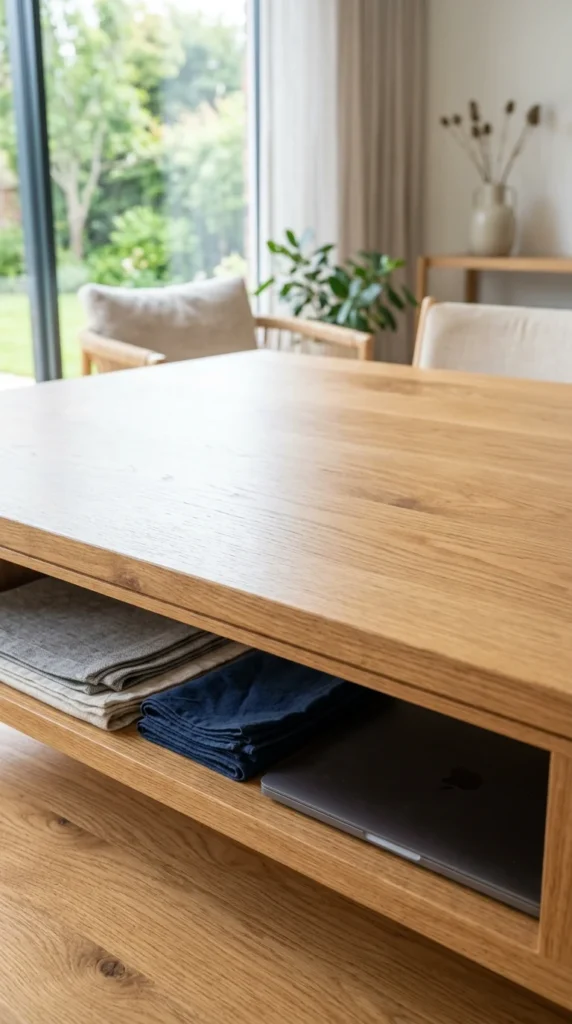
In a small apartment, every surface should work twice as hard. Tables with built-in drawers or lower shelves allow you to keep the tabletop clear of clutter while keeping dining essentials—or even your work-from-home gear—within arm’s reach.
21. Bold Accents
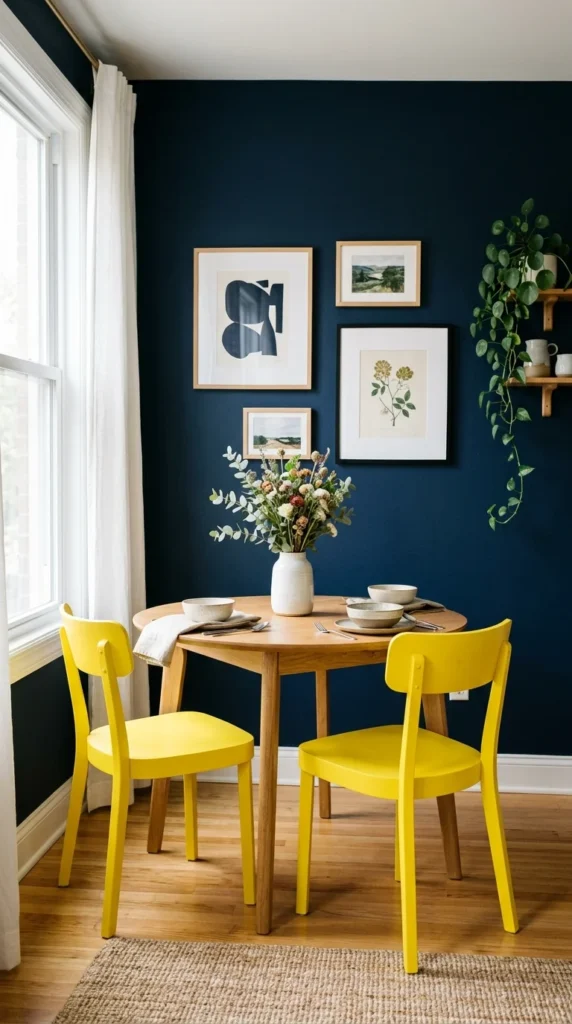
Sometimes, the best way to deal with a small space is to lean into it. By using a bold accent color or a striking wallpaper in your dining nook, you make it a focal point. Instead of noticing how small the area is, people will notice the vibrant design and the personality of the space.
22. Gateleg Tables
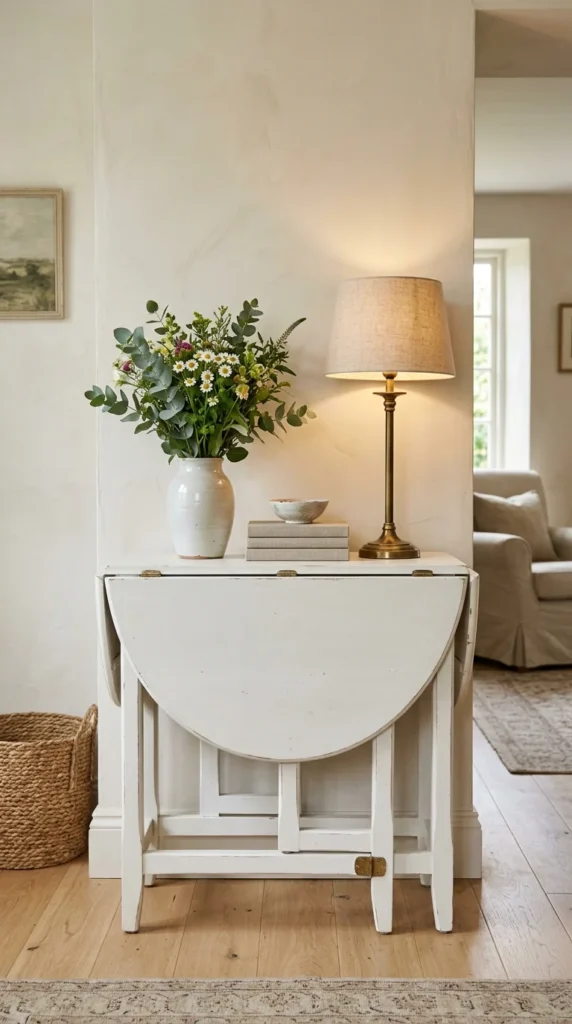
The gateleg table is a centuries-old solution that is still perfect today. It’s the transformer of the furniture world. When closed, it’s a slim console table; when one leaf is up, it’s a desk; and when both are up, it’s a full dining table. It offers the maximum amount of utility for the minimum amount of permanent footprint.