
Living in a small space doesn’t mean you have to sacrifice style or comfort. In fact, compact quarters often spark the most creative design solutions. The secret isn’t just about what furniture you buy, but exactly where you place it. Strategic placement can trick the eye into seeing more square footage, improve traffic flow, and turn a cramped room into a cozy sanctuary. Here are 22 expert-approved furniture placement tips that will transform your small space.
1. Float Furniture
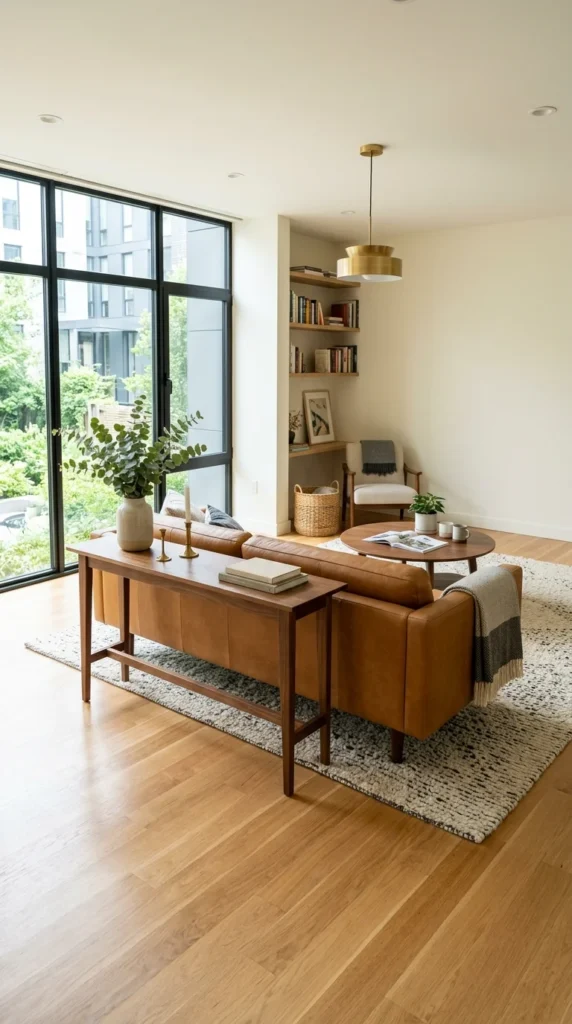
The most common mistake in small rooms is pushing all the furniture against the walls. While it seems like this would open up the floor, it actually highlights the room’s boundaries. By “floating” your sofa or chairs just a few inches—or even feet—away from the wall, you create an illusion of depth. This allows air and light to circulate around the pieces, making the room feel more breathable and less “boxed in.”
2. Define Zones
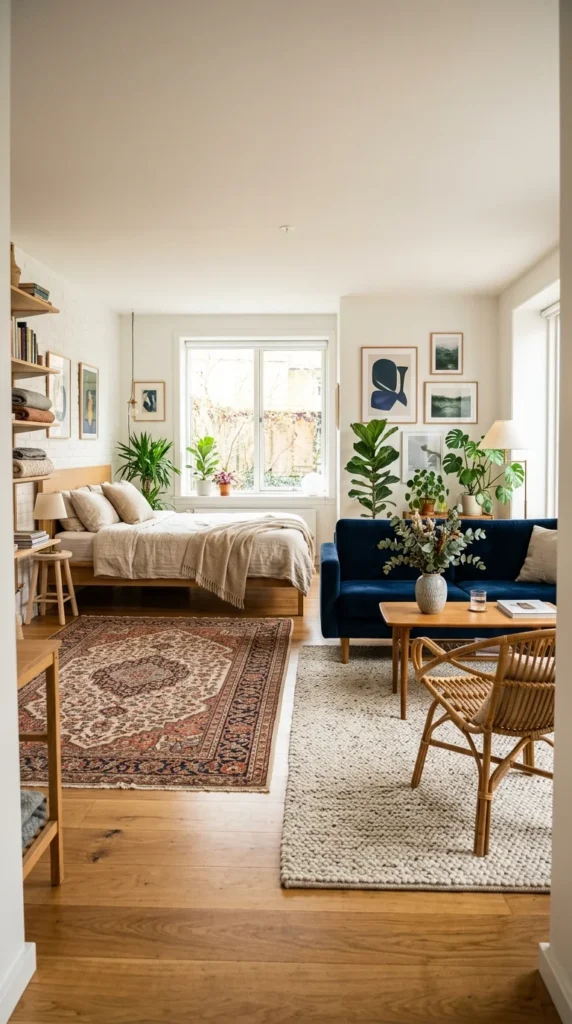
In a small open-plan space or a studio, furniture placement should serve as a map. Use rugs to “ground” specific areas. Placing a rug under the dining set and another under the living room seating creates distinct “rooms” without the need for physical walls. This organizational strategy prevents the space from looking like a cluttered jumble of furniture.
3. Vertical Shelving
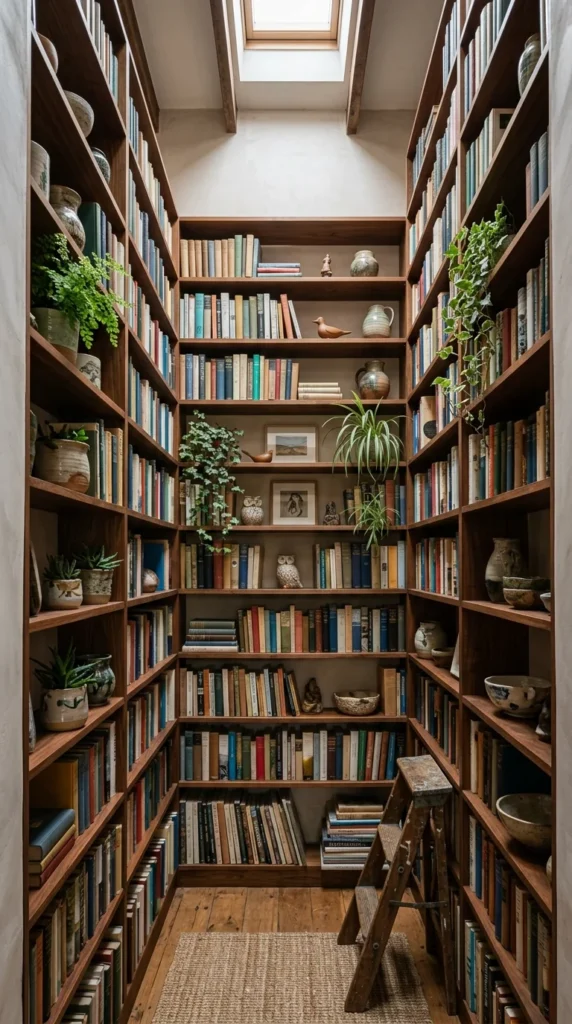
When floor space is at a premium, look up. Placing tall, narrow bookshelves or wall-mounted units draws the eye toward the ceiling. This vertical placement emphasizes the height of the room rather than its narrow width. Position these units in corners or flanking a doorway to utilize areas that are often left vacant.
4. Transparent Pieces
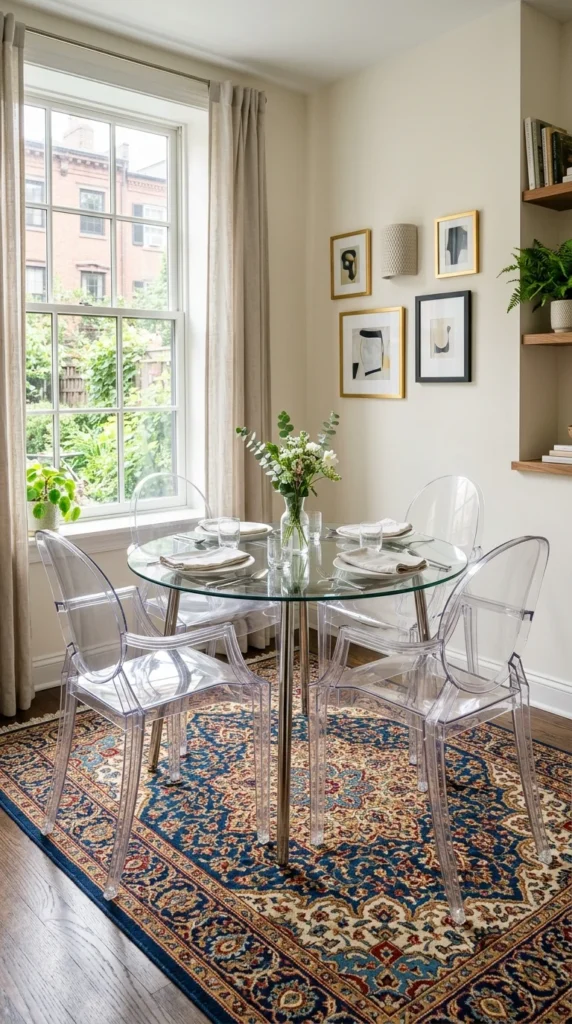
Furniture made of glass or acrylic is a small-space miracle. Because you can see right through them, these pieces have “zero visual weight.” Placing a glass coffee table in the center of a seating arrangement provides functionality without creating a visual block, making the floor area appear much larger than it actually is.
5. Mirror Magic
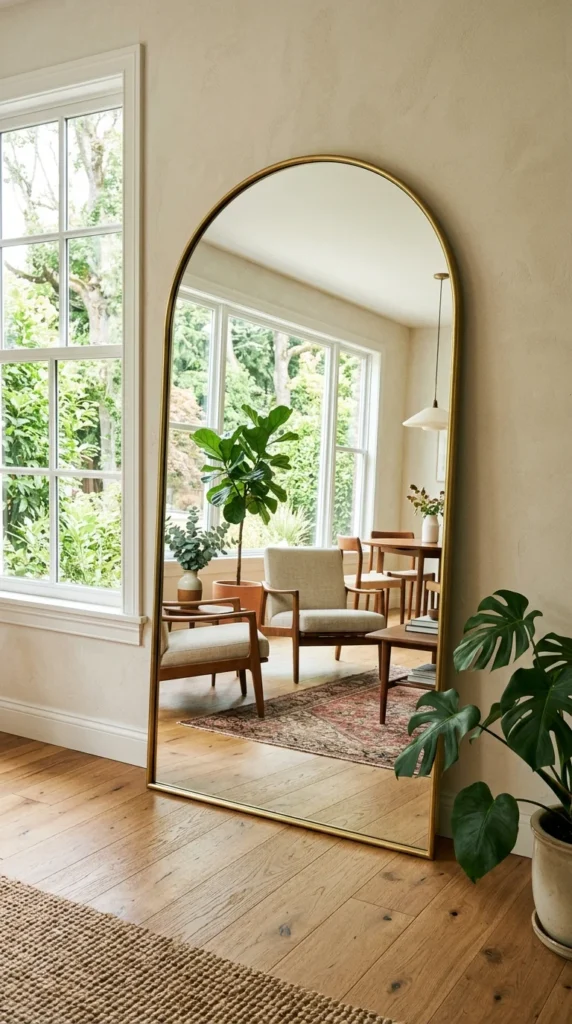
While mirrors are decor, their placement is a fundamental furniture strategy. Position a large mirror directly across from a window to bounce natural light deep into the room. This effectively “doubles” the visual space and creates a faux window effect, which is particularly useful in dark or windowless corners.
6. Corner Utilization
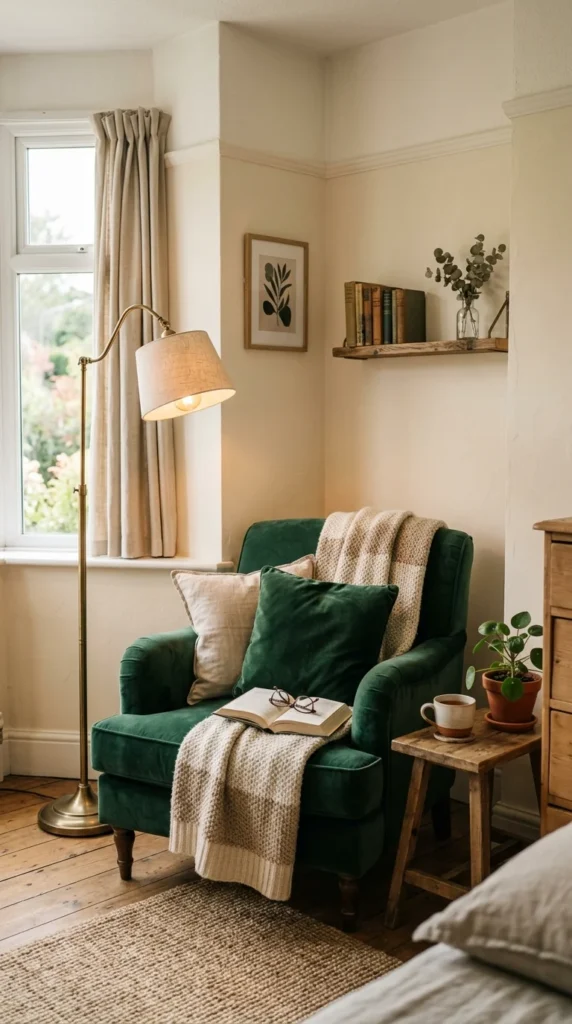
Corners are often wasted real estate. Instead of leaving them empty, place a corner desk, a triangular shelving unit, or a cozy armchair there. By filling the corners, you move the activity away from the high-traffic center of the room, making the overall layout feel more intentional and spacious.
7. Leggy Furniture
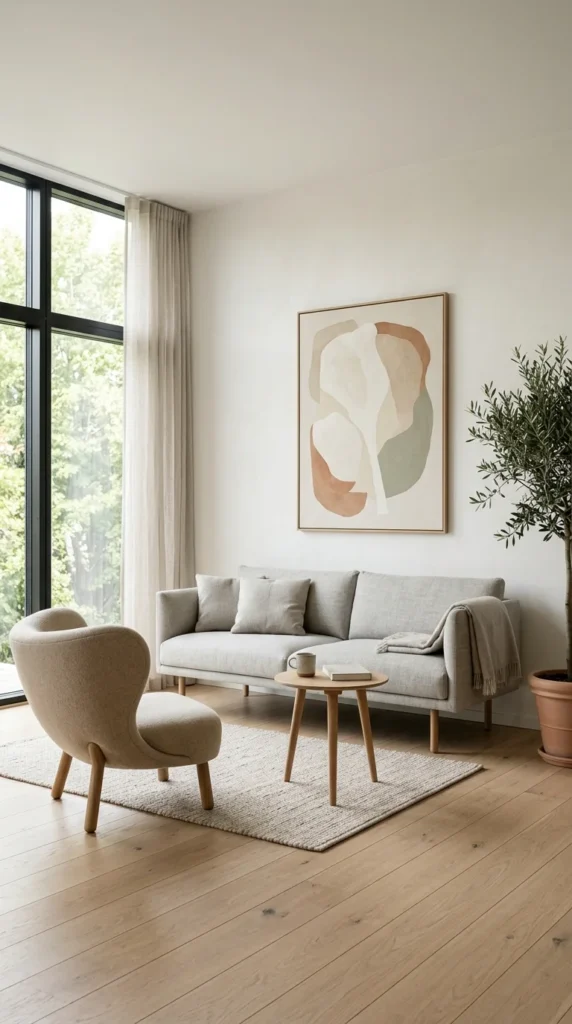
Furniture that sits flat on the floor can feel heavy and “clunky.” Opt for sofas, beds, and cabinets with exposed legs. When you can see the floor extending underneath the furniture, the room feels more open. This simple shift in placement and style prevents the floor plan from feeling “eaten up” by heavy upholstery.
8. Path Clearance
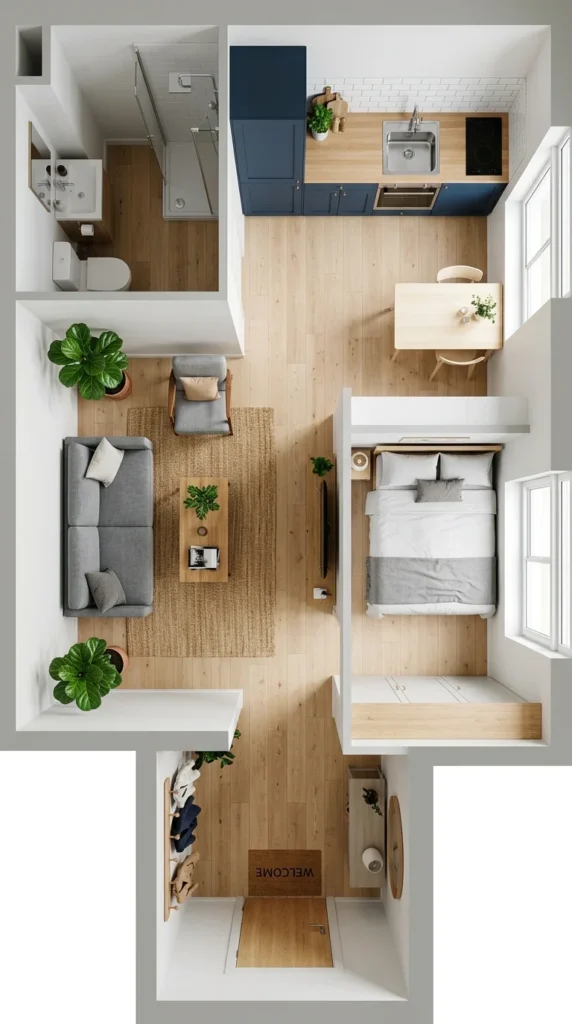
Good flow is essential for a small home to feel functional. Arrange your furniture to ensure there is a clear, straight path through the room. If you have to zig-zag around a coffee table or a chair to get to the kitchen, the space will feel smaller and more frustrating. Keep the “traffic lanes” at least 30 inches wide whenever possible.
9. Multi-functional Ottomans
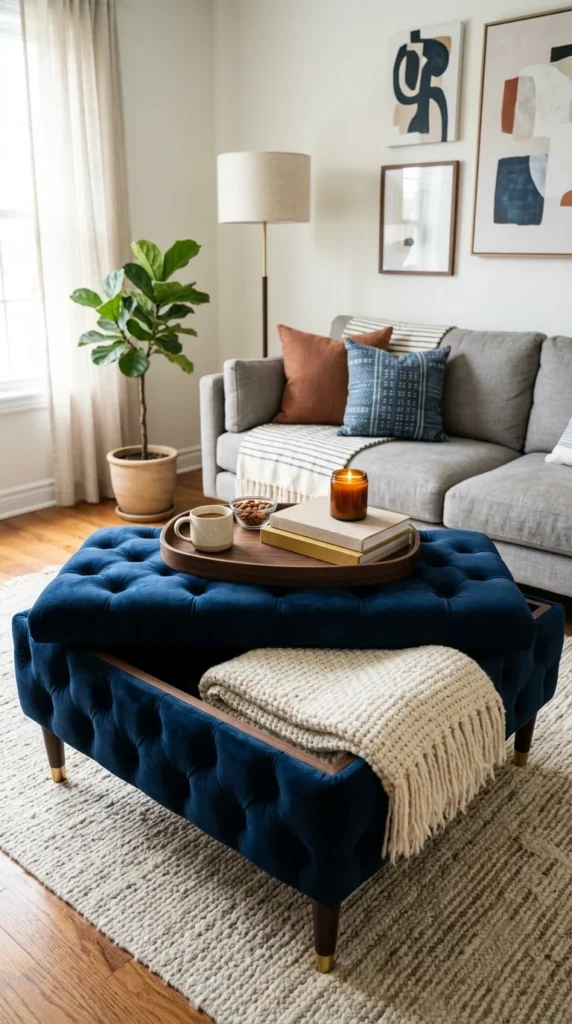
Swap a traditional coffee table for an oversized ottoman. Place it in the center of your seating group. It can serve as a table (with a tray), extra seating for guests, or a footrest. Many ottomans also come with hidden storage, allowing you to tuck away clutter that would otherwise shrink the room visually.
10. Low Profiles
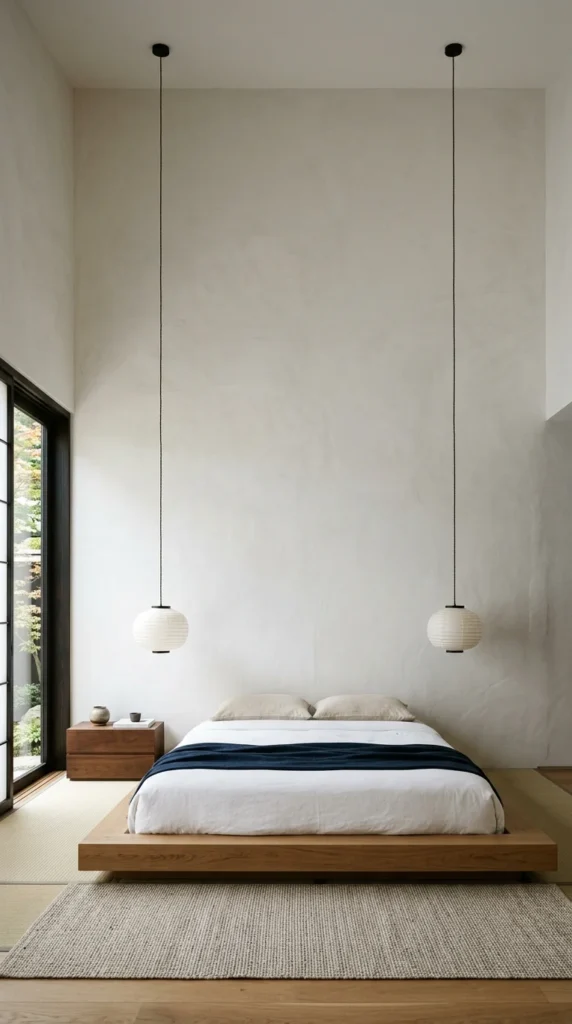
Low-profile furniture—pieces that sit closer to the ground—creates the illusion of higher ceilings. In a small bedroom, a low platform bed prevents the room from feeling cramped. By keeping the “horizon line” of your furniture low, you leave more open air in the upper half of the room, which provides a sense of grandeur.
11. Nesting Tables
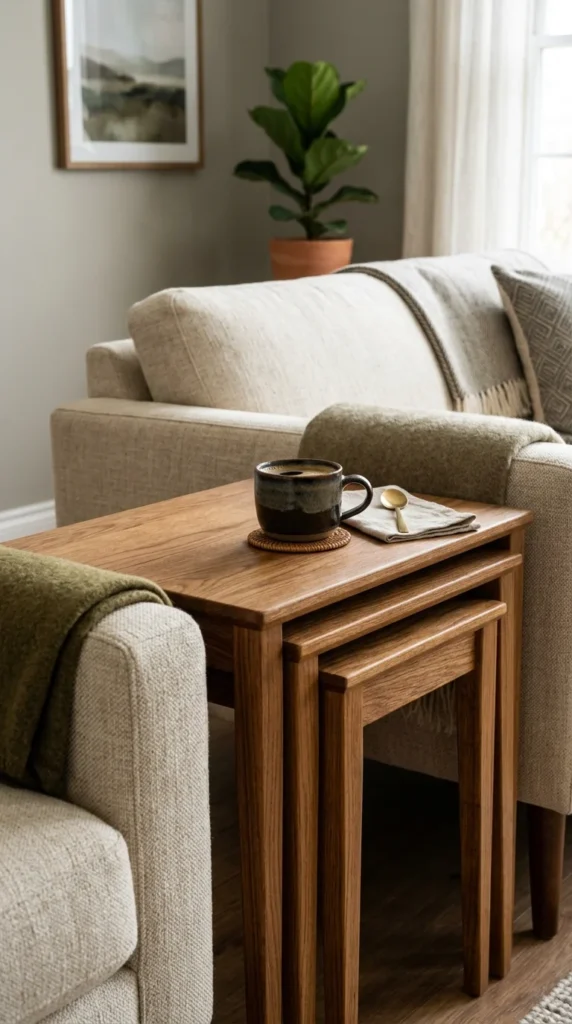
Nesting tables are the ultimate “now you see them, now you don’t” furniture. Place them next to a sofa or bed. They take up the footprint of just one small table but can be pulled out and spread across the room when you have guests. This flexibility allows you to adapt the room’s density based on your current needs.
12. Symmetrical Layouts
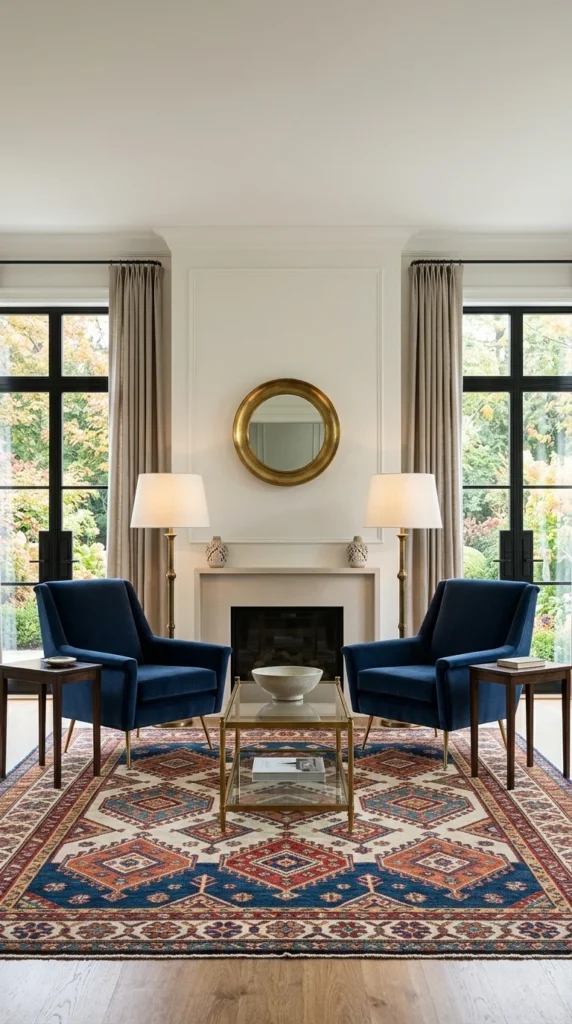
Symmetry is pleasing to the eye and creates a sense of order. In a small space, a chaotic layout can feel cluttered. By placing furniture in a symmetrical fashion—such as two matching chairs across from a sofa—you create a balanced environment that feels calm and expansive rather than cramped.
13. Behind-Sofa Consoles
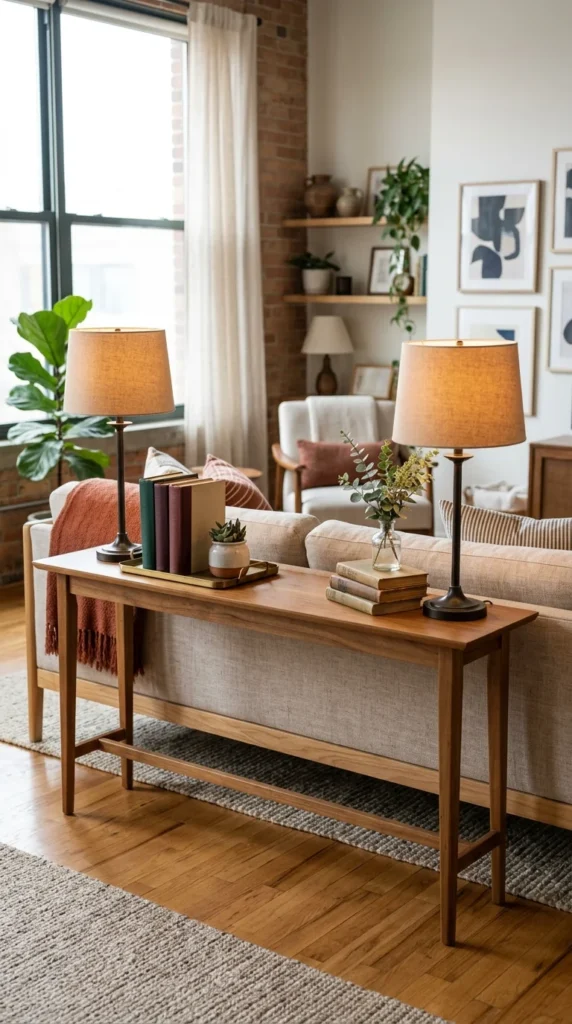
If your sofa is floated away from the wall, place a slim console table directly behind it. This provides a surface for lamps and decor without requiring extra side tables. It also creates a “buffer” between functional zones, such as separating the living area from a dining nook or workspace.
14. Scale Appropriately
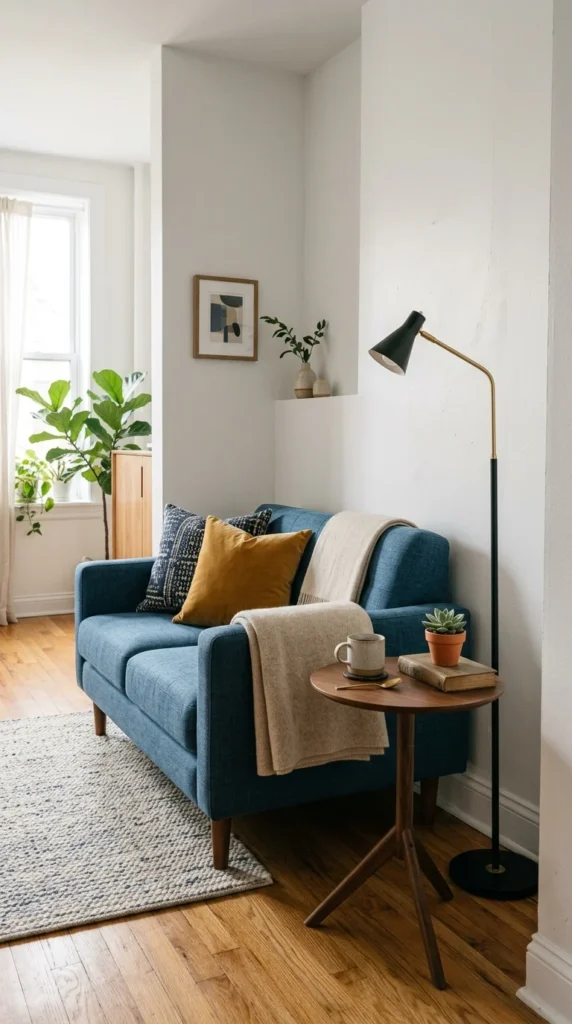
Avoid “overstuffed” furniture in a small room. A massive sectional might be comfortable, but if it touches both walls and blocks a window, it’s too big. Choose pieces that are scaled to the room’s dimensions. A sleek loveseat and two small armchairs often provide more seating and better flow than one oversized couch.
15. Wall-Mounted Desks
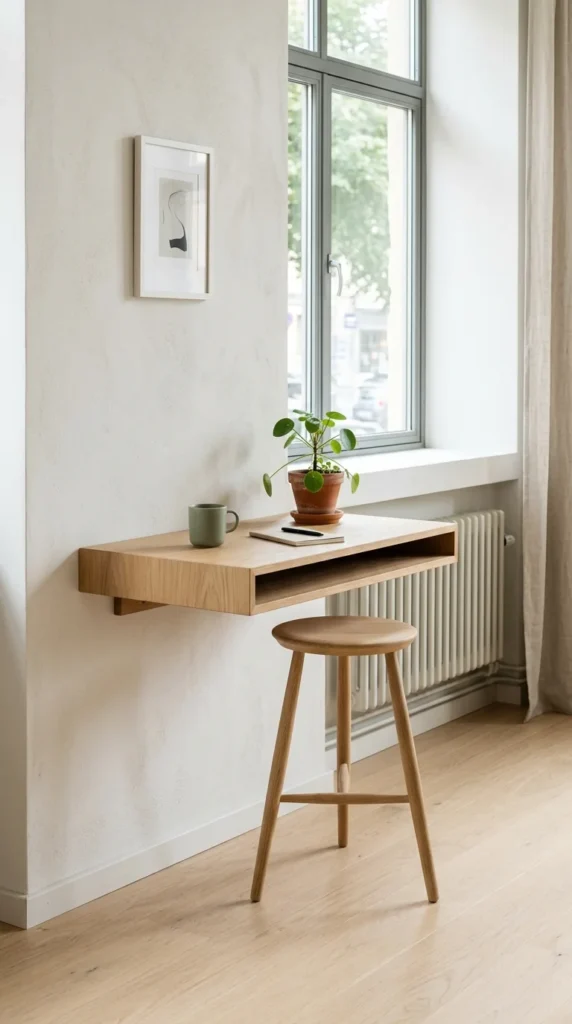
Floor space is precious. By using wall-mounted or “floating” desks and nightstands, you keep the floor area clear. This visual continuity of the floor makes the room seem much larger. Plus, it’s much easier to clean, which helps maintain the minimalist look that makes small spaces thrive.
16. Round Tables
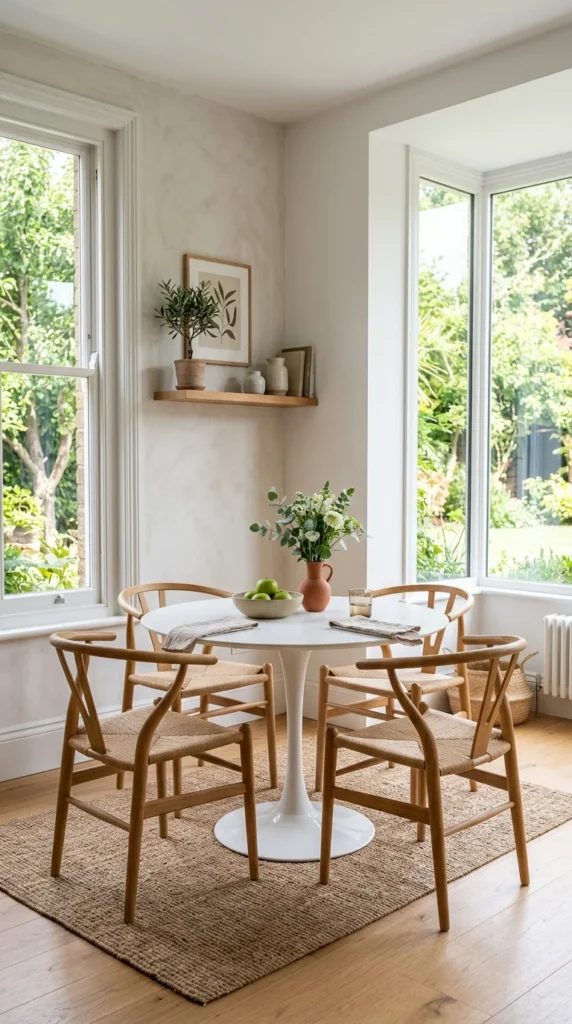
In tight dining areas, square or rectangular tables can be “pathway killers” with their sharp corners. A round table has a smaller footprint and no sharp edges to bump into. Its shape naturally facilitates better movement and can often accommodate more people in a pinch compared to a square table of the same size.
17. Use the “Dead” Space
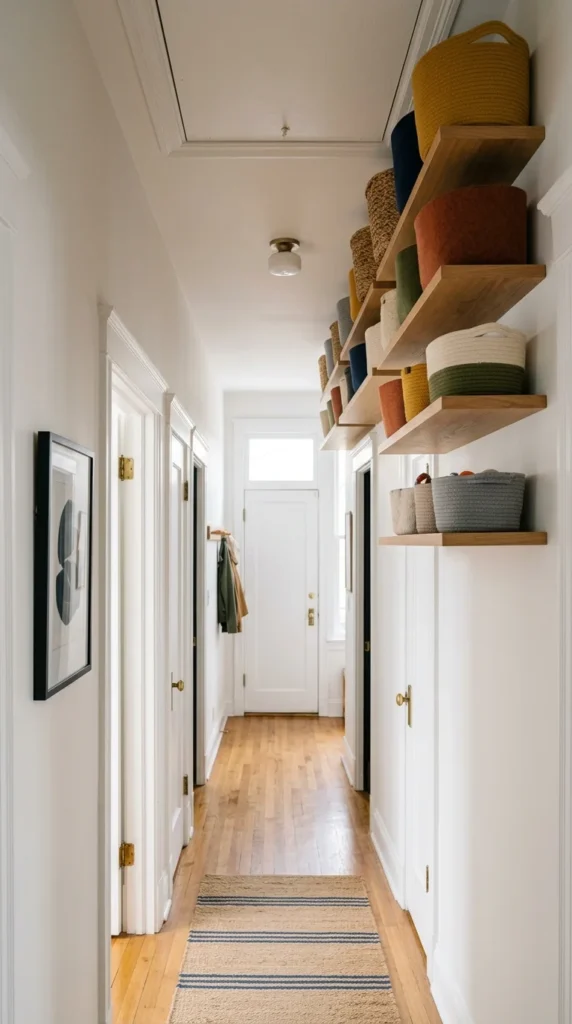
Every home has “dead” space—the area above doorways, the ends of hallways, or the space under the stairs. Use these areas for storage or slim furniture. A narrow bookshelf at the end of a hallway or a storage bench under a window utilizes every inch without obstructing the main living areas.
18. Curtains as Dividers
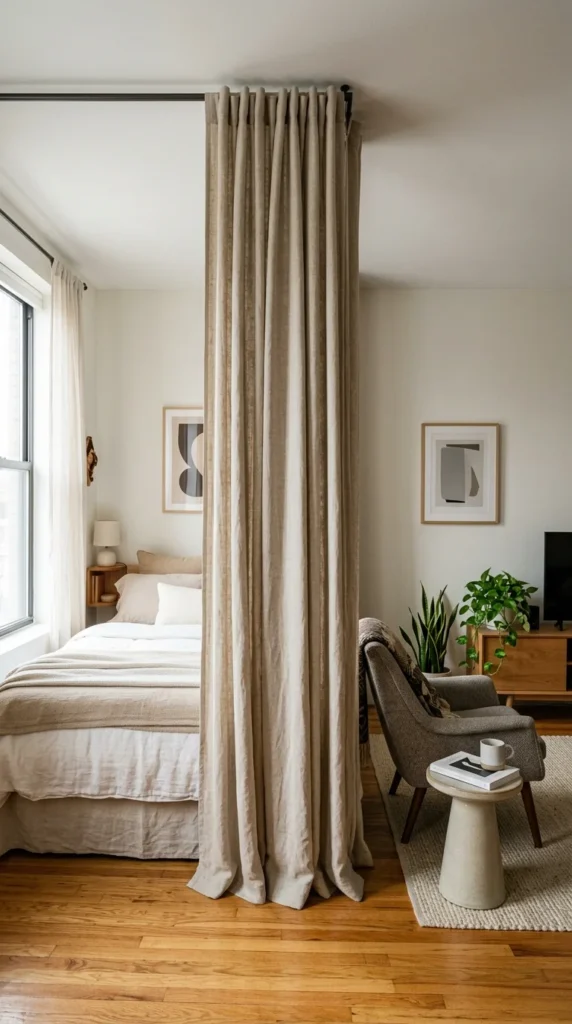
If you need to divide a room but don’t have space for a folding screen or a bookshelf, use curtains. Hanging a curtain from a ceiling track allows you to “wall off” a bedroom or workspace instantly. When opened, the fabric stacks neatly against the wall, taking up almost no space and keeping the floor plan open.
19. Statement Pieces
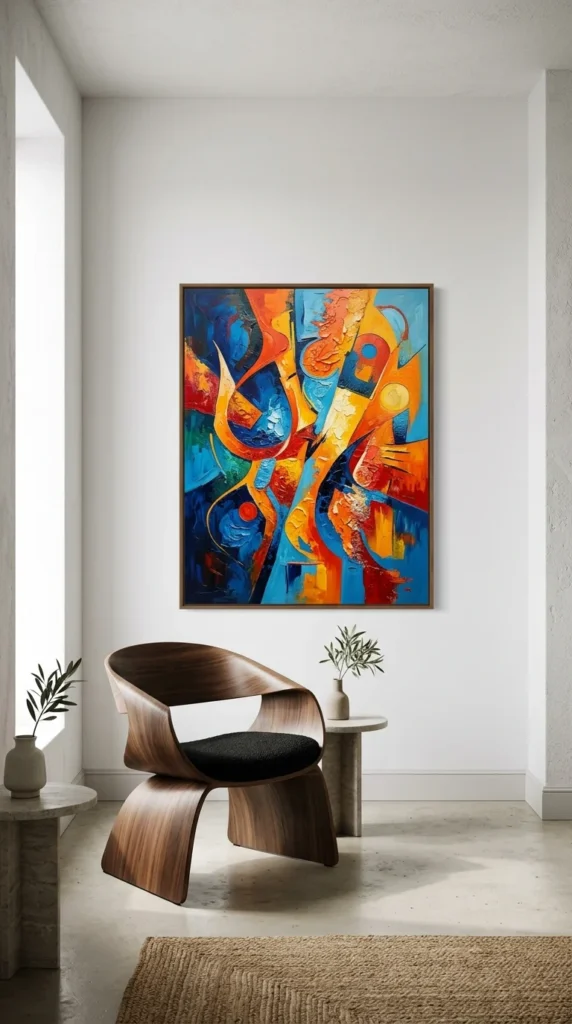
It’s a myth that small rooms need lots of small things. Too many tiny items can create visual “noise.” Instead, place one or two large, bold statement pieces—like a large piece of art or a striking armchair. This gives the eye a place to rest and makes the room feel more confident and less like a collection of “miniatures.”
20. Under-Bed Storage
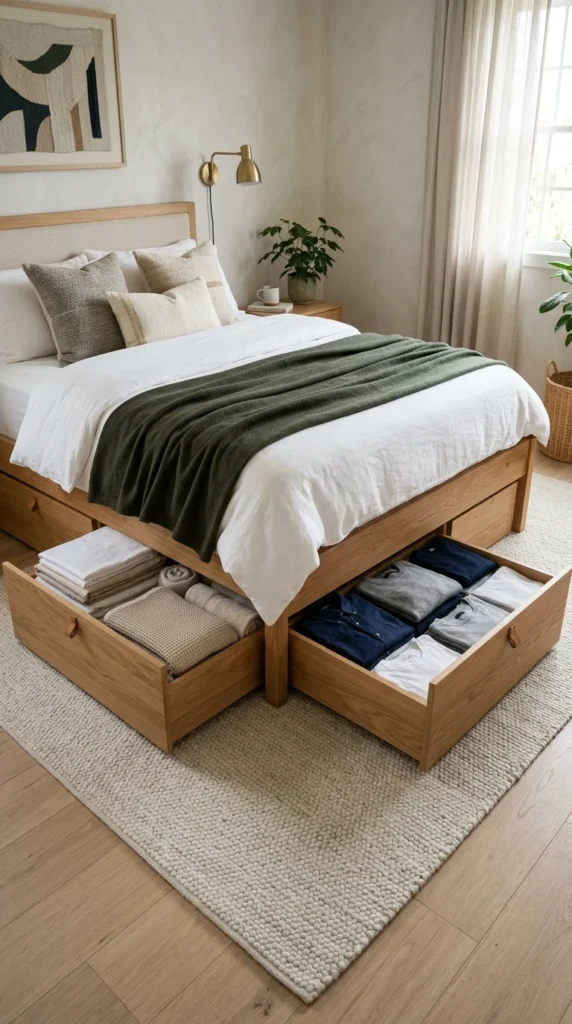
The area under your bed is the largest “hidden” square footage in your home. Use a bed frame with built-in drawers or use risers to lift a standard bed and fit specialized storage bins underneath. This allows you to eliminate bulky dressers from the room, freeing up floor space for better furniture placement elsewhere.
21. Layered Lighting
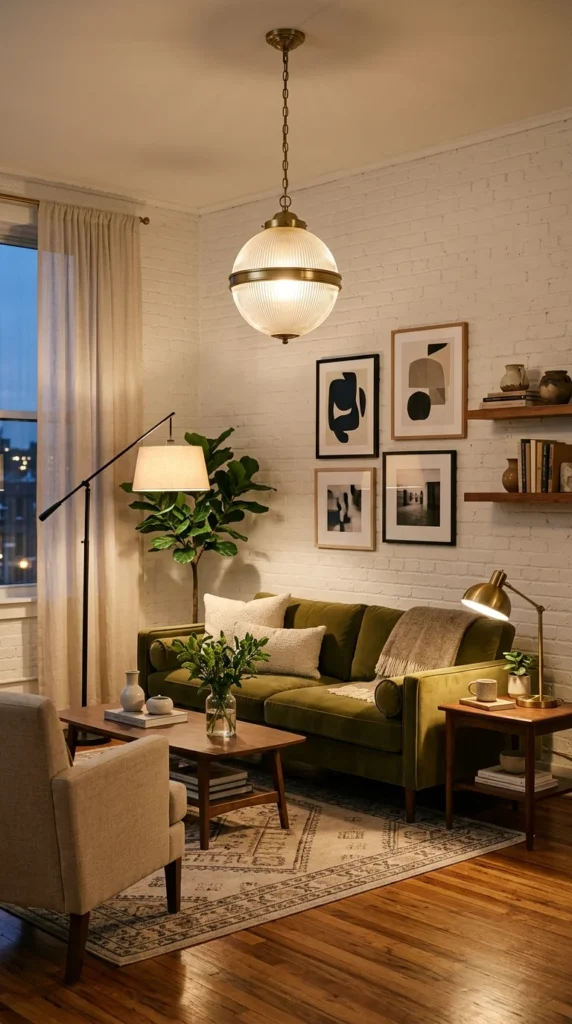
Lighting placement is just as important as furniture placement. Don’t rely on a single overhead light, which can cast harsh shadows and make corners feel “closed in.” Place lamps at different heights—floor lamps, table lamps, and wall sconces—to wash the walls with light. This expands the perceived boundaries of the room.
22. Backless Benches
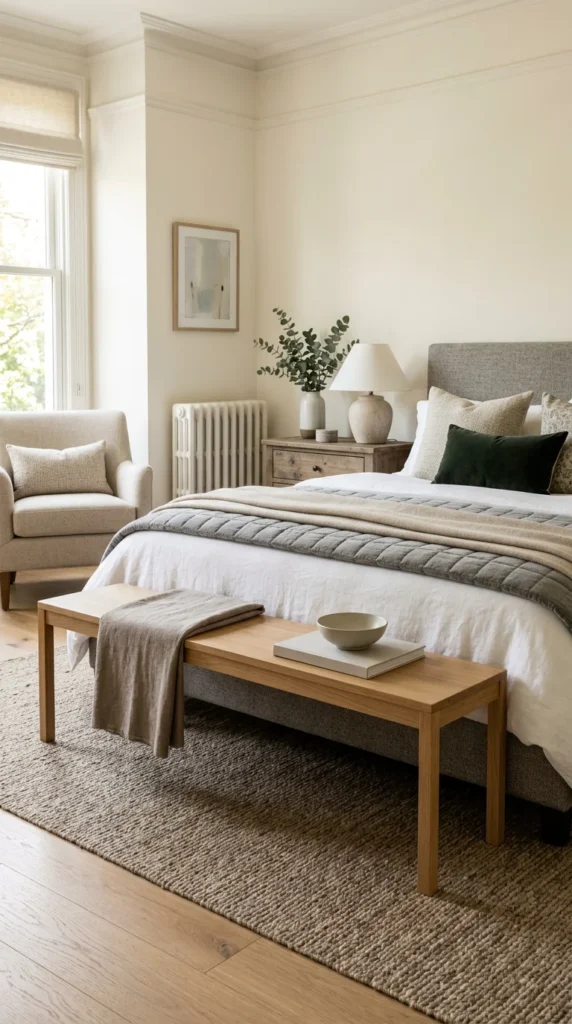
A backless bench is a secret weapon for small spaces. Because it lacks a back, it provides seating without creating a visual barrier. Place one at the foot of the bed, in an entryway, or even as seating on one side of a dining table. It keeps sightlines clear and the room feeling open.