
In a small living room, every square inch counts. The television often serves as the focal point of the space, but bulky entertainment centers can quickly overwhelm a cramped area. Designing a TV wall that is both functional and aesthetically pleasing requires a blend of creativity and strategic planning. Whether you are living in a studio apartment or a cozy cottage, these 21 space-saving TV wall ideas will help you maximize your floor plan while elevating your home’s style.
1. Floating Console
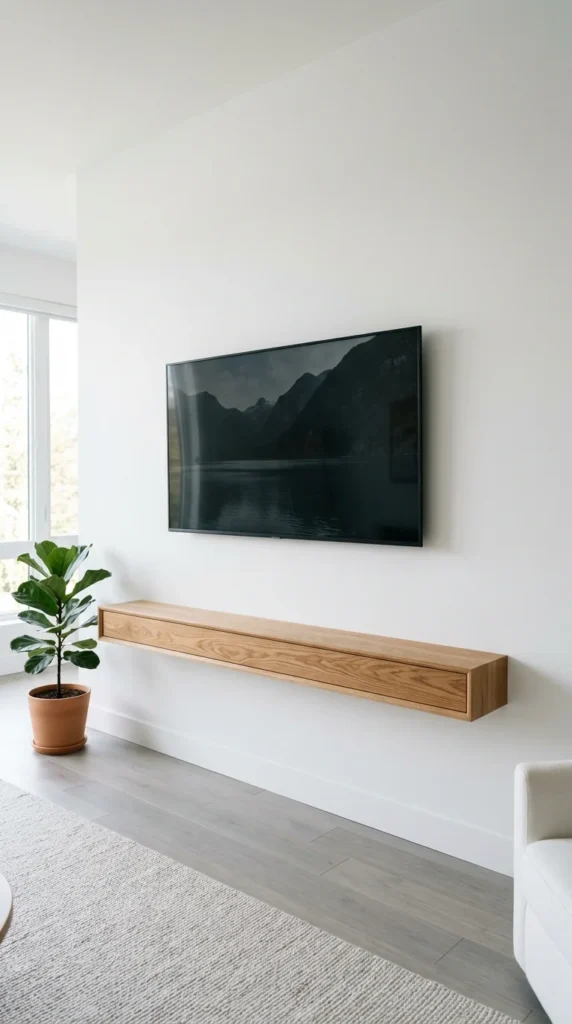
The floating console is a champion of small-space design. By mounting your media cabinet directly to the wall, you eliminate the need for legs, which opens up the floor space below. This visual trick makes the room feel larger because the flooring extends all the way to the wall. It also provides a sleek, modern look and makes cleaning much easier, as there are no nooks and crannies for dust to hide in.
2. Recessed Niche
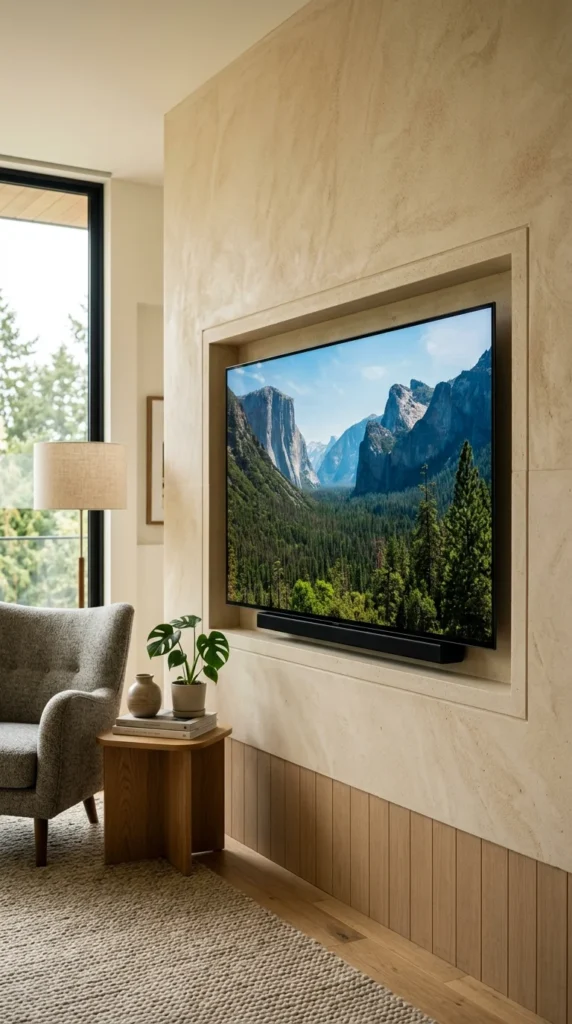
If you are undergoing a renovation, consider building a recessed niche for your TV. By tucking the screen into the wall itself, you reclaim the few inches that a standard mount would take up. This “built-in” look is incredibly high-end and prevents people from bumping into the corners of the TV in narrow walkways. It creates a seamless, architectural feel that keeps the room looking organized and intentional.
3. Corner Mount
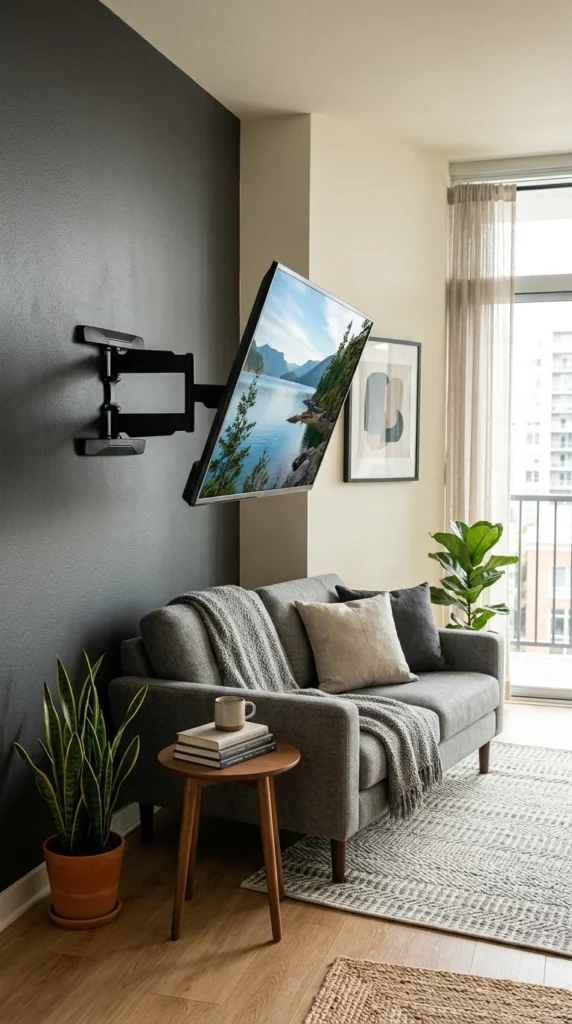
Corners are often underutilized in small rooms. Using a heavy-duty corner mount allows you to place the TV in an area that might otherwise go to waste. This setup is particularly effective in odd-shaped rooms where the main wall is too short or interrupted by windows. An articulating arm also gives you the flexibility to tuck the TV away when it’s not in use or pull it out for the perfect viewing angle.
4. Vertical Slats
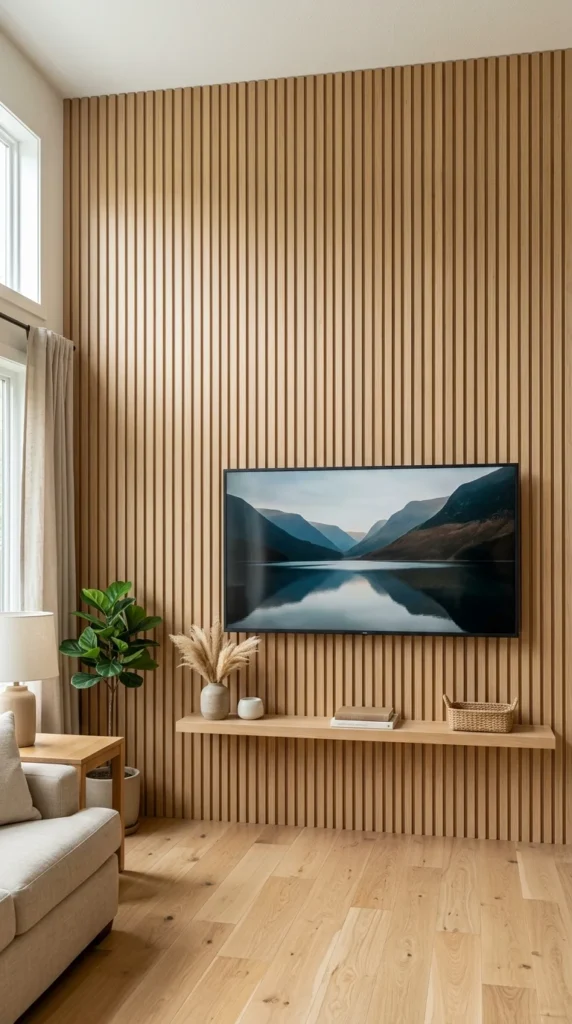
When horizontal space is limited, look up. Vertical wooden slats add a sophisticated texture to your TV wall while drawing the eye upward, making low ceilings feel higher. The gaps between the slats are also perfect for hiding unsightly cables and wires. This design choice adds a “feature wall” element that transforms the TV from a simple appliance into a piece of integrated decor.
5. Hidden Art
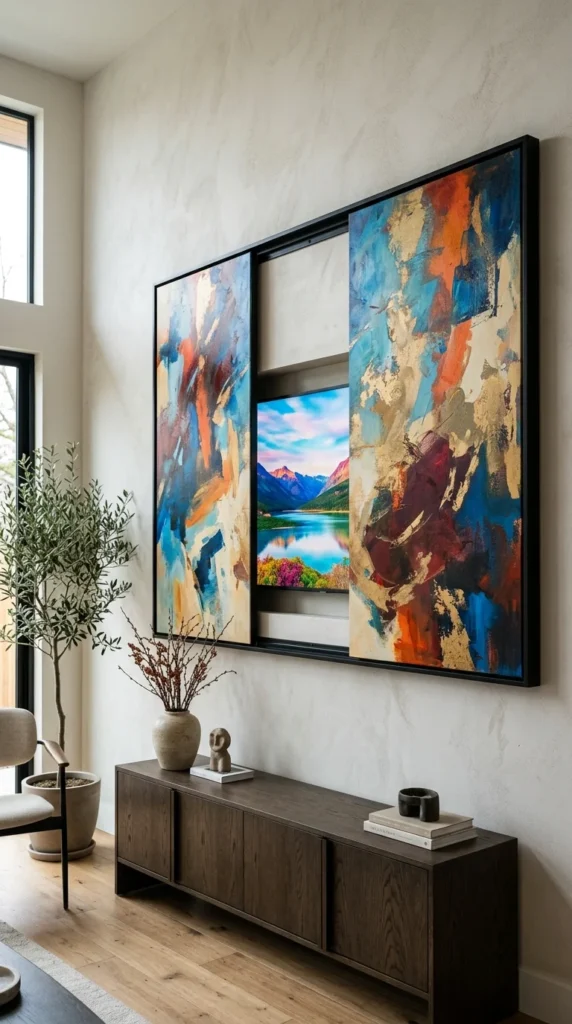
For those who prefer a living room that doesn’t scream “media center,” hidden art is the ultimate solution. Using a sliding track system or a motorized canvas, you can cover your TV with a beautiful painting when it’s not in use. This maintains the room’s sophisticated atmosphere and ensures that the large black rectangle of the screen doesn’t dominate the aesthetic of your small space.
6. Gallery Wall
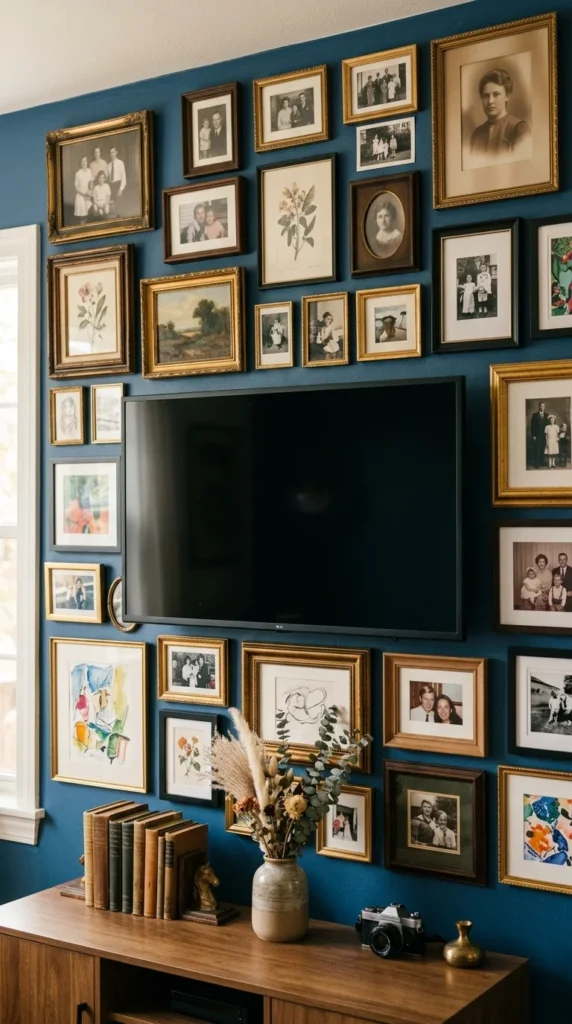
One of the best ways to make a TV disappear in plain sight is to surround it with a gallery wall. By placing art of various shapes and sizes around the screen, the TV becomes just another frame in the collection. This distracts the eye and blends the technology into the overall decor. Use black frames for the artwork to help the black screen of the TV blend in even more seamlessly.
7. Ladder Shelving
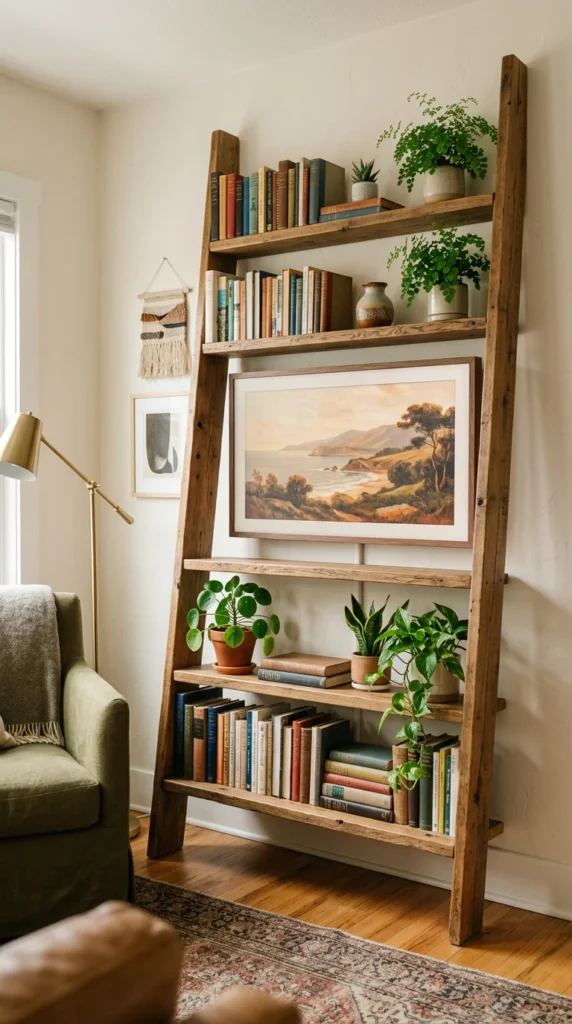
Ladder shelves provide a wonderful “lean-to” aesthetic that feels light and airy. Unlike heavy bookcases, ladder units have an open profile that doesn’t block light. Many modern ladder designs feature a wider middle shelf specifically designed to hold a television. This provides you with extra storage for books, plants, and decorative objects without requiring a massive piece of furniture.
8. Dark Backdrop
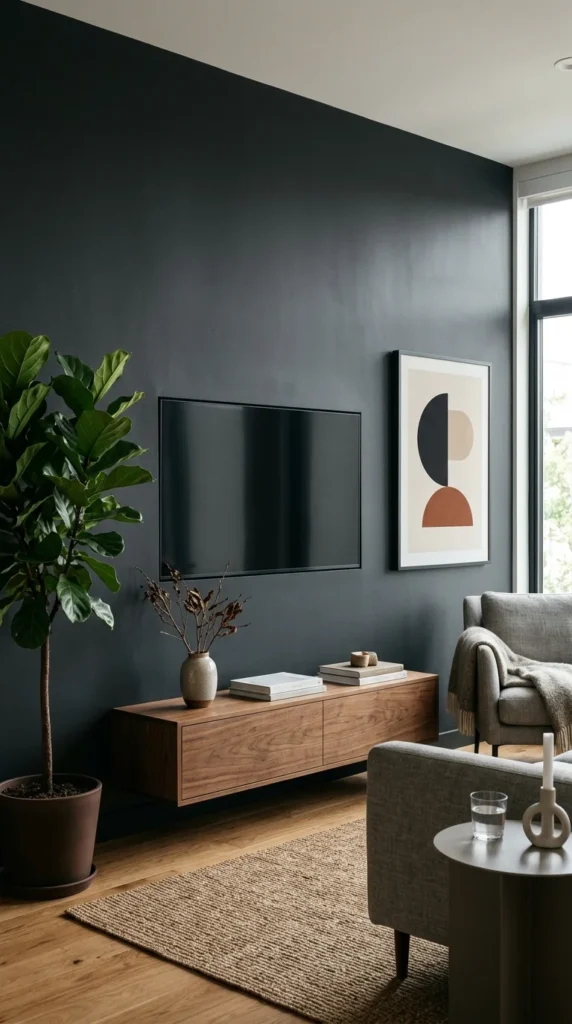
A dark accent wall—whether in navy, charcoal, or forest green—is a brilliant trick for small living rooms. When the TV is turned off, its black screen blends into the dark paint, effectively “erasing” it from the room. This prevents the TV from being a distracting dark hole in a light-colored room and adds a touch of dramatic elegance to your living space.
9. Under-Stairs Nook
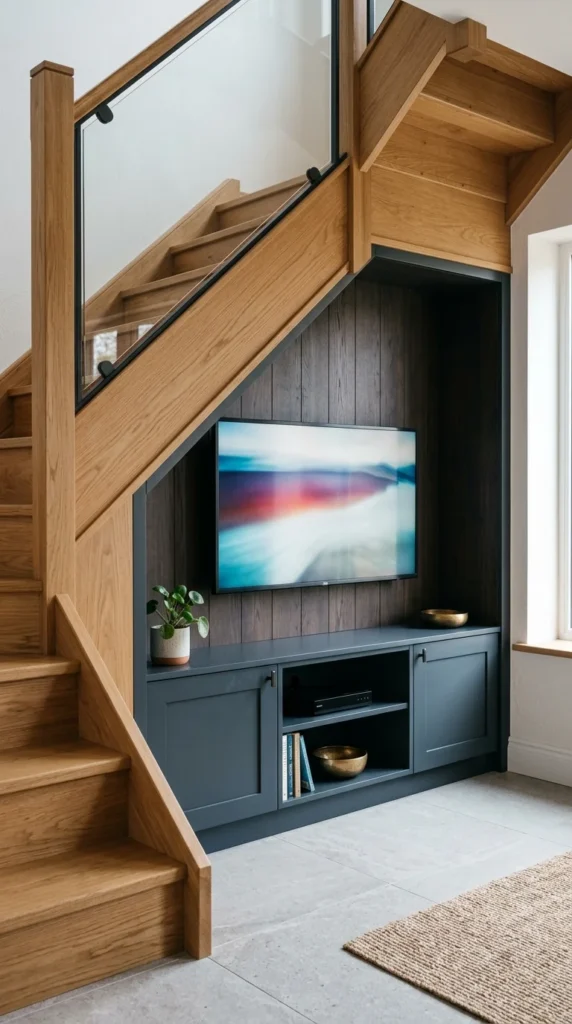
The space under the stairs is often neglected or used as a cluttered storage closet. However, it can be the perfect location for a TV setup. By custom-fitting a small console or mounting the TV directly to the slanted wall, you save valuable floor space in the main part of the living room. It turns an awkward architectural feature into a functional entertainment hub.
10. Swivel Mount
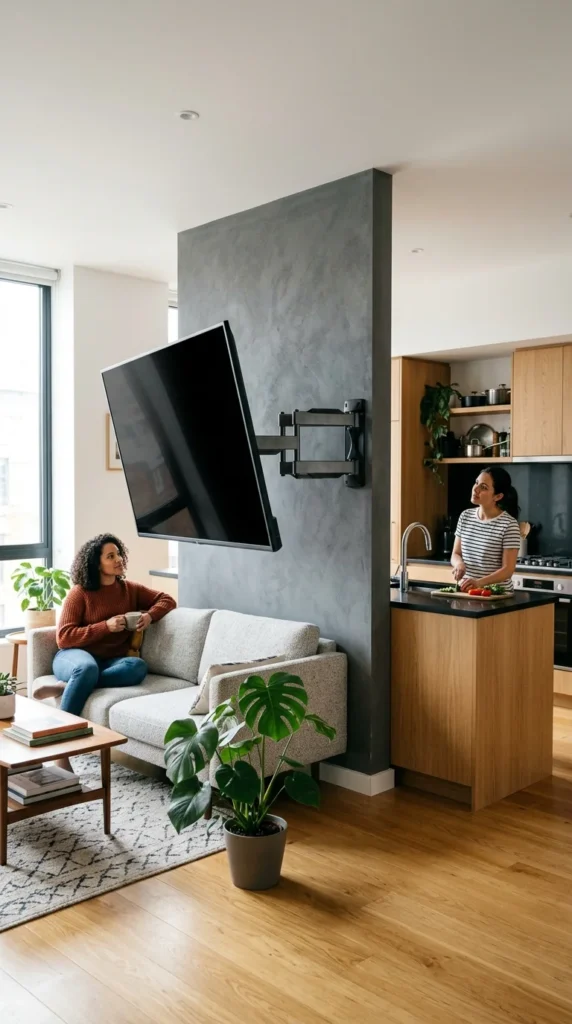
In studio apartments or open-concept small homes, a swivel mount is a lifesaver. It allows the TV to serve multiple “zones” of the home. You can face it toward the sofa while relaxing, or swivel it toward the dining table or kitchen while cooking. This versatility means you don’t need multiple screens, keeping your small home clutter-free and highly functional.
11. Floor-to-Ceiling Storage
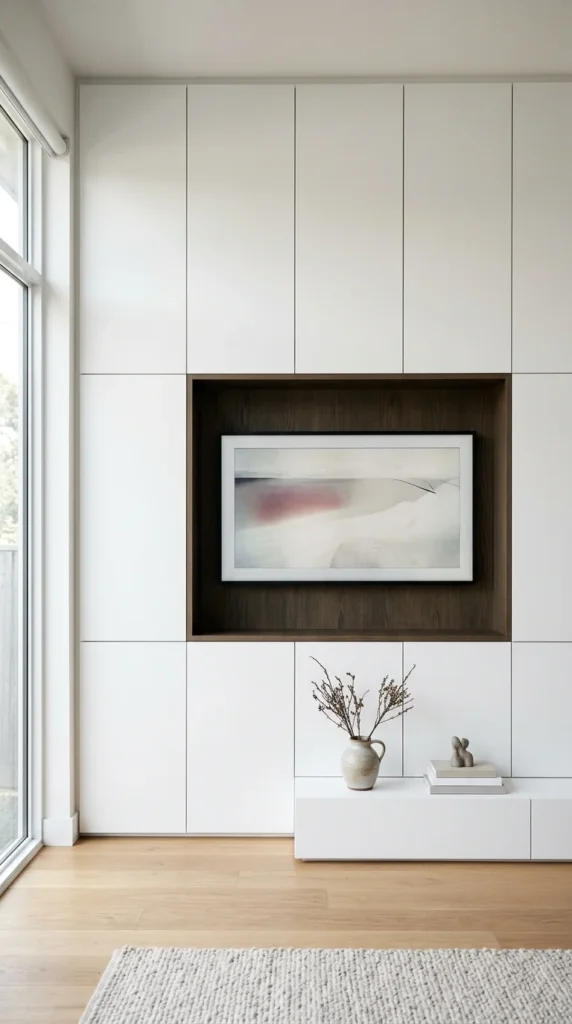
If you have a lot of items to store, a floor-to-ceiling built-in unit is the way to go. By dedicating one entire wall to storage, you actually make the rest of the room feel more spacious because you’ve eliminated the need for various smaller cabinets and chests. Creating a dedicated “cutout” for the TV within this unit keeps everything looking streamlined and tidy.
12. Backlit Panels
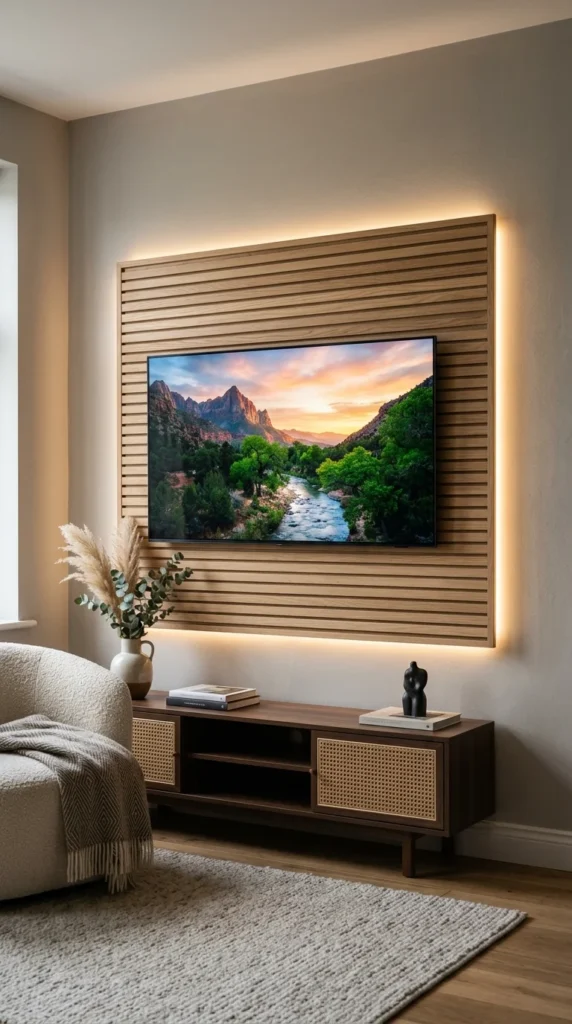
Adding LED backlighting behind your TV or a mounting panel does more than just look cool. It creates a sense of depth, making the wall appear to recede, which can make a small room feel deeper. Furthermore, the soft ambient light reduces eye strain during nighttime viewing, allowing you to ditch bulky floor lamps that take up valuable corner space.
13. Pegboard System
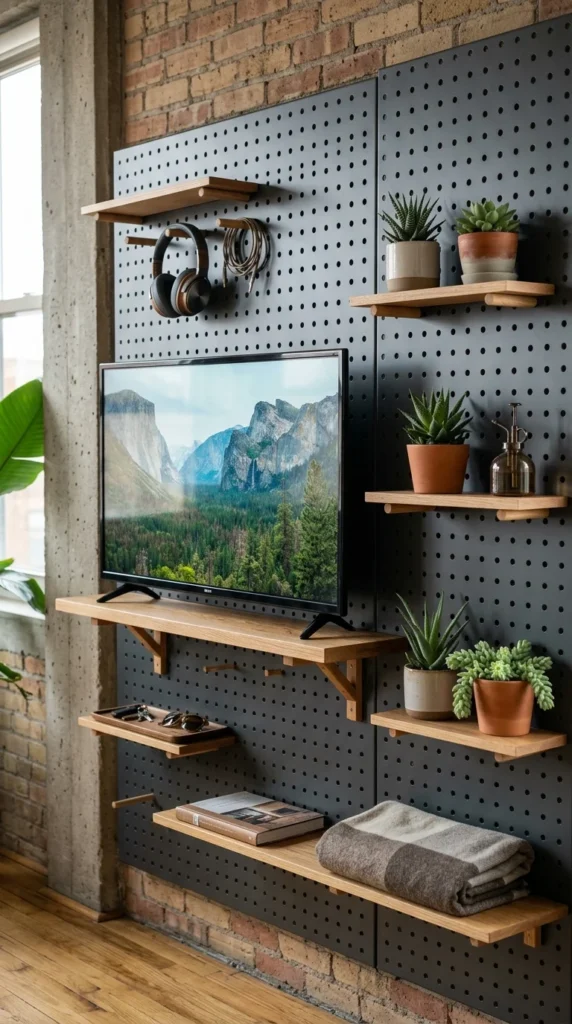
Pegboards aren’t just for garages anymore. A large-scale pegboard TV wall offers ultimate flexibility. You can move shelves and hooks around as your needs change, allowing you to accommodate different TV sizes or add storage for gaming consoles and remote controls. The perforated texture adds a modern, industrial vibe that works well in urban apartments.
14. Mirrored Background
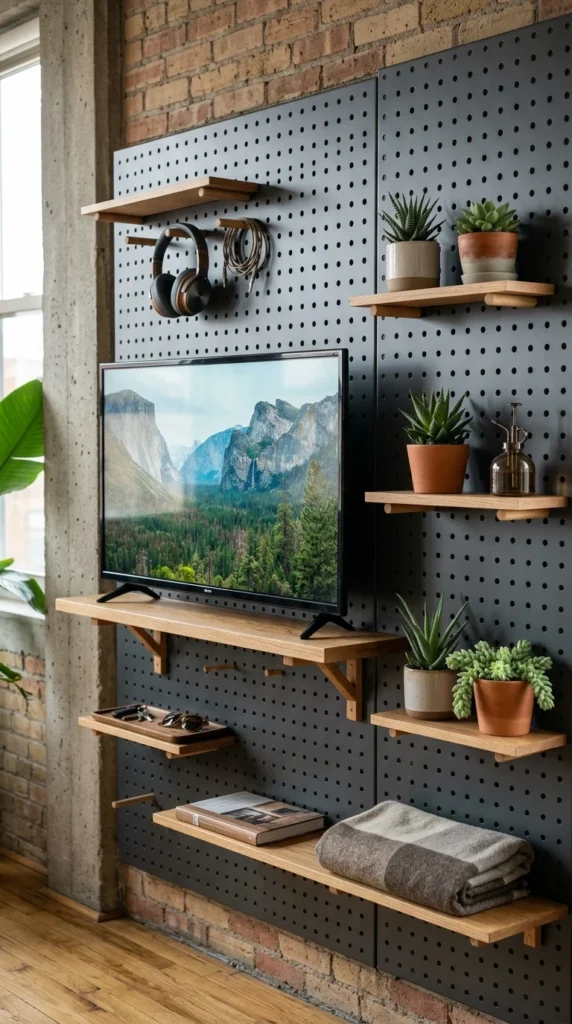
Mirrors are the oldest trick in the book for making a room feel twice as large. Mounting your TV on a mirrored wall (or a wall with mirrored panels) reflects light and views, instantly brightening a cramped space. It creates a “window” effect that adds a sense of luxury and airiness, ensuring that the TV wall doesn’t feel like a heavy, closing-in boundary.
15. Minimalist Pedestal
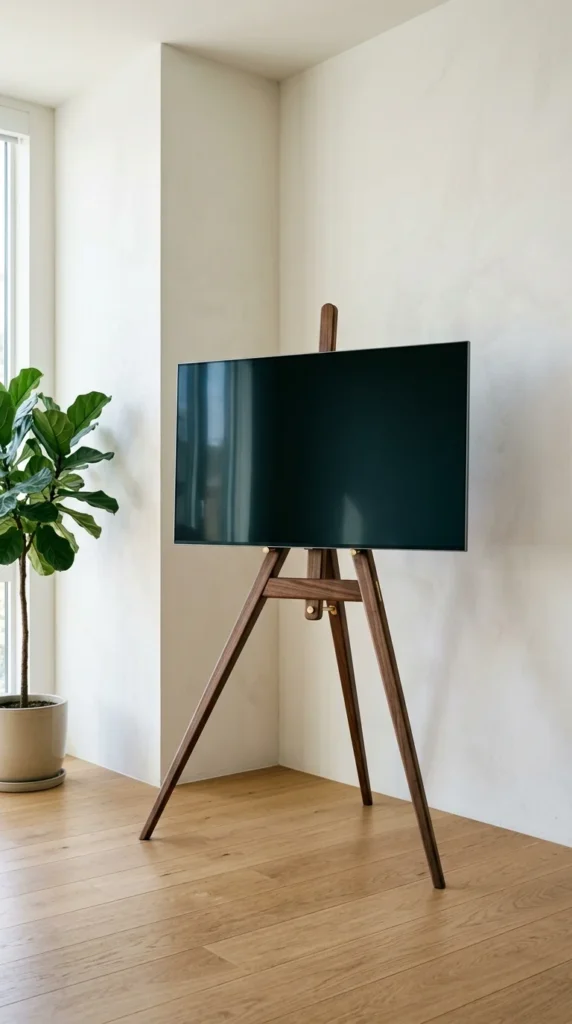
If you want to avoid drilling into walls, a minimalist pedestal or easel stand is a fantastic alternative. These stands have a very small footprint and look like a piece of fine furniture or an artist’s tool. Because you can see the floor and the wall behind and under the stand, it keeps the room’s visual flow open, preventing the “clogged” feeling that traditional stands often create.
16. Fireplace Integration
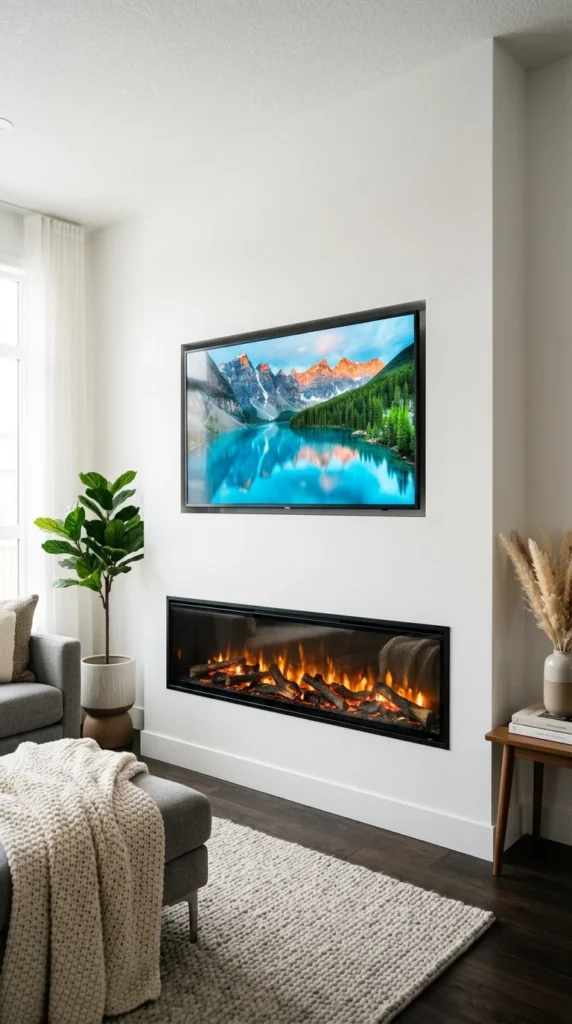
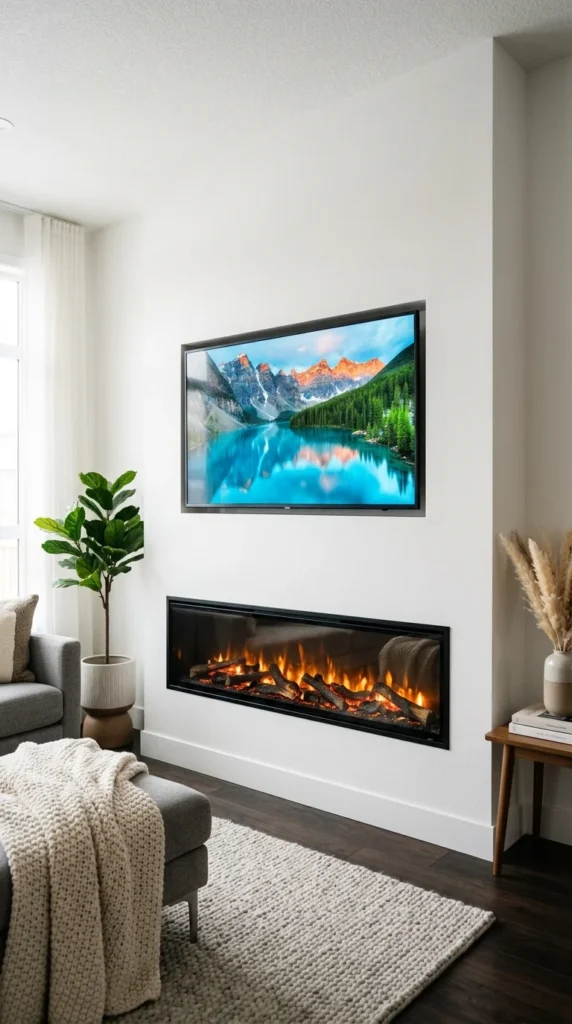
In many small homes, the fireplace and the TV compete for the same wall. Combining them into one vertical stack solves this conflict. By mounting the TV above the mantel (ensuring it is at a comfortable viewing height), you consolidate your focal points into one area. This leaves the other walls free for seating, windows, or storage, maximizing the utility of the room.
17. Sliding Doors
If you find that a television disrupts the calm energy of your small living room, consider a cabinet with sliding doors. These can be barn-style doors, sleek pocket doors, or simple bifold panels. When guests come over or when you’re reading a book, you can slide the doors shut to hide the tech, instantly transforming the room into a more tranquil, non-digital environment.
18. Window Perch
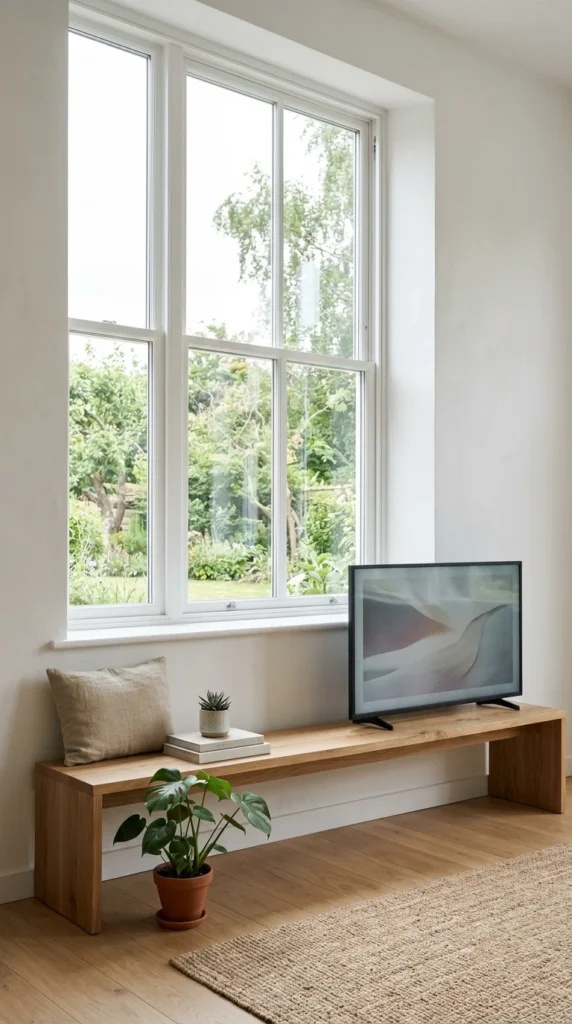
While usually discouraged, placing a TV near or in front of a window can work in very tight spaces if done correctly. Using a very low-profile stand ensures that the TV doesn’t block too much natural light. This is a great solution when every other wall in the room is taken up by doors or radiators. Just be sure to use blackout curtains or blinds to prevent glare on the screen.
19. Textured Stone
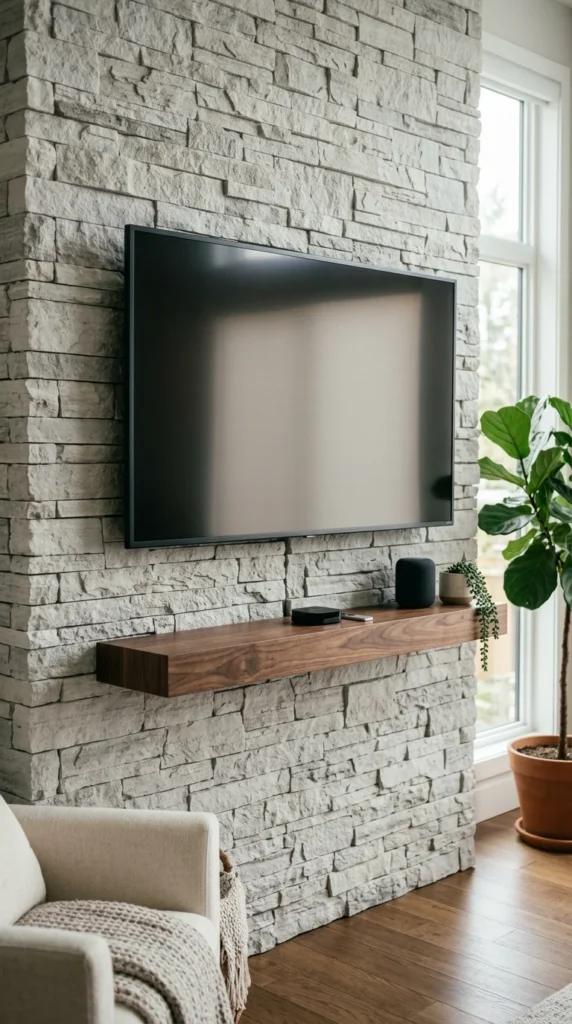
Adding texture to your TV wall can provide a sense of luxury and “permanence” in a small space. Stacked stone, brick veneers, or even high-quality 3D wallpaper adds a tactile element that makes the room feel cozy rather than cramped. The organic shadows created by the texture give the wall depth, preventing it from feeling like a flat, boring surface.
20. Built-in Desk
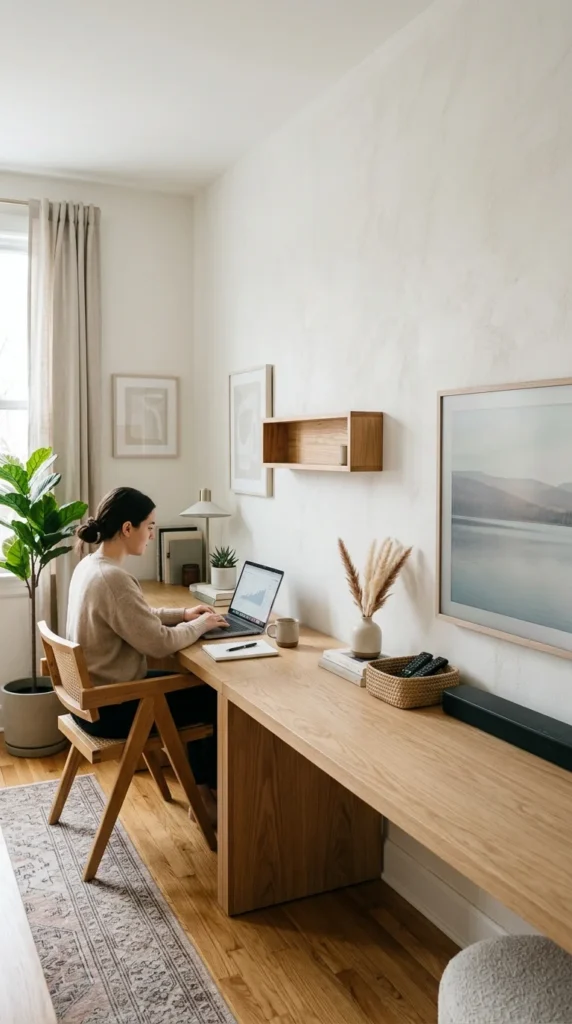
Small homes often require rooms to pull double duty. A long, wall-mounted “floating” desk can serve as both a workspace and a TV stand. This “long-line” design draws the eye across the room, making it feel wider. It eliminates the need for two separate pieces of furniture, keeping the floor plan open and the aesthetic cohesive.
21. Rotating Divider
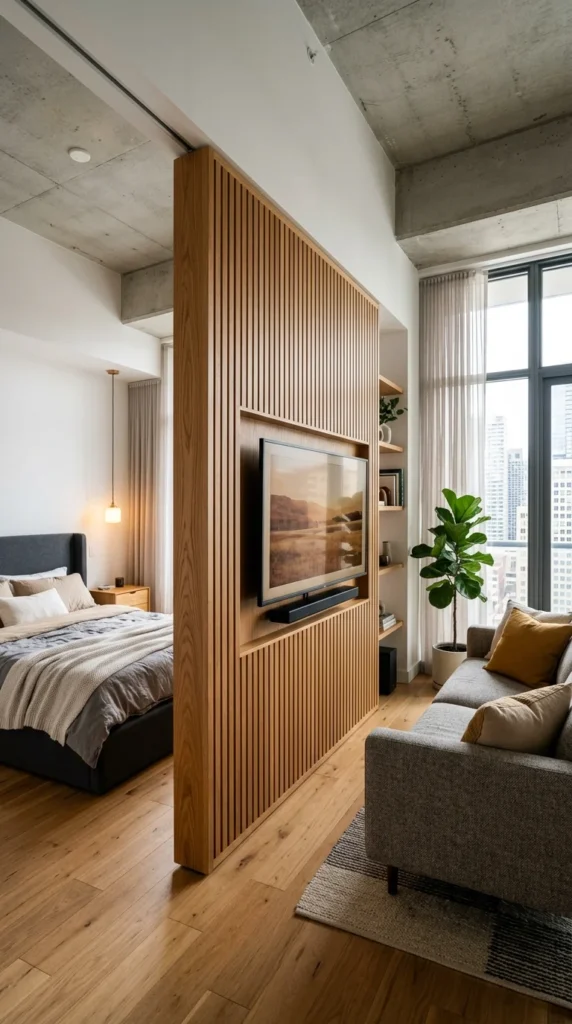
For the ultimate space-saving feat, use a rotating wall divider. This is a vertical panel on a pivot that acts as a room separator. By mounting the TV on one side, you can flip it 180 degrees. This allows you to watch a movie from the sofa in the “living room” and then rotate the TV to face the bed in the “bedroom” area. It’s a genius way to get the most out of a single device and a single piece of furniture.