
Living in a small apartment often feels like a constant balancing act between functionality and aesthetics. When your bedroom, office, and living room all occupy the same four walls, the lack of defined boundaries can lead to mental clutter and a chaotic living experience. However, you don’t need a construction crew to create separate “rooms.”
The right room divider can transform a cramped studio into a multi-functional sanctuary. From maximizing natural light to providing much-needed storage, these 21 ideas offer creative ways to carve out privacy and improve the flow of your home.
1. Open Shelving
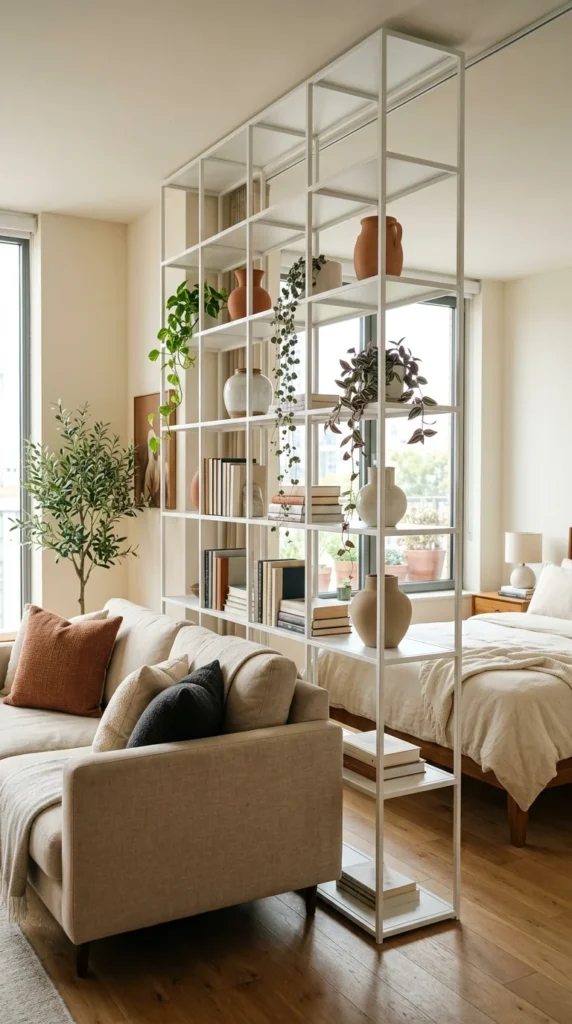
Open shelving is the holy grail of small apartment living. Unlike a solid wall, an open bookcase like the iconic IKEA Kallax provides a physical boundary without blocking light or sightlines entirely. This keeps the apartment feeling airy while offering a dedicated place to display your personality. By curating the items on the shelves, you can control how much privacy the unit provides.
2. Folding Screens
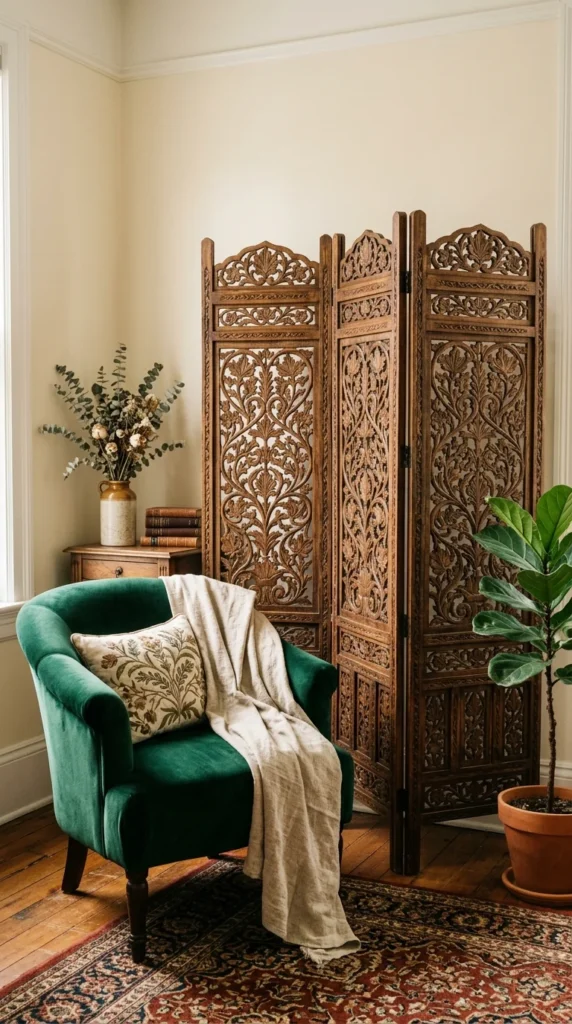
The folding screen is a classic for a reason. It is portable, adjustable, and requires zero installation. Whether you choose a traditional shoji screen for a minimalist look or a bold, hand-painted wooden version, it acts as a piece of functional art. When you have guests over or need to open up the floor space, you can simply fold it up and tuck it away.
3. Hanging Macramé
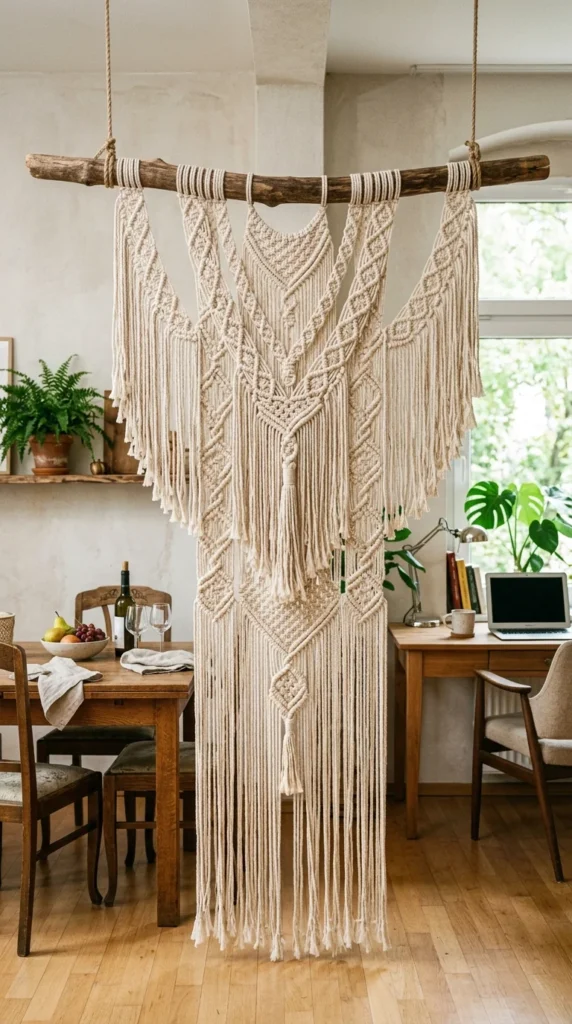
For those who lean into the boho-chic aesthetic, a hanging macramé partition adds texture and warmth. It creates a “visual break” rather than a hard wall. Because it is porous, it allows air to circulate and light to filter through, making it perfect for separating a workspace from a relaxation area without making the office feel like a closet.
4. Floor-to-Ceiling Curtains
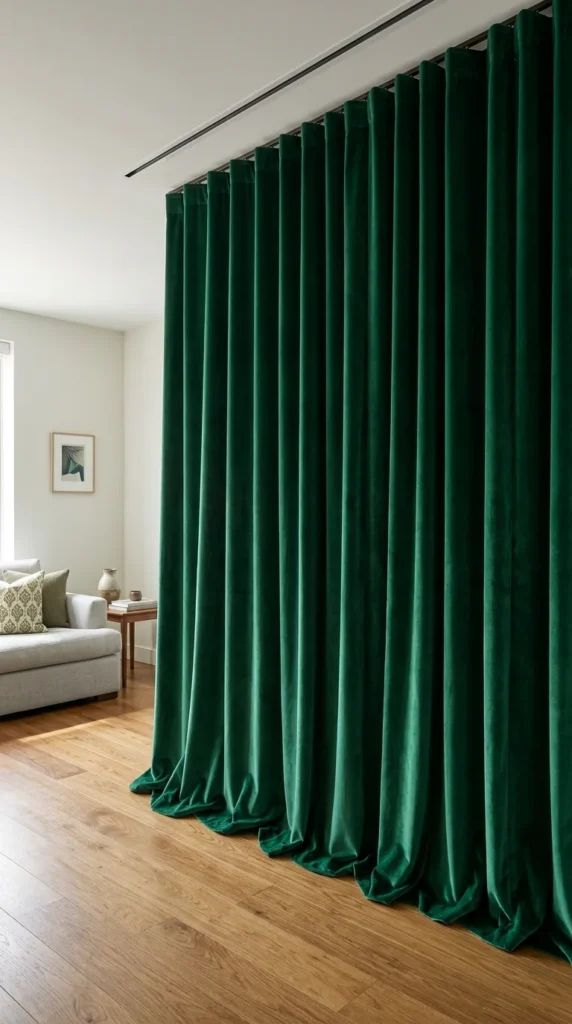
If you want total privacy at the flick of a wrist, floor-to-ceiling curtains are the answer. By installing a track on the ceiling, you can completely cordoning off your sleeping area. This is particularly effective in studios where you want to “hide” the bedroom during the day or when entertaining. Choose sheer fabrics for a soft glow or heavy velvet for sound dampening and light blocking.
5. Glass Partitions
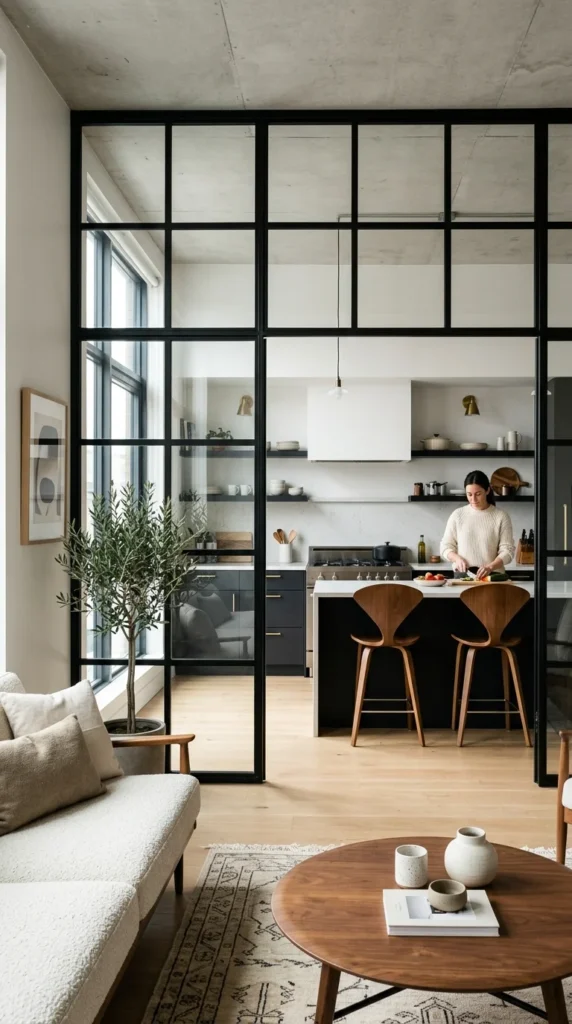
Glass partitions provide a sophisticated, industrial look that defines space without sacrificing a single lumen of light. Whether you use a fixed glass wall or a sliding version, it provides a physical barrier against noise and kitchen smells while maintaining a “big picture” view of your entire apartment.
6. Indoor Plants
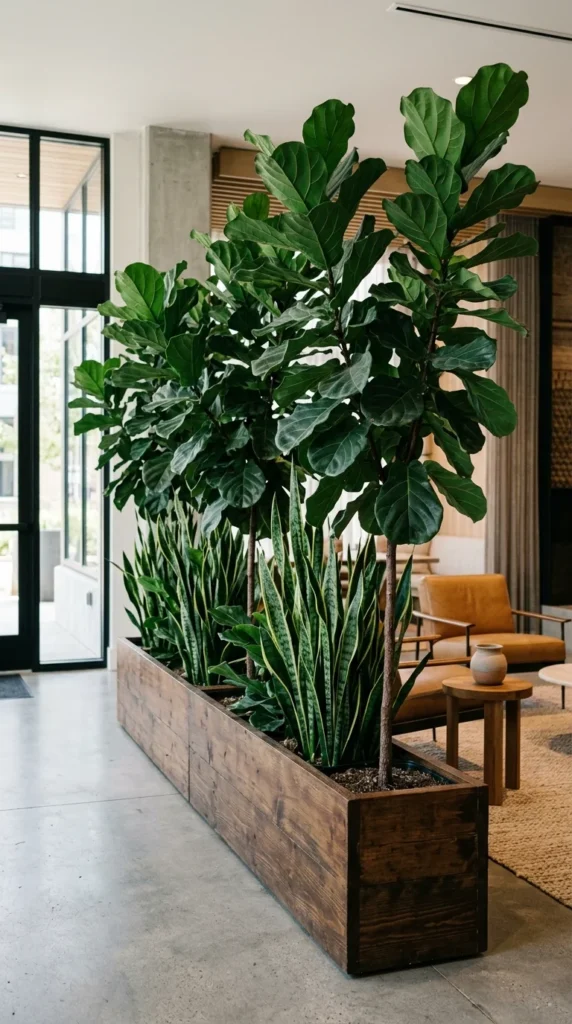
Using “living walls” is one of the most refreshing ways to divide a room. A collection of tall floor plants or a vertical garden rack can create a lush, breathing boundary. Plants like snake plants or bamboo grow tall and narrow, making them perfect for creating a dense green screen that improves air quality while shielding your bed or desk.
7. Bar Carts
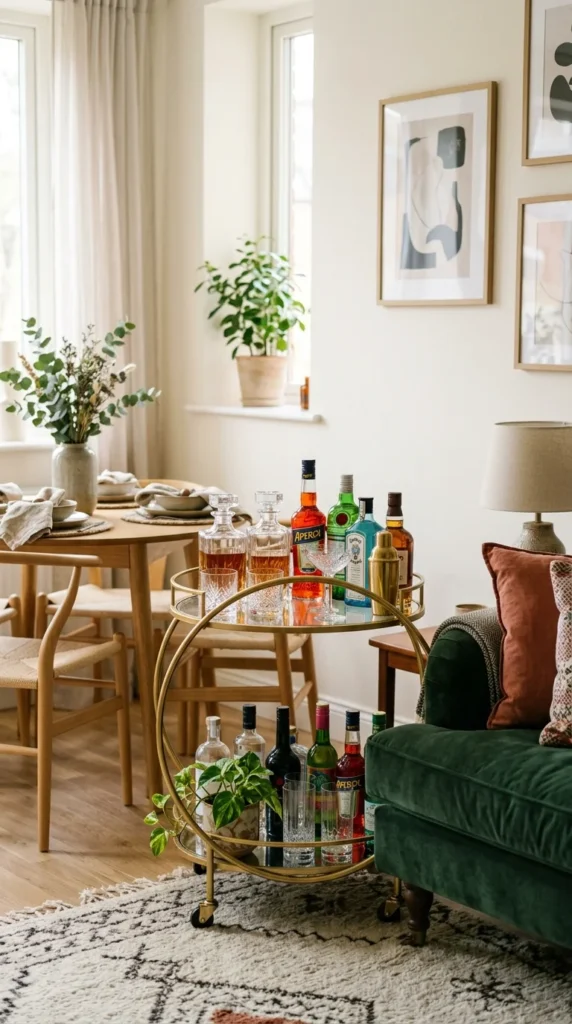
A bar cart is a low-profile divider that works wonders in tiny spaces. It creates a subtle transition between the kitchen and the living room. Because most bar carts are on wheels, they offer incredible flexibility. You can use it to mark the end of the “social zone” and then roll it into the center of the room when it’s time to serve drinks.
8. Double-Sided Art
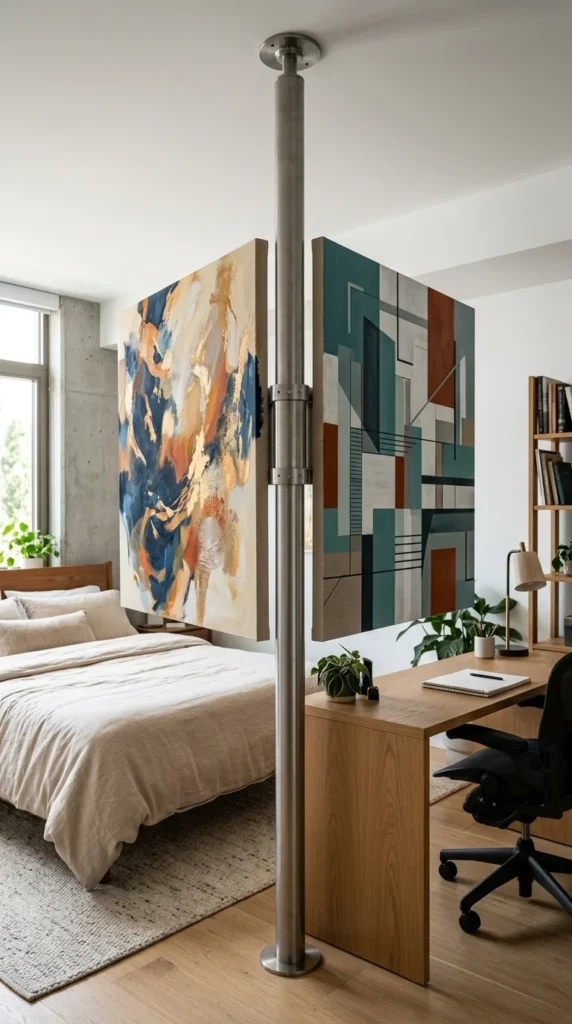
Why settle for one view when you can have two? A large piece of art mounted on a swivel or a frame that stands perpendicular to the wall can define two different zones. It adds a sophisticated focal point and ensures that no matter which “room” you are in, you are looking at something beautiful rather than the back of a piece of furniture.
9. Sliding Barn Doors
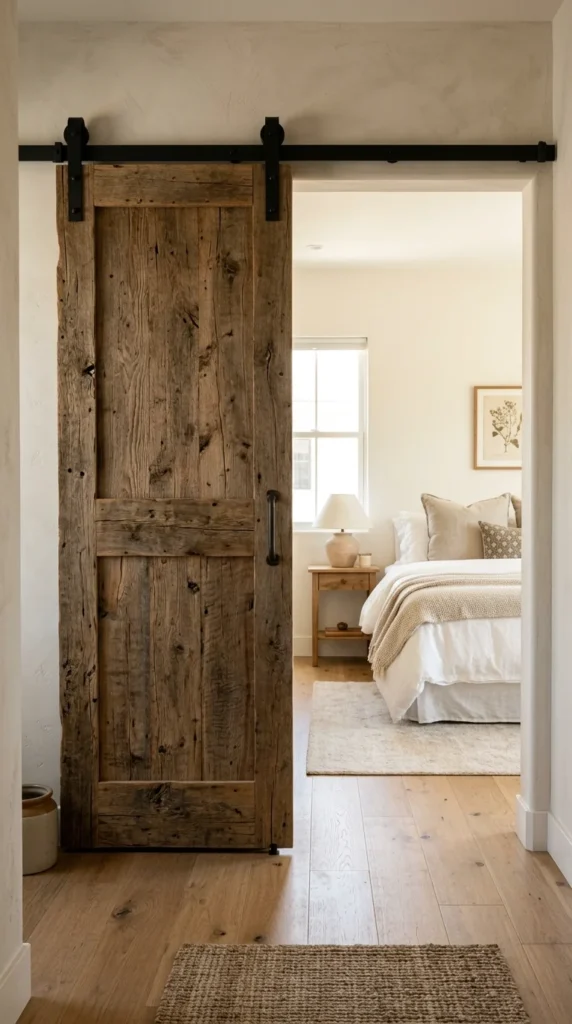
If your landlord allows it (or if you use a tension-based system), a sliding barn door is a space-saving miracle. Unlike traditional doors that need a “swing” radius, barn doors slide flat against the wall or track. They provide the ultimate privacy of a real wall while adding a heavy dose of architectural character to a plain apartment.
10. Wooden Slats
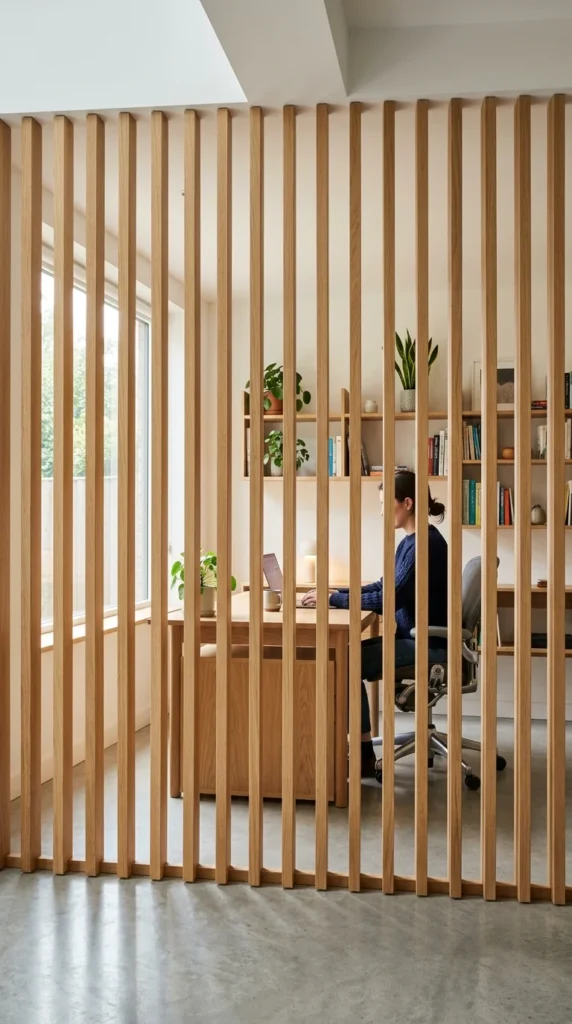
Vertical wooden slats (or “tambour” walls) are a favorite in modern interior design. They provide a sense of architectural permanence and high-end style. The gaps between the wood pieces ensure the space doesn’t feel closed in, but the repetition of the lines creates a strong psychological boundary that clearly marks where one room ends and another begins.
11. Strategic Headboards
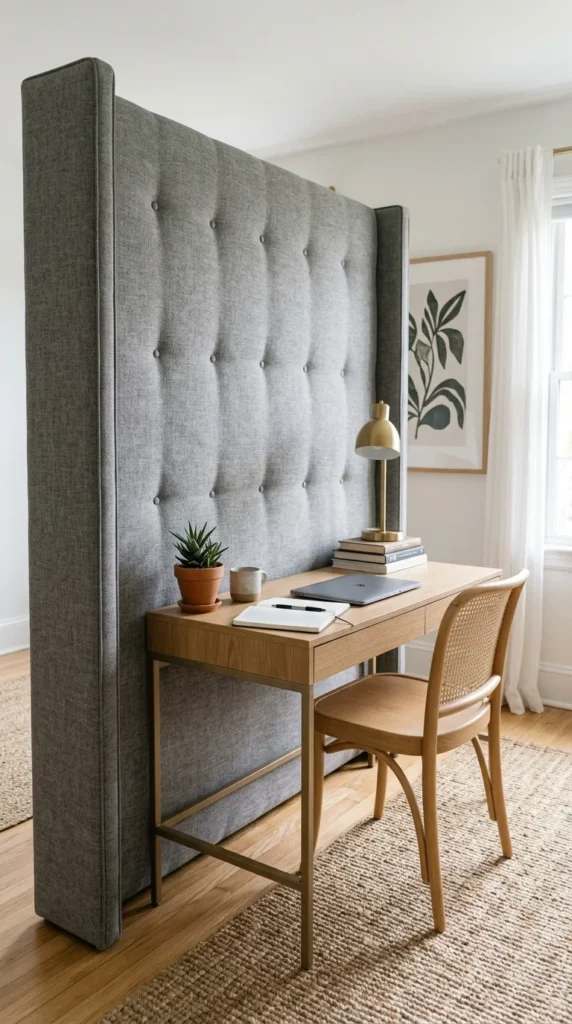
If your bed is in the middle of your studio, use a tall headboard as a room divider. Many modern headboards are designed to be freestanding. By positioning the bed away from the wall and using the back of the headboard as an anchor for a desk or a console table, you create a natural flow that separates your “sleep zone” from your “active zone.”
12. Bookcase Backdrop
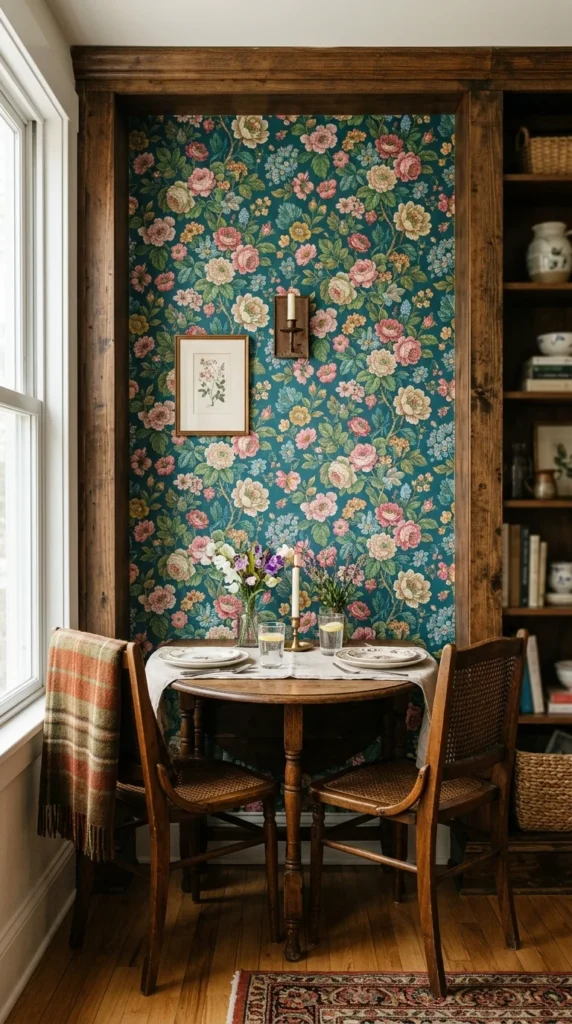
Many people think bookshelves must go against a wall, but they are most effective when placed perpendicular to one. If the back of the bookshelf is unsightly, you can “finish” it with peel-and-stick wallpaper, a coat of paint, or even corkboard to create a functional message center for the other side of the room.
13. Industrial Pipes
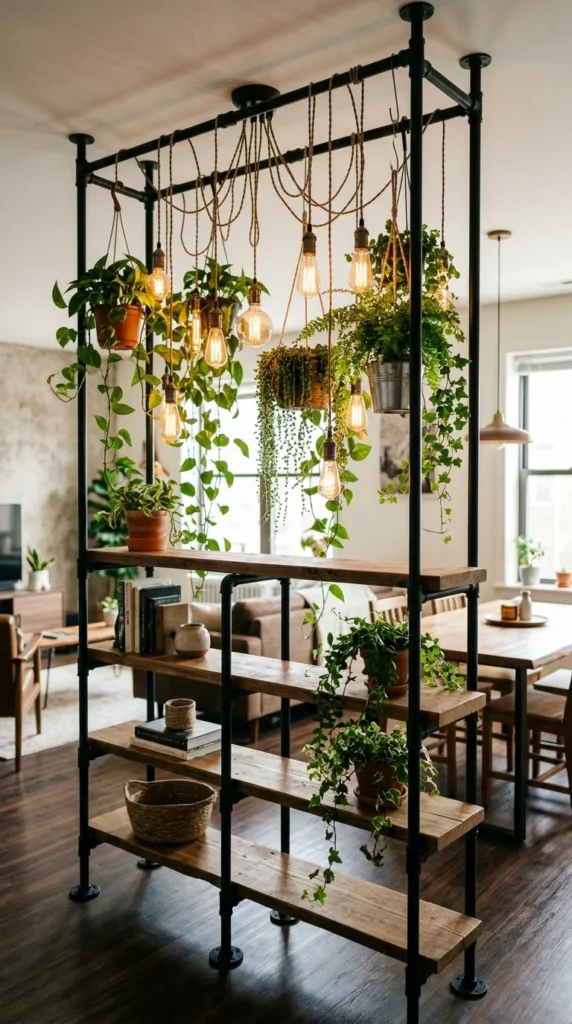
For an edgy, loft-style vibe, industrial pipe structures offer a sturdy and customizable divider. You can build a frame that holds shelves, hangs clothes, or simply supports a few hanging plants. This look is particularly effective in apartments with high ceilings and exposed brick.
14. Beaded Curtains
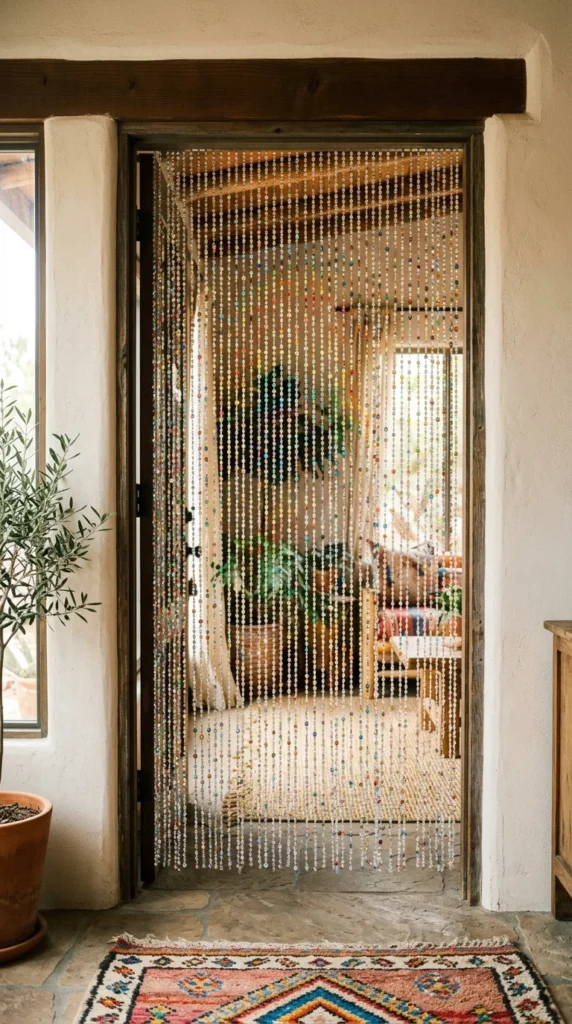
Beaded curtains are a nostalgic and fun way to add movement to a room. Whether you choose classic wooden beads, shimmering glass, or modern bamboo, they provide a tactile transition between spaces. They are perfect for closets or transitions into a “meditation corner” where you want a sense of entry without a heavy door.
15. Wardrobe Units
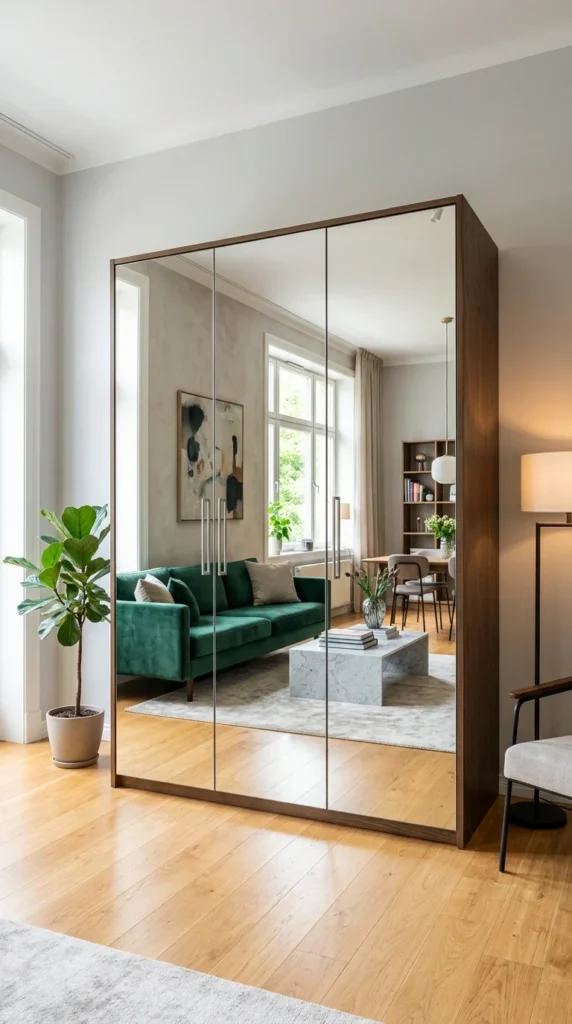
Using a wardrobe as a divider is the ultimate functional move for small apartments lacking closet space. By placing a wardrobe at the foot of the bed, you create a dressing area on one side and a living area on the other. Mirrored doors on the wardrobe will also help bounce light around the room, preventing the large piece of furniture from feeling overbearing.
16. Desk Placement
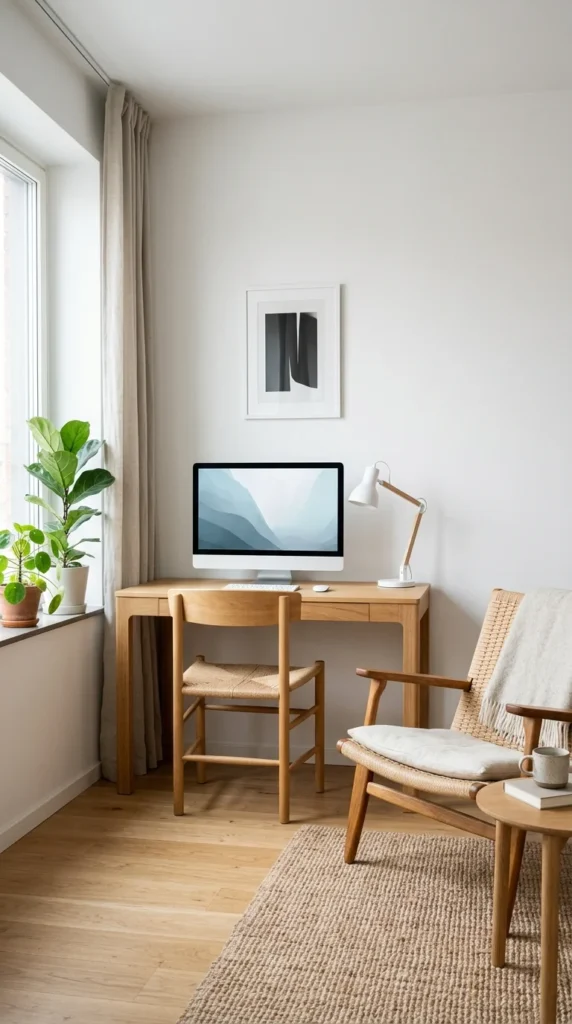
Sometimes the best divider is the furniture you already own. Placing a desk perpendicular to the wall creates a “cubicle” effect that separates work from play. It acts as a physical barrier that tells your brain, “When I am on this side, I am working; when I walk around it, I am home.”
17. Sofa Positioning
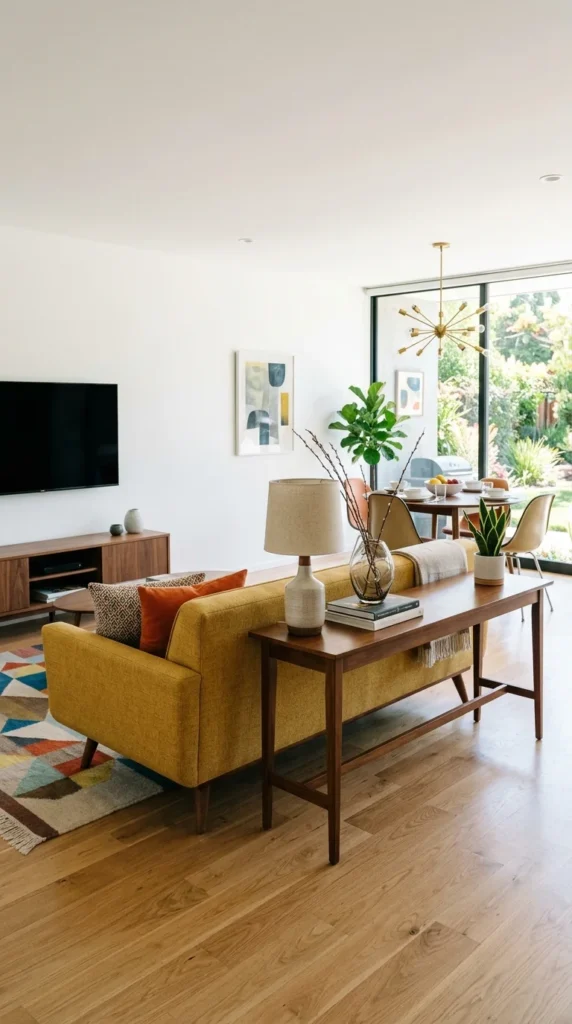
The back of a sofa is a natural wall. Instead of pushing your couch against the furthest wall, move it to the center of the space. This instantly creates a “living room” footprint. Adding a slim console table behind the sofa provides a surface for lamps or books and further solidifies the boundary between the seating area and whatever lies behind it.
18. Painted Arches
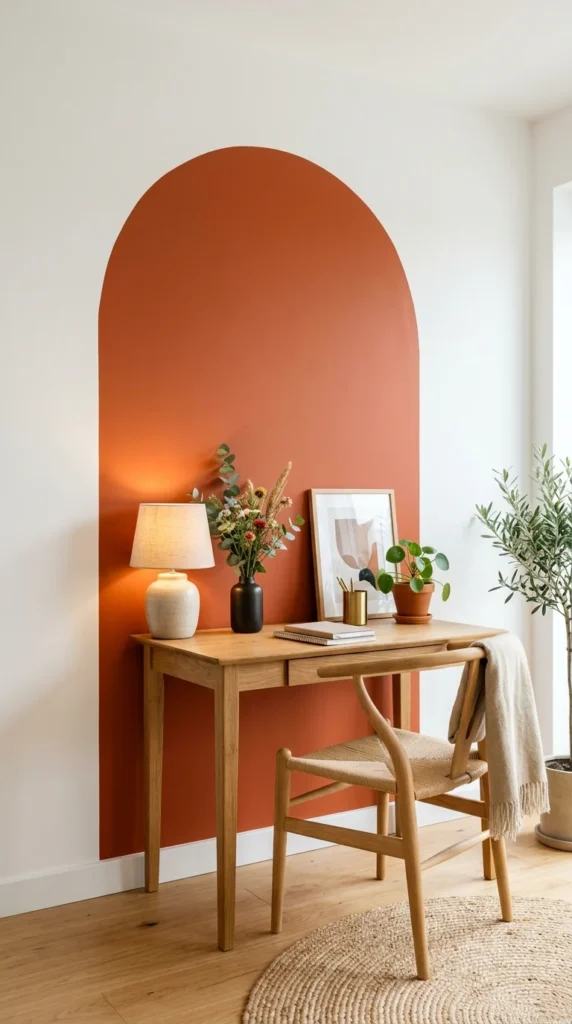
This is a “visual divider” rather than a physical one. By painting a specific shape—like an arch or a solid block of color—behind a specific area (like a bed or a desk), you create a “zone” that the eye perceives as a separate room. It’s an inexpensive and space-saving way to organize a studio apartment.
19. Rattan Panels
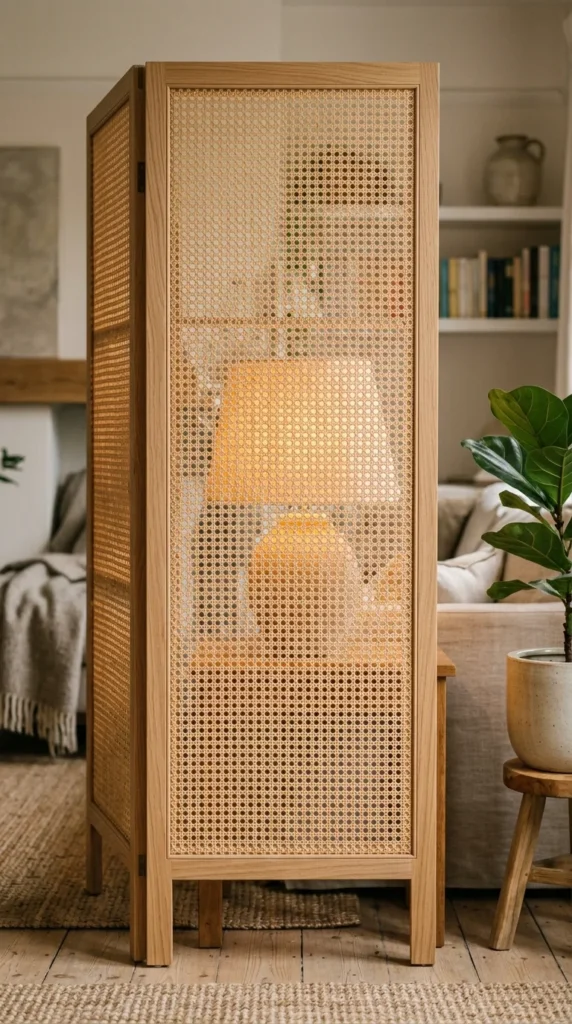
Rattan and cane are incredibly popular for their organic texture and lightness. A rattan room divider brings a natural, airy element to a room. Because it is lightweight, it is easy to move, and the woven texture provides just enough visual obstruction to create privacy while keeping the apartment feeling breezy.
20. Mirrored Screens

Mirrored screens are a double-threat: they divide the space and make it look much larger than it actually is. By reflecting the rest of the room, they trick the eye into seeing more depth. They are perfect for placing near a window to catch the afternoon sun and bounce it into the darker corners of a studio.
21. Rug Zoning
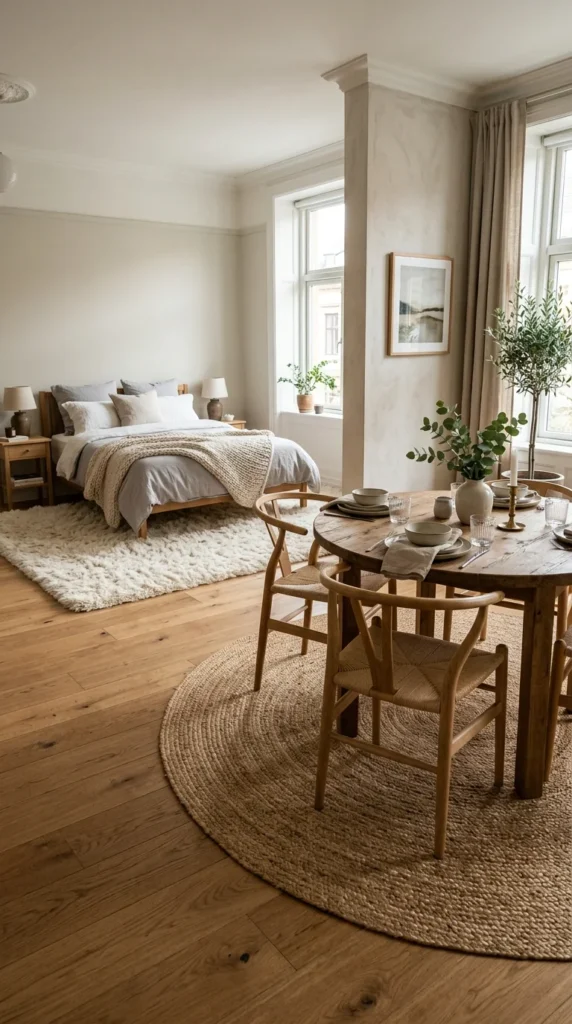
While not a vertical divider, rugs are the most essential tool for defining “rooms” in an open space. A large rug anchors a specific area, signaling to the eye where the living room begins and ends. When you combine rug zoning with one of the vertical dividers mentioned above, you create a professional, multi-room feel in the smallest of spaces.