
Stepping into a high-end hotel room or browsing through a luxury home magazine often leaves us longing for a space that feels curated, calm, and expensive. However, creating a five-star sanctuary doesn’t require a five-star bank account. Luxury is more about the intentionality of design, the layering of textures, and the clever use of light than it is about the price tag on the furniture. By focusing on high-impact changes and DIY upgrades, you can transform your bedroom into a sophisticated retreat on a modest budget.
1. Monochromatic Palette
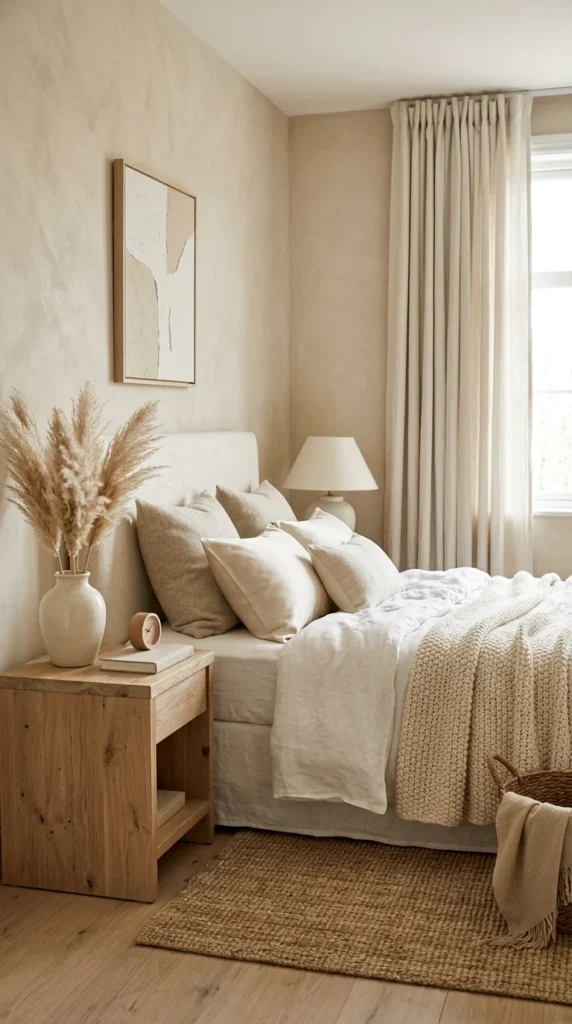
One of the simplest ways to make a room look expensive is to stick to a monochromatic color scheme. When you use varying shades of the same color—especially neutrals like ivory, soft grey, or warm taupe—it creates a cohesive and sophisticated look. This technique removes visual “noise” and makes the space feel more expansive and tranquil. To keep it from looking flat, mix your textures: pair a matte wall with a silk pillow and a chunky knit wool rug.
2. Wall Molding
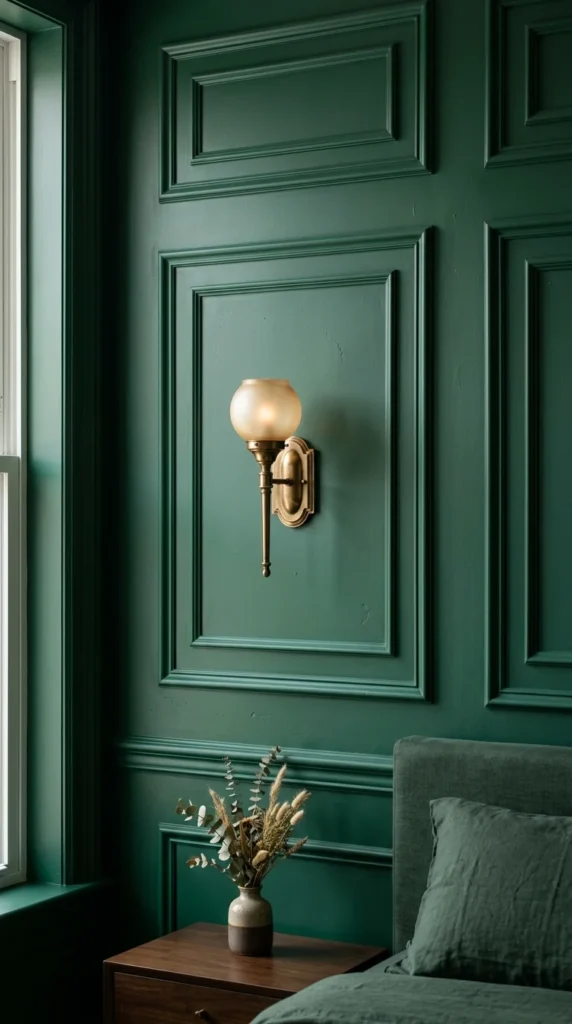
Nothing says “custom architecture” like wall molding. Whether it’s picture frame molding, wainscoting, or board and batten, adding trim to your walls provides instant character. You can buy inexpensive decorative trim at any hardware store and install it yourself with a miter saw and a nail gun. Painting the molding the same color as the wall creates a high-end, seamless look that mimics the craftsmanship found in historic European estates.
3. Layered Bedding
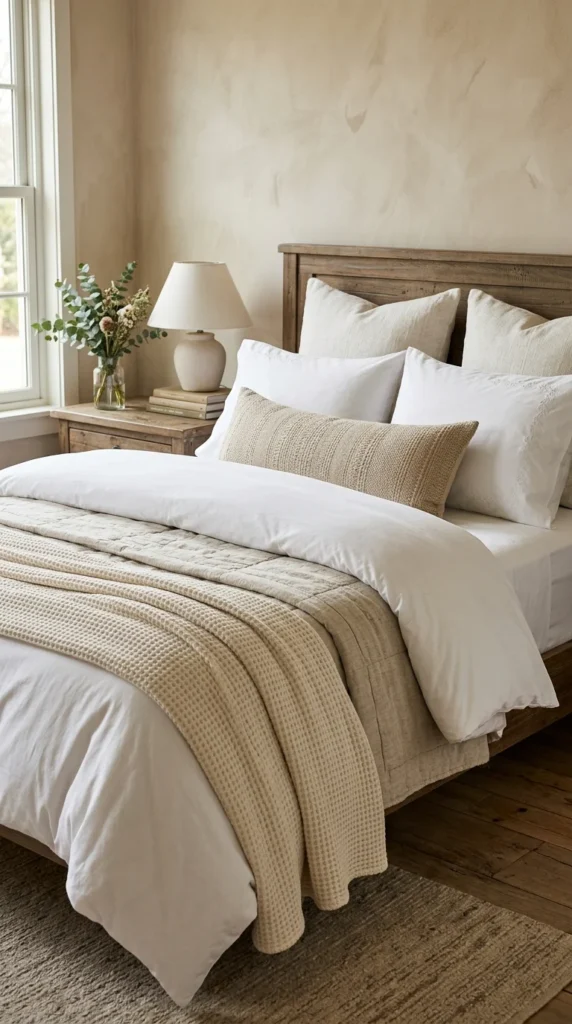
The bed is the focal point of the room, so it should look as inviting as possible. Luxury beds aren’t just a sheet and a comforter; they are built in layers. Start with crisp, high-thread-count cotton or linen sheets. Add a duvet for volume, and then layer a quilt or coverlet over the top. Finish with a heavy throw blanket draped over the foot of the bed. This “nesting” effect adds depth and makes the bed look significantly more expensive.
4. Statement Headboard
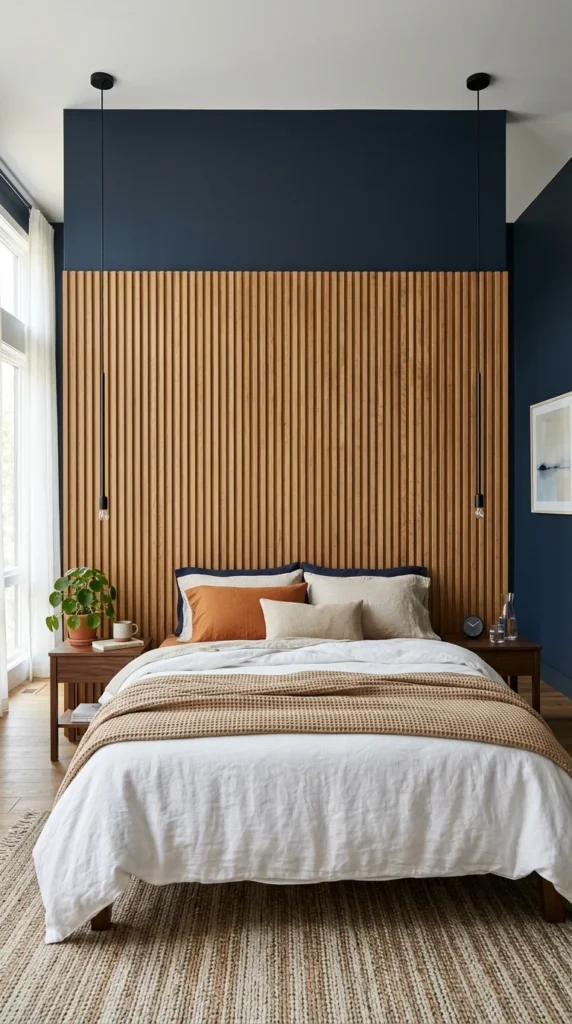
If your bed is currently just a frame against a wall, adding a headboard will change the entire dynamic of the room. You don’t need to buy a designer piece. You can create a “faux” headboard using a large piece of plywood covered in foam and velvet fabric, or even use reclaimed wood panels. A tall, oversized headboard draws the eye upward, making the ceilings feel higher and the room feel grander.
5. Brass Hardware
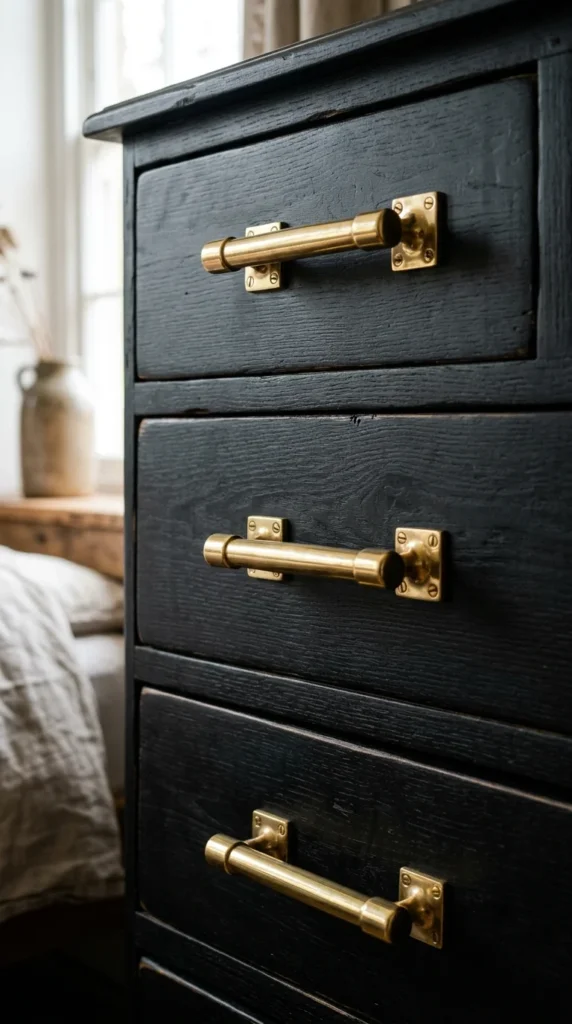
The “jewelry” of your furniture is the hardware. Standard builder-grade knobs can make even a nice piece of furniture look cheap. By swapping out old drawer pulls and cabinet knobs for high-quality materials like brass, matte black steel, or even leather tabs, you elevate the entire piece. Look for heavy, solid-feeling hardware; the weight and finish will provide a tactile sense of luxury every time you open a drawer.
6. Mood Lighting
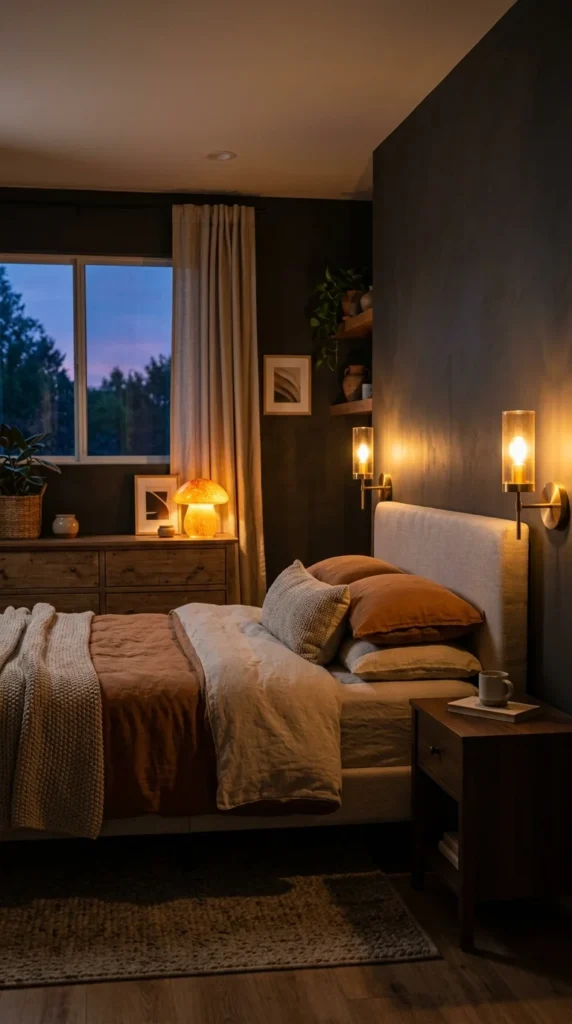
Harsh overhead lighting is the enemy of a luxurious atmosphere. To achieve a high-end feel, you need layers of light. Replace your standard ceiling fixture with a statement chandelier or a drum shade pendant. More importantly, add “task” and “accent” lighting. Wall-mounted sconces (there are many “plug-in” versions that don’t require an electrician) provide a clean, hotel-like aesthetic and free up space on your nightstands.
7. Oversized Rug
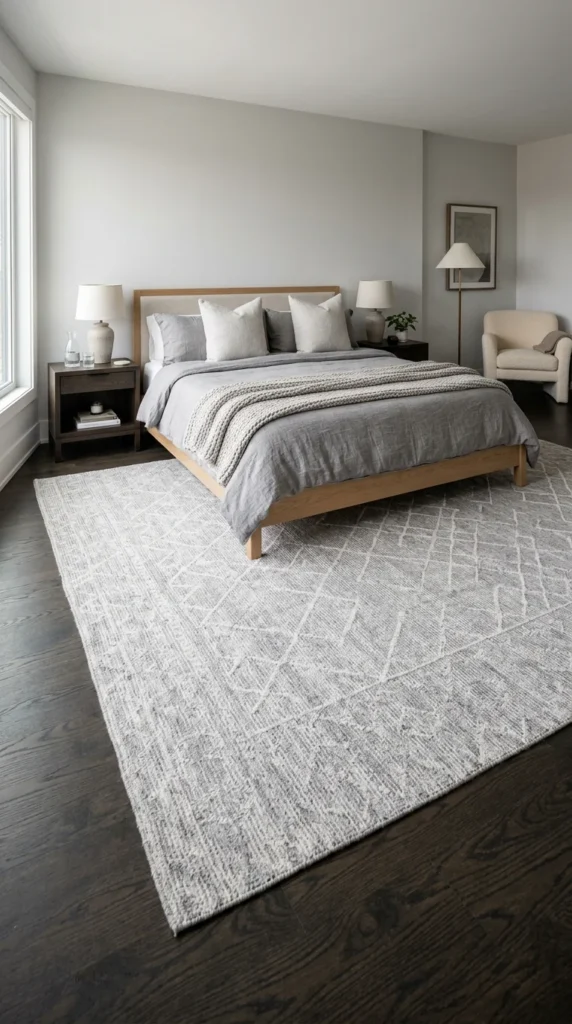
A common mistake is buying a rug that is too small for the space. A small rug looks like an island and makes the room feel disjointed. A large rug that fits under the bed and extends at least 24 inches on all sides grounds the furniture and creates a “zoned” feel. Even a budget-friendly jute or sisal rug can look incredibly chic when it is scaled correctly to the room.
8. Floor Mirrors
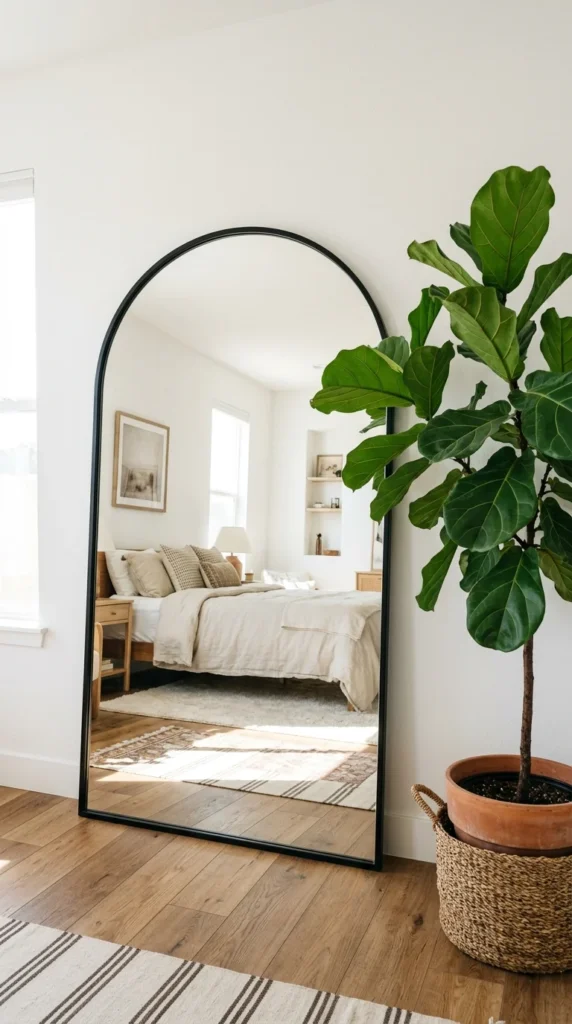
Mirrors are a classic designer trick for making a room feel larger and brighter. A massive floor-length mirror leaning against the wall adds a sense of effortless glamour. It reflects light into darker corners and acts as a piece of functional art. Choose a frame that complements your style—be it an ornate gold “antique” style or a sleek, modern black frame.
9. Symmetrical Styling
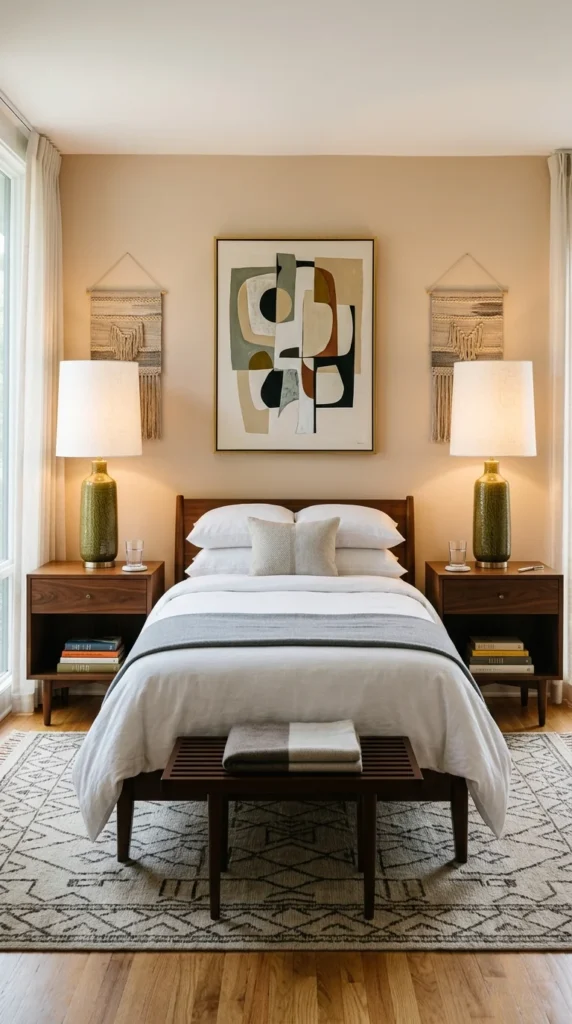
Symmetry is a hallmark of traditional luxury. It creates a sense of order and balance that is naturally pleasing to the eye. You don’t need expensive furniture to achieve this; simply having matching nightstands and identical lamps on either side of the bed will immediately make the room feel curated and professional. Ensure the heights of the lamps and nightstands are consistent to maintain the clean lines.
10. Designer Fans
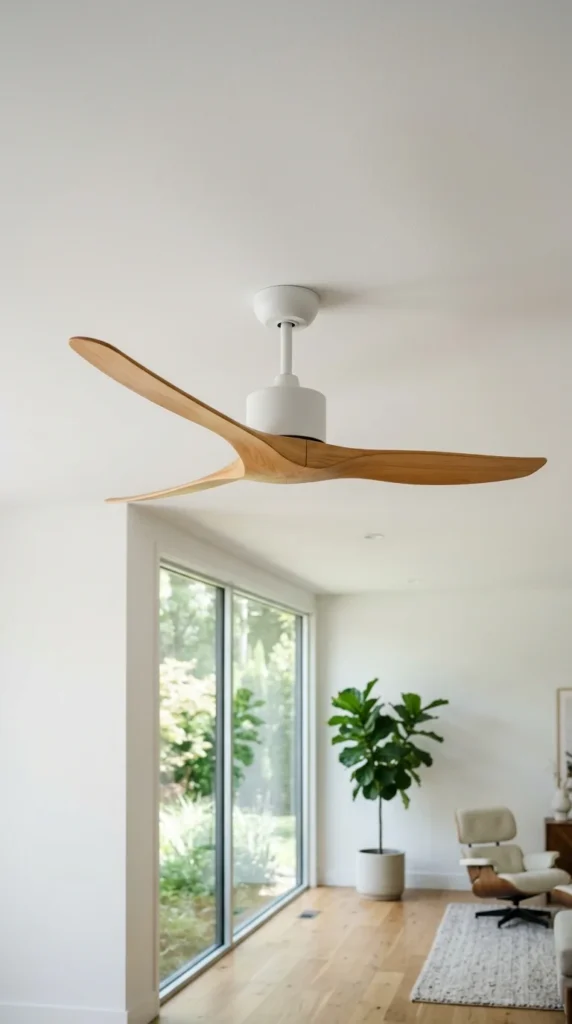
Most standard ceiling fans are bulky and unattractive. If you live in a climate where a fan is a necessity, upgrade to a “designer” model. Look for fans with wooden blades, sleek silhouettes, and no visible light kits (or very minimalist ones). A stylish fan becomes a design element rather than an eyesore, contributing to the overall polished look of the ceiling.
11. High-Hung Curtains
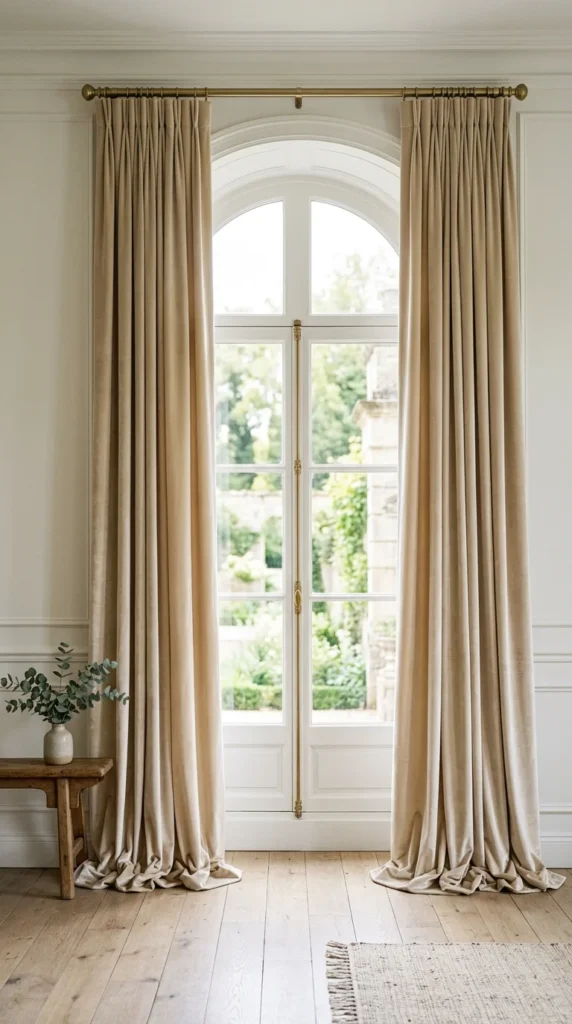
To make your windows look larger and your ceilings taller, hang your curtains “high and wide.” Place the curtain rod 6–10 inches above the window frame and extend it 12 inches beyond the sides. Use long panels that touch or slightly “puddle” on the floor. Opt for heavy fabrics like velvet or lined linen, which provide better insulation and a much more expensive drape than thin, sheer polyester.
12. Indoor Greenery
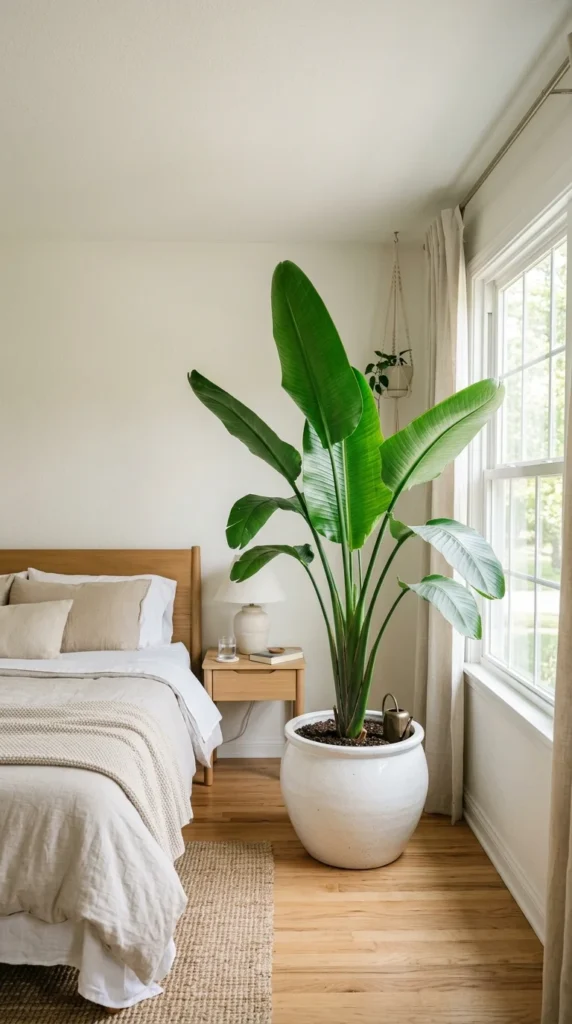
Bringing a bit of the outdoors in adds life and vibrancy to a bedroom. A large-scale plant, like a Fiddle Leaf Fig, an Olive Tree, or a Monstera, acts as a living sculpture. If you don’t have a green thumb, high-quality “real-touch” faux plants can offer the same visual benefit. The organic shapes of the leaves break up the straight lines of the furniture, making the room feel more organic and expensive.
13. Dark Accent Wall
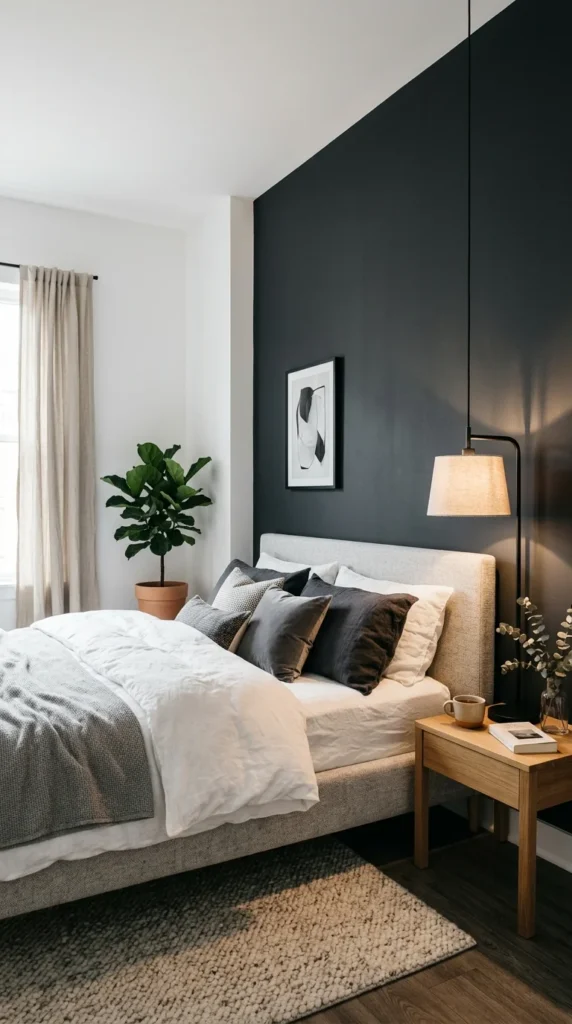
Paint is the most cost-effective tool in your makeover arsenal. A deep, moody accent wall in navy, forest green, or charcoal creates an instant sense of drama and intimacy. Dark colors feel receding, which can actually make a small room feel deeper. When you pair a dark wall with lighter bedding and warm wood tones, the contrast creates a high-end, “boutique hotel” vibe.
14. Bedside Trays
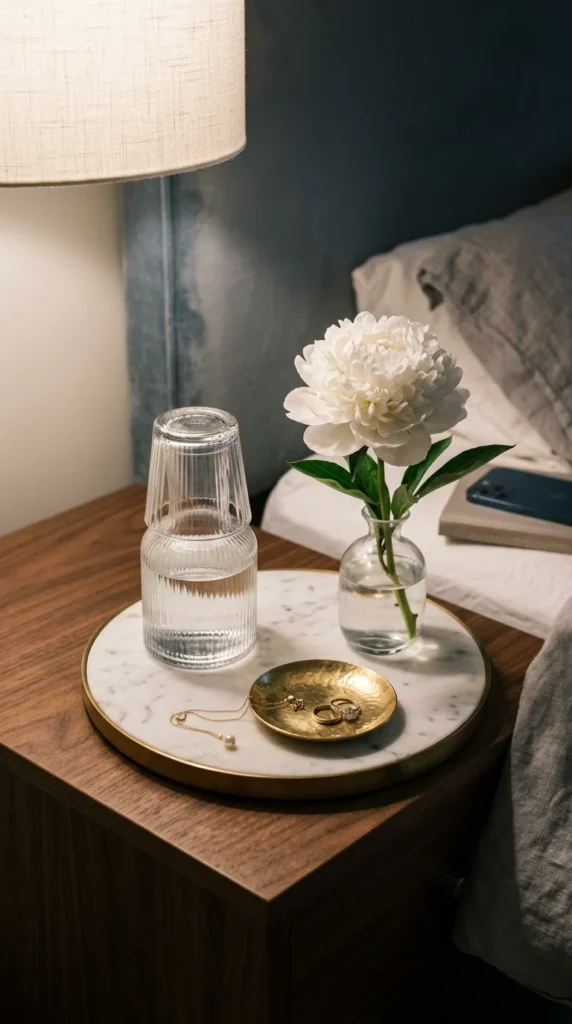
Luxury is found in the details. Instead of letting your nightstand become a cluttered mess of charging cables and loose change, use a decorative tray to corral your essentials. A marble, leather, or metallic tray makes even the most mundane items look like a curated display. It adds a layer of organization that signals the room is well-cared for and intentionally designed.
15. High-End Throw Pillows
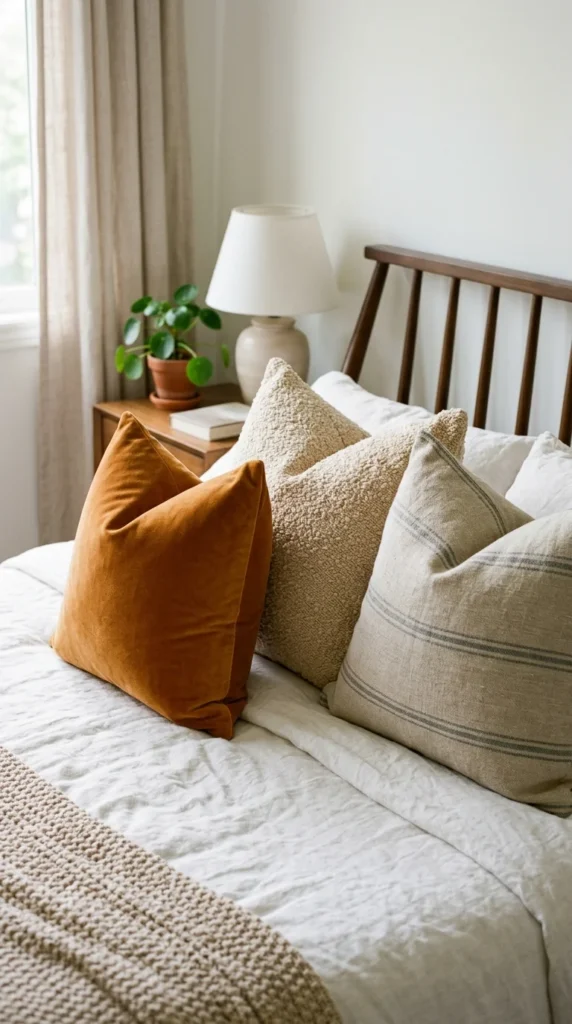
The secret to expensive-looking pillows isn’t the cover; it’s the insert. Swap out flat polyester inserts for down or high-quality down-alternative “choppable” inserts. Use covers in high-end fabrics like linen, velvet, or wool. Mixing textures and sizes—starting with large Euro shams in the back and moving to smaller lumbar pillows in the front—adds the visual weight necessary for a luxury look.
16. Curated Gallery Wall
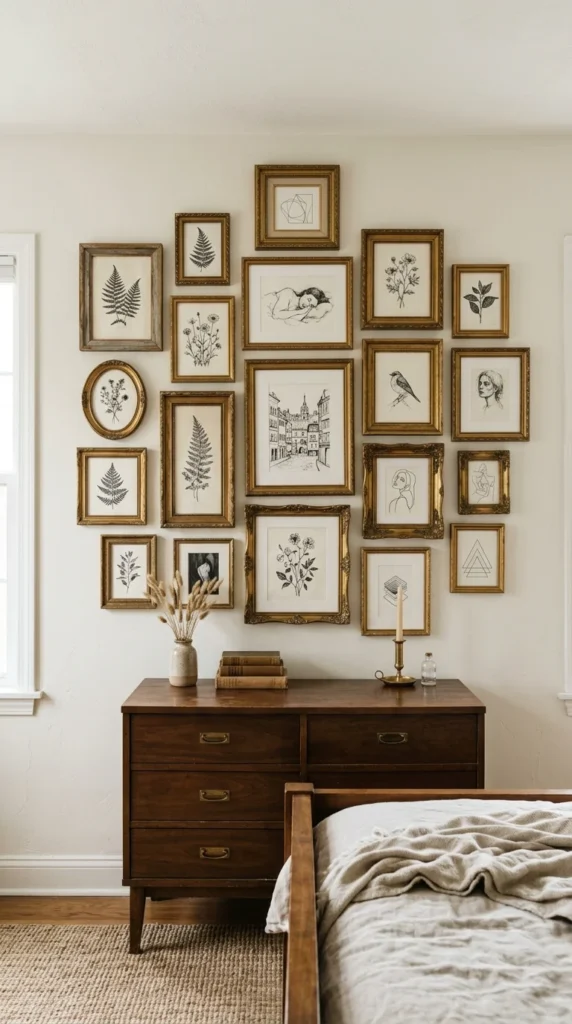
Art fills the “voids” of a room and adds personality. You don’t need to buy original oil paintings to look sophisticated. You can frame high-quality digital prints, vintage maps, or even architectural sketches found in old books. The key to making it look expensive is the framing. Use oversized mats and consistent frame colors to give a disparate collection of art a cohesive, gallery-like feel.
17. Textured Throws
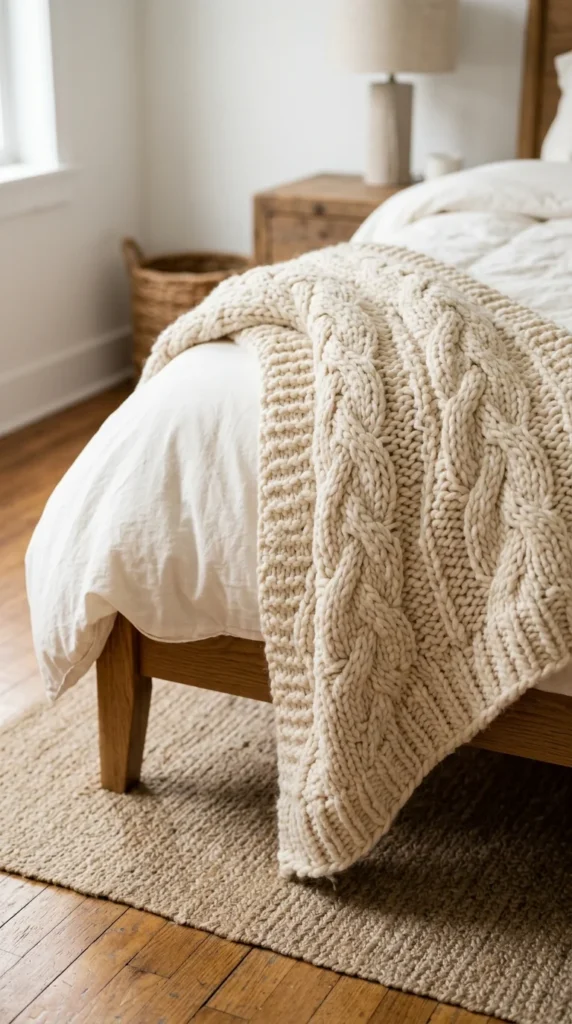
Texture is what makes a room feel “expensive” to the touch. A chunky knit blanket, a faux-fur throw, or a heavy mohair wrap adds a level of sophistication that a standard fleece blanket cannot match. Drape it over the corner of the bed or across a reading chair to introduce a new material into the room’s design language.
18. Scented Ambiance
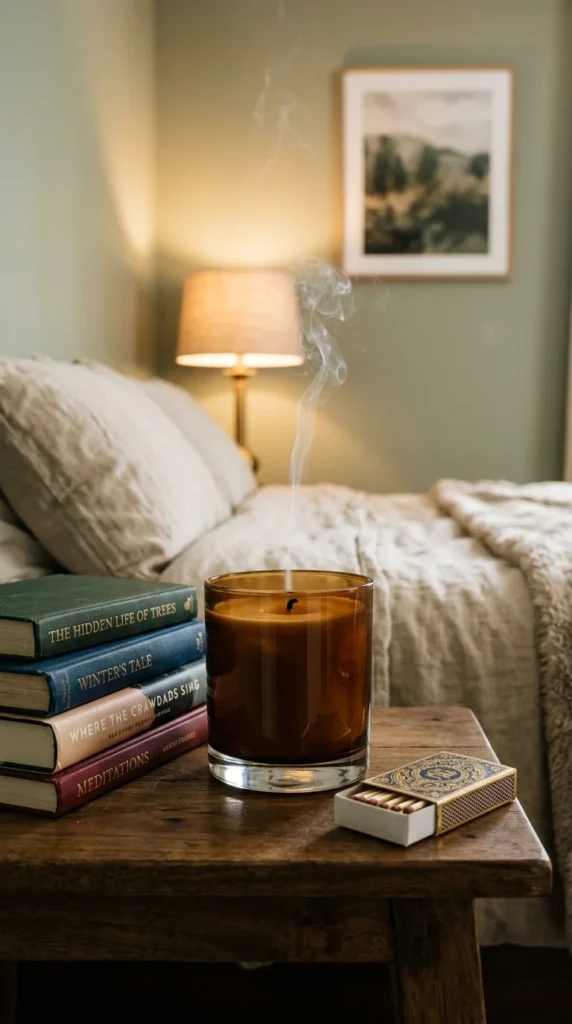
Luxury is a multi-sensory experience. A room that looks beautiful but smells like laundry or dust won’t feel truly high-end. Invest in a signature scent via high-quality candles, reed diffusers, or a stone ultrasonic oil diffuser. Scents like sandalwood, cedar, bergamot, or white tea are often associated with high-end spas and hotels, helping to reinforce the luxurious atmosphere of your bedroom.
19. Refurbished Furniture
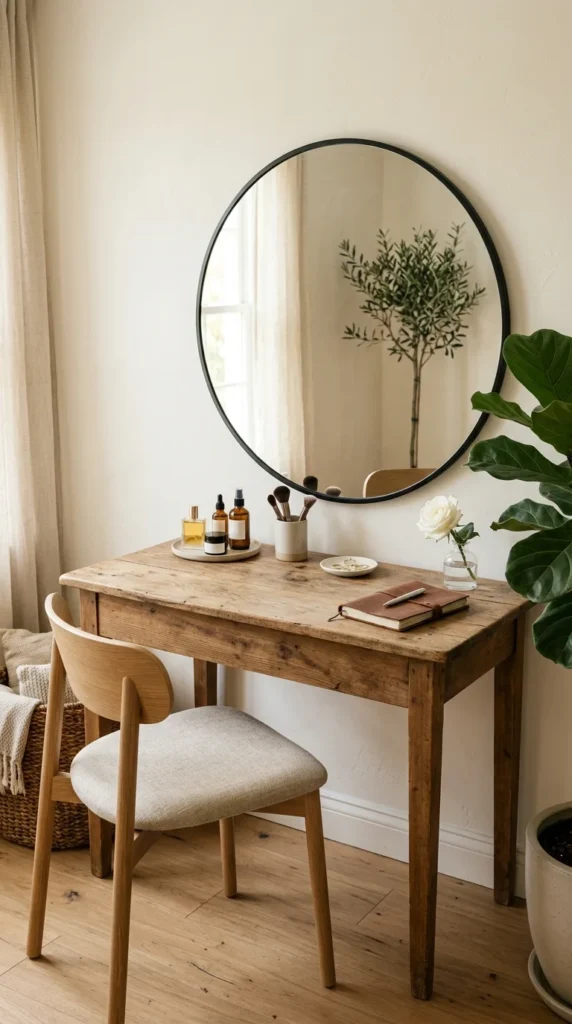
New furniture is expensive, and budget-friendly “fast furniture” often looks flimsy. Instead, scout thrift stores, estate sales, or Facebook Marketplace for solid wood pieces with good bones. A coat of paint, new hardware, or even just a good sanding and staining can turn a $20 find into a statement piece. “Old” wood adds a sense of history and permanence that brand-new sets often lack.
20. Hidden Technology
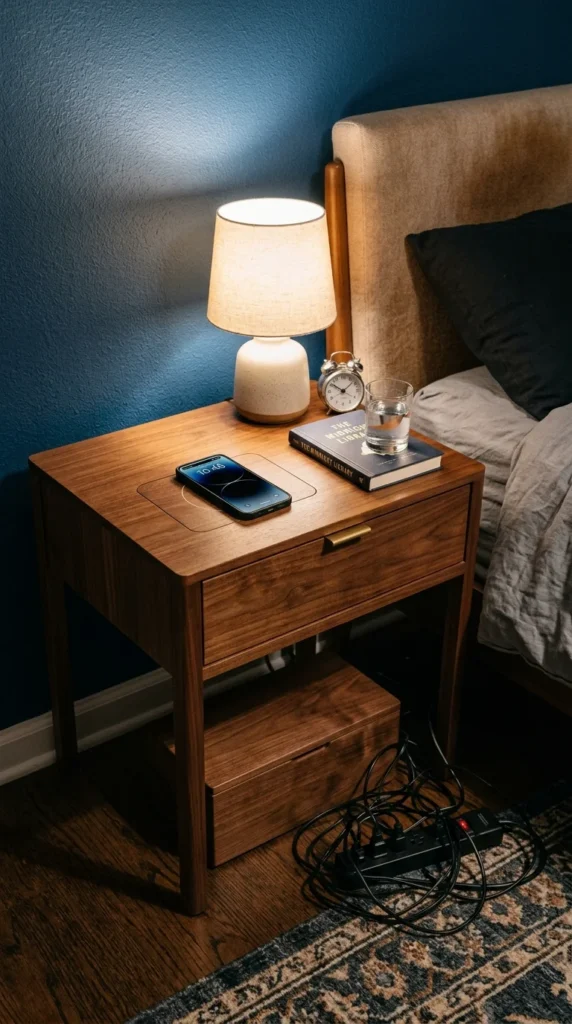
Nothing kills a luxury vibe faster than a “rat’s nest” of tangled charging cables and power strips. To maintain a high-end look, keep your technology hidden. Use cable management boxes, run wires behind furniture, or choose nightstands with built-in charging ports. A clean, wire-free environment promotes a sense of calm and order.
21. Luxury Fragrance
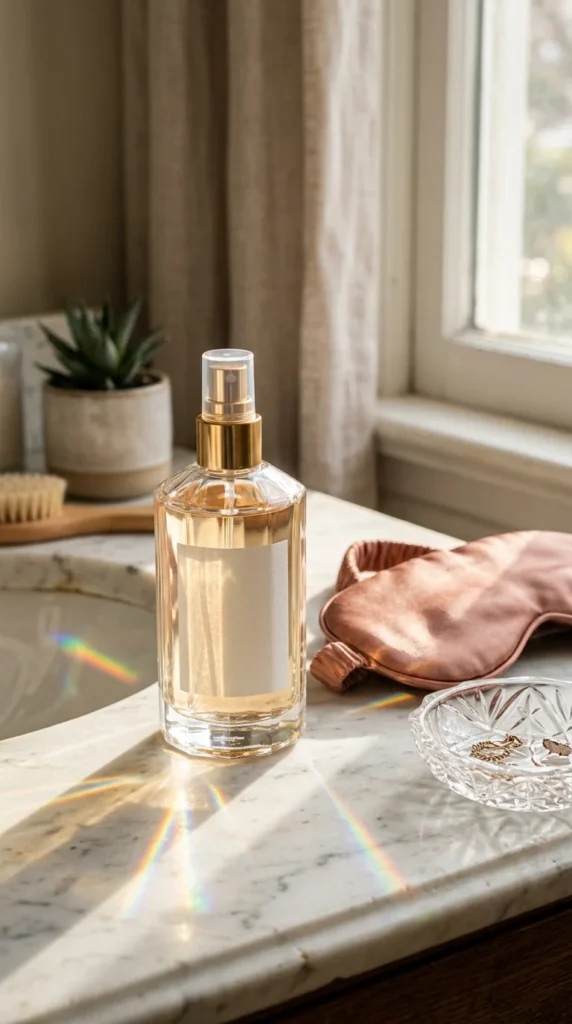
In addition to candles, using a dedicated linen spray or “room perfume” can elevate your daily routine. Spraying your sheets with a light lavender or eucalyptus mist before bed mimics the “turn-down service” at luxury resorts. It is a small, low-cost habit that makes the bedroom feel like a special destination rather than just a place to sleep.
22. Crown Molding
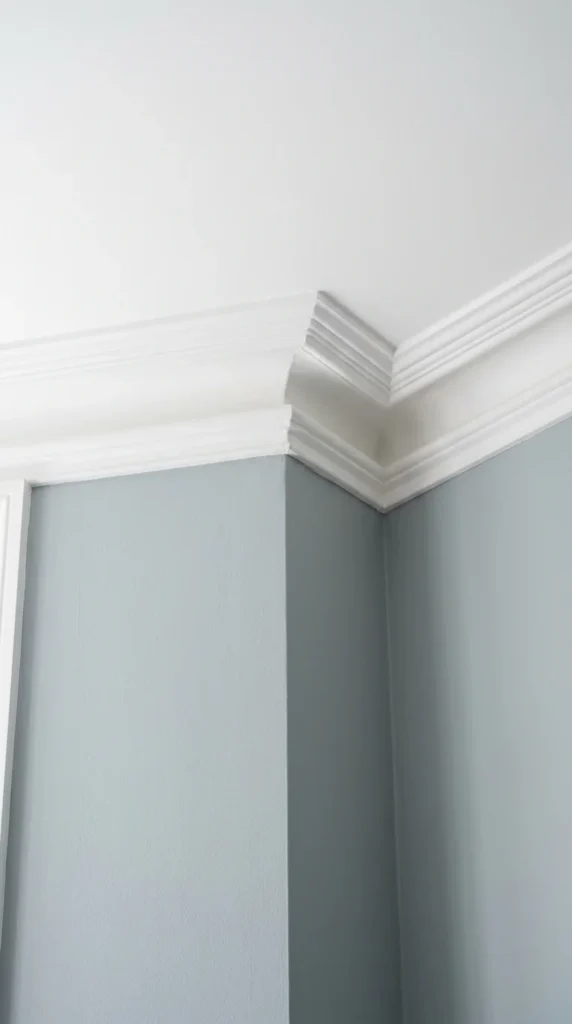
While floor-level molding is great, crown molding (at the ceiling) is the ultimate finishing touch. It hides imperfections where the wall meets the ceiling and provides a polished, “finished” look to the room. If you are a renter or on a tight budget, you can find lightweight polyurethane crown molding that can be installed with adhesive, providing the look of heavy plaster for a fraction of the cost.
23. Floating Shelves
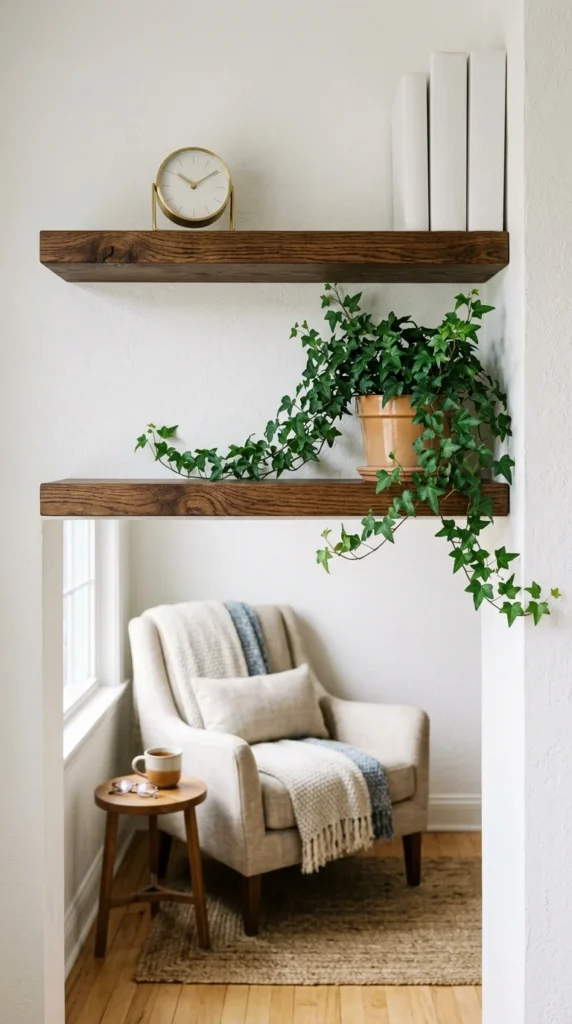
Floating shelves provide a minimalist way to display decor without the bulk of a traditional bookcase. By choosing thick, high-quality wood (or painting them to match the wall for a “built-in” look), you create a space for “vignettes.” A vignette is a small, styled group of objects. Keep these shelves sparsely populated to maintain a high-end, curated feel rather than a cluttered one.
24. Velvet Accents
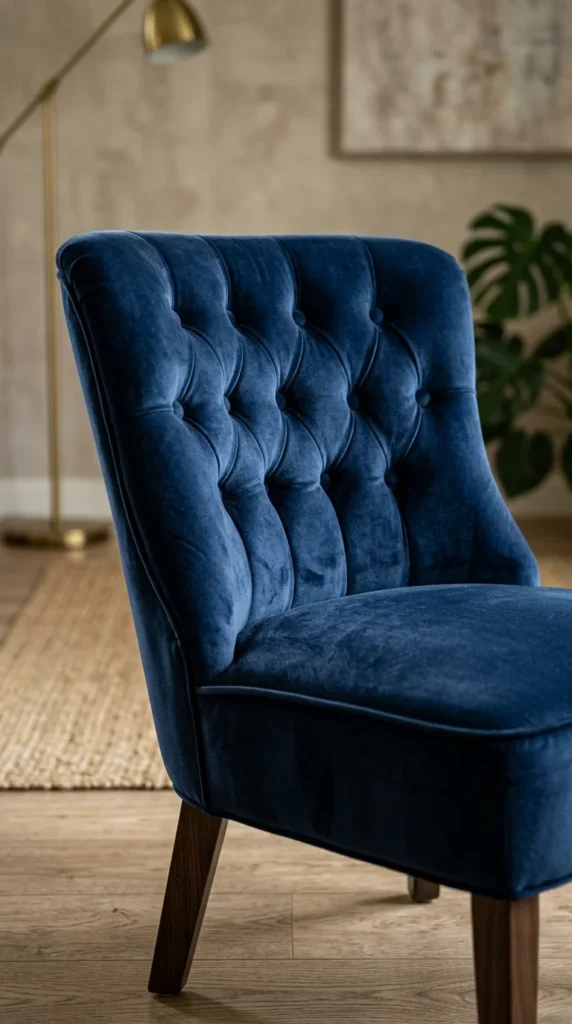
Velvet is the quintessential “luxury” fabric. It has a visual depth and a tactile softness that immediately signals opulence. You don’t need a velvet sofa; a single velvet accent chair in the corner or even just a long velvet lumbar pillow on the bed can be enough to elevate the entire room’s material palette. It catches the light beautifully and adds a sense of warmth.
25. Decluttered Surfaces
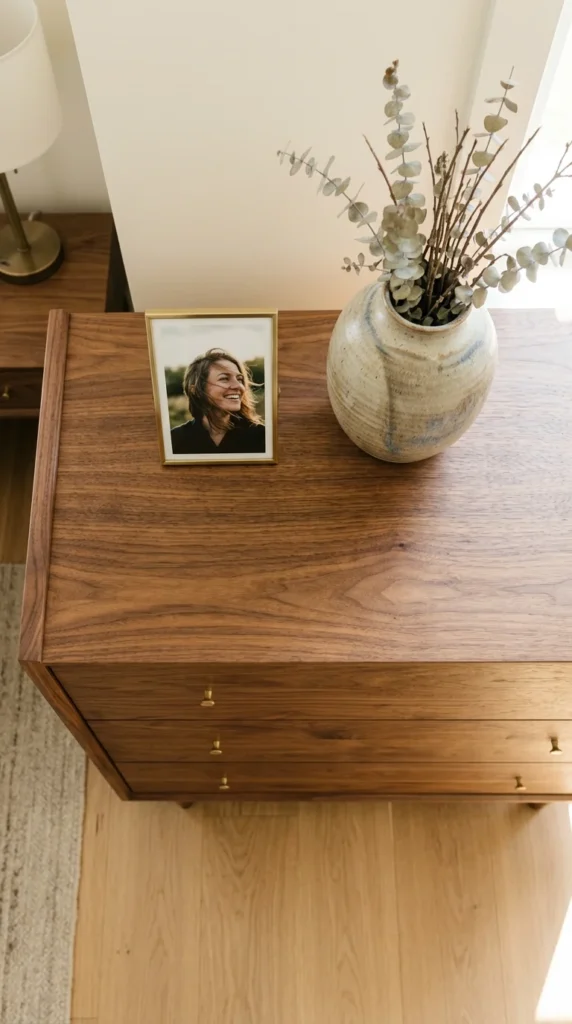
The cheapest and most effective way to make a room look expensive is to remove the clutter. Luxury spaces are characterized by “breathing room.” Take everything off your surfaces and only put back the items that are either beautiful or absolutely necessary. By giving your furniture and decor space to be seen, you allow the design to shine. Minimalism isn’t about having nothing; it’s about making sure everything you do have has a purpose and a place.