
Living in a small apartment doesn’t mean you have to sacrifice style or comfort. In fact, some of the most beautiful homes in the world are compact spaces that use clever design tricks to feel much larger than they actually are. The secret lies in visual “tricks” that deceive the eye, maximizing every square inch of floor space, and embracing a “less is more” philosophy. Whether you’re dealing with a tiny studio or a cozy one-bedroom, these 25 design ideas will help you transform your living room into a spacious sanctuary.
1. Leggy Furniture
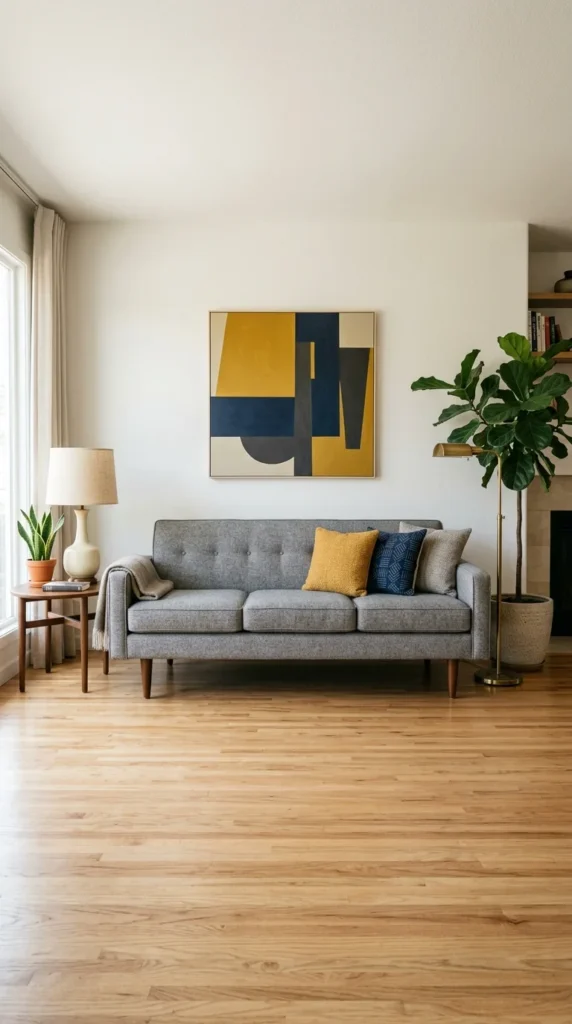
One of the oldest tricks in the interior design book is to show off as much floor as possible. When furniture sits directly on the ground, it acts as a visual block. By choosing sofas, chairs, and sideboards with tall, slender legs, you allow the eye to travel underneath the piece. This creates a sense of “airiness” and makes the room feel far more expansive than it would with heavy, “skirted” furniture.
2. Lucite Accents
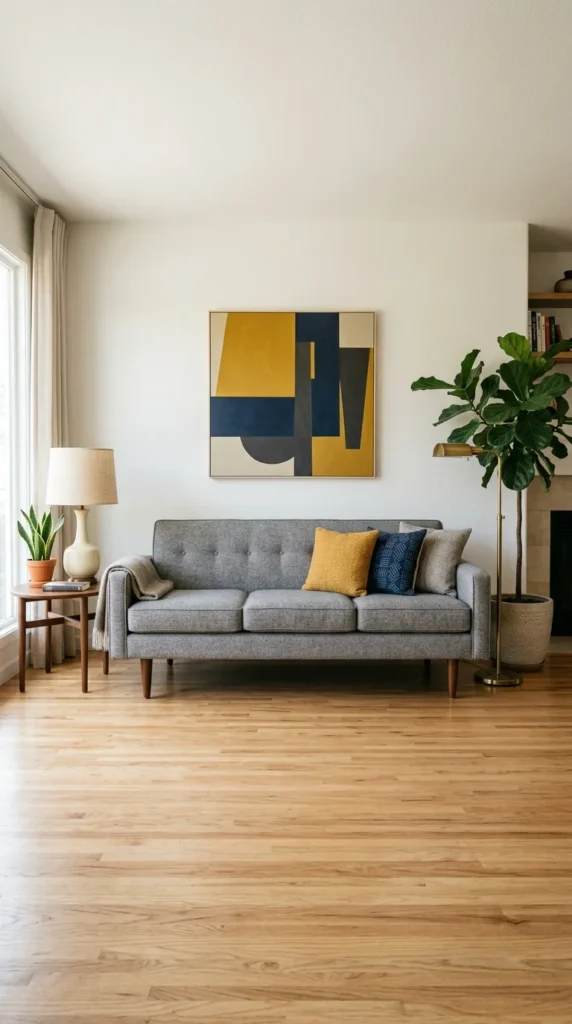
Lucite and acrylic furniture are a small-space dweller’s best friend. Because these pieces are transparent, they take up zero visual weight. You get the functionality of a coffee table or a desk without the visual clutter. It’s a sleek, modern way to keep your room feeling open while still having surfaces to place your coffee or books.
3. Scale Matters
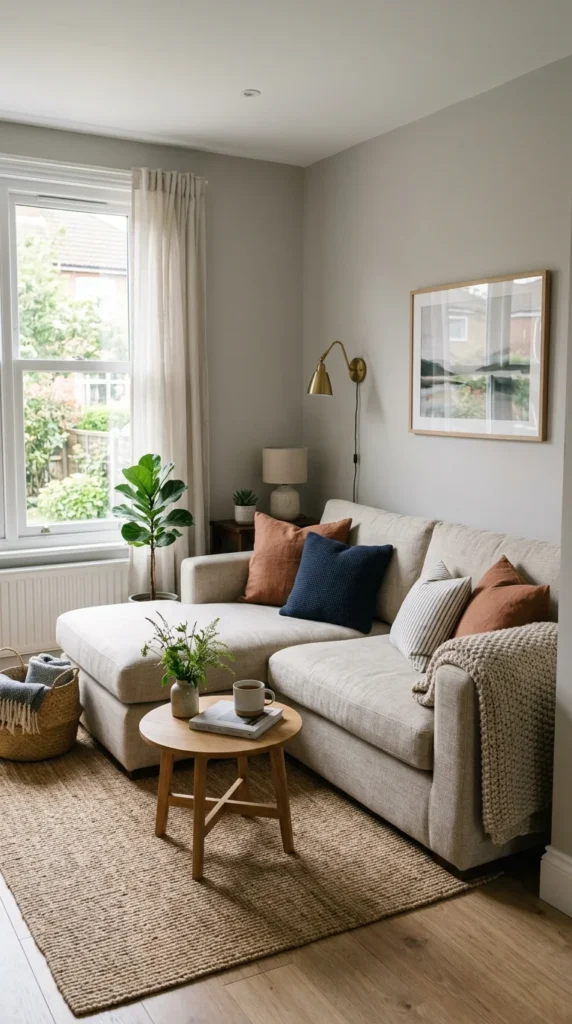
It might seem counterintuitive, but many small pieces of furniture can actually make a room look more cluttered and smaller. Instead of trying to cram in a loveseat, two chairs, and an ottoman, opt for one large, “hero” piece like a full-sized sectional. A single large item makes the room feel grander and more cohesive, providing plenty of seating without the “choppy” feel of multiple small items.
4. Wall Sconces
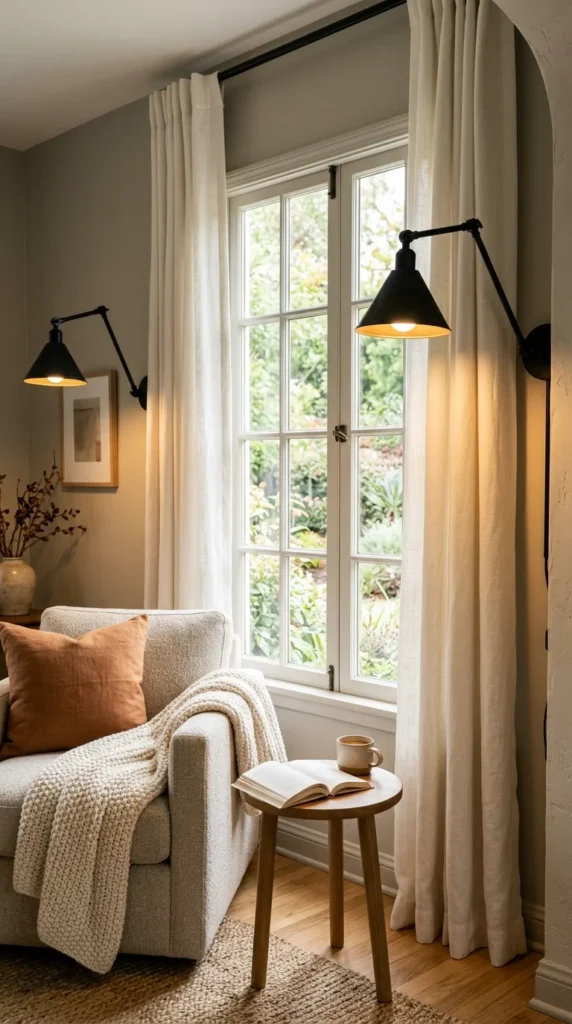
Floor lamps and table lamps take up valuable real estate on the ground or on surfaces. By installing wall-mounted sconces, you free up floor space and eliminate cord clutter. Swing-arm designs are particularly effective because they can be adjusted to provide task lighting for reading or ambient lighting for entertaining, all while looking like a sophisticated piece of wall art.
5. Mirror Magic
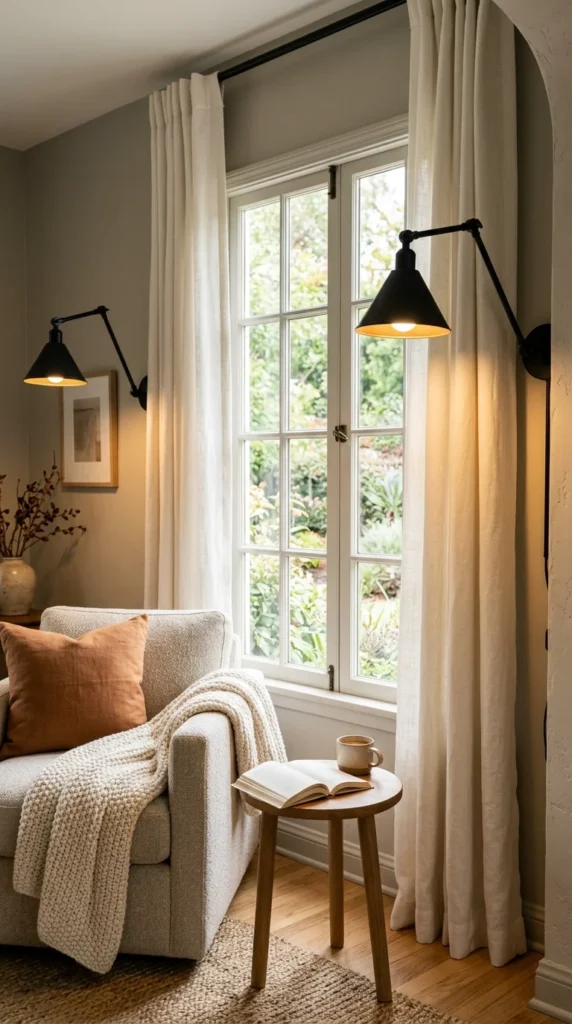
If you want to double the perceived size of your room instantly, use mirrors. A large mirror reflects light and the view of the room, creating an illusion of depth. Placing a mirror opposite a window is the most effective strategy, as it bounces natural light throughout the space and essentially acts as an extra window.
6. Vertical Storage
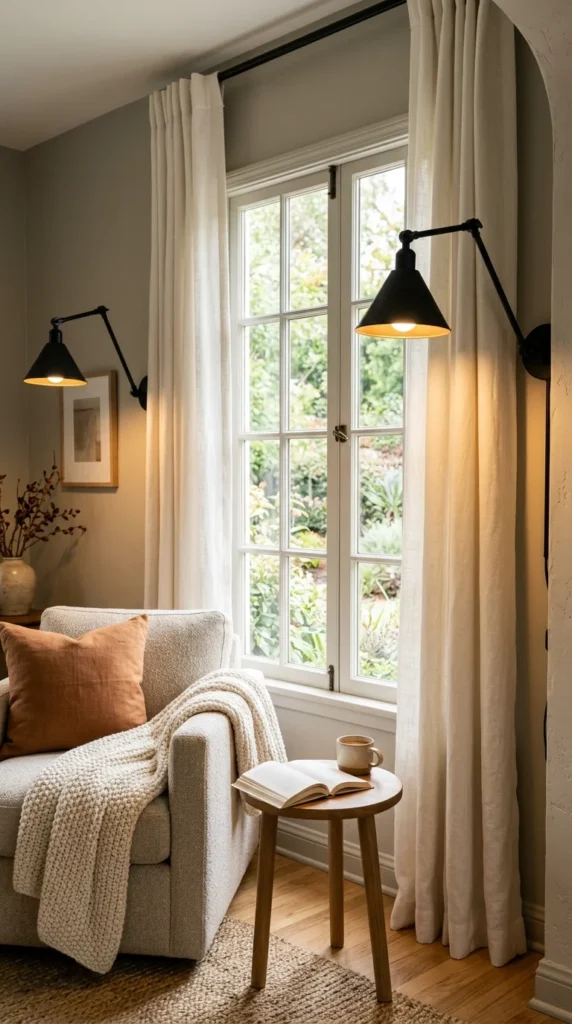
When you run out of floor space, look up. Tall, narrow shelving units draw the eye toward the ceiling, emphasizing the height of the room rather than its limited width. This “verticality” makes the room feel taller. Use the upper shelves for items you don’t use daily, and keep the lower ones for essentials.
7. Monochromatic Palettes
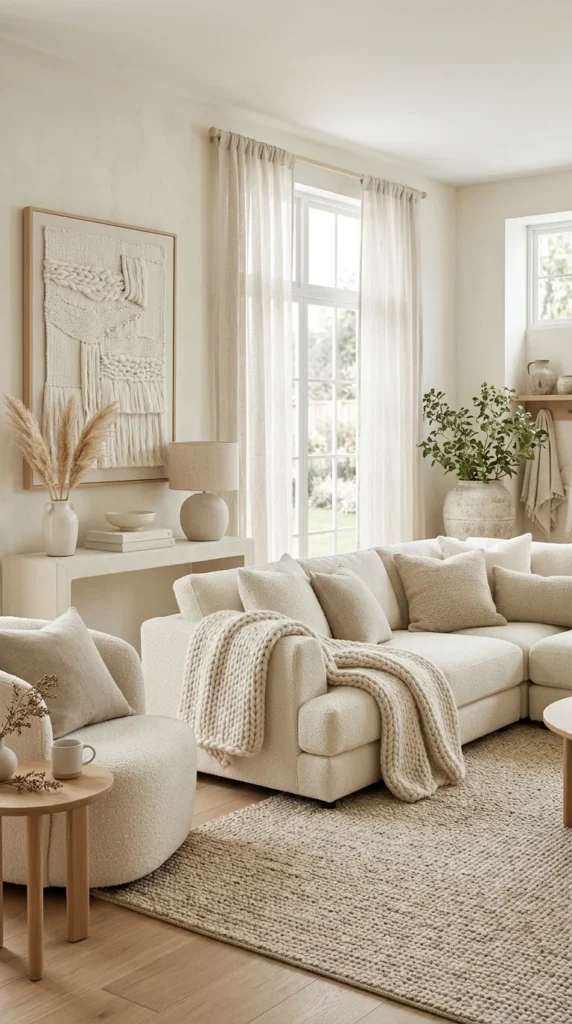
A monochromatic color scheme—using different shades and tints of the same color—creates a seamless look. When there are no harsh contrasts between walls, furniture, and floors, the boundaries of the room seem to blur. This lack of visual interruption makes the space feel infinitely larger and more serene.
8. Multifunctional Ottomans
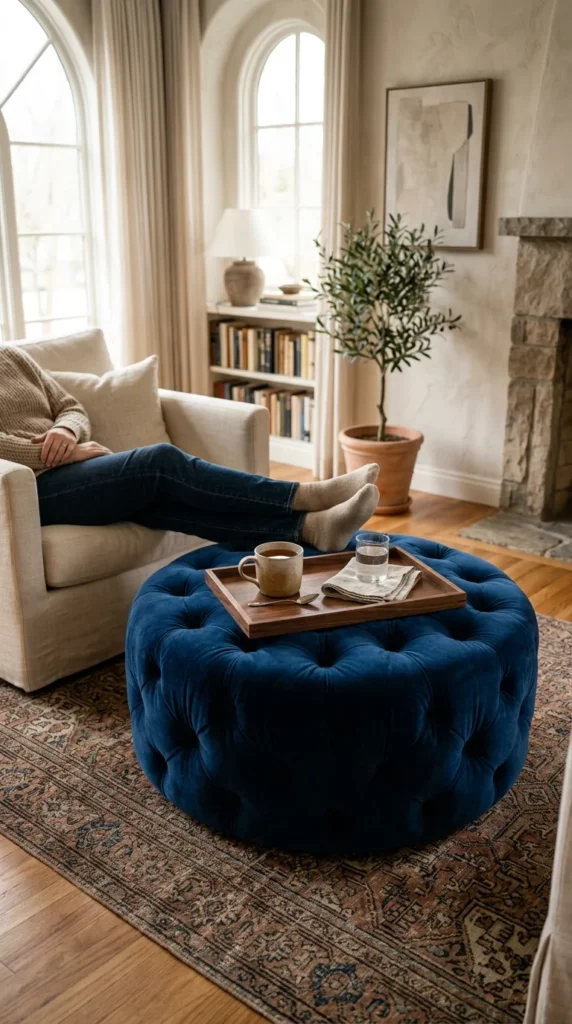
In a small living room, every piece of furniture should work overtime. A large ottoman can serve as a coffee table (just add a tray), extra seating for guests, or a place to kick up your feet. Choosing one with internal storage provides an extra bonus for hiding away blankets and pillows.
9. Floating Shelves
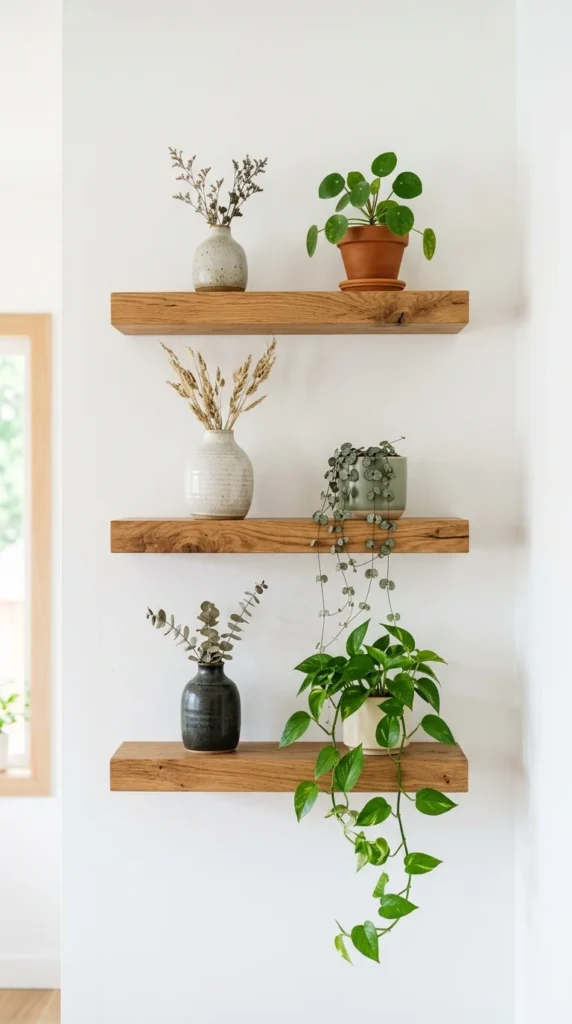
Heavy bookcases can overwhelm a small room. Floating shelves provide the same storage and display opportunities but with a much lighter footprint. Because they don’t have a base, they keep the floor area clear, maintaining that all-important sense of openness.
10. Sheer Curtains
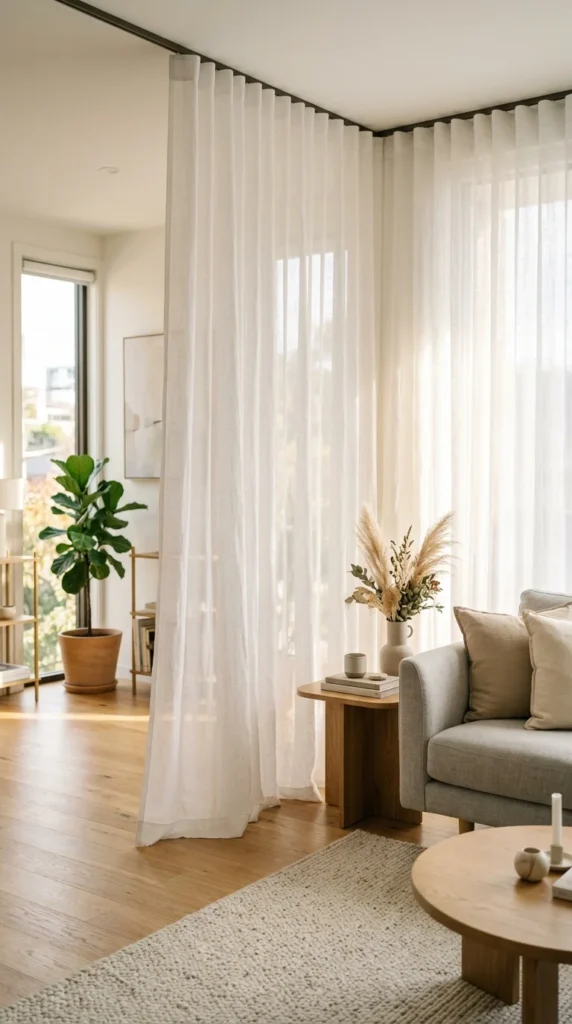
Heavy, dark drapes can make a small room feel like a cave. Instead, opt for sheer fabrics that allow natural light to flood the space. Light is the best tool for making a room feel spacious. If you need privacy, consider layering sheers with a light-colored blackout blind for the evening.
11. High-Hung Rods
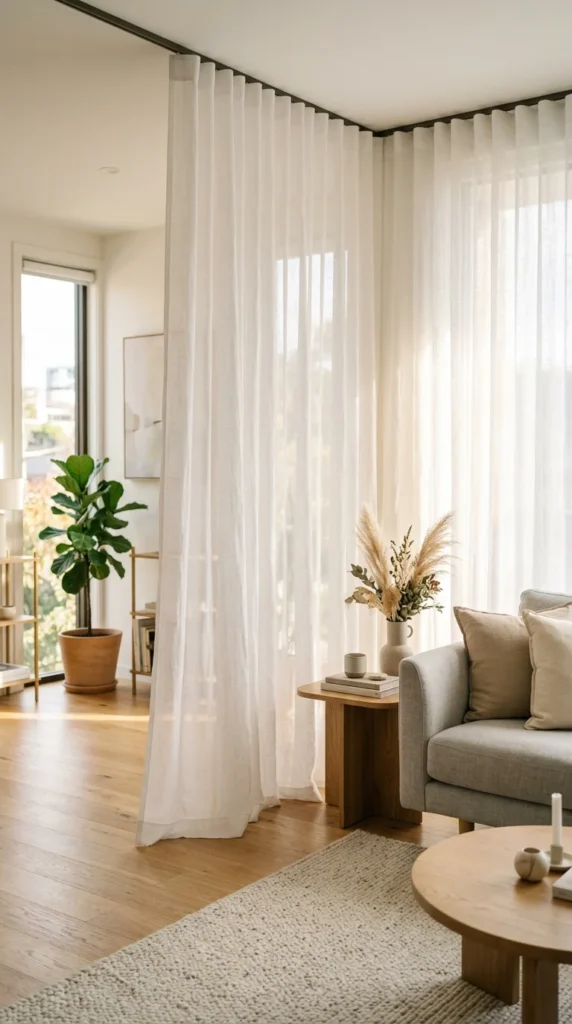
A simple trick to make your ceilings feel a foot taller is to hang your curtain rods as high as possible. Don’t stop at the window frame; go all the way to the ceiling or crown molding. This draws the eye upward and gives the window a grander, more majestic presence.
12. Corner Focus
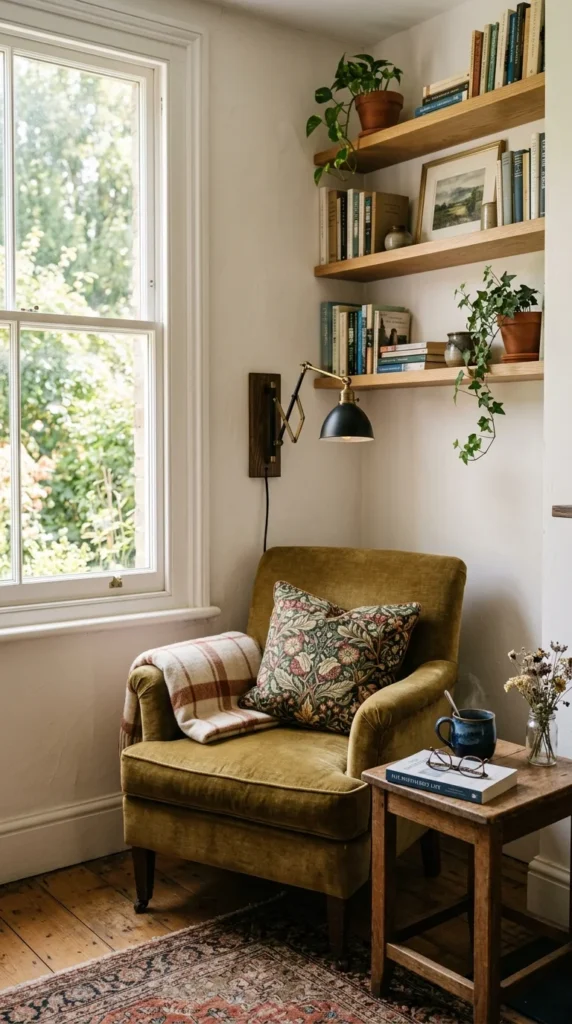
Don’t let corners go to waste. A corner is the perfect spot for a dedicated “zone,” like a reading nook or a small home office. By pushing furniture into the corners, you leave the center of the room open, which facilitates better traffic flow and makes the layout feel more organized.
13. Nesting Tables
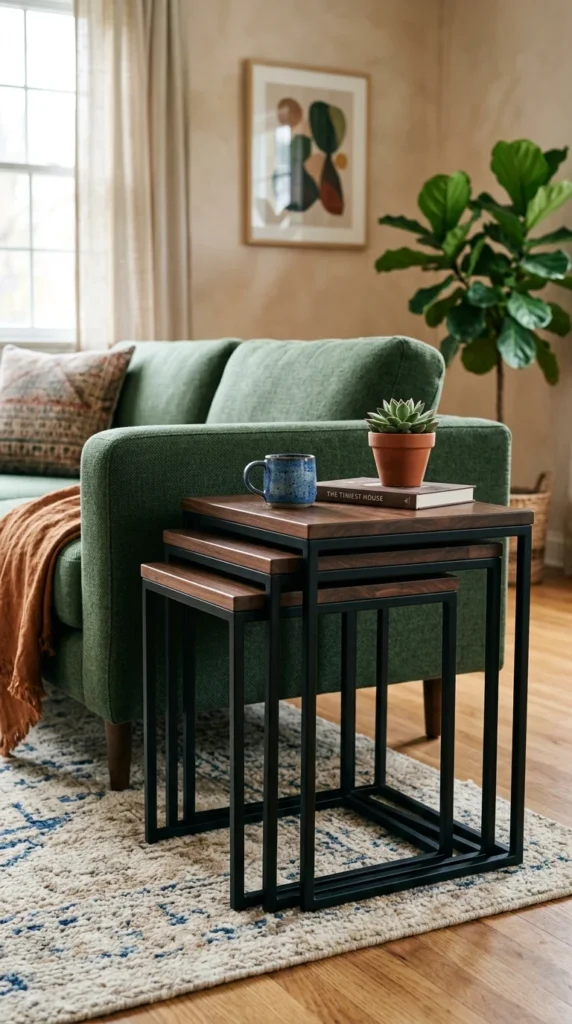
Nesting tables are the ultimate space-savers. You can keep them tucked away during the day to save floor space, and then pull them out when you have guests over and need extra surfaces for drinks and snacks. They offer flexibility without the permanent footprint of a large coffee table.
14. Strategic Rugs
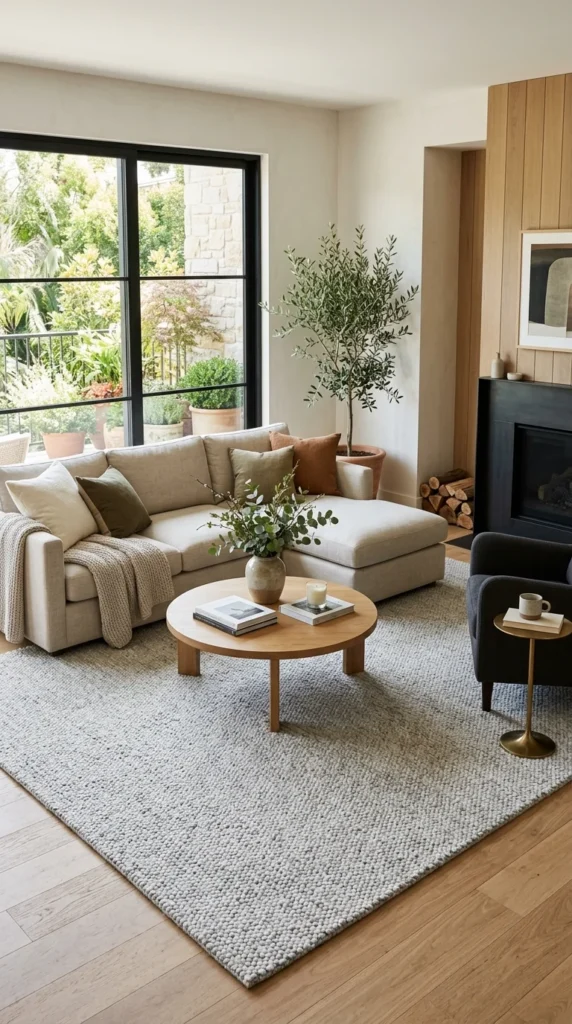
A common mistake in small apartments is using a rug that is too small. A tiny rug makes the room look fragmented. Instead, choose a rug large enough so that all the legs of your furniture—or at least the front legs—sit on it. This anchors the room and creates a unified “zone” that feels expansive.
15. Low-Profile Seating
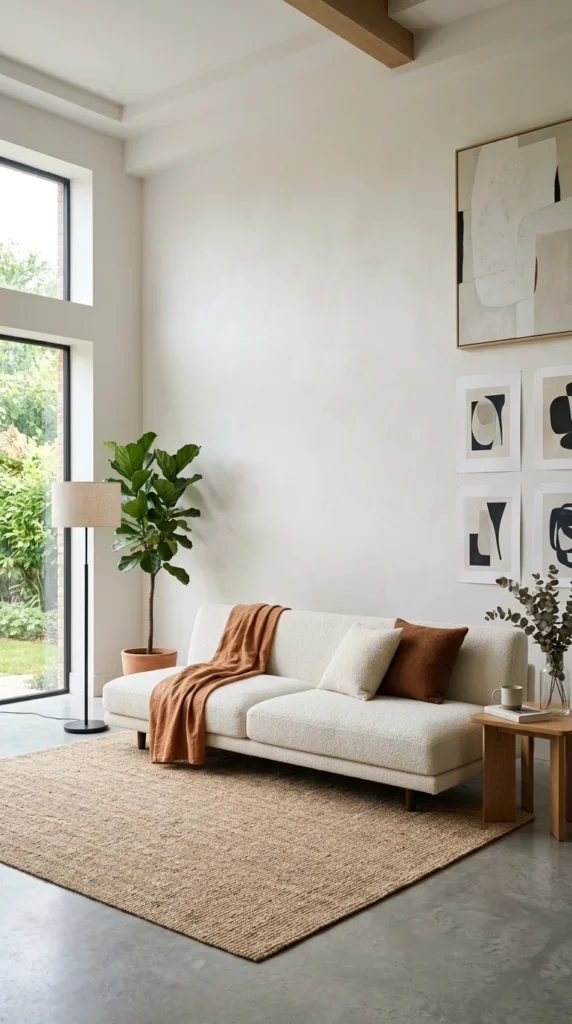
Low-profile furniture—furniture that sits lower to the ground—creates more “white space” on your walls. This extra wall space makes the ceiling feel higher and the room more open. Modern, Japanese-inspired, or mid-century designs often feature these lower heights.
16. Glass Coffee Tables
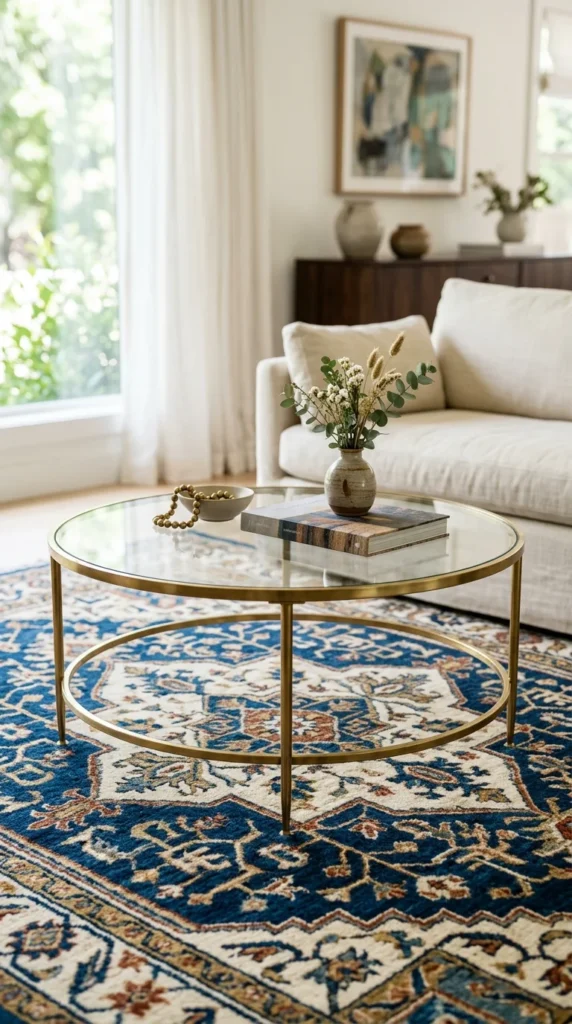
Similar to Lucite, glass furniture allows light to pass through it. A glass coffee table provides a solid surface for your items but doesn’t create a visual “block” in the middle of the room. It’s an elegant way to maintain a sense of flow.
17. Hidden Storage
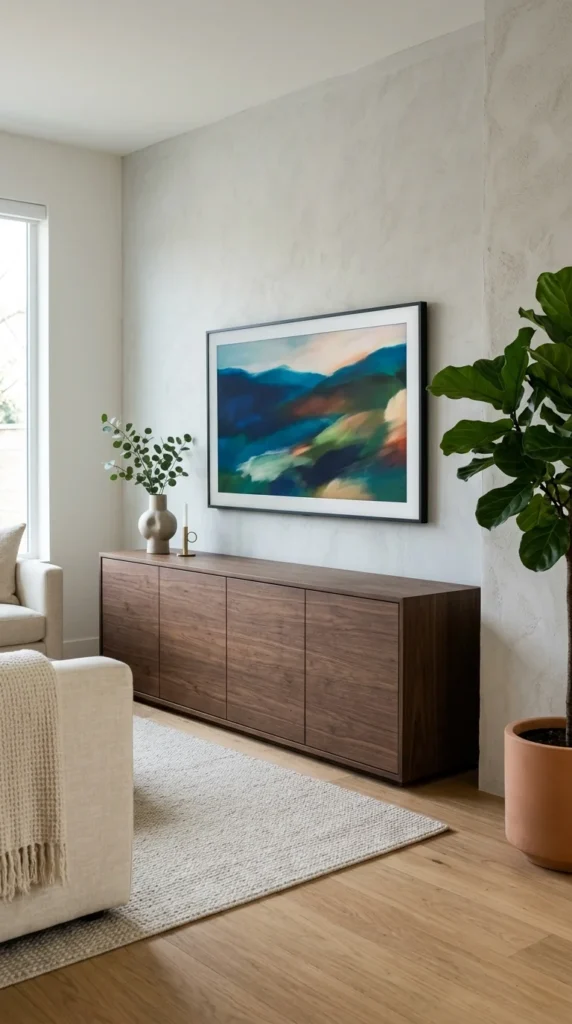
Clutter is the enemy of small spaces. The more items you have sitting out, the more cramped the room will feel. Invest in furniture that doubles as storage, such as coffee tables with drawers, benches with flip-tops, or media consoles that hide all your wires and gadgets.
18. Statement Art
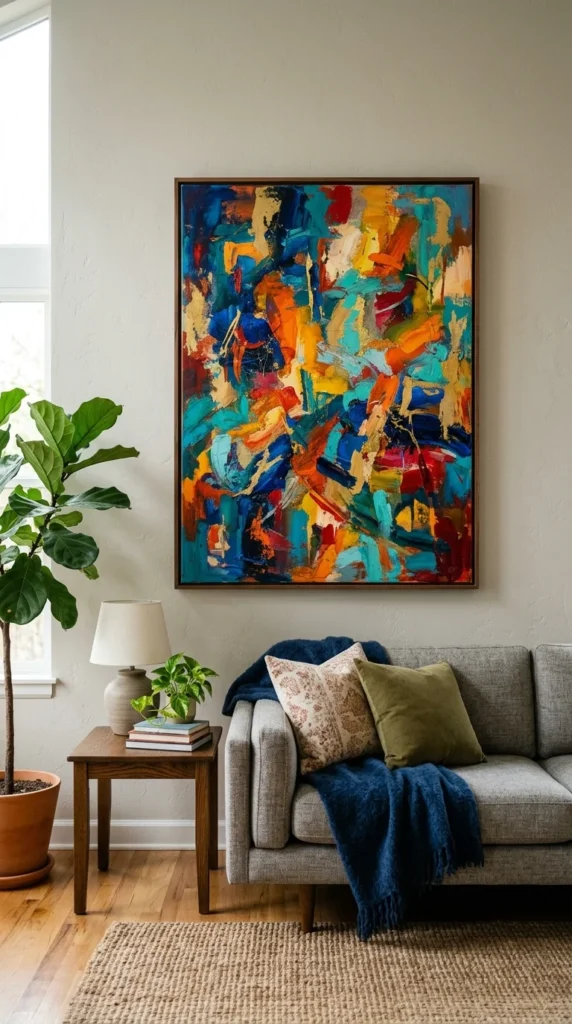
Instead of a “gallery wall” with many small pictures, which can look busy, choose one large piece of art. A large-scale painting or photograph creates a focal point and gives the room a sense of grandeur. It simplifies the visual landscape and makes the walls feel wider.
19. Plant Life
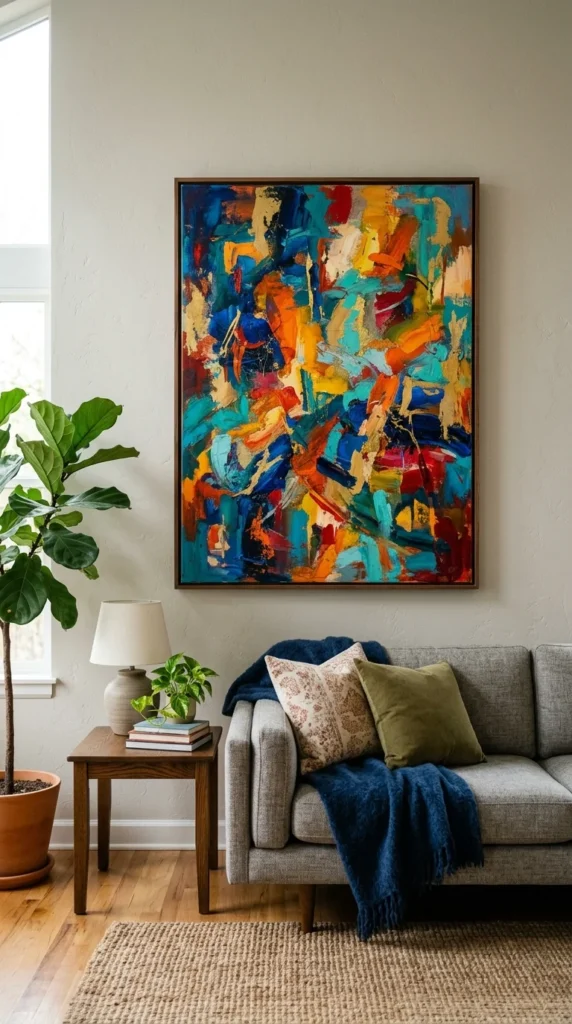
Adding greenery can actually make a room feel bigger by softening the corners and adding depth. Tall plants like a Fiddle Leaf Fig or a Monstera draw the eye upward, while hanging plants like Pothos can fill “dead” vertical space without taking up any floor area.
20. Open Paths
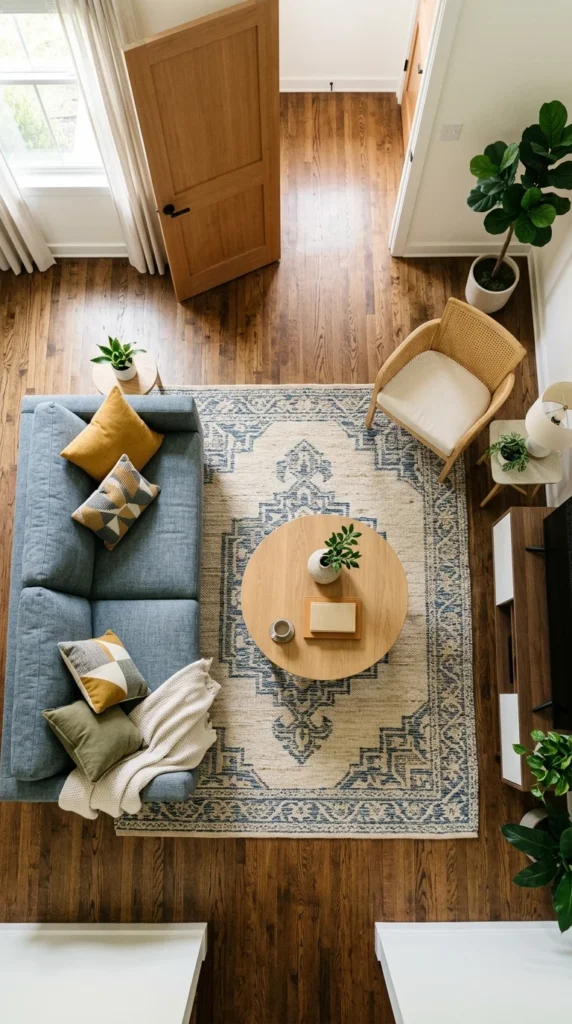
Ensure there is a clear, unobstructed path through the room. If you have to shuffle sideways to get around a table or a chair, the room is too crowded. Keeping the “traffic lanes” open makes the apartment feel functional and easy to navigate, which contributes to a feeling of spaciousness.
21. Natural Light
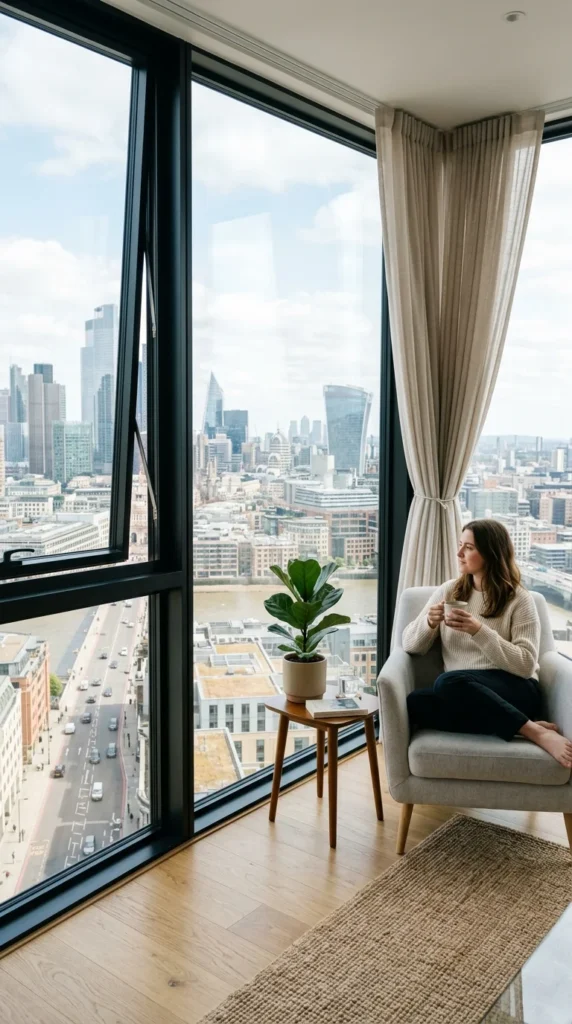
Never block your natural light sources. Light is the most effective way to expand a room visually. Keep window sills clear of clutter and use light-colored window treatments. If you don’t have much natural light, use “daylight” balanced LED bulbs to mimic the effect.
22. Cohesive Colors
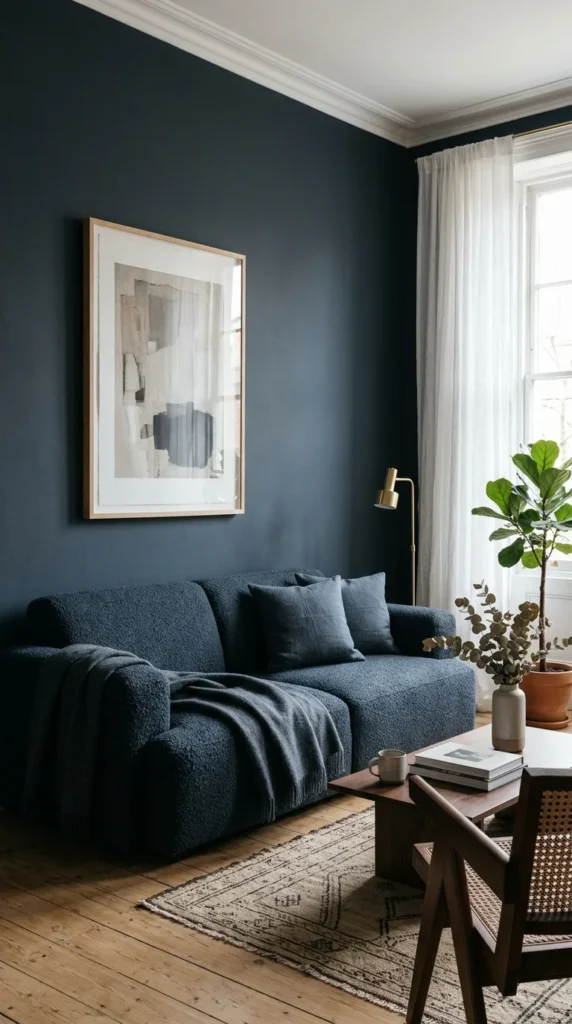
When your furniture is a similar color to your walls, it tends to “disappear” into the background. This technique is particularly effective for large items like bookshelves or sofas. By reducing the contrast between the objects and the walls, the room feels much more open and less “busy.”
23. Fold-Down Desks
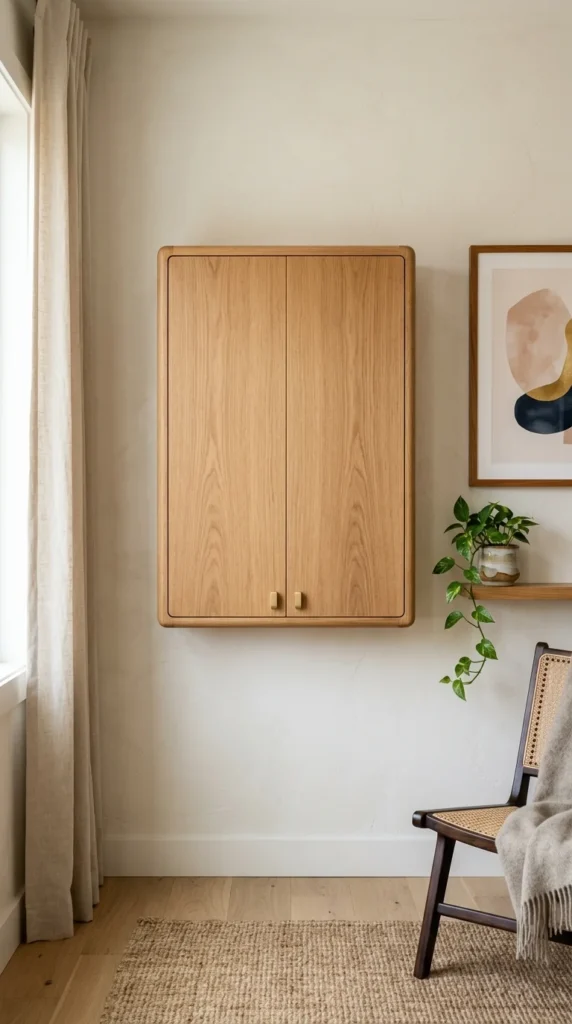
If you work from home but don’t have a spare room, a fold-down or “Murphy” desk is a lifesaver. It provides a sturdy workspace when you need it and disappears when you don’t. This prevents your living room from feeling like a permanent office.
24. Backless Sofas
A backless sofa or a daybed is a fantastic way to define a space without creating a wall. If you have an open-concept studio, using a backless piece allows the eye to travel through to the next “zone,” maintaining the overall footprint of the apartment.
25. Zones
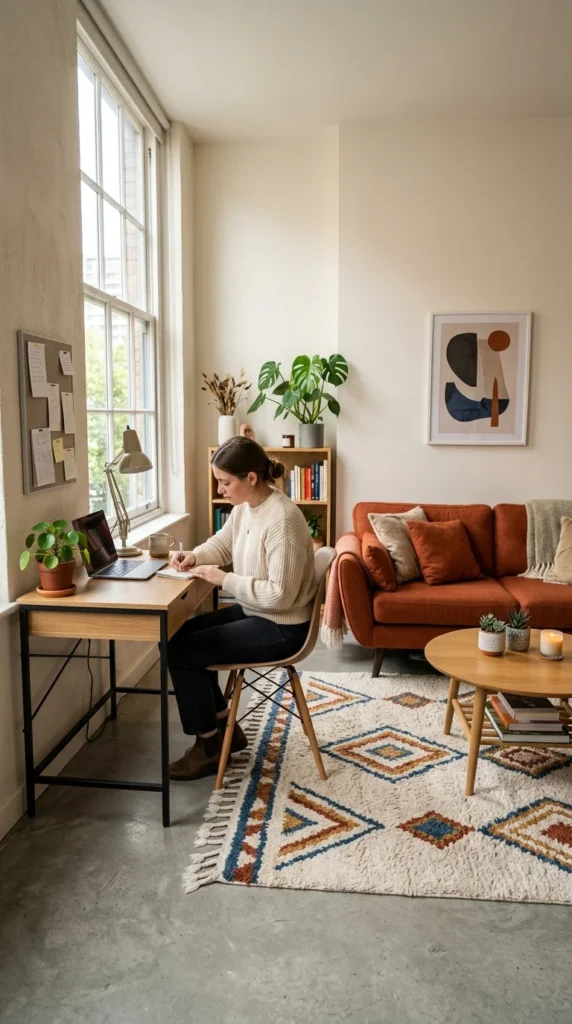
Even in a tiny room, creating distinct “zones” for different activities can make the space feel larger. Use rugs, lighting, or furniture placement to signal where the “living” area ends and the “dining” or “working” area begins. Paradoxically, dividing the space makes it feel like you have “more rooms” within one.