
When you are dealing with a compact living area, every square inch of visual real estate matters. Windows are the “eyes” of your home, and how you dress them can either make a room feel cramped and cave-like or expansive and full of life. The right curtain strategy acts like a facelift for your architecture, drawing the eye upward and outward to trick the brain into seeing a much larger space.
Here are 22 expert-approved curtain ideas designed specifically to make small windows look massive and your living room feel like a palace.
1. Ceiling Mounts
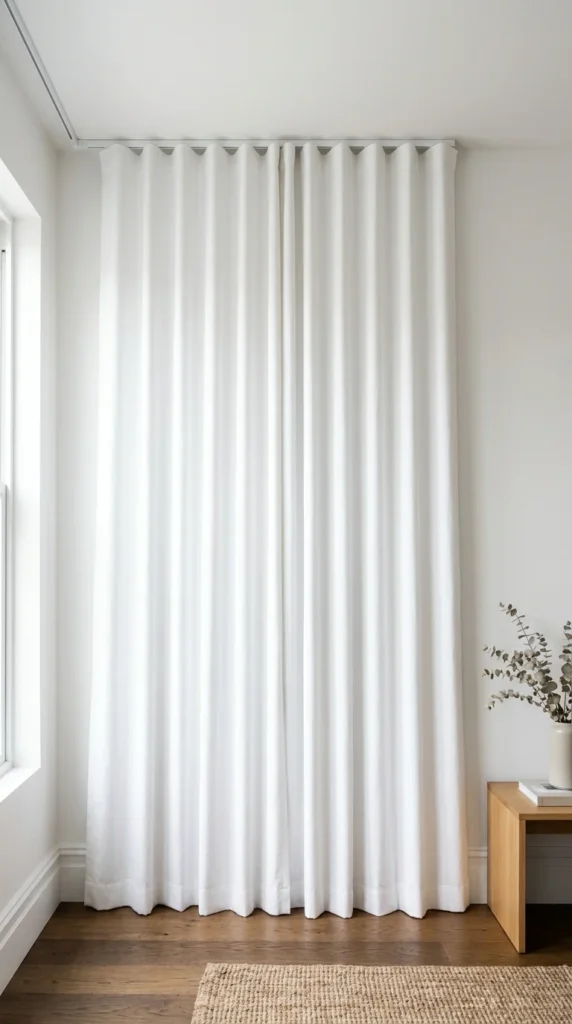
Installing your curtain rod directly onto the ceiling—or as high as possible above the window frame—is the ultimate “height hack.” By eliminating the gap between the top of the window and the ceiling, you create a continuous vertical line. This forces the eye to travel the entire height of the wall, making the ceiling appear feet higher than it actually is.
2. Extended Rods
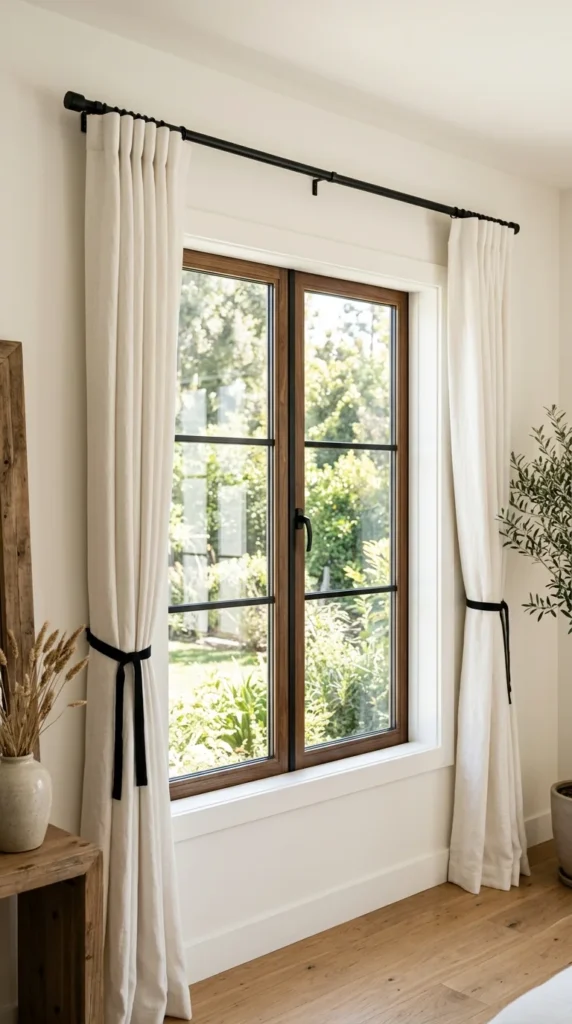
A common mistake is buying a rod that only spans the width of the window. Instead, choose a rod that extends 10 to 15 inches past the frame on either side. This allows you to hang the “stack back” (the gathered fabric) against the wall rather than the glass. When the curtains are open, the entire window is exposed, making the glass itself look significantly wider.
3. Sheer Fabrics
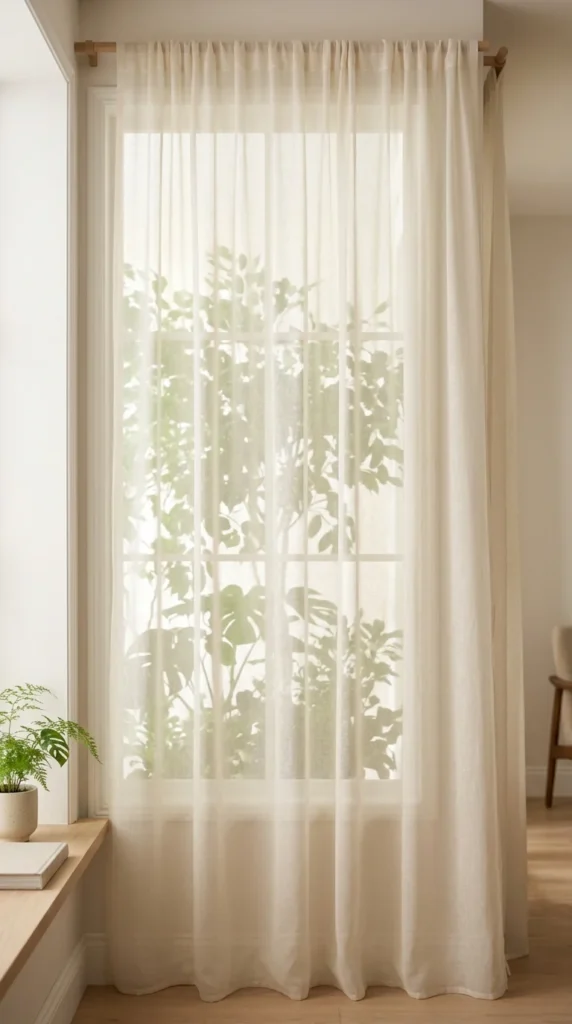
Heavy, opaque fabrics can feel like a solid wall, closing in a small room. Sheer fabrics, like voile or chiffon, provide privacy while allowing light to permeate the space. Because you can see the light and a hint of the world outside through the fabric, the boundaries of the room feel less rigid and more expansive.
4. Vertical Stripes
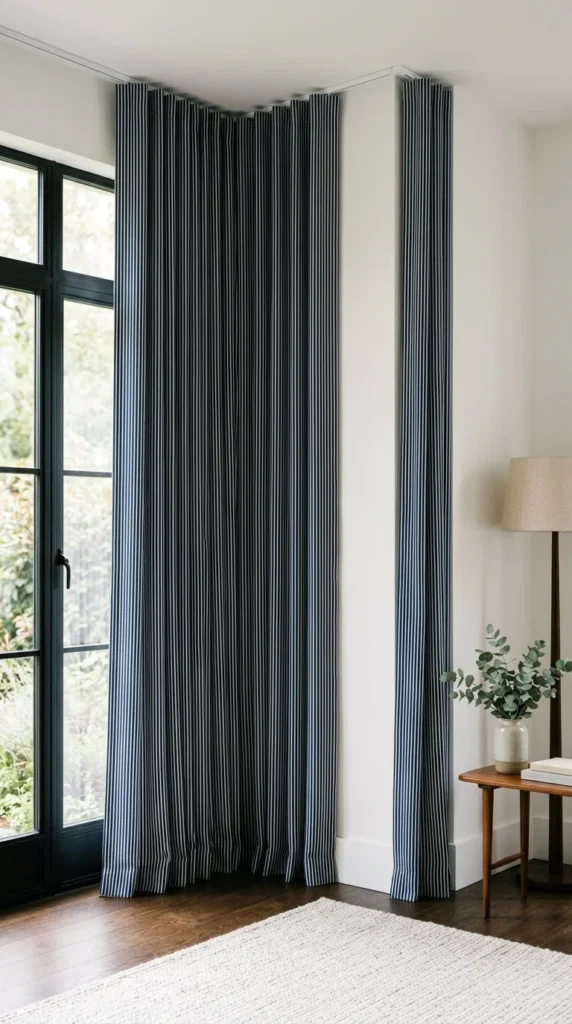
Just like a pinstriped suit elongates a silhouette, vertical stripes on curtains elongate your walls. The repeating vertical lines lead the eye upward, creating a sense of rhythm and height. For a subtle look, choose tone-on-tone stripes like matte and satin finishes in the same color.
5. Monochromatic Matching
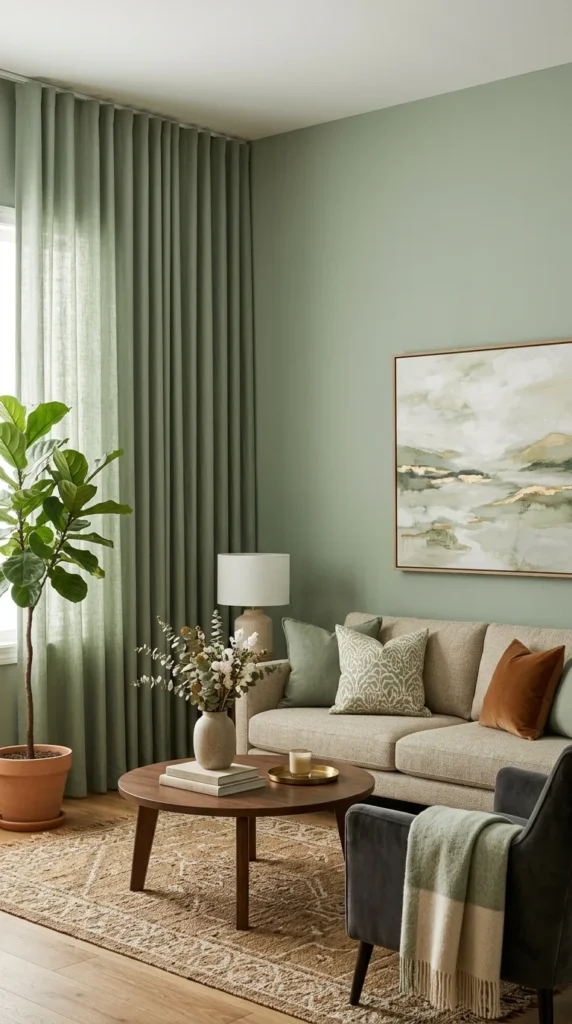
When your curtains match the color of your walls, you eliminate visual “stops.” In a small room, high-contrast curtains chop up the walls into smaller segments. By matching the fabric color to the paint, the curtains become an extension of the wall, making the entire perimeter feel continuous and large.
6. Lightweight Linens
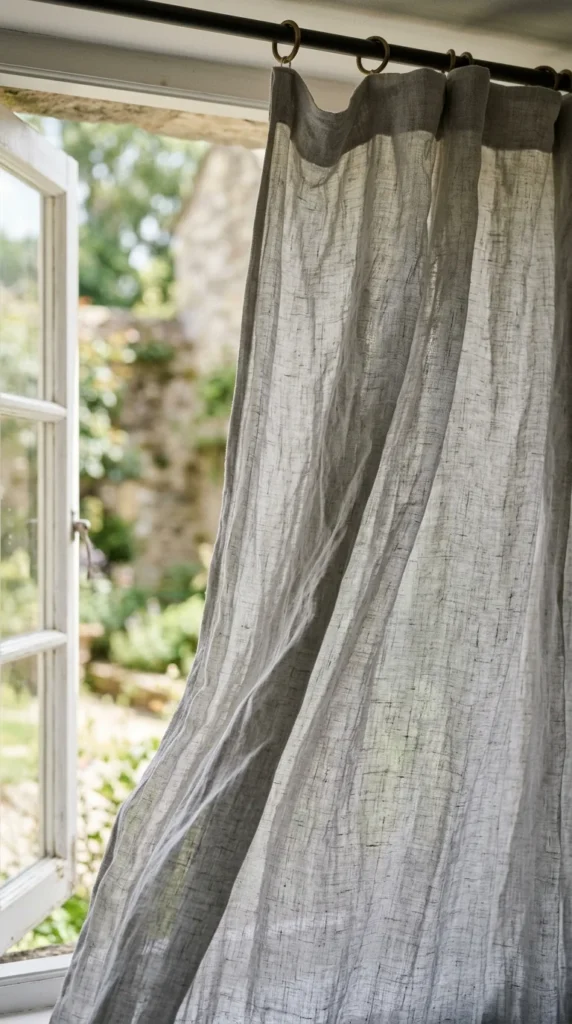
Linen is the gold standard for small-space sophistication. It has a physical lightness that heavy velvets lack. The slightly porous nature of linen allows some light to pass through, keeping the window area feeling “breathable” and preventing the room from feeling over-decorated.
7. Floor-to-Ceiling Panels
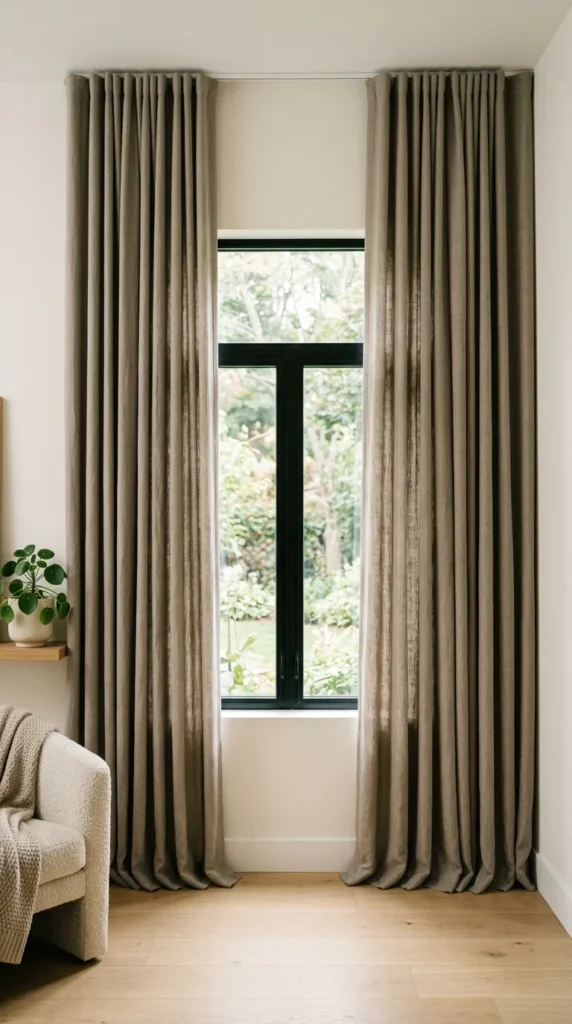
If you have a small window on a large wall, don’t just dress the window—dress the wall. Running curtains from one corner of the room to the other across the entire window wall creates a dramatic, high-end look that disguises the actual size of the window and makes the room feel much wider.
8. Acrylic Hardware
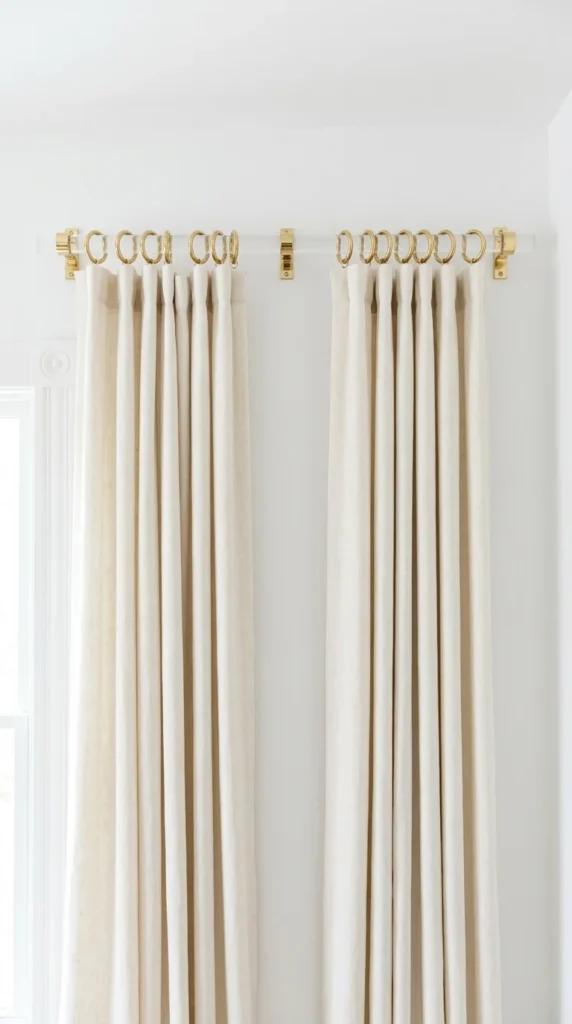
Visual clutter is the enemy of small spaces. Thick, dark wooden rods can feel heavy and intrusive. Acrylic or “lucite” rods are a brilliant modern solution. They provide the necessary support for your drapes but stay “invisible,” allowing the focus to remain on the light and the fabric.
9. Hidden Tracks
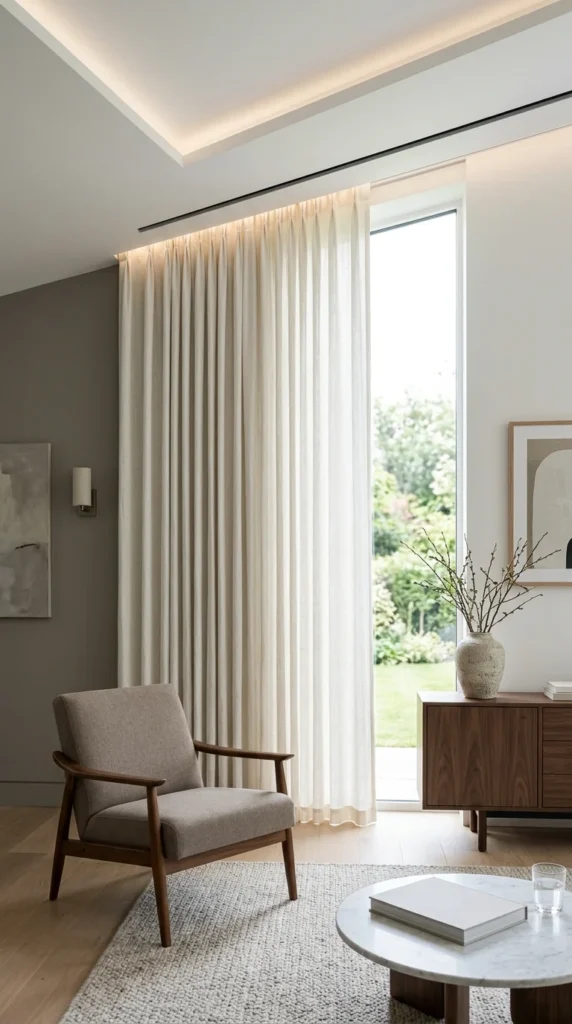
For the ultimate minimalist look, use a hidden track system. These are often installed inside a small “cove” built into the ceiling. By hiding the hardware entirely, you remove the horizontal line of the rod, which can sometimes “cut” the height of a room. This results in a seamless, architectural look.
10. Minimalist Valances
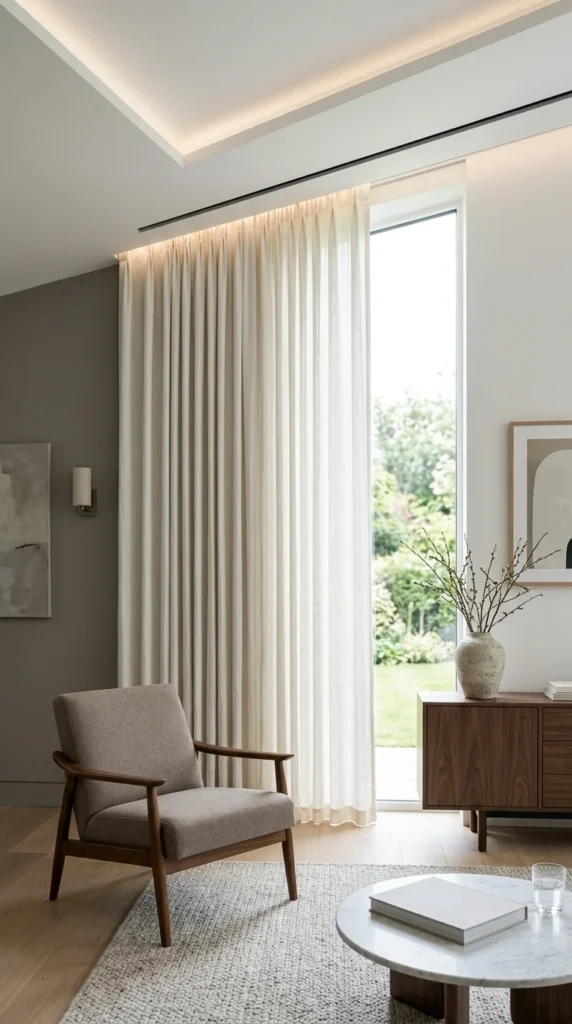
Forget the ruffled, oversized valances of the past. A modern, structured box valance mounted several inches above the window frame can hide the top of the curtains and the rod, creating a clean, architectural line that draws the eye upward without the bulk of traditional drapery headers.
11. Wide Headers
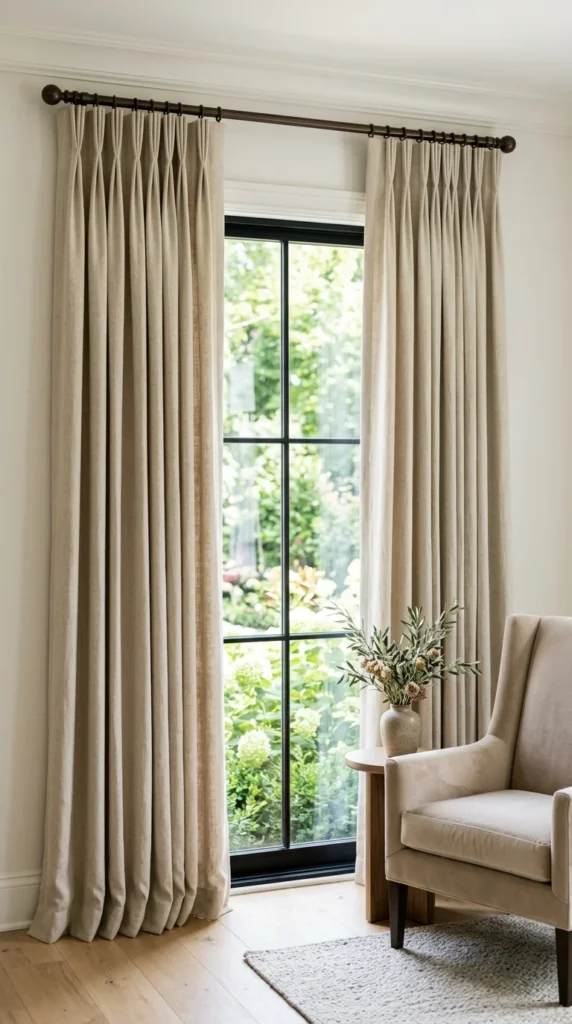
The “header” is the top part of the curtain where it attaches to the rod. Using a wide, structured header like a pinch pleat or a Goblet pleat adds volume at the top of the wall. This attracts the eye to the highest point of the room, emphasizing the distance between the floor and the ceiling.
12. Ombre Effects
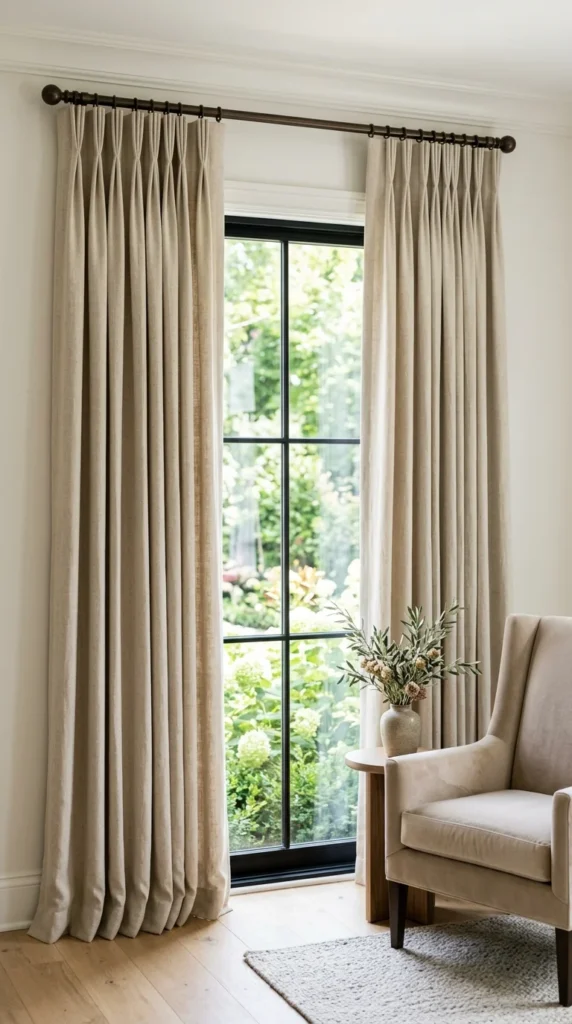
Ombre curtains that are light at the top and darker at the bottom are perfect for small rooms. The light color at the top blends into the ceiling, creating an airy feel, while the darker weight at the bottom anchors the room. This gradient effect tricks the eye into seeing more height.
13. Double Rods
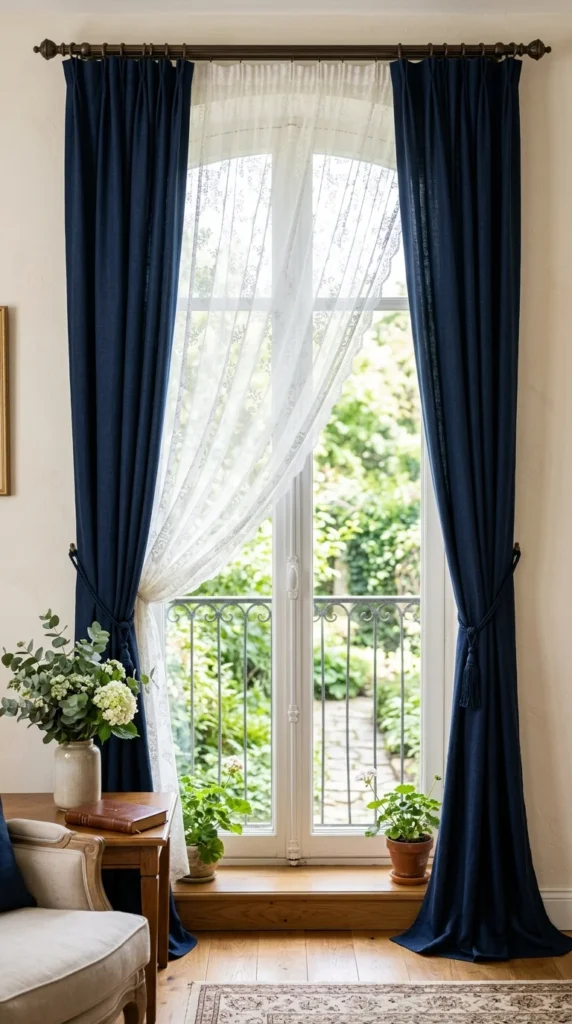
Using a double rod allows you to layer sheer curtains with heavier panels. In the daytime, you can pull the heavy panels back completely (using the extended rod trick) and leave the sheers closed. This gives you the illusion of a massive, fully-dressed window while keeping the room bright.
14. Taut Tension
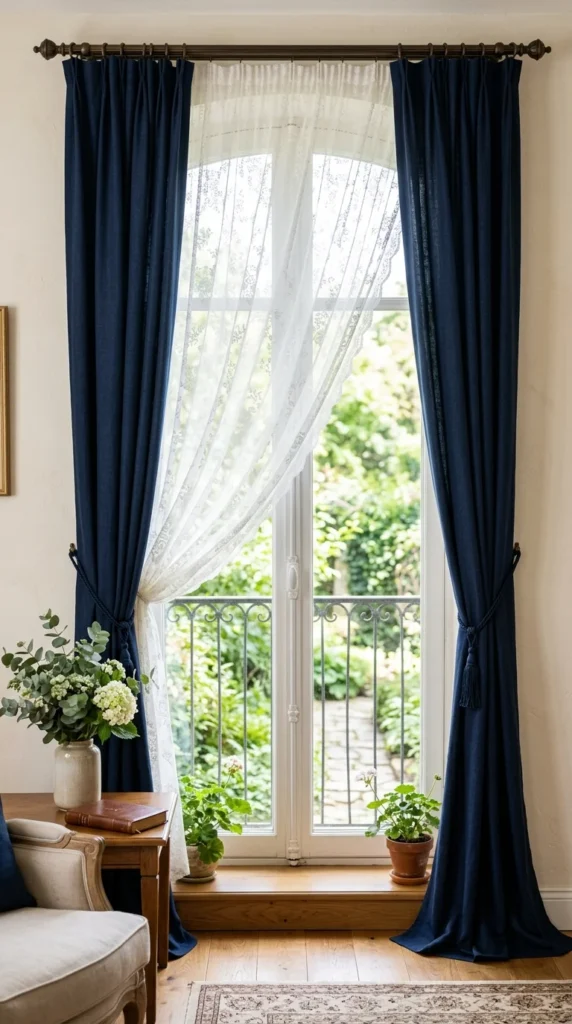
In ultra-small spaces or “nook” living rooms, voluminous fabric can feel overwhelming. A taut tension curtain—where the fabric is stretched flat between two rods—provides privacy and light control while maintaining a very slim profile that doesn’t eat into the room’s physical space.
15. Roman Shades
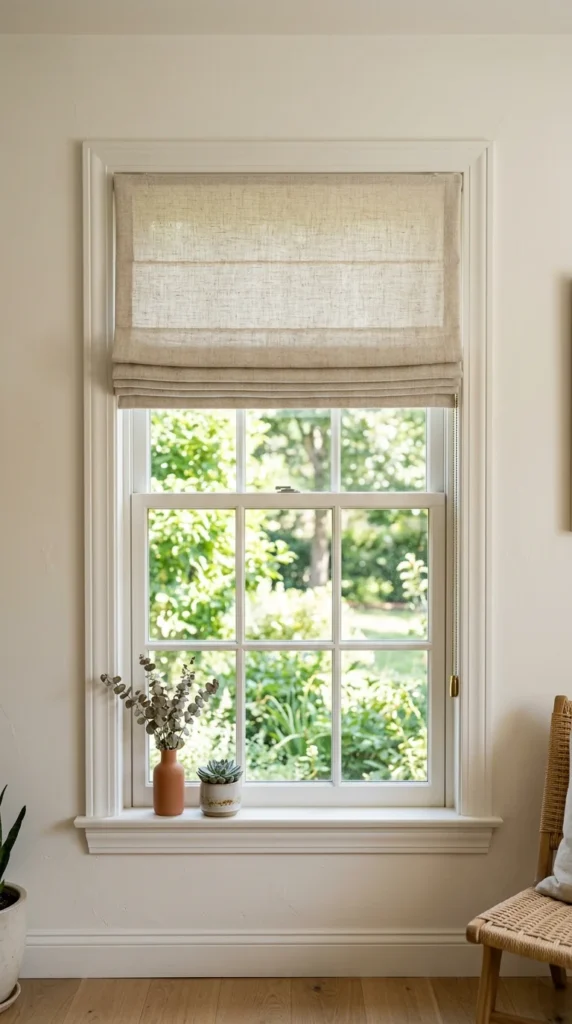
If you prefer shades over curtains, mount your Roman shade several inches above the window frame. When the shade is partially raised, the fabric covers the wall and the top of the window frame, making the window appear taller than it is.
16. Cafe Curtains
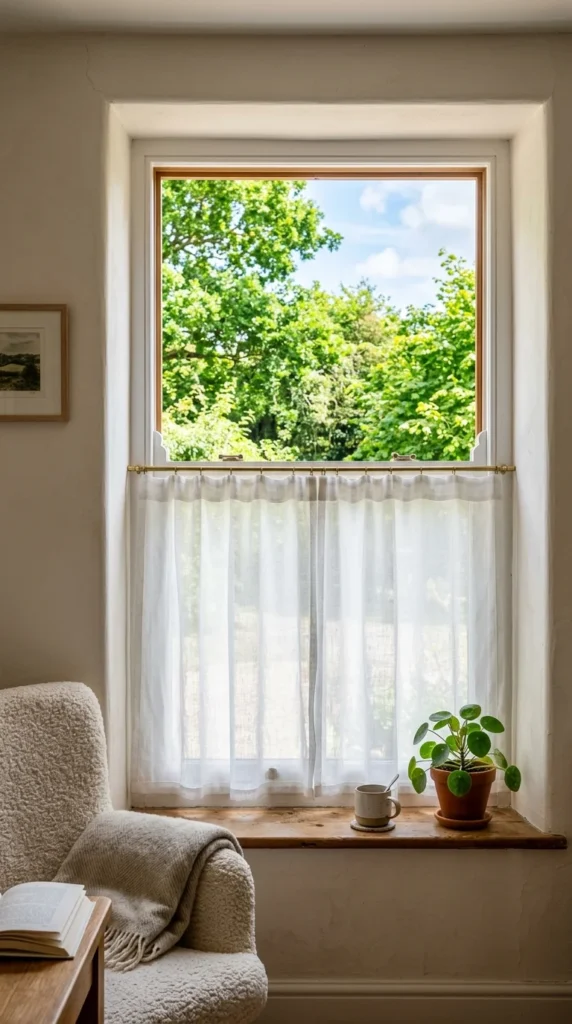
Cafe curtains are hung halfway down the window. This is a great trick for small rooms because it provides privacy at eye level while leaving the top half of the window completely unobstructed. This maximizes the amount of natural light entering the top of the room, keeping it bright and open.
17. Tie-Back Symmetry
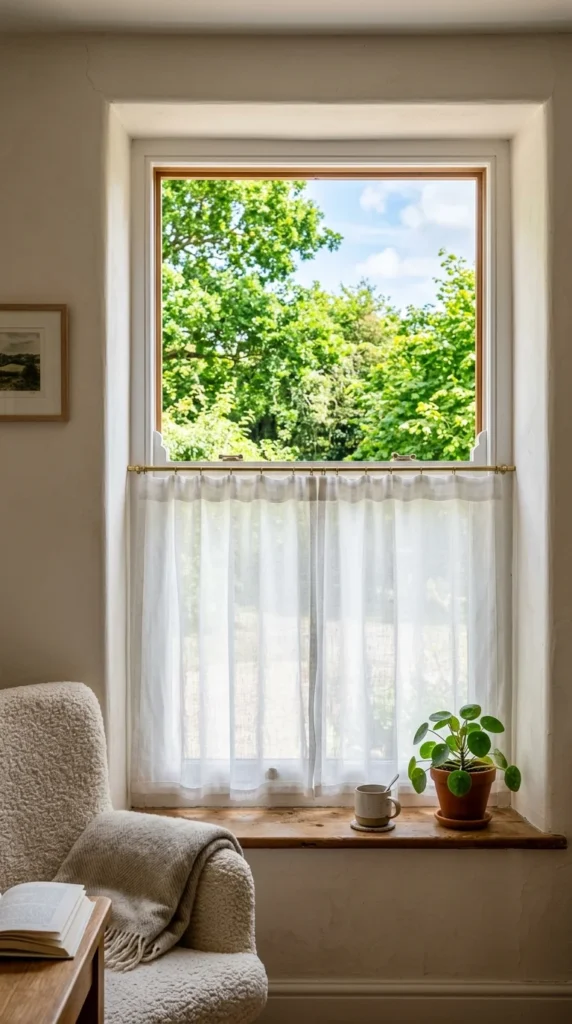
Using tie-backs to pull curtains away from the center of the window creates a diagonal line that draws the eye outward. This “V” or “hourglass” shape creates a sense of openness and structure, making the window feel like a deliberate, large-scale architectural feature.
18. Metallic Accents
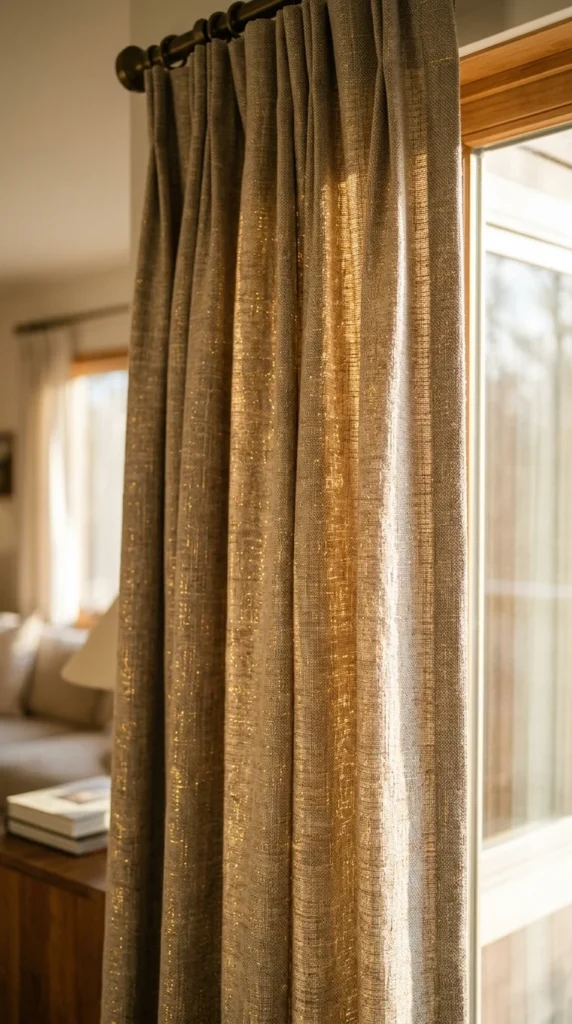
Fabrics with a slight sheen or metallic thread act like mirrors. They reflect light rather than absorbing it. In a small living room, this extra bounce of light helps to brighten dark corners and makes the window area feel like a source of energy and radiance.
19. Gossamer Layers
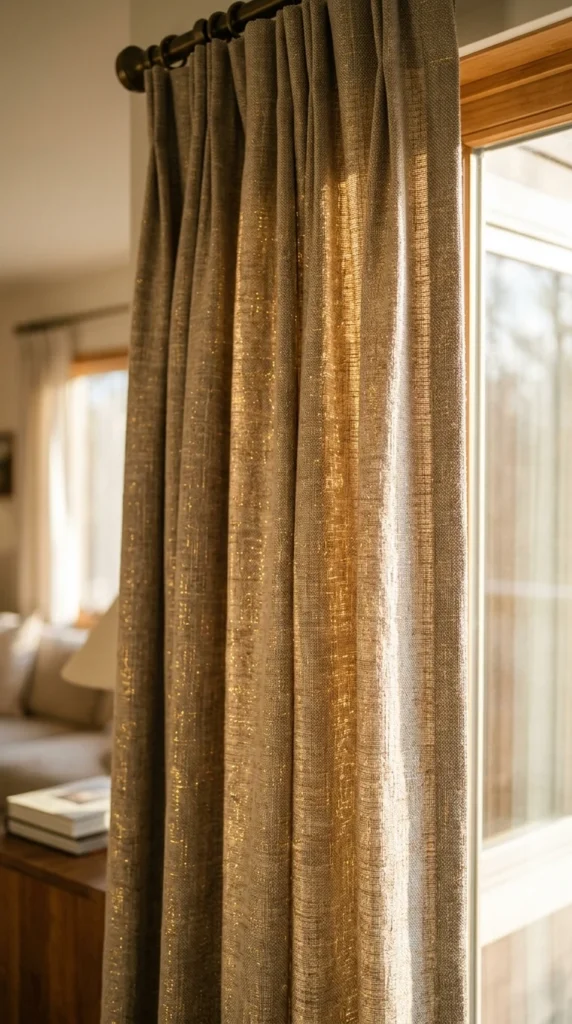
Instead of one thick curtain, try layering two or three very thin “gossamer” sheers. This creates a depth and texture that feels high-end and ethereal. The lack of weight prevents the room from feeling “stuffed,” while the layers add a sophisticated architectural dimension.
20. Border Prints
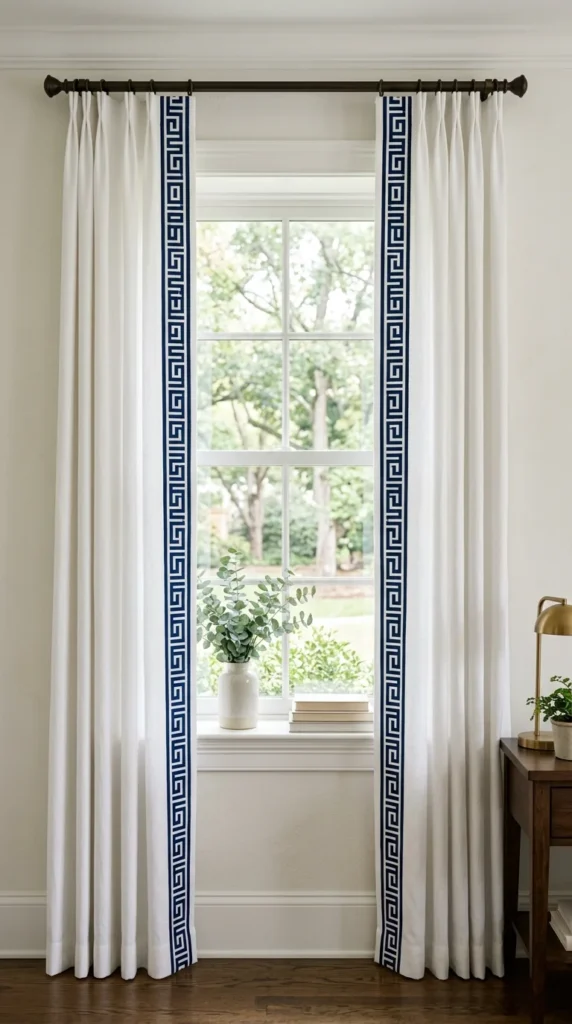
A vertical border or “leading edge” on the inner side of your curtains creates a strong frame. This border draws the eye up and down the height of the window, emphasizing the vertical scale. It adds personality without the overwhelming visual noise of a full-patterned fabric.
21. Natural Bamboo
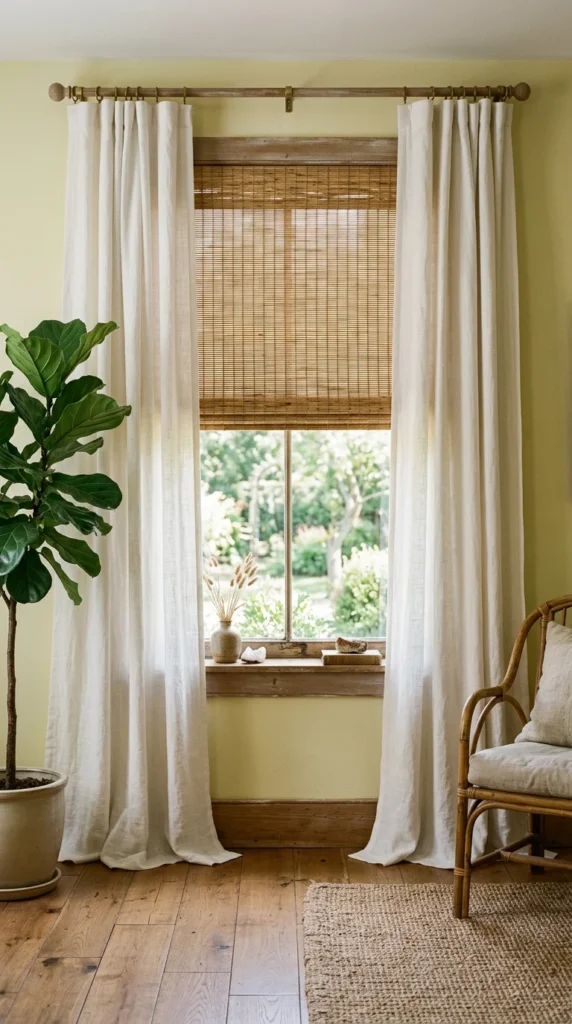
Pairing a textured natural blind with soft curtains adds “depth” to the window. By layering a woven wood shade (mounted high) under sheer curtains, you create multiple horizontal and vertical planes. This complexity makes the window area feel more significant and “designed” than it actually is.
22. Soft Puddling
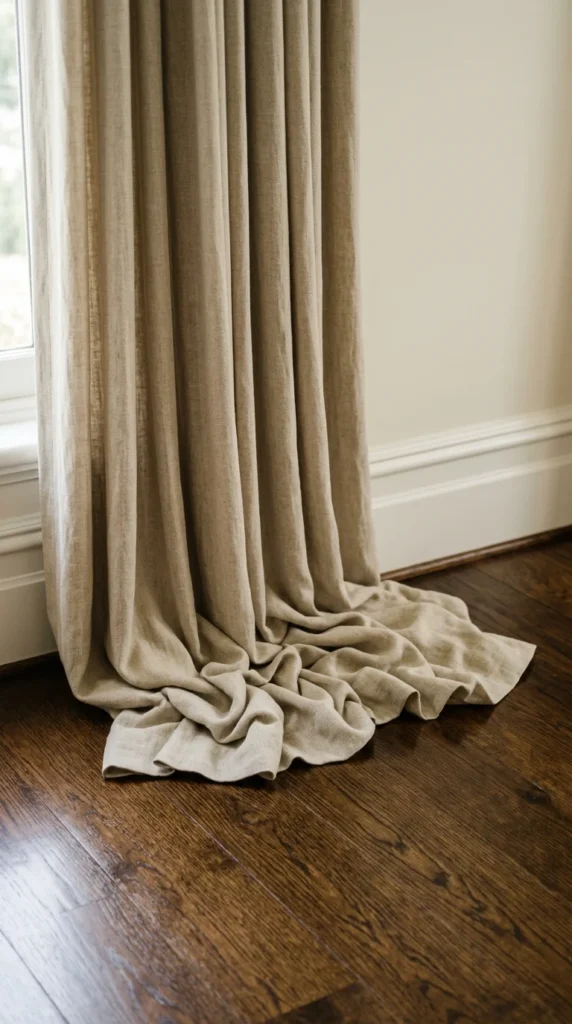
“Puddling” is when you allow an extra 1-3 inches of fabric to gather on the floor. While it might seem counterintuitive in a small room, this touch of luxury creates a sense of abundance. It signals that you have “too much” fabric, which psychologically suggests a larger, grander space rather than a cramped one.