
Living in a small space doesn’t mean your home has to be overrun by plastic building blocks and plush animals. The secret to maintaining a peaceful home while raising children lies in smart, strategic storage. When floor space is at a premium, you have to think vertically, multi-functionally, and creatively. These 26 toy storage ideas are designed specifically for tight quarters, ensuring that cleanup is a breeze and your living room doesn’t look like a toy store exploded.
1. Door Organizers
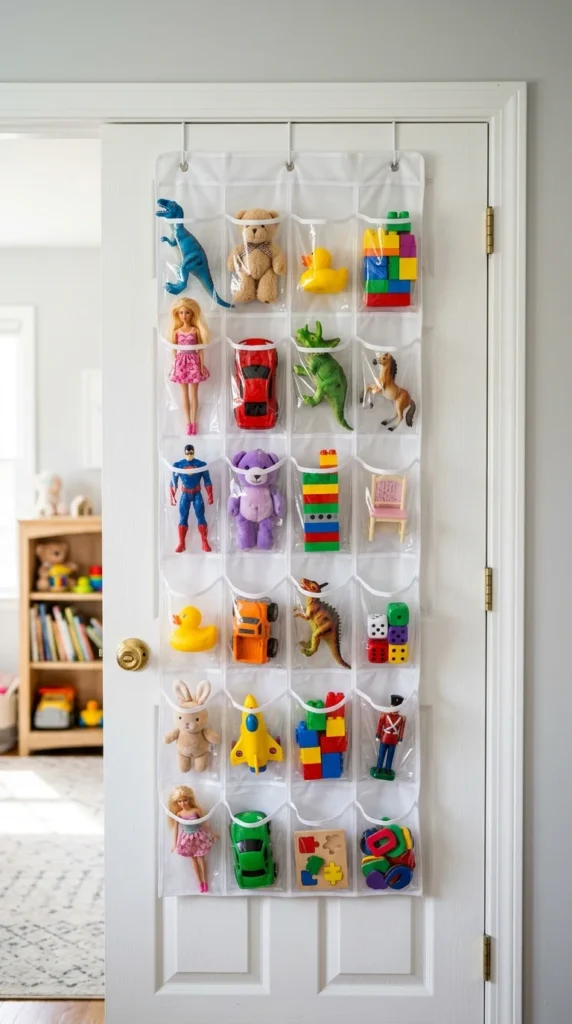
Over-the-door organizers are the unsung heroes of small-space living. Usually intended for shoes, these clear plastic or mesh pockets are perfect for sorting small toys. Because they are transparent, children can easily see where their favorite action figures or cars are located, which prevents them from dumping out entire bins to find one specific item. This keeps the floor clear and utilizes the often-ignored vertical space behind a bedroom or closet door.
2. Rolling Carts
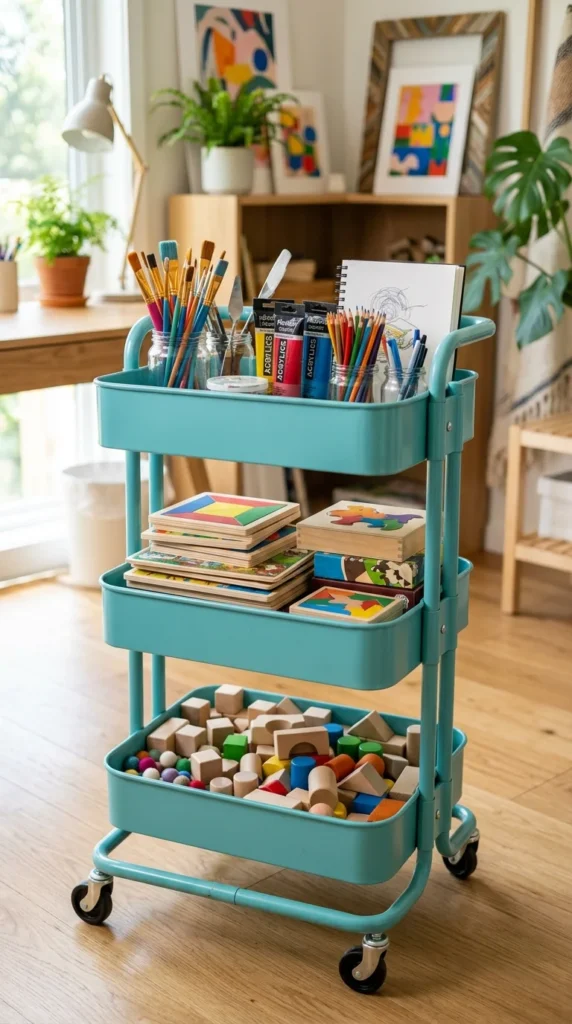
The beauty of a rolling cart is its mobility. You can store “stations” on each tier—such as an art station, a LEGO station, or a book station—and wheel it into the center of the room during playtime. When the day is over, the entire unit tucks away into a closet or a corner. It’s a high-density storage solution that moves with the action, making it ideal for multipurpose living rooms.
3. Under-Bed Bins
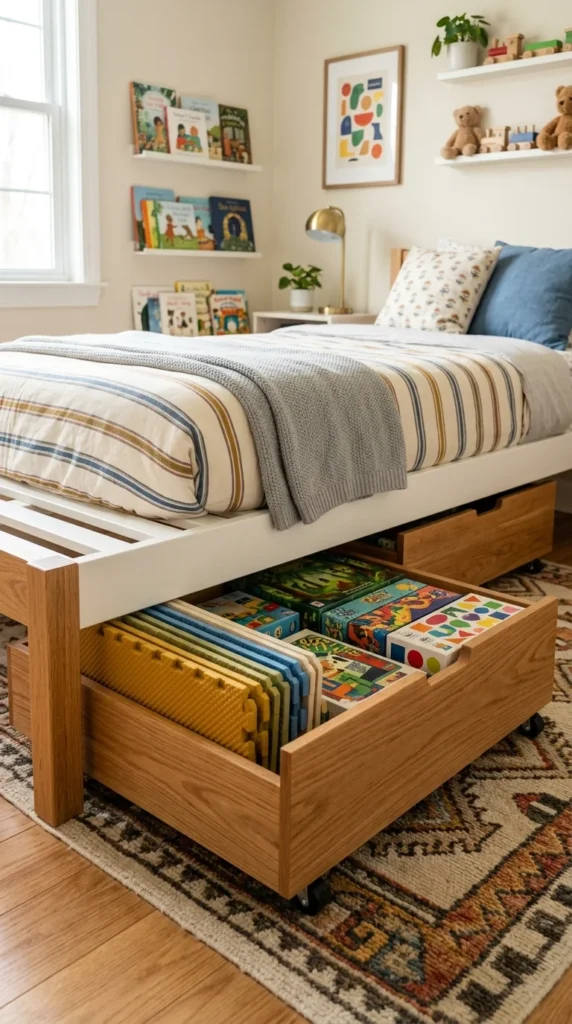
The space under the bed is often a “dust bunny” zone, but in a small room, it’s prime real estate. Long, shallow bins with wheels allow kids to easily pull out their toys and push them back out of sight when finished. Opt for bins with lids to keep dust off the toys, or use open wooden trays for items that are used daily, like train tracks or building sets.
4. Wall-Mounted Crates
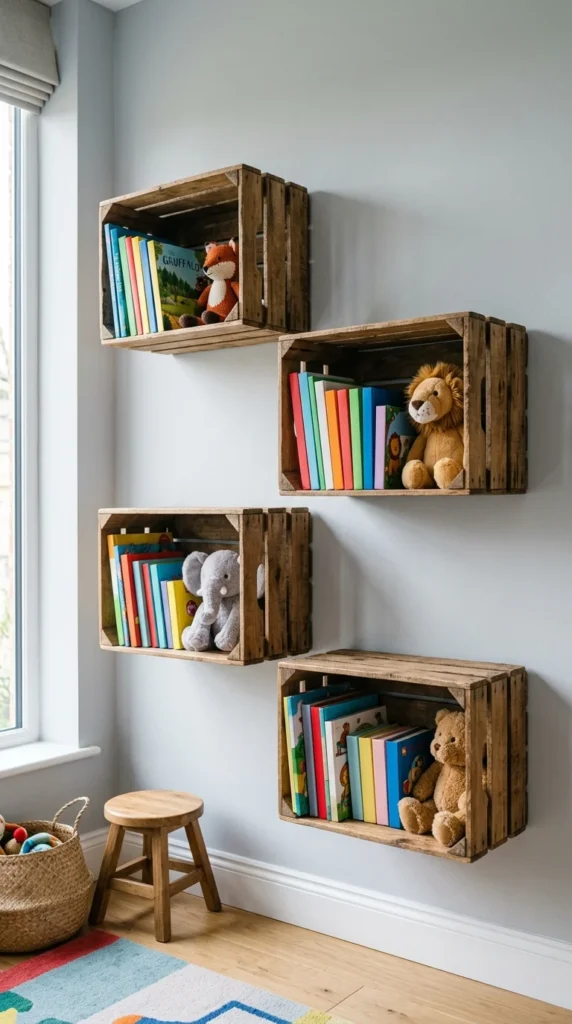
Instead of taking up floor space with a heavy bookshelf, mount wooden crates directly to the wall. This creates a floating storage system that keeps the floor open, making the room feel larger. You can paint the crates to match the room’s decor or leave them natural for a rustic look. They are sturdy enough to hold heavy books and deep enough for medium-sized toys.
5. Hanging Nets
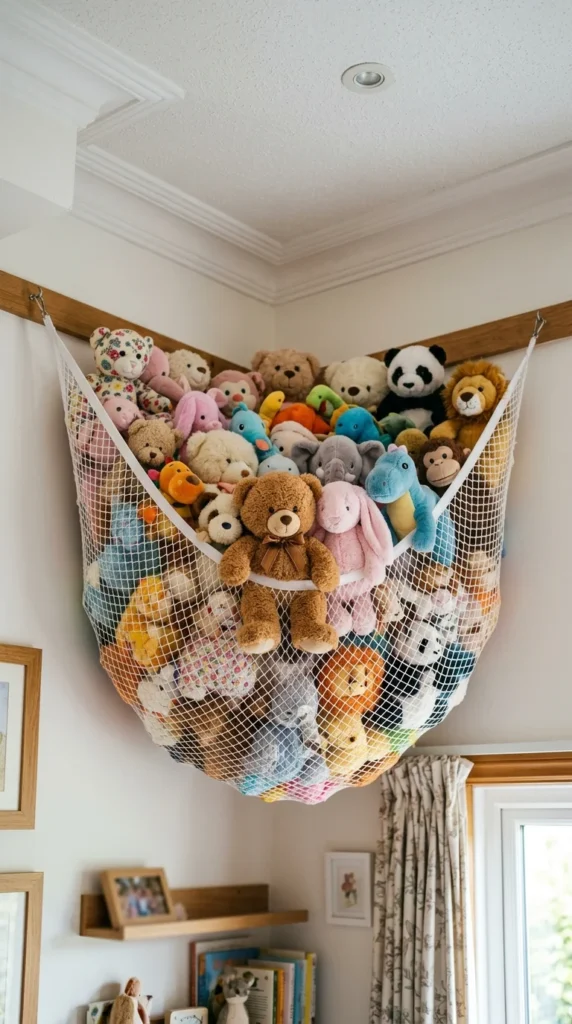
Plush toys are notorious space-wasters because they don’t stack well. A corner “toy hammock” or hanging net lifts the “stuffed animal zoo” off the bed and floor. By utilizing the upper corners of a room, you reclaim floor space for active play while keeping the room looking whimsical and tidy.
6. Ottoman Storage
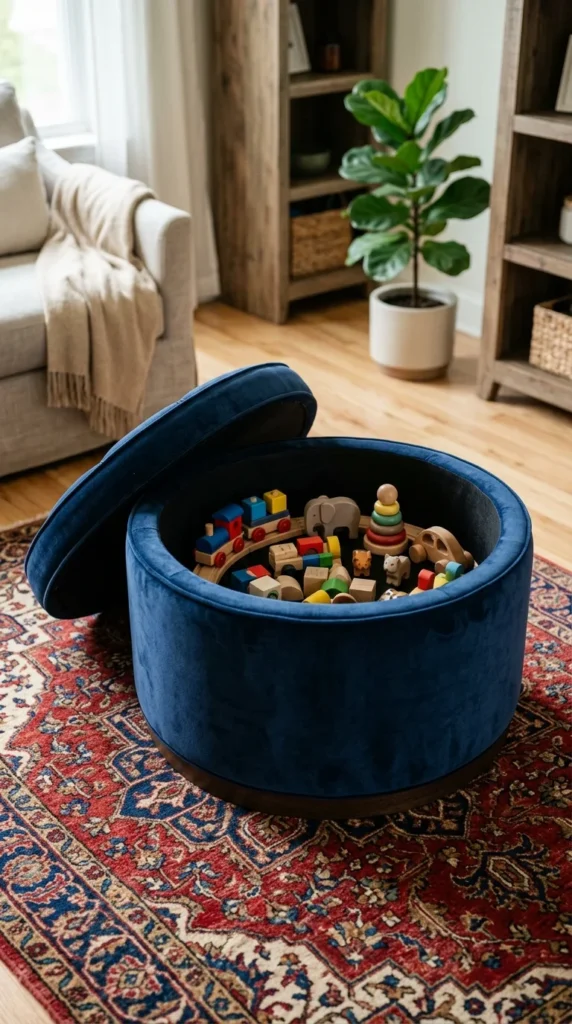
Multi-functional furniture is essential for small apartments. A storage ottoman serves as a footrest, extra seating, and a secret hiding spot for toys. In a living room setting, these are perfect for quickly “sweeping” toys into a hidden compartment before guests arrive. It’s the ultimate “stealth” storage solution.
7. Clear Cubbies
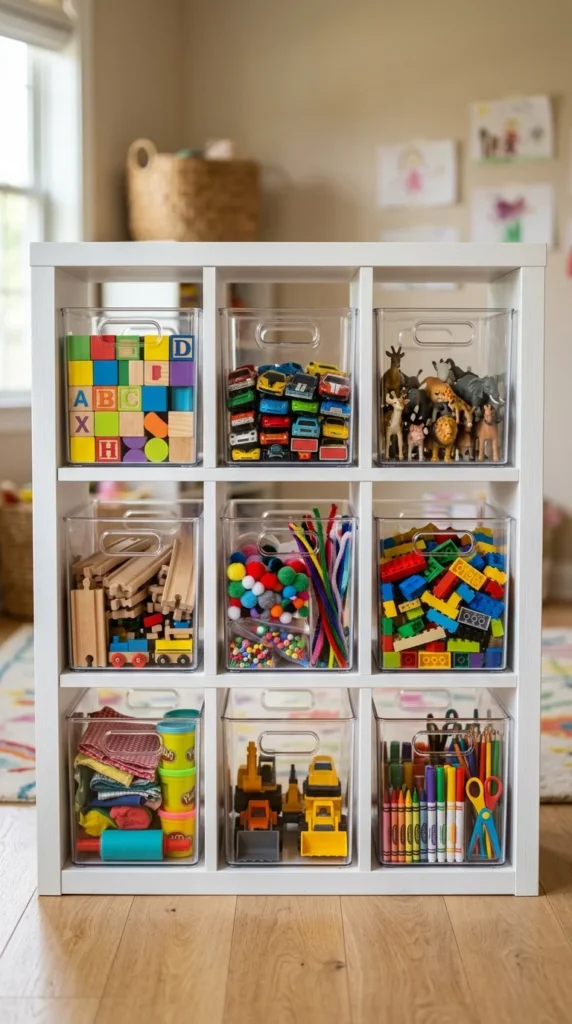
Visual clutter can make a small room feel claustrophobic. Clear cubbies offer the best of both worlds: they keep items contained and organized, but because they are transparent, they don’t add “visual weight” to the room. They also help children practice categorization by seeing exactly where the “blue blocks” or “dinosaurs” belong.
8. Magnetic Strips
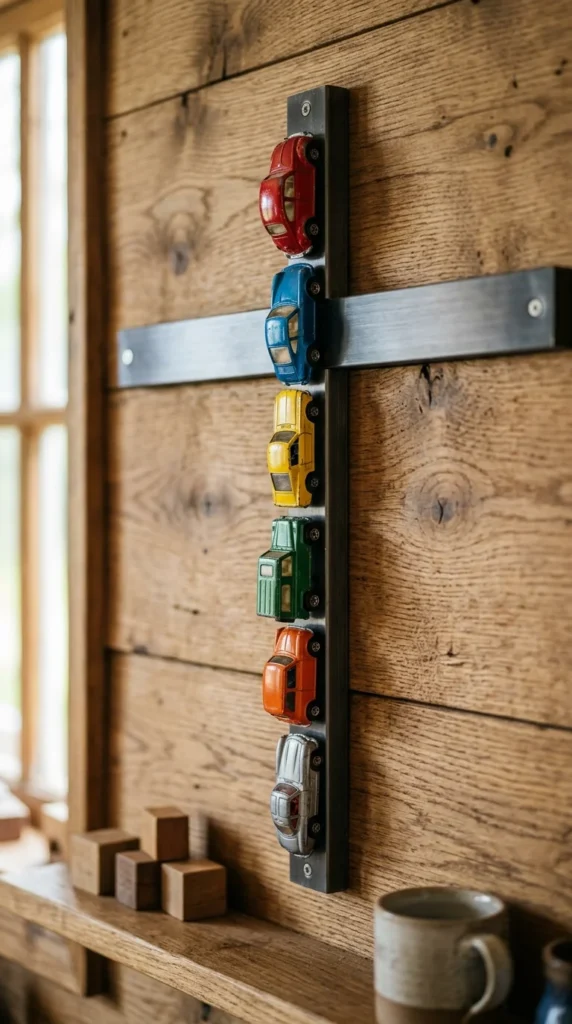
If your child has a massive collection of Matchbox or Hot Wheels cars, magnetic strips are a game-changer. Typically used for kitchen knives, these strips can be mounted at a child’s eye level. The cars stick right to the metal, turning a messy pile into a cool wall display that doubles as decor.
9. Corner Shelves
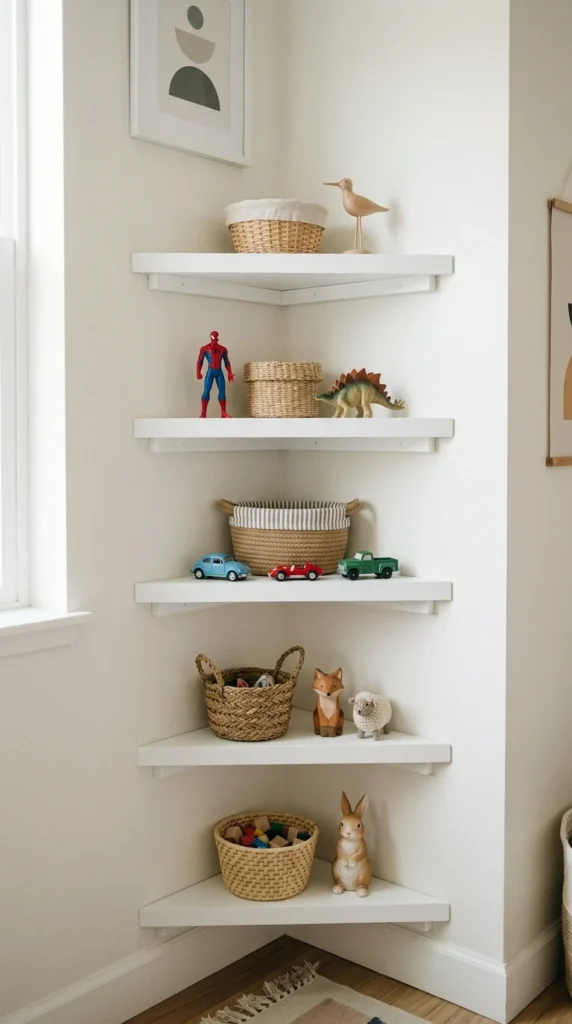
Corners are often underutilized in small rooms. Installing floating corner shelves creates storage out of thin air. These are perfect for displaying “special” toys that you want to keep away from younger siblings or for storing small baskets of miscellaneous parts that don’t fit elsewhere.
10. Vertical Bookshelves
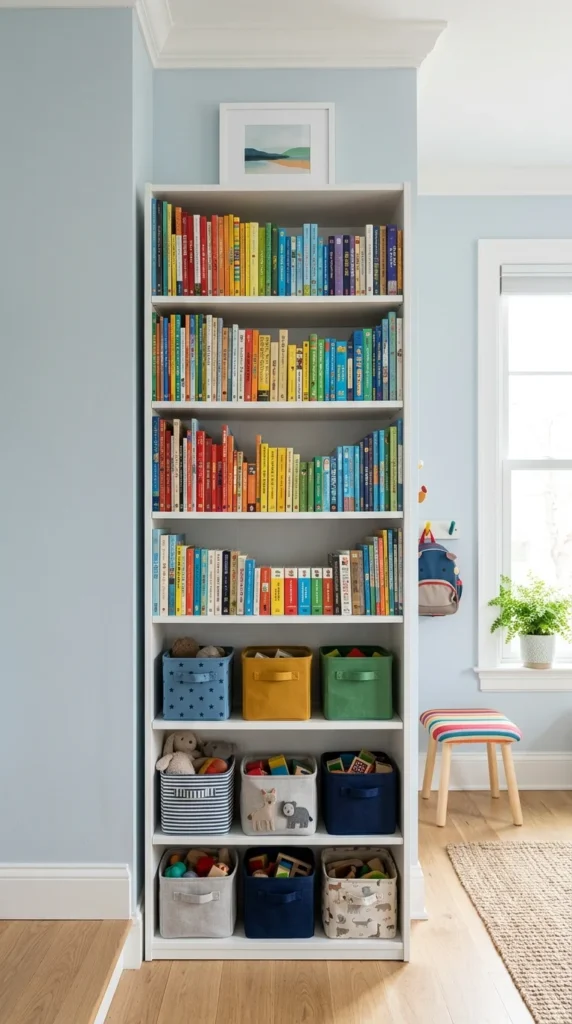
When you can’t go wide, go high. A tall, narrow bookshelf takes up a tiny footprint while providing several layers of storage. Keep the toys the children use most on the bottom shelves so they can reach them independently, and use the top shelves for items that require adult supervision, like paints or small-piece puzzles.
11. Window Seats
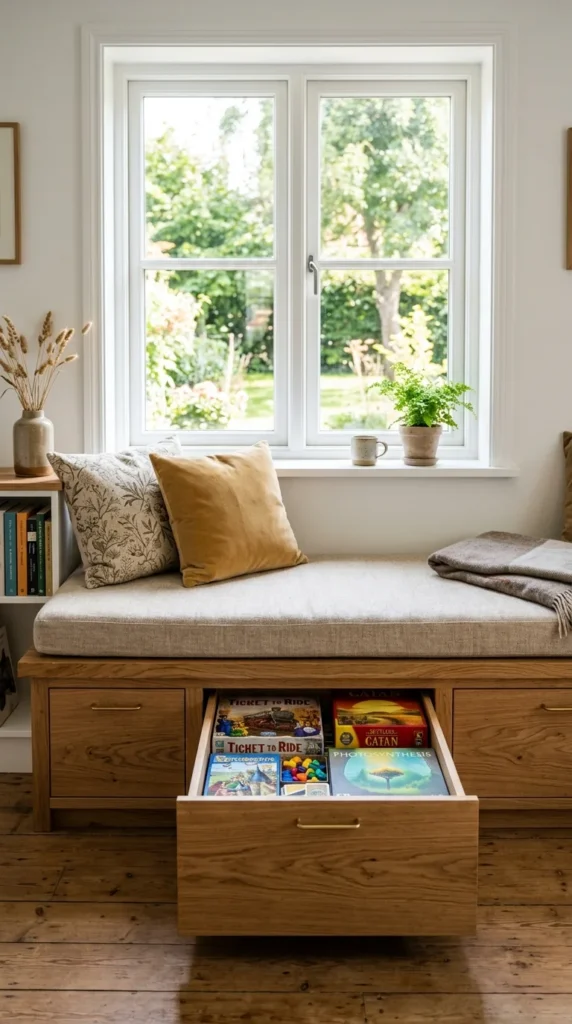
A window seat adds charm and functionality. By building a bench with drawers or a flip-top lid under a window, you create a cozy reading nook that doubles as a massive toy chest. This is an excellent way to use the space beneath a window that might otherwise remain empty.
12. Labeled Bins
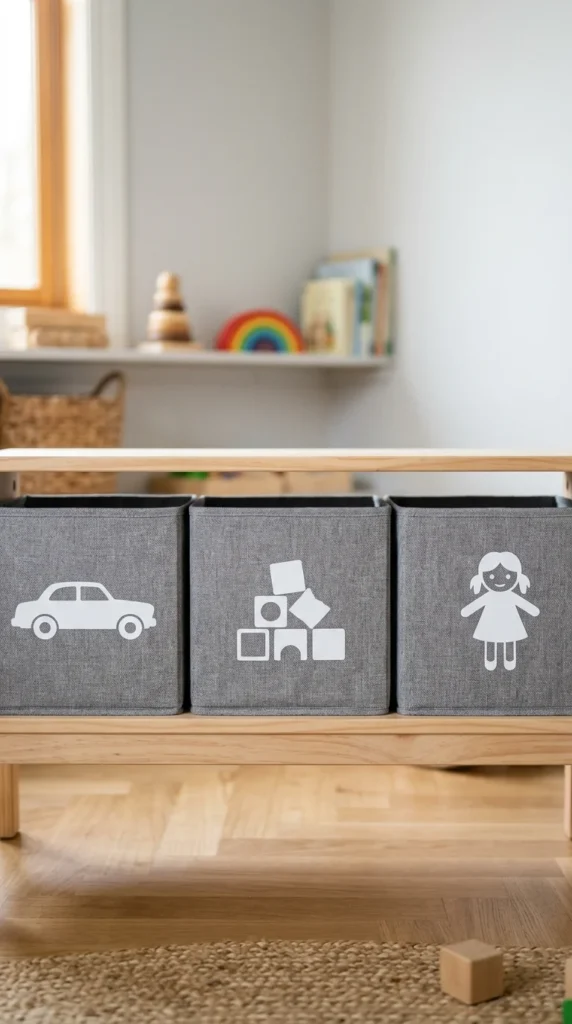
The key to an easy cleanup is knowing exactly where things go. For pre-readers, use labels with pictures. Seeing a picture of a LEGO brick on a bin tells the child exactly where that stray piece belongs. This empowers children to participate in the cleanup process, making your life much easier.
13. Pegboards
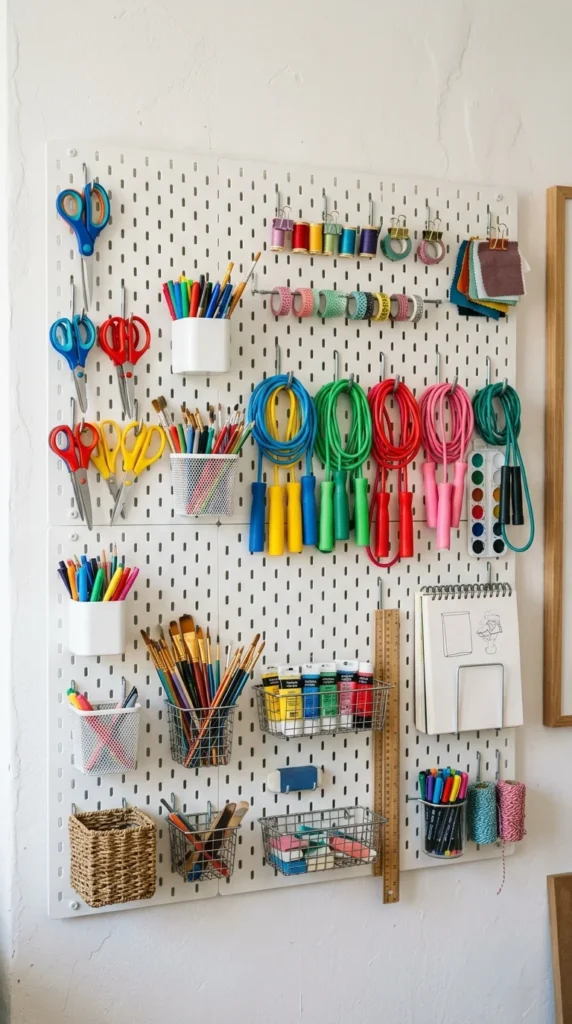
Pegboards are incredibly versatile. You can rearrange hooks, shelves, and baskets as your child’s interests change. They are perfect for organizing craft supplies, dress-up accessories, or even Nerf gear. Because it’s wall-mounted and flat, it takes up zero floor space.
14. Closet Conversions
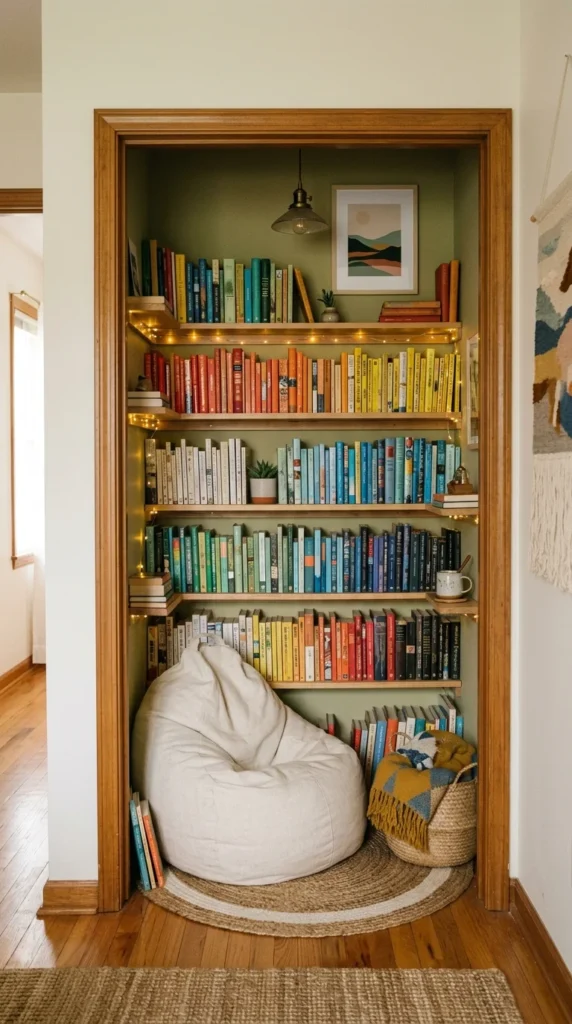
If you have a spare closet, consider removing the doors and turning it into a “toy command center.” By installing custom shelving and a small desk, you can move all toy storage out of the main living area. This keeps the mess contained to a specific “zone” that can be hidden with a curtain if needed.
15. Hanging Pockets
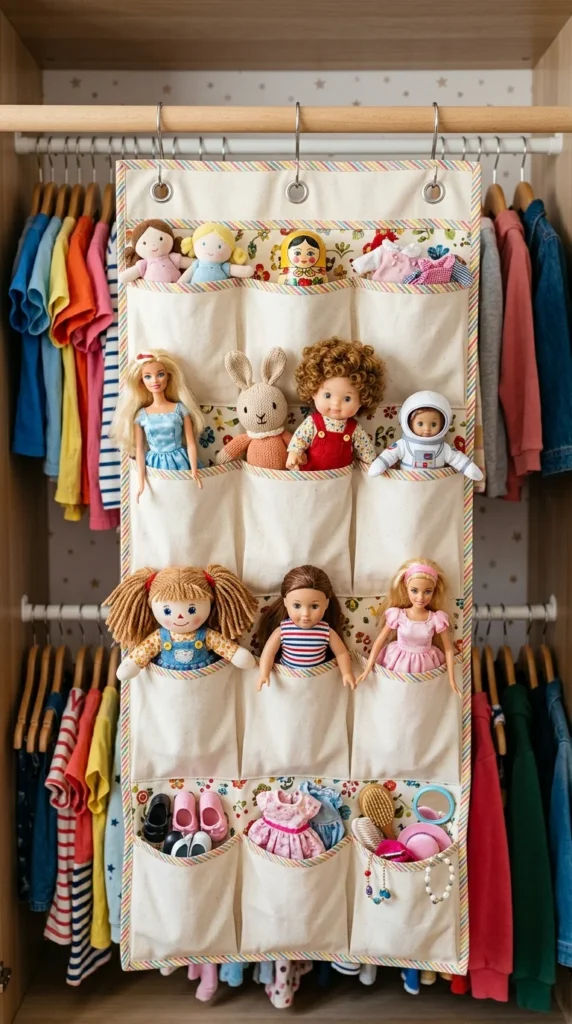
Vertical hanging organizers designed for sweaters or shoes can be hung on a standard closet rod. These are deep enough to hold bulkier items like stuffed animals or dress-up clothes. It’s an easy way to add tiers of storage to a closet without installing permanent shelving.
16. Stackable Crates
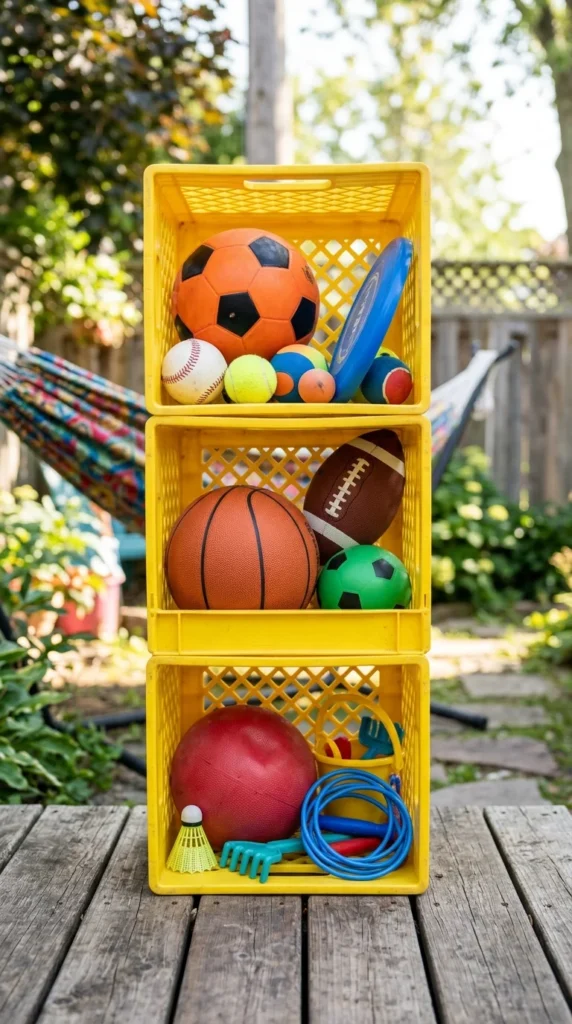
Stackable crates are budget-friendly and durable. Because they stack, you can create a tower of storage that grows with your collection. Turning them on their sides so the opening faces out creates a makeshift cubby system that is easy for kids to access.
17. Soft Baskets
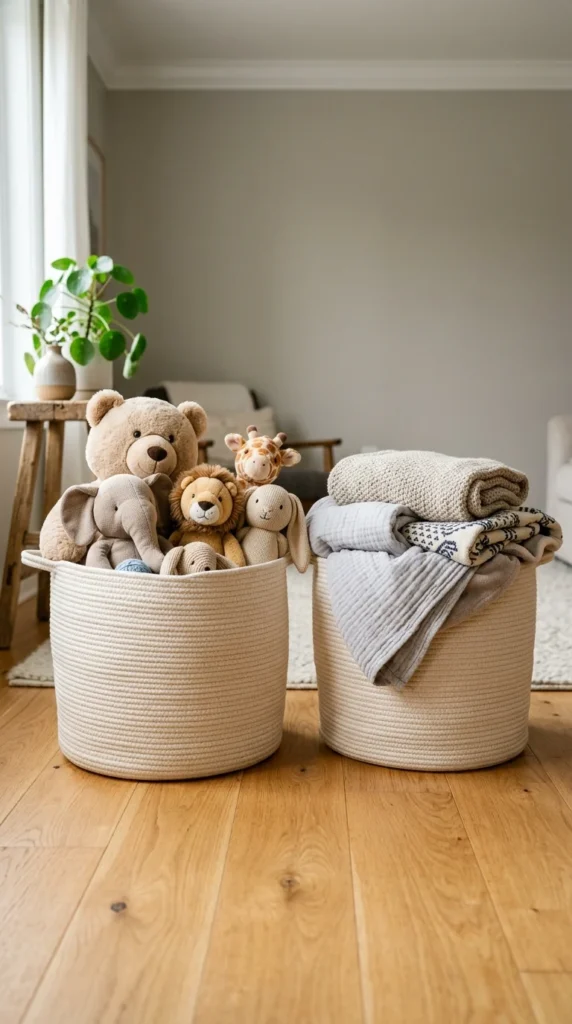
For very young children, soft rope or fabric baskets are the safest option. They have no sharp corners and are flexible enough to be stuffed into tight corners. They also look more like “adult” decor, helping toys blend into a living room or shared bedroom more naturally.
18. Tiered Trays
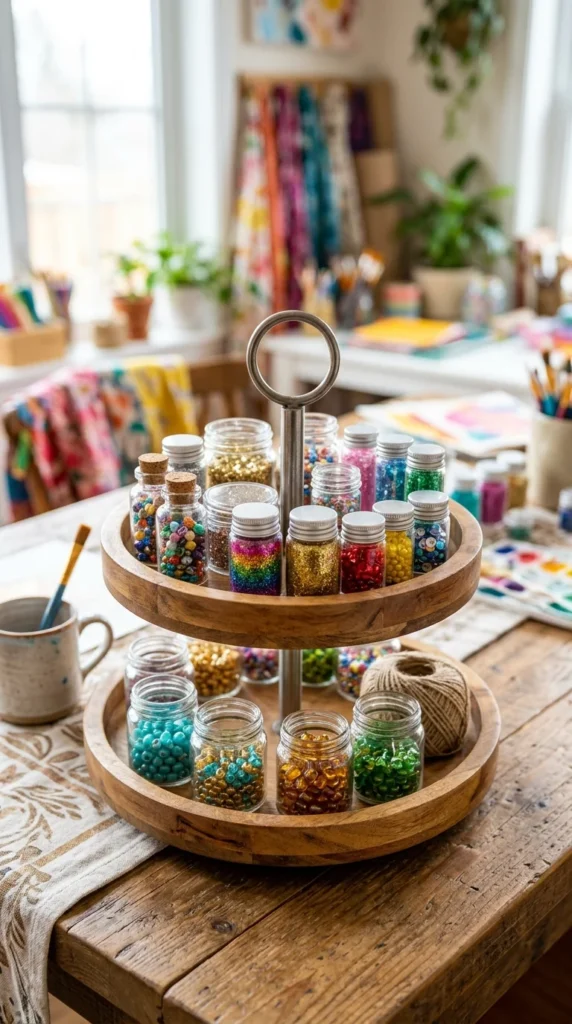
Tiered trays are perfect for small “bits and bobs.” If your child loves jewelry making, beads, or small figurines, a tiered tray keeps them organized in a small footprint. It’s also easy to move the entire tray from a desk to a high shelf when it’s time for dinner.
19. Console Tables
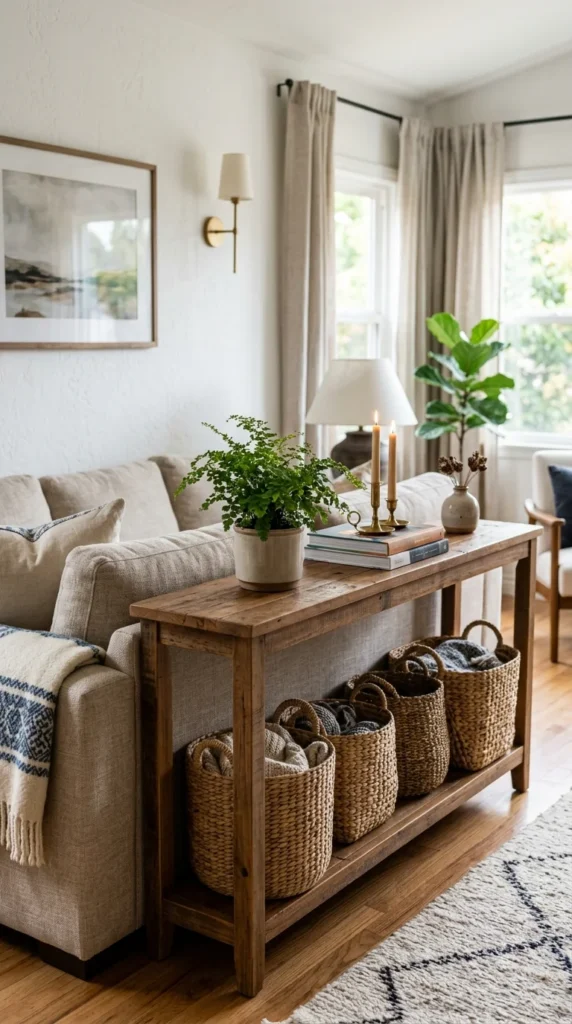
The space behind a sofa is often wasted. A slim console table with shelves allows you to hide toys in plain sight. Use attractive baskets on the lower shelves to hold toys, and keep the top of the table for lamps or decor. It creates a “buffer” between the play area and the rest of the room.
20. Trunk Tables
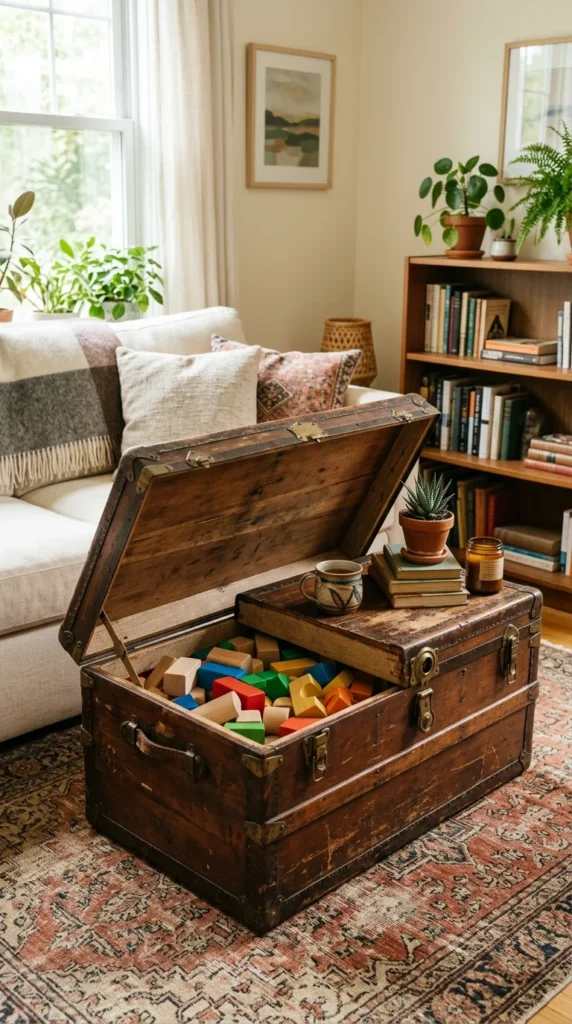
Using a trunk as a coffee table is a classic small-space hack. It provides a large, deep volume of storage for the bulkiest toys—like play mats or large trucks—while serving a primary function in the living room. It’s the perfect “hide-all” for a quick cleanup.
21. Ladder Shelves
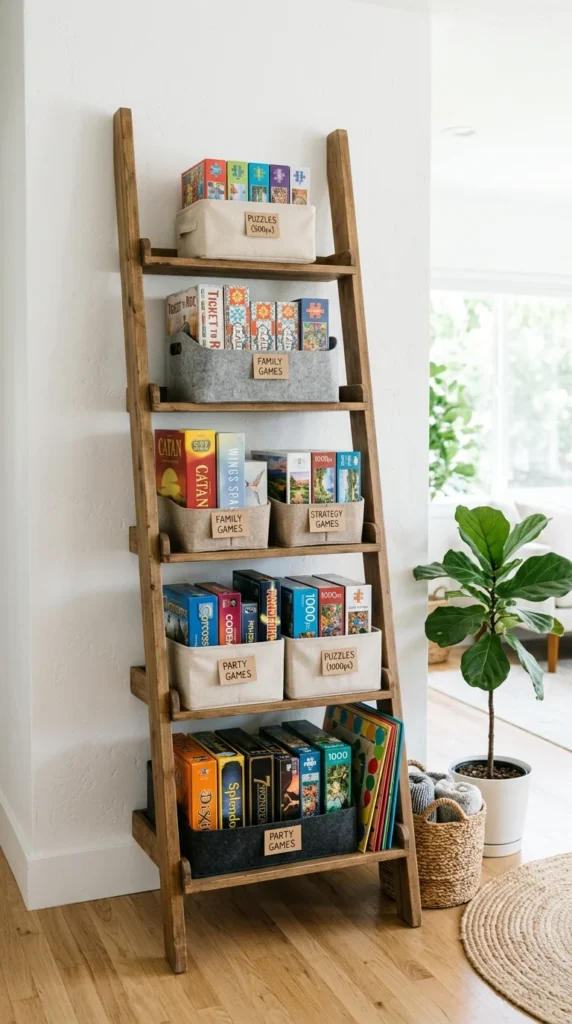
Leaning ladder shelves have a graduated depth, with wider shelves at the bottom and narrower ones at the top. This design is perfect for storing larger toy bins at the base and smaller items or books at the top. The “leaning” look also feels less bulky than a traditional cabinet.
22. Zippered Pouches
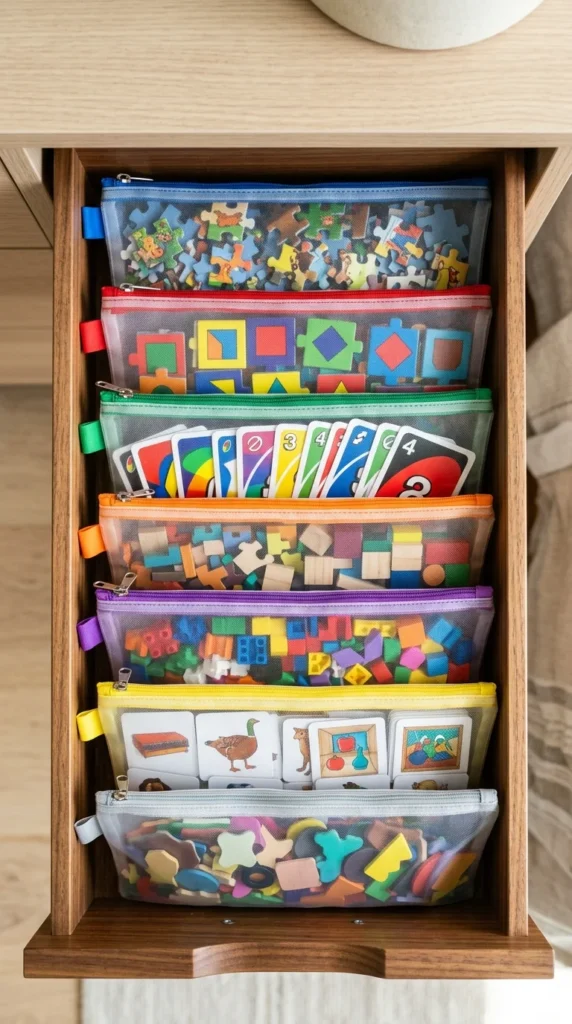
Say goodbye to bulky, ripped cardboard boxes. Transferring puzzles and board games into zippered mesh pouches saves an incredible amount of space. You can stack these pouches in a drawer or basket, reducing a pile of boxes into a slim, manageable file.
23. Art Carts
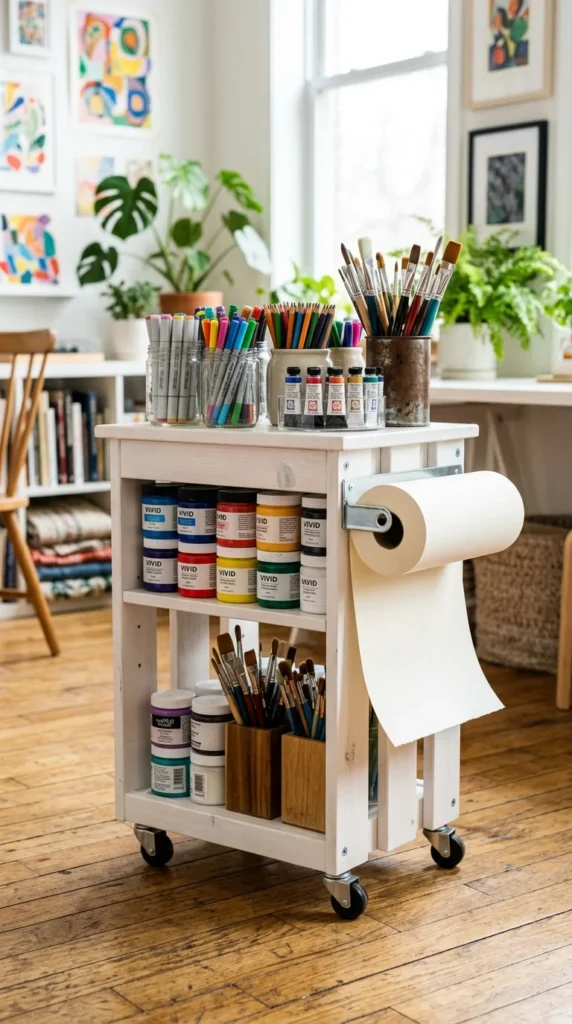
Dedicated art carts allow kids to take their creativity anywhere in the house. By keeping all “messy” supplies in one mobile unit, you can ensure they are only used in areas with easy-to-clean floors, and the cart can be tucked away in a laundry room or closet when not in use.
24. Shower Caddies
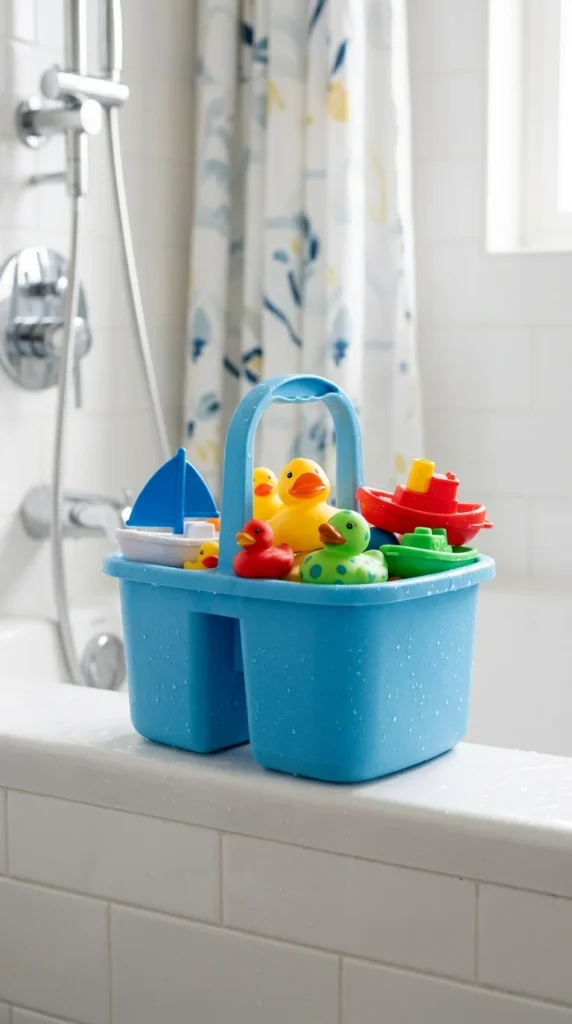
Bath toys can quickly become a cluttered, mildewy mess. A plastic shower caddy with drainage holes is the perfect solution. It keeps the toys organized and allows them to air dry. Plus, it’s easy to move out of the way when an adult needs to use the shower.
25. Shoe Racks
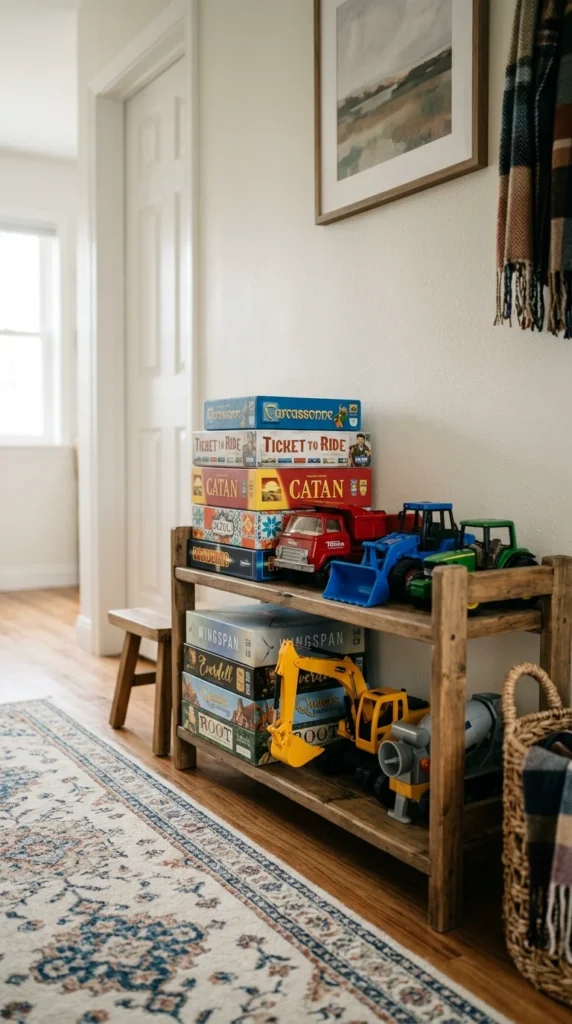
Low-profile shoe racks are the perfect height for toddlers. They can be placed at the bottom of a closet or against a wall. The slatted shelves are great for holding board games, ensuring that they stay flat and are easy to slide out without toppling the whole stack.
26. Hanging Planters
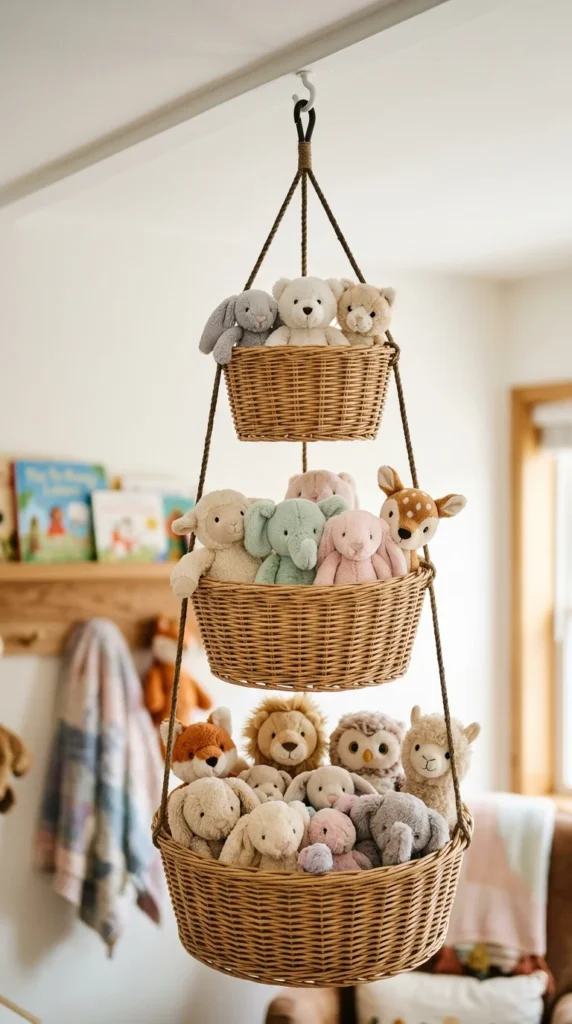
Woven hanging planters aren’t just for ivy. In a small nursery, a tiered hanging basket can hold “the regulars”—those small stuffed animals or soft balls that are used every day. It keeps them within reach but off the ground, adding a touch of boho-chic style to the room.