
A cramped kitchen can feel like a puzzle with missing pieces. When you’re working with a small pantry—or worse, no pantry at all—the clutter can quickly become overwhelming. However, you don’t need a sledgehammer and a contractor to double your storage capacity. By utilizing clever organizers, vertical space, and a few “hacks,” you can transform a tiny cupboard into a high-functioning storage powerhouse.
1. Door Racks
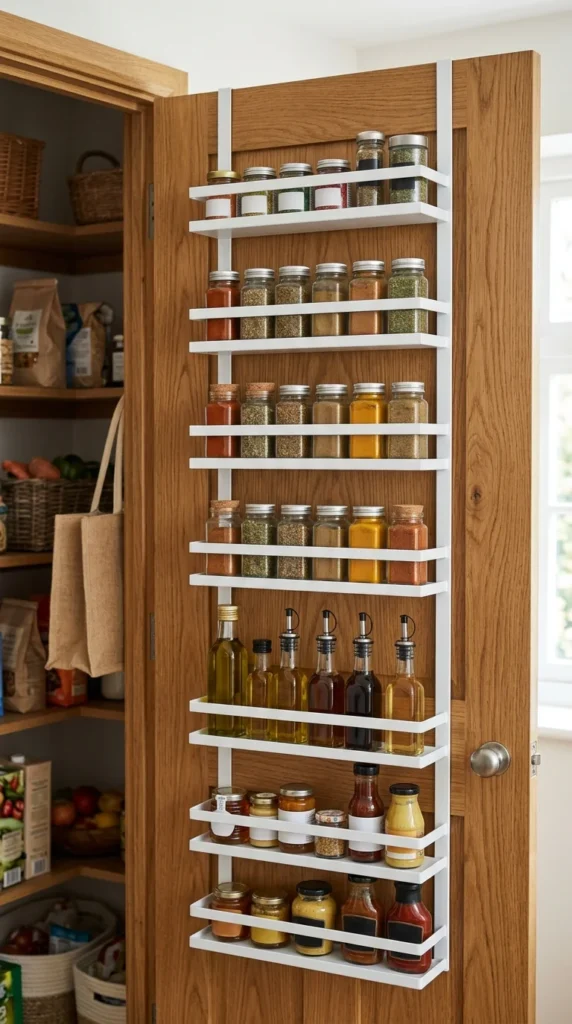
The back of your pantry or cabinet door is often-ignored real estate. By installing an over-the-door rack, you create instant shelving for thin items like spices, hot sauce, and aluminum foil boxes. These racks come in various styles, from wire baskets to adjustable shelves, allowing you to customize the height based on what you’re storing.
2. Shelf Risers
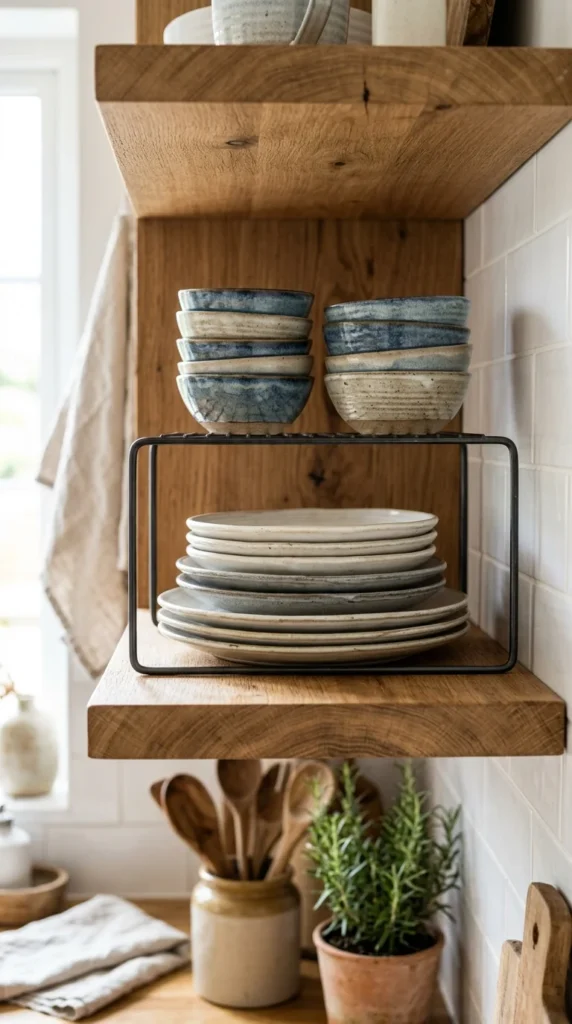
Standard pantry shelves are often spaced too far apart, leaving several inches of “dead air” above your items. Shelf risers act as a mini-loft system, allowing you to stack plates, cans, or boxes without having to dig through a precarious tower of items. This simple addition effectively doubles your usable surface area.
3. Clear Bins
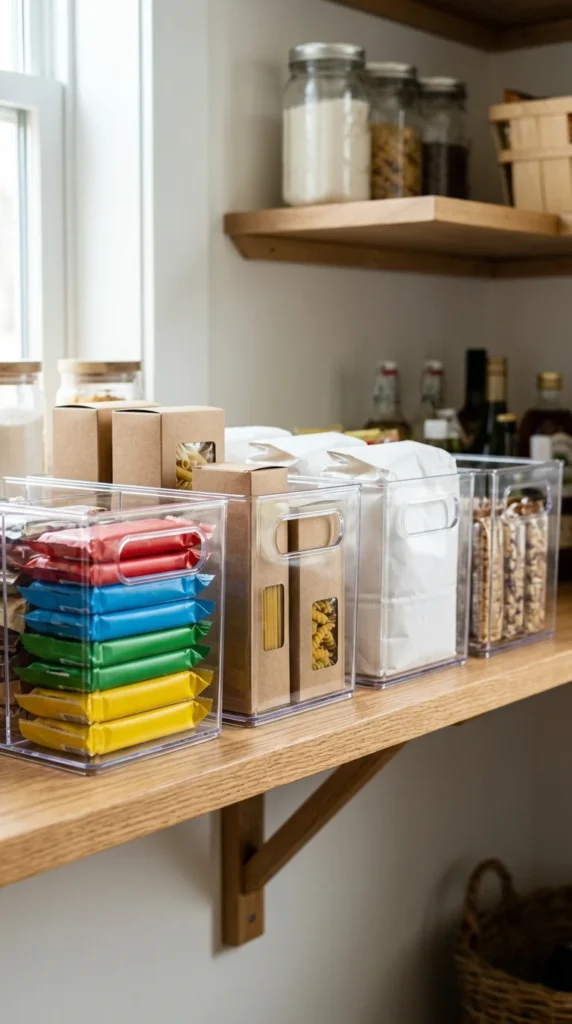
Visual clutter makes a small space feel even smaller. Switching to clear acrylic bins allows you to see exactly what you have at a glance, preventing “duplicate buying.” Grouping similar items—like all your baking supplies or all your snacks—into these bins keeps the pantry tidy and makes it easy to pull out an entire category at once.
4. Lazy Susans
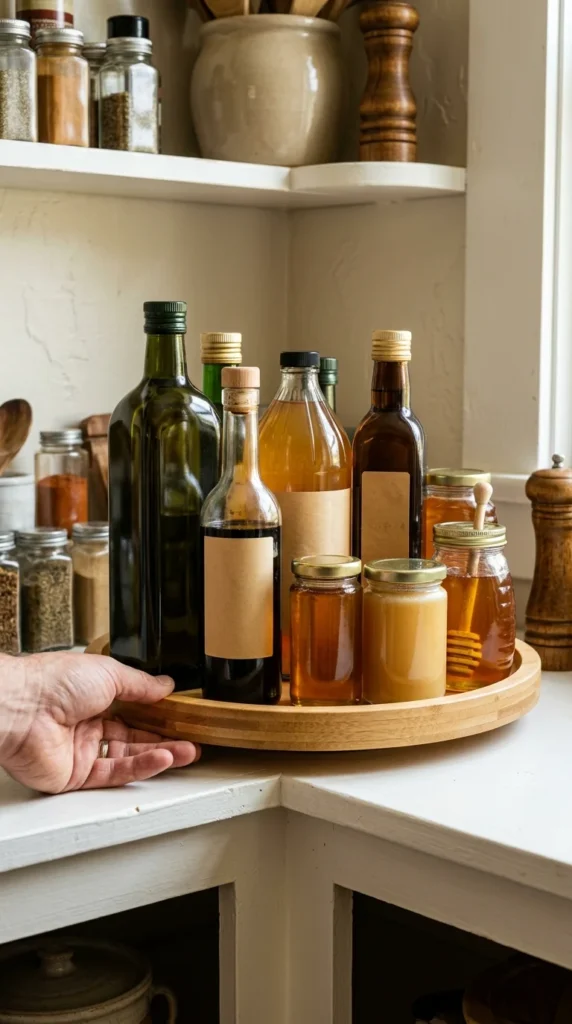
Corners and deep shelves are where pantry items go to be forgotten. A Lazy Susan (a rotating turntable) brings everything from the back to the front with a simple flick of the wrist. They are perfect for oils, vinegars, and spices that usually get lost in the dark recesses of a cupboard.
5. Rolling Carts
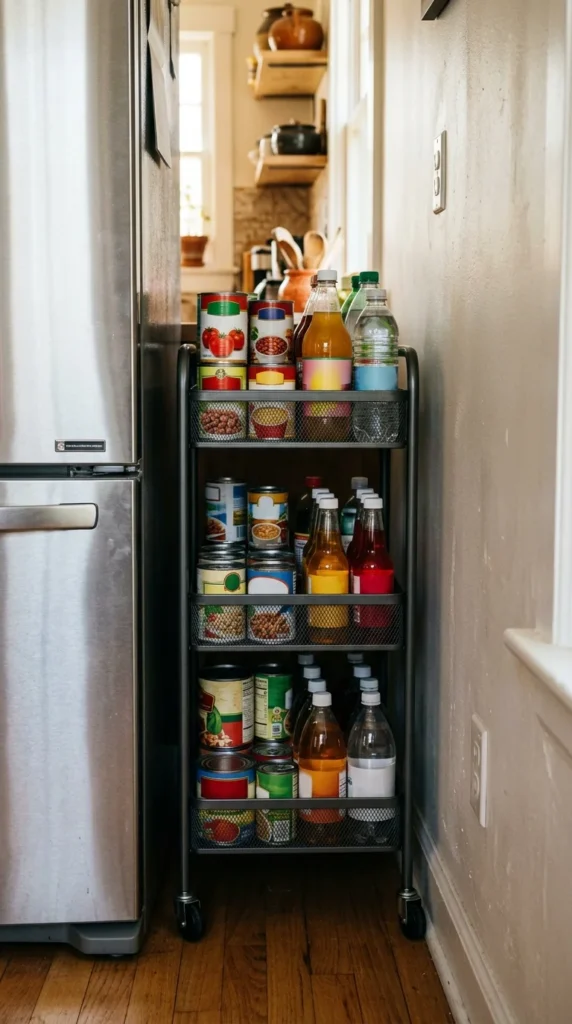
If you have a narrow gap between your fridge and the wall, a slim rolling cart is your best friend. These mobile units can hold a surprising amount of weight and can be tucked away when not in use. It’s an ideal solution for those who lack a built-in pantry but have a few inches of floor space to spare.
6. Under-Shelf Baskets
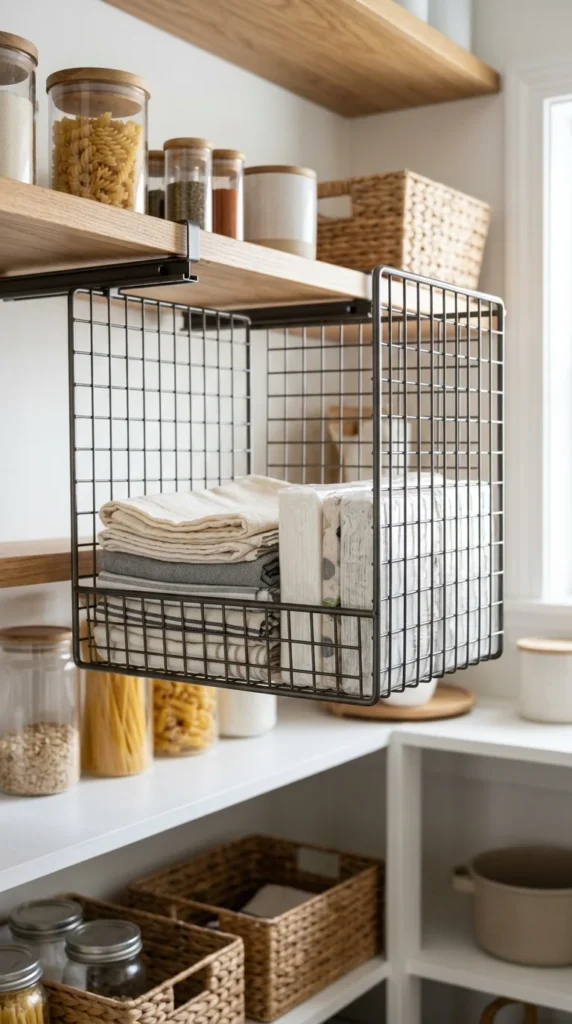
Don’t let the space beneath your shelves go to waste. Slide-on wire baskets require zero tools for installation. They are perfect for lightweight, flat items like bread, tortillas, or rolls of parchment paper that would otherwise get squashed by heavier items.
7. Magnetic Tins
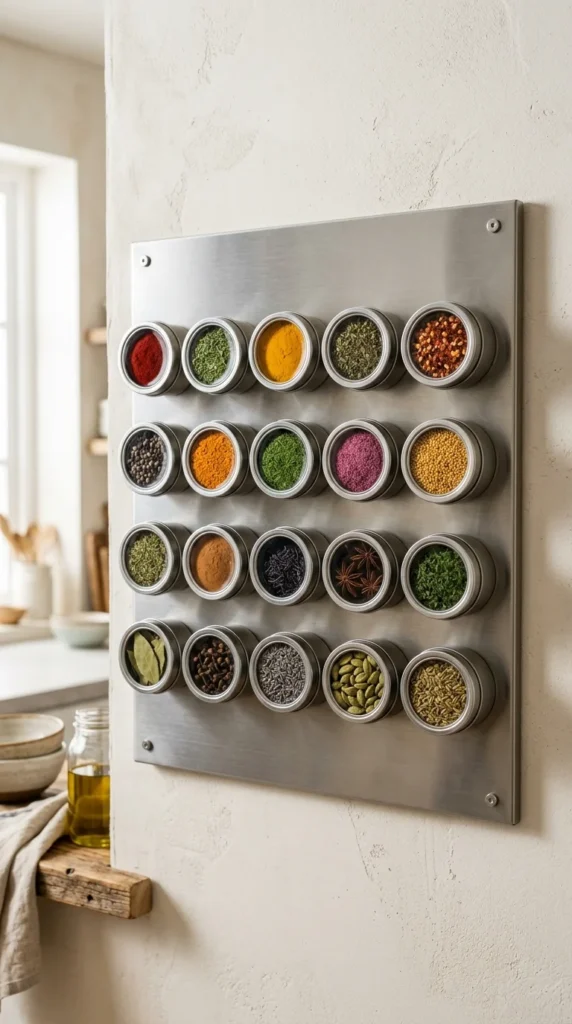
Spices take up a lot of horizontal space. By transferring them to magnetic tins, you can move them to the side of the refrigerator or a mounted metal plate. This frees up an entire shelf for larger items while turning your spices into a functional piece of kitchen decor.
8. Command Hooks
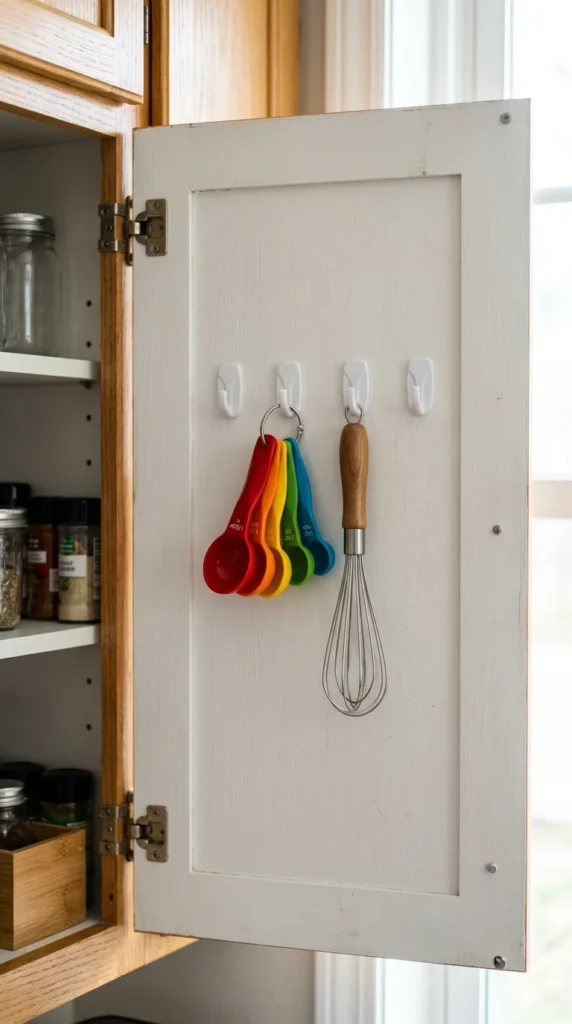
Adhesive hooks are a renter’s dream. Use them on the inside of pantry doors or walls to hang measuring cups, aprons, or even small baskets for onions and garlic. They keep small, frequently used items within reach without taking up any precious shelf space.
9. Stackable Jars
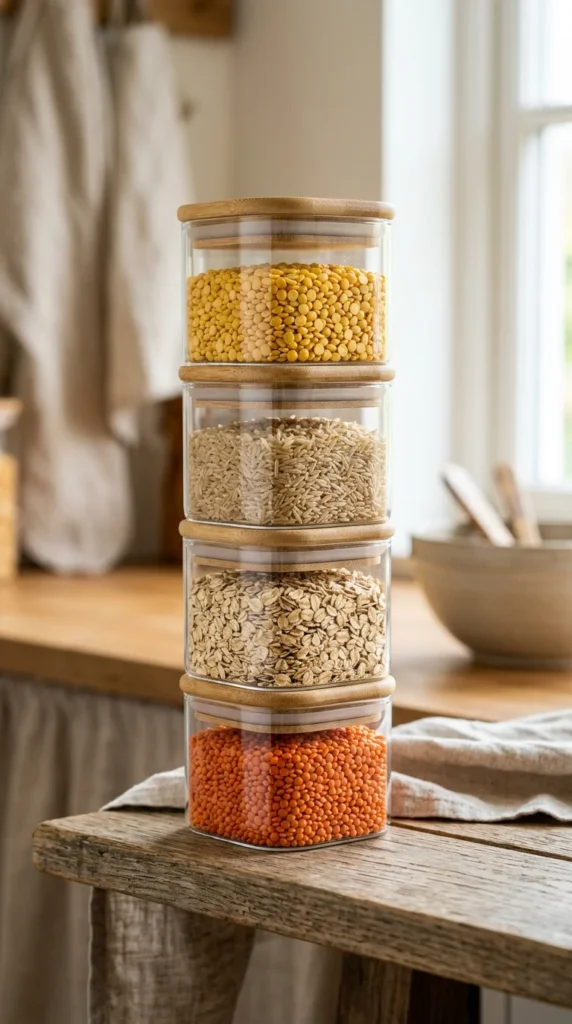
Uniformity is the key to a professional-looking pantry. Invest in stackable glass or BPA-free plastic jars. By decanting dry goods into these containers, you eliminate bulky, half-empty cardboard boxes and create a cohesive, organized aesthetic that maximizes vertical space.
10. Wire Baskets
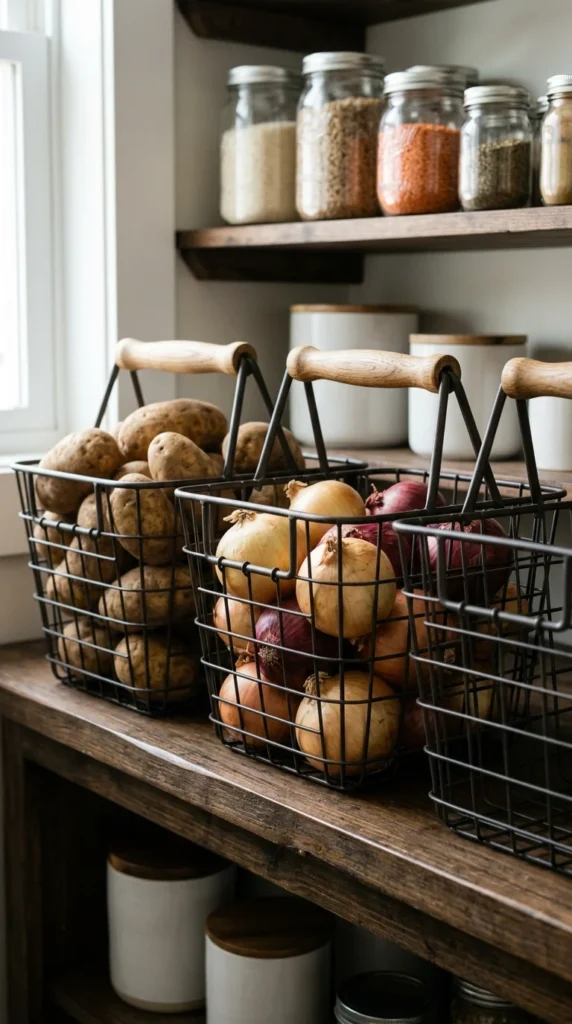
Wire baskets are excellent for items that need to breathe, such as potatoes, onions, and citrus fruits. Because they are open-weave, you can easily see what’s inside, and they add a touch of rustic “farmhouse” charm to your storage setup.
11. Pegboard Walls
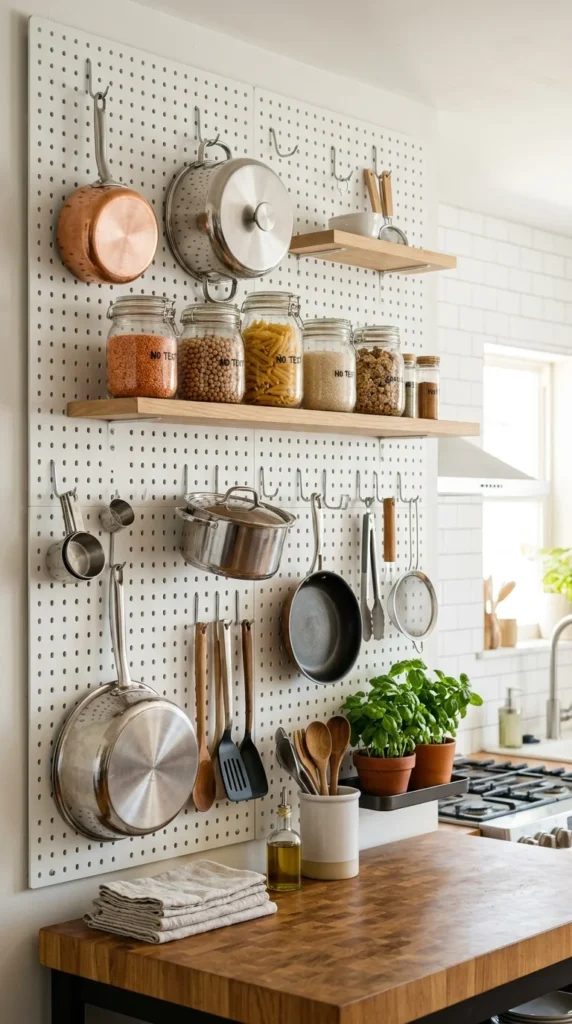
If you have an empty wall in or near your kitchen, a pegboard is the ultimate modular storage solution. You can move hooks and shelves around as your needs change, making it a flexible way to store everything from colanders to spice jars without needing a dedicated pantry closet.
12. Tension Rods
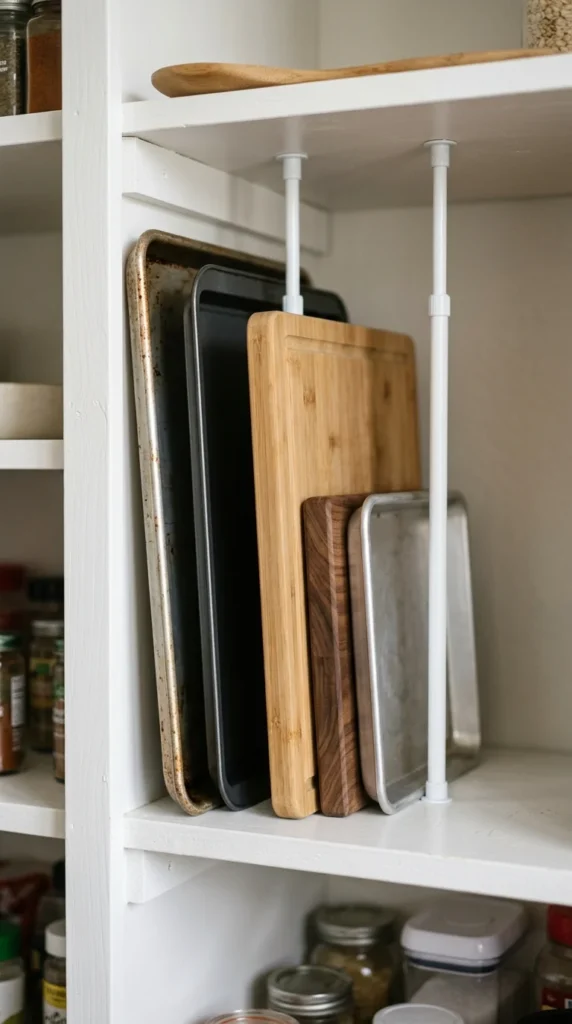
Baking sheets, muffin tins, and cutting boards are notoriously difficult to store. Instead of stacking them horizontally (and dealing with the “clatter” every time you need one), use small tension rods placed vertically. This creates “files” for your pans, allowing you to slide them out individually.
13. Pull-Out Bins
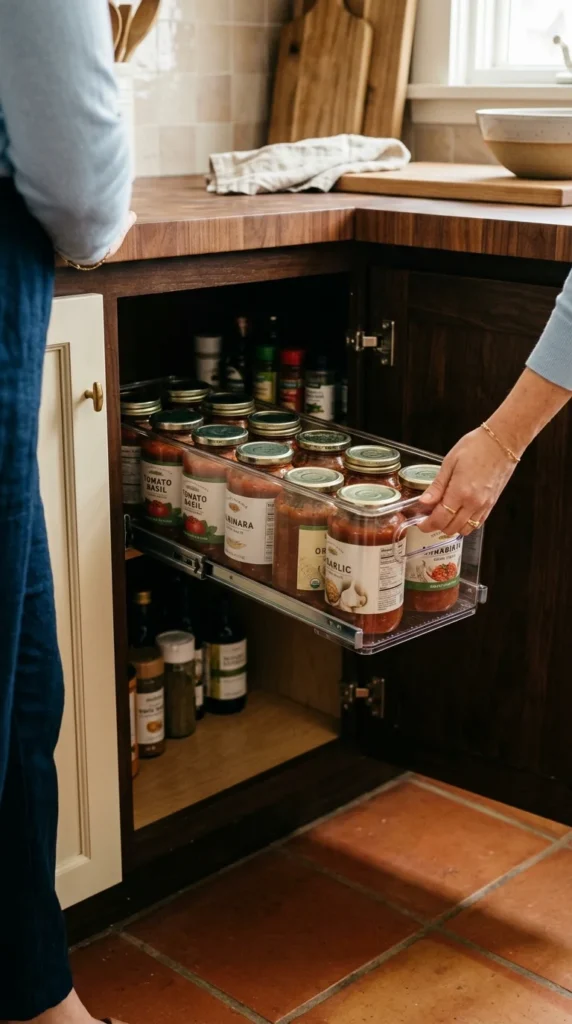
Deep cabinets are a blessing and a curse. To make them more functional, use long, rectangular bins that act like makeshift drawers. When you need something from the back, simply pull the entire bin out rather than moving twenty different items to find the one you need.
14. Chalkboard Labels
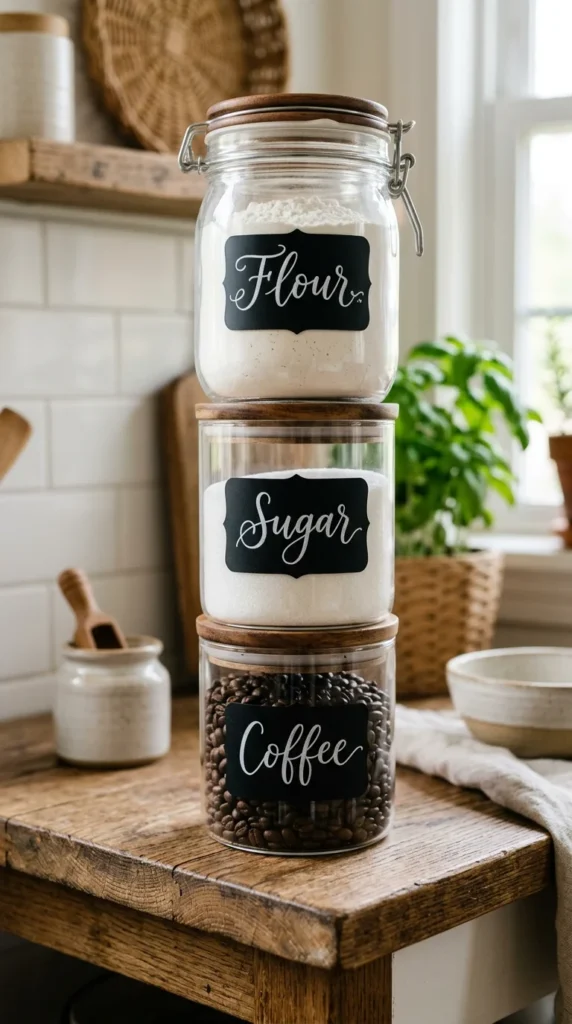
Labeling isn’t just about aesthetics; it’s about maintaining the system. Chalkboard labels allow you to easily change the name of the contents when you restock. When everyone in the household knows exactly where the “Snacks” go, the pantry is much more likely to stay organized.
15. Tiered Risers
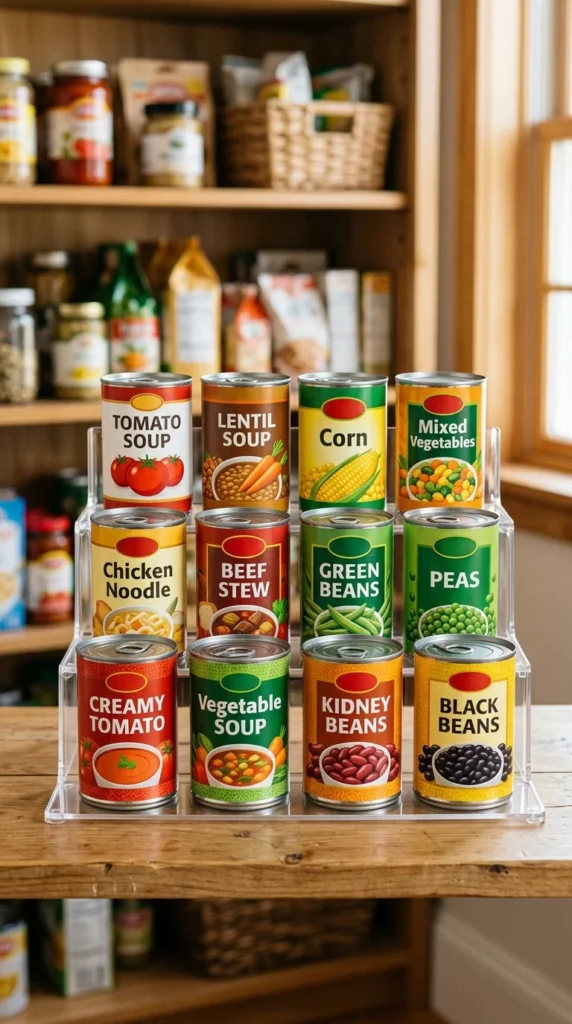
Commonly used for spices or canned goods, tiered risers (often called “stadium seating” for cans) ensure that no item is hidden behind another. It allows you to see your entire inventory of canned beans or soups at once, reducing the risk of buying things you already have.
16. Produce Bags
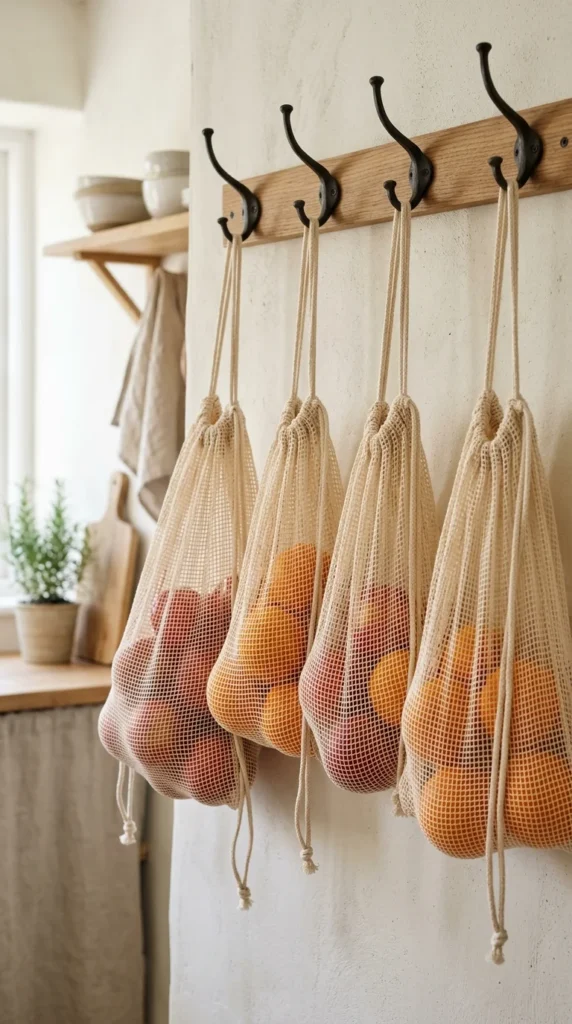
Keep your countertops clear by hanging produce in mesh or macramé bags. These are great for fruits and vegetables that don’t need to be refrigerated. Hanging them on the wall or the side of a cabinet frees up shelf space for boxed and canned goods.
17. Can Dispensers
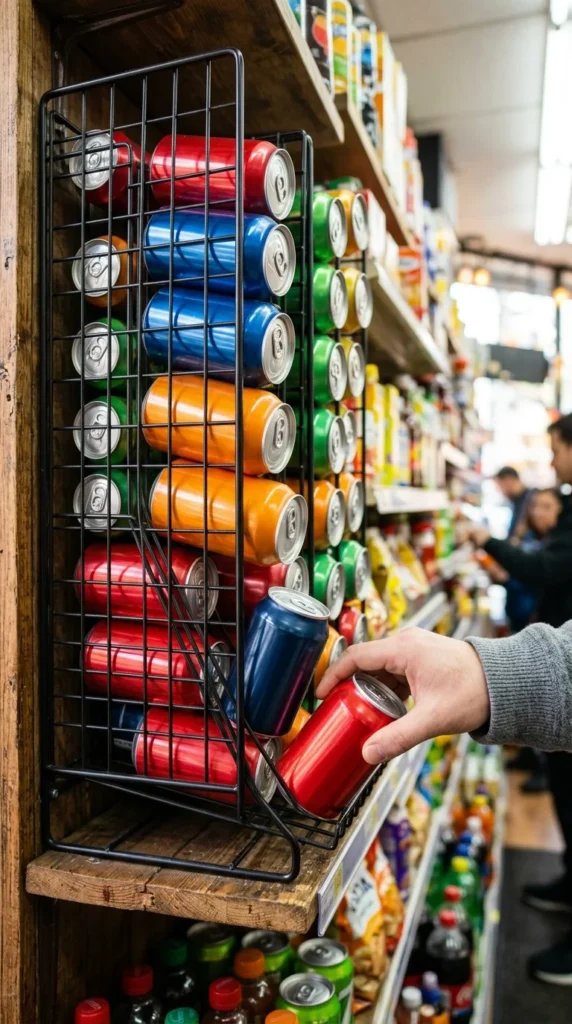
For those who stock up on soda or canned vegetables, a gravity-fed dispenser is a game-changer. These racks allow you to stack cans vertically and ensure you are using the “first-in, first-out” method, keeping your stock fresh.
18. Magazine Holders
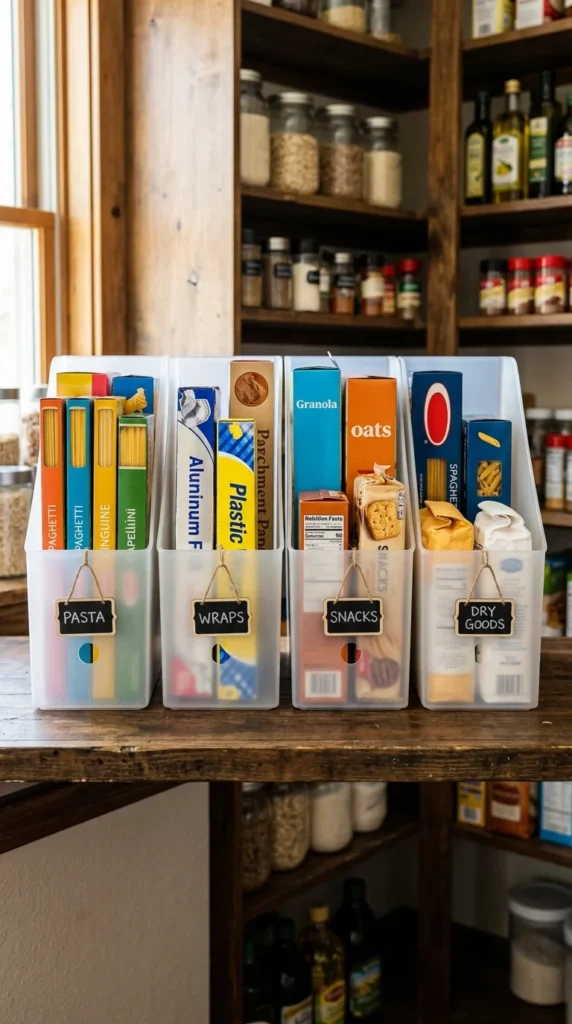
Magazine holders are surprisingly versatile in the kitchen. Use them to stand up boxes of aluminum foil, plastic wrap, or even to hold “floppy” items like bags of chips or packets of gravy mix. They keep tall items from falling over and create a very neat, lined-up look.
19. Decanting Dry Goods
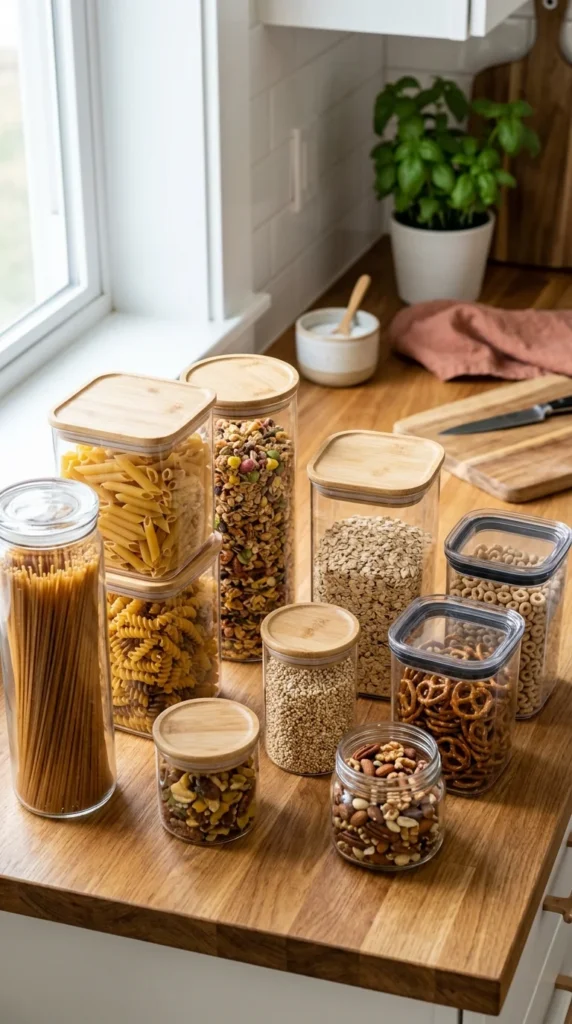
Decanting is the process of moving food from its original packaging into uniform containers. Not only does this look beautiful, but it also saves space. Original packaging is often designed to look good on a grocery shelf, not to fit efficiently in your pantry. Removing the air-filled bags and bulky boxes creates more room.
20. Pocket Organizers
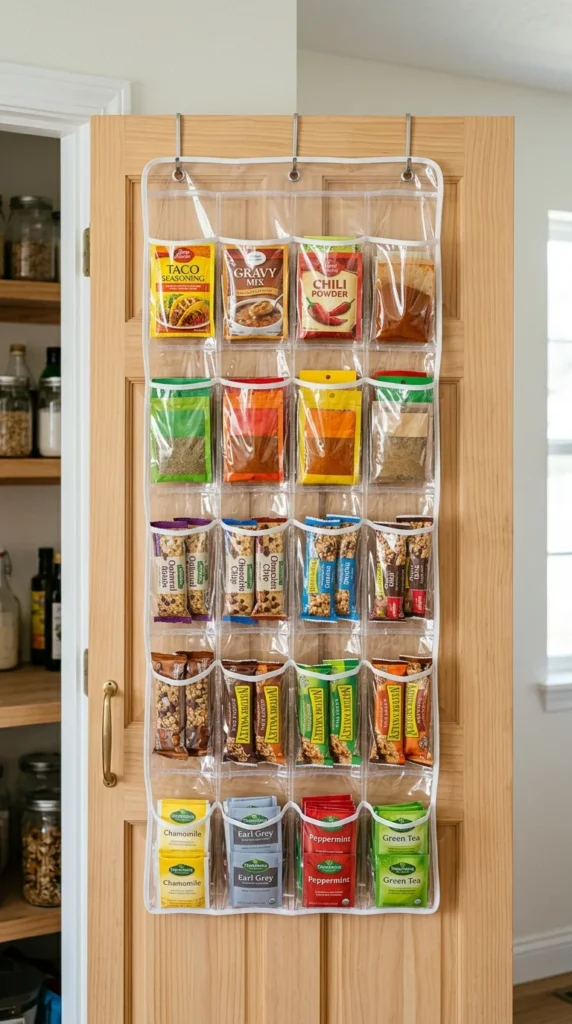
The classic over-the-door shoe organizer is perfect for a pantry. The clear pockets are the ideal size for small snacks, spice packets, or even cleaning supplies. It keeps these tiny items from getting lost in large bins or at the back of shelves.
21. Wine Racks
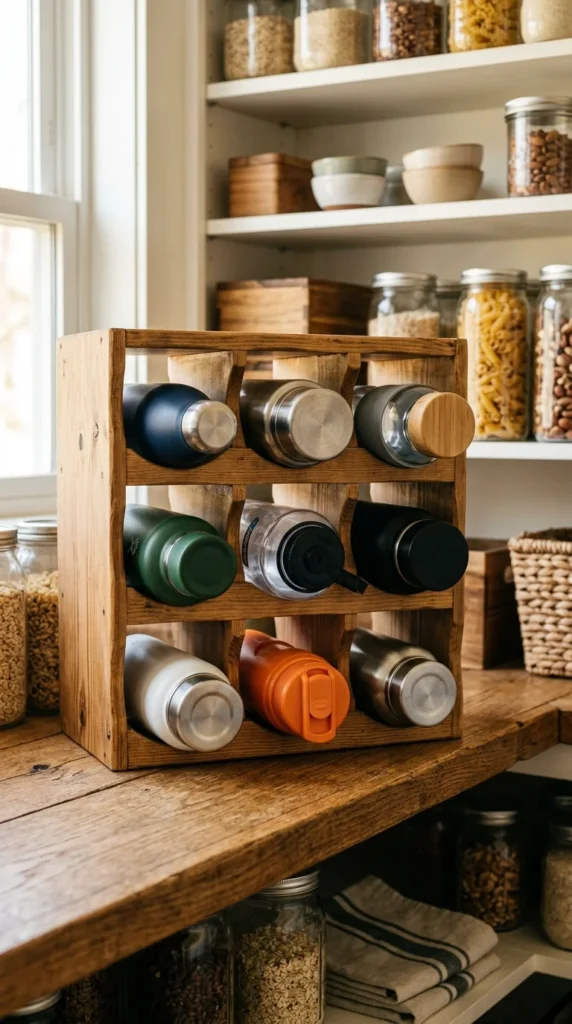
Wine racks aren’t just for alcohol. They are one of the best ways to store reusable water bottles, which have a habit of falling over like dominos. Tucking them into the horizontal slots of a wine rack keeps them contained and easy to grab on your way out the door.
22. Lid Organizers
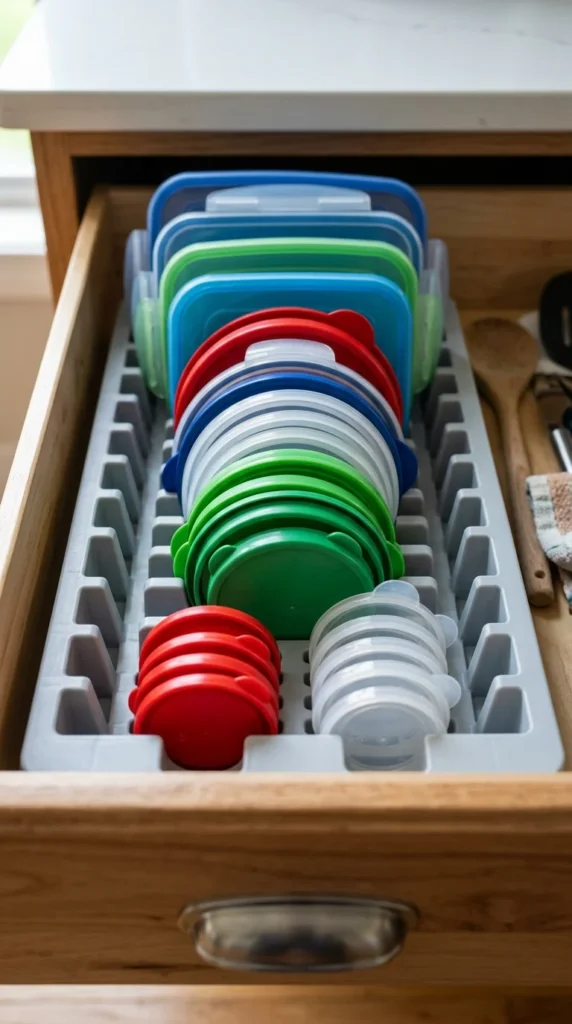
The “Tupperware drawer” is usually the most chaotic place in a kitchen. Use a lid organizer to keep all your plastic and glass lids standing upright. By separating the lids from the containers, you can stack the containers inside each other, saving a massive amount of space.
23. Corner Carousels
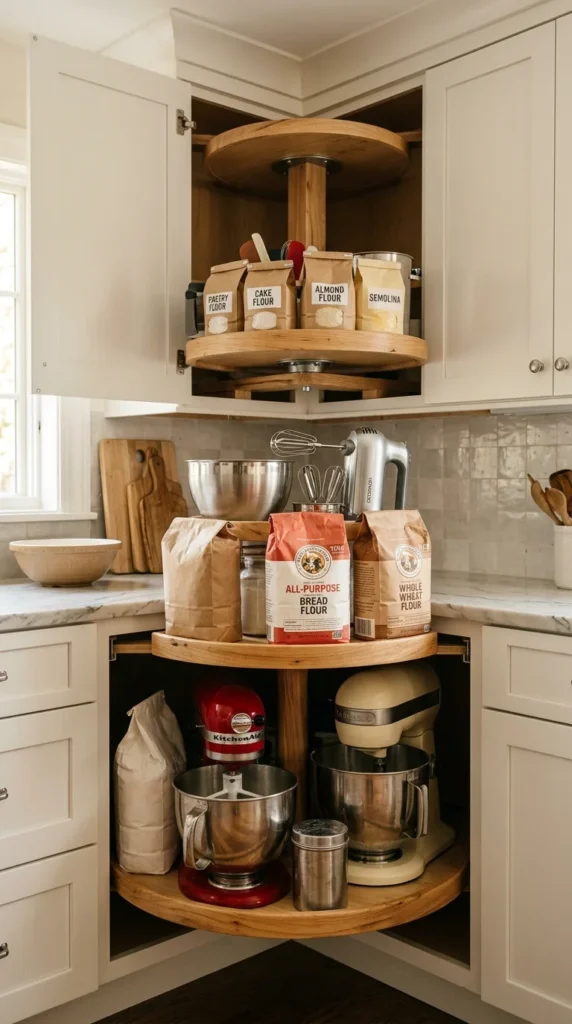
If you have “blind” corner cabinets that go back forever, a corner carousel (or Kidney-shaped Susan) is essential. These are designed to fit the specific geometry of corner units, ensuring that no space is wasted in those hard-to-reach angles.
24. Bread Boxes
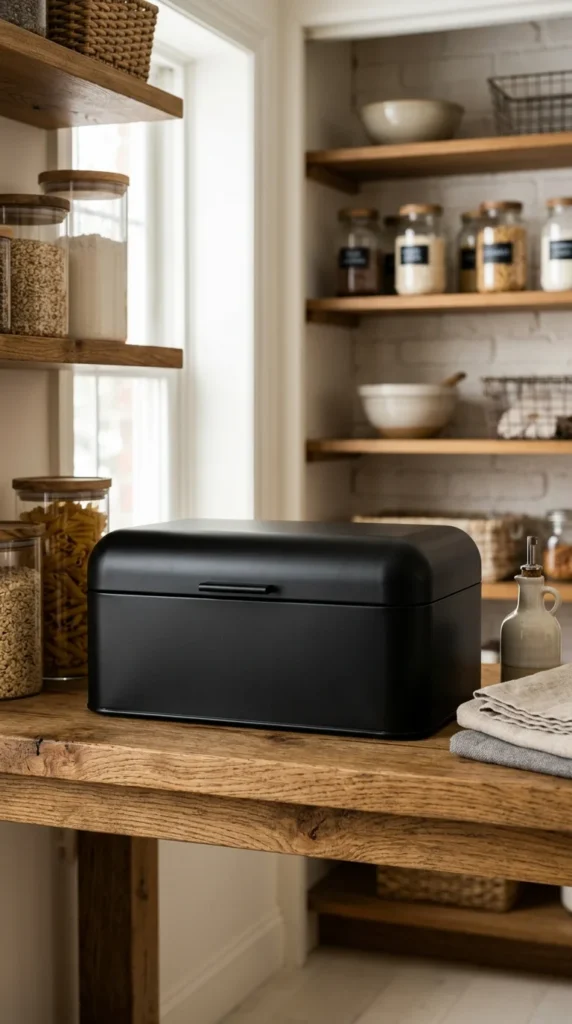
Bread bags are bulky and often end up squashed. A dedicated bread box provides a hard shell that protects your baked goods and allows you to stack other light items on top of the box itself. It also keeps the pantry looking streamlined by hiding the colorful, messy plastic bags.
25. Wooden Crates
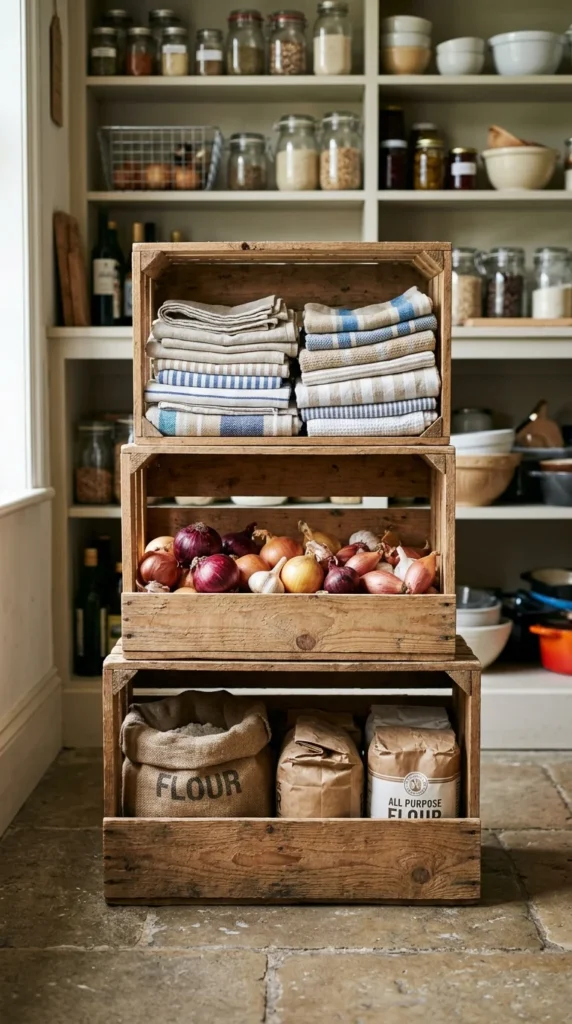
For floor-level storage, wooden crates are sturdy and stackable. They are perfect for heavy items like bulk bags of rice or flour that you don’t want to lift onto high shelves. They also provide a cohesive, natural look that hides the “industrial” feel of bulk packaging.
26. Clip-on Labels
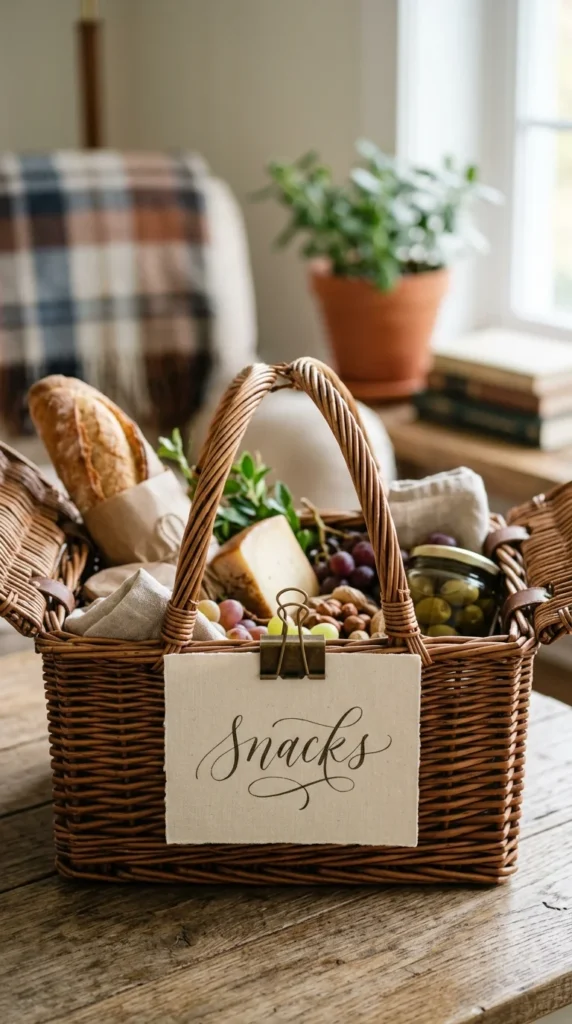
If you use baskets or bins that aren’t smooth enough for stickers, clip-on labels are the solution. These can be attached to wire, wicker, or fabric bins, ensuring that every container in your pantry is identified. It’s the final touch in creating a system that is as functional as it is beautiful.