
Transforming a cramped kitchen doesn’t always require knocking down walls or spending thousands on a structural remodel. Often, the most powerful tool in a designer’s arsenal is a simple gallon of paint. The right color palette can manipulate the way light interacts with a room, tricking the eye into seeing more depth, height, and width than actually exists.
Whether you are dealing with a tiny galley kitchen or a compact open-plan apartment, choosing a color scheme that maximizes light reflection and minimizes visual clutter is key. From the timeless appeal of crisp whites to the surprising depth of moody charcoals, here are 24 color ideas to make your small kitchen feel grand.
1. Crisp White
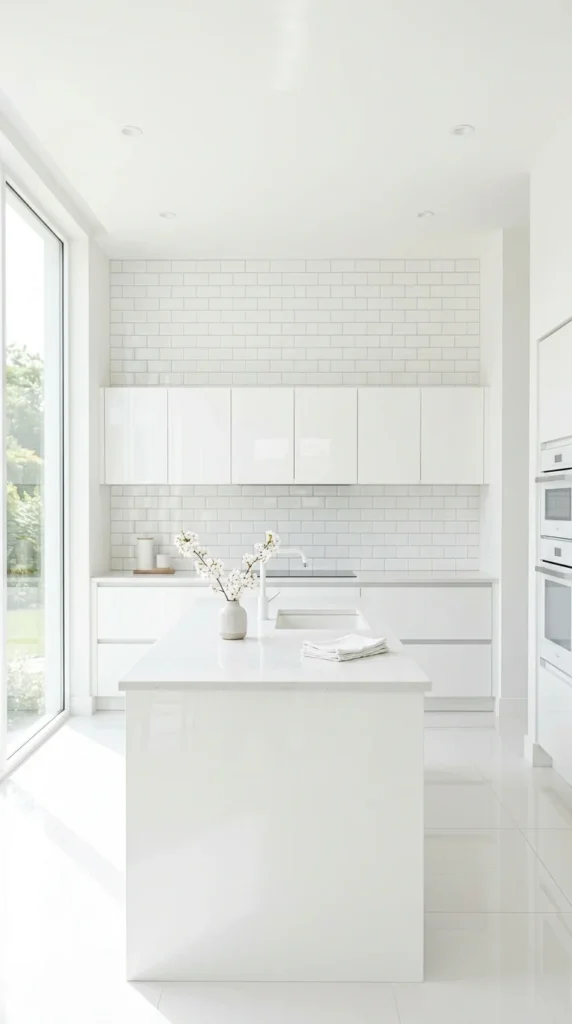
White is the ultimate champion of small spaces. By using a high-reflectance white on the walls, cabinets, and ceiling, you eliminate the visual boundaries that define a room’s size. When the eye doesn’t stop at a color change between the wall and the cabinet, the space feels continuous. Crisp white acts as a blank canvas, bouncing both natural and artificial light into every dark corner.
2. Soft Greige
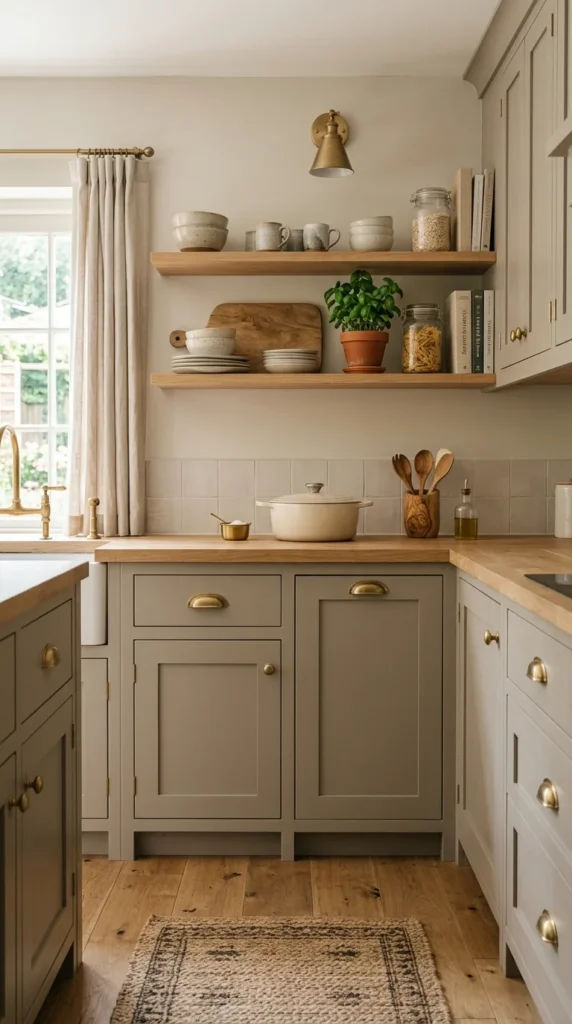
Greige is the perfect middle ground for those who find pure white too clinical. This blend of gray and beige brings warmth without absorbing too much light. It provides a sophisticated backdrop that feels cozy yet expansive. When paired with light wood floors, soft greige creates a harmonious, monochromatic look that stretches the visual boundaries of the room.
3. Pale Sky Blue
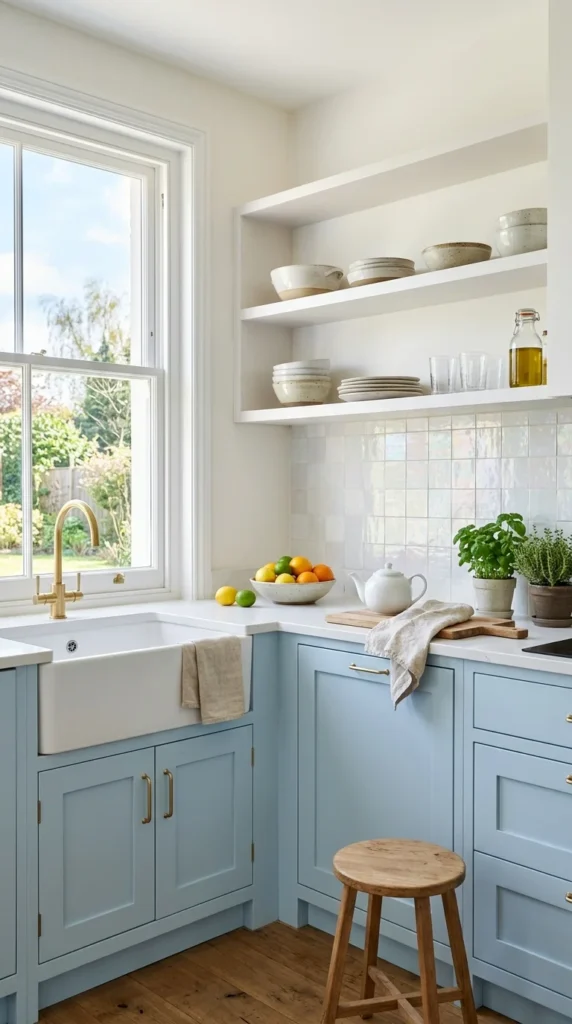
Light blue is naturally recessive, meaning it tends to move away from the eye. Painting your kitchen a soft, pale blue can make the walls feel like they are pushing outward. This color brings a sense of serenity and airiness, making it feel as though the kitchen is connected to the outdoors. It works exceptionally well in kitchens with plenty of natural light.
4. Sage Green
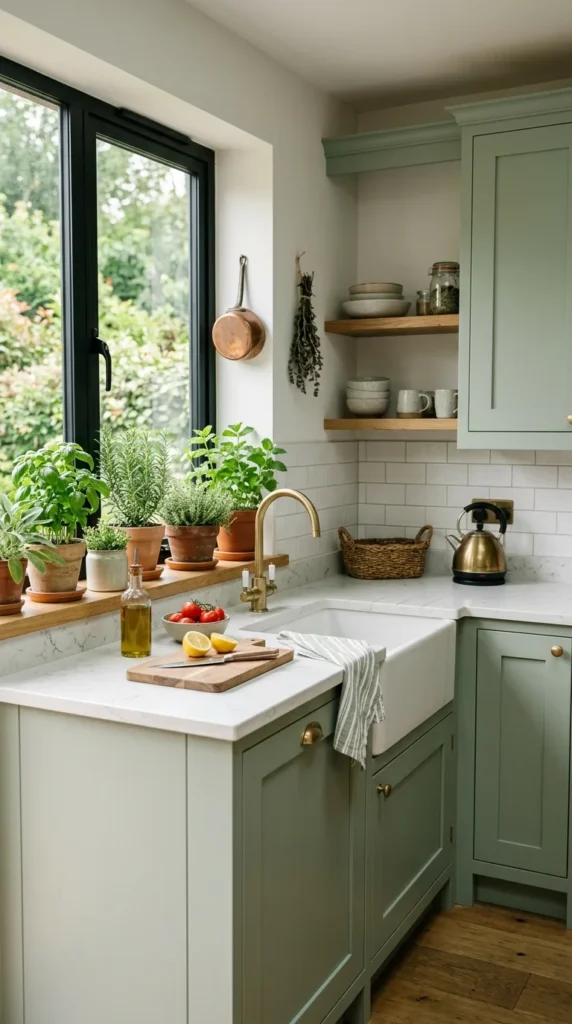
Sage green is a “new neutral” that adds a touch of nature to a small kitchen without feeling heavy. Because it is found so frequently in the natural world, our eyes process it as a calming, expansive color. Light-to-medium sage shades provide enough pigment to feel intentional while remaining light enough to keep the space feeling open and refreshed.
5. Sunshine Yellow
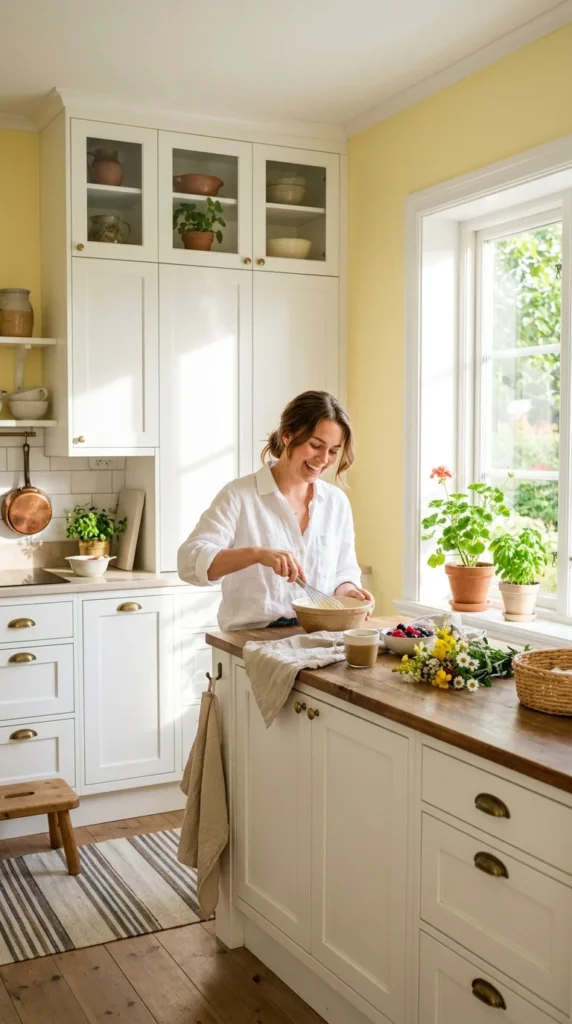
If your kitchen lacks natural light, bring the sun indoors. A soft, buttery yellow can make a dark galley kitchen feel significantly brighter. Yellow has a high luminosity, meaning it reflects light exceptionally well. Avoid neon shades; instead, opt for creamy, pale yellows that feel like a soft glow rather than a loud statement.
6. Light Peach
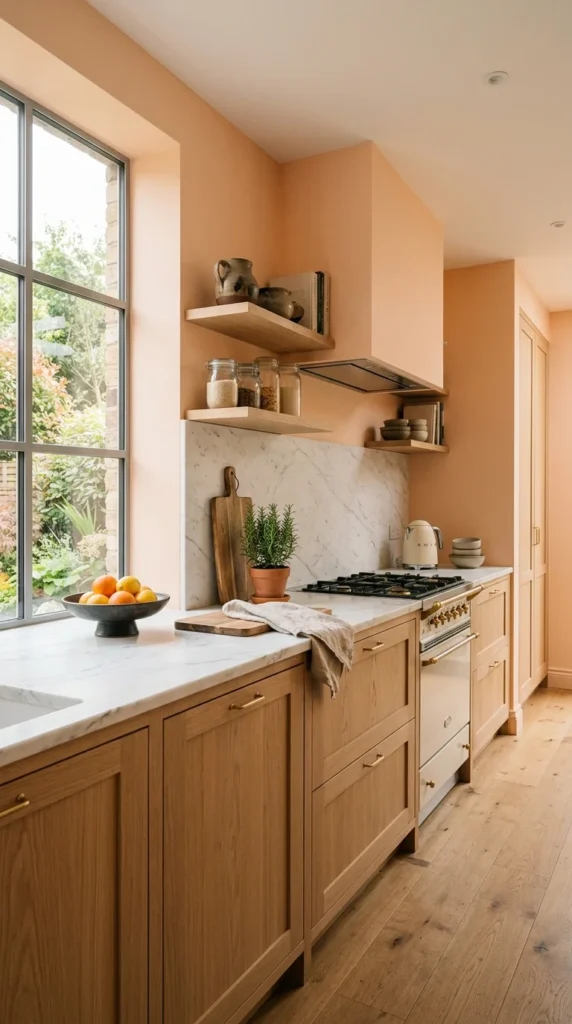
Peach is a sophisticated alternative to pink or beige. It has an inherent warmth that makes a small kitchen feel inviting. Because it sits on the lighter end of the spectrum, it maintains high reflectivity. Peach tones look stunning when paired with modern gold or copper hardware, which further enhances the “glow” of the room.
7. Muted Lavender
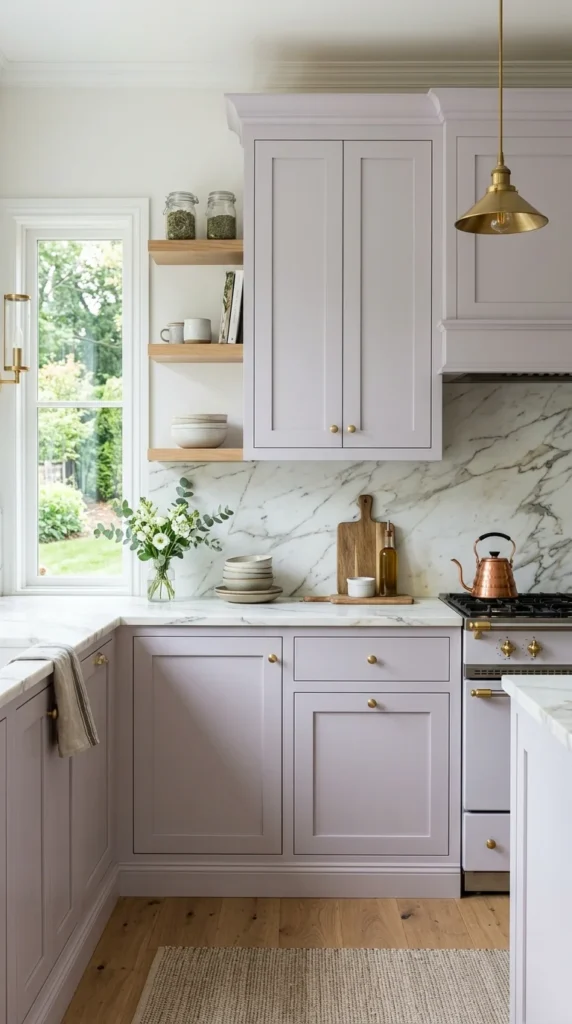
Lavender is an underrated choice for small kitchens. Like blue, it is a cool tone that recedes visually. A muted, dusty lavender adds a touch of personality and whimsy without the visual weight of darker purples. It creates a dreamlike, expansive atmosphere that feels both creative and calm.
8. Charcoal Accents
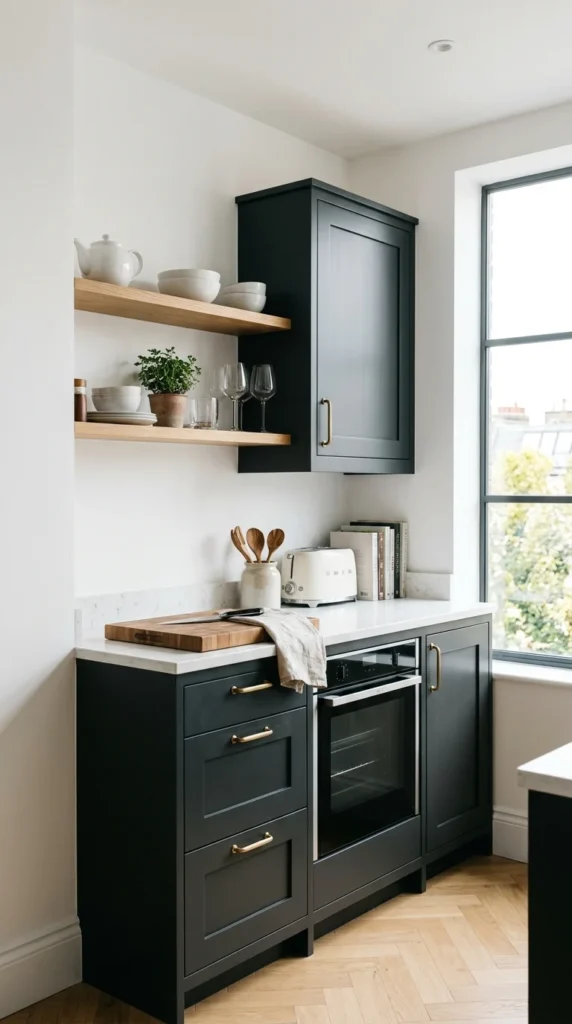
While it might seem counterintuitive, dark colors can actually help a small kitchen feel bigger if used correctly. By painting a single accent wall or the lower cabinets in a deep charcoal, you create a sense of depth. This “anchor” effect makes the lighter walls around it seem even more expansive by comparison.
9. Navy Blue
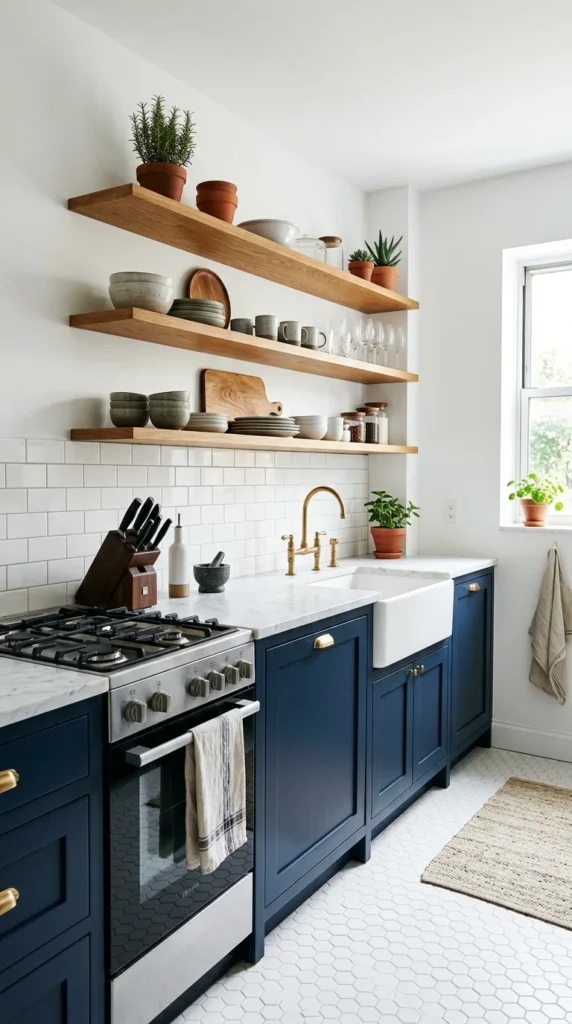
Navy blue is a classic color that brings a sense of luxury. In a small kitchen, using navy on the base cabinets while keeping the upper walls and ceiling white creates a “horizon line” that draws the eye across the room. This horizontal emphasis can make a narrow kitchen feel wider.
10. Mint Green
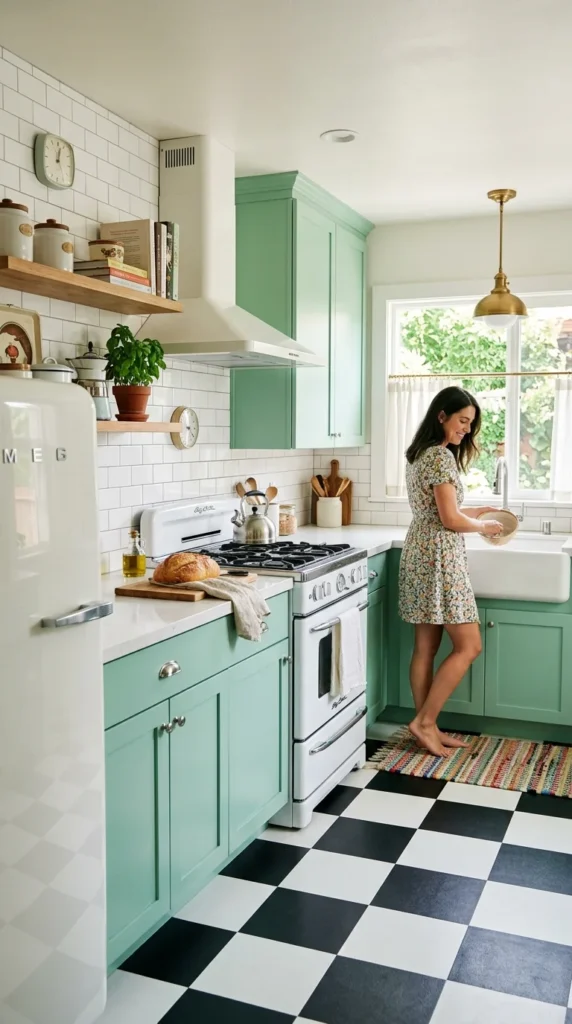
Mint green is synonymous with freshness. This pastel shade is perfect for making a small kitchen feel clean and “zippy.” It has enough white in its base to reflect plenty of light, but enough pigment to give the room a distinct personality. Mint looks particularly striking when paired with bright white subway tiles.
11. Terracotta
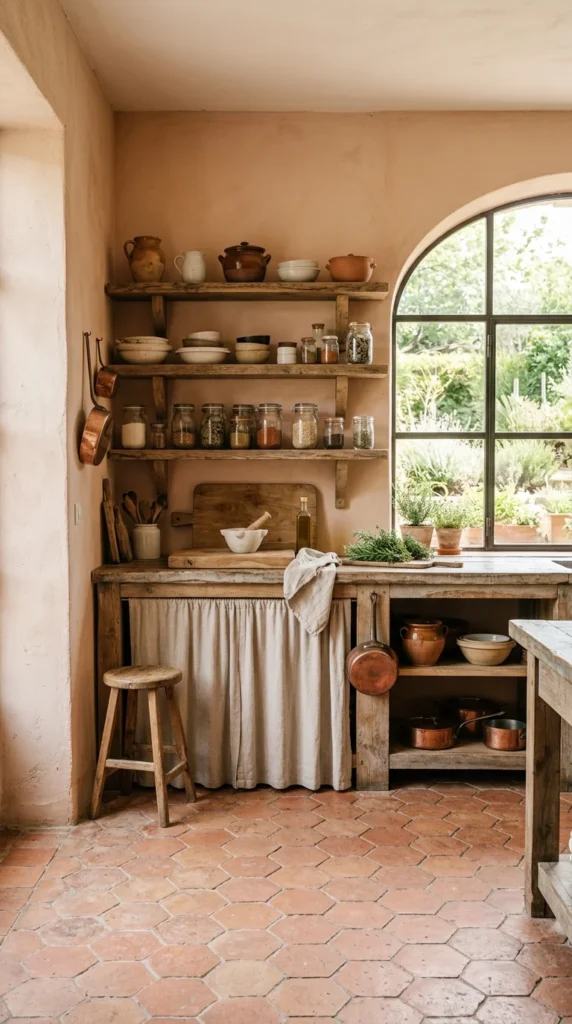
For a kitchen that feels grounded and earthy, light terracotta is an excellent choice. This sun-baked hue brings warmth and texture. To keep the space feeling large, pair terracotta walls with light-colored cabinetry and avoid heavy, dark furniture. The warmth of the color makes the walls feel like they are glowing from within.
12. Champagne Metallic
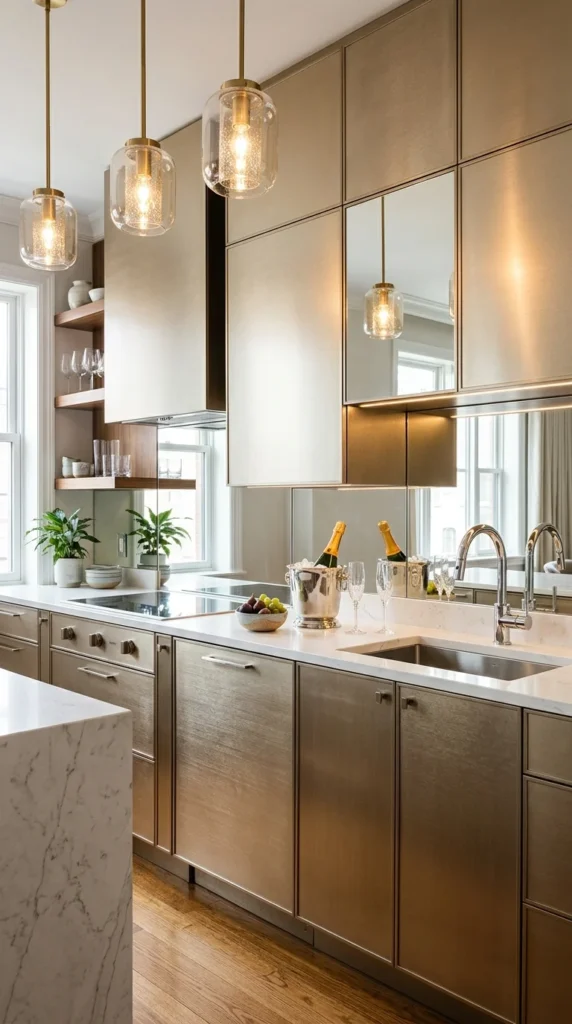
Metallics are a small kitchen’s best friend. A champagne or light gold finish on cabinets or backsplashes acts like a mirror, bouncing light throughout the room. This reflective quality creates the illusion of more space by duplicating the light sources and extending the visual field.
13. Cool Gray
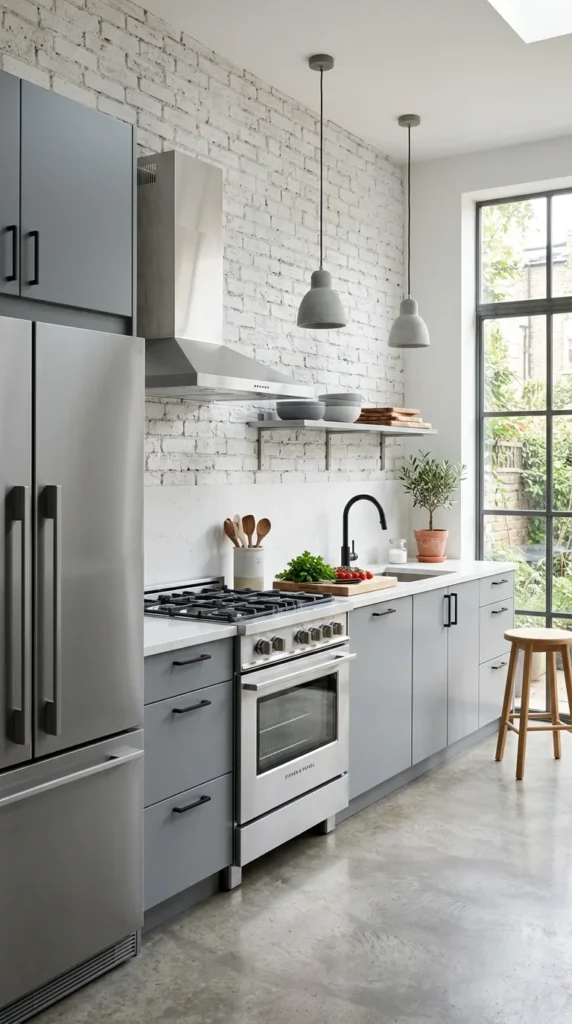
Cool gray is a sophisticated choice that works well with stainless steel appliances. Because cool tones recede, gray walls can make a small kitchen feel more spacious. When paired with bright white trim and plenty of LED lighting, cool gray creates a crisp, professional look that feels uncluttered.
14. Blush Pink
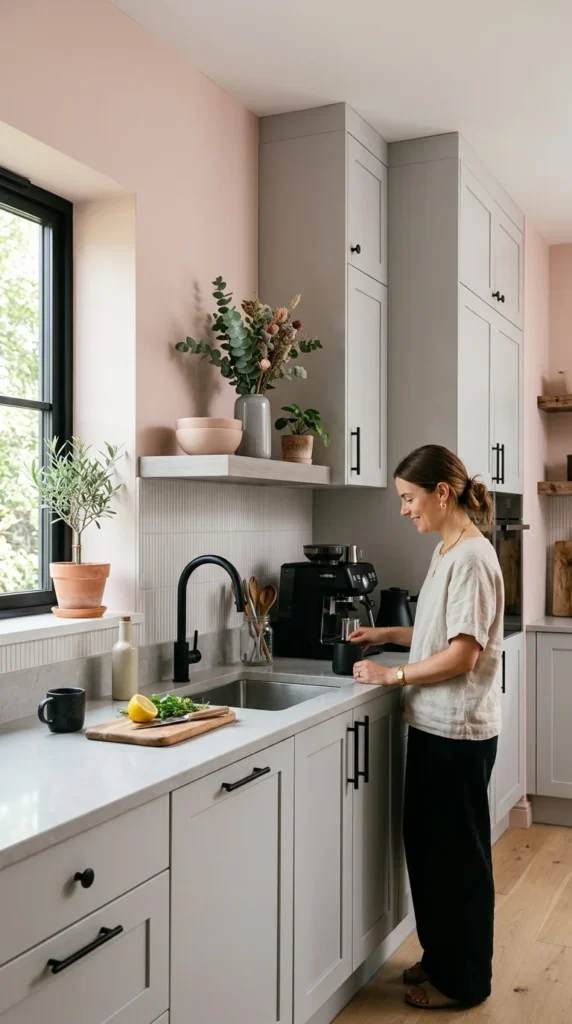
Blush pink is no longer just for nurseries. In a kitchen, a very pale blush acts as a warm neutral. It adds a softness to the space that “harder” colors like white or gray lack. This softness can make the boundaries of the room feel less defined, contributing to a sense of openness.
15. Creamy Ivory
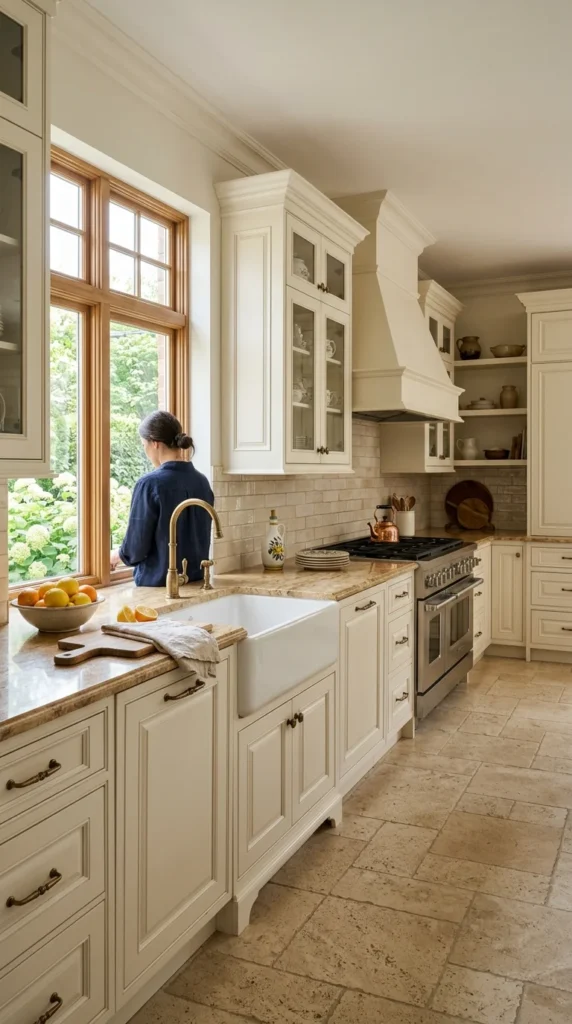
Ivory is the softer, more forgiving cousin of pure white. It provides the same light-reflecting benefits but adds a layer of richness and history. For small kitchens in older homes, ivory preserves the character of the space while ensuring it doesn’t feel cramped or dingy.
16. Teal
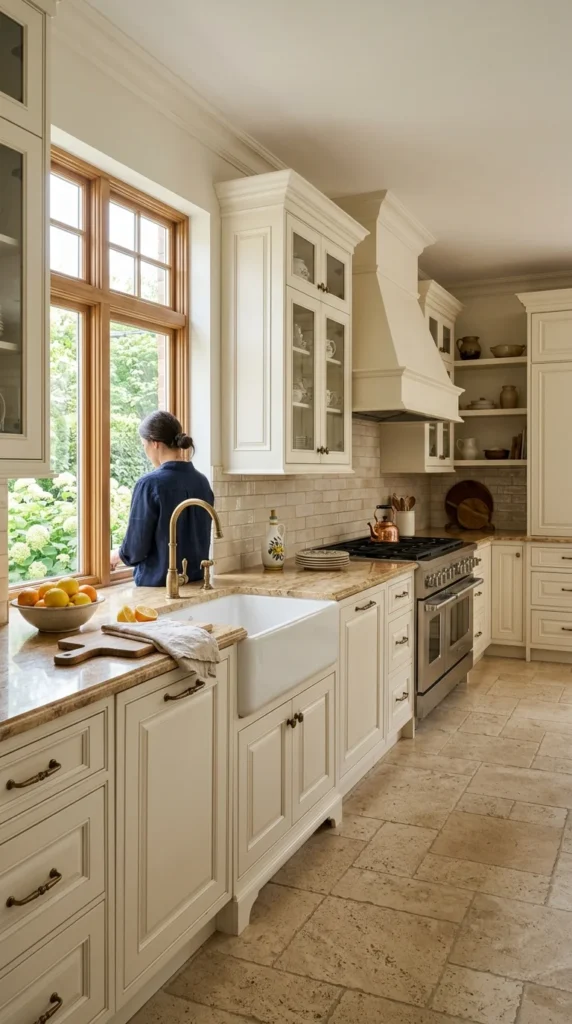
Teal is a bold choice that can work wonders in a small space if balanced correctly. Using a vibrant teal on the cabinets against stark white walls creates a high-contrast look that feels intentional and designer-led. The depth of the teal draws the eye inward, creating a focal point that distracts from the limited square footage.
17. Dove Gray
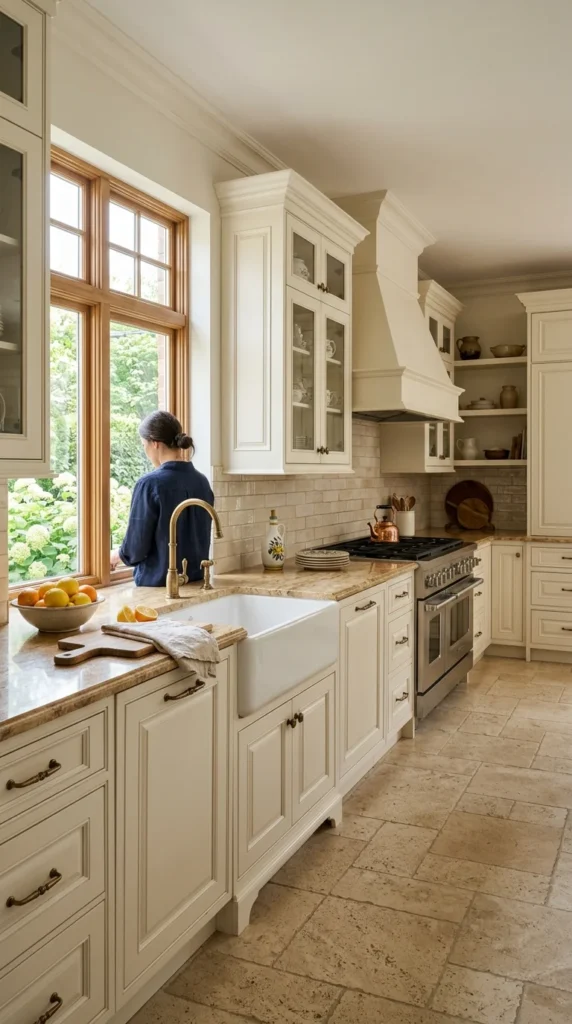
Dove gray is one of the most popular colors for a reason. It is light enough to keep a space feeling open but has enough “body” to feel like a real color. In a small kitchen, dove gray creates a seamless transition between different zones, especially if the kitchen is part of an open-concept living area.
18. Pistachio
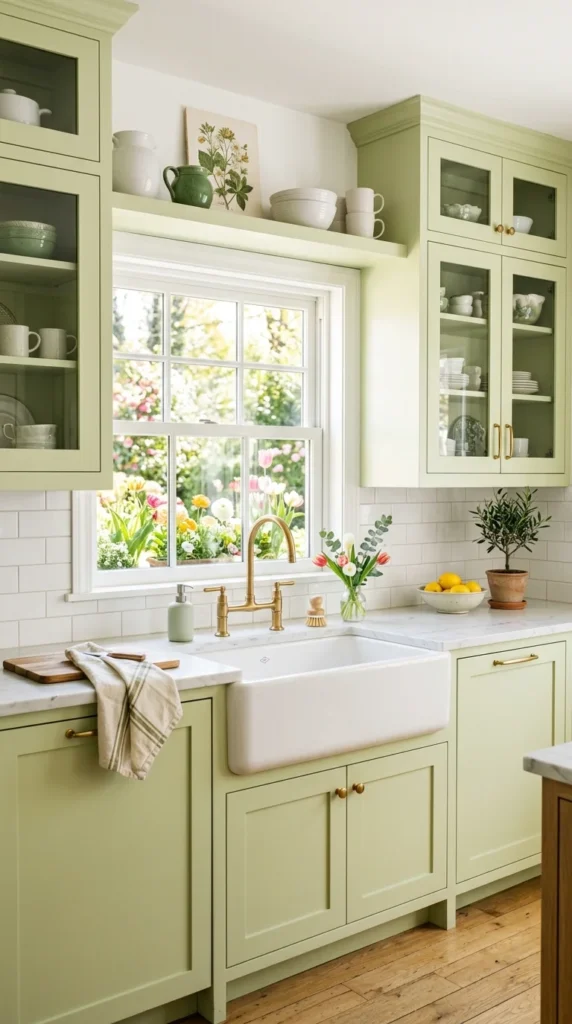
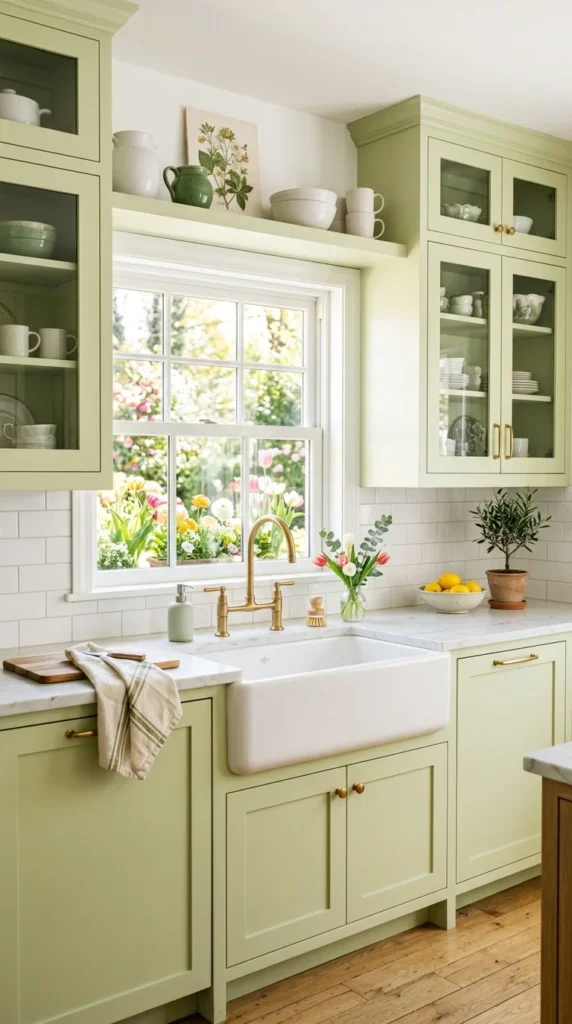
Pistachio is a muted, yellowish-green that feels incredibly fresh. It works particularly well in kitchens with a lot of wood elements. The yellow undertones in the green help to brighten the space, while the green keeps it feeling connected to nature. It’s a playful way to add color without overwhelming a small footprint.
19. Sand
Bringing the colors of the beach into the kitchen can create a relaxed, expansive feeling. Sand-colored walls reflect light in a warm, diffused way. When paired with light textures—like wicker barstools or light oak—sand tones create a breezy, open atmosphere that feels larger than it is.
20. Slate Blue
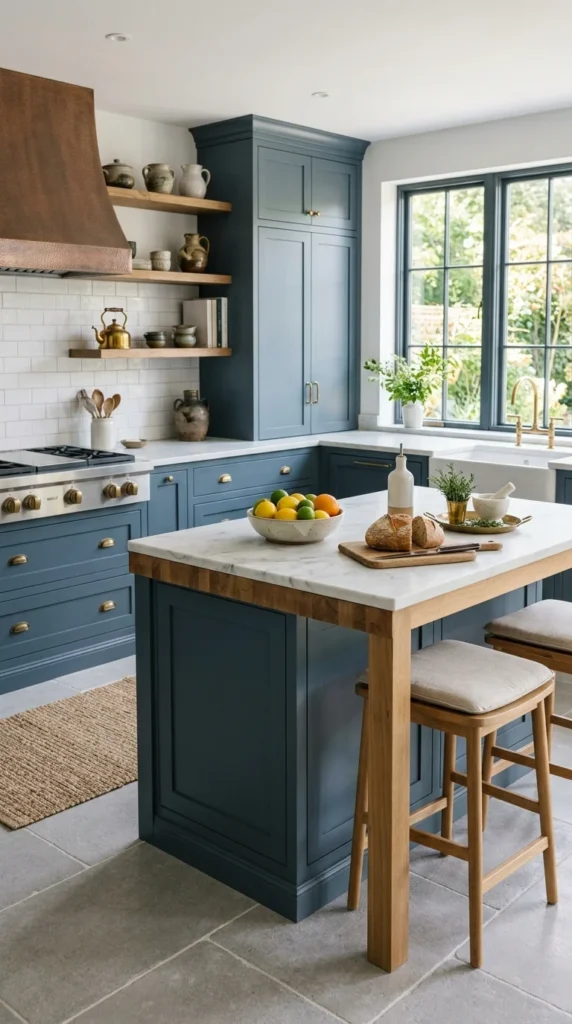
Slate blue is a more grounded version of sky blue. It has gray undertones that make it feel modern and stable. In a small kitchen, slate blue provides a sense of calm. Using it on all the cabinetry while keeping the walls a very light gray or white creates a cohesive look that doesn’t “break up” the space visually.
21. Buttercream
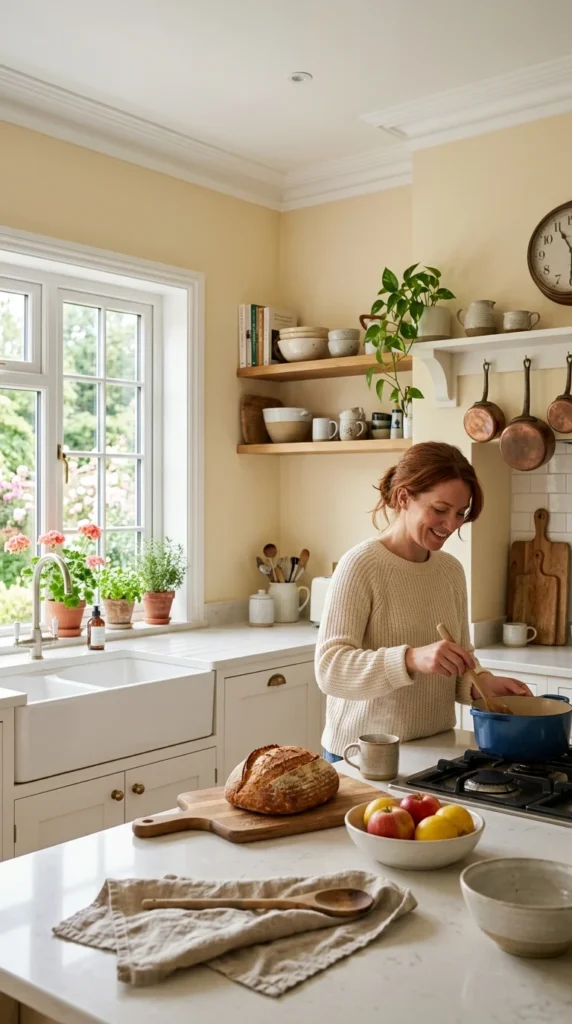
Buttercream is a rich, warm off-white that makes a kitchen feel like it’s bathed in candlelight. It’s much warmer than ivory and adds a “sunny” feel even on cloudy days. In a small kitchen, buttercream walls paired with white cabinets create a subtle contrast that adds depth without shrinking the room.
22. Silver Accents
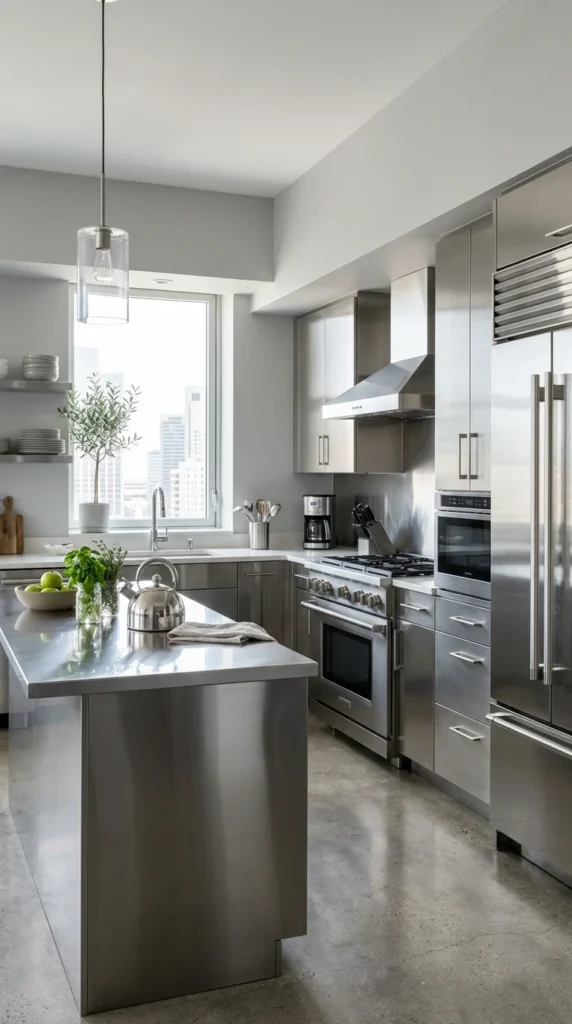
While not a wall color per se, incorporating silver through backsplashes, hardware, and appliances can dramatically increase the perceived size of a kitchen. Silver is essentially a mirror. By scattering silver accents throughout a small, light-colored kitchen, you create multiple points of reflection that make the walls feel further away.
23. Forest Green
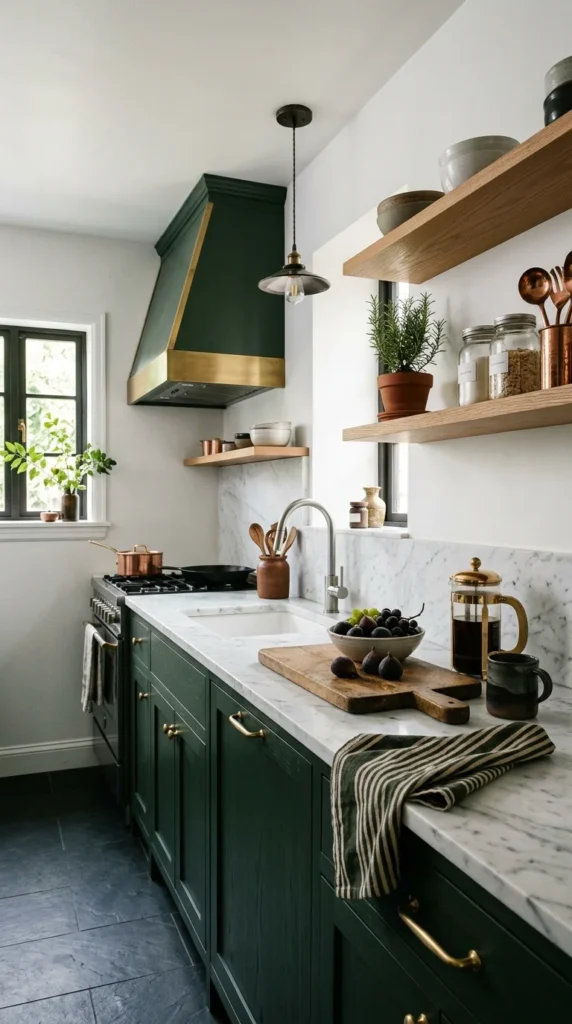
Dark colors like forest green can be used effectively in small kitchens by employing the “tuxedo” look. By keeping the top half of the room (upper cabinets and ceiling) bright white and the bottom half (base cabinets) forest green, you ground the space. The deep green adds a sense of luxury and depth, while the white top half ensures the room remains airy.
24. Monochromatic Layering
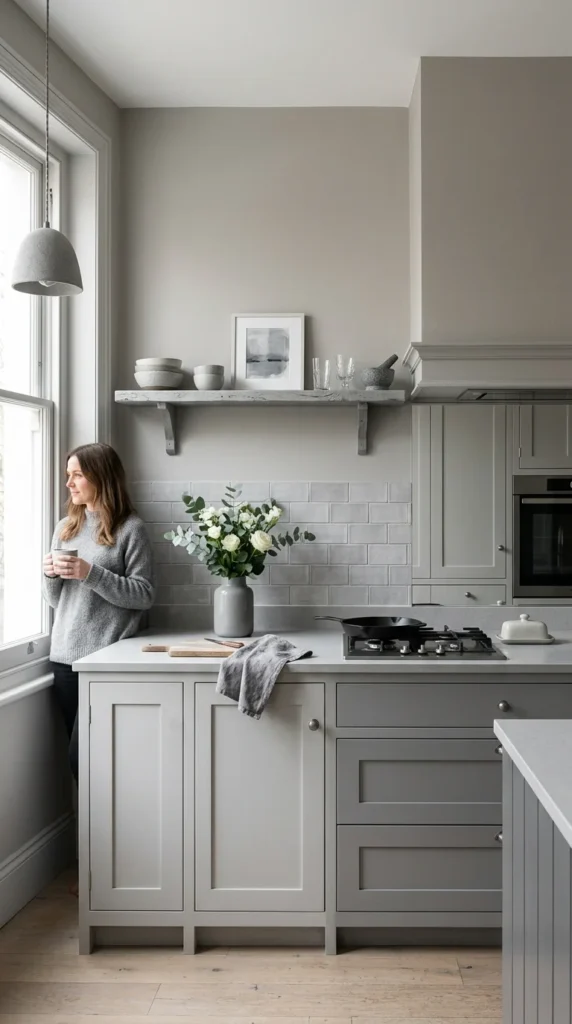
The ultimate trick for making a small room feel bigger is monochromatic layering. By using different shades, tints, and textures of the exact same color, you remove all visual interruptions. In a small kitchen, a monochromatic scheme in a light color like stone or pearl gray allows the eye to glide over surfaces, creating a feeling of infinite space.