
Creating a sanctuary for two in a confined space is a challenge that requires a blend of clever engineering and aesthetic discipline. When floor real estate is at a premium, every square inch must serve a dual purpose. For couples, the stakes are higher; you need to balance shared functionality with individual comfort. This guide explores 24 innovative layout ideas and design strategies to transform a cramped bedroom into a cozy, organized, and romantic retreat.
1. Loft Bed
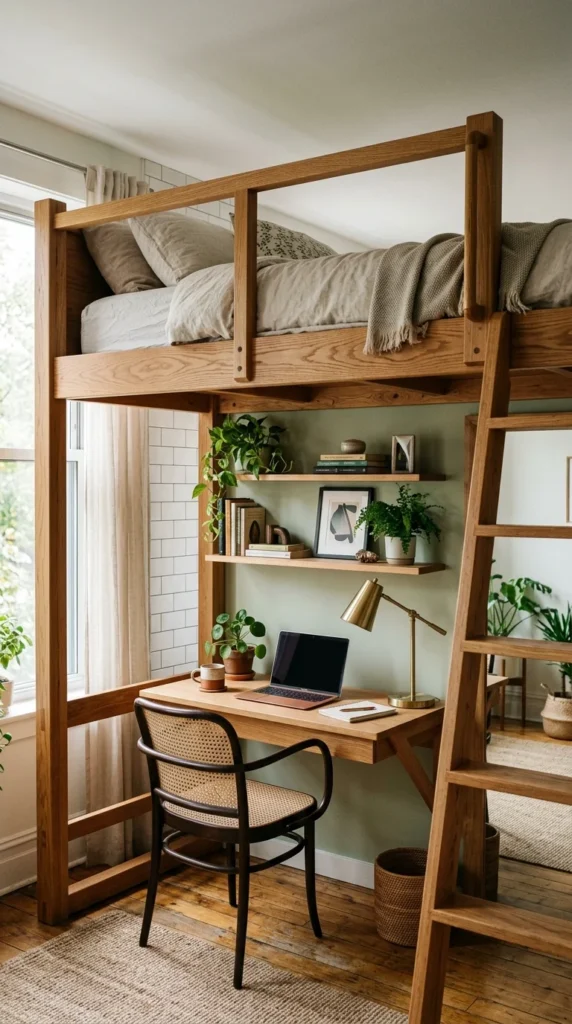
If you have high ceilings, look up. A loft bed is the ultimate space-saving maneuver for couples living in studio apartments or small rooms. By elevating the sleeping area, you reclaim the entire footprint of the bed for other uses. Underneath, you can install a full-sized wardrobe, a double-desk workspace, or even a small “living room” area with a loveseat and a television. It effectively turns a single room into a two-story living experience.
2. Murphy Bed
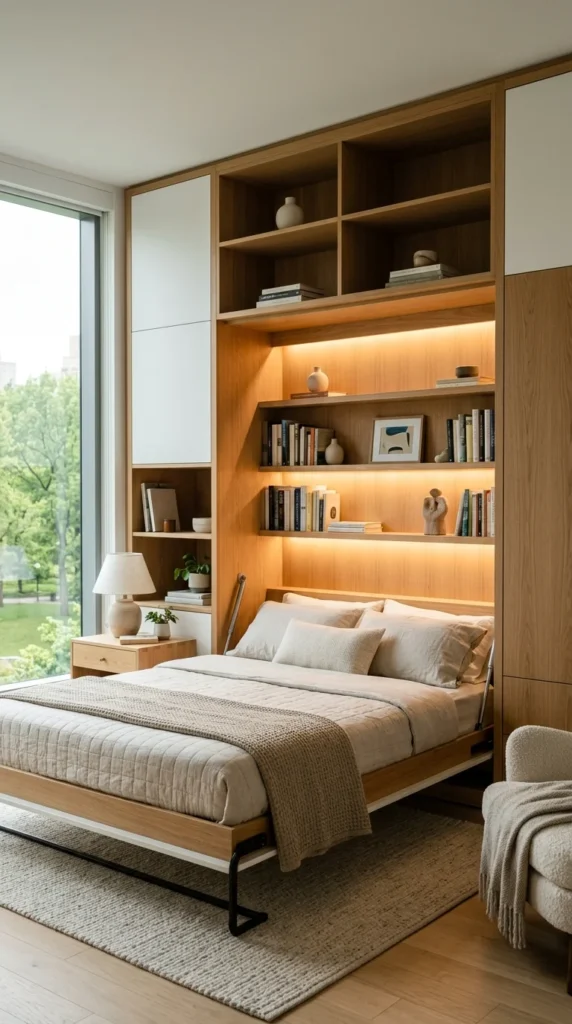
The Murphy bed remains a classic for a reason. For couples who use their bedroom for more than just sleeping—perhaps as a home office or a yoga space during the day—a fold-away bed is a game-changer. Modern designs are effortless to operate and often come integrated with shelving or a sofa that remains functional even when the bed is tucked away. It allows the room to breathe during the daylight hours.
3. Floating Nightstands
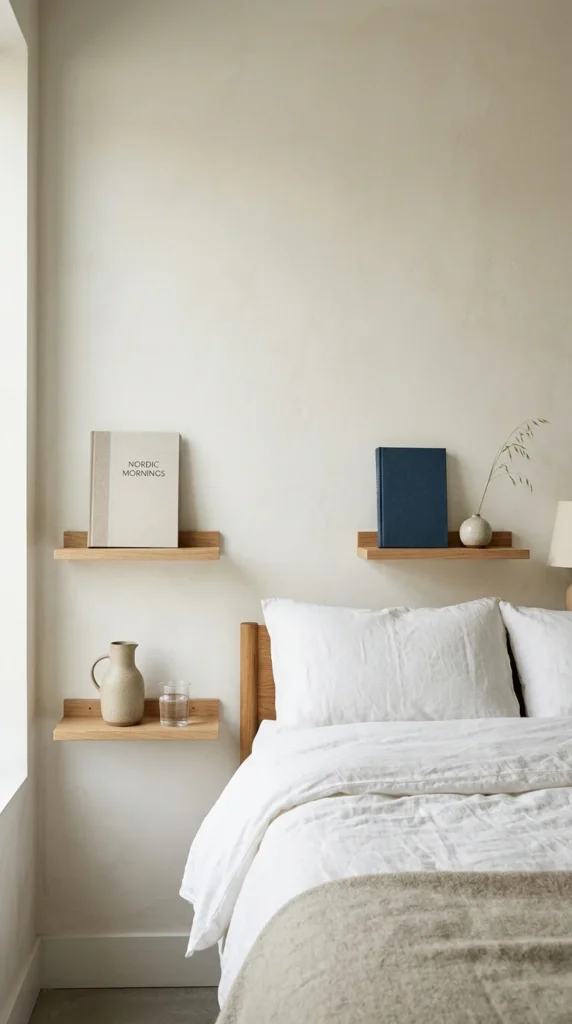
Floor space is precious in a small bedroom. Traditional bedside tables with legs can make a room feel cluttered and closed-in. By opting for floating nightstands, you keep the floor clear, which creates the illusion of more space. This also makes cleaning much easier and provides just enough surface area for the essentials: a phone, a glass of water, and a reading lamp.
4. Symmetrical Layout
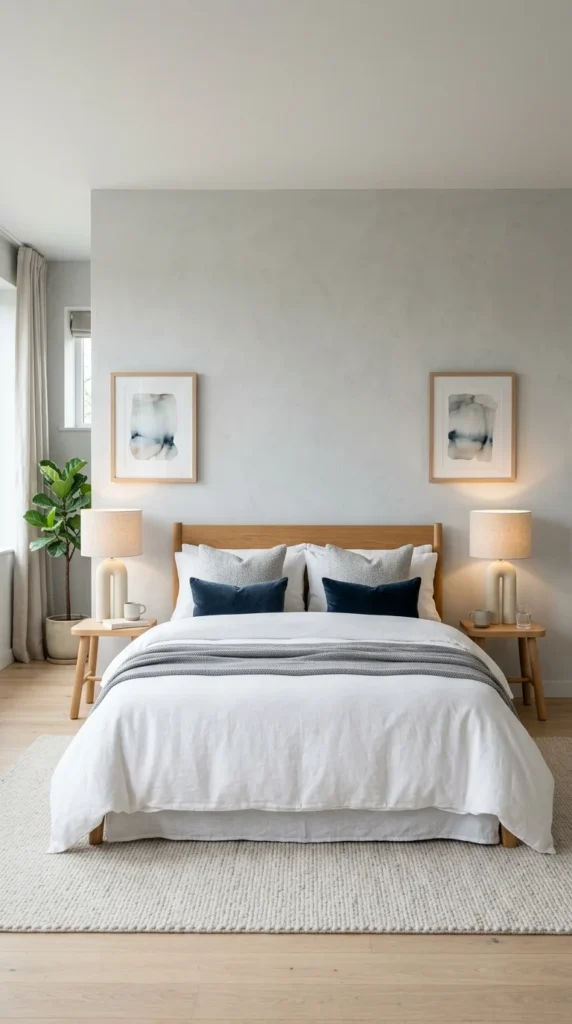
For a couple, symmetry is key to harmony. Even in a small room, trying to center the bed on a main wall provides equal access for both partners. This prevents one person from having to climb over the other to get out of bed. Symmetrical decor, such as matching sconces or pillows, also creates a sense of order that calms the visual “noise” of a small space.
5. Storage Headboard
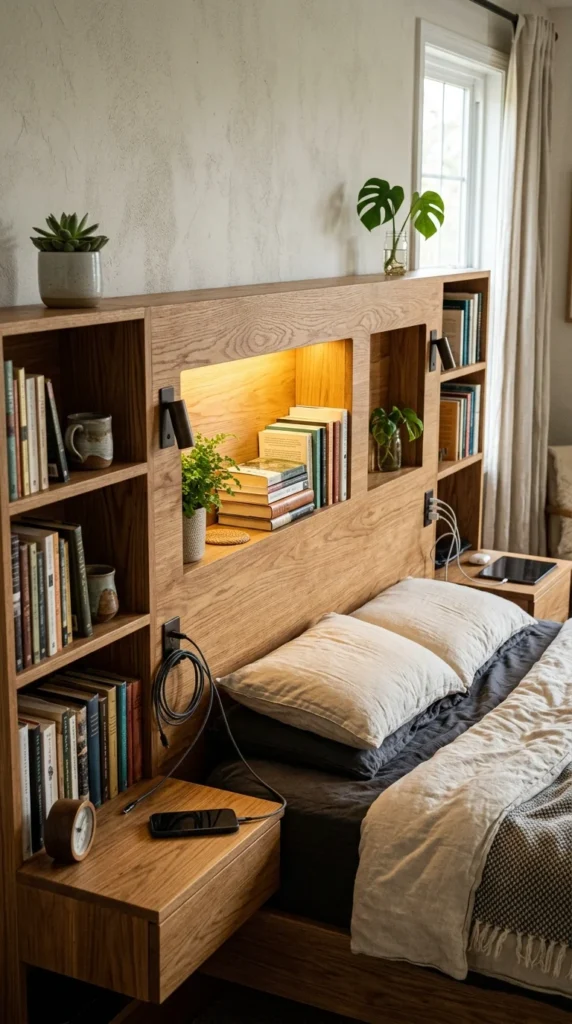
When there is no room for a dresser or nightstands, let the headboard do the heavy lifting. A thick, functional headboard can house recessed shelving for books, built-in charging stations for electronics, and even hidden compartments for valuables. This eliminates the need for extra furniture pieces that would otherwise obstruct the walking path around the bed.
6. Under-bed Drawers
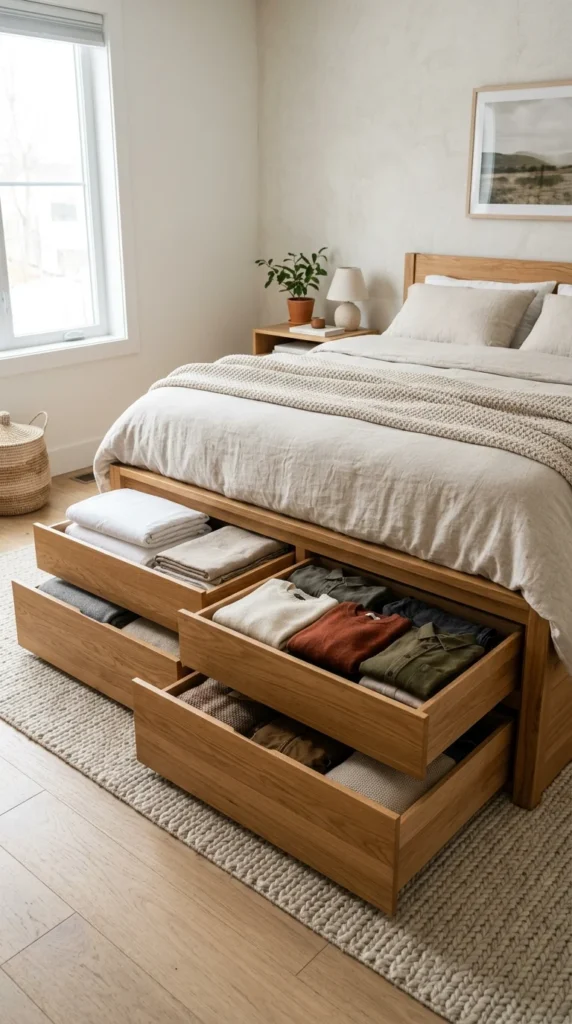
The “dead space” under the bed is a gold mine for storage. For couples with extensive wardrobes, choosing a bed frame with integrated drawers is essential. Unlike plastic bins that collect dust, built-in drawers are seamless and provide easy access to extra sheets, heavy winter coats, or shoes. It’s like having a horizontal dresser hidden right under your mattress.
7. Corner Bed
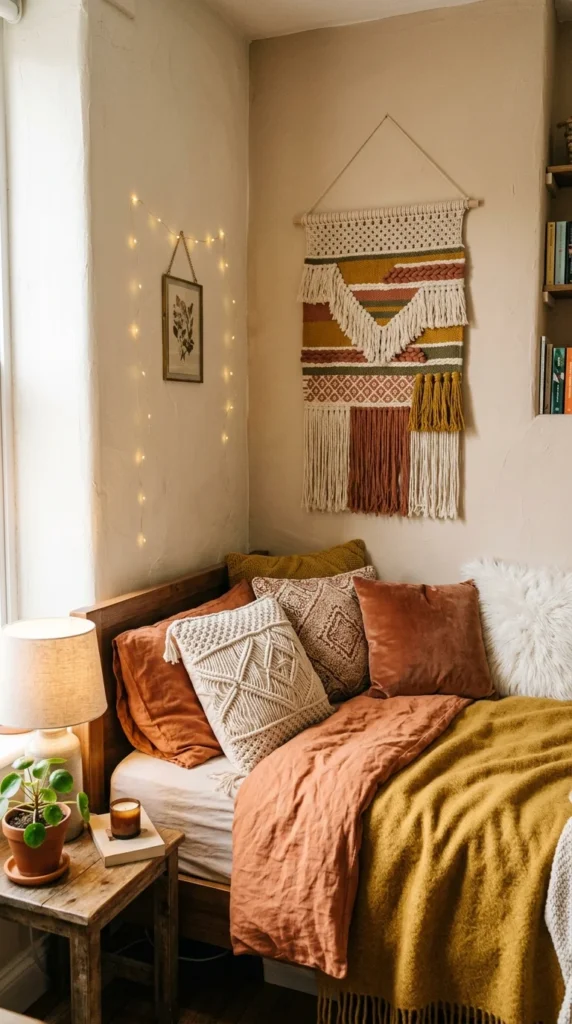
While symmetry is ideal, sometimes the dimensions of a room simply won’t allow for it. In very narrow rooms, pushing the bed into a corner can open up a significant amount of floor space. To make this work for a couple, use the wall-side as a “nesting” area with soft wall pads or a row of pillows, and ensure the person on the inside has a wall-mounted light and a small shelf for their belongings.
8. Vertical Shelving
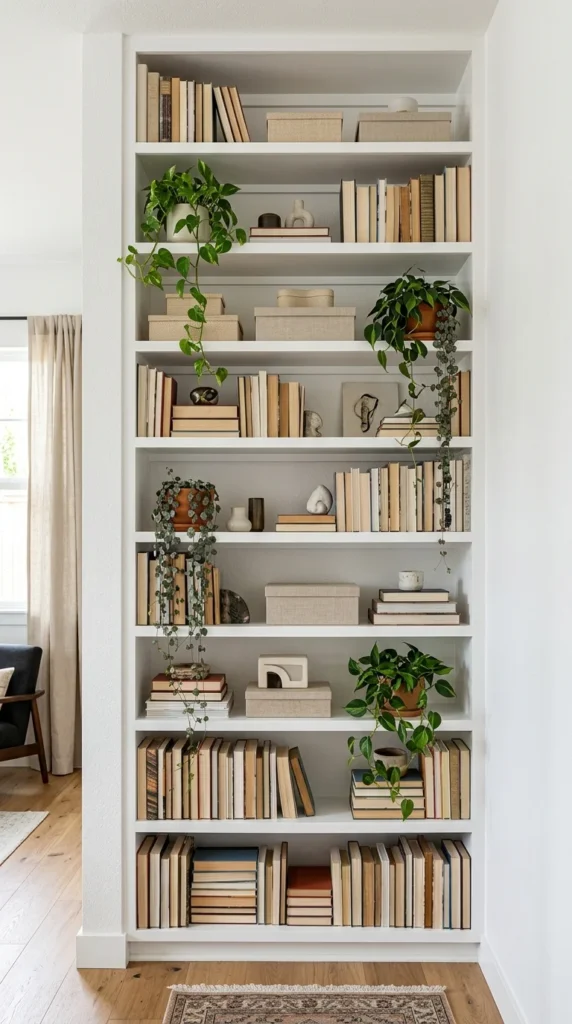
When you can’t expand horizontally, expand vertically. Installing shelves that reach all the way to the ceiling utilizes space that is otherwise wasted. Use the higher shelves for items you rarely need, like seasonal decor or old archives, and keep daily essentials at eye level. This draws the eye upward, making the room feel taller and more expansive.
9. Sliding Doors
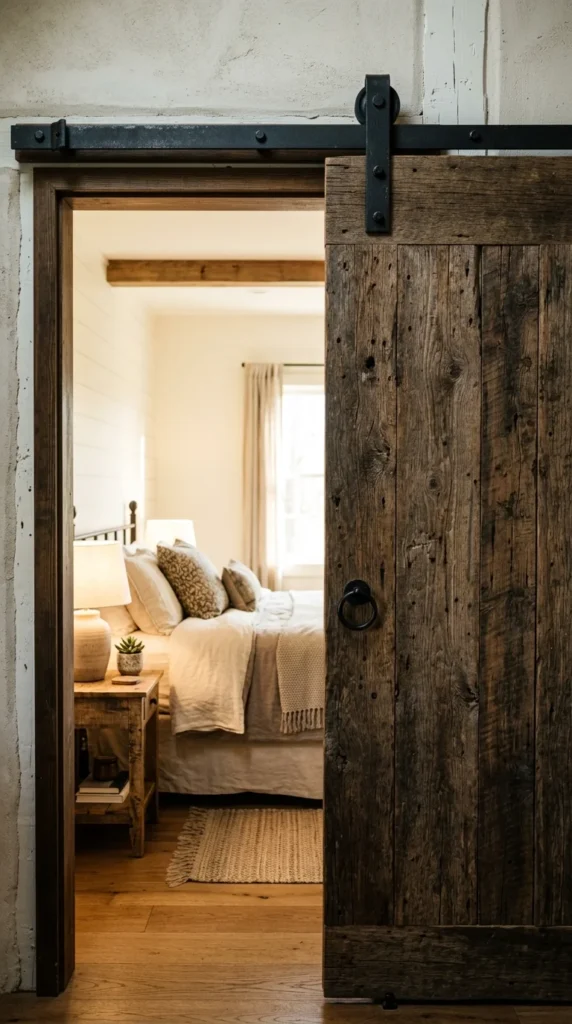
Traditional swinging doors require a “clearance zone” that can’t be used for furniture. In a tight bedroom, this can be a dealbreaker. Replacing a standard door with a sliding barn door or a pocket door saves several square feet of space. This allows you to place the bed or a wardrobe closer to the doorway without obstructing the entrance.
10. Mirrored Closets
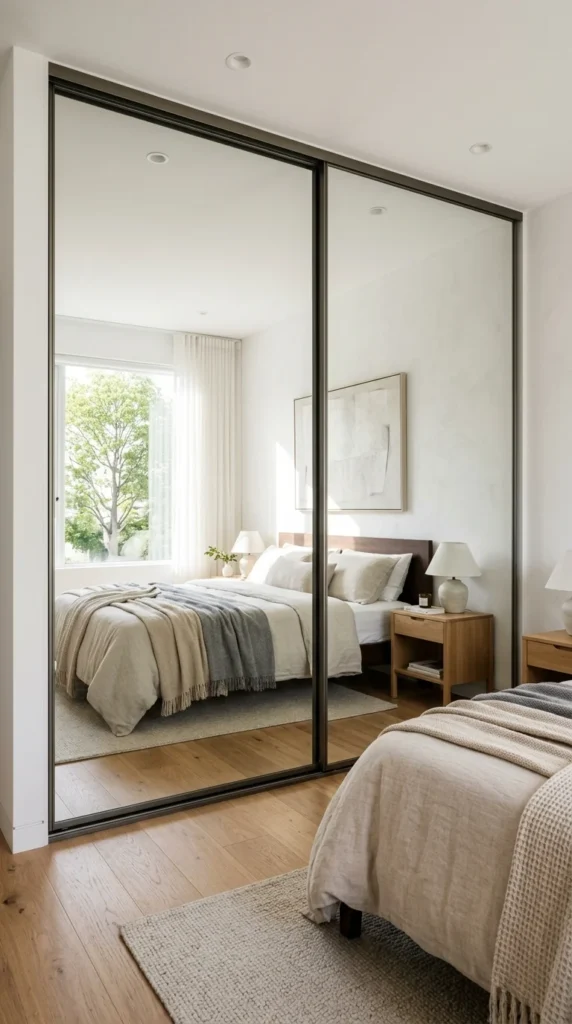
Mirrors are the oldest trick in the interior design book for a reason. By installing floor-to-ceiling mirrors on closet doors, you bounce light around the room and create the optical illusion of depth. For a couple, this also provides a full-length view for getting ready in the morning without needing a separate, bulky floor mirror.
11. Window Placement
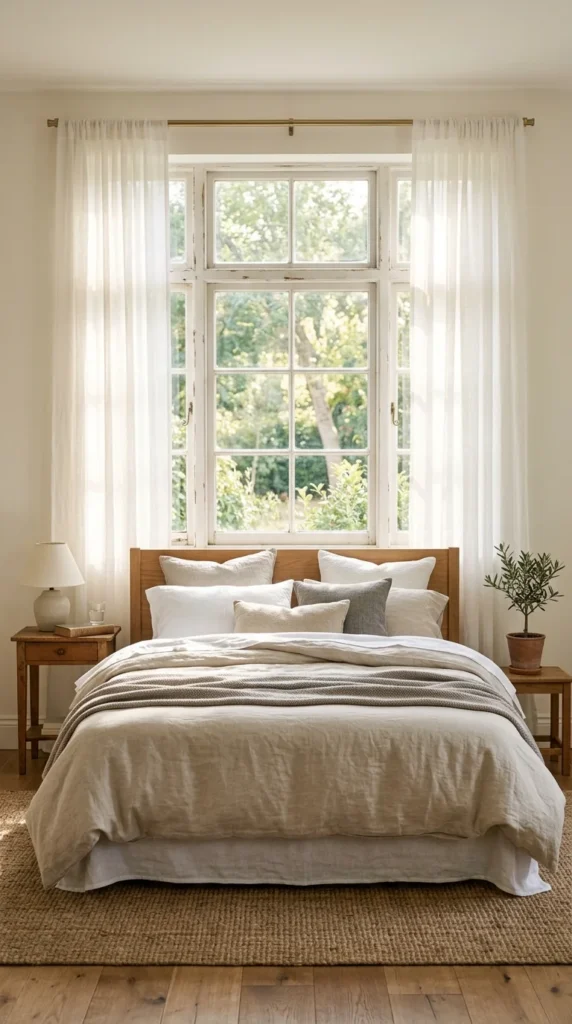
Many people avoid placing a bed in front of a window, but in a small room, it might be the best layout. Centering the bed under a window can create a beautiful focal point and allow the couple to wake up with natural light. Use low-profile headboards or no headboard at all to avoid blocking the view and the airflow.
12. Minimalist Decor
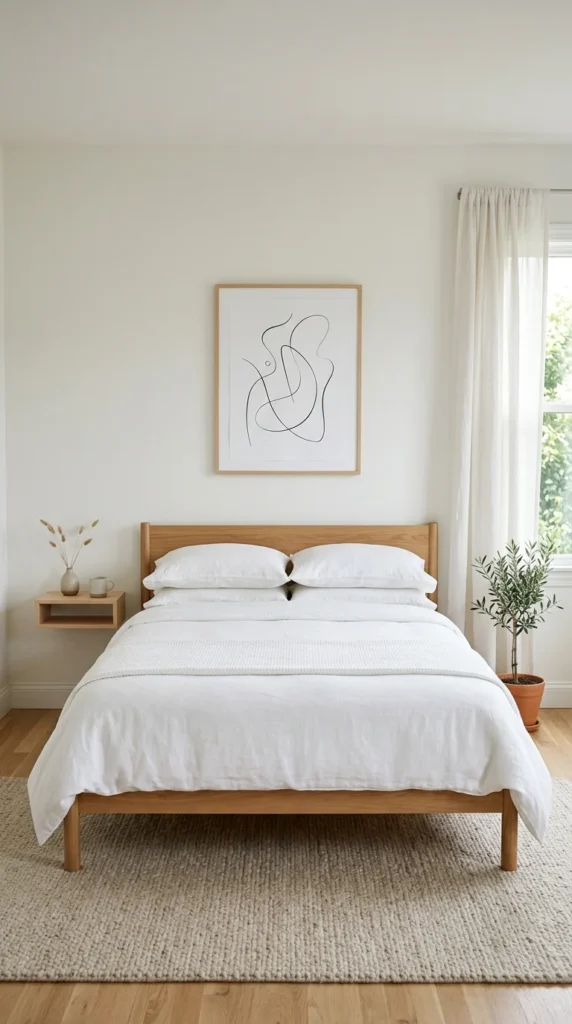
Visual clutter makes a small room feel even smaller. For couples, it’s easy for “stuff” to accumulate quickly. Adopting a minimalist aesthetic—sticking to a limited color palette and choosing a few high-quality decor pieces rather than many small knick-knacks—can make a cramped room feel like a serene spa.
13. Wall Sconces
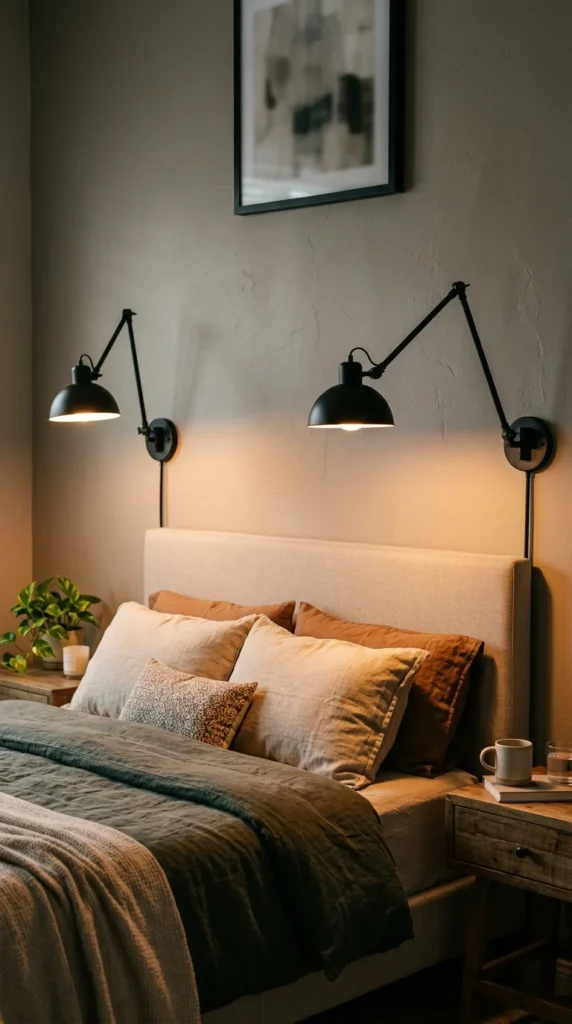
Table lamps take up valuable surface space on nightstands. By mounting adjustable sconces on the wall, you free up that space and provide better-directed light for reading. For a couple, individual sconces allow one person to read while the other sleeps, providing personal control in a shared space.
14. Multi-functional Desk
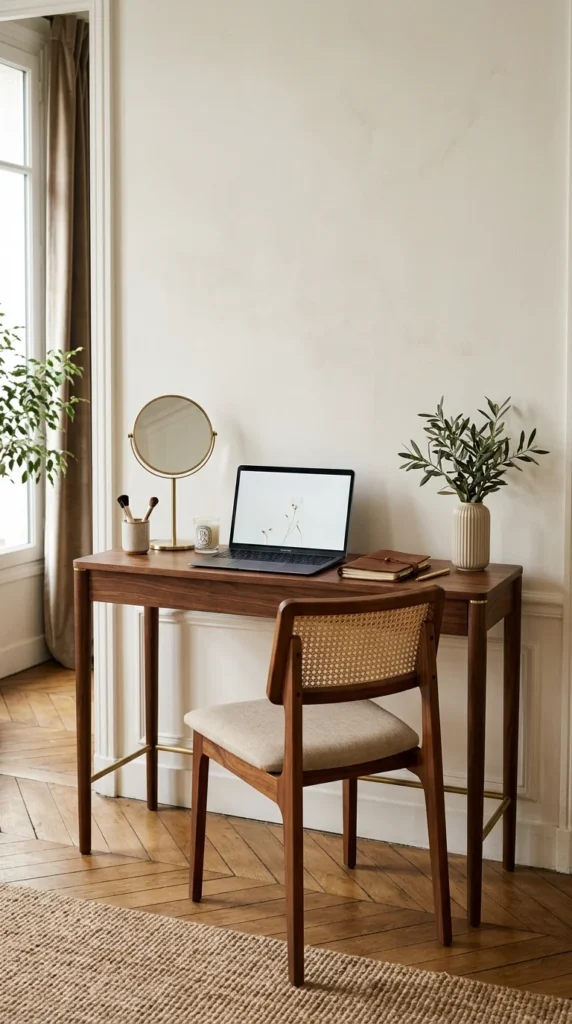
If you need a workspace but don’t have the room, look for a piece of furniture that can do double duty. A slim console table can serve as a desk during the day and a vanity for getting ready in the morning. Choosing a chair that can be tucked completely under the table helps keep the walkway clear when the desk isn’t in use.
15. Rug Zoning
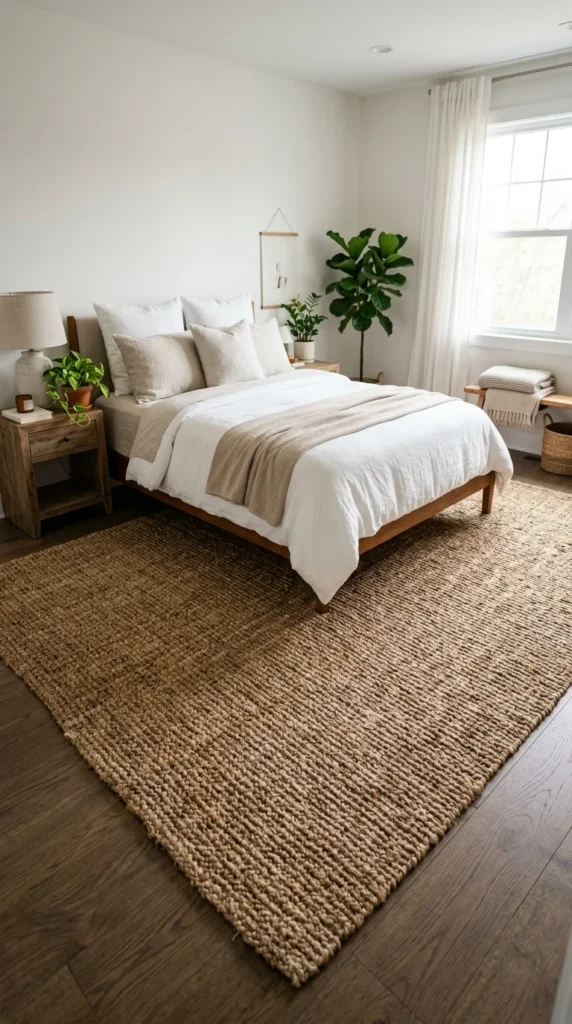
In a small or studio-style bedroom, a rug can act as a visual boundary. A large rug that extends beyond the foot of the bed helps “anchor” the furniture and defines the sleeping zone as separate from the rest of the room. This adds a layer of comfort for bare feet and introduces texture without taking up physical space.
16. Light Color Palette
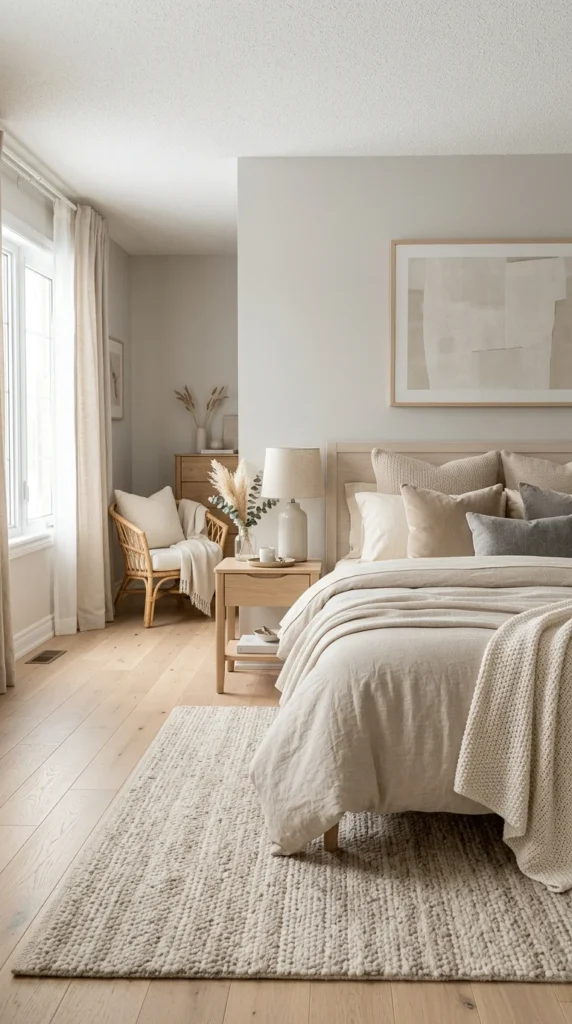
Dark colors absorb light, making walls feel like they are closing in. To keep a small bedroom feeling airy and open, stick to a light color palette. Whites, creams, and soft pastels reflect light and create a sense of continuity. You can always add “pops” of color through pillows or a throw blanket to keep the room from feeling too clinical.
17. Built-in Wardrobes
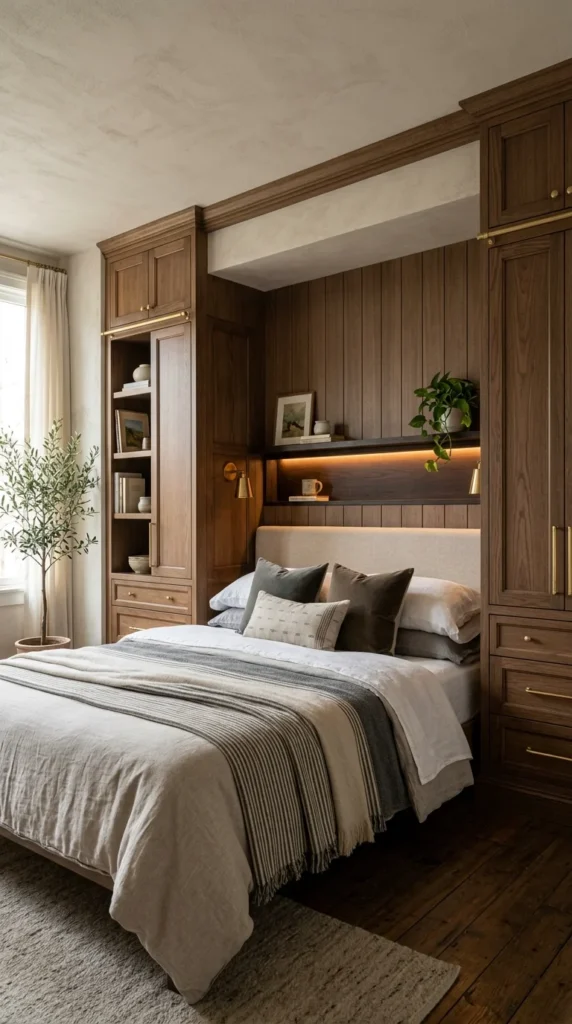
Instead of a standalone dresser, consider built-in wardrobes that span an entire wall. Custom cabinetry can be designed to go around the bed or window, maximizing every inch of available wall space. This creates a streamlined, “tucked-in” look that provides massive storage capacity without the visual bulk of heavy furniture.
18. Daybed Setup
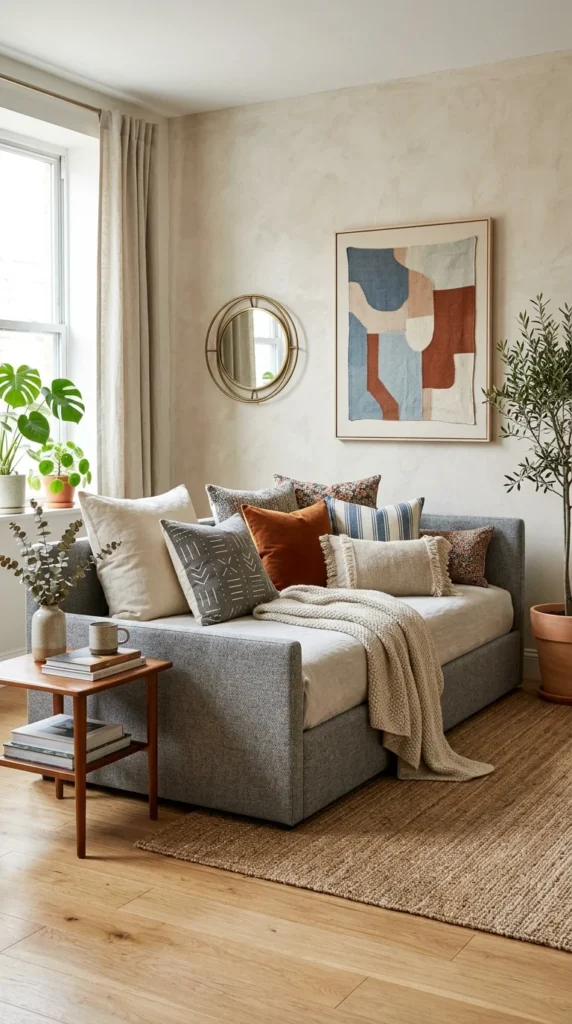
For couples in very small studios, a daybed can serve as a sofa during the day and a comfortable bed at night. This is a great layout for those who host guests or want their bedroom to feel more like a lounge area during waking hours. Choose a high-quality mattress to ensure it’s comfortable for two people to sleep on nightly.
19. Layered Lighting
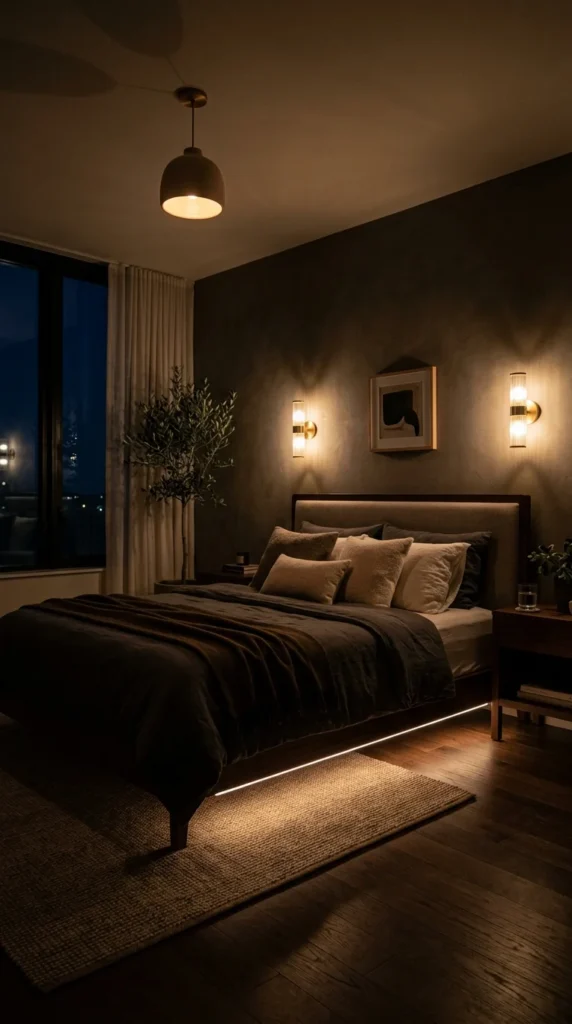
Small rooms often suffer from harsh shadows that make corners feel cramped. By layering your lighting—using a mix of overhead lights, wall sconces, and perhaps LED strips under the bed or behind a headboard—you can wash the walls in soft light. This eliminates dark corners and makes the entire volume of the room feel utilized.
20. Bench Footboard
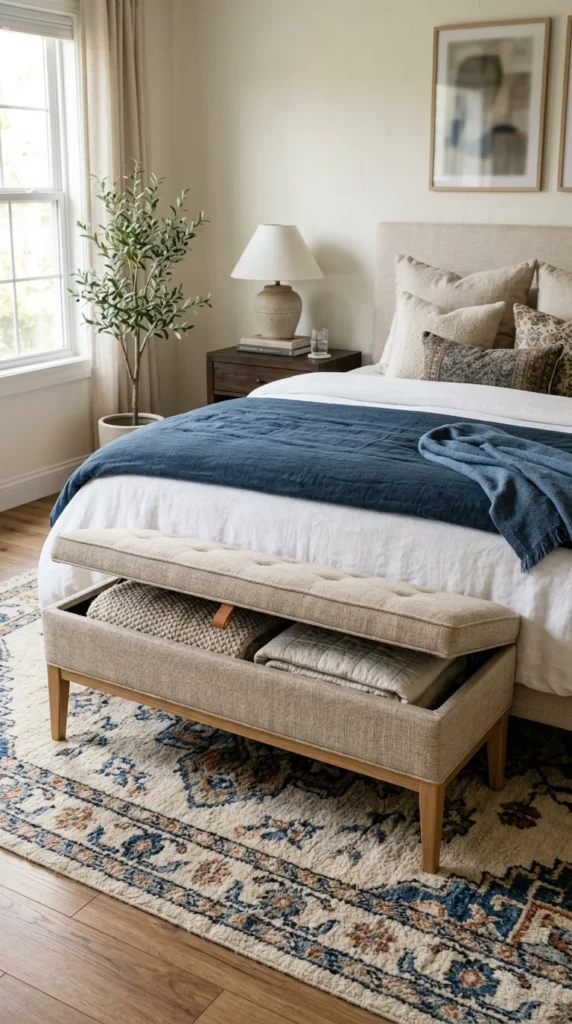
The foot of the bed is often neglected. Adding a slim bench provides a place to sit while putting on shoes and offers extra storage for blankets or pillows. In a narrow room, ensure the bench is low-profile so it doesn’t obstruct the view of the floor, which helps maintain the feeling of spaciousness.
21. Hook Racks
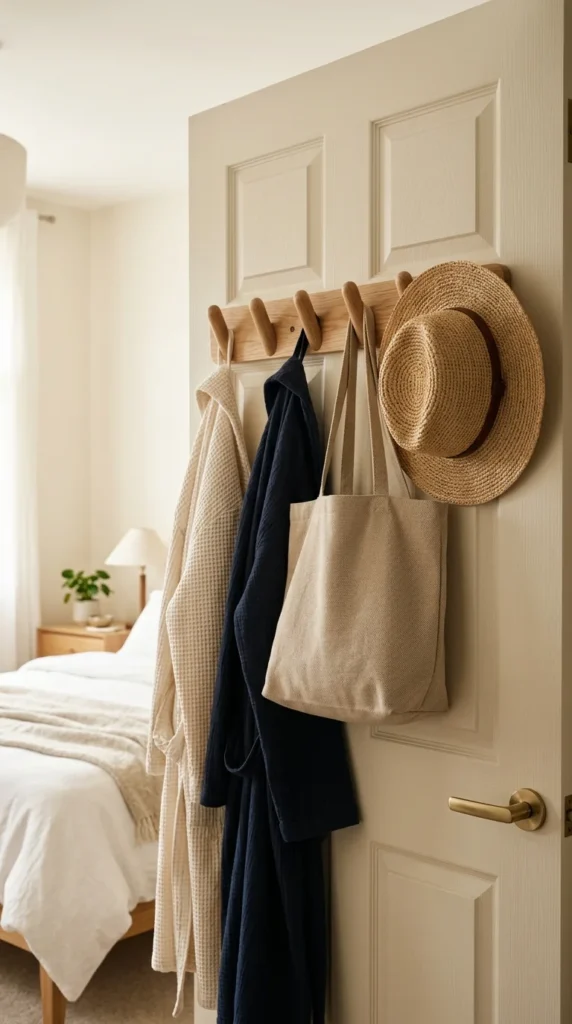
When closet space is full, look to the walls and doors. A simple row of hooks can hold items that would otherwise end up on a chair (the infamous “clothes chair”). For couples, giving each person their own set of hooks helps manage daily items like robes, bags, and coats, keeping them off the floor and organized.
22. Transparent Furniture
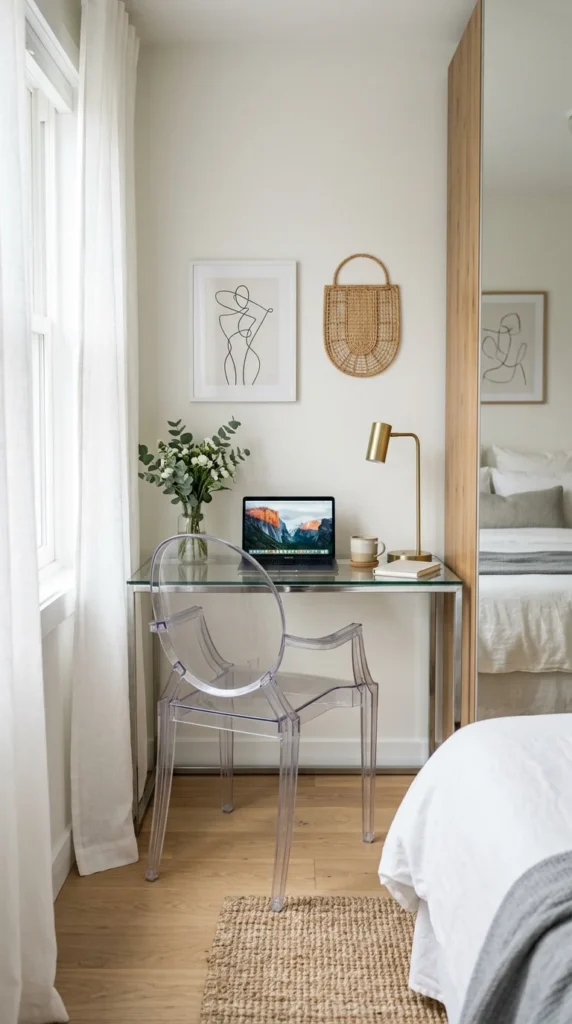
Acrylic or glass furniture is a secret weapon for small spaces. Because you can see right through a “ghost” chair or a glass desk, it doesn’t “block” the room visually. It provides the function you need without the visual weight, making the layout feel much more open and less crowded.
23. Fold-down Table
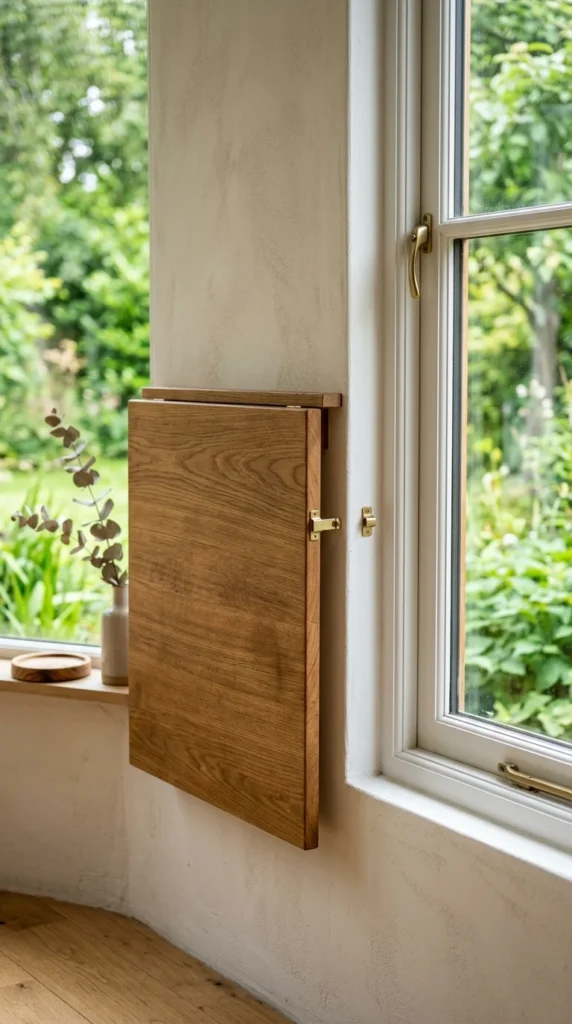
If you occasionally need a surface for a laptop or a morning coffee but don’t want a permanent desk, a fold-down wall table is the perfect solution. It stays out of the way 90% of the time and can be flipped up in seconds. This is particularly useful in “walk-through” areas of the bedroom where a permanent table would block the path.
24. Ceiling Hooks
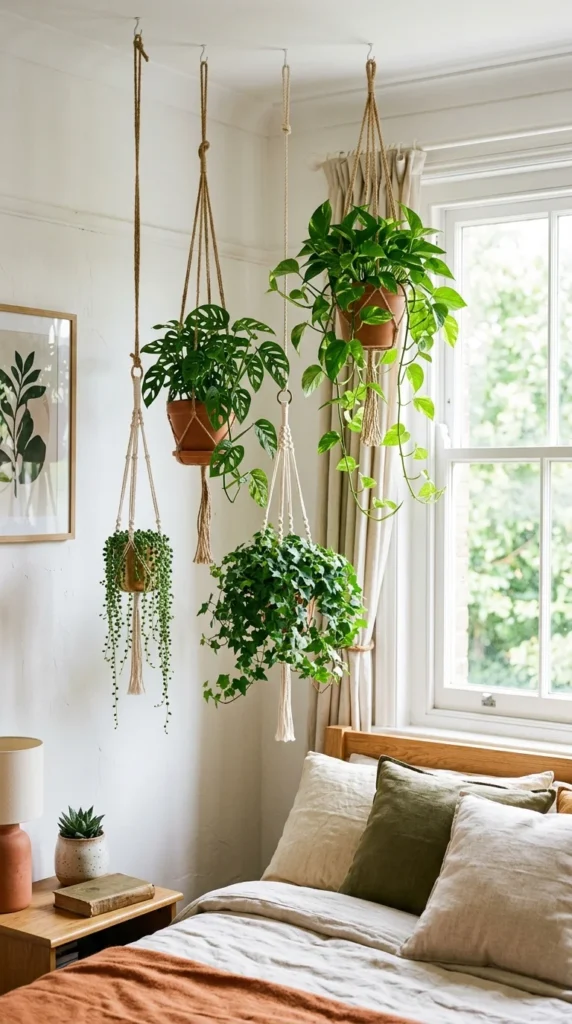
Keep your surfaces clear by hanging decor from the ceiling. Plants, lanterns, or even hanging bedside “tables” (suspended by rope) can add character and life to a room without taking up a single inch of floor or shelf space. This draws the eye upward and adds a vertical dimension to your design, making the small bedroom feel dynamic and thoughtfully curated.