
Living in a small apartment often feels like a giant puzzle where the pieces just won’t fit. You want a home office, a comfortable living room, and a sanctuary for sleep, but you only have 300 square feet to work with. This is where the magic of vertical thinking comes in. By lifting your bed off the ground, you effectively double your usable square footage, creating a “room above a room.” Whether you are dealing with a tiny studio or a high-ceilinged historical flat, these 24 loft bed ideas will help you reclaim your floor space and live large in a small footprint.
1. Industrial Pipes
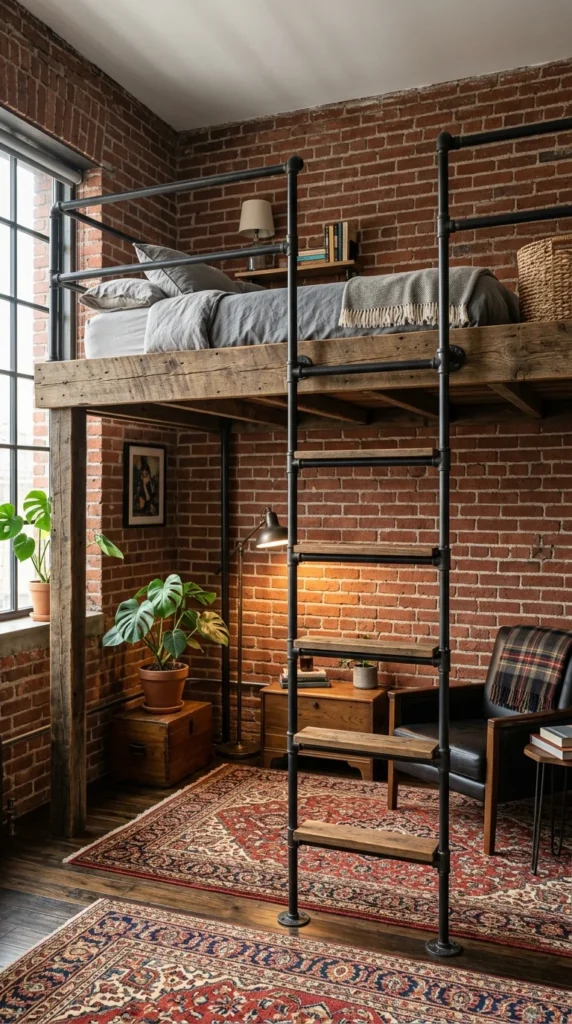
The industrial aesthetic is perfect for loft beds because the materials are inherently strong and visually “thin.” Using black iron piping creates a structural, edgy look that doesn’t feel bulky. This setup works exceptionally well in urban “hard lofts” or converted warehouses. The open frame allows light to pass through, ensuring that the area underneath—whether it’s a desk or a seating area—doesn’t feel like a dark cave.
2. Workspace Combo
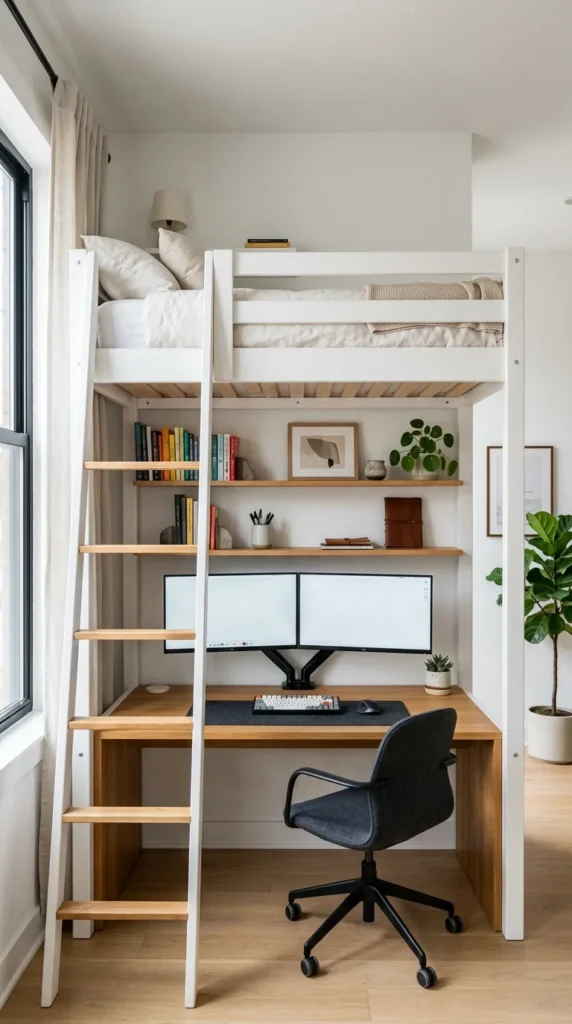
For the remote worker, the workspace loft is the ultimate productivity hack. By placing a full-sized desk directly beneath the sleeping platform, you create a dedicated “office zone” that is physically separated from your relaxation area. This helps mentally distinguish between “work time” and “rest time,” even in a one-room apartment.
3. Sofa Lounge
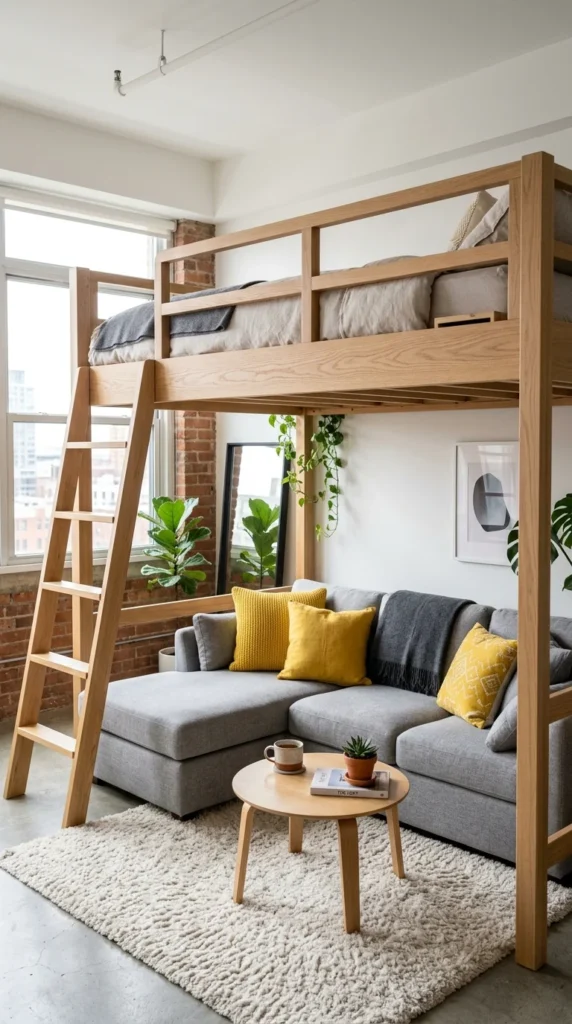
If you love hosting but don’t have room for a guest couch, the sofa lounge loft is your answer. This configuration turns the “under-bed” area into a cozy den. It’s the perfect spot for movie marathons or reading. Choosing a sofa that fits snugly between the loft’s legs makes the space look custom-built and high-end.
4. Closet Storage
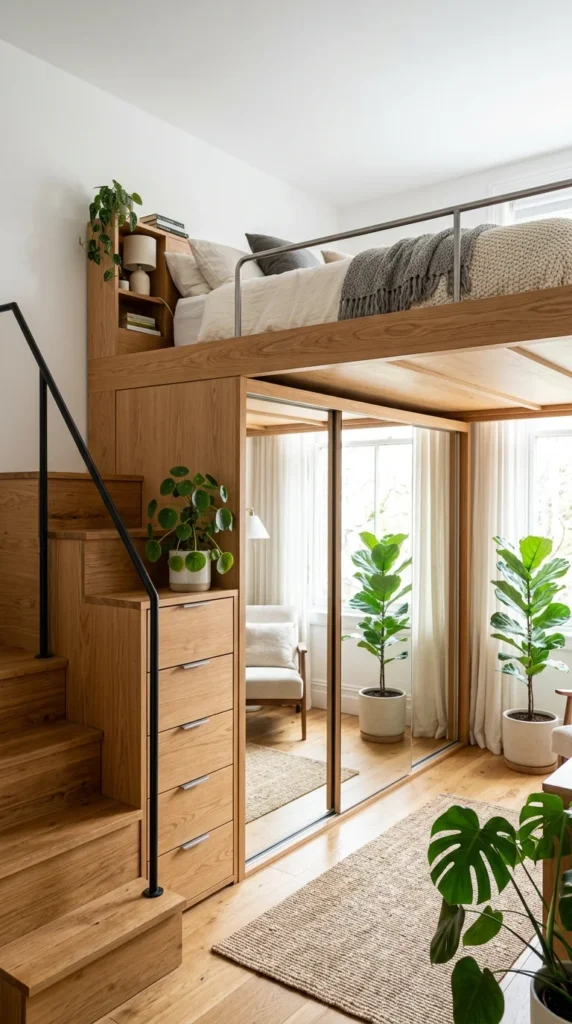
One of the biggest struggles in small apartments is the lack of closet space. A “storage loft” treats the area under the mattress as a walk-in wardrobe. You can install hanging rods, shelving units, and even a full-length mirror. This eliminates the need for bulky dressers elsewhere in the room, freeing up precious floor real estate.
5. Minimalist Platform
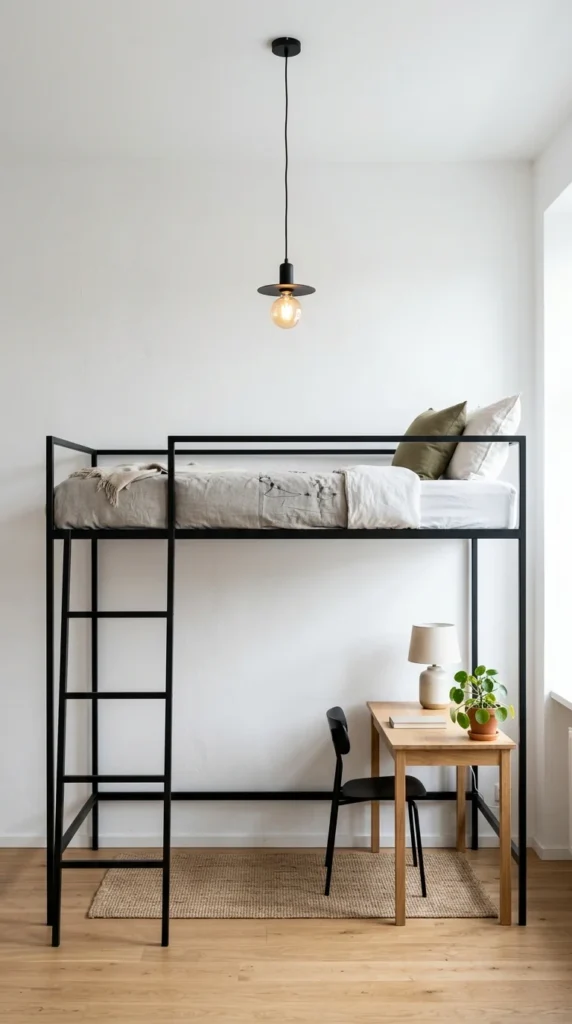
Sometimes, less is more. A minimalist platform loft focuses on clean lines and a low-profile frame. This is ideal for apartments with standard-height ceilings where a bulky wooden frame might feel suffocating. By choosing a frame that matches the wall color, the bed almost “disappears” into the architecture.
6. Reading Nook
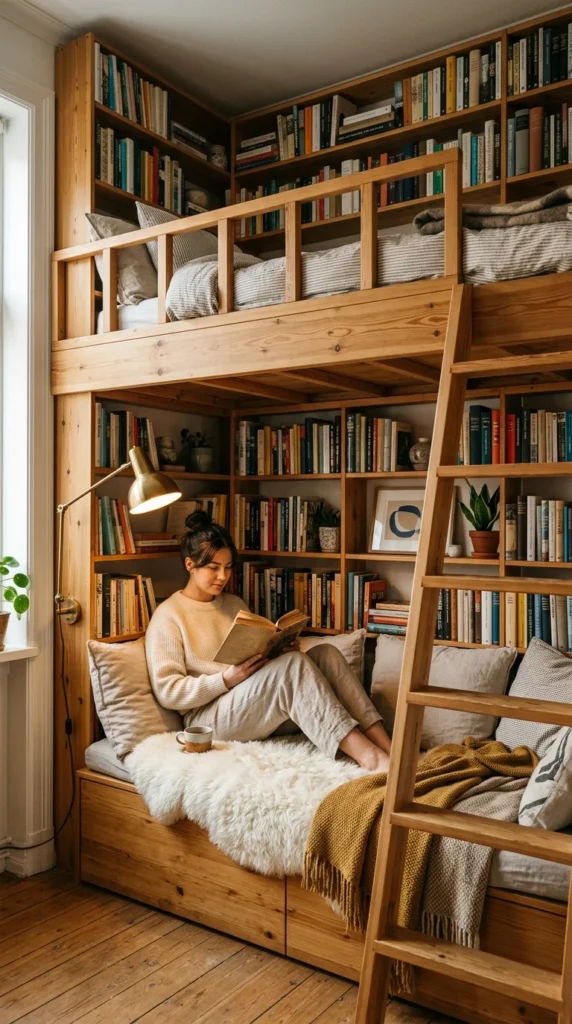
Transform the space beneath your bed into a literary escape. By lining the walls under the loft with bookshelves and adding a comfortable cushioned bench or a beanbag, you create a private retreat. This is a great way to utilize a corner of a studio that might otherwise become a “junk zone.”
7. Kitchen Loft
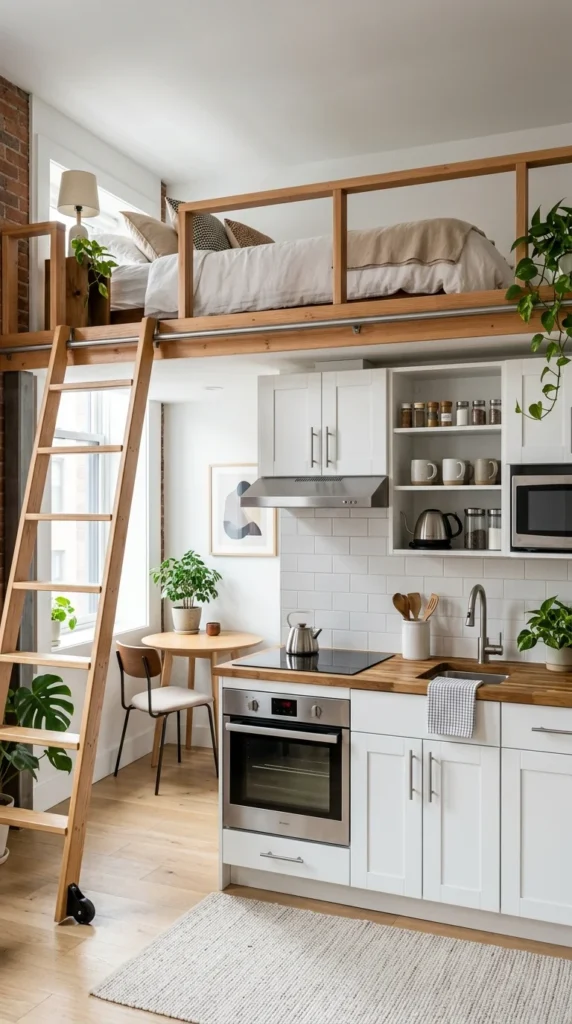
In ultra-compact “micro-apartments,” every inch counts. Placing the bed above the kitchen is a bold but highly effective move. It utilizes the height of the room that usually goes to waste above the cabinets. Ensure there is proper ventilation and a solid moisture barrier between the kitchen and the mattress platform for the best experience.
8. Floor-to-Ceiling Shelving
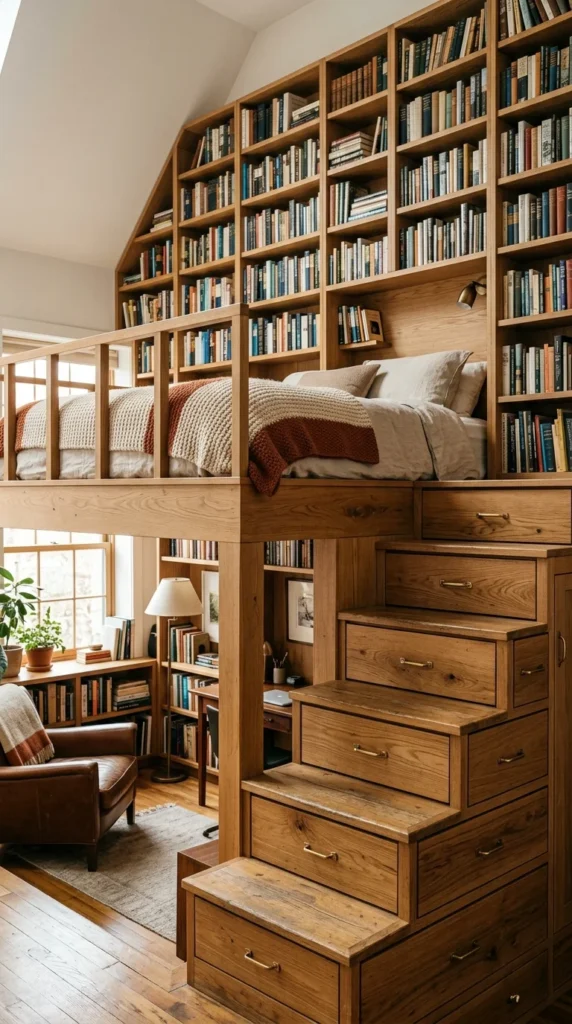
Why stop at a small bookshelf? Building a loft bed into a wall-to-wall shelving unit creates a cohesive, architectural look. The shelves provide structural support for the bed while offering an incredible amount of storage for books, decor, and bins. It turns your furniture into a feature wall.
9. Double Loft
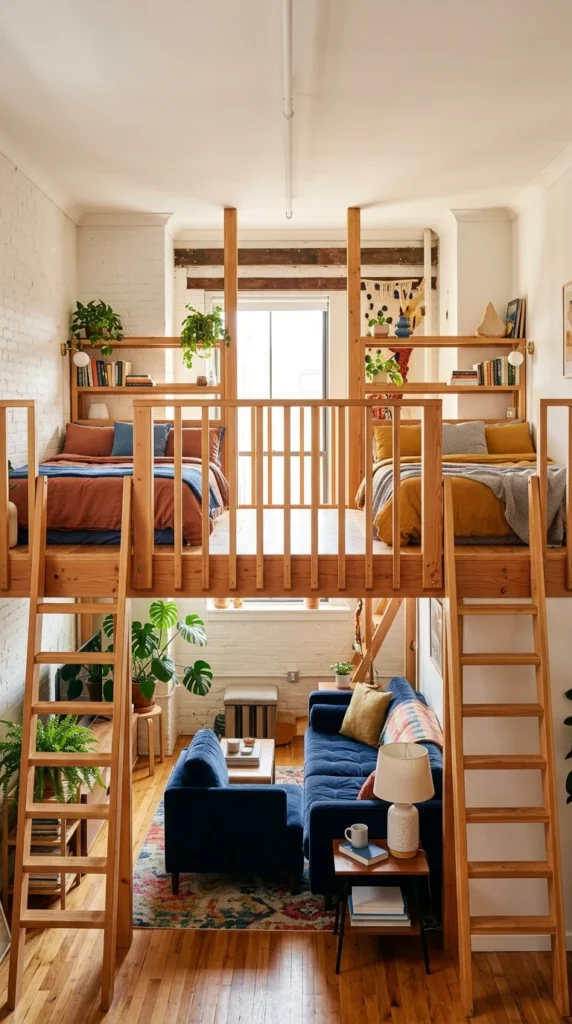
If you share a studio with a roommate or a partner who prefers separate sleeping quarters, a double loft is a game-changer. By elevating both beds, you keep the entire floor area open for a shared living room and dining area. It creates a “treehouse” vibe that is both fun and functional.
10. Murphy Loft
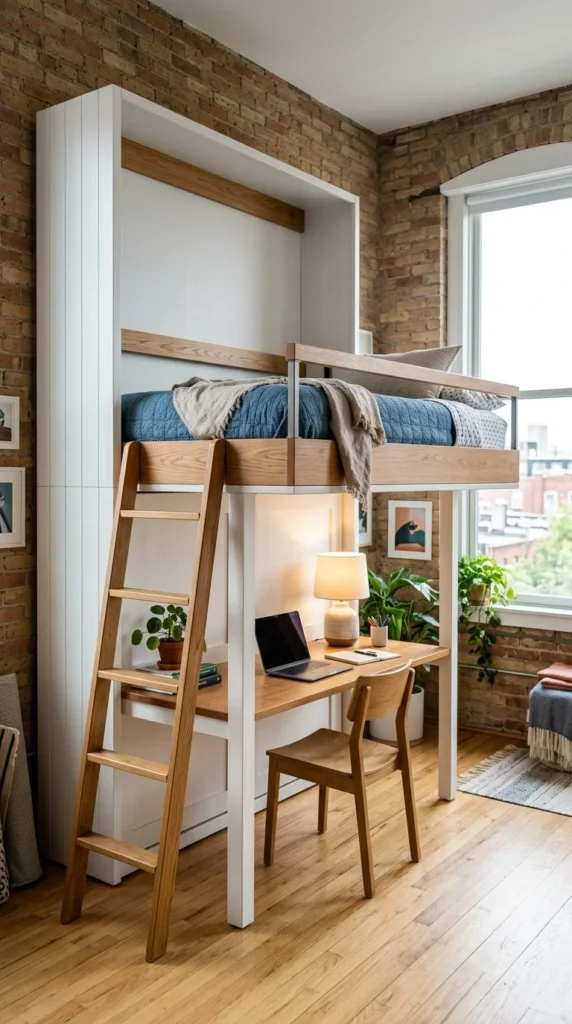
The Murphy loft is the peak of small-space engineering. Some designs allow the bed to be tucked away against the wall during the day, while others feature a bed that stays lofted but can be lowered for easy sheet changes. This is perfect for those who want the benefits of a loft but hate the idea of climbing a ladder every night.
11. Scandinavian Wood
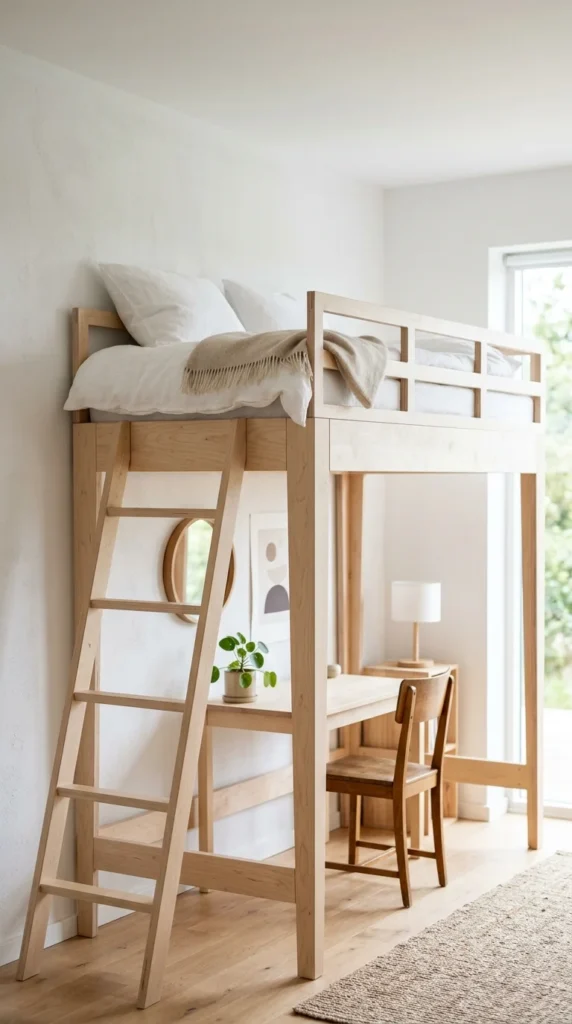
Scandinavian design is synonymous with bright, airy, and functional spaces. A loft bed made of light woods like pine or birch helps keep the room feeling open and light. Pair it with white bedding and natural textures to create a serene, hygge-inspired sleeping environment.
12. Secret Garden
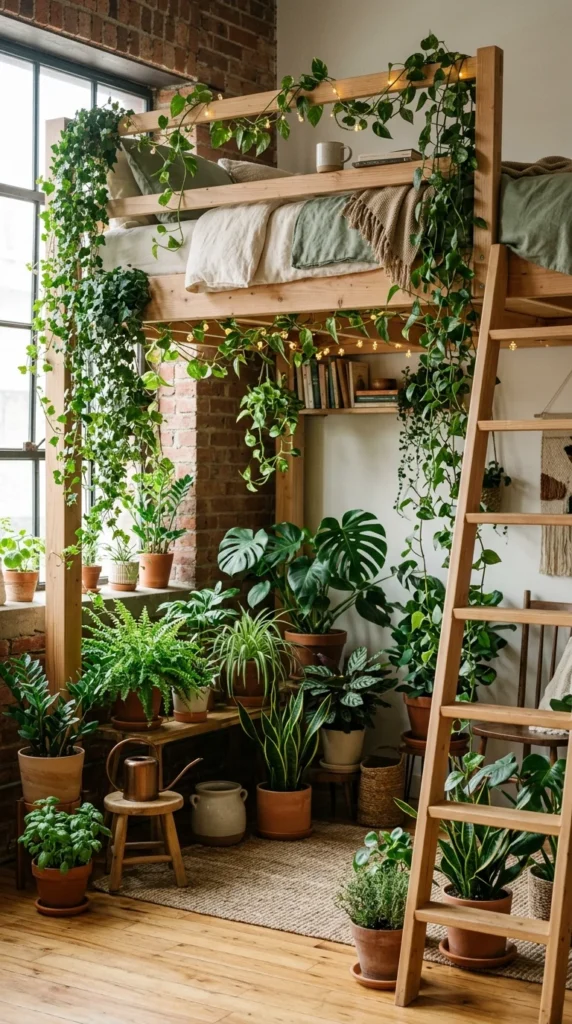
Bring the outdoors in by using your loft frame as a trellis for indoor climbing plants. The area underneath can become a lush “garden room” with a small table and chairs. This not only improves air quality but also creates a stunning visual focal point that feels organic rather than industrial.
13. Boho Hammock
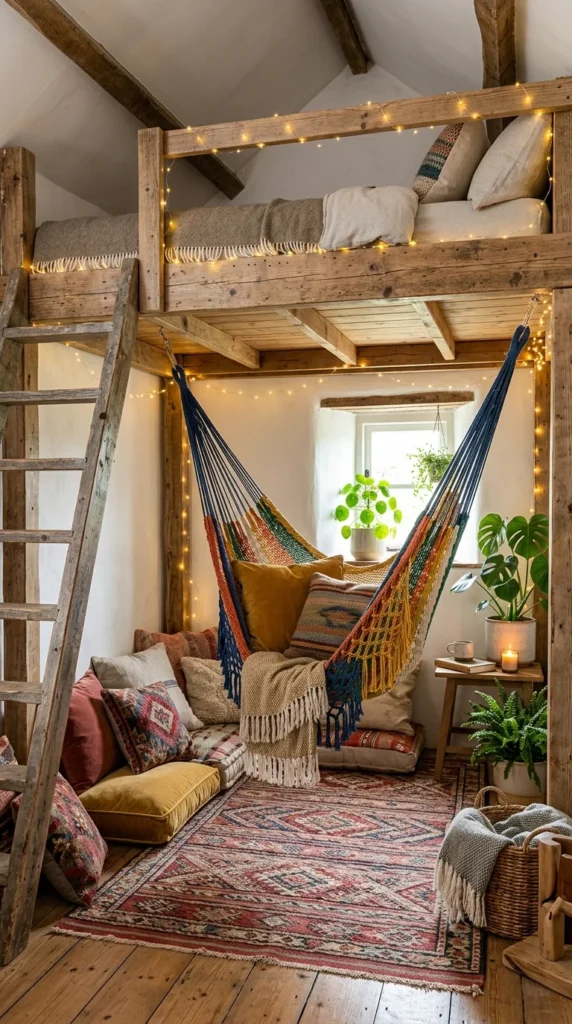
For a relaxed, bohemian vibe, skip the traditional furniture underneath the loft and hang a hammock instead. It provides a flexible place to lounge and nap without taking up any permanent floor space. Add some fairy lights and patterned textiles to complete the whimsical look.
14. Entertainment Center
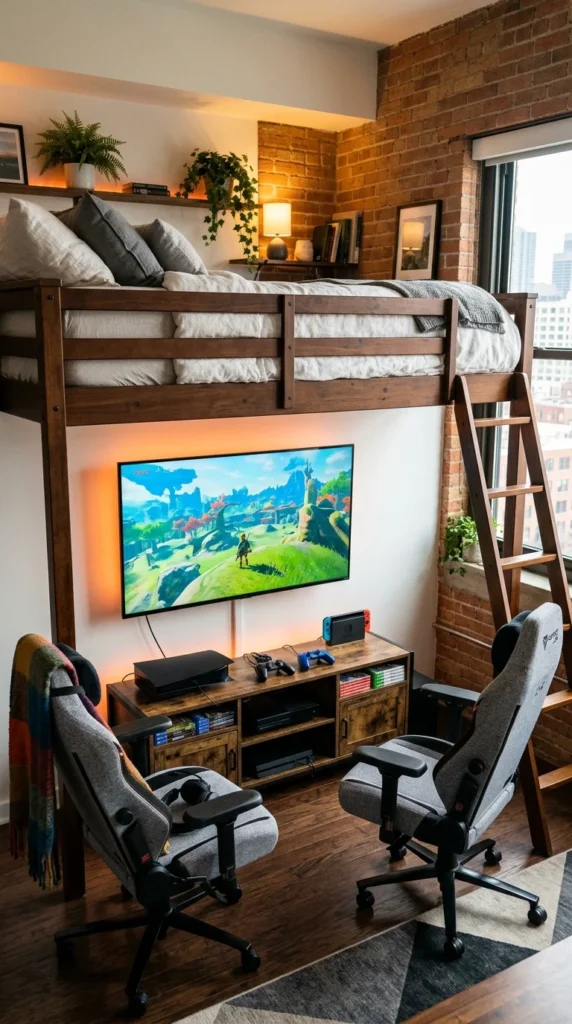
Turn your “downstairs” into a private cinema or gaming hub. By mounting a TV and speakers under the loft, you create a dedicated media zone. This works particularly well because the underside of the bed provides a natural “ceiling” that makes the viewing experience feel more immersive and theater-like.
15. Spiral Staircase

Ladders can be difficult to navigate and sometimes look a bit “dorm-room.” A spiral staircase is a sophisticated alternative. It takes up very little floor space compared to traditional stairs but offers a much easier and safer climb. It adds an architectural “wow” factor to any small apartment.
16. Glass Railing
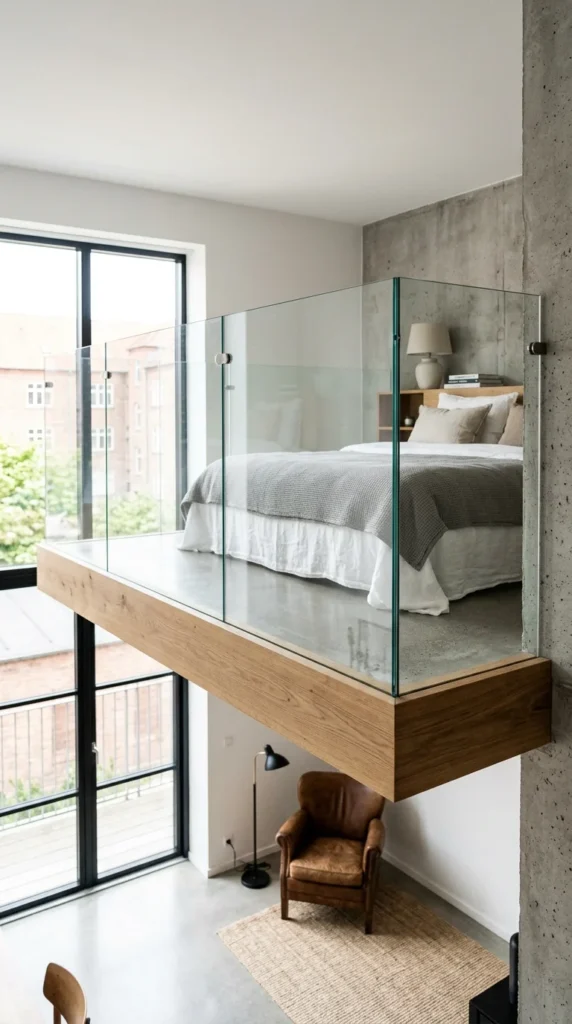
One of the downsides of loft beds is that they can make a room feel smaller by cutting off the visual line of sight. Using tempered glass or acrylic for the safety railing solves this problem. It provides the necessary safety without adding visual bulk, keeping the apartment feeling wide open.
17. Split-Level Studio
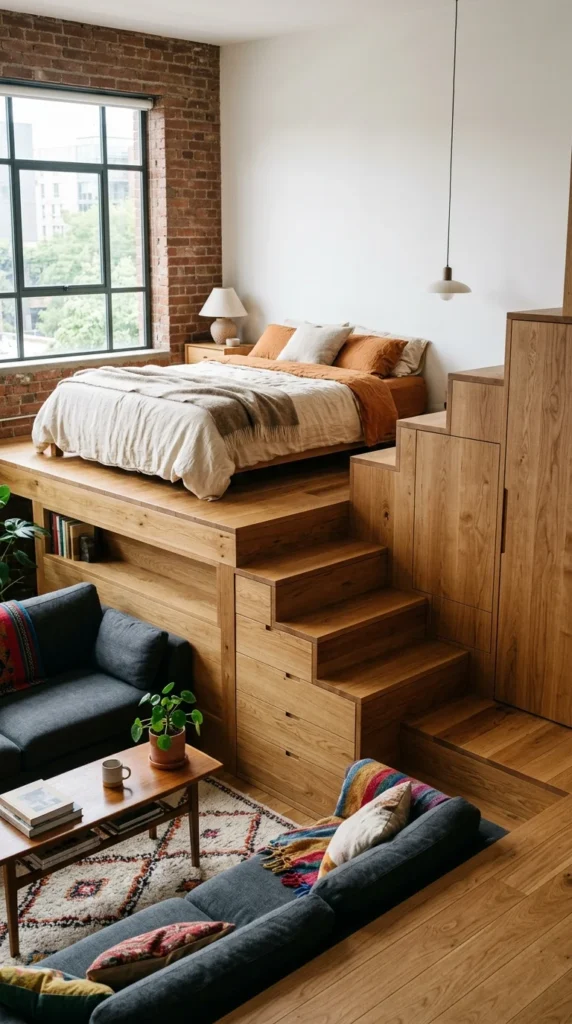
Instead of a “bed on stilts,” consider a split-level design. This involves building a large raised platform for the bed that takes up half the room, with the “ground level” reserved for the kitchen or living area. This feels more like a permanent architectural feature than a piece of furniture.
18. Sliding Ladder
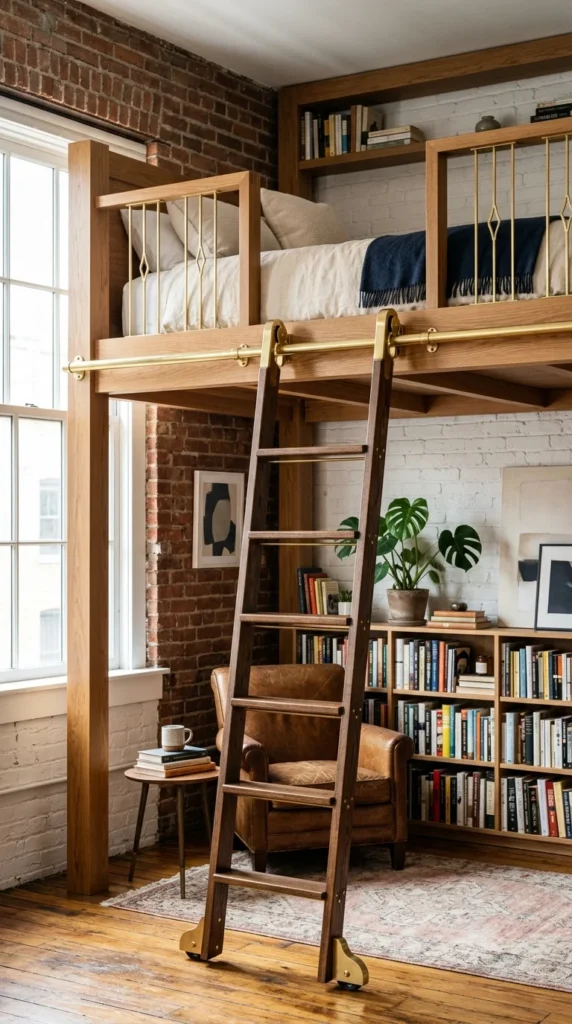
A fixed ladder can sometimes get in the way of drawers or walkways. A sliding ladder—much like those found in old libraries—allows you to move the access point wherever it’s most convenient. It’s a functional tool that also adds a touch of classic charm to the room.
19. Kids’ Creative Corner
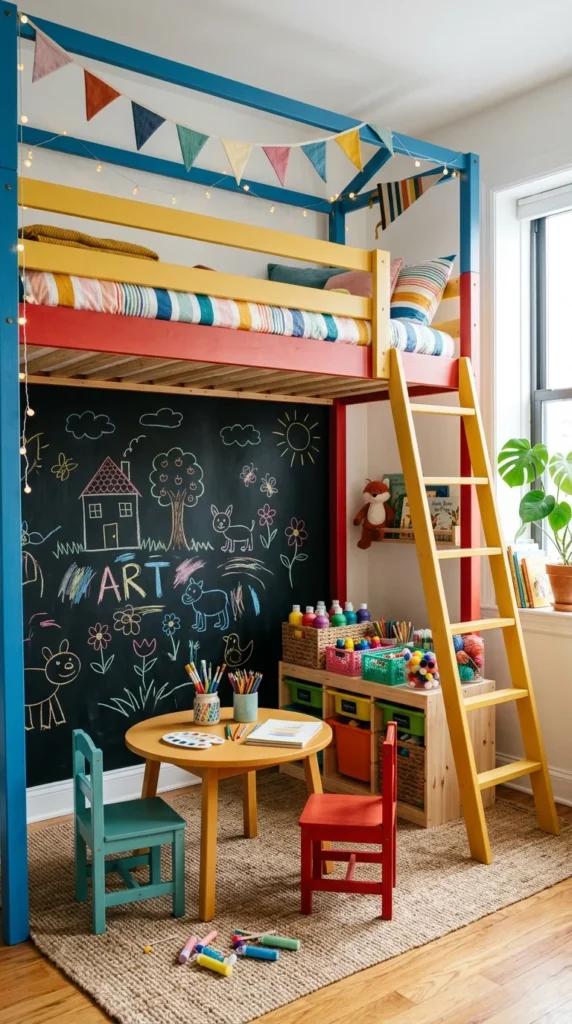
If you have a child in a small apartment, a loft bed is a lifesaver. The area below becomes a dedicated “play and create” zone. You can paint the walls with chalkboard paint or install a pegboard for art supplies, keeping the “mess” of toys and crafts contained to one small area.
20. Wrap-around Desk
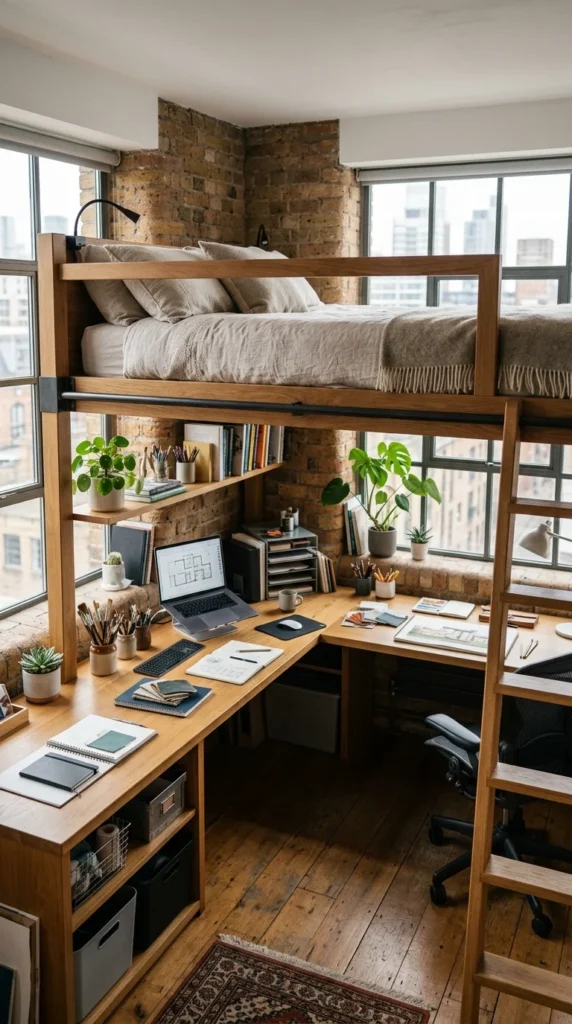
If you are a crafter, artist, or gamer who needs a lot of desk space, the wrap-around design is perfect. It maximizes every inch of the perimeter under the bed, providing different “stations” for different tasks. You can have a computer area on one side and a sewing or drawing area on the other.
21. Built-in Wardrobe
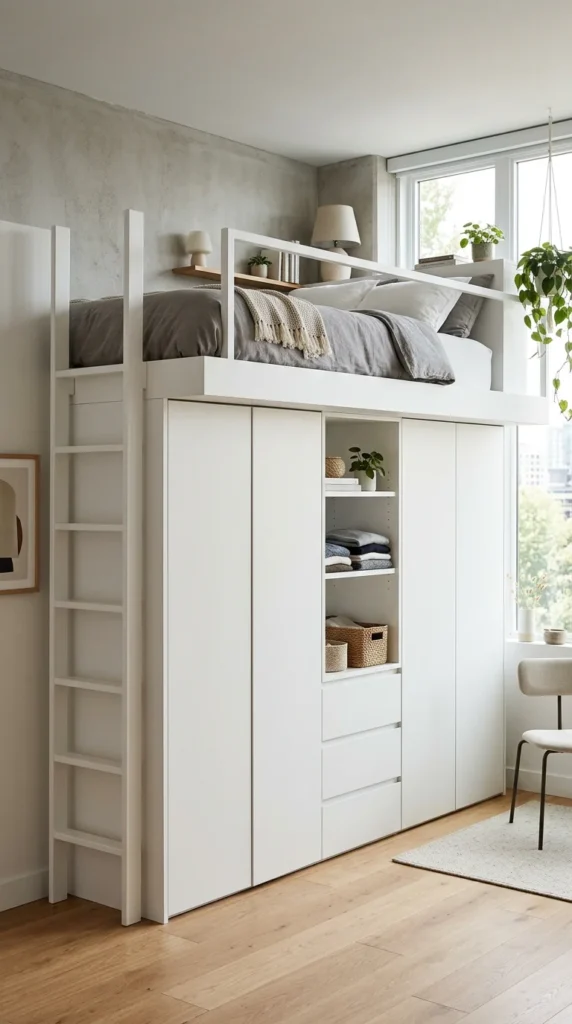
This is the ultimate “hidden” loft. By using heavy-duty kitchen or wardrobe cabinets as the base for your bed, you create a seamless look. It doesn’t look like a bed on legs; it looks like a functional storage wall that happens to have a mattress on top.
22. Art Studio
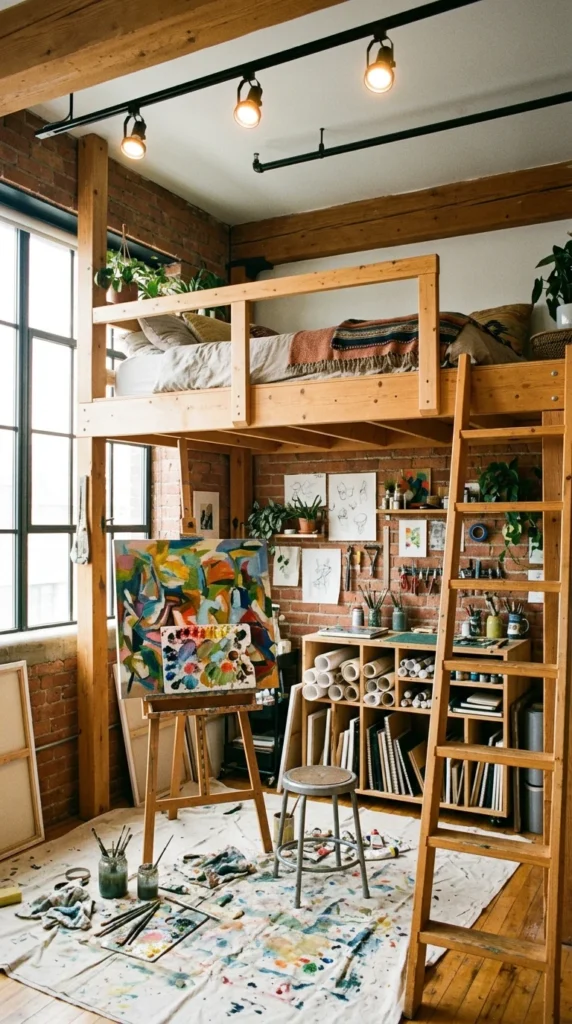
For artists, finding space for an easel and supplies is a nightmare. A loft bed provides the perfect “studio” footprint. By installing high-CRI (Color Rendering Index) lighting under the bed, you can create a professional-grade workspace that stays set up even when you’re done for the day.
23. Guest Bunk
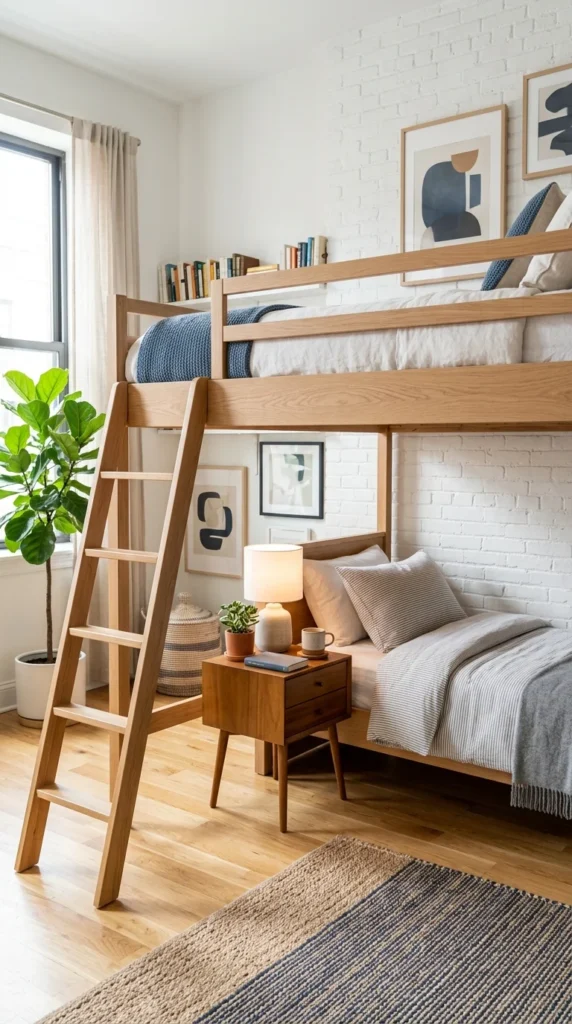
Even in a small apartment, you might want to host a friend. An “L-shaped” bunk configuration allows for two beds in the footprint of one and a half. The area not covered by the bottom bed can still be used for a small desk or storage unit, making the most of the layout.
24. Zen Platform
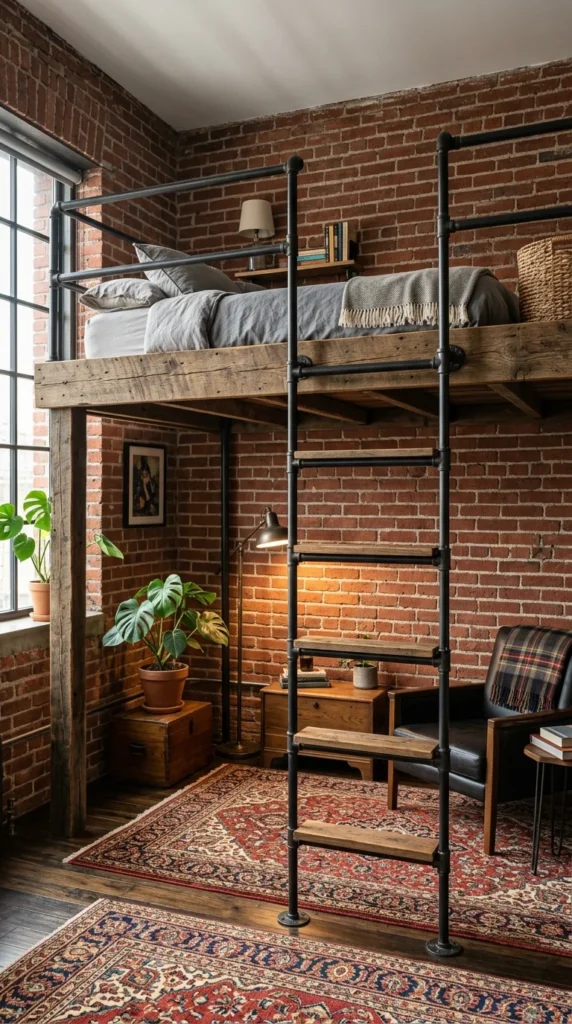
Create a space for mindfulness. A Zen-inspired loft uses natural materials and keeps the area underneath simple and clutter-free. Use it for meditation, yoga, or just quiet reflection. In a busy city apartment, having a dedicated “quiet zone” can be just as valuable as having extra storage.