A small bathroom doesn’t have to feel like a cramped afterthought. In the world of interior design, compact spaces are often referred to as “jewelry boxes”—opportunities to experiment with bold textures, luxurious materials, and clever engineering that might be too overwhelming or expensive in a larger room. Whether you are dealing with a tiny powder room or a narrow master ensuite, a thoughtful makeover can turn a functional necessity into a spa-like sanctuary.
The secret lies in balancing aesthetics with utility. By focusing on visual flow, vertical real estate, and light reflection, you can trick the eye into perceiving more square footage than actually exists. Here are 22 transformative ideas to help you reimagine your small bathroom.
1. Floating Vanities
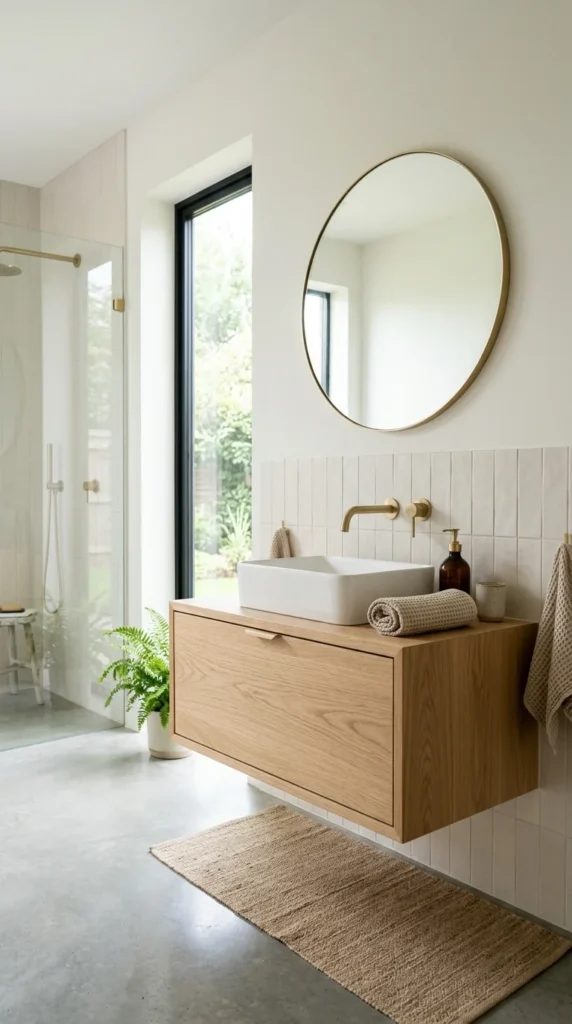
One of the most effective ways to make a small bathroom feel larger is to keep the floor visible. A floating vanity attaches directly to the wall, leaving the space beneath it open. This creates an uninterrupted line of sight across the floor, which instantly tricks the brain into thinking the room is more spacious. Beyond the visual benefits, floating vanities offer a sleek, contemporary aesthetic and make cleaning the bathroom floor significantly easier.
2. Oversized Mirrors
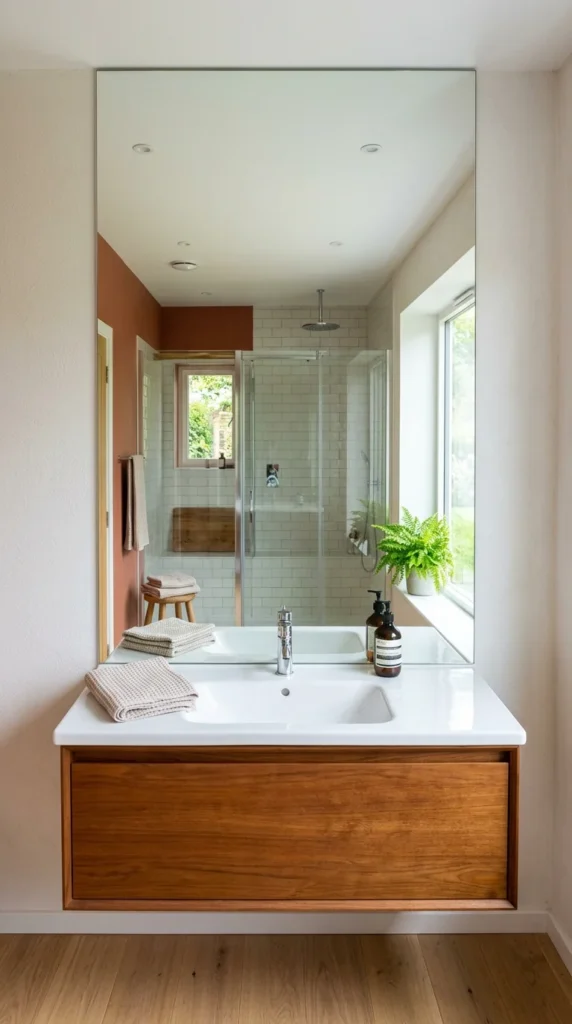
Mirrors are a small space’s best friend. Instead of a standard medicine cabinet, consider a large, wall-to-wall mirror or a massive circular piece. Mirrors reflect both natural and artificial light, brightening the entire room. By reflecting the rest of the decor, they create an illusion of depth that can make a cramped galley bathroom feel twice as wide. For a modern touch, look for mirrors with built-in LED backlighting.
3. Vertical Storage
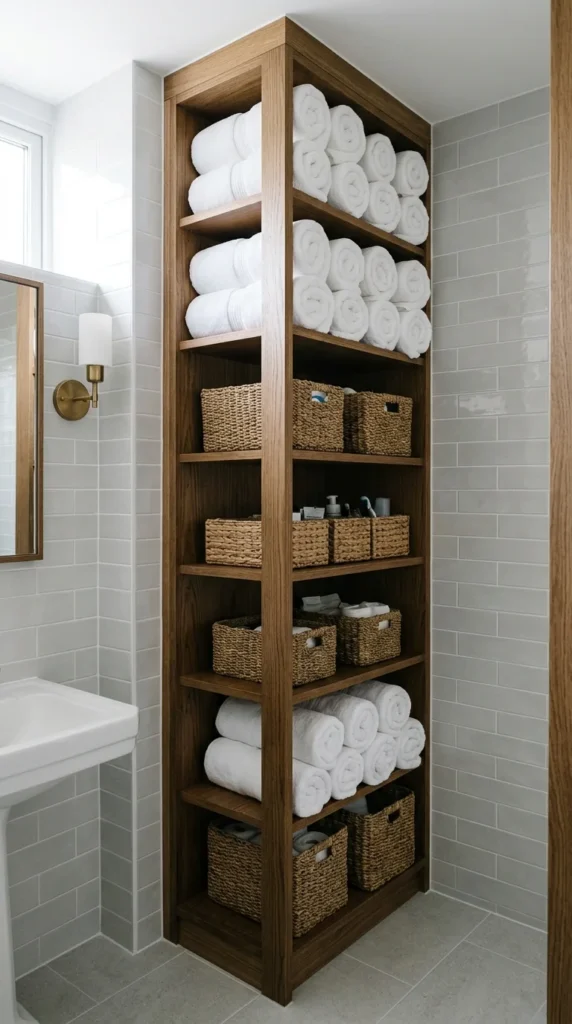
When you run out of floor space, look up. Vertical storage is essential in small bathrooms. High-reaching shelves, tall cabinets, or even a stack of floating cubbies can house all your essentials without encroaching on your walking path. Utilize the space above the door for a shelf to store extra toilet paper or seasonal items, keeping the high-traffic areas clutter-free.
4. Glass Doors
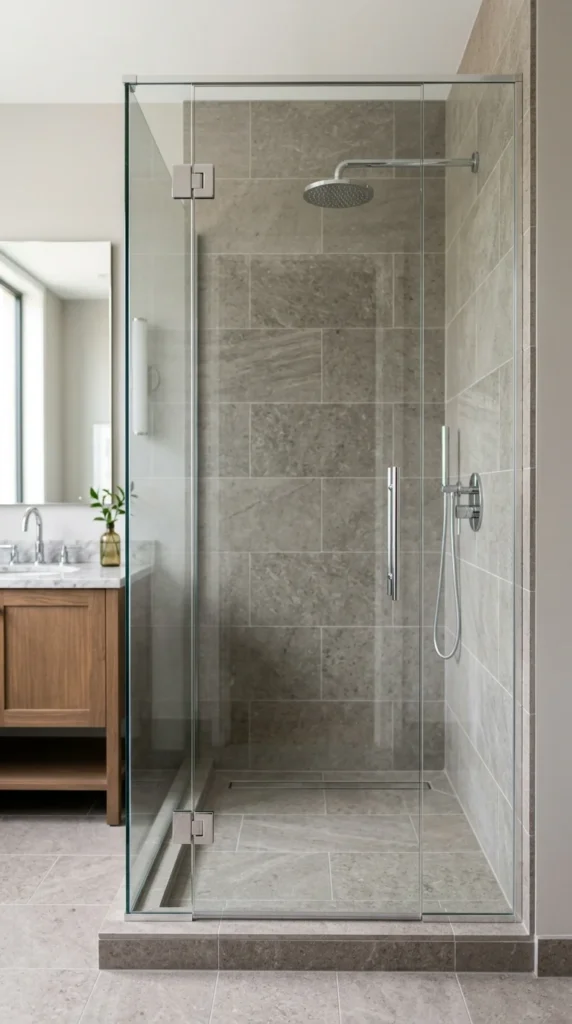
A traditional shower curtain acts like a wall, cutting the room in half and making it feel significantly smaller. Replacing a curtain or frosted glass with a clear, frameless glass shower door removes that visual barrier. This allows the eye to travel all the way to the back wall of the shower, making the entire footprint of the bathroom visible and significantly more open.
5. Bold Wallpaper
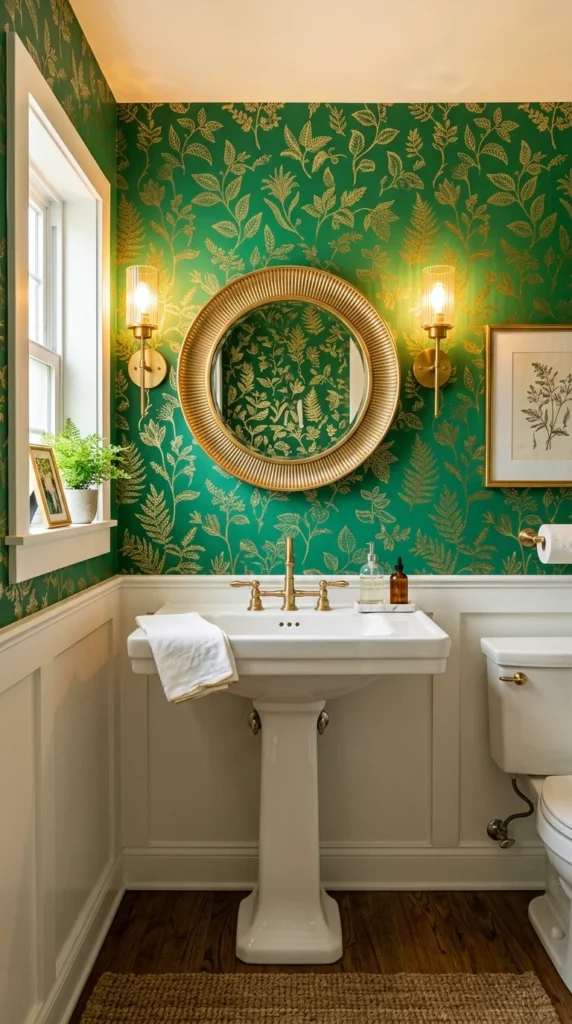
Small bathrooms are the perfect place to take a design risk. Because the area is limited, bold wallpaper won’t feel as overwhelming as it might in a living room. High-contrast patterns, tropical prints, or deep, moody colors can give a tiny room a distinct personality. If you’re worried about humidity, look for vinyl wallpapers specifically designed for bathrooms.
6. Monochromatic Schemes
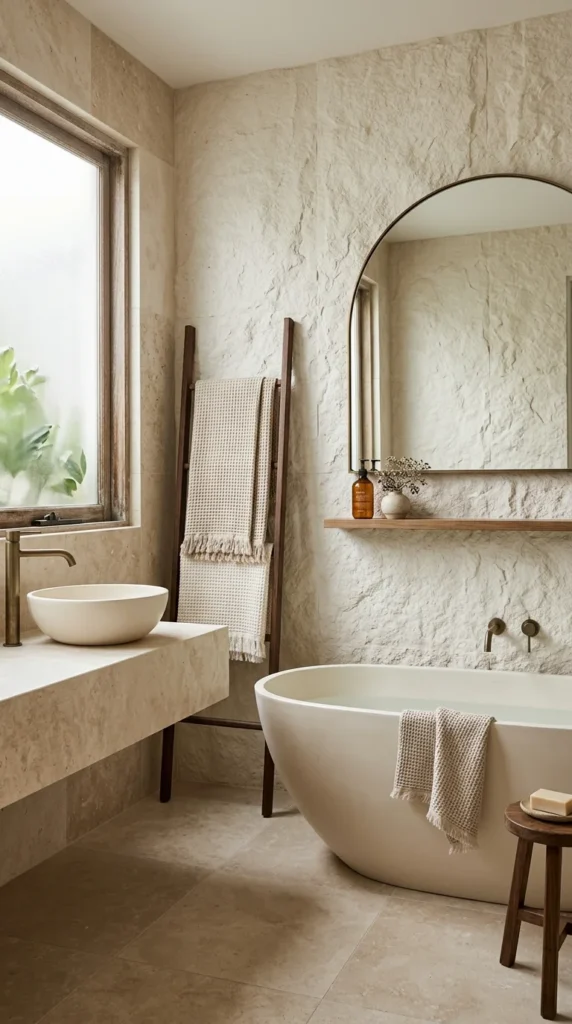
Using a single color palette—especially in lighter shades like white, cream, or soft gray—creates a seamless look that blurs the boundaries of the room. When the walls, floor, and even the ceiling share a similar tone, the corners of the room seem to disappear. This lack of visual “stops” creates a calm, expansive atmosphere that feels curated and high-end.
7. Open Shelving
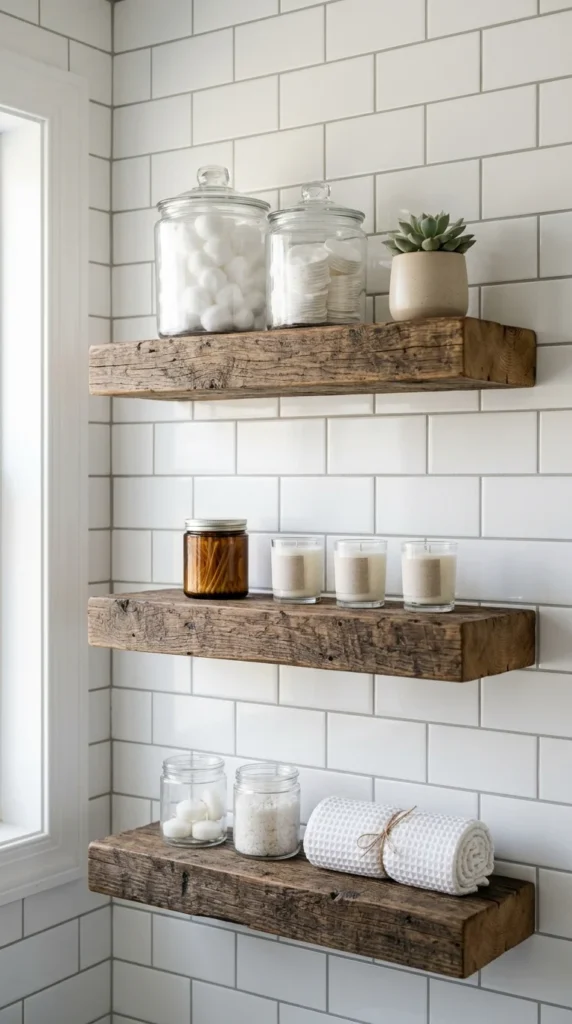
If you find that bulky cabinets make your bathroom feel heavy, switch to open shelving. It provides the storage you need while maintaining an “airy” feel. The key to open shelving is organization; use matching baskets or glass jars to keep toiletries looking tidy. This approach also allows you to display decorative items, adding a layer of warmth to the space.
8. Accent Lighting
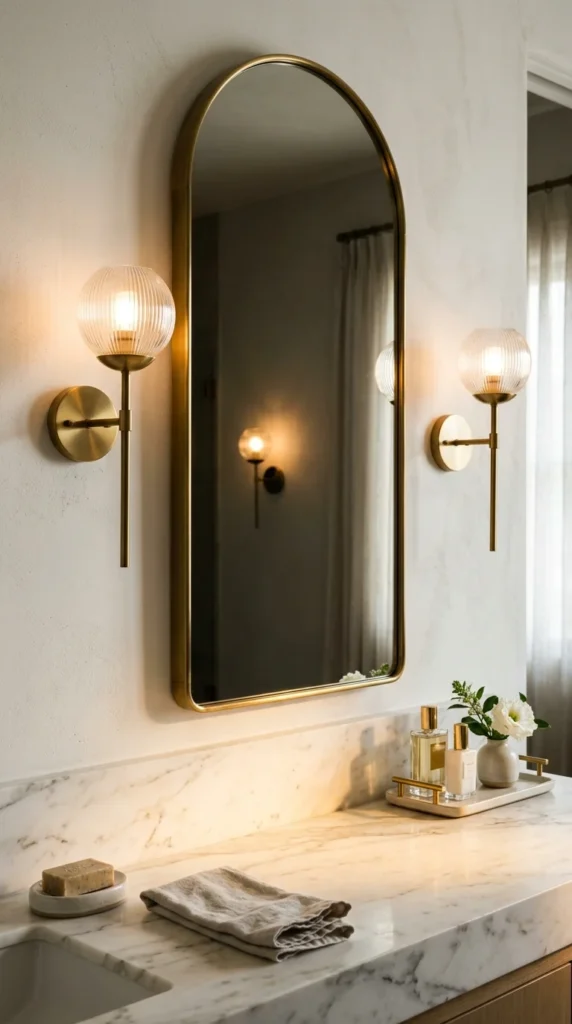
Proper lighting can change the entire mood of a small space. Avoid relying solely on a single overhead light, which can create harsh shadows and make the room feel dingy. Layer your lighting with wall sconces, pendant lights, or even under-cabinet strips. Warm, well-placed light eliminates dark corners and makes the bathroom feel inviting and polished.
9. Recessed Niches
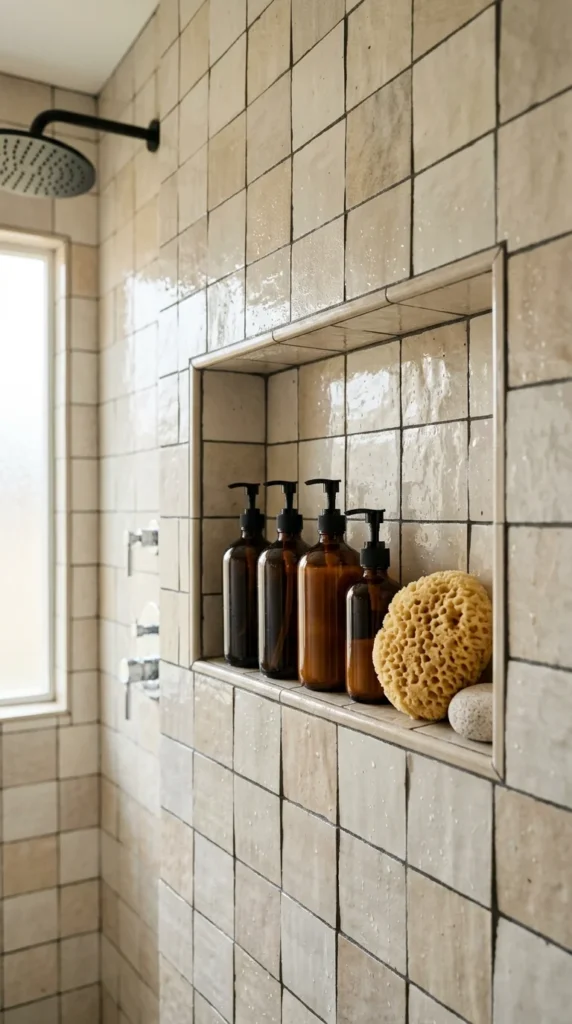
In a small shower, bulky hanging organizers can get in the way. A recessed niche—built directly into the wall between the studs—provides a permanent, sleek storage solution for soaps and shampoos. By tucking these items into the wall, you keep the shower area clear and streamlined. You can even use a contrasting tile inside the niche to make it a design feature.
10. Patterned Floors
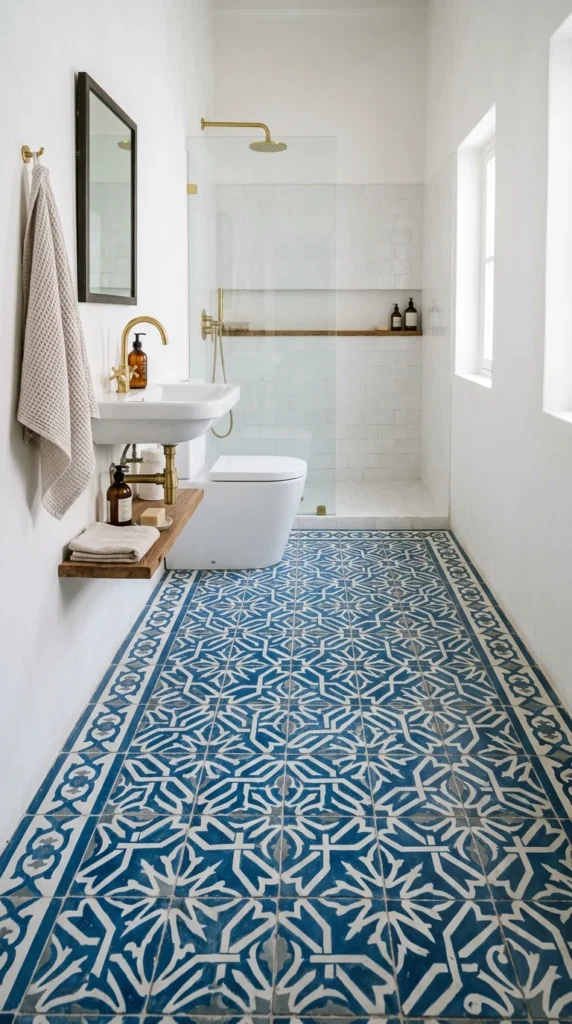
If you want to add visual interest without cluttering the walls, look to the floor. Patterned tiles can draw the eye downward and provide a sense of scale. Large-scale patterns can actually make a floor feel wider, while intricate designs add a layer of luxury. Keep the rest of the room relatively simple to let the floor be the star of the show.
11. Wall-Mounted Faucets
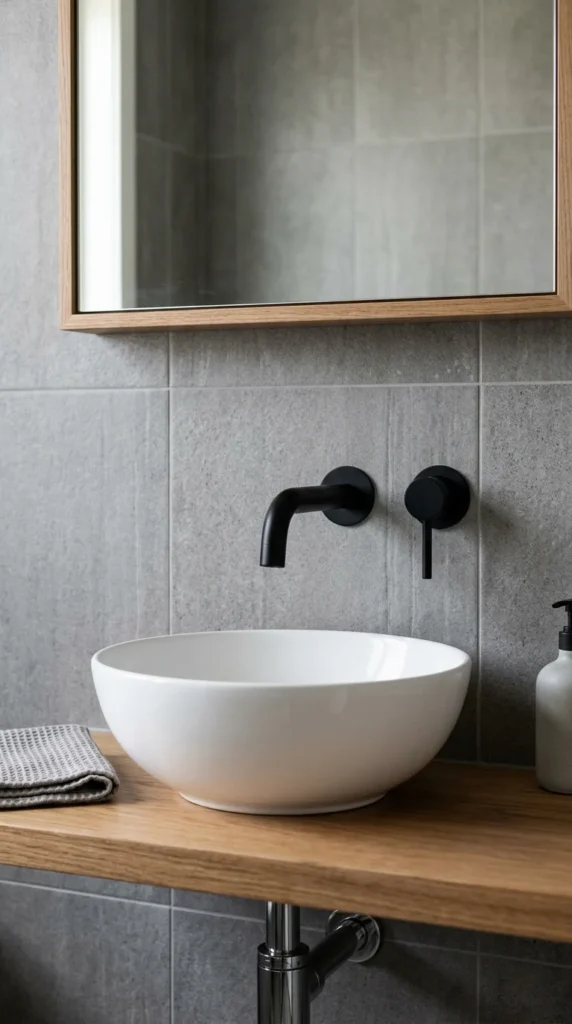
Every inch of counter space matters in a small bathroom. By mounting the faucet on the wall rather than the sink or vanity, you free up valuable real estate on the countertop. This also creates a very clean, high-end look reminiscent of a boutique hotel. It’s a sophisticated move that makes a standard sink setup feel much more custom.
12. Pocket Doors
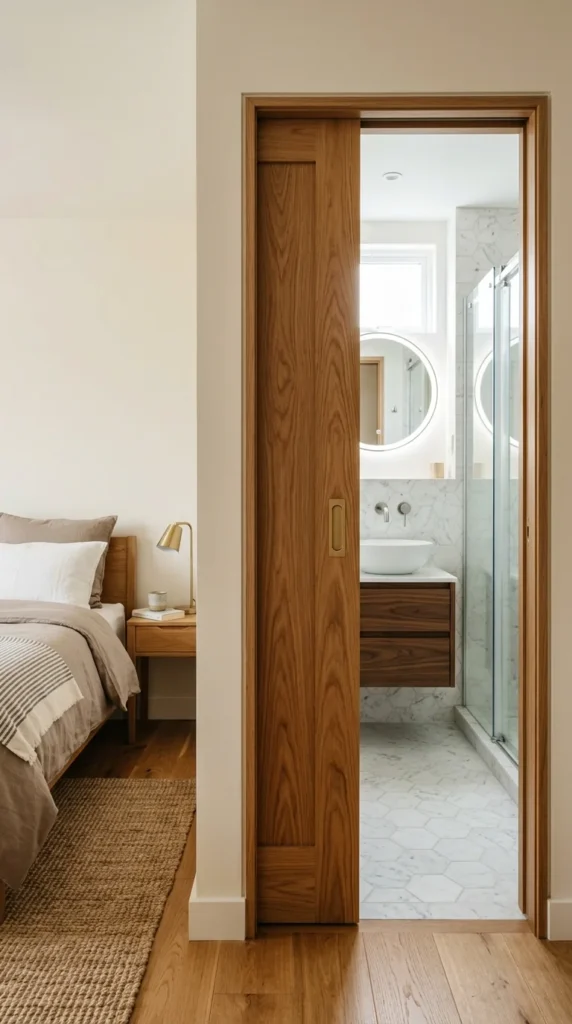
Traditional doors require “swing space,” which can be a major issue in tight quarters. A pocket door slides directly into the wall, requiring zero floor space to open or close. This can free up enough room to add a larger vanity or a separate storage cabinet that would otherwise be blocked by a swinging door.
13. Natural Light
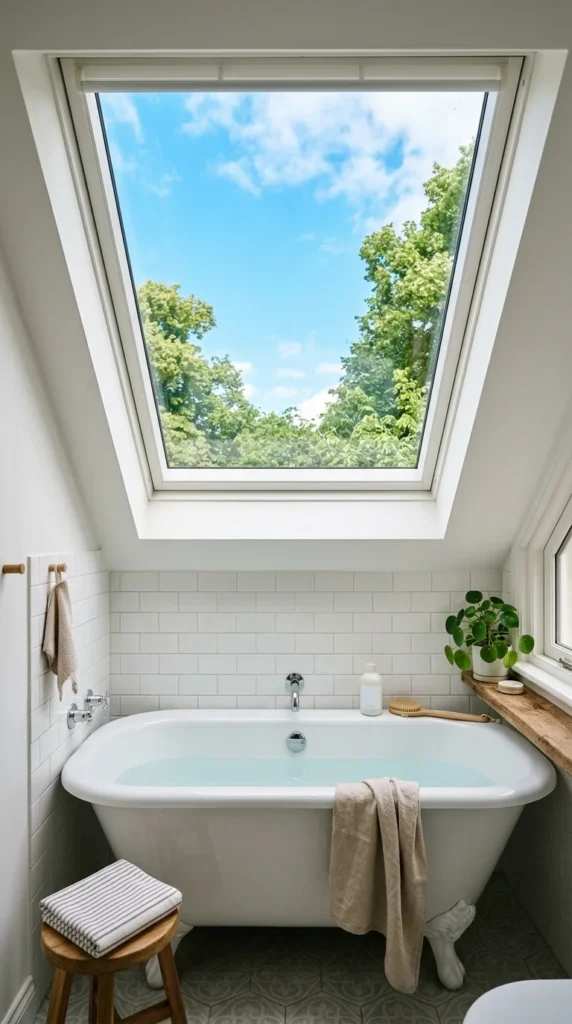
Whenever possible, maximize natural light. If you have a window, avoid heavy coverings; use frosted glass or a simple roller shade for privacy instead. If there is no window, consider installing a tubular skylight. Natural light makes colors pop and gives the space an outdoor, fresh feel that counters the “closed-in” sensation often found in small baths.
14. Towel Ladders
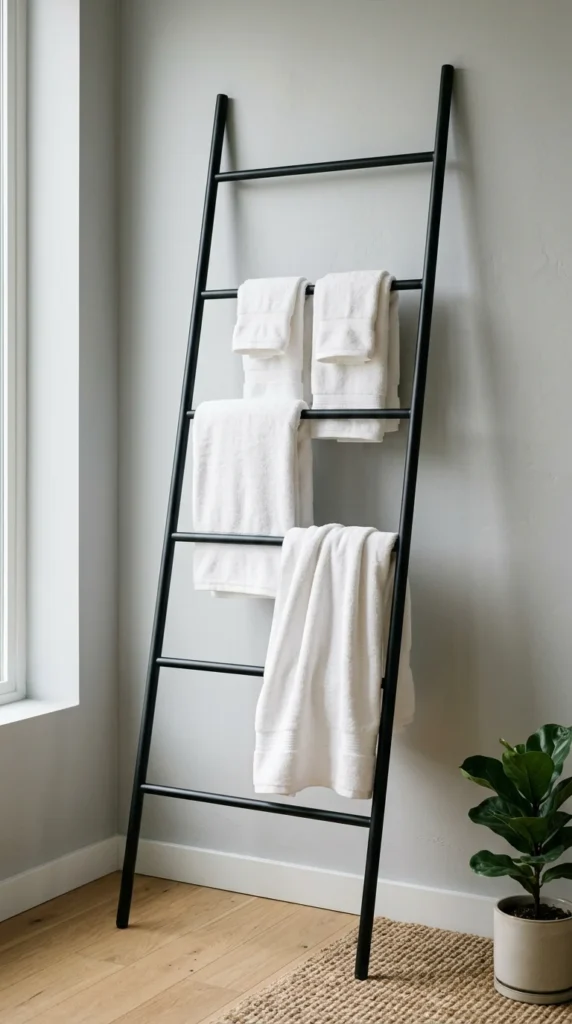
Towel bars can take up a lot of horizontal wall space. A leaning towel ladder is a stylish alternative that utilizes vertical space and adds a bit of architectural interest. Ladders are also incredibly versatile; you can move them around as needed, and they provide a great spot to hang multiple towels or even a small hanging plant.
15. Wainscoting
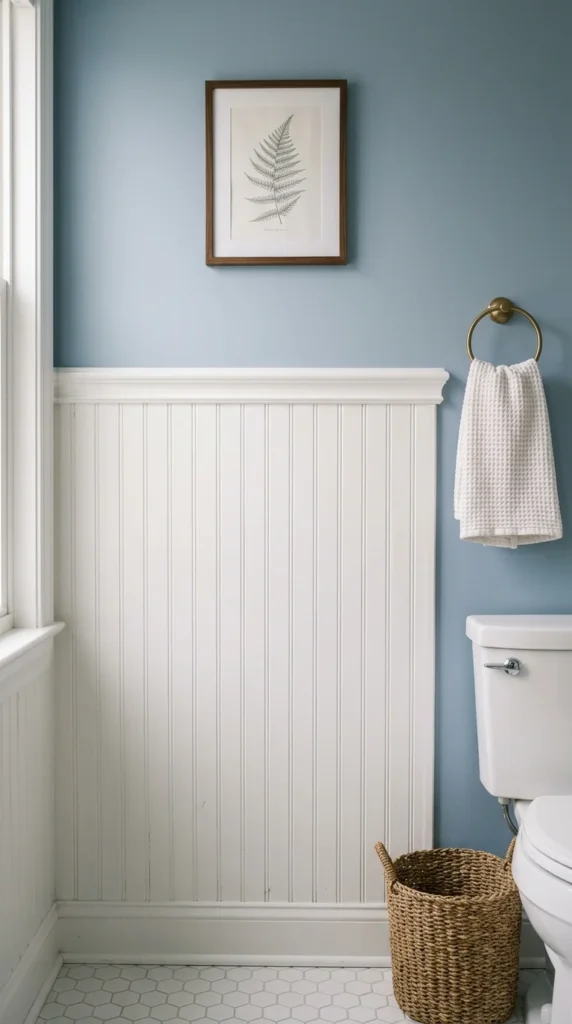
Wainscoting or beadboard adds texture and a sense of architectural structure to a room. In a small bathroom, it can help “ground” the space. By painting the wainscoting a light color and the wall above it a slightly different shade, you create horizontal lines that can make the room feel wider and more classic.
16. Penny Tiles
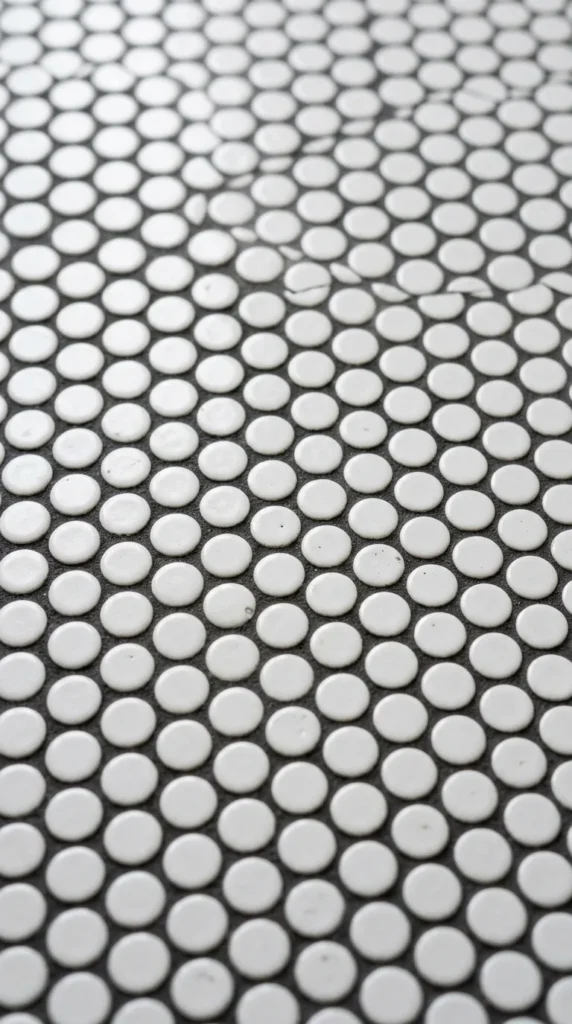
Penny tiles are a classic choice for small bathrooms for a reason. Their small scale is perfectly proportioned for tiny floors. Furthermore, the high amount of grout lines provides excellent slip resistance in wet areas. You can use them in a solid color for a clean look or create patterns and borders for a vintage, custom feel.
17. Mirrored Cabinets
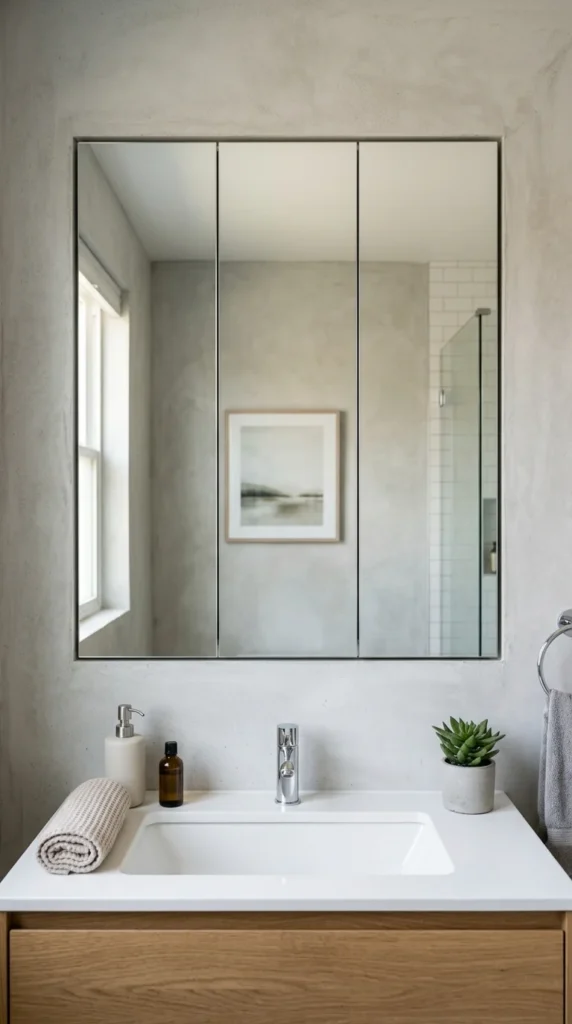
If you need the storage of a medicine cabinet but hate the look of a box sticking out from the wall, try a recessed mirrored cabinet. By setting the cabinet into the wall, you get all the storage benefits without losing any physical or visual space. When closed, it looks like a standard flat mirror, keeping the room’s profile slim and tidy.
18. Cabinet Color
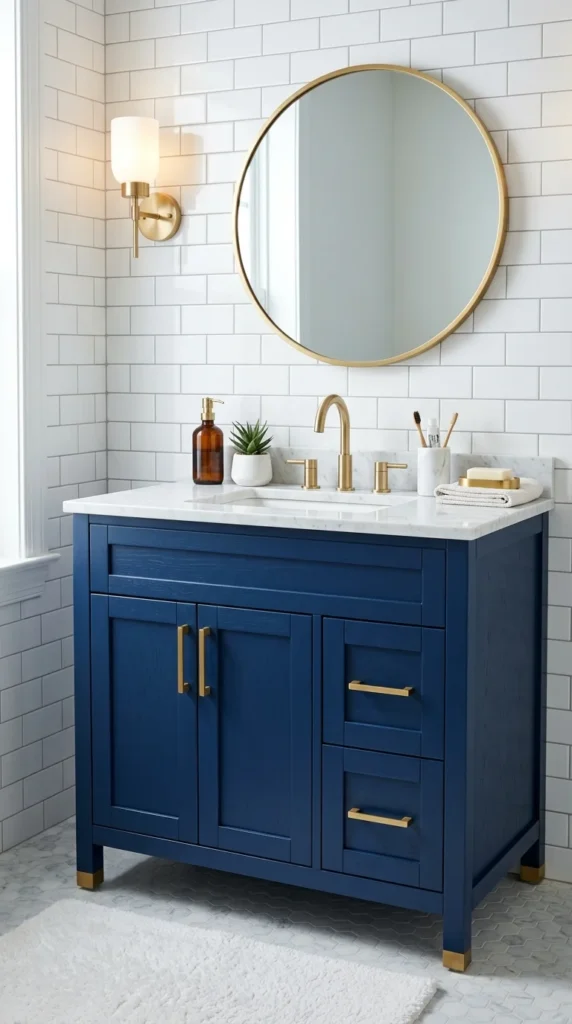
Don’t be afraid to give your vanity a coat of bold paint. While light walls help a room feel large, a colorful vanity adds a focal point that gives the room purpose. Deep blues, forest greens, or even soft terracotta can turn a basic cabinet into a piece of furniture that defines the room’s style.
19. Indoor Plants
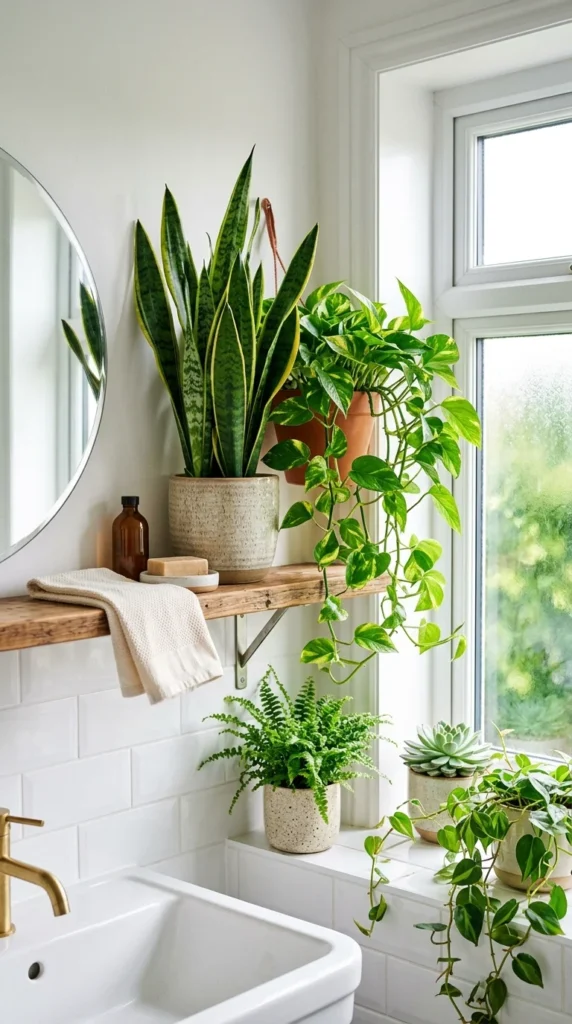
Plants thrive in the humid environment of a bathroom and bring a touch of life to the space. Adding greenery softens the hard surfaces of tile and porcelain. Use hanging planters or small pots on high shelves to keep the surfaces clear while still enjoying the vibrant, organic feel that plants provide.
20. Minimalist Fixtures
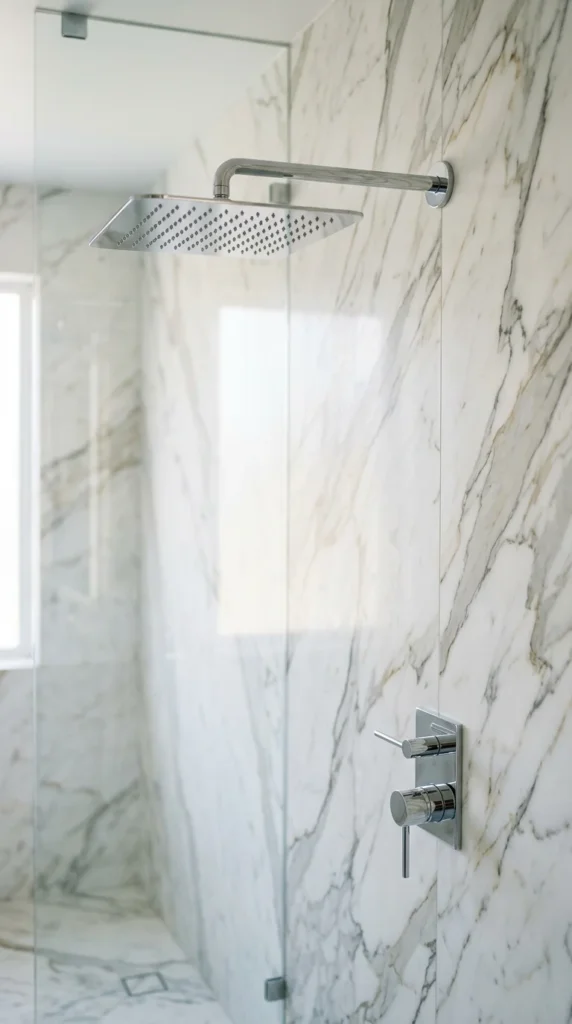
In a small space, heavy, ornate fixtures can feel cluttered. Opt for minimalist hardware with clean lines and a slim profile. Matte black, brushed gold, or polished chrome in simple geometric shapes will look modern and keep the visual noise to a minimum, allowing the other design elements to shine.
21. Hexagon Tiles
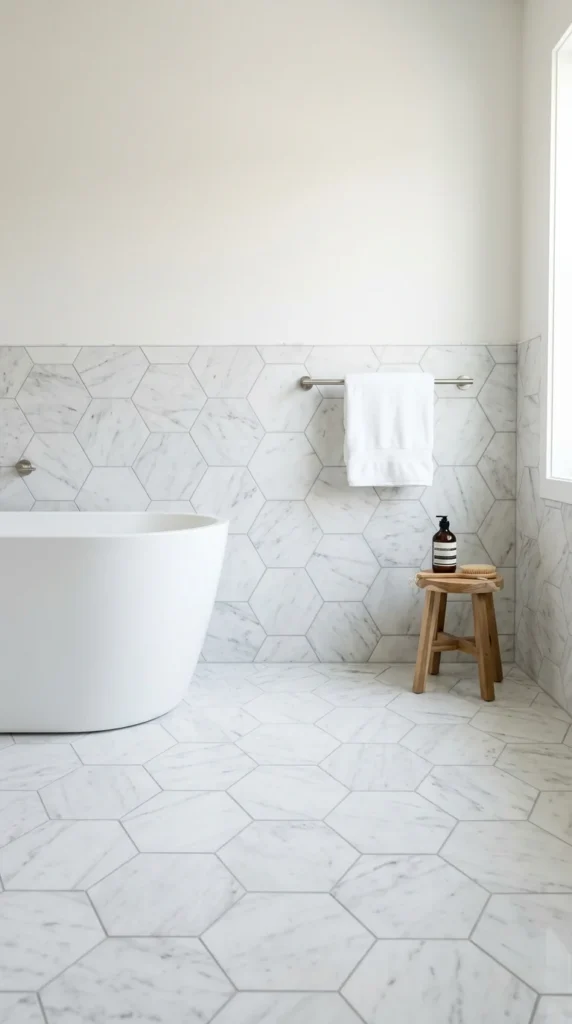
Hexagon tiles are a great way to introduce geometric interest. Because they don’t follow a standard grid pattern, they can make the floor boundaries feel less rigid. Using the same hexagon tile on the floor and continuing it up onto a feature wall or into the shower creates a “wraparound” effect that makes the space feel cohesive and expansive.
22. Curated Art
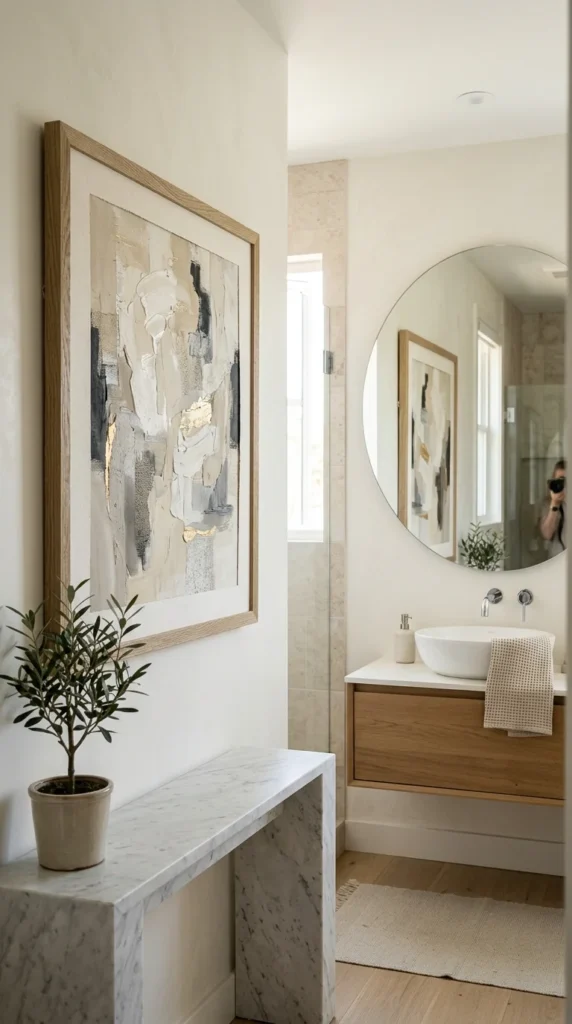
Just because a bathroom is small doesn’t mean it should be devoid of art. A single, well-chosen piece of art can provide a sense of scale and make the room feel like a finished, lived-in part of the home. Choose a large piece rather than several small ones to avoid a cluttered look, and ensure it is properly framed to protect it from moisture.