
The Japandi interior design trend is more than just a passing fad; it is a philosophy that marries the ancient Japanese aesthetic of wabi-sabi—finding beauty in imperfection—with the modern Scandinavian concept of hygge—comfort and coziness. For those living in small apartments, Japandi is a lifesaver. It prioritizes functionality, clear spaces, and a deep connection to nature, making even the most cramped urban dwelling feel like a sprawling sanctuary of peace.
By stripping away the excess and focusing on quality over quantity, you can transform your home into a breathable, organized environment. Here are 22 Japandi-inspired ideas to help you master this aesthetic in a small footprint.
1. Neutral Palette
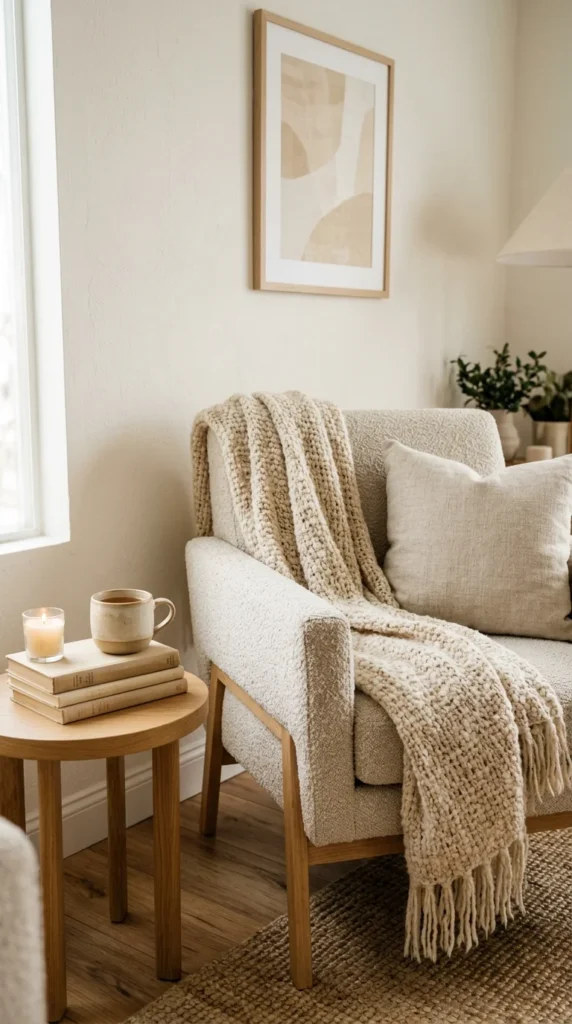
The foundation of any Japandi home is its color scheme. Unlike the stark, clinical whites of pure minimalism, Japandi leans into warmer, earthy neutrals. Think sand, cream, oatmeal, and stone. These colors reflect natural light beautifully, making a small apartment feel significantly larger and airier. By keeping the walls and large furniture pieces in a cohesive neutral palette, you reduce visual noise, allowing your mind to rest the moment you walk through the door.
2. Low-Profile Furniture
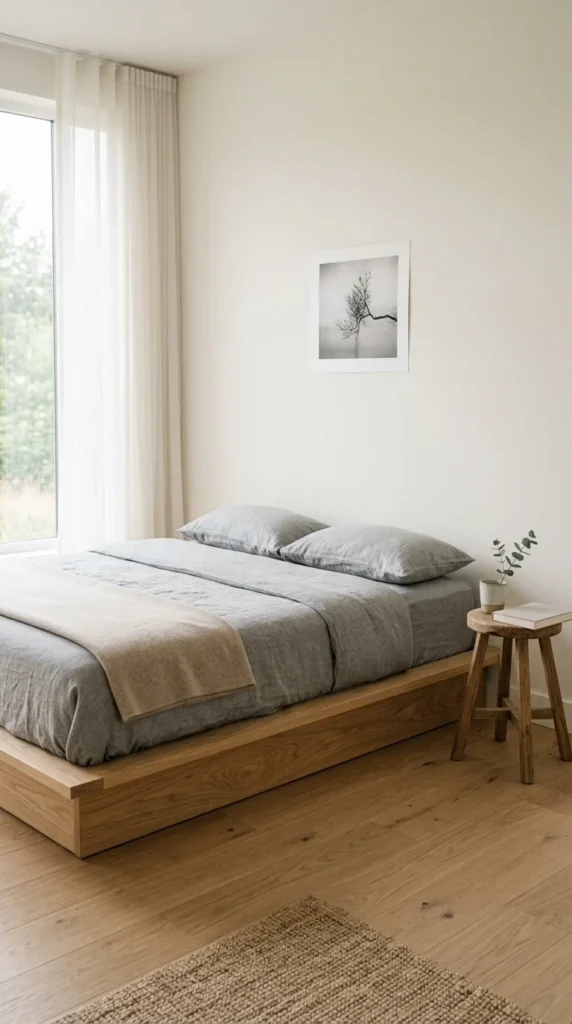
In Japanese interior design, living closer to the floor is a tradition that fosters a sense of groundedness. In a small apartment, low-profile furniture—such as platform beds, floor sofas, and low coffee tables—creates a sense of vertical space. By leaving more room between the top of the furniture and the ceiling, the room feels less “stuffed” and more open. It also forces a more relaxed posture, encouraging a slower pace of life.
3. Natural Materials
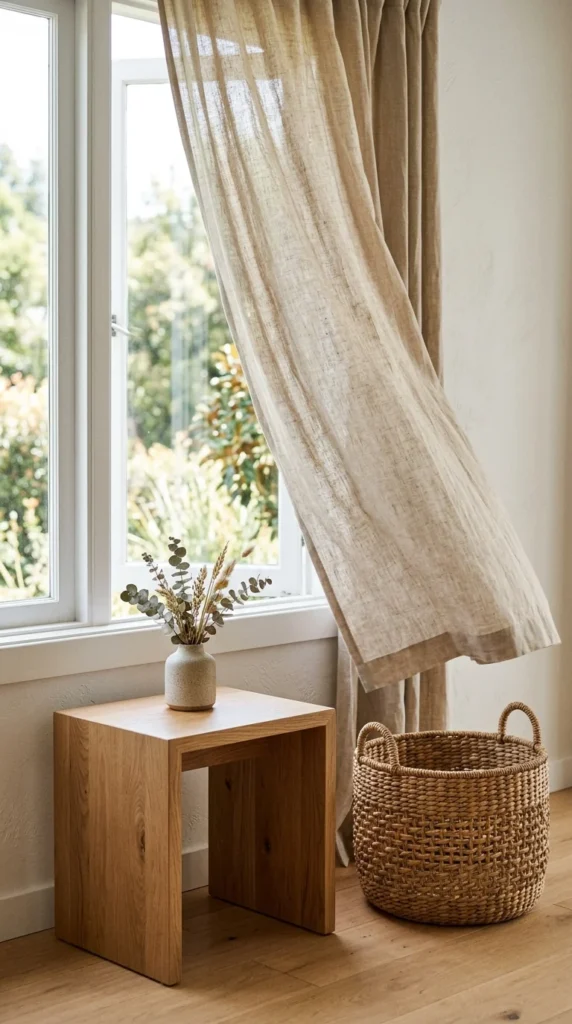
To achieve the “earthy” side of Japandi, lean heavily into natural materials. Wood is the primary element, but it should be light-toned like ash, oak, or maple. Supplement this with rattan, bamboo, hemp, and linen. These materials introduce organic textures that prevent a minimal room from feeling cold. In a small space, a single rattan chair or a set of bamboo blinds adds character without requiring the bulk of heavy upholstery.
4. Indoor Greenery
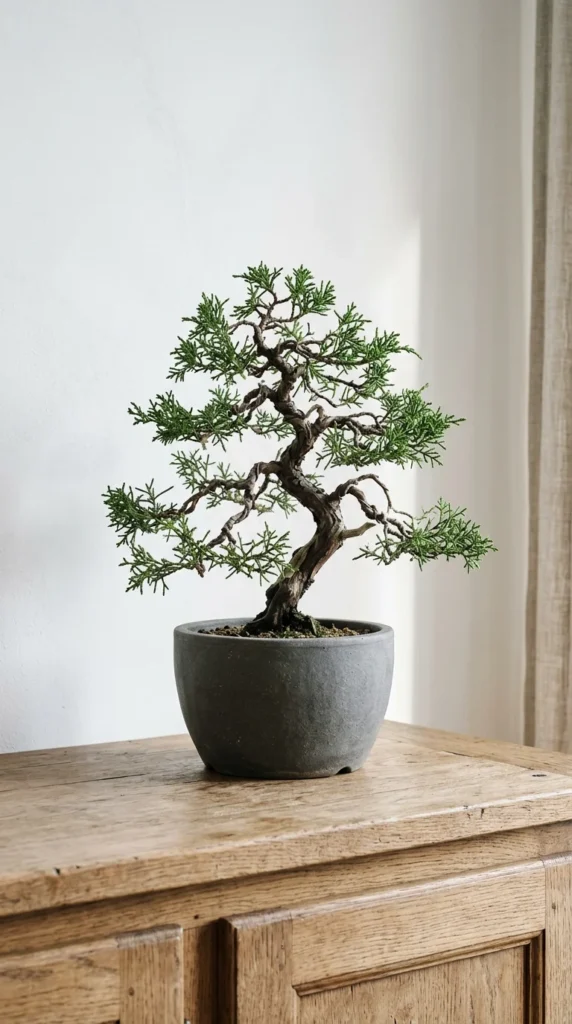
Japandi design thrives on a connection to the outdoors. However, in a small apartment, you don’t want a jungle that takes over your walking space. Instead, opt for “intentional” greenery. A single, well-placed Bonsai tree, a tall branch of Eucalyptus in a tall vase, or a sleek Snake Plant in a ceramic pot provides that burst of life. The key is to choose plants with structural beauty that complement the room’s lines rather than cluttering them.
5. Sliding Doors
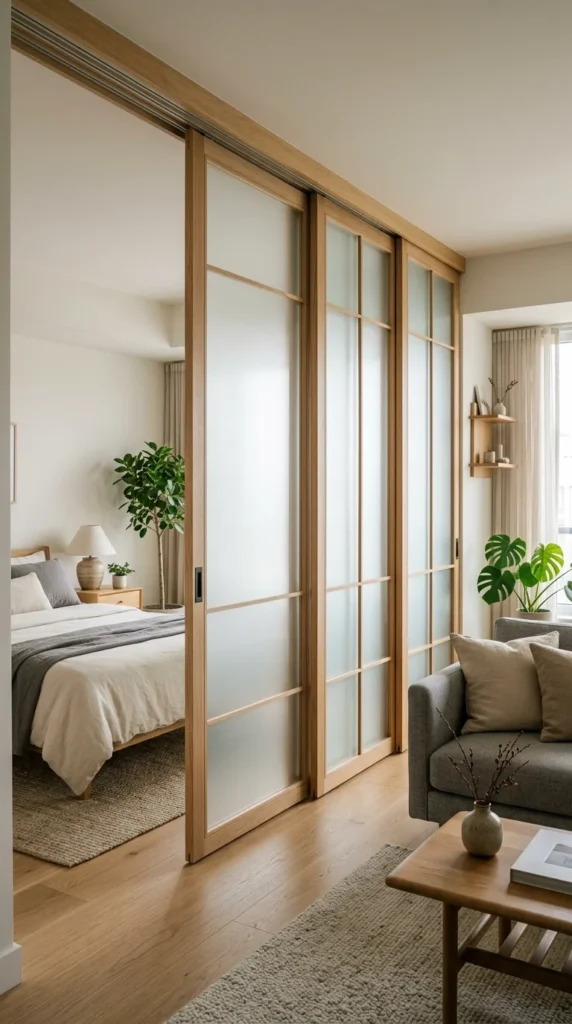
Traditional Japanese Shoji screens are perfect for small apartments because they provide privacy without blocking light. If you can’t install actual sliding doors, look for room dividers made of light wood or paper. These allow you to “hide” your workspace or bedroom when guests come over, maintaining the minimalist flow of the apartment while maximizing the utility of a single-room layout.
6. Textured Textiles
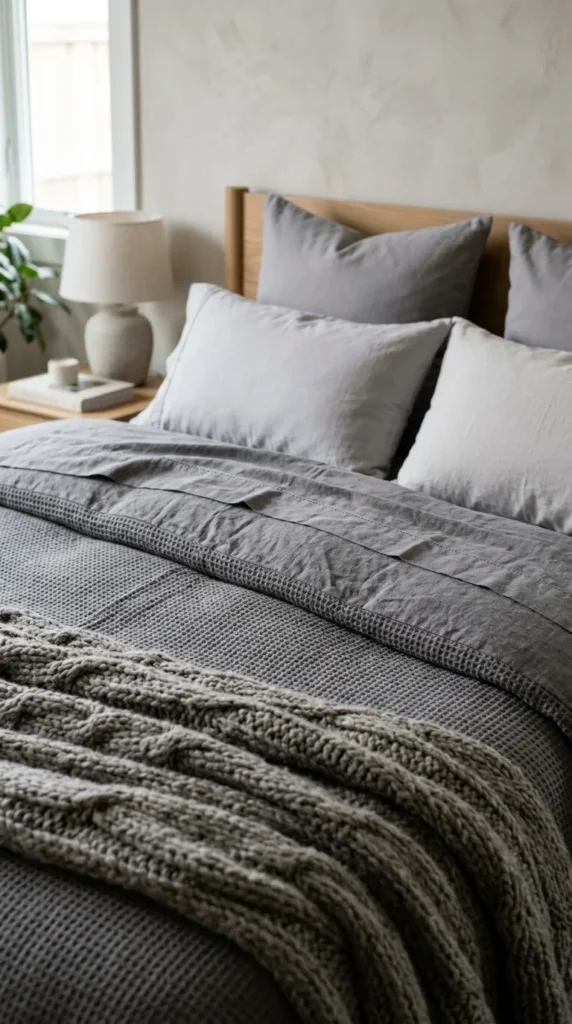
Since Japandi relies on a limited color palette, texture becomes your best friend for creating visual interest. Mix and match different fabrics to add depth. A waffle-weave hand towel in the bathroom, a chunky wool rug in the living room, and linen curtains in the bedroom create a sensory experience. These “soft” elements provide the Scandinavian hygge (coziness) that balances the “hard” Japanese minimalism.
7. Statement Lighting
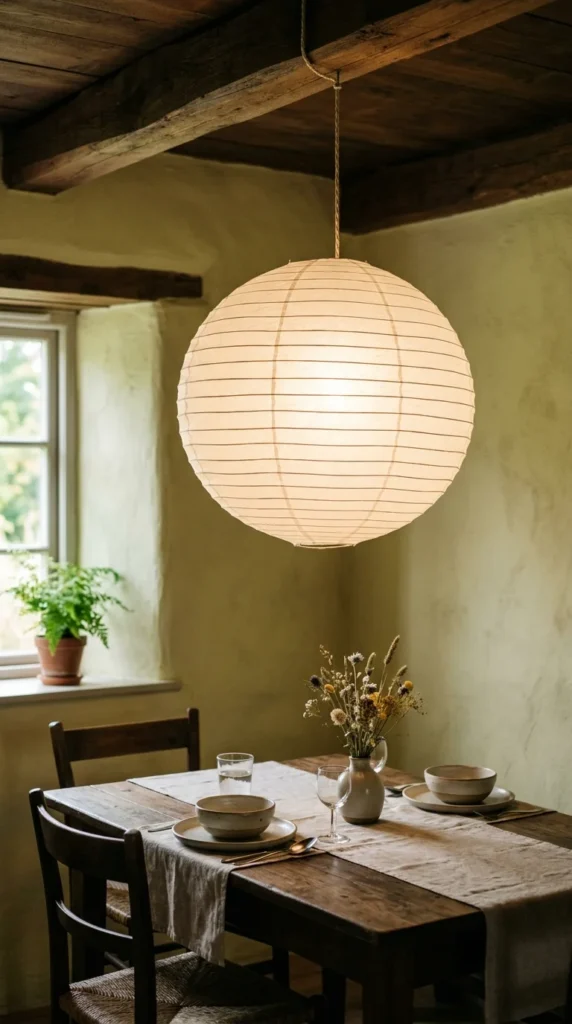
Lighting in a Japandi home should be soft and diffused. Avoid harsh overhead lights that cast deep shadows. Instead, choose statement pieces like oversized rice paper lanterns or sleek, matte-black floor lamps with Nordic silhouettes. In a small apartment, a beautiful pendant light can act as a focal point, drawing the eye upward and defining a specific area, like a dining nook, without the need for physical walls.
8. Functional Zones
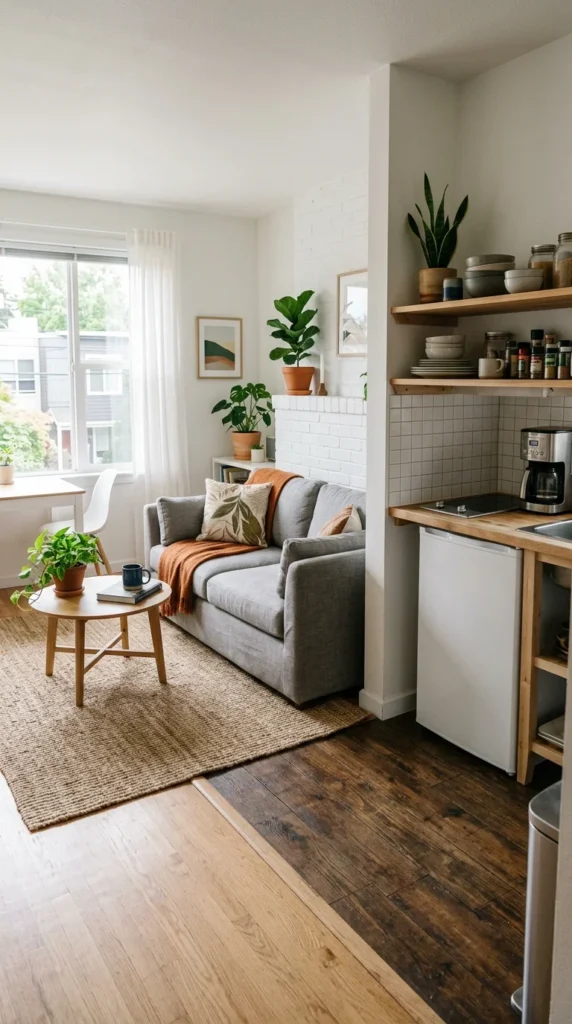
When you live in a studio or a small one-bedroom, your living, dining, and working areas often overlap. Use rugs, lighting, or furniture placement to create “zones.” A jute rug can anchor the living area, while a small wooden bench can mark the “entryway.” This psychological division helps keep the apartment organized and prevents the “cluttered” feeling that comes when activities bleed into one another.
9. Minimalist Art
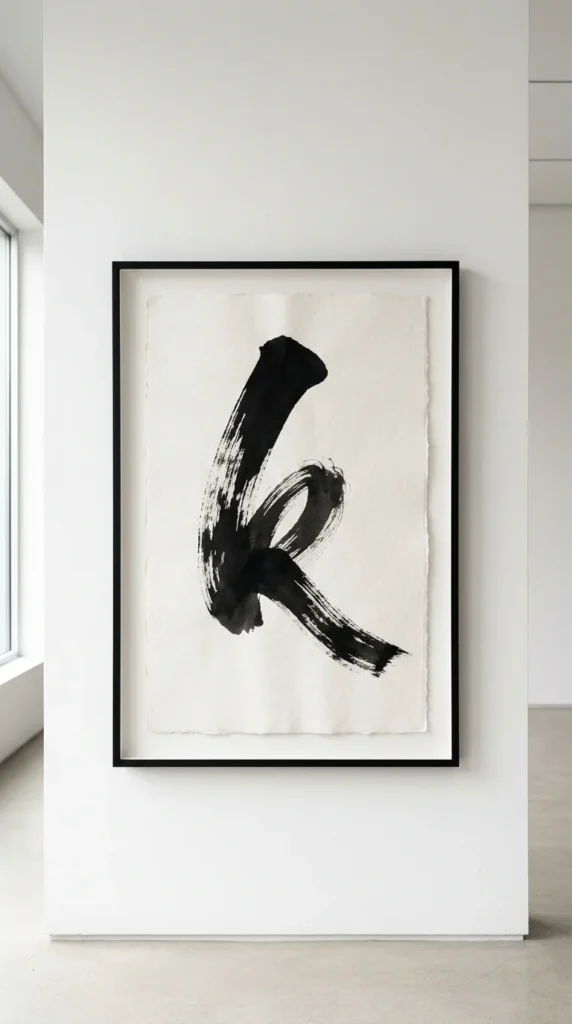
Forget the gallery wall; Japandi is about the power of the singular. Choose one or two pieces of art that truly resonate with you. Abstract line drawings, Japanese calligraphy, or nature photography in simple wooden frames work best. Leaving plenty of “negative space” around the art allows the piece to breathe and prevents the walls from feeling like they are closing in on you.
10. Multi-functional Pieces
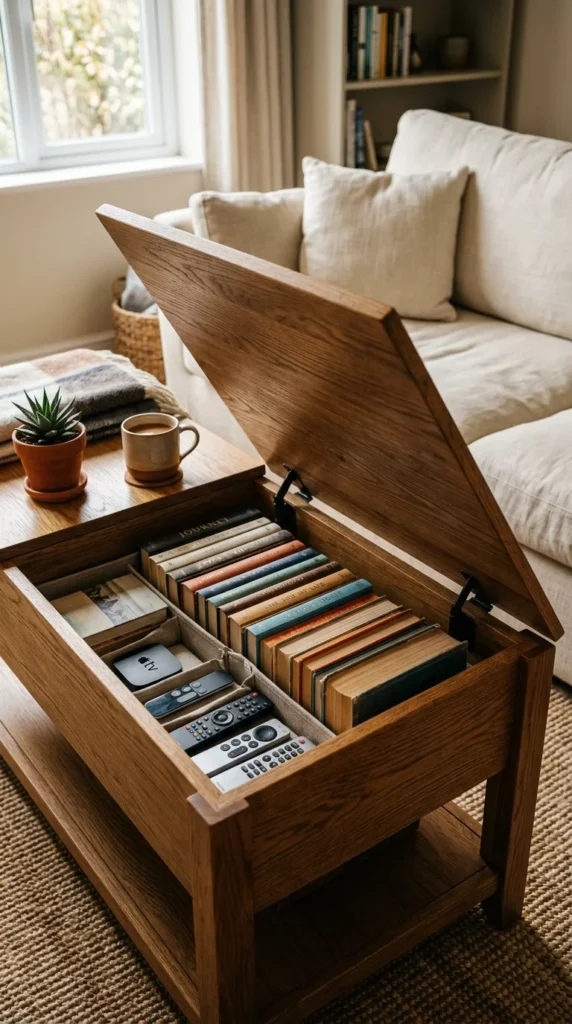
Every inch counts in a small apartment. Look for furniture that works double-duty. A storage ottoman can serve as a seat, a footrest, and a place to hide blankets. A dining table can double as a desk. The Japandi aesthetic prizes “considered” living, which means every object in your home should have a purpose and a designated place to live when not in use.
11. Negative Space
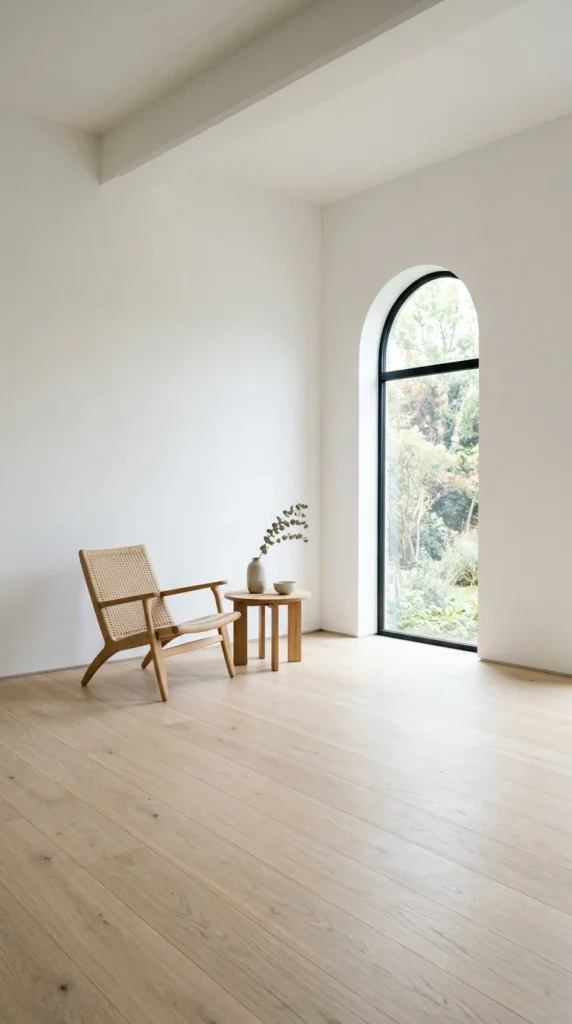
In Japanese culture, the concept of Ma refers to the beauty in the empty space between objects. Don’t feel the need to fill every corner of your apartment. Empty space is not “wasted” space; it is “breathing” space. By leaving parts of your floor and walls bare, you create a sense of calm and allow the furniture you do have to stand out as sculptural elements.
12. Earthy Ceramics
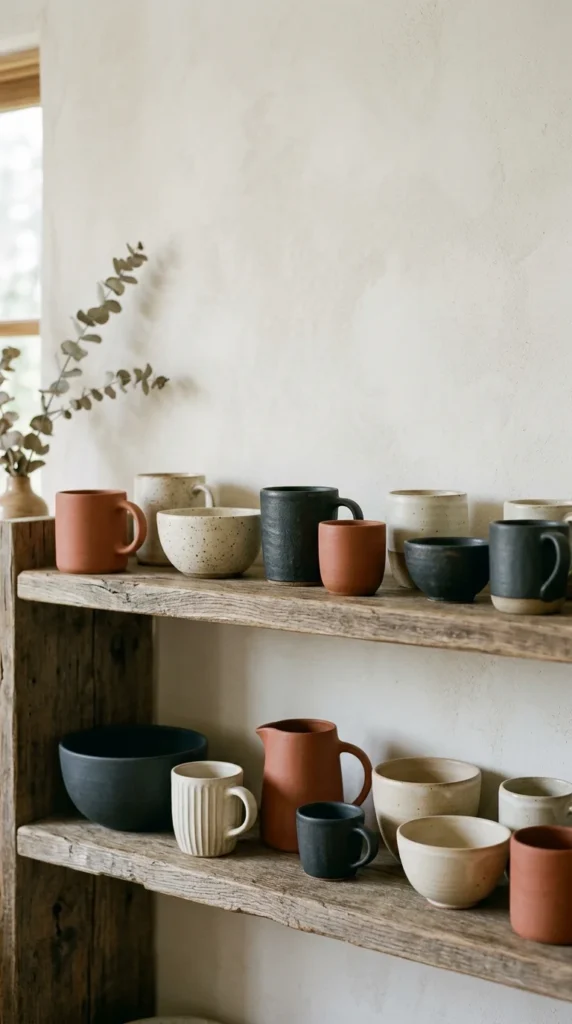
Swap out plastic containers and mass-produced kitchenware for handmade ceramics. Look for “imperfect” pieces—glazes that aren’t quite uniform or shapes that are slightly organic. This embodies the wabi-sabi spirit. Displaying a few beautiful bowls on an open shelf adds a personal, artisanal touch to your small kitchen without feeling like clutter.
13. Light Wood
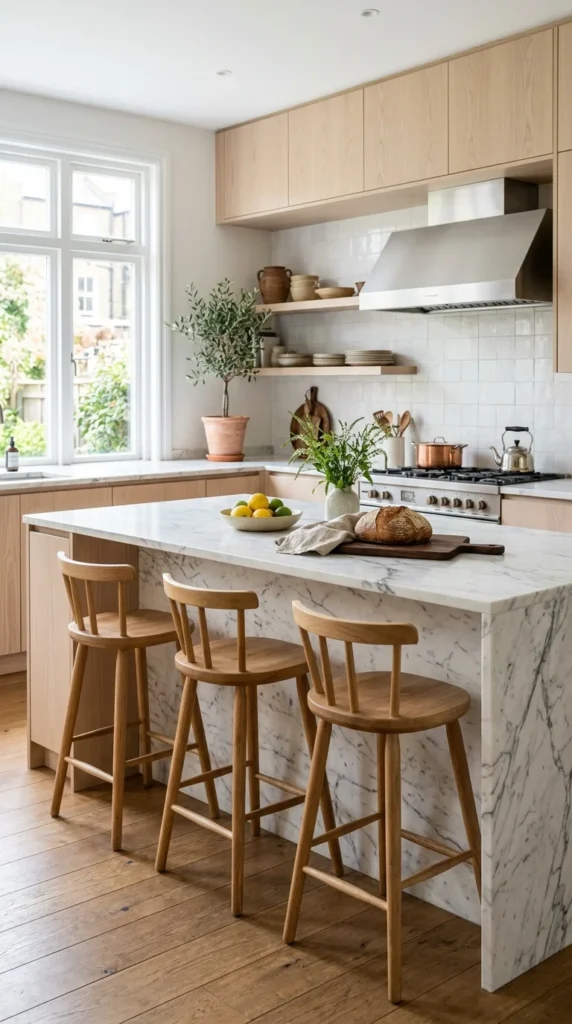
While Scandinavian design often uses very pale woods and Japanese design sometimes uses darker cedar, the Japandi sweet spot is a warm, light-to-medium wood. Avoid high-gloss finishes. Matte, natural wood surfaces feel warmer to the touch and help bridge the gap between the modern and the traditional. It creates a seamless look that makes small rooms appear more cohesive.
14. Floor Seating
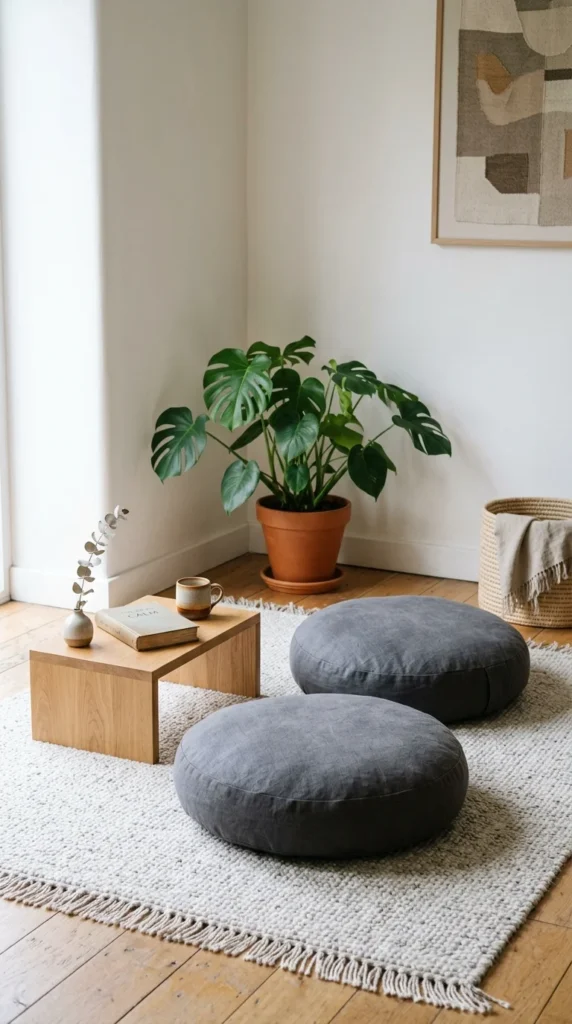
If your living room is too small for a full-sized sofa, consider floor cushions or “Zafu” pillows. They are easy to move, can be stacked when not in use, and provide a cozy, intimate seating arrangement for guests. This is a classic Japanese solution for small-scale living that adds an instant sense of Zen to the room.
15. Open Shelving
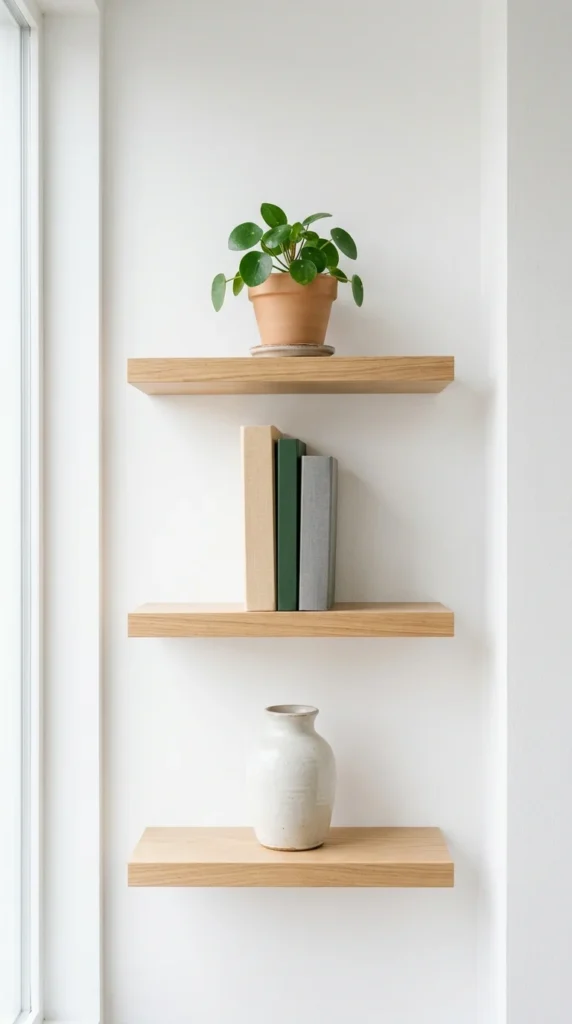
Open shelving can make a kitchen or living area feel larger because you can see the wall behind the items. The trick to Japandi open shelving is “curation.” Only display items that are both functional and beautiful. If you have mismatched plastic cups or cluttered spices, hide them in cabinets and save the shelves for your best tea set or a single trailing plant.
16. Contrast Accents
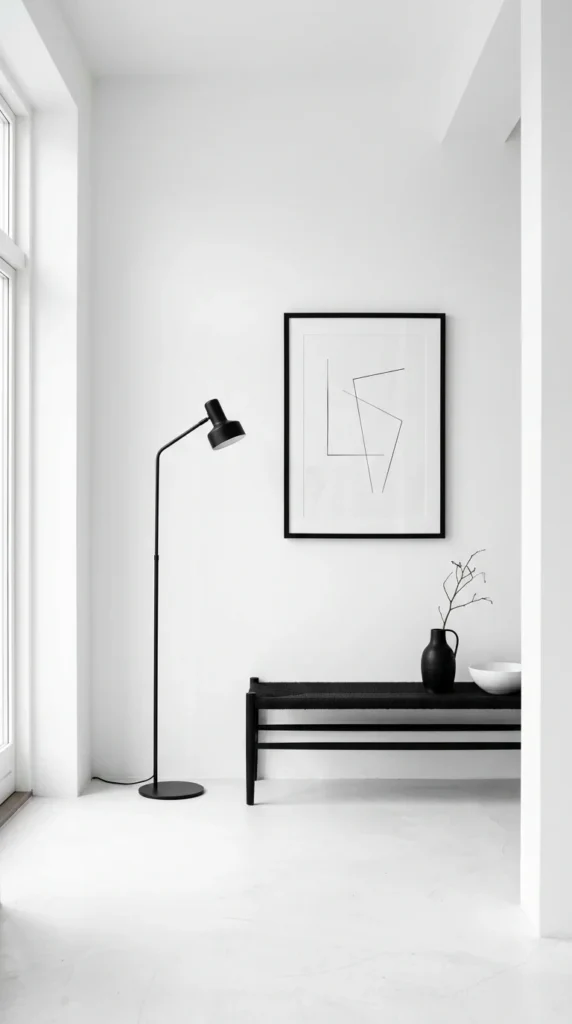
While the palette is mostly neutral, Japandi often uses black as a “grounding” color. Think of it like the ink in a Japanese painting. Small touches—a black faucet in the kitchen, a black metal lamp base, or black hardware on cabinets—add a contemporary “edge” to the soft Scandi backdrop. These accents provide focus points that guide the eye through the room.
17. Organic Shapes
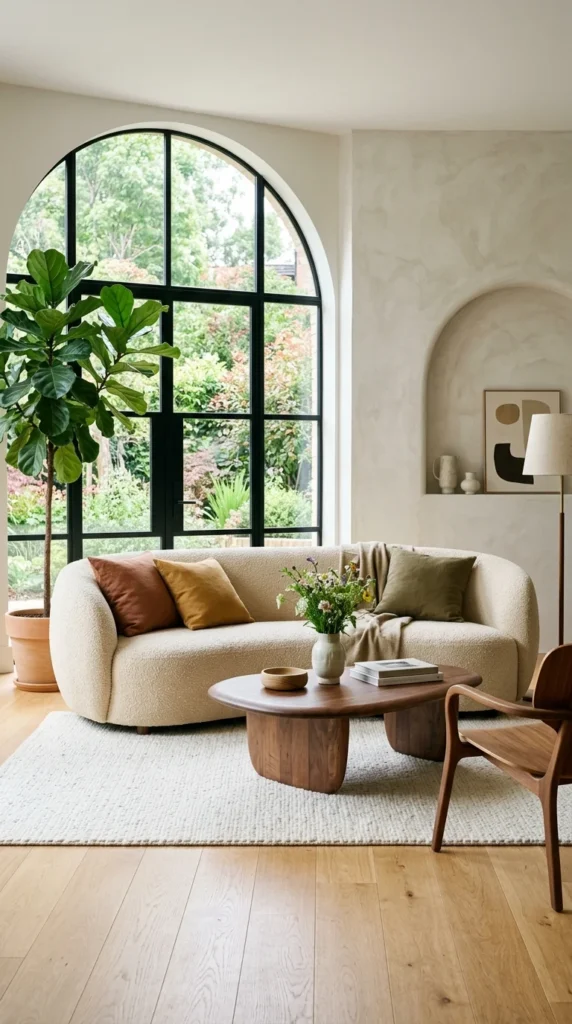
To soften the straight lines of a typical apartment, incorporate organic, rounded shapes. A circular mirror, a curved sofa, or a pebble-shaped coffee table can break up the “boxy” feeling of a small room. These shapes feel more natural and fluid, contributing to the overall sense of tranquility and ease.
18. Sheer Curtains
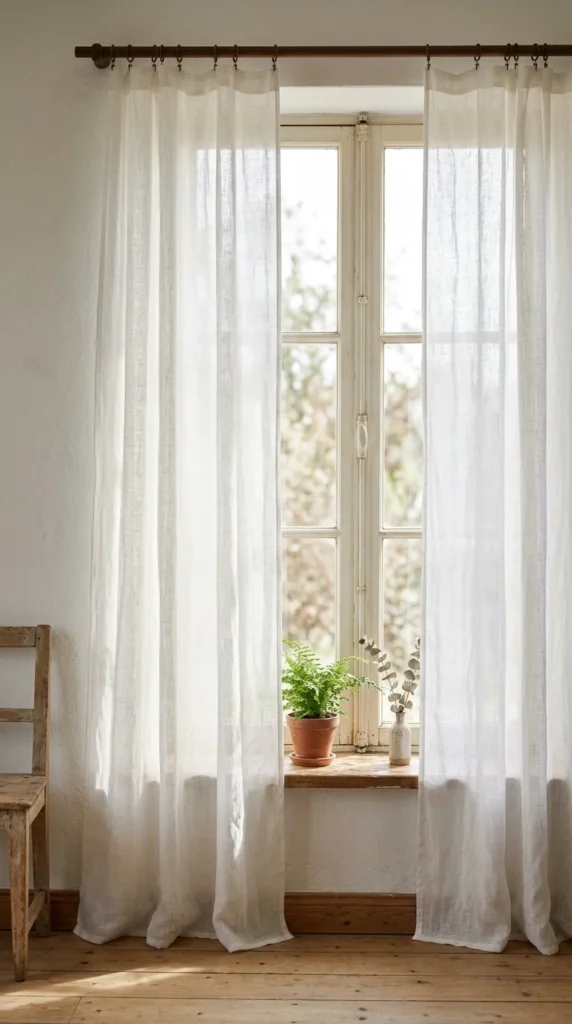
Privacy is essential, but heavy drapes can make a small room feel claustrophobic. Sheer linen or cotton curtains allow maximum sunlight to penetrate the apartment while still providing a soft barrier from the outside world. The way the fabric catches the light creates a dreamy, ethereal atmosphere that is quintessentially Japandi.
19. Hidden Storage
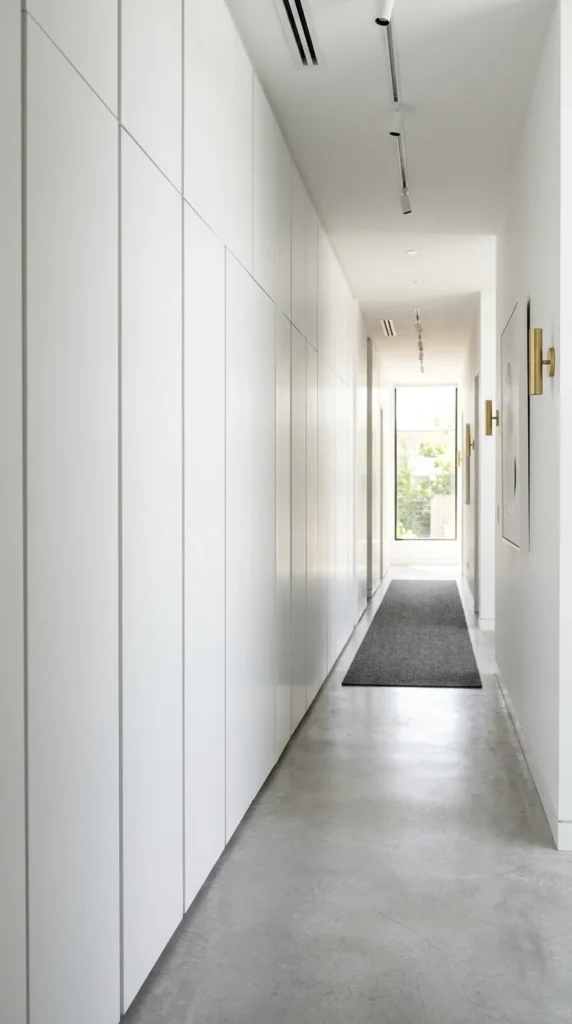
To maintain a minimalist look, you need clever storage. Built-in cabinets that match the color of your walls can “disappear,” providing massive amounts of storage without taking up visual space. In a small apartment, use every “dead” space—under the bed, above the doors, or inside hollow benches—to keep your belongings out of sight.
20. Dried Florals
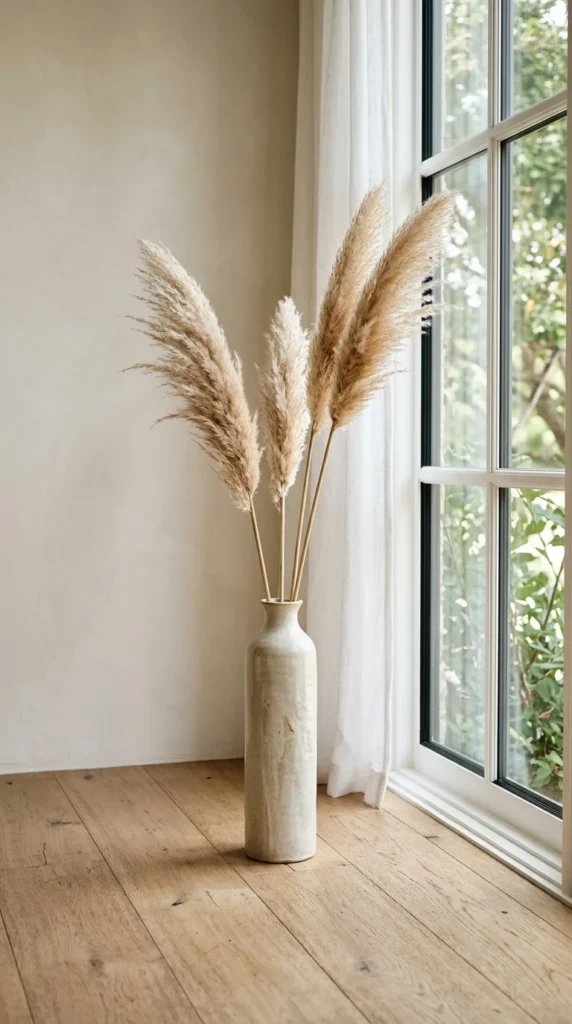
If you find it difficult to keep plants alive, dried florals are a perfect Japandi alternative. Pampas grass, dried eucalyptus, or cotton stems offer a muted, earthy aesthetic that lasts forever. They bring a bit of the “outside” in without the need for watering or sunlight, making them ideal for darker corners of a small apartment.
21. Natural Stone
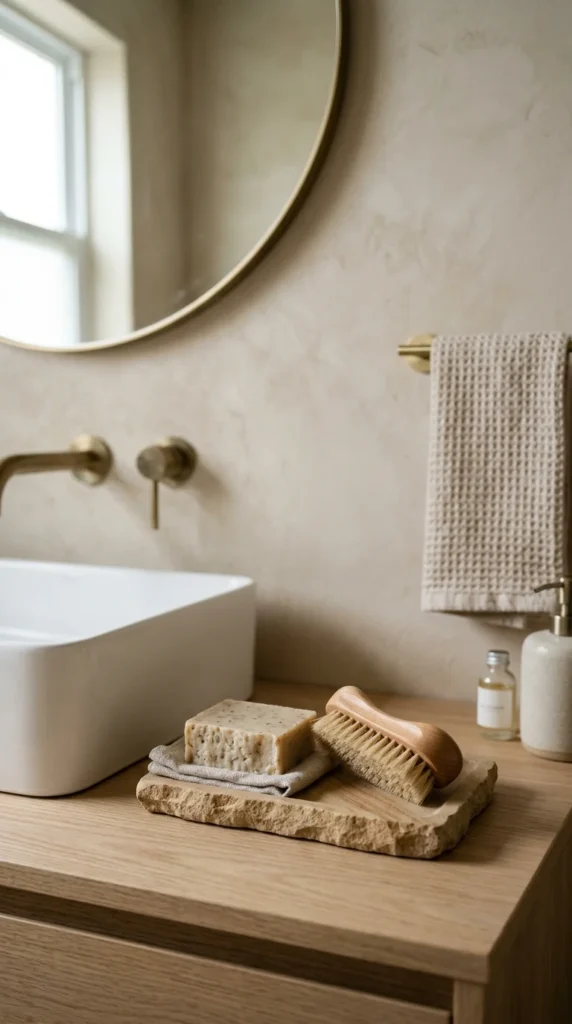
Bring in the element of “earth” with natural stone accents. Marble, slate, or even smooth river stones can be used as coasters, soap dishes, or decorative trays. The cold, hard texture of stone provides a beautiful contrast to the warmth of the wood and the softness of the textiles, completing the trifecta of Japandi materials.
22. Tactile Rugs
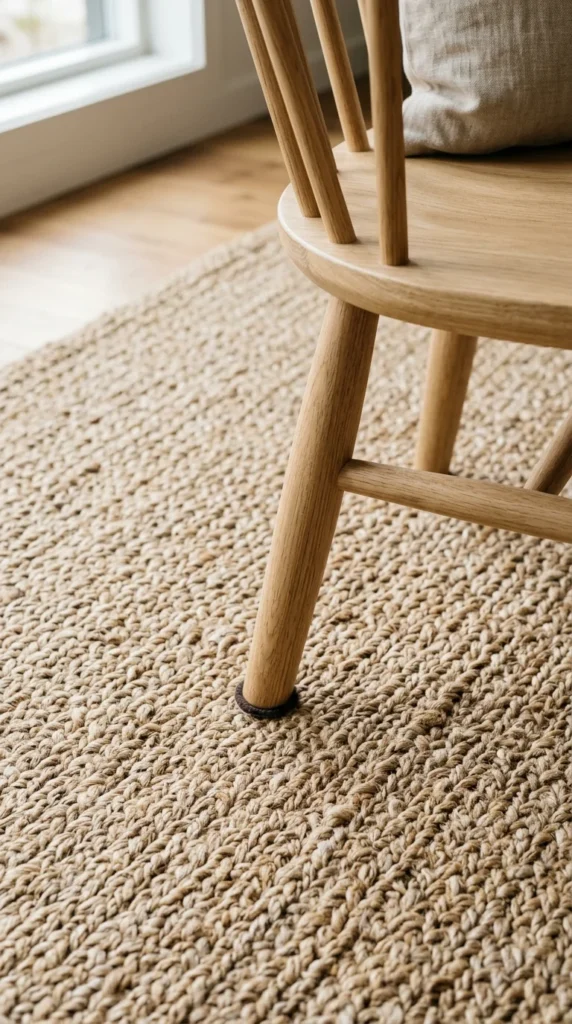
Floor coverings are essential for “warming up” a space. Instead of colorful patterns, look for rugs with high tactility. A jute or sisal rug provides a rustic, natural feel, while a low-pile wool rug offers softness underfoot. In a small apartment, a rug can act as the “anchor” for your furniture, bringing all the disparate elements together into one cohesive, calm unit.