
Living in a compact home often feels like a constant battle between your love for literature and the reality of your square footage. When every inch of floor space is precious, a traditional, bulky library wall simply isn’t an option. However, having a small footprint doesn’t mean you have to donate your beloved collection or switch entirely to e-readers.
Maximizing small spaces requires a shift in perspective. Instead of looking for floor space, we look for “dead” space—corners, heights, and areas behind furniture that usually go unnoticed. The following 21 ideas prove that with a little creativity, you can store hundreds of books while actually enhancing the aesthetic of your home.
1. Floating Shelves
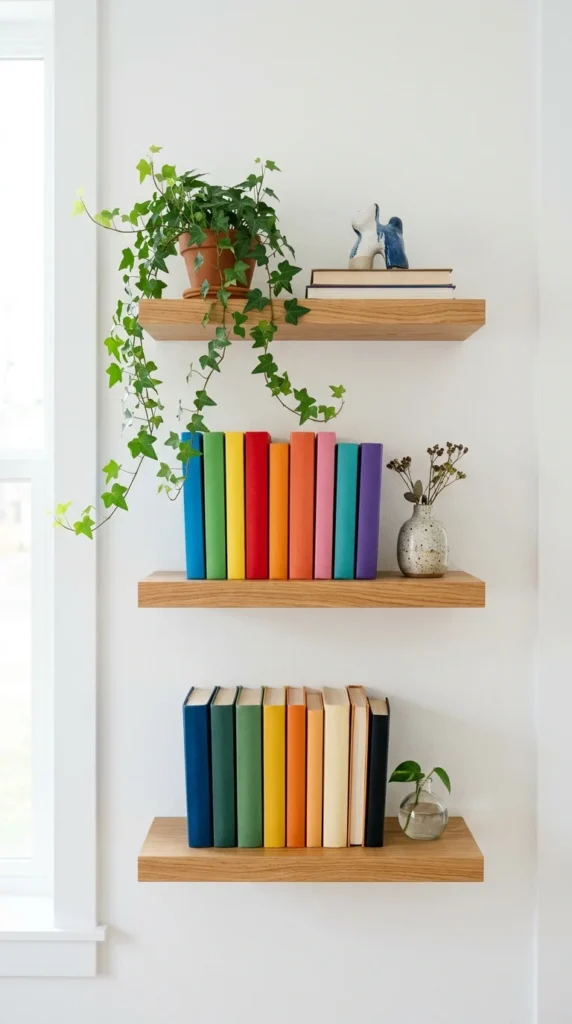
Floating shelves are the ultimate “space-saving” champions because they eliminate the need for bulky vertical supports or a base that takes up floor real estate. By mounting shelves directly into the wall studs, you create a sleek, airy look that keeps the room feeling open. You can stagger them for a dynamic, modern feel or align them vertically to draw the eye upward, making a low ceiling feel higher. They are particularly effective in hallways or above desks where floor-standing units would block traffic.
2. Corner Units
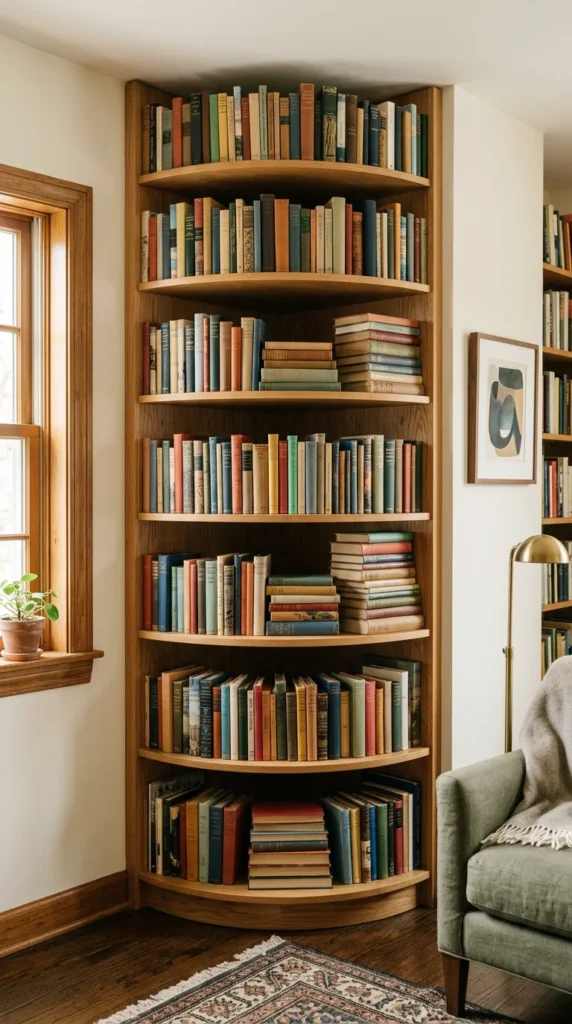
Corners are often the most underutilized areas in any room. A dedicated corner bookshelf utilizes that awkward 90-degree intersection to provide deep storage without protruding into the main walking paths. Whether you choose a “zigzag” style shelf or a more traditional curved unit, these pieces turn a “dead” zone into a functional library. It’s a perfect spot for creating a reading nook; just add a small armchair and a floor lamp right next to it.
3. Ladder Bookshelves
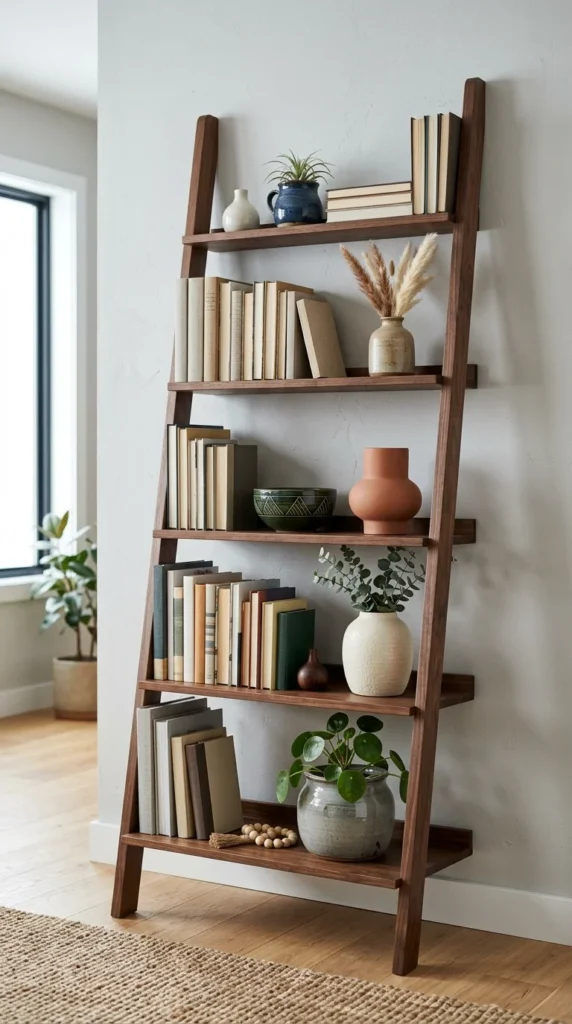
Ladder shelves, or “lean-to” shelves, offer a trendy, casual vibe that works wonders in tight quarters. Because they narrow toward the top, they don’t feel as imposing as a standard rectangular unit. The graduated depth allows you to store larger coffee table books on the bottom and smaller paperbacks or decorative items on the top. Their footprint is minimal, and because they rest against the wall, they provide a sense of stability without the visual weight of a cabinet.
4. Over-the-Door Racks
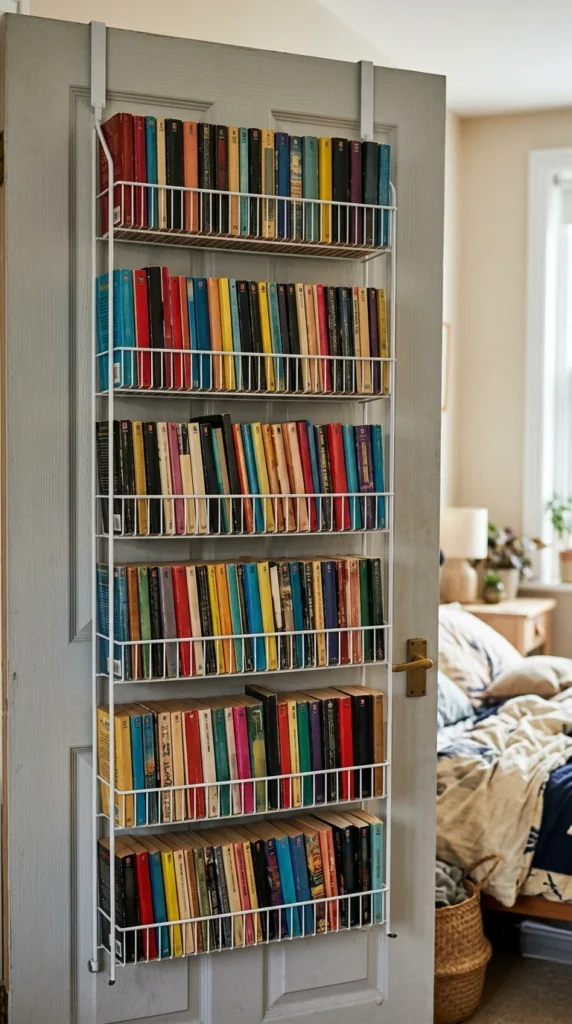
The space above and behind your doors is a goldmine for storage. Over-the-door racks, often marketed for shoes or spices, are actually perfect for mass-market paperbacks. If you want something more permanent, you can install a custom wooden shelf specifically in the space between the top of the door frame and the ceiling. It’s a space that is almost never used, making it the perfect “hidden” library for books you’ve already read but want to keep.
5. Invisible Bookshelves
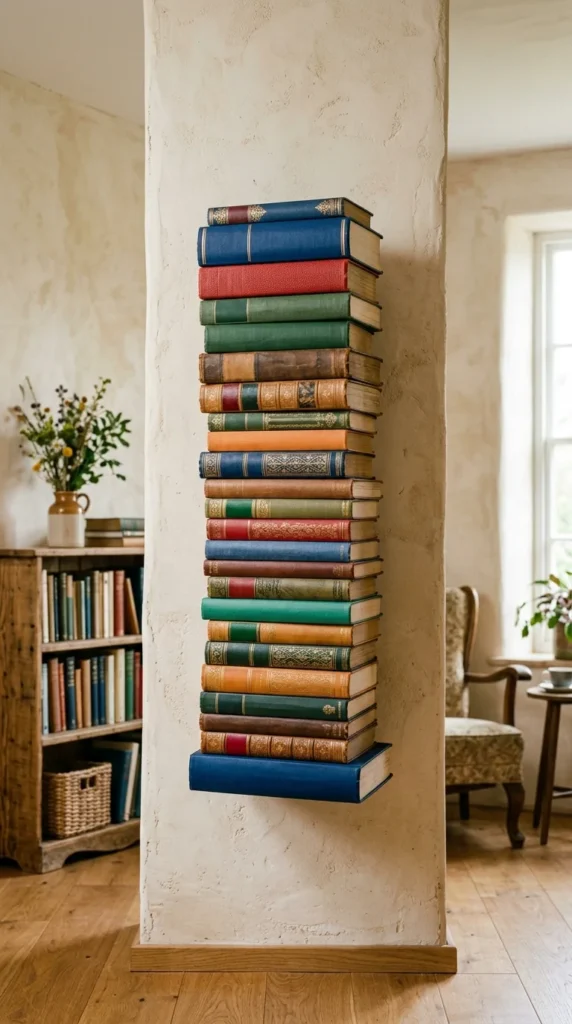
Invisible bookshelves use a small, L-shaped metal bracket that gets hidden by the bottom-most book. The result is a stack of books that looks like it’s floating magically against the wall. This is a brilliant solution for ultra-minimalists. It takes up zero floor space and turns your books into a piece of 3D wall art. By grouping them in clusters of three or four, you can create a striking focal point on a narrow strip of wall.
6. Slim Towers
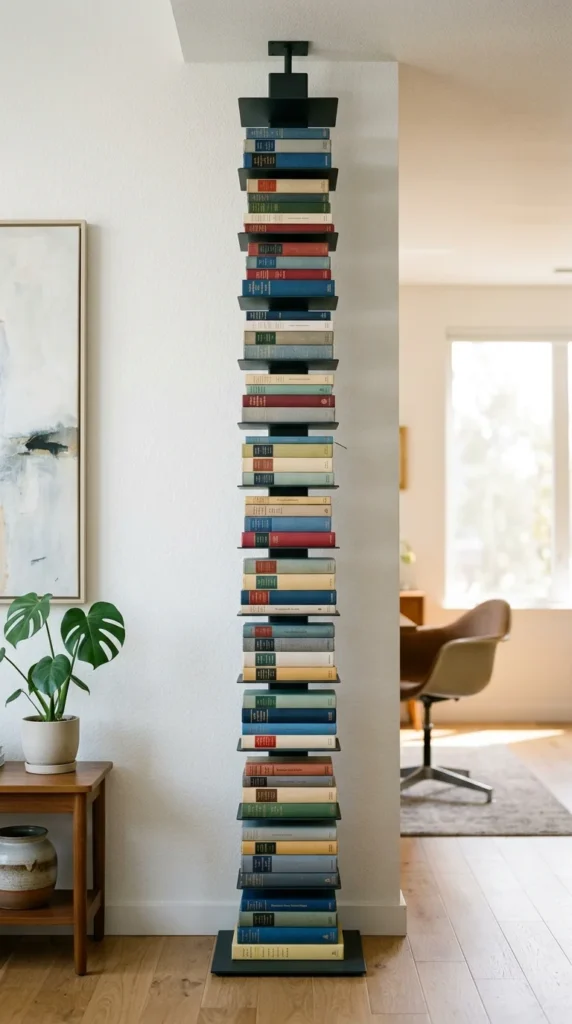
When you can’t go wide, go tall. Slim tower shelves, sometimes called “spine” bookshelves, occupy a footprint of less than one square foot. They feature small horizontal metal plates that hold stacks of books vertically. These are ideal for those tiny gaps between a sofa and a wall or in the small space next to a nightstand. They are sturdy, modern, and can hold a surprising number of volumes in a very compact area.
7. Rolling Carts
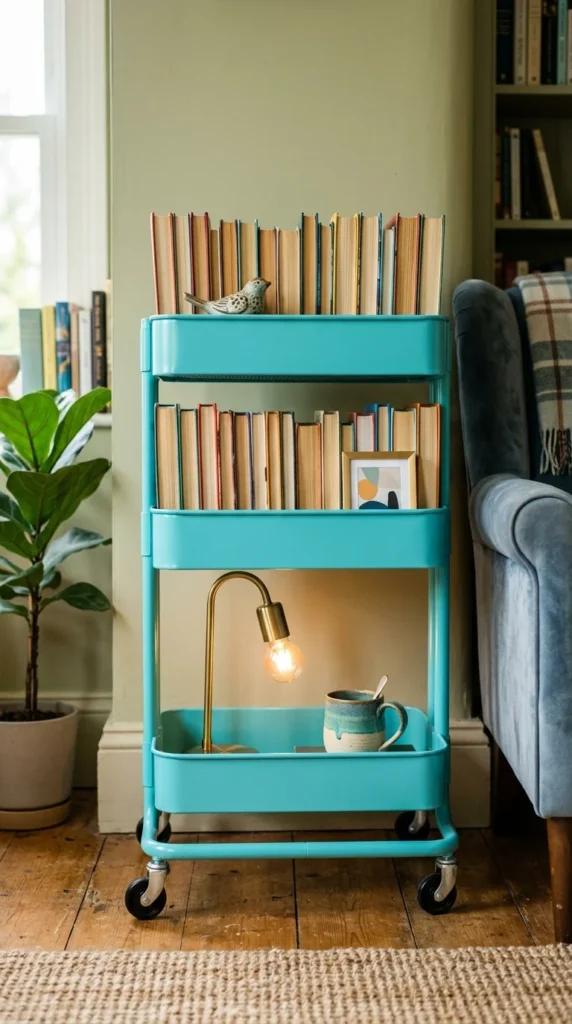
The beauty of a rolling cart lies in its mobility. If you’re living in a studio, you might need your space to be flexible. A rolling book cart can serve as a nightstand at night and be wheeled over to the sofa during the day. It provides three levels of storage and a flat top surface for your coffee. Plus, the industrial aesthetic of a metal cart adds a pop of color and personality to a room.
8. Window Sill Extensions
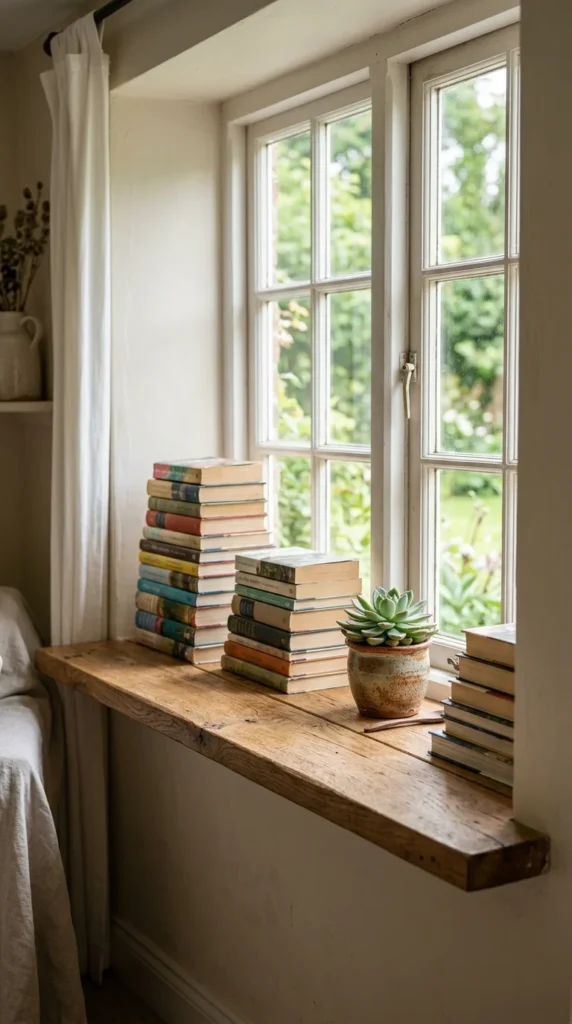
If you have deep window sills, you’re in luck. If not, you can easily extend them with a simple wooden board. Using a window sill as a bookshelf not only saves space but also places your books in the best natural light. Just be mindful of sun damage; use this for books you aren’t worried about slightly fading, or use UV-protective window film to keep your covers pristine.
9. Vertical Columns
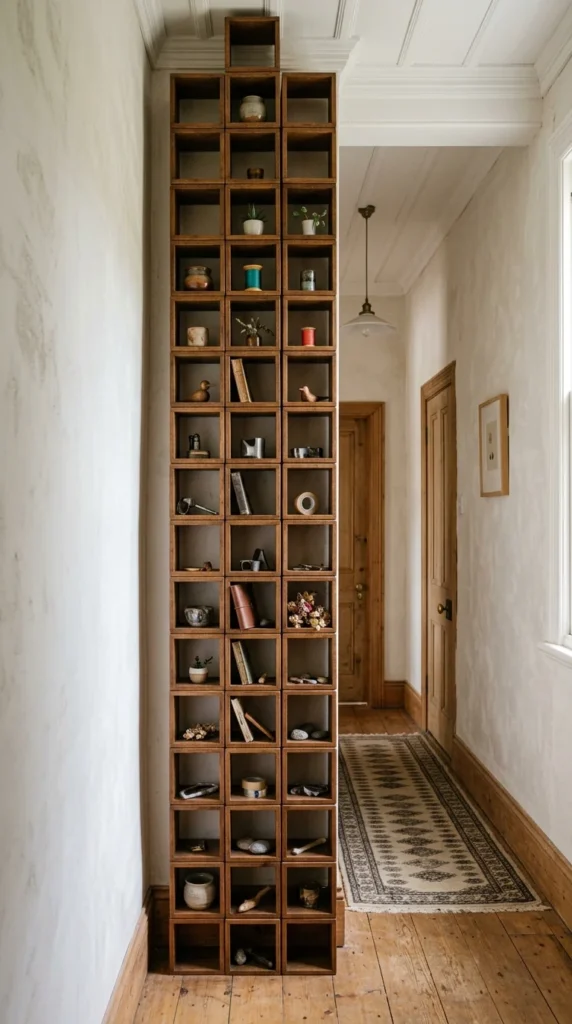
Vertical column shelving is about repetition and height. By stacking uniform cubbies or small shelves in a single straight line from floor to ceiling, you emphasize the height of the room. This trick draws the eye upward, which can actually make a small room feel more spacious. It’s a great way to utilize the “bit” of wall between two windows or next to a doorway.
10. Under-Bed Storage
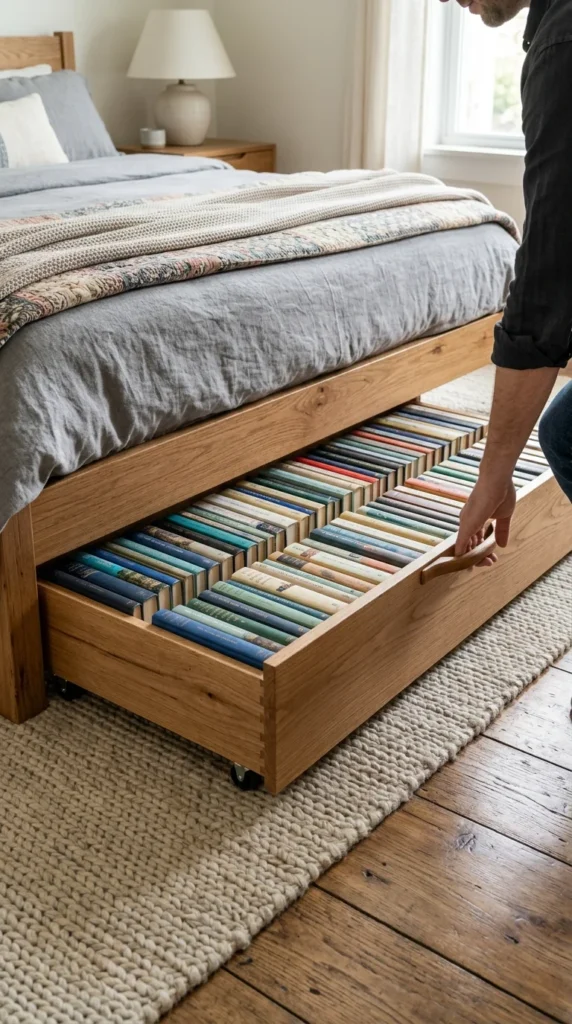
The area under your bed is essentially a horizontal closet. Instead of letting it collect dust bunnies, invest in low-profile rolling bins or purpose-built under-bed drawers. This is the perfect spot for “archival” storage—books you love but don’t need to grab every day. By keeping the spines facing up, you can easily scan your collection and pull out exactly what you’re looking for.
11. Headboard Shelves
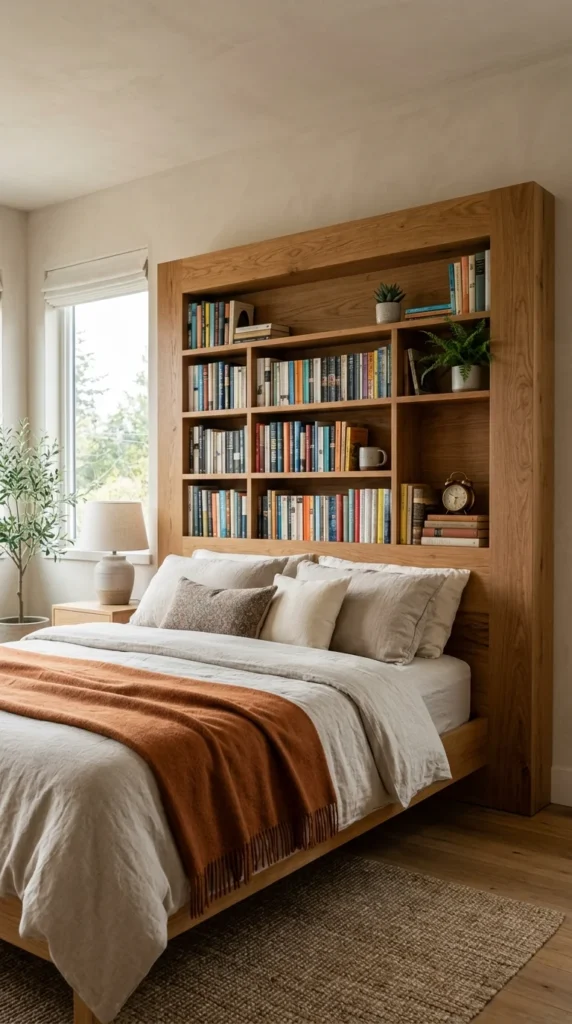
Why have a plain headboard when it could be a library? Many modern bed frames come with integrated shelving in the headboard. This eliminates the need for bedside tables, saving you several feet of floor space on either side of the bed. It’s the ultimate convenience for night-time readers, keeping your “to-be-read” pile within arm’s reach.
12. Wall-Mounted Cubes
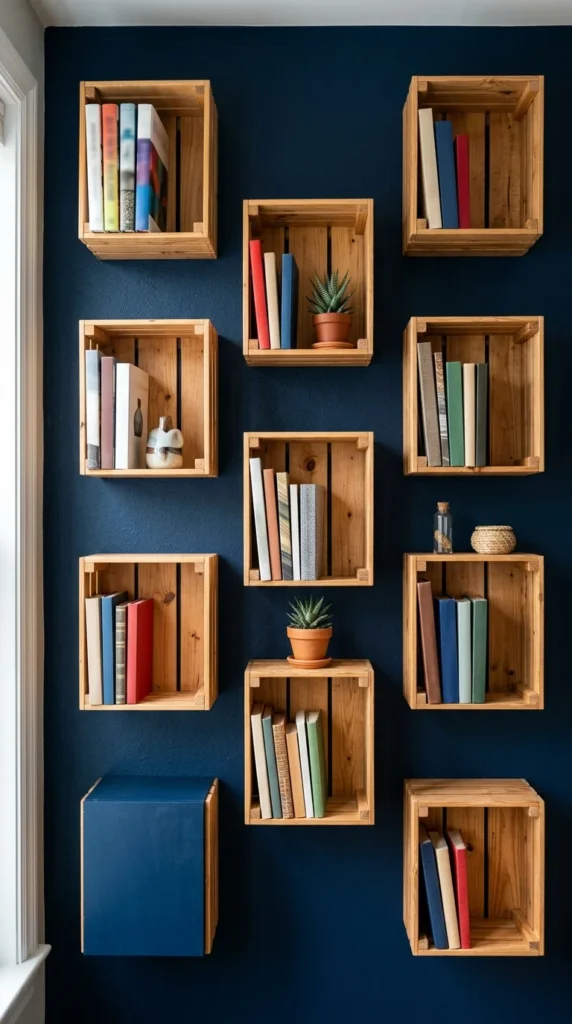
Wall-mounted cubes offer a more modular approach than long floating shelves. You can arrange them in any pattern you like—symmetrical, staggered, or even in a staircase shape. Because each cube is a self-contained unit, they provide a “framed” look for your books. You can mix and match sizes to accommodate both tiny paperbacks and tall art books, turning your storage into a customizable art installation.
13. Industrial Pipes
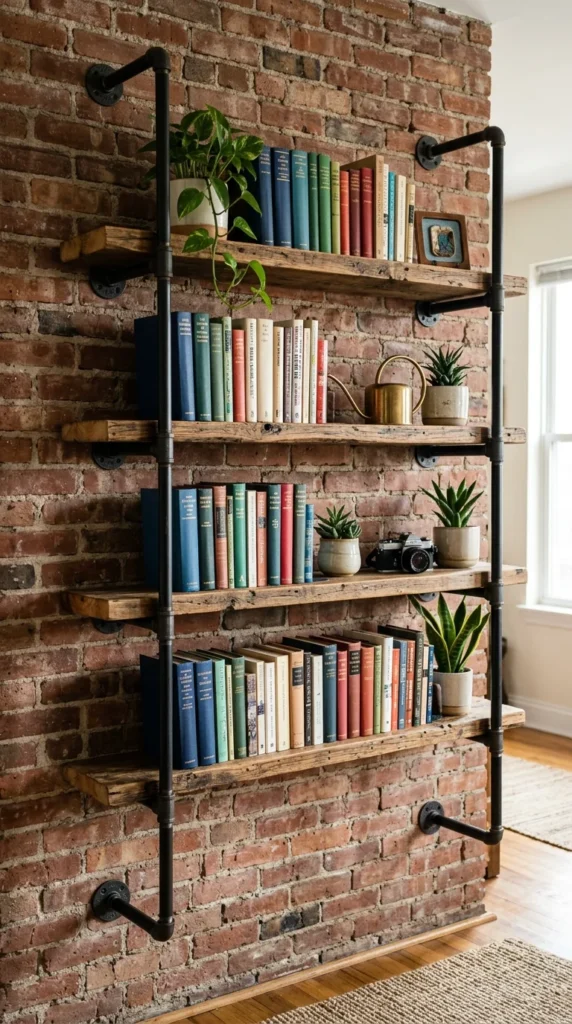
Industrial pipe shelving is a favorite for DIY enthusiasts and those who love the “loft” look. These shelves are incredibly sturdy, allowing you to store heavy encyclopedias or textbooks without fear of sagging. Because you build them yourself, you can customize the height and width to fit the exact dimensions of your space, such as around a radiator or over a television.
14. Behind-the-Sofa Consoles
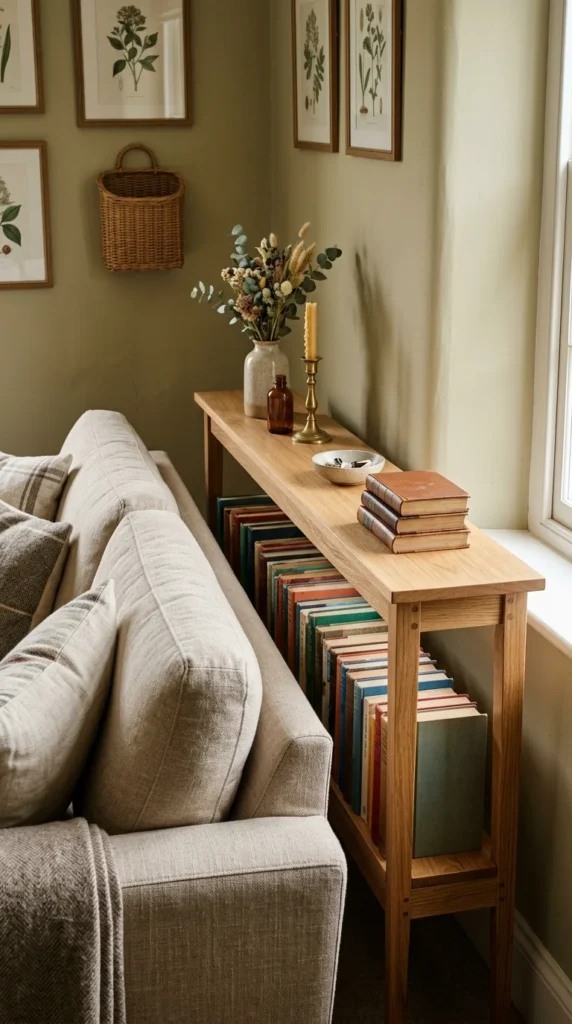
If your sofa isn’t pushed directly against the wall, you have space for a console shelf. Even a narrow 6-inch wide table can hold a significant number of books. This “hidden” storage keeps the room looking tidy while providing easy access to your favorites while you’re lounging. It also provides a handy surface for a lamp or a drink.
15. Repurposed Ladders
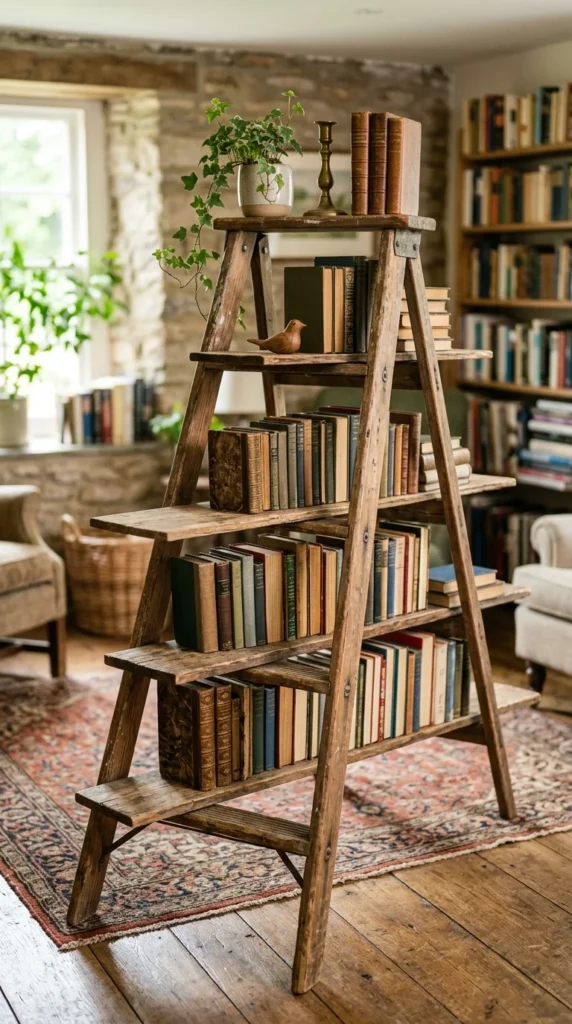
For a rustic or farmhouse aesthetic, a repurposed vintage ladder is a fantastic choice. By placing planks of wood across the rungs of an open A-frame ladder, you create wide, sturdy shelves with a lot of character. This takes up a bit more floor space than a floating shelf, but its open-air design prevents it from feeling heavy or intrusive in a small room.
16. Modular Hexagons
Genera
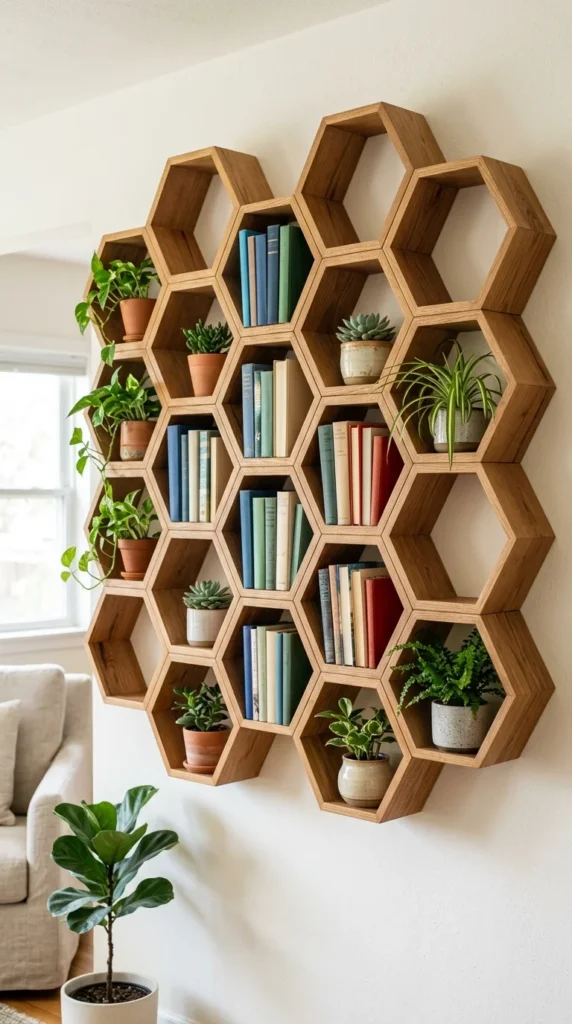
Hexagonal, or “honeycomb,” shelves are incredibly trendy and space-efficient. Their geometric shape allows them to fit together tightly, or you can spread them out across a wall to create a sense of movement. They are perfect for small collections or for highlighting “special” books. Because of their unique angles, books can be leaned against the sides, adding a touch of visual interest to your organization.
17. Rotatable Towers
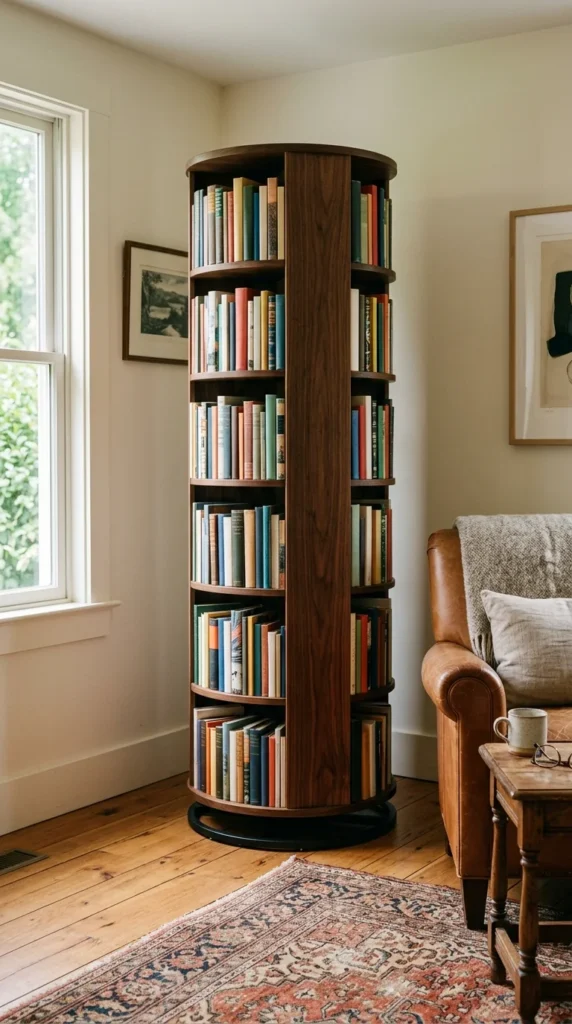
Inspired by old-fashioned library bookstands, the rotatable tower is a 360-degree storage solution. Because it spins, you can tuck it into a corner and still access every single book easily. It’s a high-density storage option that maximizes every square inch of its footprint. These are often aesthetically pleasing and serve as a great conversation piece.
18. Picture Ledges
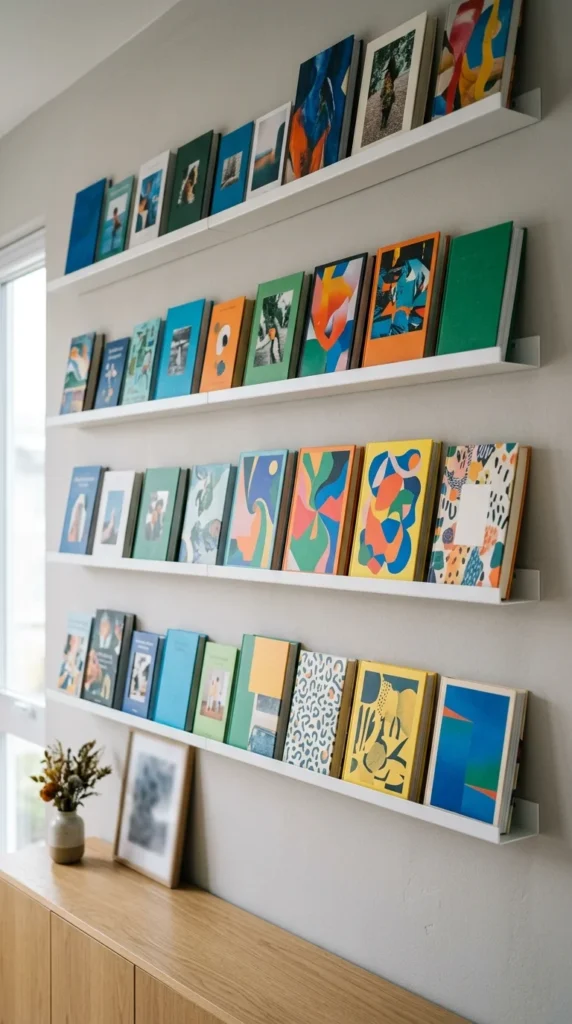
Picture ledges are very shallow—usually only 3 to 4 inches deep. Instead of storing books with the spines facing out, you display them with the covers facing forward. This is a common tactic in children’s rooms, but it works beautifully for adults too, especially for those with beautiful art books or graphic novels. It turns your book collection into a rotating art gallery and takes up almost zero physical space in the room.
19. Door Frame Surrounds
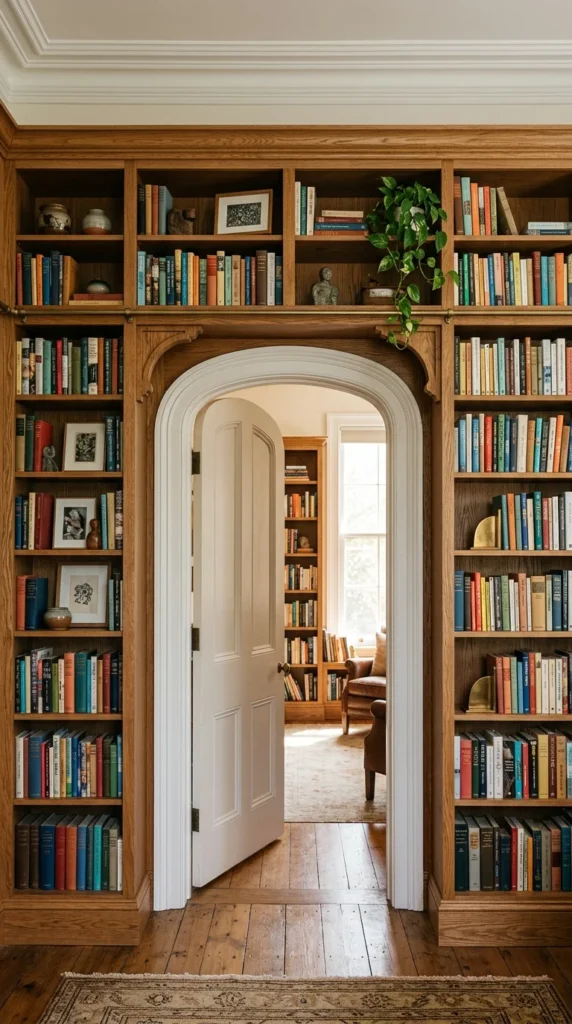
If you have a doorway in the middle of a wall, that wall space is often wasted. By building shelves that frame the door, you create a sophisticated “library” feel without losing any usable wall space where furniture might go. It utilizes the “up and over” space that is usually left empty, making the doorway itself a grand entrance to your literary world.
20. Staircase Risers
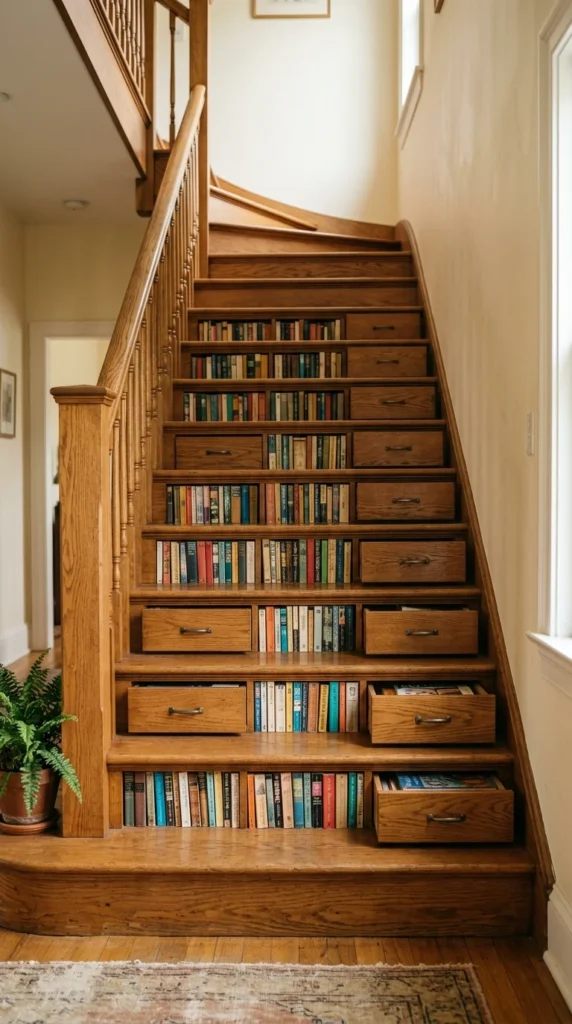
In two-story tiny homes or loft apartments, the stairs are a goldmine for storage. You can either use the space under the entire staircase for a large built-in unit, or even more creatively, turn the “risers” (the vertical part of the step) into drawers or open cubbies. It’s the ultimate way to hide a library in plain sight.
21. Built-in Niches
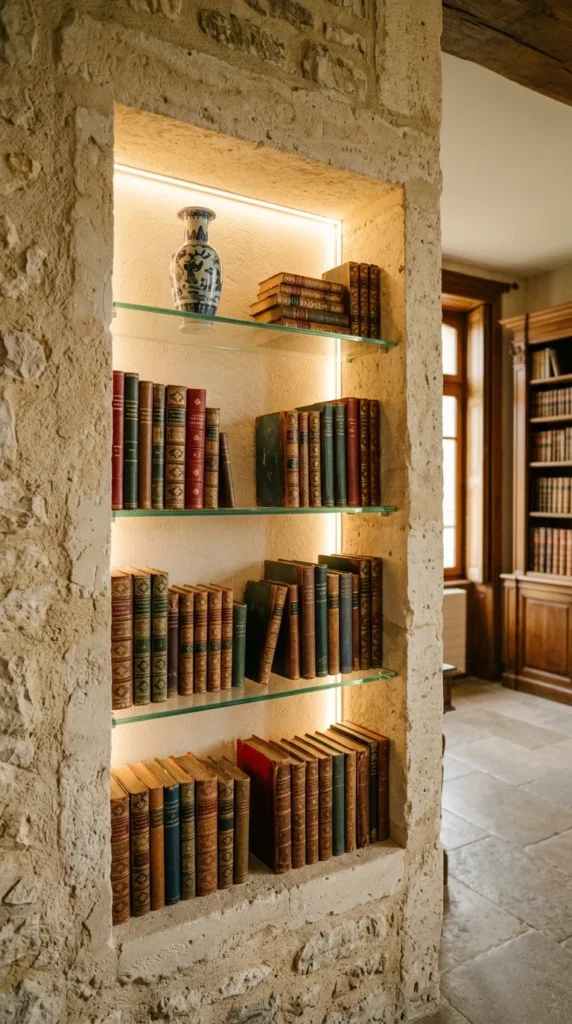
If you are renovating, consider carving out “niches” between the wall studs. These recessed shelves don’t protrude into the room at all; they sit flush with the wall. It’s the most seamless way to add storage to a small space. By adding a bit of backlighting or contrasting paint inside the niche, you can make your book collection look like a high-end museum display.