
In a small kitchen, every square inch of real estate is precious. We’ve all experienced the “junk drawer” phenomenon—that chaotic catch-all where whisks get tangled with twine and finding a vegetable peeler feels like a high-stakes archaeological dig. When you lack counter space and cabinet room, your drawers must work twice as hard.
Effective organization isn’t just about making things look pretty for social media; it’s about workflow efficiency. Imagine reaching for a teaspoon and finding it instantly, or opening a deep drawer to find your heavy pots nested perfectly without a clatter. By implementing these 21 strategic organization ideas, you can transform your cramped kitchen into a streamlined culinary sanctuary.
1. Bamboo Dividers
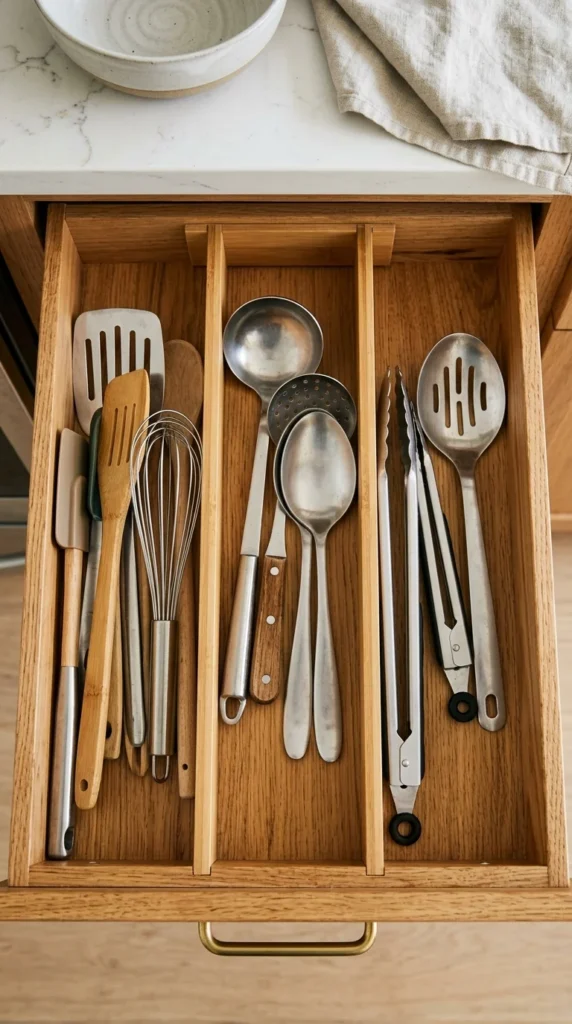
Bamboo dividers are the gold standard for drawer organization because they are sustainable, aesthetically pleasing, and highly versatile. These spring-loaded tension bars can be moved to accommodate the specific lengths of your tools. Instead of a one-size-fits-all plastic tray, bamboo slats allow you to create custom-width “lanes” for your rolling pins, silicone spatulas, and whisks. The natural wood finish adds a touch of warmth to the interior of your cabinetry, making the simple act of opening a drawer feel like a luxury experience.
2. Expandable Trays
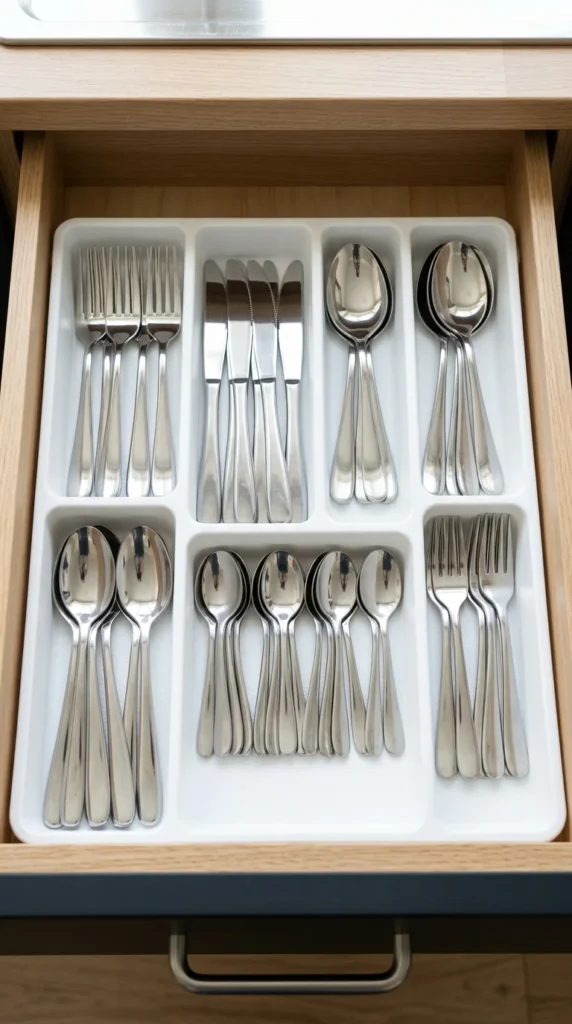
The biggest mistake people make is buying an organizer that doesn’t fit the full width of the drawer, leaving “dead zones” on the sides where crumbs and loose items collect. Expandable trays solve this by sliding out to hug the edges of your drawer perfectly. Look for models with non-slip feet to ensure the tray doesn’t slide to the back every time you shut the drawer. These are ideal for standard cutlery, ensuring that your forks, knives, and spoons have a dedicated home that stays put.
3. Clear Acrylics
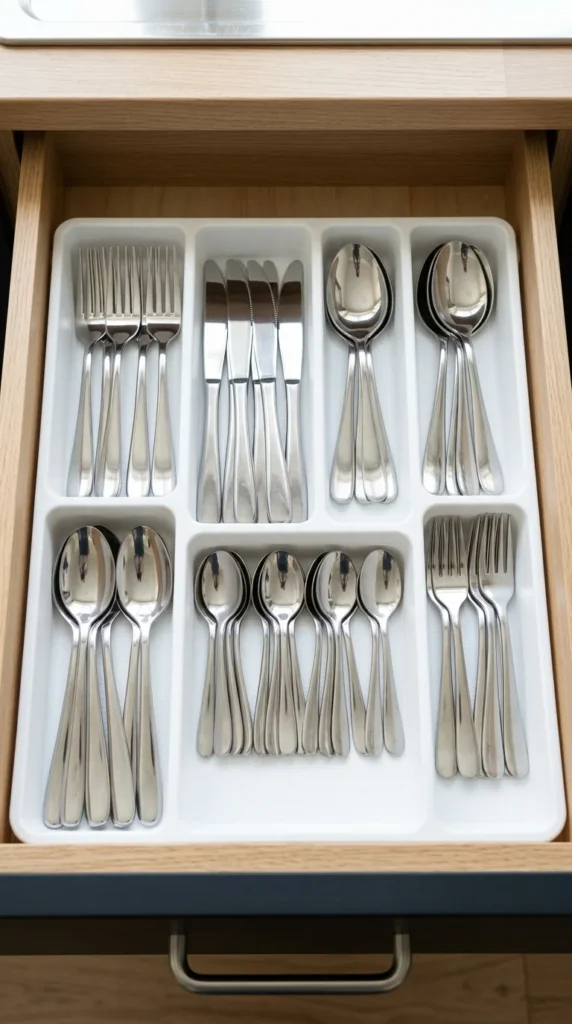
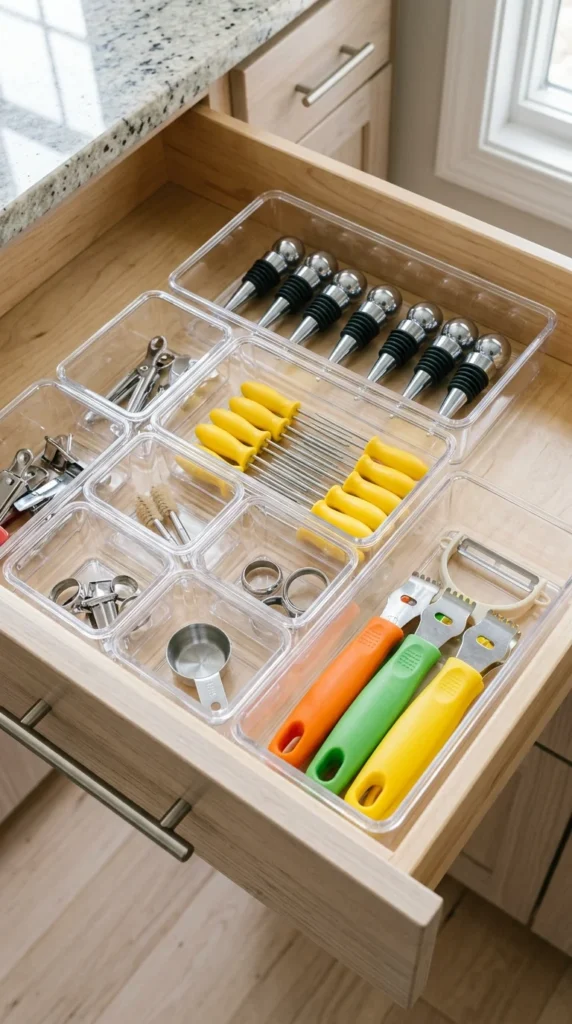
If you prefer a modern, invisible look, clear acrylic bins are the way to go. They provide a high-end “boutique” feel while allowing you to see the bottom of the drawer, which helps in identifying any lost items. Because these bins usually come in modular sets, you can play “Tetris” with your drawer layout until you find the perfect configuration for your unique collection of gadgets. They are also incredibly easy to clean—just a quick wipe with a damp cloth keeps them sparkling.
4. Tiered Spice Rack
Vertical space is often wasted in kitchen drawers. A tiered spice insert tilts your jars at an angle, allowing you to see every label at a glance without having to dig through a crowded cabinet or a spinning lazy Susan. This is particularly effective for small kitchens because it frees up valuable pantry or counter space. By decanting your spices into uniform jars and placing them in a tiered drawer, you turn a messy collection into a visual masterpiece that makes seasoning your meals a breeze.
5. Knife Docks
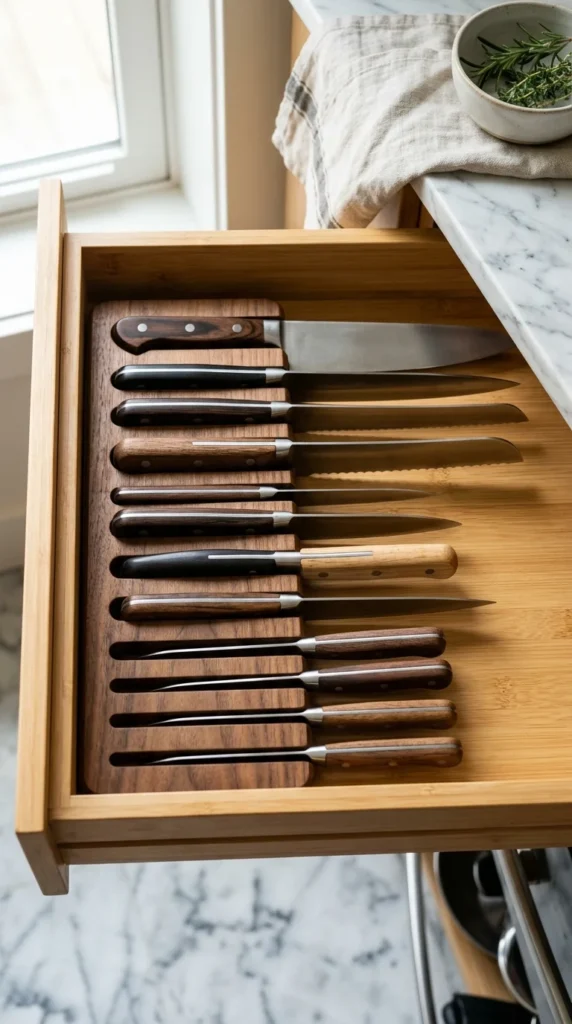
Countertop knife blocks take up significant prep space. An in-drawer knife dock (or block) keeps your blades sharp, protected, and out of reach of children while clearing your counters. These docks feature slots that hold the handles upward for easy grabbing while the sharp edges are shielded within the wood or cork. This not only organizes the drawer but also extends the life of your expensive cutlery by preventing the blades from clinking against other metal tools.
6. Silicone Liners
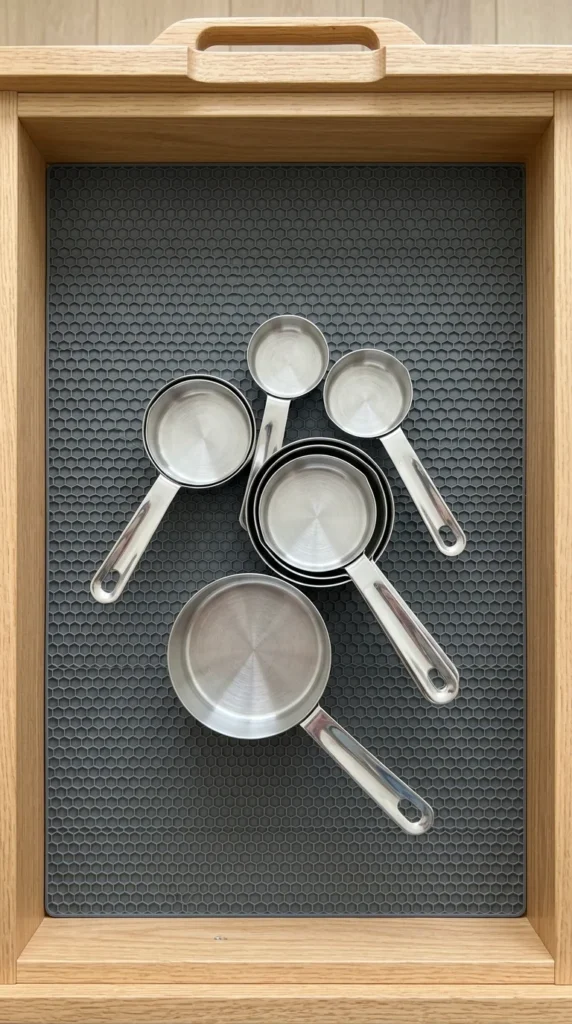
Sometimes the simplest solution is the most effective. High-quality silicone liners provide a “grip” surface that prevents your organizers and loose tools from sliding around when you open and close the drawer. Beyond the anti-slip benefits, liners protect your drawer bottoms from scratches, leaks, and stains. Choose a patterned or brightly colored liner to add a pop of personality to your kitchen’s hidden spaces.
7. Diagonal Dividers
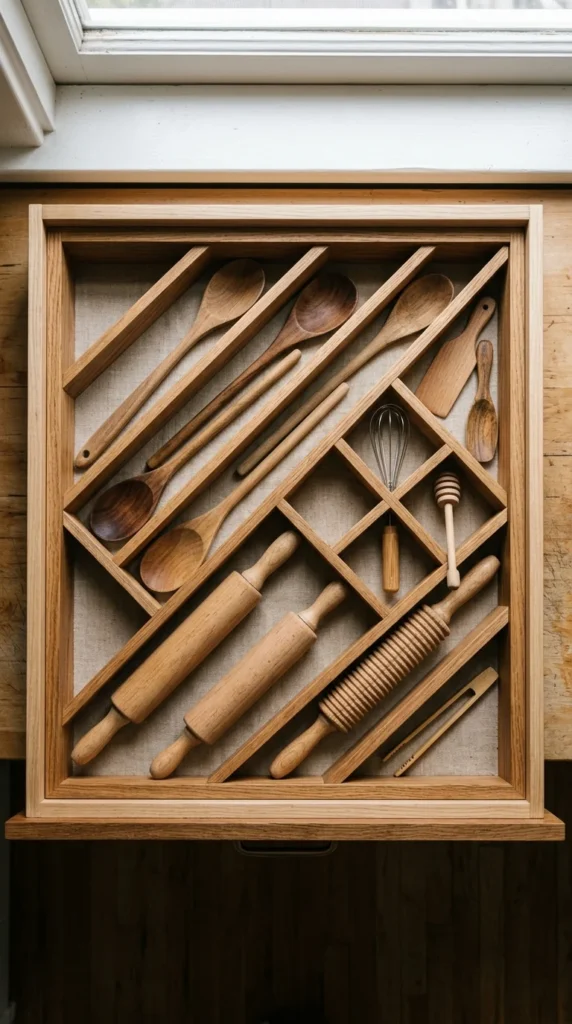
Standard vertical or horizontal dividers often fail when it comes to long items like rolling pins, offset spatulas, or extra-long BBQ tongs. Diagonal dividers maximize the “hypotenuse” of the drawer, providing the longest possible storage path. This geometric trick allows you to fit items that would otherwise have to be stored awkwardly on top of other tools, effectively eliminating the “tangled tool” syndrome.
8. Deep Drawer Tubs
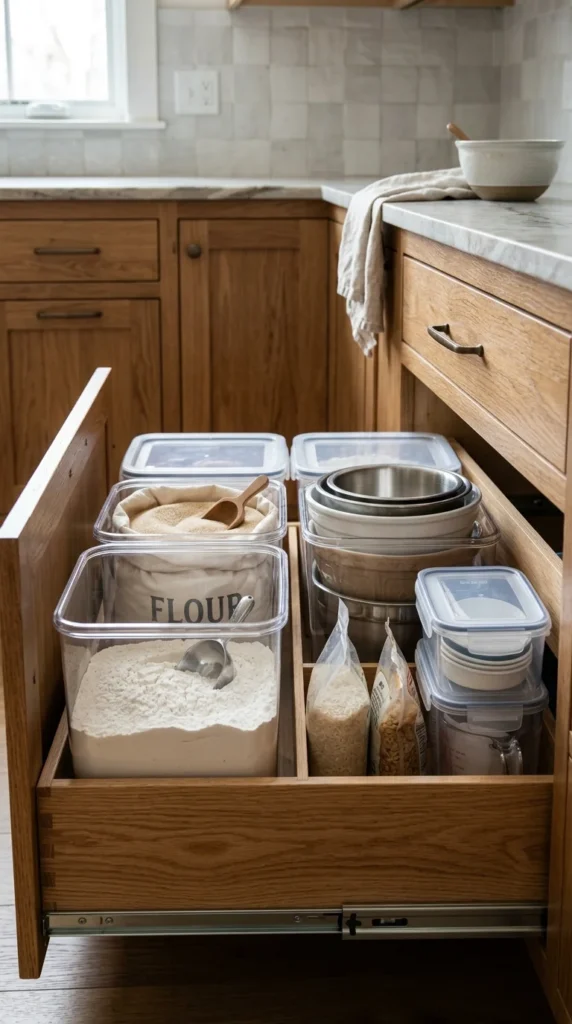
For those deep bottom drawers that usually become a graveyard for oversized pots, try using large plastic tubs or bins. These act as “drawers within a drawer.” Instead of stacking items precariously, you can group categories—like “Baking Supplies” or “Tupperware Lids”—into separate tubs. When you need something, you can lift the entire tub out, find what you need, and slide it back in. This prevents you from having to get on your hands and knees to find the pot at the very back.
9. Coffee Pod Holders
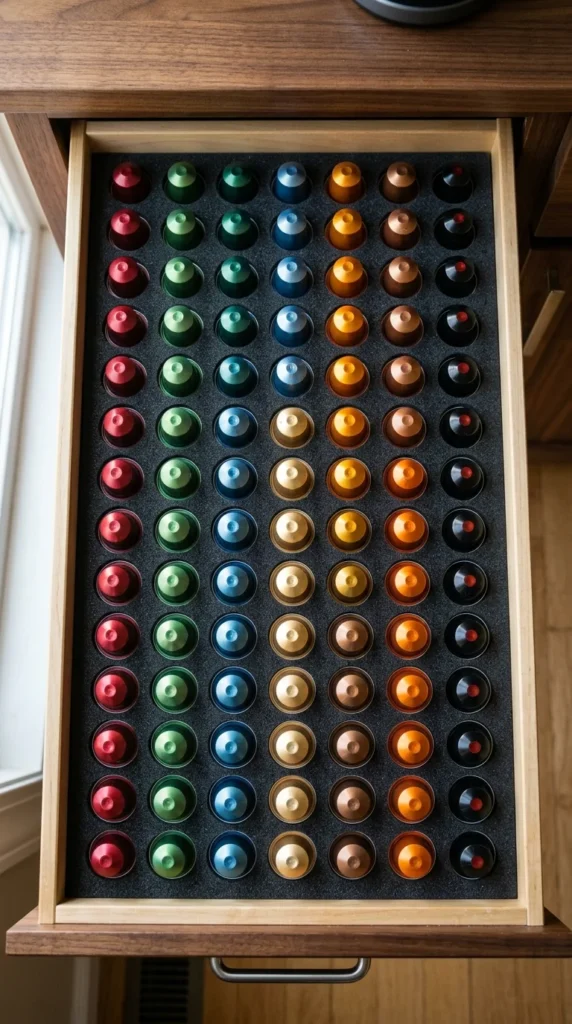
Coffee stations are notorious for creating counter clutter. By moving your coffee pods into a dedicated drawer insert, you regain that space for food prep. There are many custom inserts available made of foam, acrylic, or wire that keep your pods lined up by flavor and color. It turns your morning caffeine routine into an organized, satisfying ritual.
10. Wrap Organizers
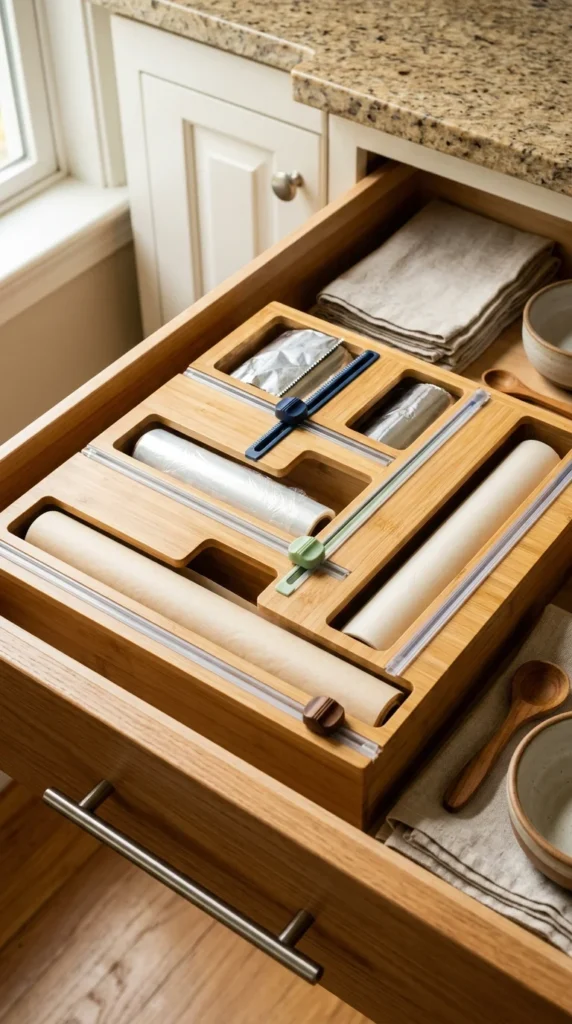
Boxes of aluminum foil, plastic wrap, and parchment paper are bulky and often fall apart. A dedicated wrap organizer keeps these rolls in a sturdy wooden or plastic housing with built-in sliding cutters. This prevents the “ripped edge” frustration and keeps all your food preservation wraps in one slim, easy-to-access location. It’s a game-changer for those who pack lunches daily.
11. Pegboard Inserts
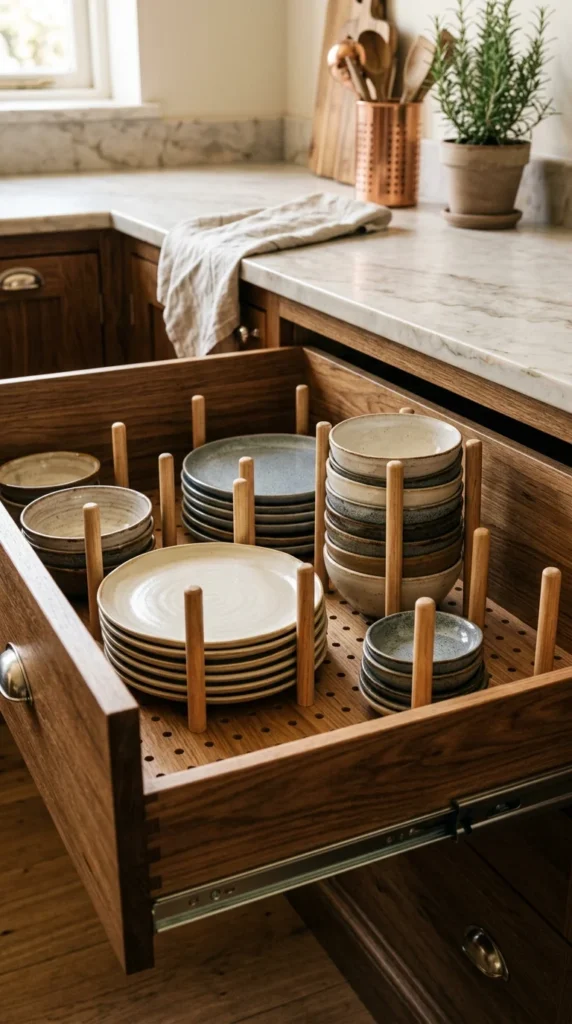
Pegboards aren’t just for garage walls. A pegboard system at the bottom of a deep drawer allows you to move pegs around to create custom “walls” for your dishes, lids, or heavy pots. This prevents plates from sliding and chipping when the drawer moves. It is the ultimate “pro-kitchen” move for organizing heavy cookware that is too cumbersome for upper cabinets.
12. Labeling
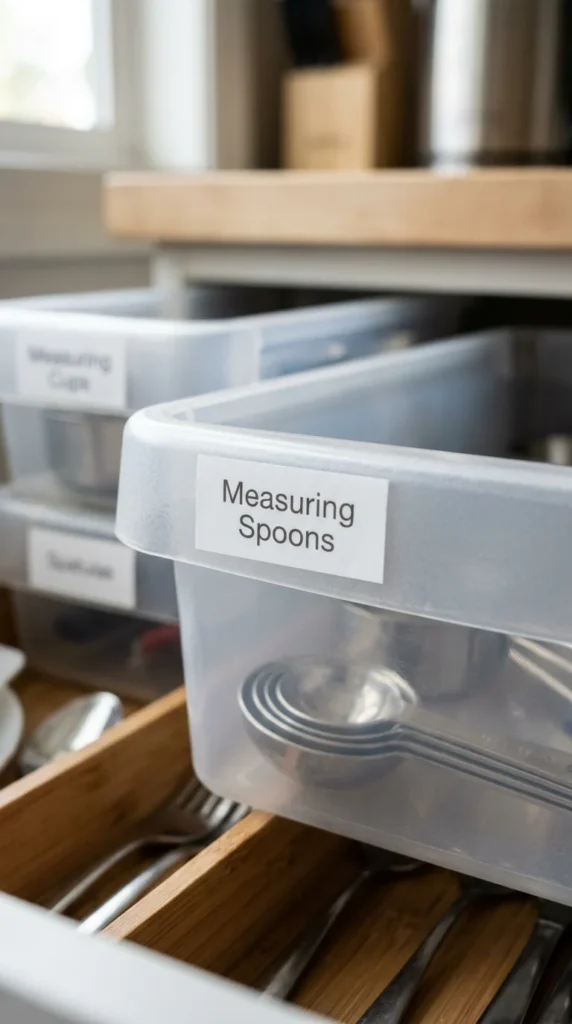
In a shared household, “a place for everything” only works if everyone knows where that place is. Using a label maker to mark the edges of your dividers or the bottom of your bins ensures that items are returned to their proper homes. This is especially helpful for small items like tea bags, snack clips, or various sizes of measuring spoons that tend to migrate over time.
13. Junk Drawer Kits
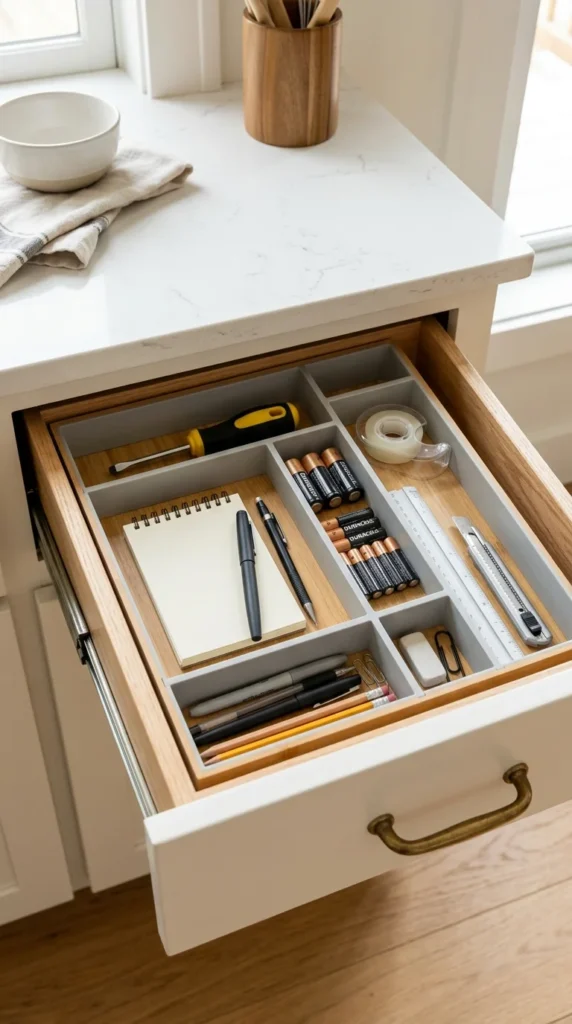
Every kitchen has a junk drawer, but it doesn’t have to be “junk.” By using a specialized kit with tiny compartments, you can organize the essentials: batteries, stamps, scotch tape, and a stray screwdriver. When these items have specific slots, the drawer remains functional rather than becoming a cluttered mess that jams every time you try to open it.
14. Vertical Plate Racks
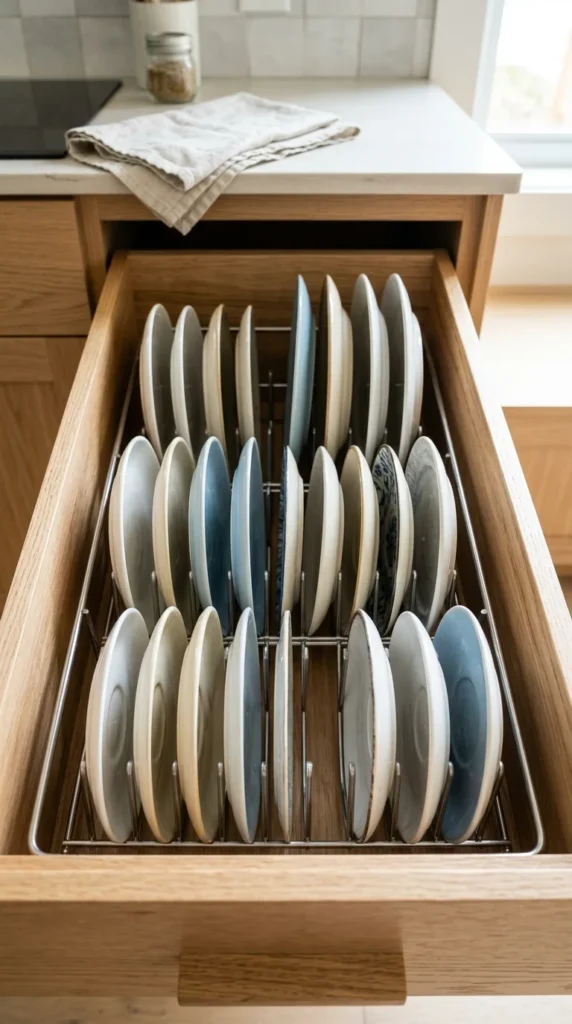
Storing plates vertically in a drawer is a revolutionary space-saver for small kitchens. Instead of lifting a heavy stack of five plates to get to the one on the bottom, you can pull each plate out like a file folder. This is particularly useful for small dessert plates or saucers that often get lost under larger dinnerware.
15. Tea Organizers
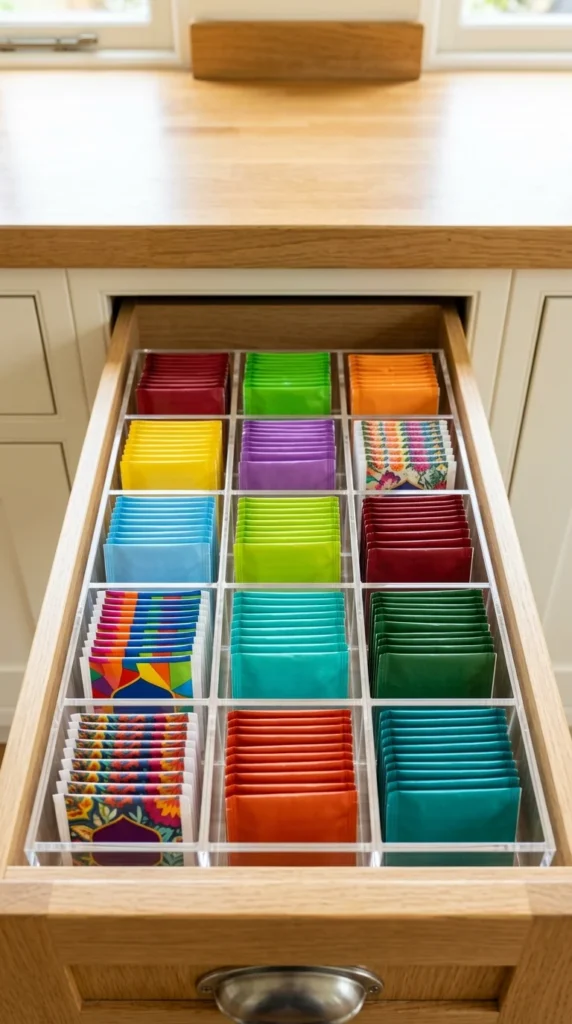
If you are a tea lover, you know how much space those cardboard boxes take up. Removing the tea bags and placing them in a dedicated drawer organizer allows you to see your entire collection at once. You can organize them by type—herbal, green, black—and instantly know when you are running low on your favorite blend.
16. Measuring Spoon Hooks
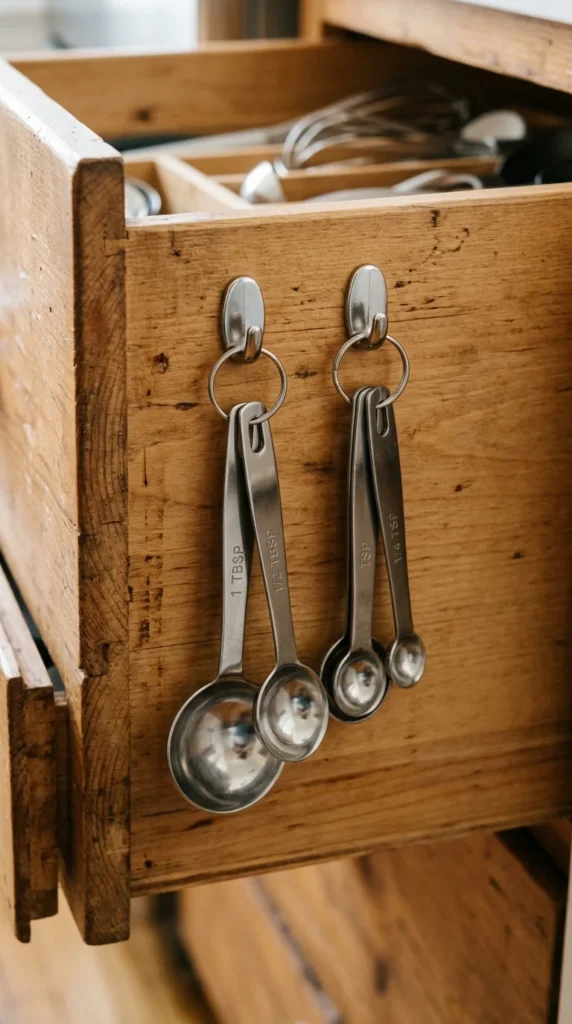
The sides of your drawers are often overlooked. By attaching small adhesive hooks to the interior side walls of a drawer, you can hang measuring spoons or small strainers. This keeps them from getting buried under larger tools and utilizes “dead space” that would otherwise go to waste.
17. Custom Wood Inserts
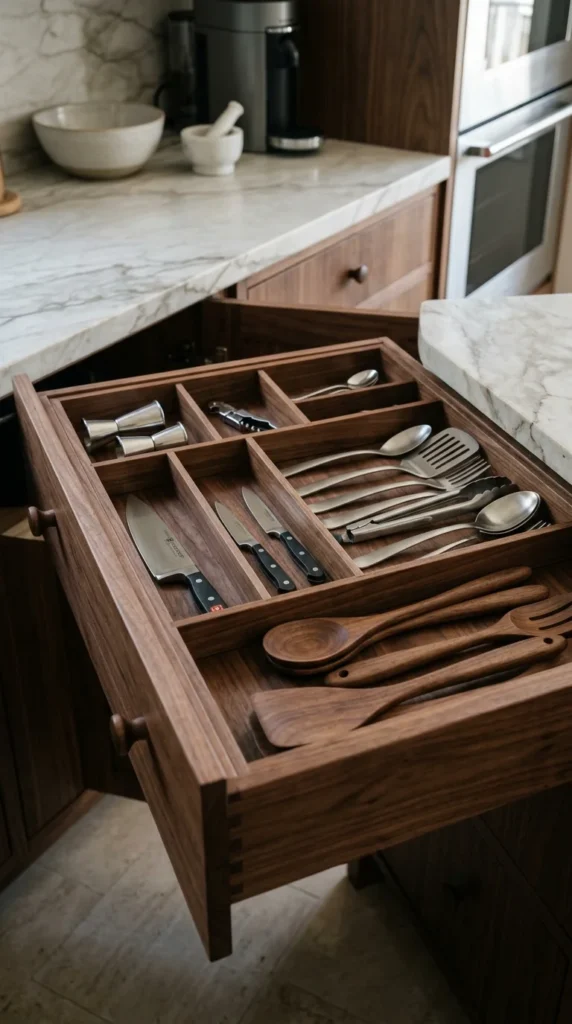
For a permanent solution, you can purchase or DIY custom wood inserts. These are measured to the exact dimensions of your drawer and your specific tool set. While less flexible than modular bins, they provide the most “built-in” and high-end look possible. They eliminate any gaps where dust can hide, creating a seamless, unified look.
18. Stacking Bins
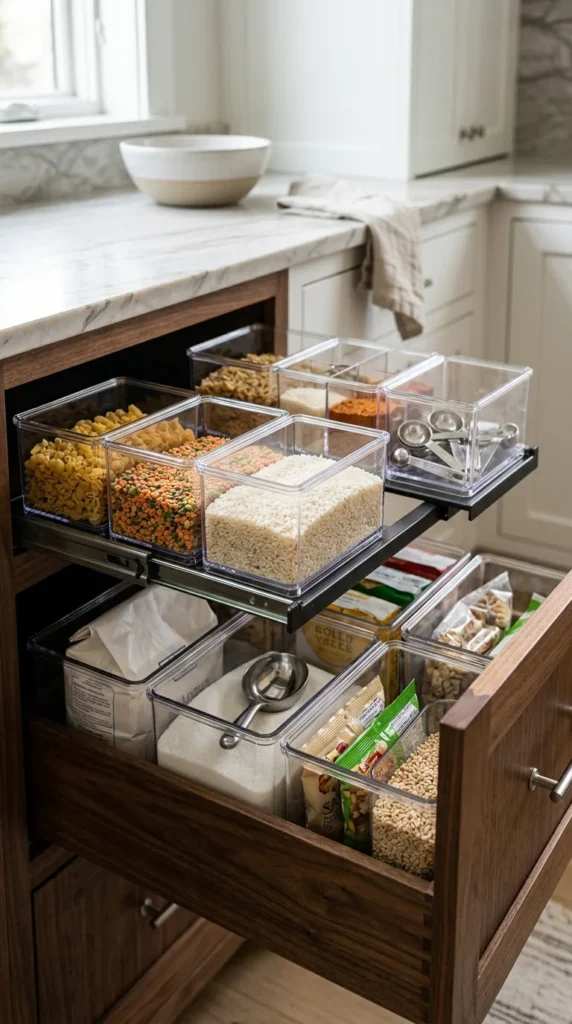
In very deep drawers, you can double your storage by using stacking or sliding bins. The bottom layer holds items you use less frequently (like holiday cookie cutters), while the top sliding layer holds everyday essentials. This effectively turns one drawer into two, maximizing every cubic inch of vertical space.
19. Baking Tool Slots
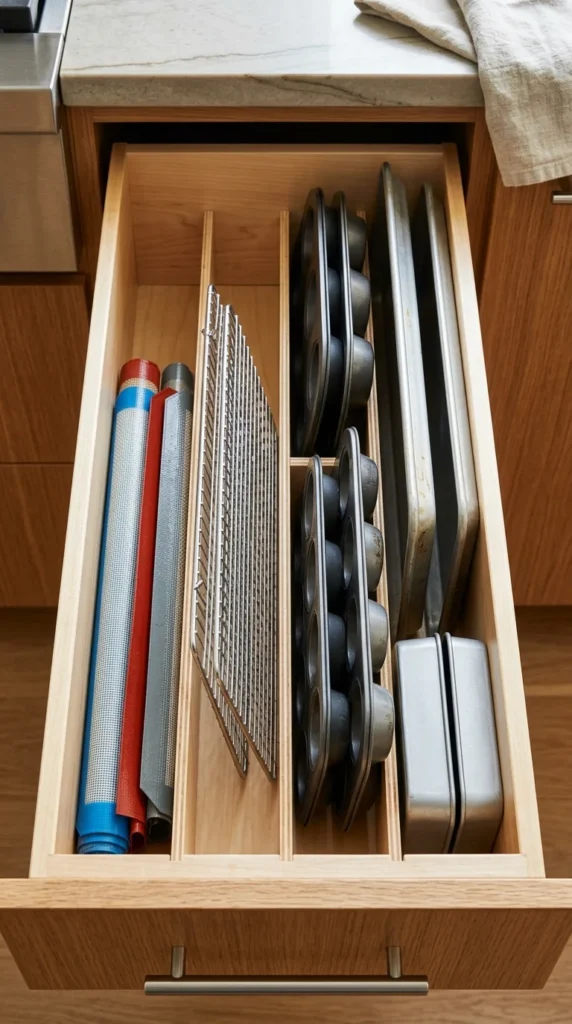
Baking sheets and muffin tins are notoriously difficult to stack. By installing vertical slots in a drawer, you can store these flat items on their sides. This makes it incredibly easy to slide one out without disturbing the rest of the pile, saving you time and preventing that loud metallic clanging.
20. Dish Towel Rolls
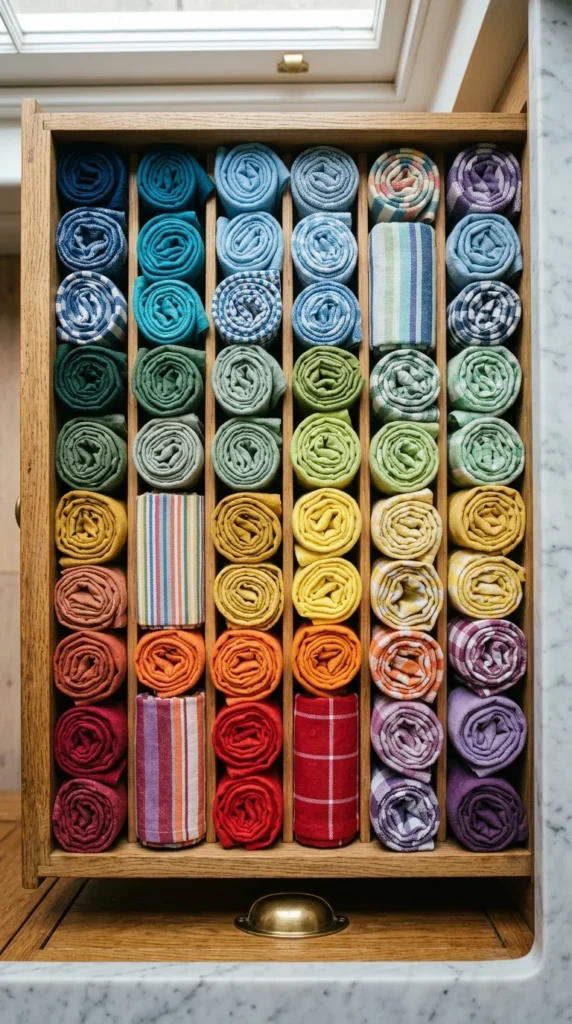
Instead of folding your dish towels in a stack (where you only ever use the top two), try rolling them “KonMari” style. Placing them vertically in a drawer allows you to see every towel you own. It looks organized, prevents wrinkles, and makes it easy to grab a fresh towel with one hand while you’re in the middle of cooking.
21. Utensil Caddies
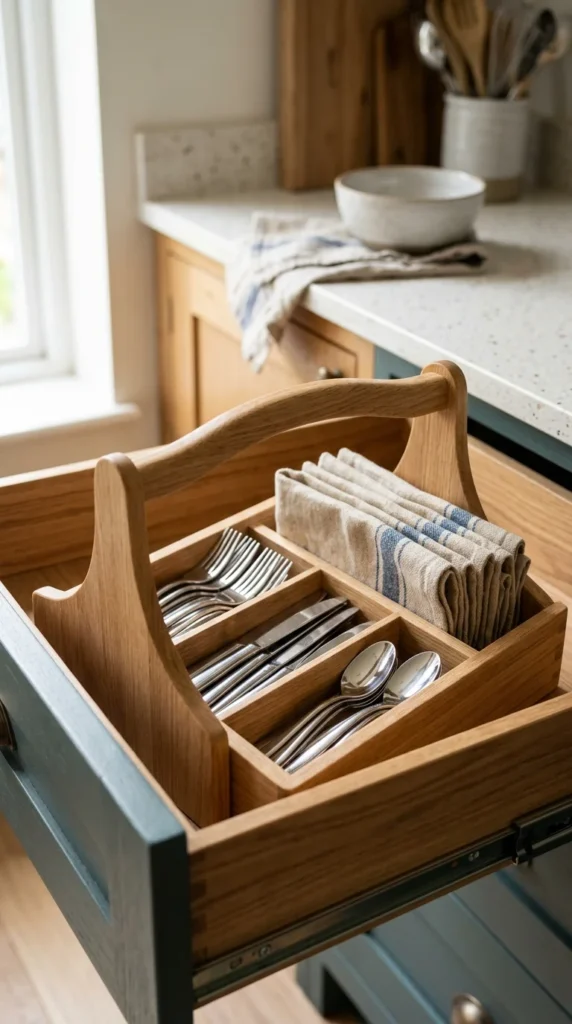
If you often eat outdoors or have a separate dining room, consider a “caddy” approach for your drawer. Use a removable organizer with a handle. During the day, it lives in the drawer holding your silverware; at mealtime, you simply lift the entire unit out and bring it to the table. This reduces the number of trips back and forth to the kitchen and keeps your most-used items mobile and organized.