
Living in a small apartment often feels like a constant battle against the square footage. You want style, comfort, and personality, but you don’t want the space to feel claustrophobic. One of the most overlooked tools in an interior designer’s arsenal for combatting “small room syndrome” is the humble area rug.
Choosing the right rug isn’t just about covering the floor; it’s about manipulating light, perspective, and boundaries. From the texture of the weave to the direction of the pattern, every detail can either shrink your room or push the walls out. Here are 21 expert-backed rug ideas to transform your small apartment into a spacious sanctuary.
1. Light Neutrals
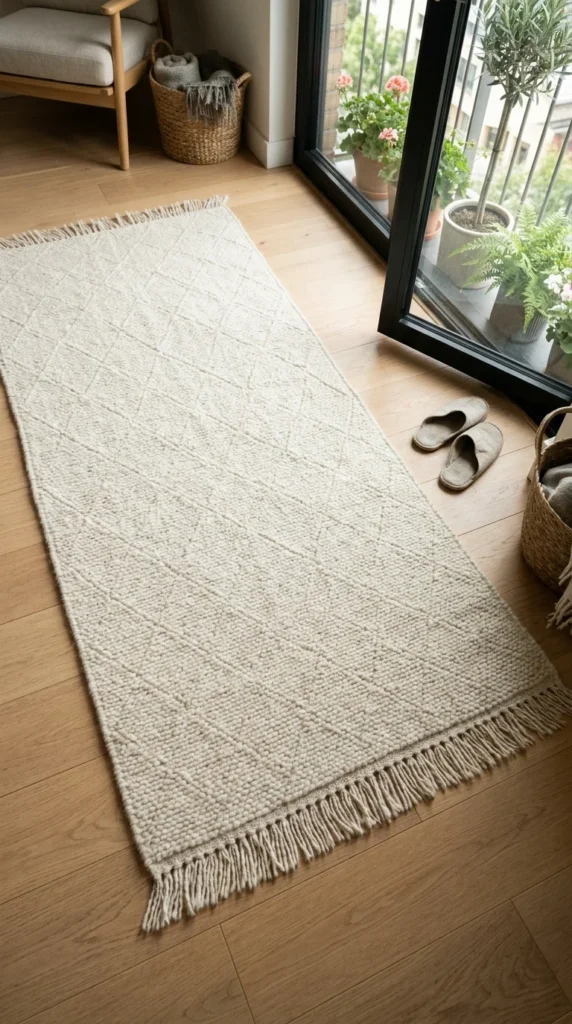
The oldest trick in the book is also the most effective. Light colors—think cream, ivory, pale gray, and sand—reflect more light than they absorb. In a small apartment, a light-colored rug acts like a mirror for your ceiling lights and natural sun, making the floor area feel expansive rather than enclosed. By keeping the floor bright, you create a sense of “air” at the base of your room, which trickles upward.
2. Oversized Dimensions
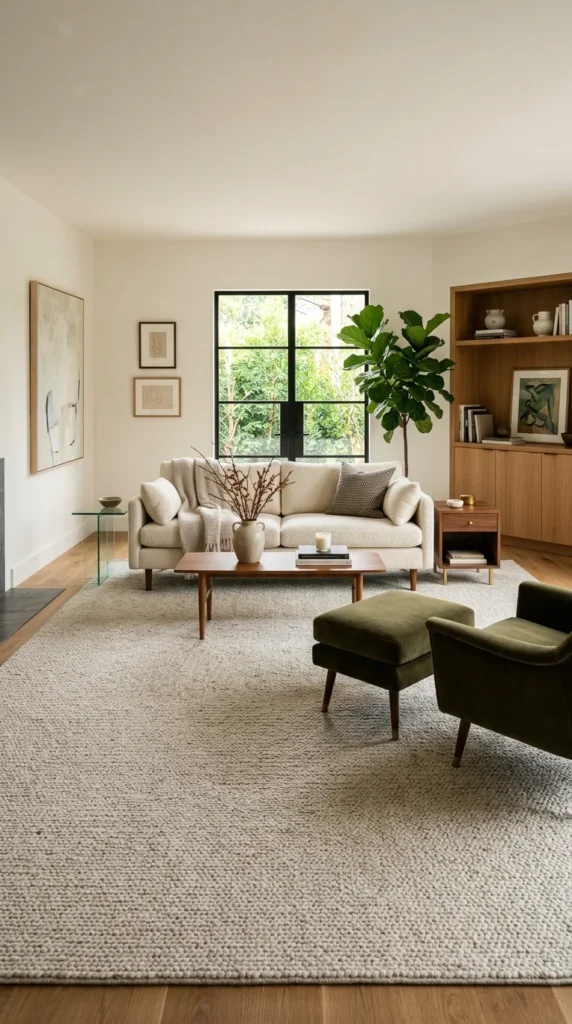
A common mistake in small apartments is buying a rug that is too small. A tiny “postage stamp” rug floating in the middle of a room actually draws the eye inward, emphasizing how little floor space you have. Conversely, an oversized rug that goes under all the legs of your furniture creates a unified “zone.” This tricks the brain into perceiving the entire area covered by the rug as one large, continuous space.
3. Vertical Stripes
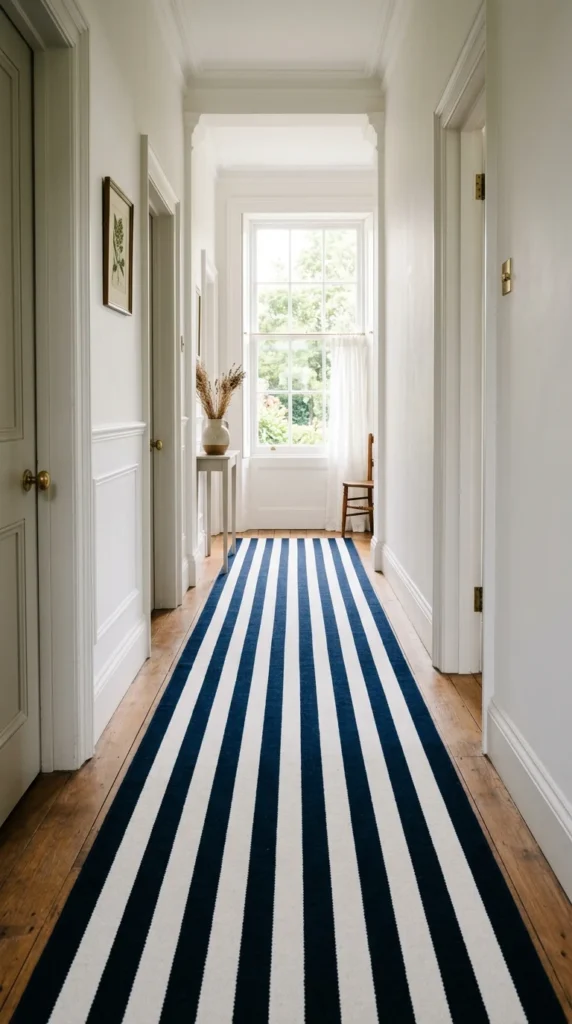
Just like vertical stripes on clothing can make a person look taller, striped rugs can make a room look longer or wider. If you have a narrow living room, place a striped rug with the lines running parallel to the longest wall. This draws the eye along the length of the stripes, creating an optical illusion of extended floor space.
4. Low Pile
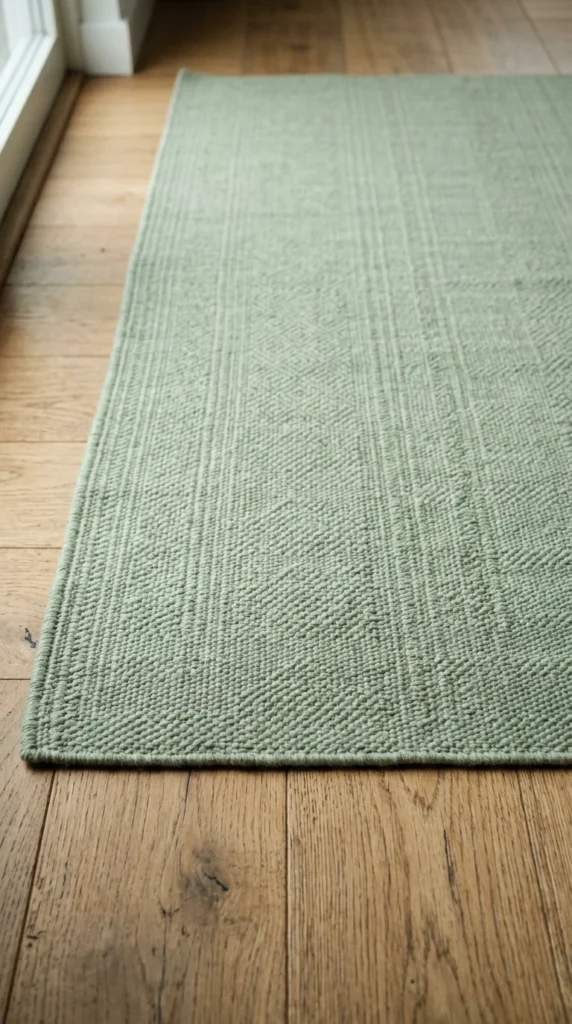
While plush, shaggy rugs are cozy, they can add visual “clutter” to a small room. A low-pile or flat-weave rug has a sleek, streamlined profile. Because it sits closer to the floor, it creates a cleaner transition between the rug and the surrounding architecture. This lack of bulk keeps the room looking organized and less “stuffed.”
5. Round Shapes
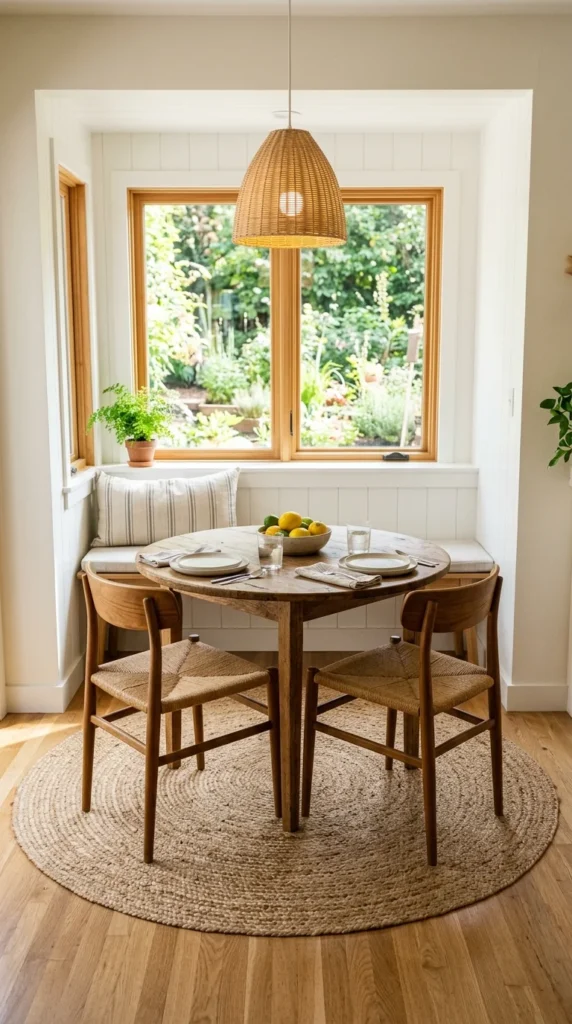
Rectangles and squares emphasize the corners of a room, which can sometimes highlight how close the walls are. A round rug, however, breaks up the hard lines of a small square room. The curved edges create a sense of movement and flow, making the boundaries of the space feel softer and less defined.
6. Subtle Textures
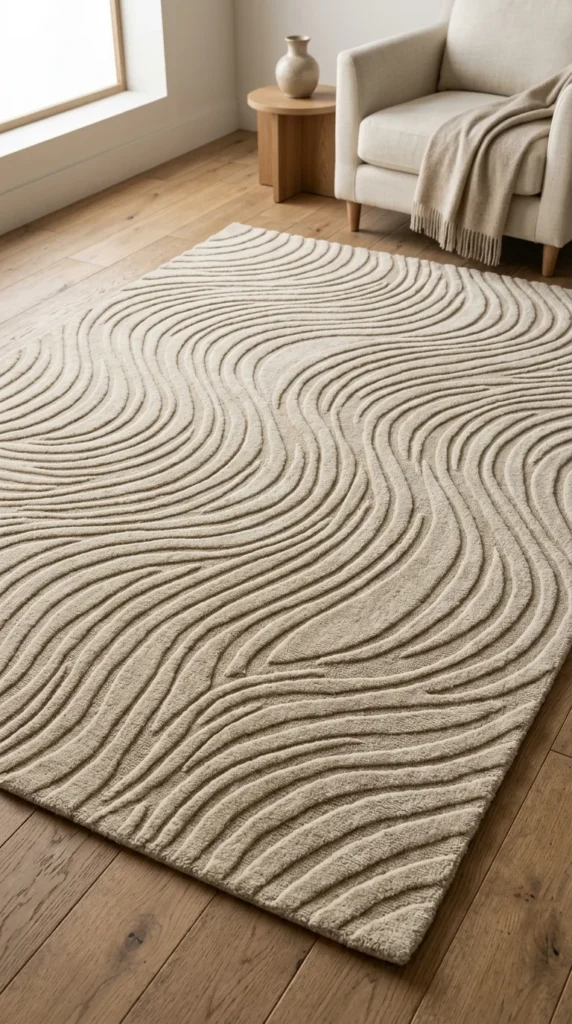
If you want visual interest without the chaos of a loud pattern, look for “texture-on-texture” rugs. These use variations in weaving (like high-low piles or carved patterns) in a single color. This adds depth and sophisticated detail to your floor without introducing multiple colors that might visually break up the room and make it feel smaller.
7. Natural Jute
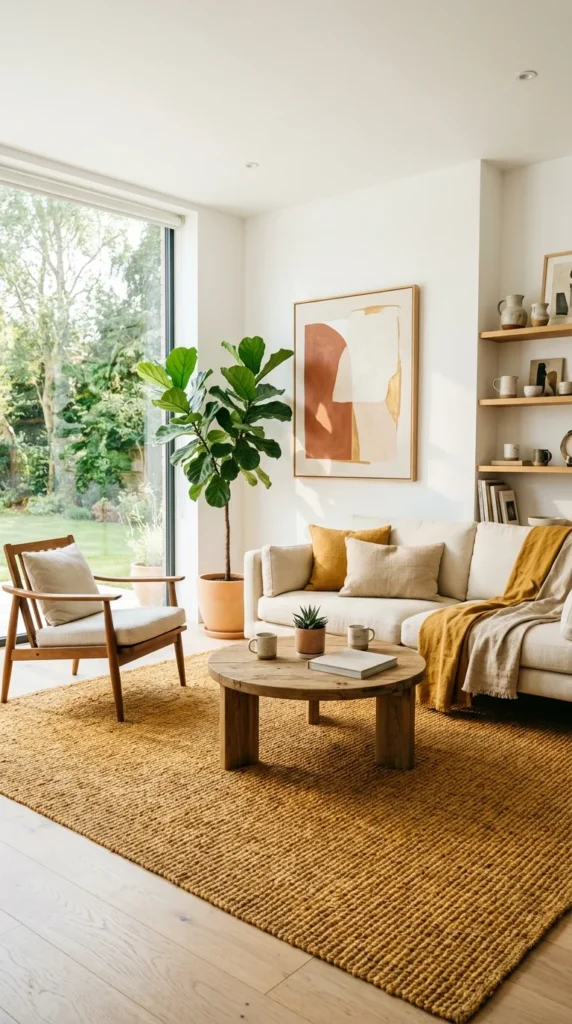
Natural fibers like jute and sisal are fantastic for small spaces because they bring in an earthy, organic element that feels “outdoor-adjacent.” Their tan and golden hues act as a warm neutral, and their slightly reflective natural sheen helps bounce light. They also provide a grounded, sturdy base that doesn’t overwhelm the senses.
8. Cool Tones
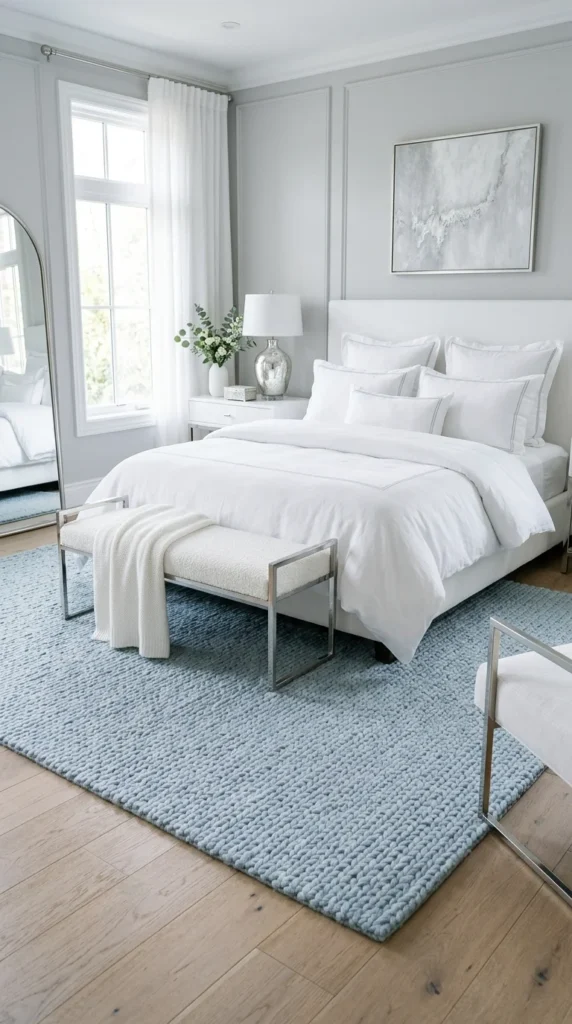
In the world of color theory, warm colors (reds, oranges) advance, while cool colors (blues, greens, purples) recede. By choosing a rug in a cool tone, you are essentially telling the floor to “step back.” This creates a psychological sense of distance, making the room feel more spacious and serene.
9. Minimalist Geometrics
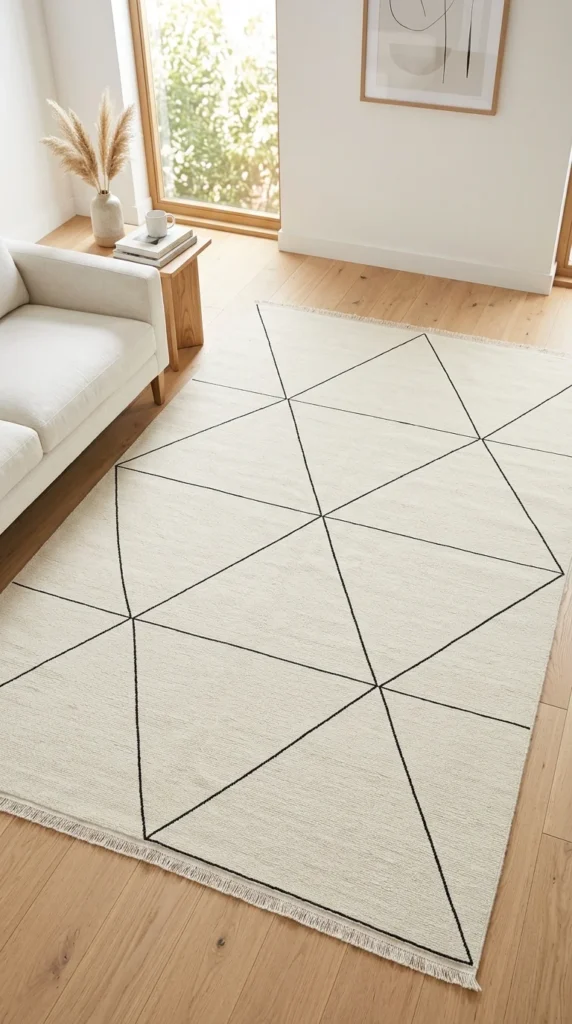
Large-scale geometric patterns with plenty of “white space” can help a room feel bigger. The key is to avoid small, busy patterns that the eye has to work hard to process. A rug with a few bold, thin lines creates a sense of structure and architecture on the floor, guiding the eye across the room in a calm, orderly fashion.
10. Borderless Designs
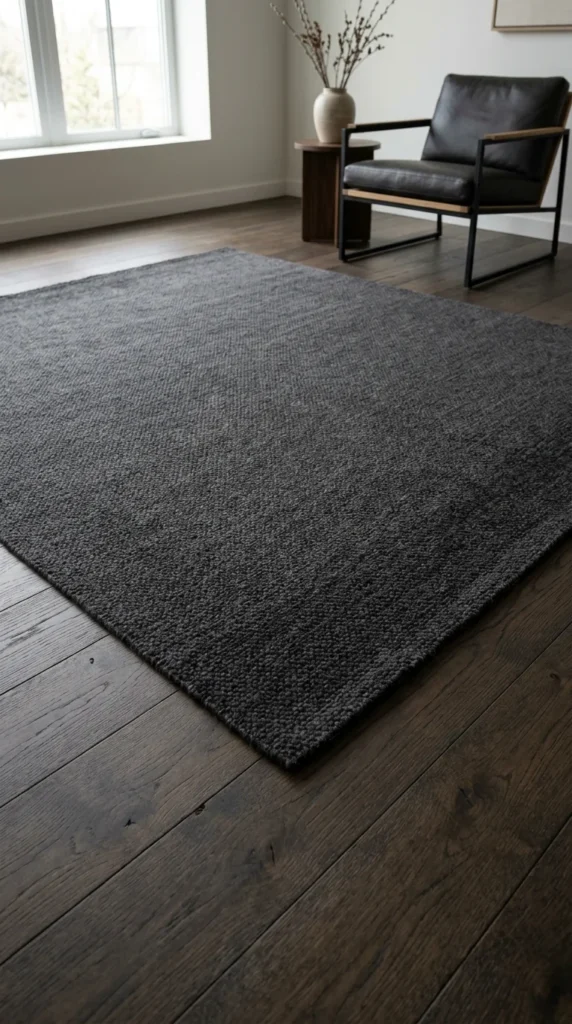
Rugs with heavy, dark borders act like a frame around a picture—they tell the eye exactly where the space ends. For a small apartment, choose a rug with no border or a very faint one. This allows the rug to blend into the rest of the floor, creating a “limitless” look that expands the perceived square footage.
11. Sheen and Silk
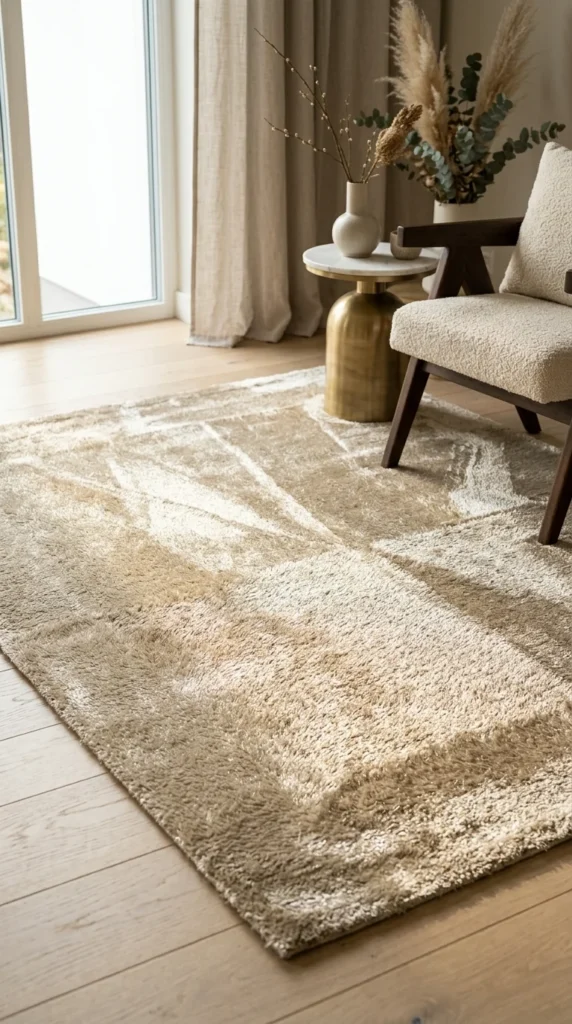
Rugs made with silk, viscose, or “bamboo silk” have a natural luster. Much like a satin paint finish, these rugs reflect light back into the room. In a dimly lit or small apartment, a rug with a slight sheen can act as a light source, brightening the “floor plane” and giving the entire room a more open, luxurious feel.
12. Irregular Shapes
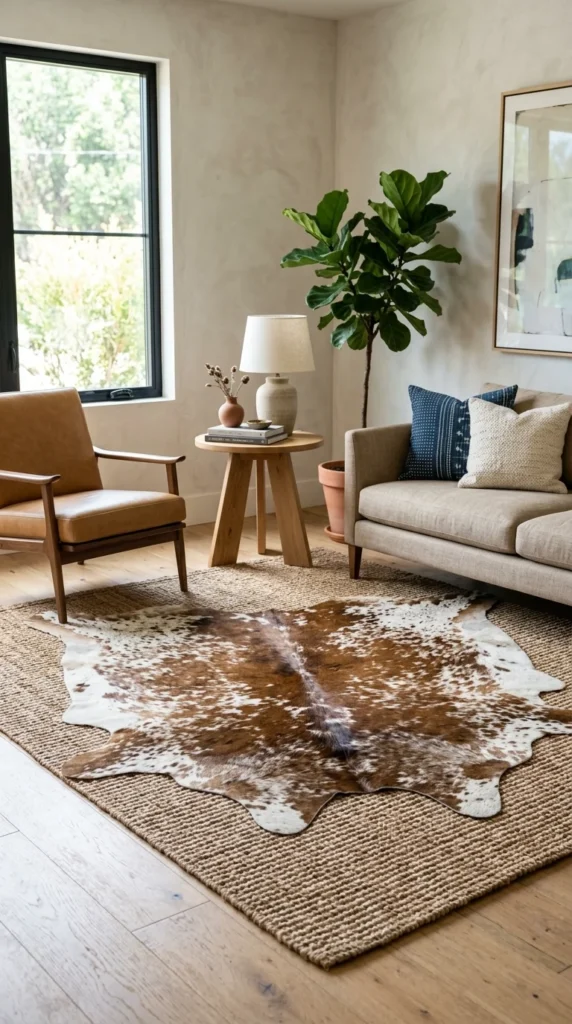
Irregularly shaped rugs, like cowhides or organic “blob” shapes, are excellent for small or awkward layouts. Because they don’t have straight edges that run parallel to the walls, they don’t “map out” the small dimensions of the room. They provide a focal point that feels artistic and intentional rather than restrictive.
13. Transparent Layering
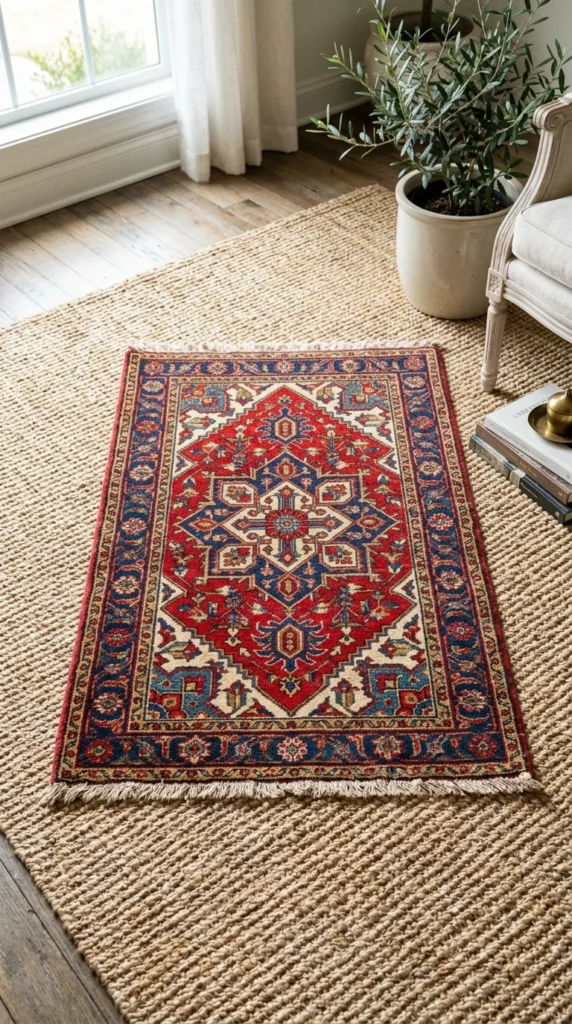
Layering might seem counterintuitive, but it adds incredible depth. By placing a smaller, patterned rug over a larger, neutral one, you create “levels” in the room. This depth makes the floor feel like it has more dimension, which translates to the brain as “more space.” Just ensure the base rug is large and light-colored.
14. Monochromatic Match
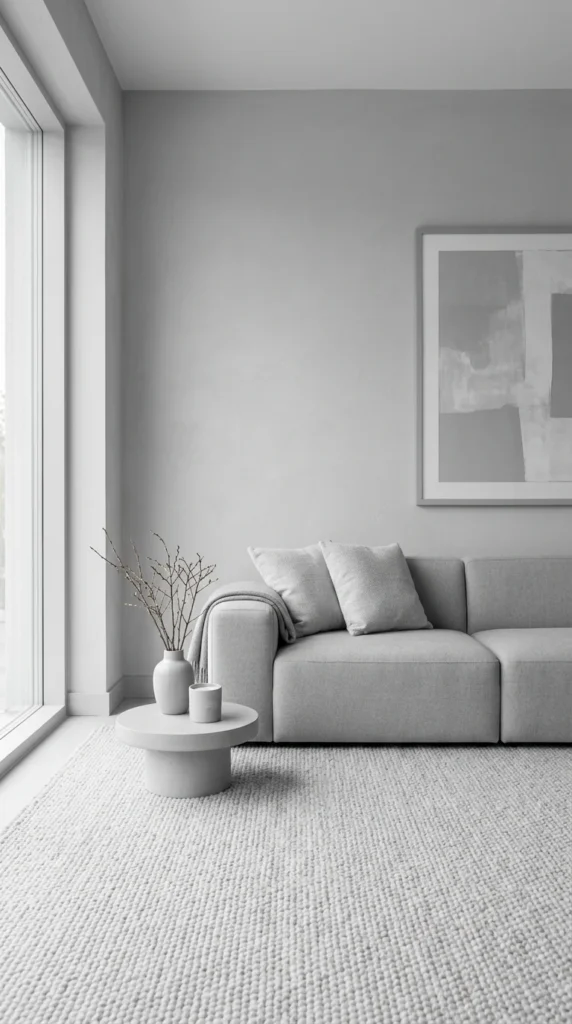
When the rug matches the color of the walls and the floor, the boundaries of the room disappear. This “monochromatic” approach prevents the eye from stopping at the edge of the rug. Instead, the gaze flows continuously from the floor up to the walls, making the room feel like a singular, vast volume.
15. The “Wall-to-Wall” Cheat
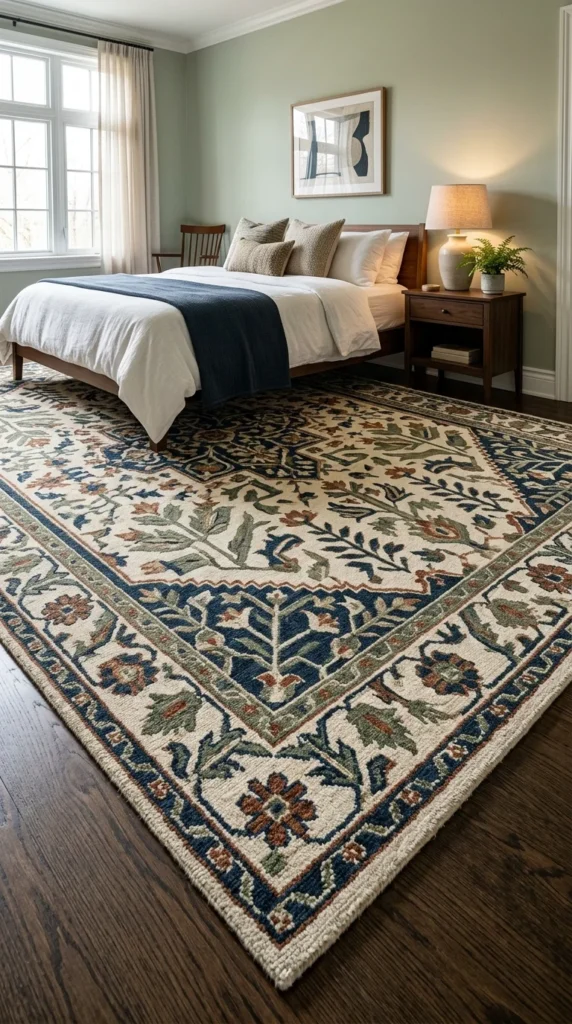
If your apartment has unattractive flooring, don’t just cover the center—cover almost all of it. Buying a rug that is just a few inches smaller than the room’s dimensions gives you the comfort of carpet with the style of an area rug. This hides the “breaks” in the floor and creates a unified, expansive foundation.
16. Diagonals
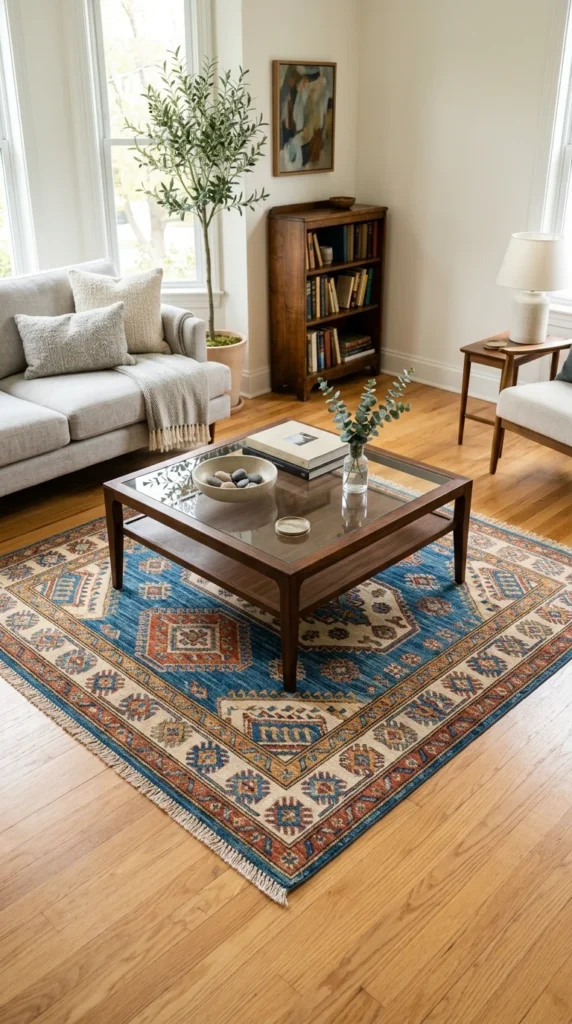
Placing a rug on the diagonal is a classic designer trick for small spaces. Because the longest line in any square or rectangle is the diagonal, orienting your rug this way leads the eye to the furthest points of the room. It breaks the “box” feel of a small apartment and creates a more dynamic, open flow.
17. Distressed Patterns
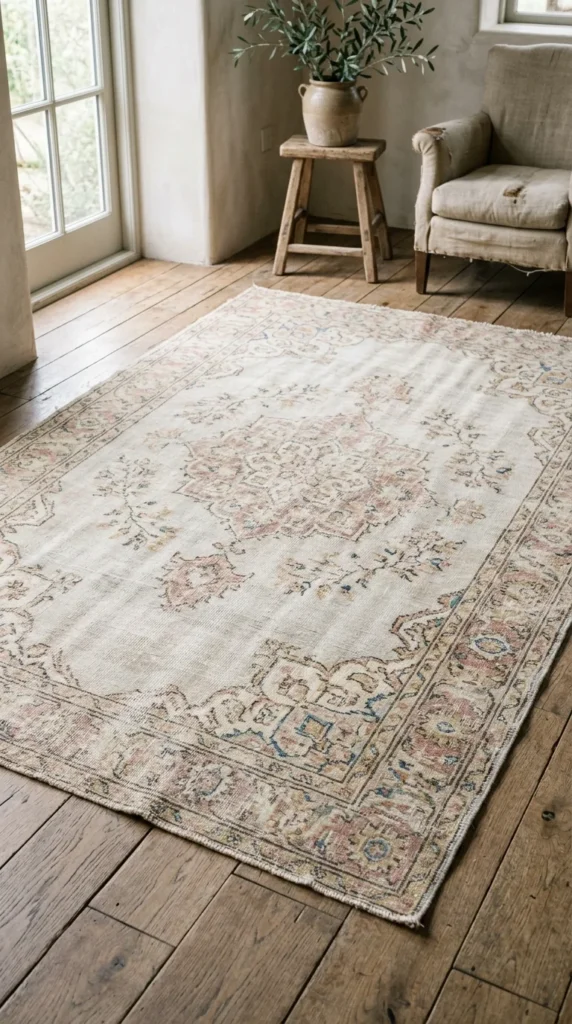
Traditional rugs can sometimes feel heavy. However, a “distressed” or “erased” version—where the pattern looks faded or worn away—provides the character of a vintage piece without the visual weight. The “missing” parts of the pattern create a sense of openness and lightness that is perfect for cramped quarters.
18. Floating Furniture
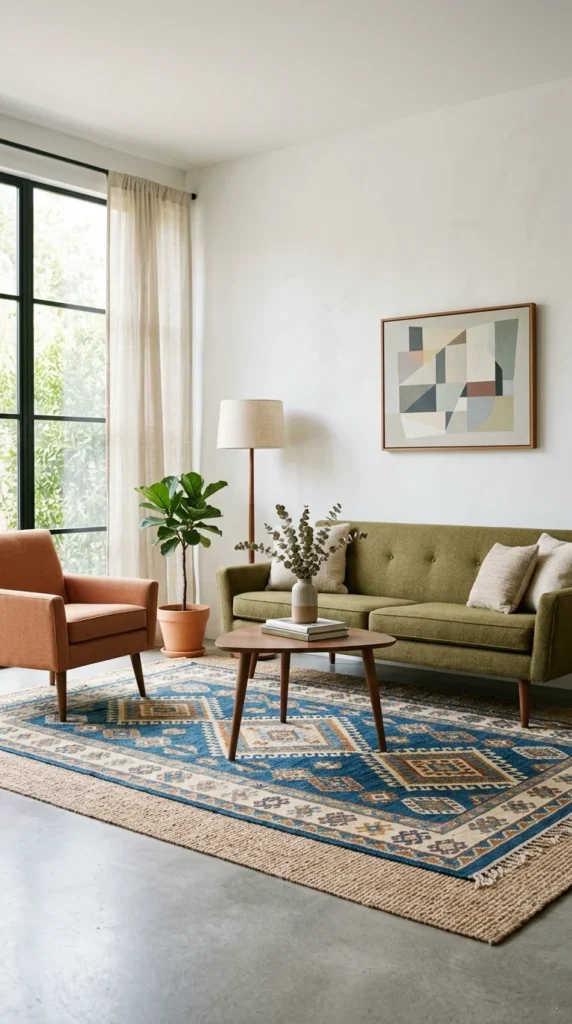
This isn’t just about the rug, but how you use it. When you pair a large, light rug with furniture on legs (rather than pieces that sit flat on the floor), you can see the rug extending under the furniture. Being able to see more of the rug’s surface area makes the room feel much less crowded.
19. Moroccan Trestle
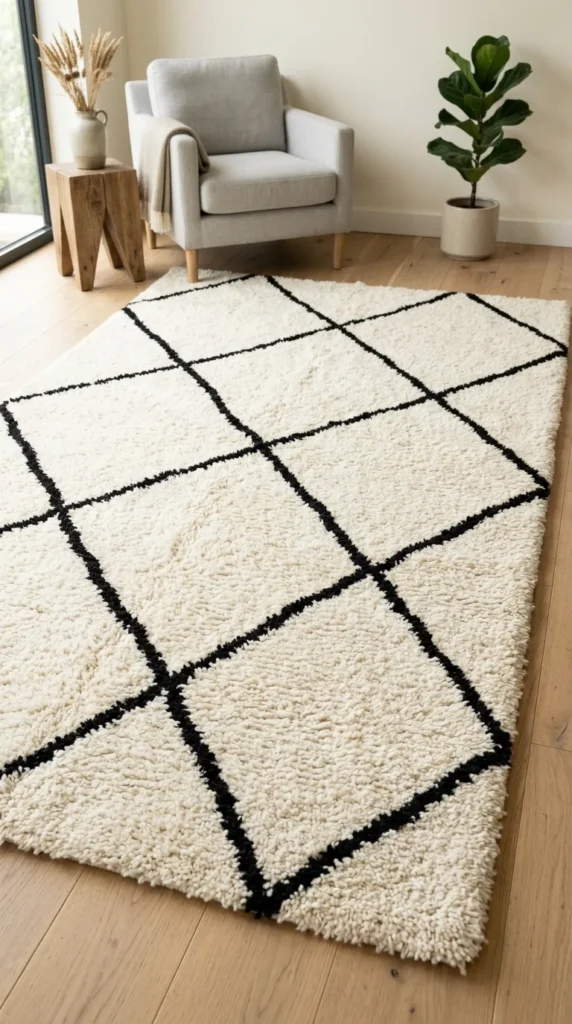
The Beni Ourain style (white with thin black lines) is a staple for a reason. The high contrast provides a focal point, but the vast amount of white space keeps the room from feeling busy. The large-scale diamond pattern creates a “grid” that feels expansive rather than restrictive.
20. Clear Boundaries with Zones
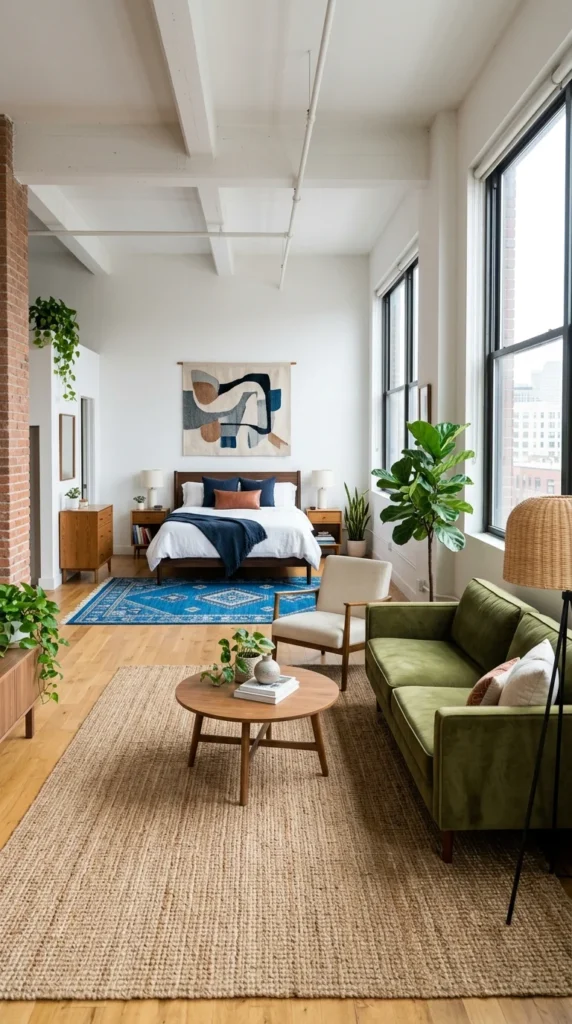
In a studio apartment, one large rug can sometimes feel like it’s swallowing the room. Using two smaller, distinct rugs to “zone” the space (one for the bed, one for the sofa) can actually make the apartment feel bigger. It creates the illusion of having multiple “rooms” within one small footprint.
21. Reflective Fibers
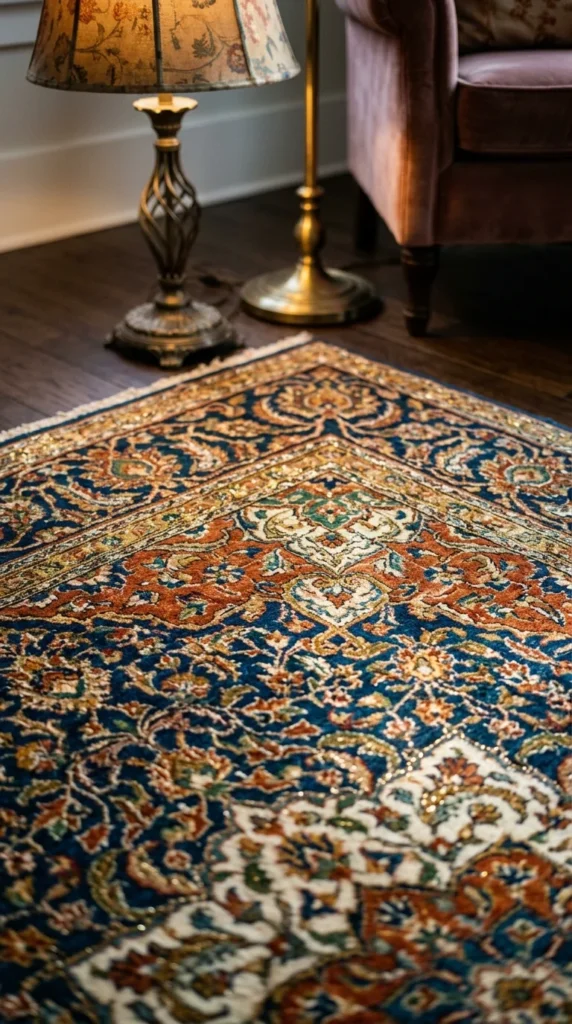
Some modern rugs incorporate Lurex or metallic threads. These subtle, shimmering elements catch the light just like a mirror would. In a small space, this tiny bit of sparkle adds a sense of “airiness” and glamour, preventing the floor from feeling like a flat, heavy surface that closes in on you.