
The struggle with a small closet is universal. We’ve all faced the “closet avalanche”—that moment you pull out one sweater and three shoe boxes, a rogue scarf, and a gym bag come tumbling down on your head. But here is the secret: you don’t necessarily need a bigger closet; you need a smarter one.
By utilizing vertical space, reclaiming “dead” zones, and choosing the right tools, you can effectively double your storage capacity without knocking down a single wall. Whether you’re dealing with a tiny reach-in or a cramped apartment wardrobe, these 20 expert-level organization ideas will transform your cluttered chaos into a streamlined sanctuary.
1. Slim Hangers
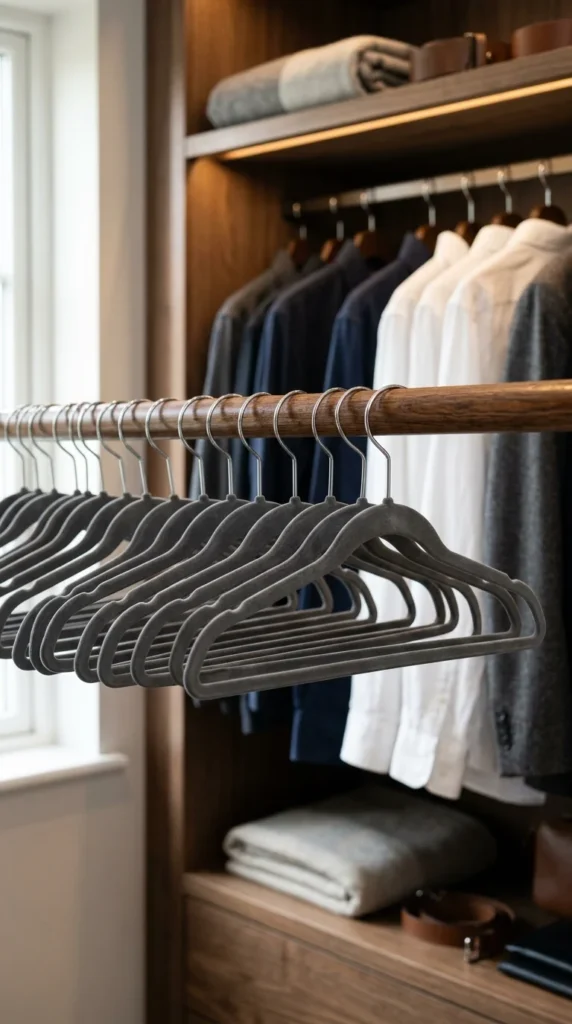
If you are still using bulky plastic or thick wooden hangers, you are losing valuable inches. Velvet or “slim-line” hangers are a game-changer for small spaces. Because they are a fraction of the width of traditional hangers, you can often fit twice as many garments on the same rod. Plus, the non-slip texture ensures your silk blouses and wide-neck tops stay off the floor.
2. Tiered Hangers
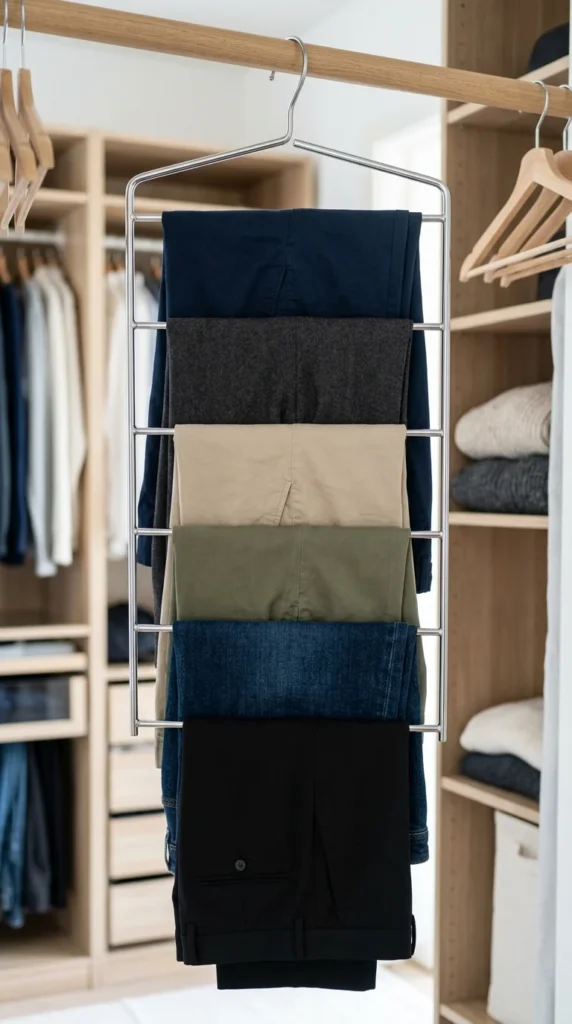
When horizontal rod space is at a premium, look down. Tiered hangers allow you to hang four or five items—like skirts, slacks, or even camisoles—in the vertical space usually occupied by one. This is especially effective for items you don’t wear every day, keeping them visible but compact.
3. Shelf Dividers
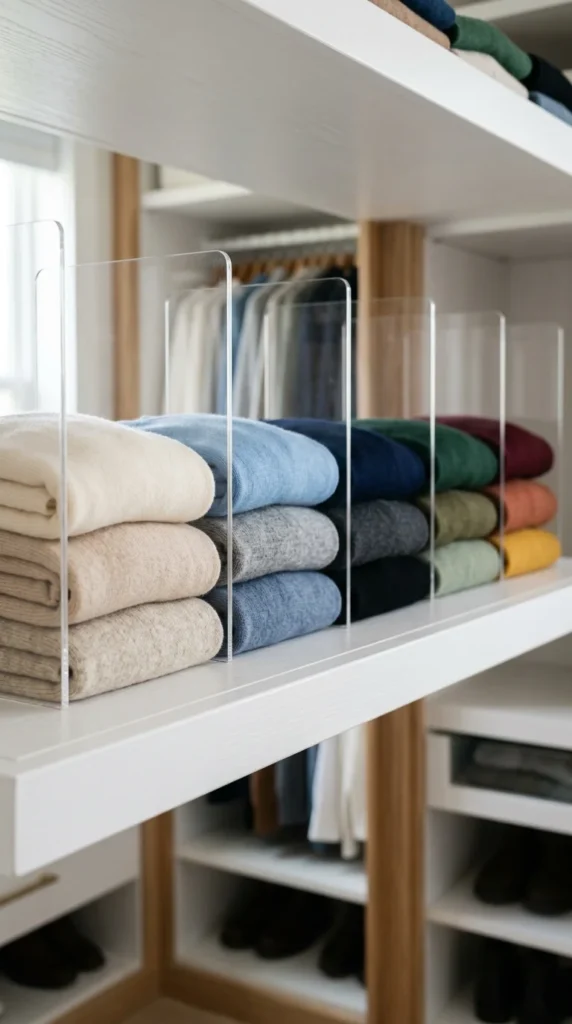
Open shelving often leads to “the lean.” You stack your sweaters perfectly, but within two days, they’ve toppled over into each other. Shelf dividers (available in acrylic or wire) create distinct “cubbies” on a long shelf. They keep stacks upright and allow you to stack higher without the risk of a clothes-slide, making your shelving look like a high-end boutique.
4. Door Organizers
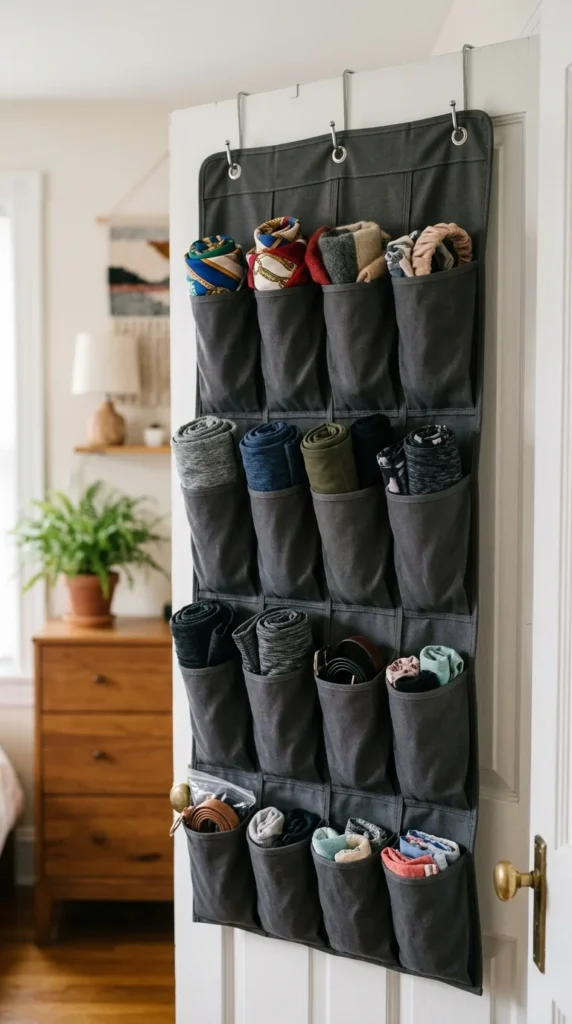
The back of your closet door is essentially a free wall. Don’t let it go to waste. Over-the-door organizers aren’t just for shoes; use them for bulky accessories, rolled-up gym clothes, or even jewelry. If you prefer a cleaner look, use individual hooks on the door for your “most-worn” items like a daily robe or a favorite handbag.
5. Double Rods
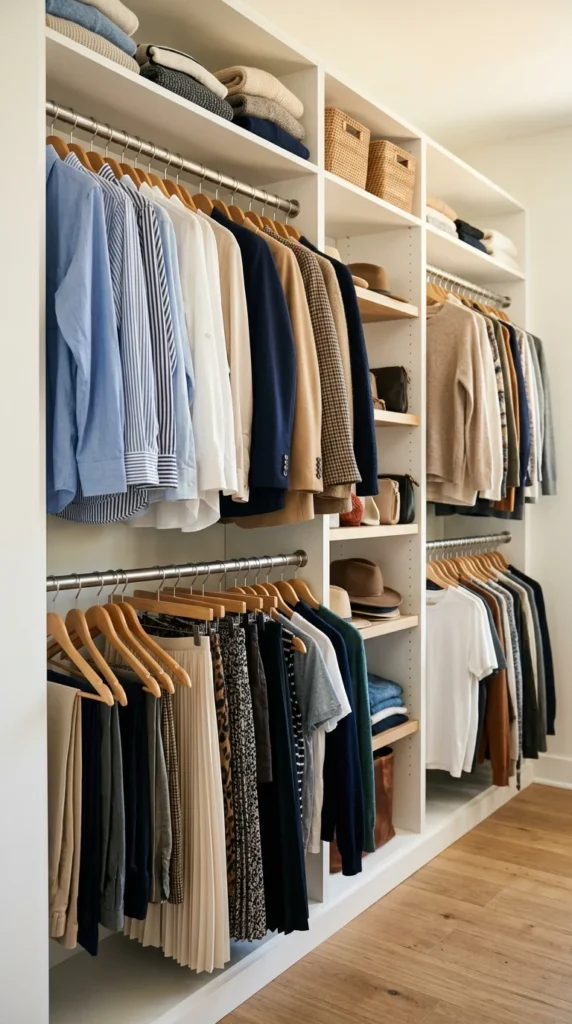
Standard closets usually feature one rod with a vast empty space underneath. By installing a second, lower rod, you instantly double your hanging real estate. Use the top rod for shirts and jackets, and the bottom rod for pants and skirts. This is one of the most effective ways to maximize a small reach-in closet.
6. S-Hooks
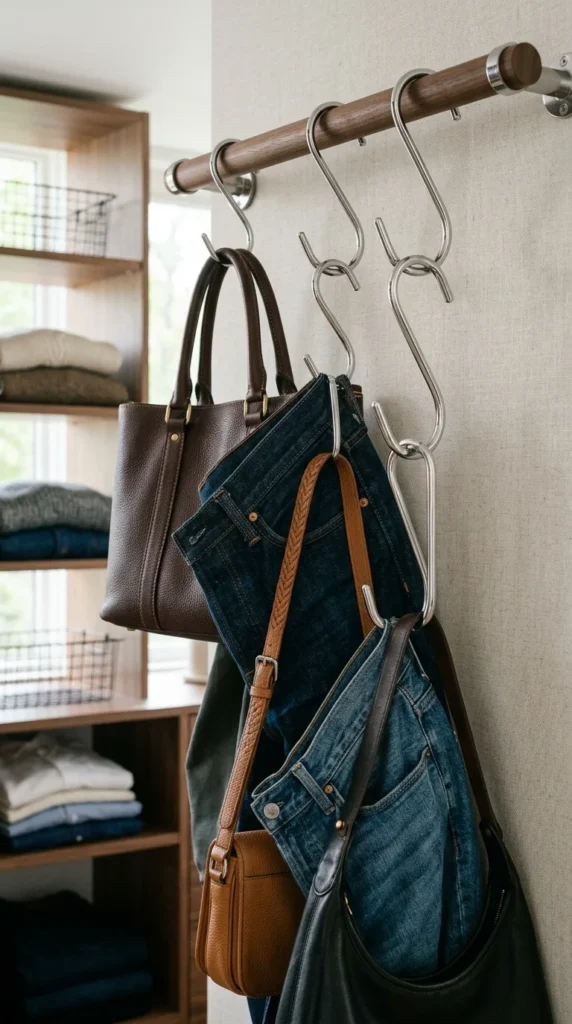
S-hooks are the unsung heroes of closet organization. Instead of laying bags on a shelf where they lose their shape, hang them by their handles using S-hooks. You can also use them to hang jeans by the belt loops, which saves drawer space and makes it easier to see your different washes and cuts.
7. Clear Bins
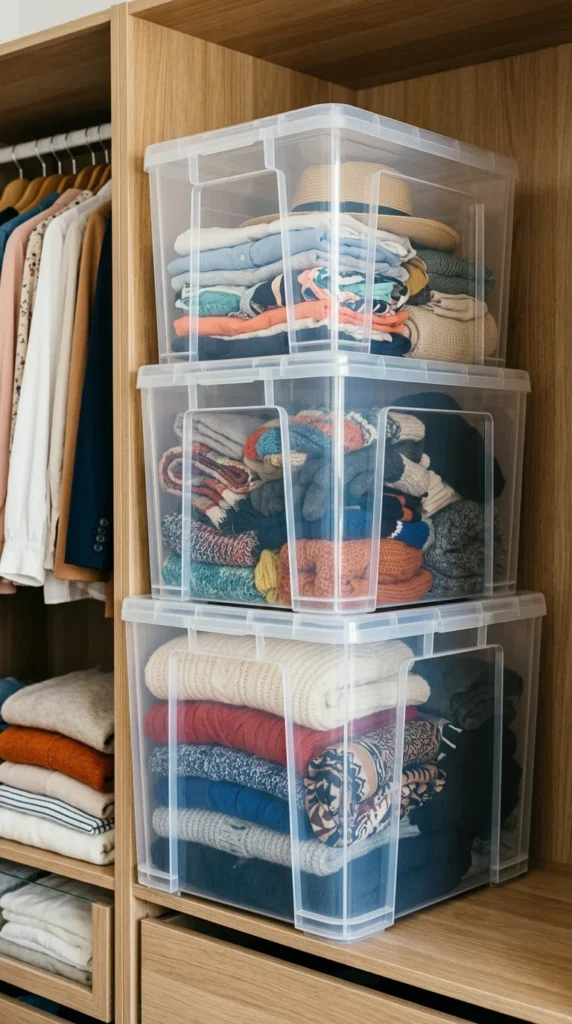
Visibility is the key to maintaining organization. When you use opaque cardboard boxes, you forget what’s inside. Clear plastic bins allow you to see exactly where your summer swimsuits or winter hats are stored. Choose stackable versions to make use of every inch of vertical height on your shelves.
8. Rolling Carts
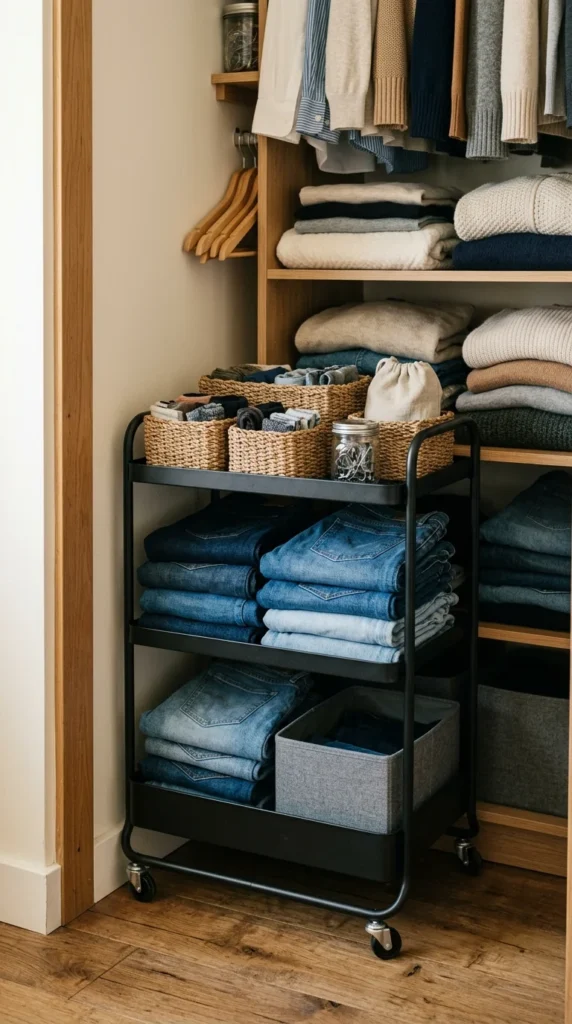
If your closet has a deep floor space that is hard to reach, a rolling cart is your best friend. You can pull it out to access items in the back and tuck it away when not in use. Use it for shoes, folded laundry, or even as a mobile station for your accessories and perfumes.
9. Vacuum Bags
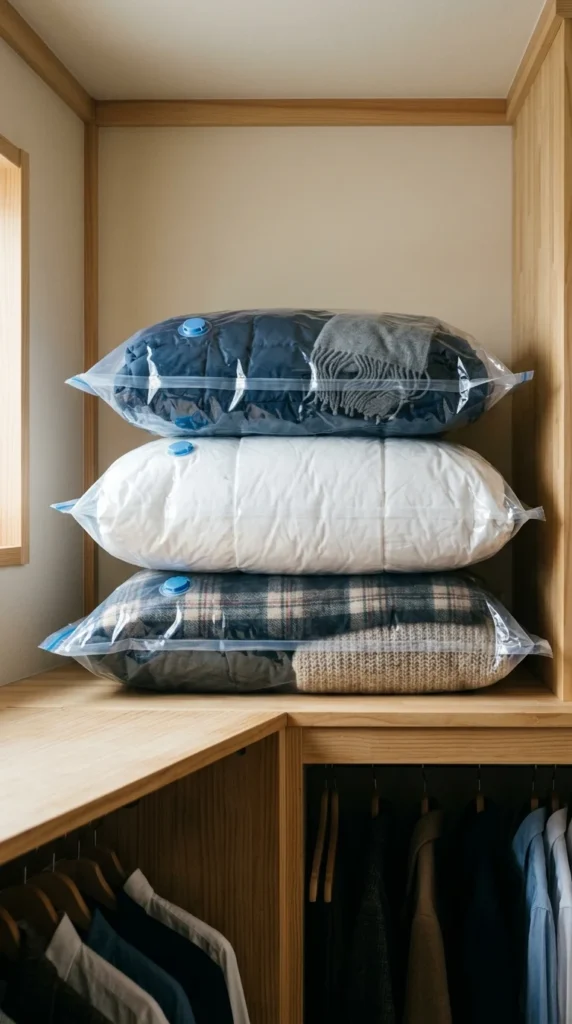
Seasonal rotation is mandatory for small closets. During the summer, your heavy puffers and wool blankets shouldn’t be taking up prime real estate. Vacuum-seal bags can reduce the volume of these items by up to 75%. Once sealed, they can be tucked away under the bed or on the highest, hardest-to-reach shelf.
10. Drawer Inserts
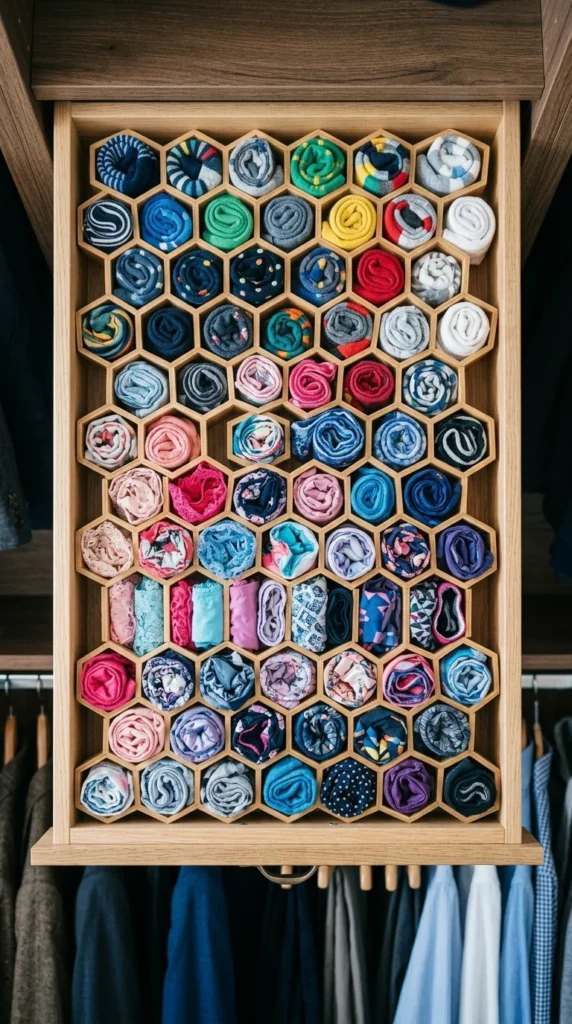
A messy drawer is a wasted drawer. By using honeycomb or grid inserts, you ensure that every pair of socks or underwear has its own dedicated spot. This prevents the “digging” that eventually messes up the whole drawer, and it forces you to keep only what actually fits.
11. Labeling
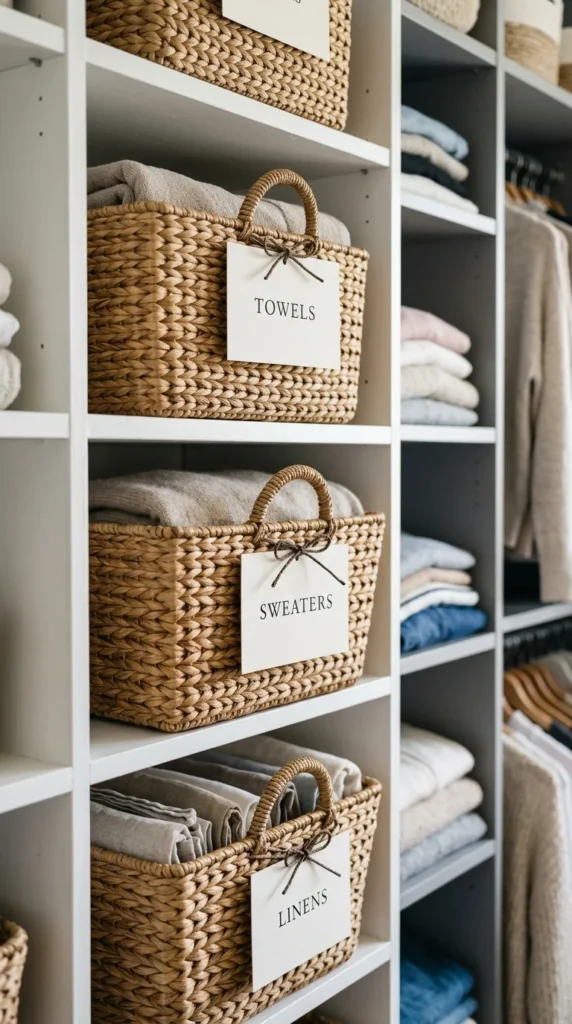
Labeling isn’t just for those who are “Type A”; it’s a functional tool for everyone living in a small space. When every bin and basket has a label (e.g., “Scarves,” “Belts,” “Swim”), you are much more likely to put things back where they belong. It also makes finding specific items during a morning rush significantly faster.
12. High Shelving
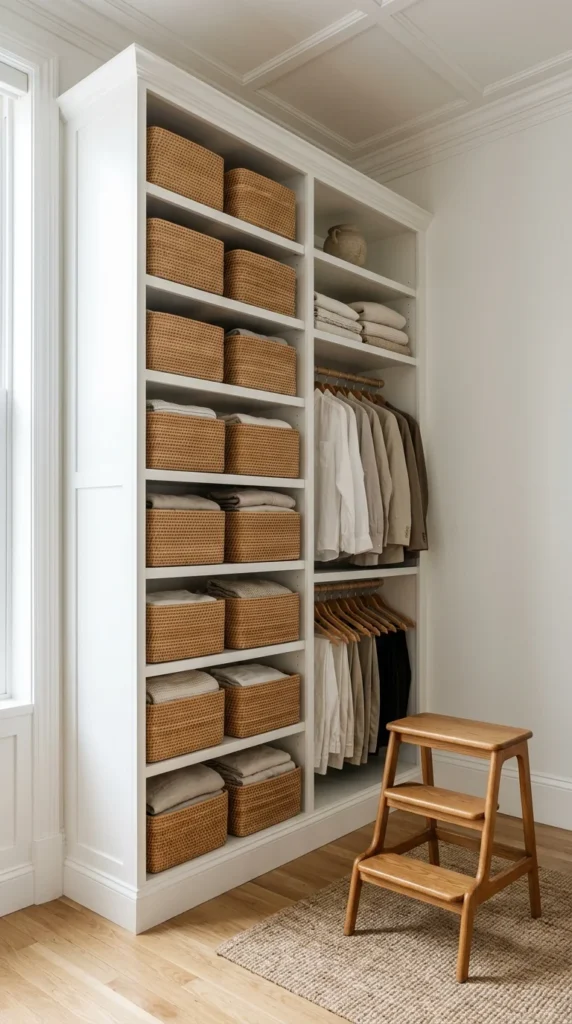
In a small closet, you must think vertically. If your shelving stops two feet below the ceiling, you are wasting potential storage. Install an extra shelf at the very top for items you only use once or twice a year, like holiday sweaters or travel gear. Keep a foldable step stool nearby to make these items accessible.
13. Pegboards
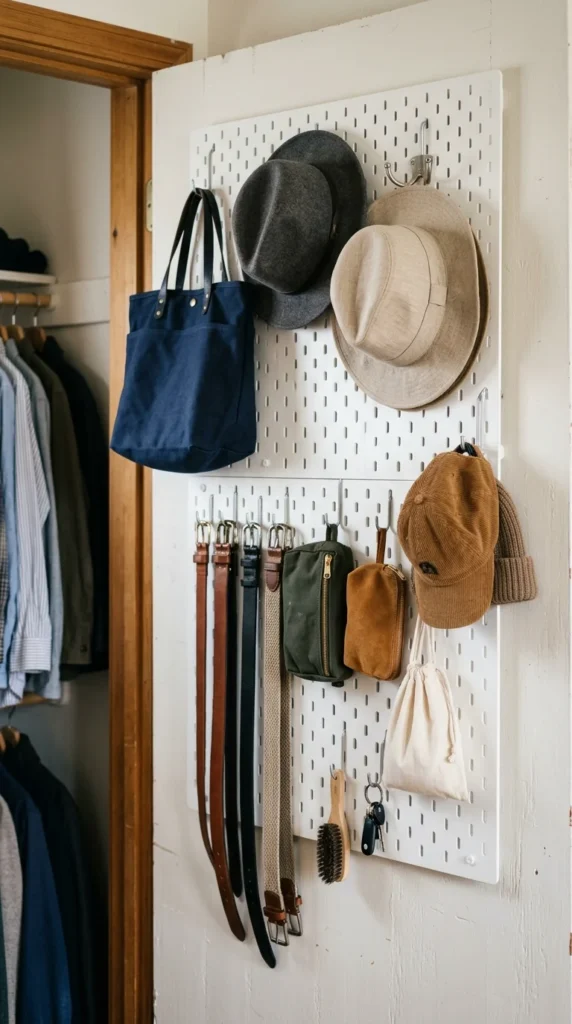
The side walls of a closet are often overlooked. A small piece of pegboard can turn a narrow strip of wall into a custom storage center for belts, necklaces, hats, and even small clutches. It keeps these smaller items from getting tangled or crushed in drawers.
14. Boot Shapers
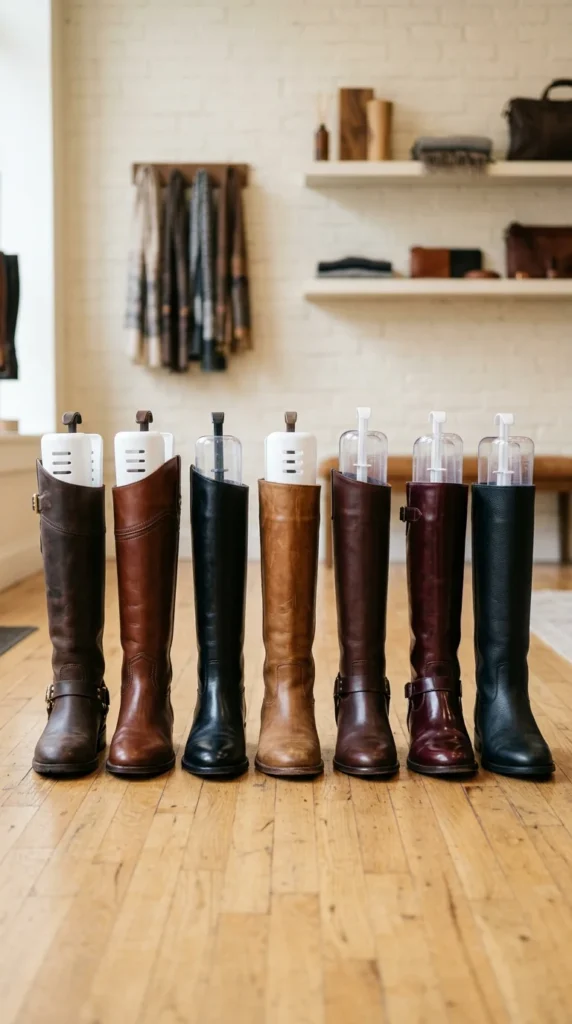
Boots that flop over take up twice as much floor space and eventually develop cracks in the leather. Using boot shapers (or even rolled-up magazines) keeps them upright and slim. This allows you to line them up tightly, saving space and preserving your investment.
15. Lighting
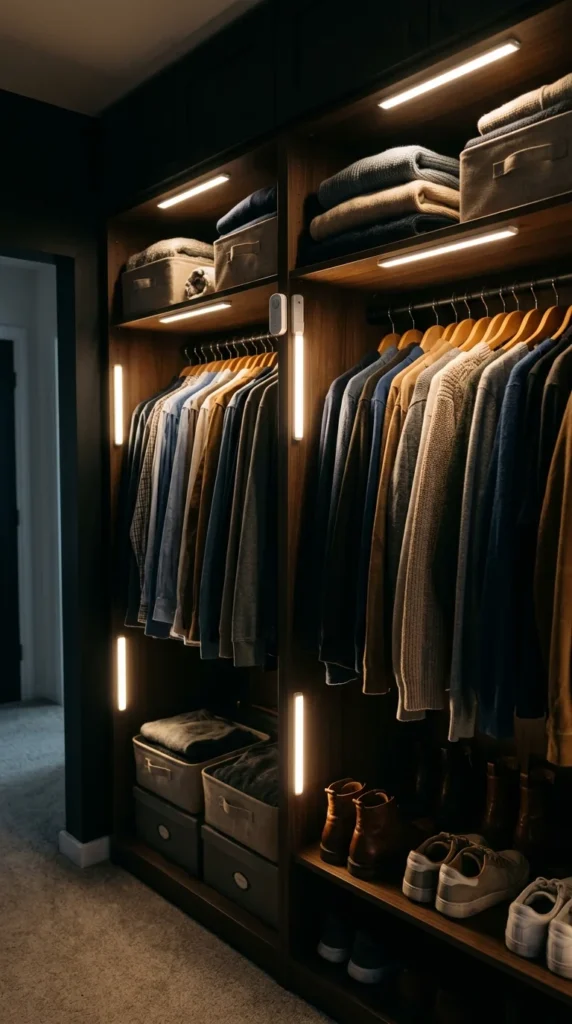
It’s hard to organize what you can’t see. Many small closets are dark, leading to “lost” items at the back. Battery-operated, motion-sensor LED strips are inexpensive and easy to install. When your closet is well-lit, you’ll utilize the full depth of the space rather than just the front six inches.
16. Uniform Baskets
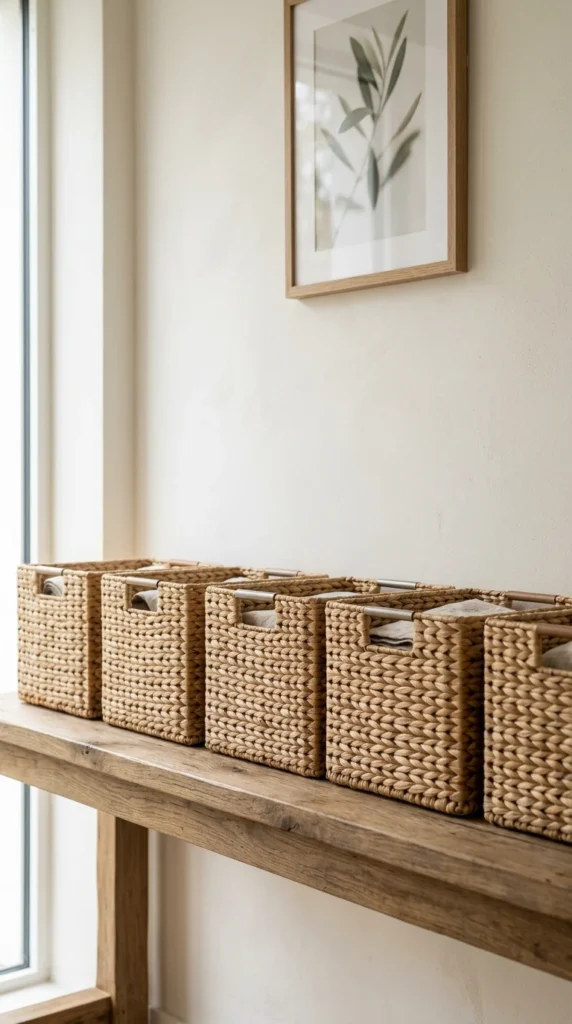
Visual clutter makes a small space feel even smaller. When you use a mismatched collection of boxes and bags, the closet looks chaotic even if it’s “organized.” Switching to uniform baskets—whether wicker, wire, or fabric—creates a streamlined look that is pleasing to the eye and makes the space feel more intentional.
17. Jewelry Trays
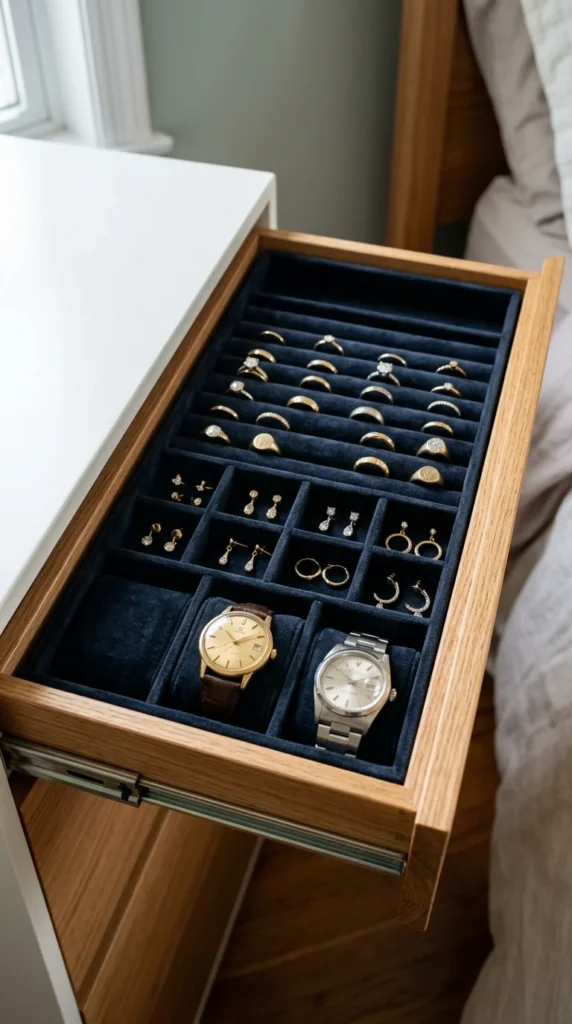
Jewelry can easily become a tangled mess in a small closet. Slim, stackable jewelry trays can be placed inside a drawer or on a shelf. They take up very little vertical space but keep your valuables organized and protected. Because they are thin, you can stack several of them in the space of one standard box.
18. Valet Rods
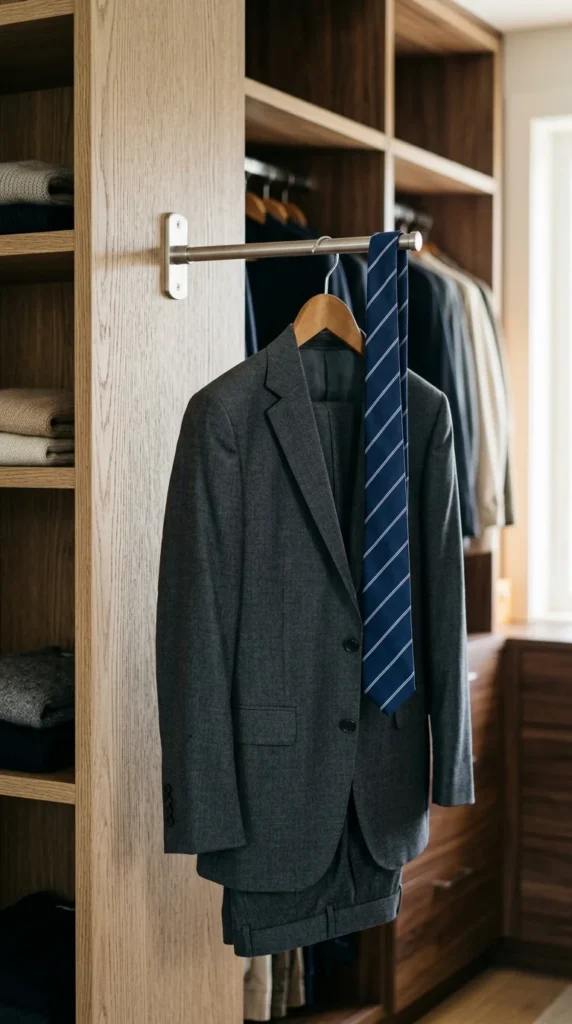
A valet rod is a small, retractable metal bar that stays tucked away until you need it. Use it to hang your outfit for the next morning or to hold dry cleaning before you put it away. It prevents the “clothes chair” phenomenon where outfits pile up outside the closet because they don’t have a temporary landing spot.
19. Corner Units
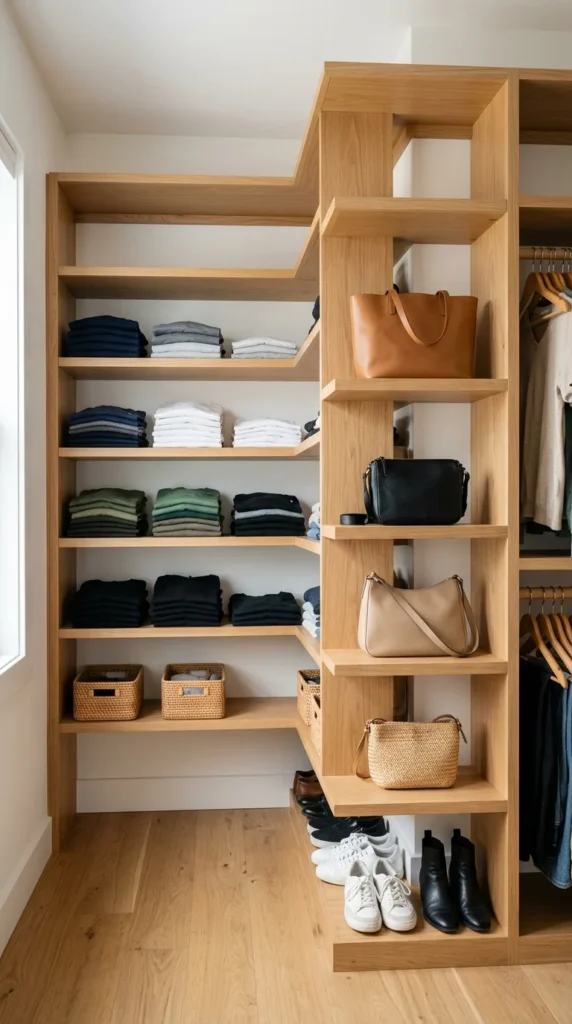
Corners are notoriously difficult to use in closets, often becoming “dead zones” where things go to be forgotten. Installing a specialized corner shelf or a rotating “Lazy Susan” for shoes can reclaim this space. It ensures that every square inch of the closet’s footprint is working for you.
20. Floor Racks
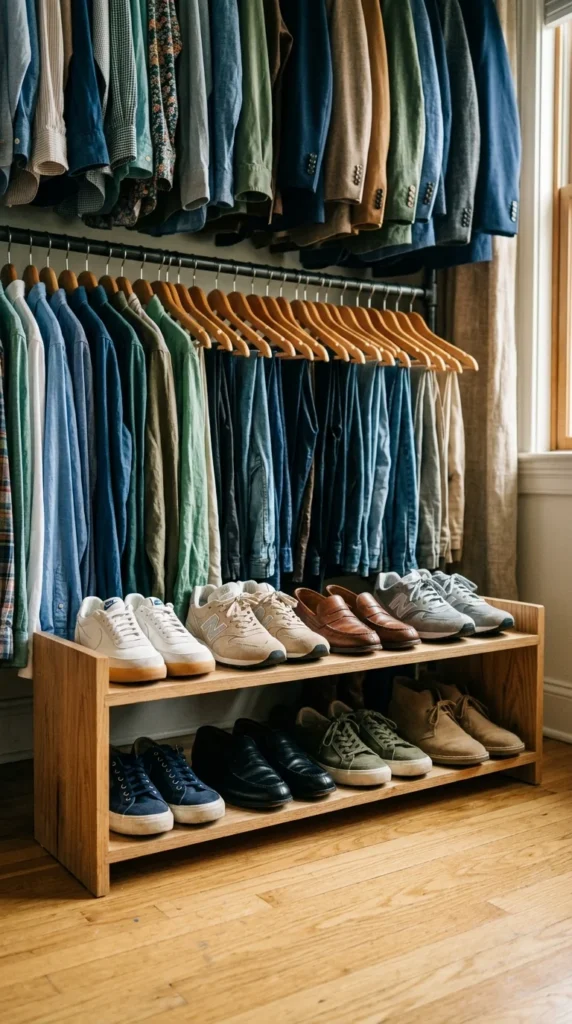
If you have space beneath your hanging clothes, don’t just toss your shoes in a pile. A low-profile shoe rack keeps footwear organized and prevents the bottom of your closet from becoming a “shoe graveyard.” Keeping shoes off the actual floor also makes it much easier to vacuum and keep the space dust-free.