
Living in a tiny home or a compact apartment doesn’t mean you have to sacrifice style or organization. In fact, small-space living often sparks the most creative architectural and interior design solutions. When floor space is at a premium, the only way to go is up. Shelving isn’t just about storage; it’s about creating visual interest, displaying your personality, and making a room feel “lived-in” without the clutter.
The key to mastering small living room shelving is finding the balance between utility and aesthetics. From utilizing “dead” spaces like corners and the area above doorways to choosing materials that disappear into the walls, here are 25 smart shelving ideas to transform your tiny living room.
1. Floating Shelves
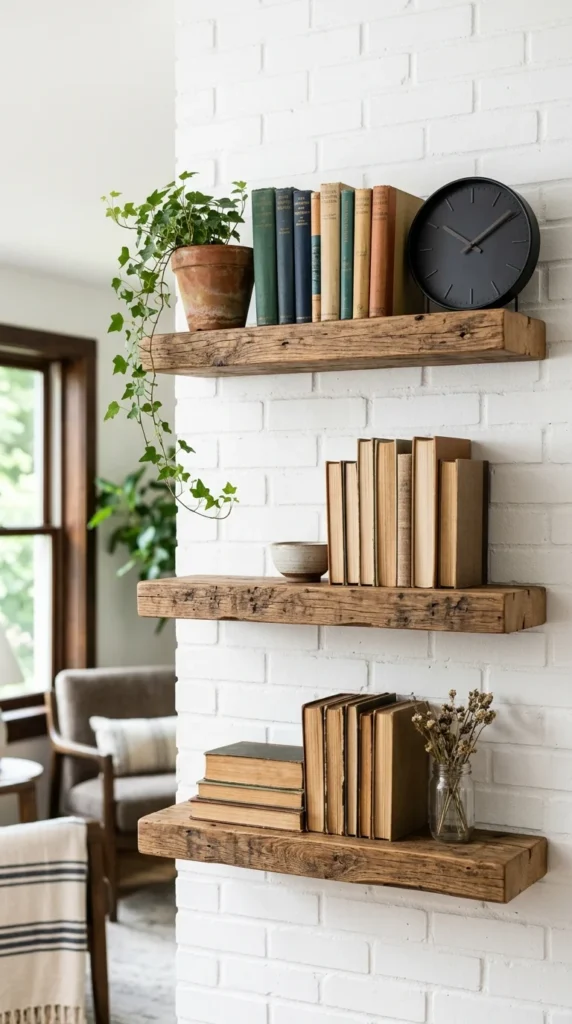
Floating shelves are the gold standard for small spaces because they eliminate the need for bulky brackets or floor-consuming legs. By exposing more of the wall and floor, they create an illusion of openness. You can stagger them for a dynamic look or align them vertically to draw the eye upward, making the ceiling feel higher than it actually is.
2. Corner Units
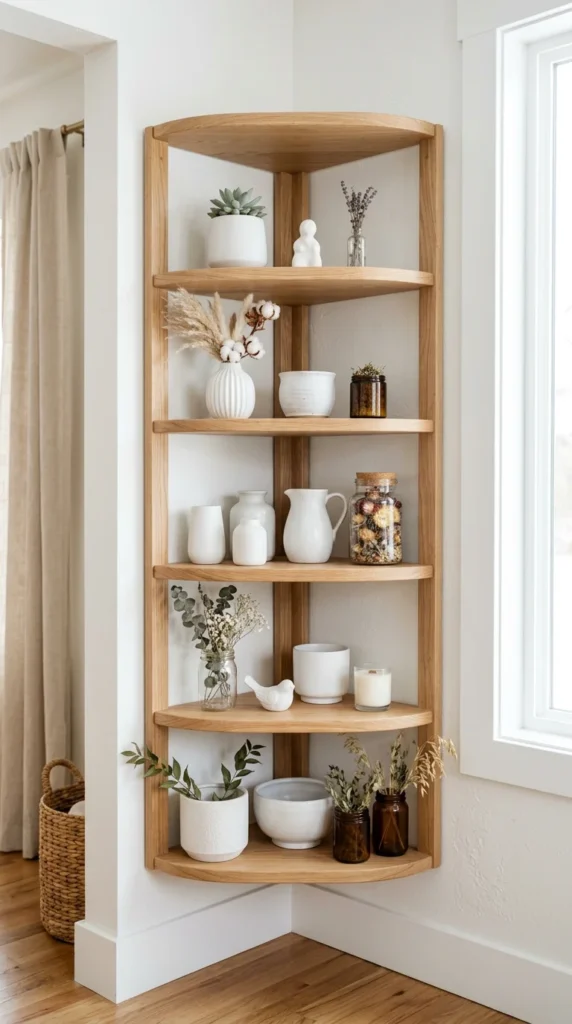
Corners are often the most underutilized areas in a tiny home. A dedicated corner shelf unit turns a “dead” zone into a functional display area. Whether you choose a floor-standing unit that hugs the walls or floating corner planks, these shelves provide a home for books and decor without intruding into the main walkway of the room.
3. Ladder Bookshelves
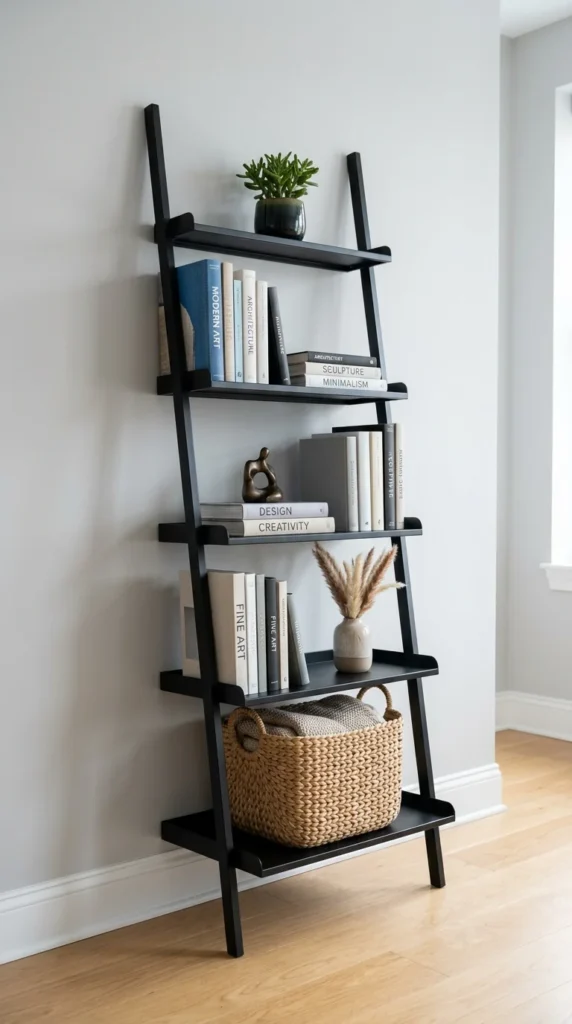
Ladder bookshelves offer a relaxed, contemporary vibe. Because they lean against the wall at an angle, they take up very little visual weight. The tapering design—narrower at the top and wider at the base—prevents the room from feeling closed in while providing a sturdy base for heavier items like storage baskets or speakers.
4. Over-the-Door Storage
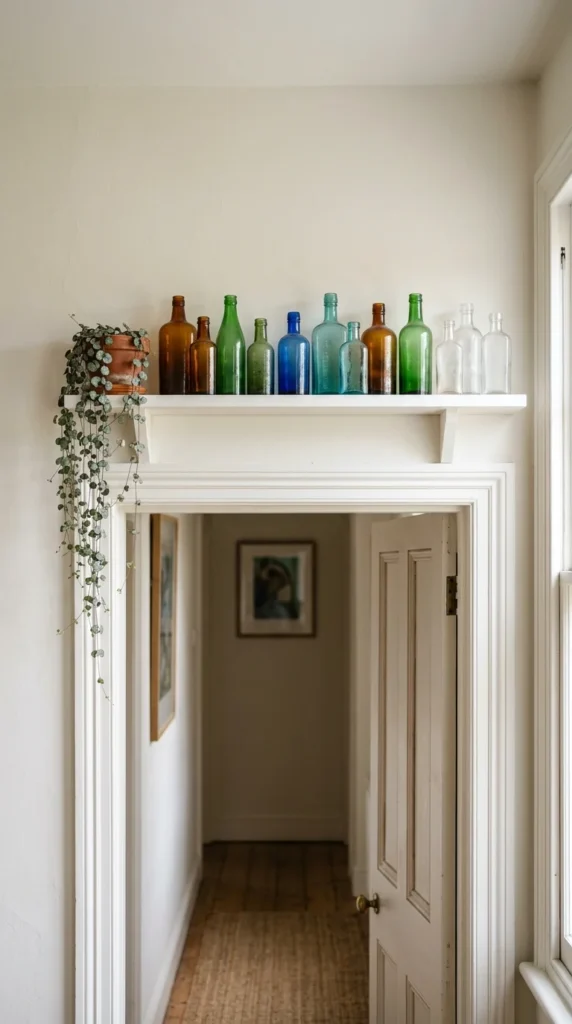
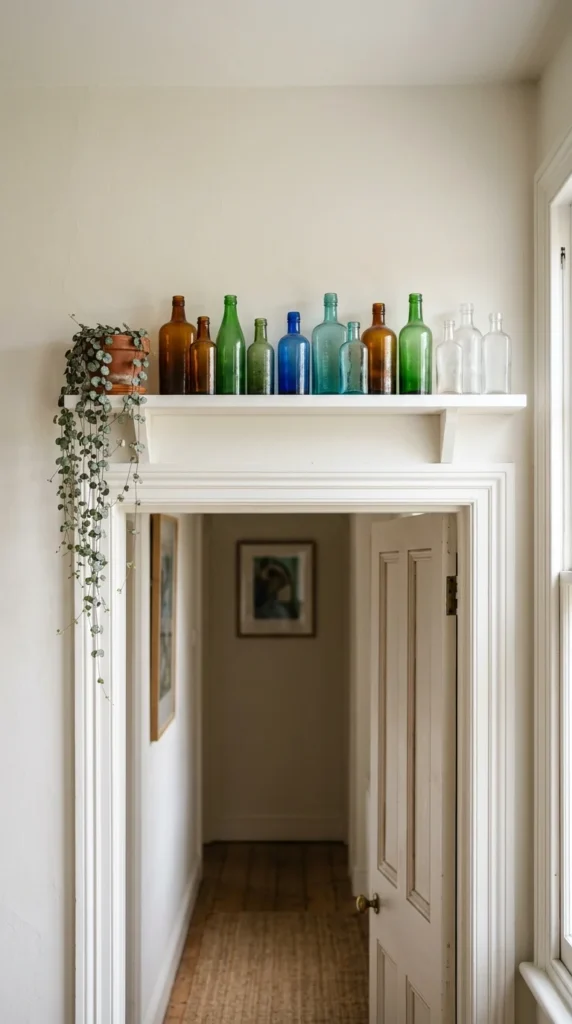
Look up! The space above your living room door is prime real estate that usually goes to waste. Installing a single long shelf here is perfect for items you don’t need to reach every day, such as a collection of rare books, seasonal decor, or travel mementos. It keeps the clutter out of your eye line while adding a custom architectural touch.
5. Ceiling-Mounted Shelves
When the walls are full, look to the ceiling. Hanging shelves from the rafters or ceiling joists is a brilliant way to add storage without touching the walls or floor. This works particularly well in homes with high ceilings, allowing you to create a “floating” library that acts as a focal point.
6. Built-in Niches
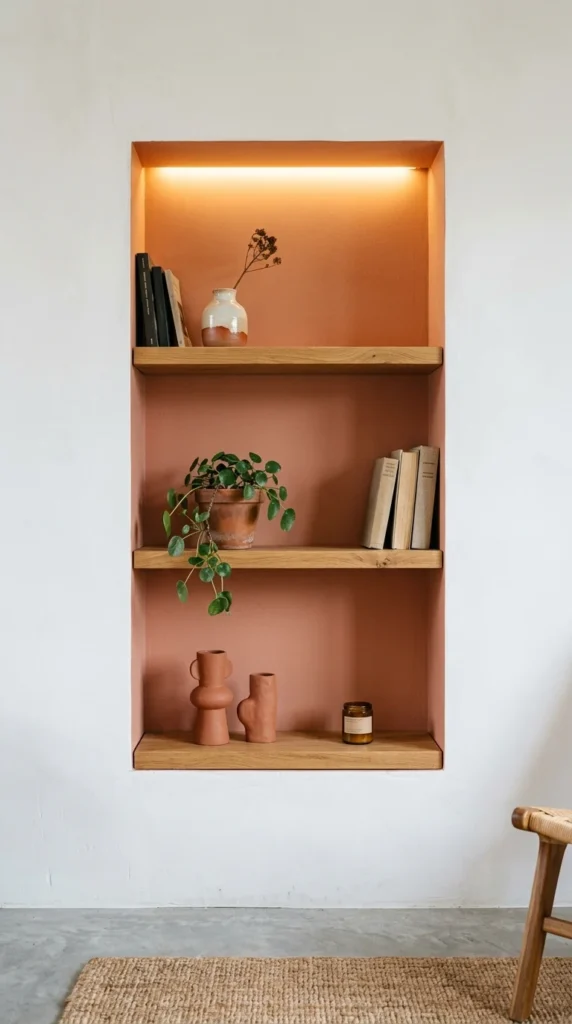
If you are in the process of renovating, building shelves directly into the wall (between the studs) is the ultimate space-saver. These recessed niches provide storage that takes up zero square inches of floor space. They look sleek, permanent, and can be highlighted with contrasting paint or internal lighting to showcase your favorite objects.
7. Geometric Modules
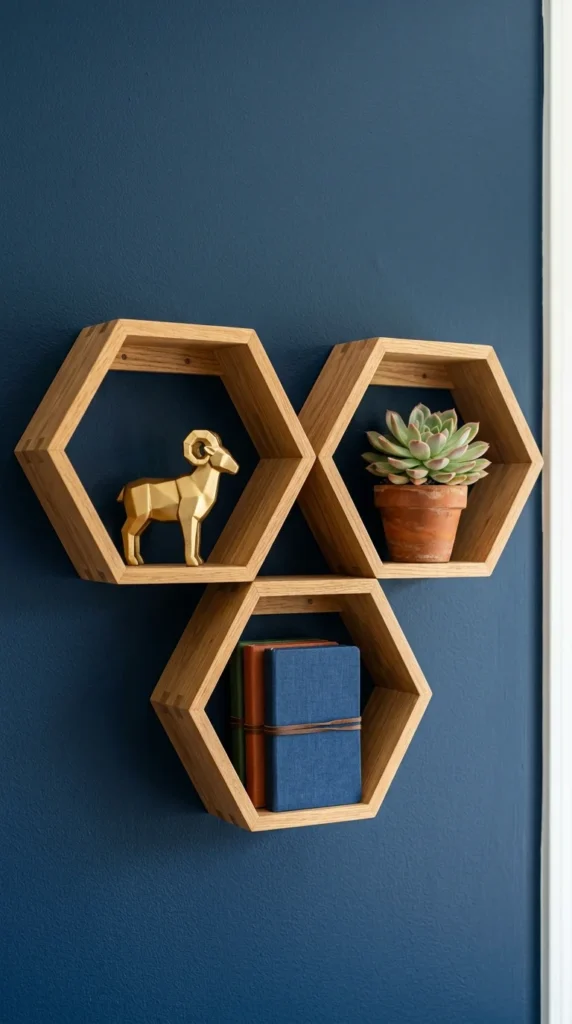
Geometric shelves—circles, hexagons, or triangles—function as wall art and storage simultaneously. Because of their unique shapes, they don’t feel as heavy as traditional rectangular shelves. They are perfect for small living rooms where you want to add a “wow” factor without overwhelming the space with large furniture pieces.
8. Vertical Columns
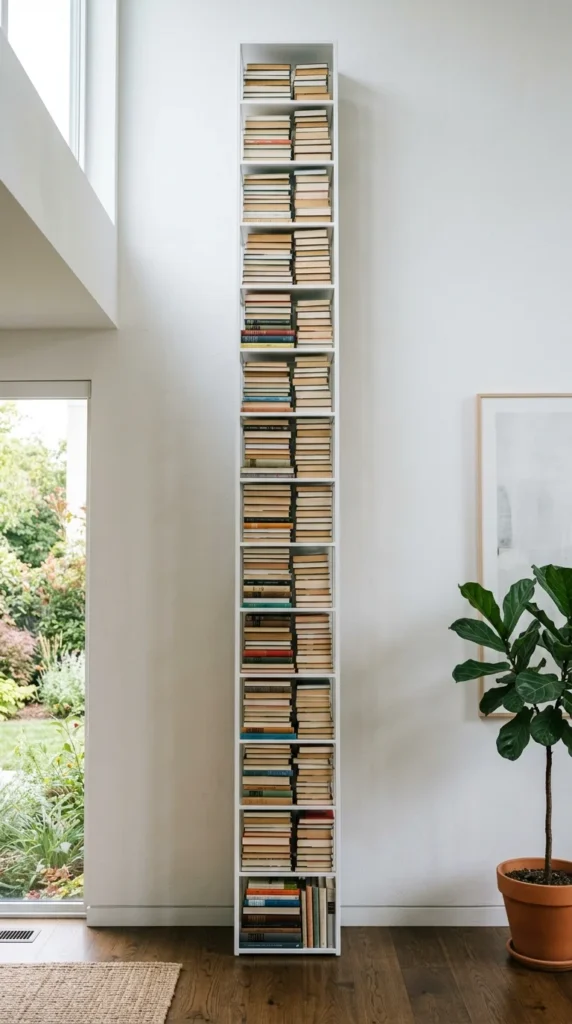
When horizontal space is limited, go vertical. A tall, narrow column shelf can fit into the smallest gaps—between a window and a corner, or next to a TV stand. By stacking items vertically, you maximize the storage capacity of a tiny footprint, making it an ideal choice for book lovers in small apartments.
9. Window Sills
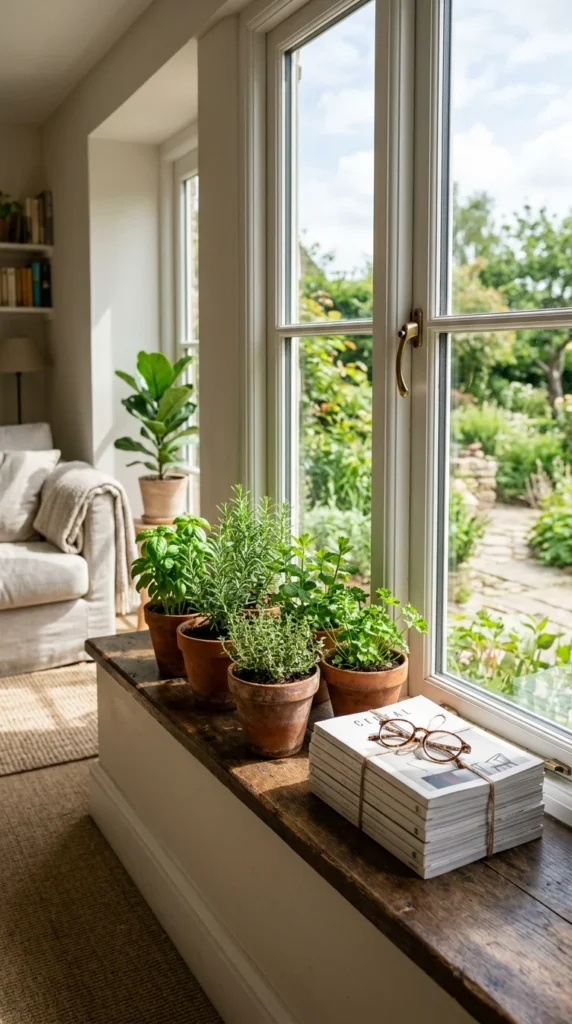
If your windows have deep sills, use them! If they don’t, you can easily install a “sill extender.” This creates a natural shelf that is bathed in light, making it the perfect spot for an indoor herb garden or a collection of glass objects that catch the sun. It’s a functional way to use a space that is already there.
10. Sofa Back Shelving
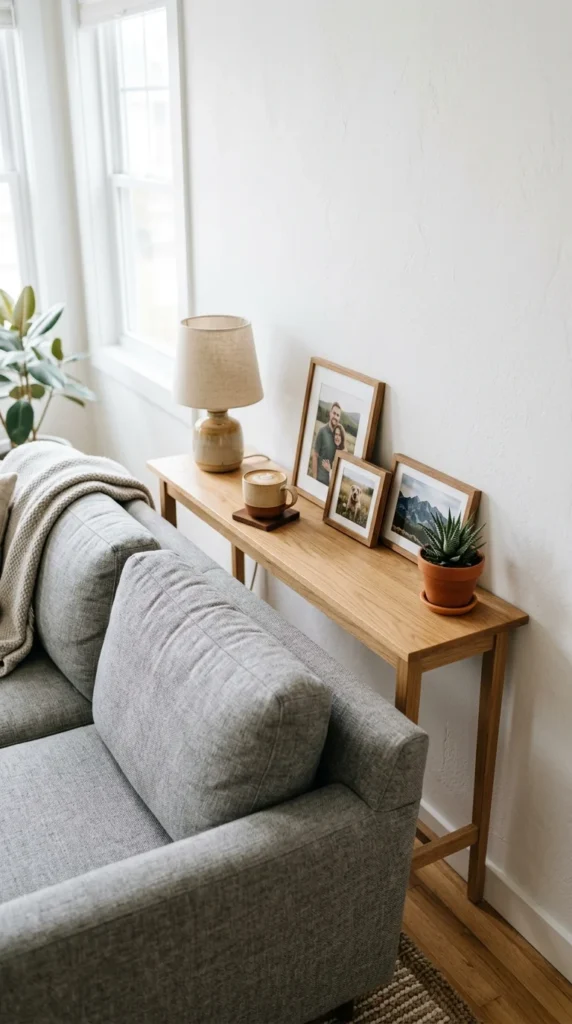
A “sofa table” or a slim shelf tucked behind your couch is a genius way to add a surface for lamps, drinks, and decor without needing a bulky coffee table. This is especially useful in narrow living rooms where there isn’t enough space to walk around a center table.
11. Picture Ledges
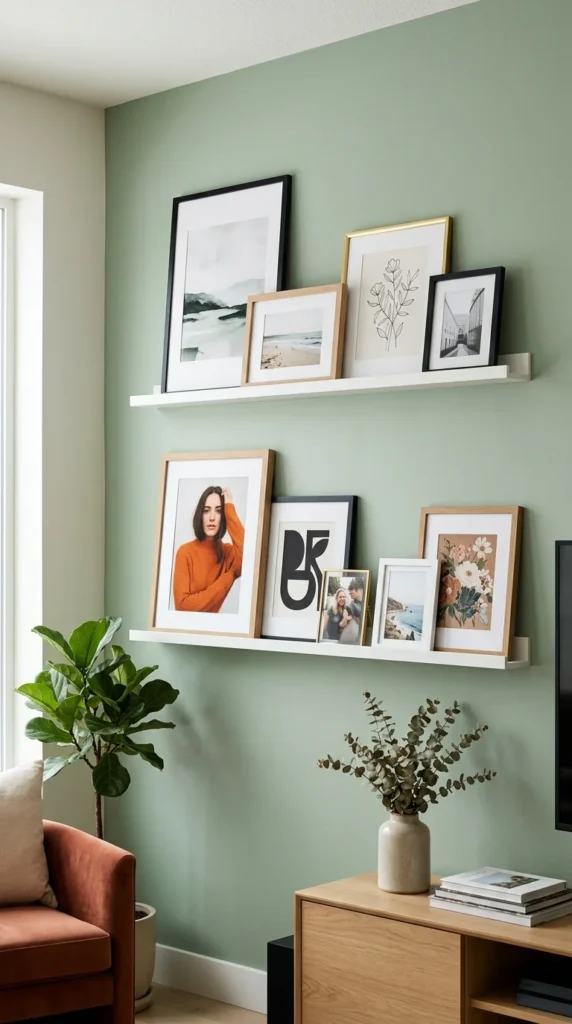
Picture ledges are incredibly shallow, making them perfect for hallways or the tight spaces behind seating. While they are designed for frames, they can also hold small items like spices (if the living room is open-plan with the kitchen), thin books, or small decorative plates. They allow you to change your decor frequently without hardware changes.
12. Pegboard Walls
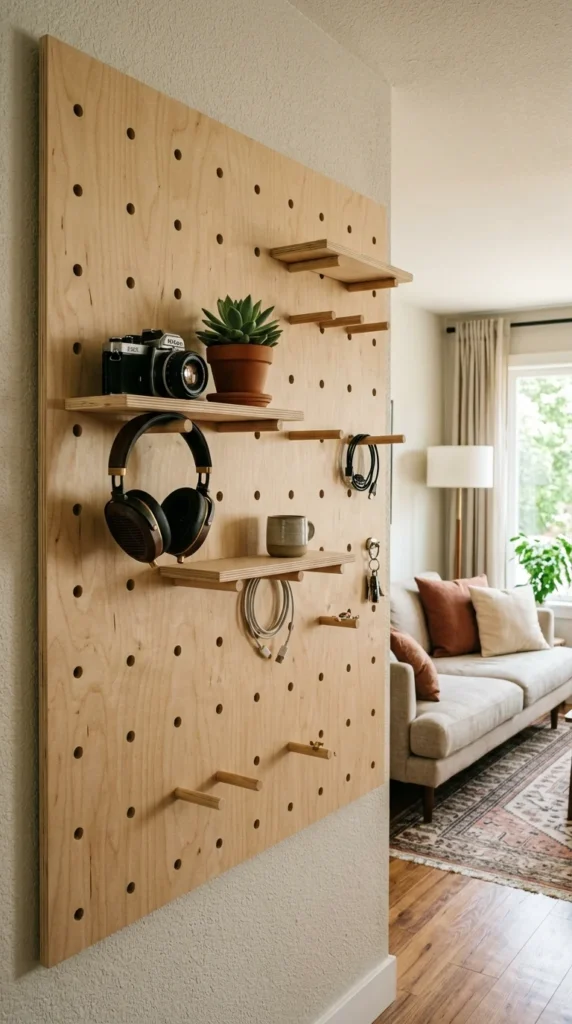
Pegboards are no longer just for garages. A high-quality wooden pegboard is a versatile, modular shelving solution. You can move the shelves and hooks around whenever you want to change the layout. This adaptability makes it perfect for tiny homes where the function of a room might change throughout the day.
13. Acrylic Shelves
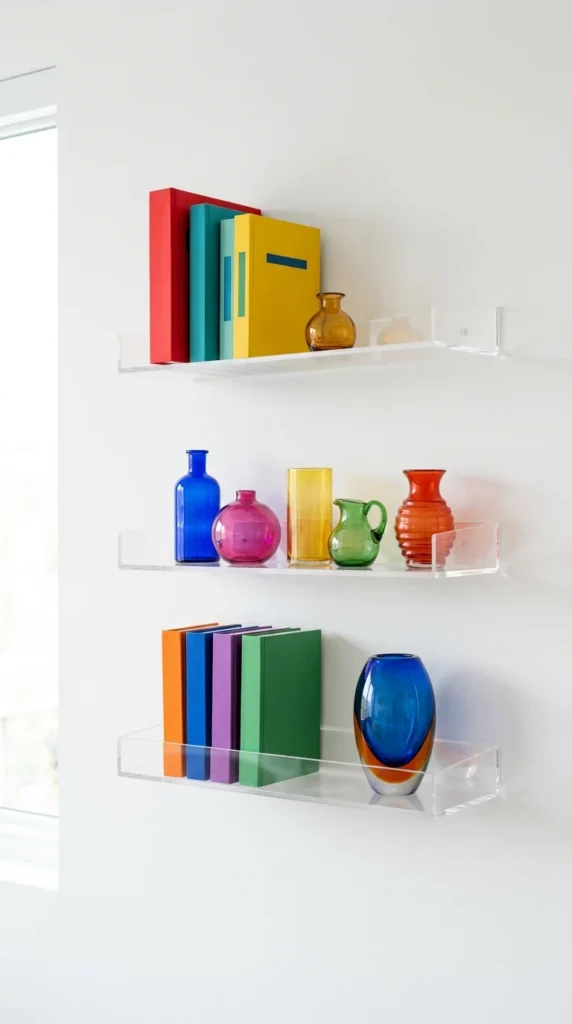
Clear acrylic or glass shelves are the ultimate “invisible” storage. Because they are transparent, they don’t break up the visual flow of the room. This prevents the “closed-in” feeling that dark wooden shelves might create in a very small, dimly lit room.
14. Industrial Pipes
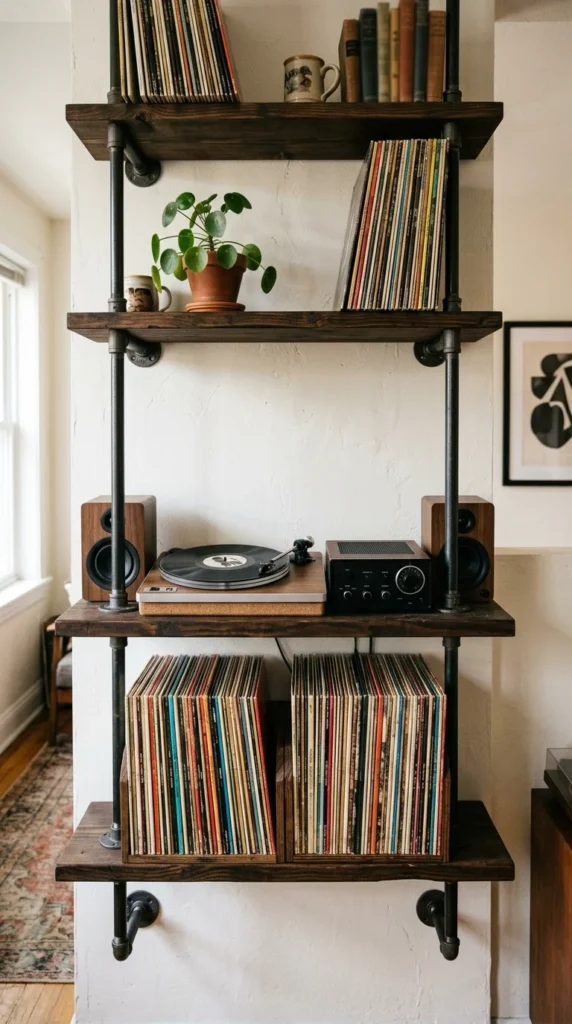
For those who love the loft look, industrial pipe shelving is a sturdy and customizable option. You can build these to fit any specific height or width. The open-frame design keeps the wall visible, which helps maintain a sense of space while offering a very strong platform for heavier electronics or large book collections.
15. Hidden Cubbies
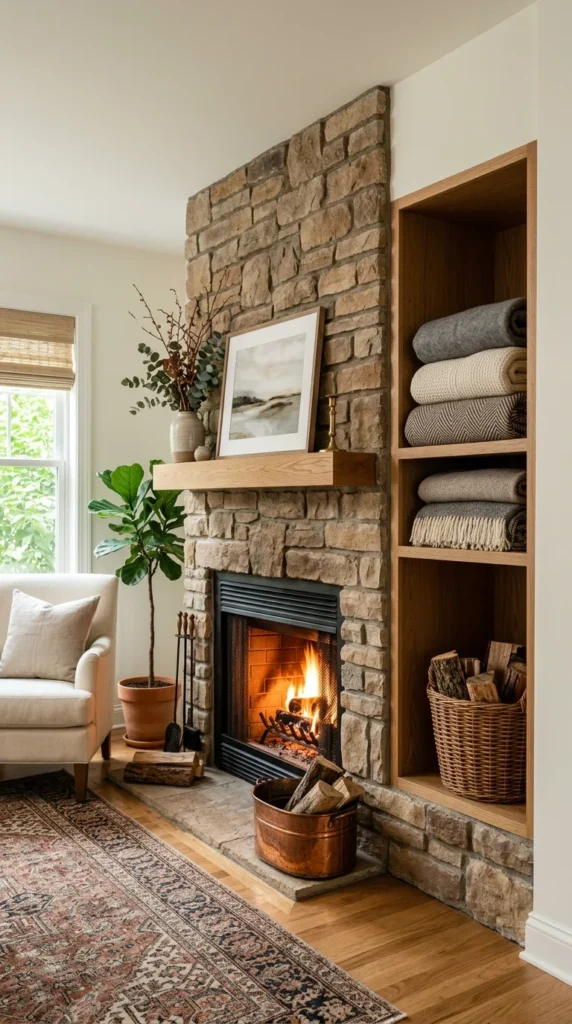
Every architectural quirk in a tiny home is an opportunity. If you have a fireplace, a protruding pillar, or an awkward alcove, consider adding custom cubbies. These “hidden” spots utilize space that would otherwise be wasted, providing a neat home for everyday essentials.
16. Wrap-around Shelving
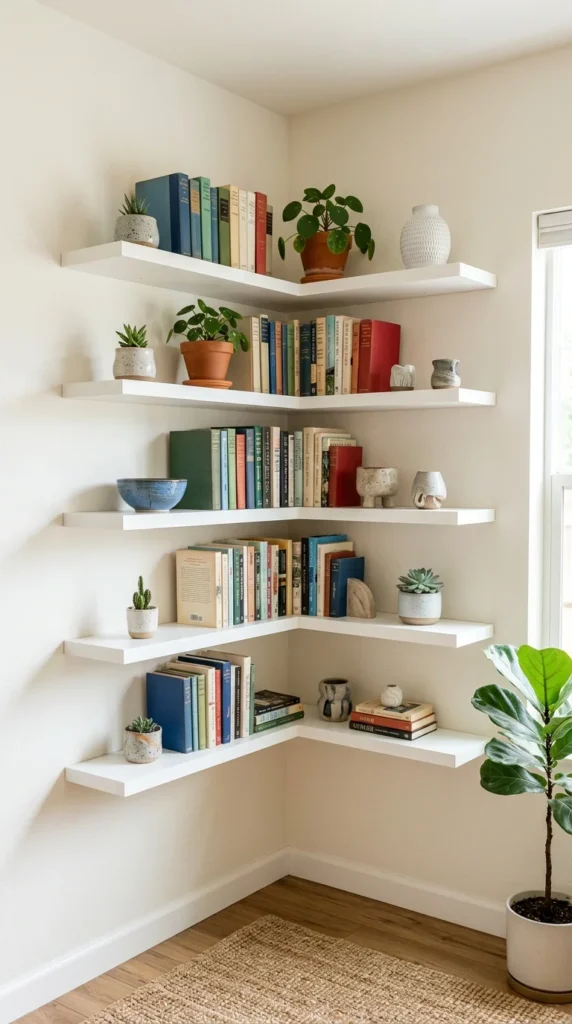
Wrap-around shelves create a continuous line that leads the eye around the room, making the space feel more expansive. This technique is great for “softening” sharp corners and creating a cohesive look that connects different zones of a tiny open-plan home.
17. High Perimeter Shelves
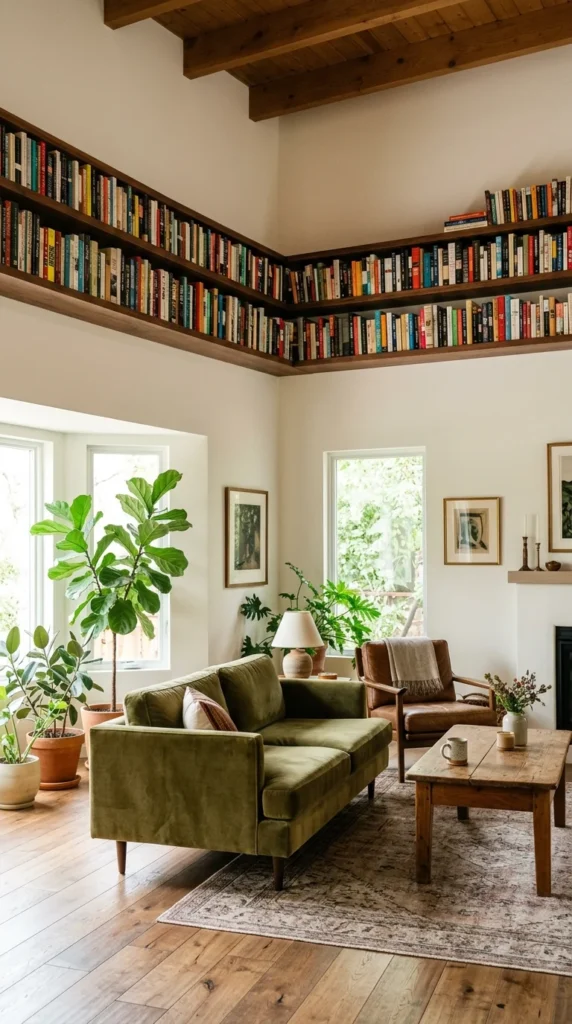
Installing a shelf that runs around the top of the entire room is a classic tiny house move. It creates a “library” feel without taking up any usable wall space at eye level. It also acts as a crown-molding alternative, adding architectural interest to a plain boxy room.
18. TV Unit Integration
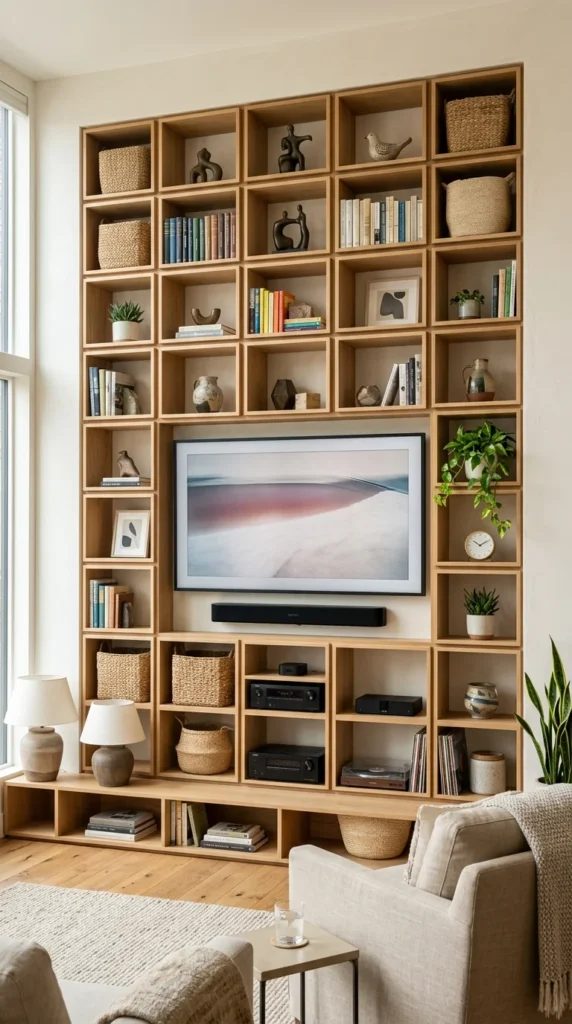
Instead of a standalone TV stand, surround your television with shelving. This “frames” the TV and integrates it into the room’s decor, rather than letting it be a giant black hole on the wall. It also provides a centralized location for all your media-related storage.
19. Hexagonal Honeycombs
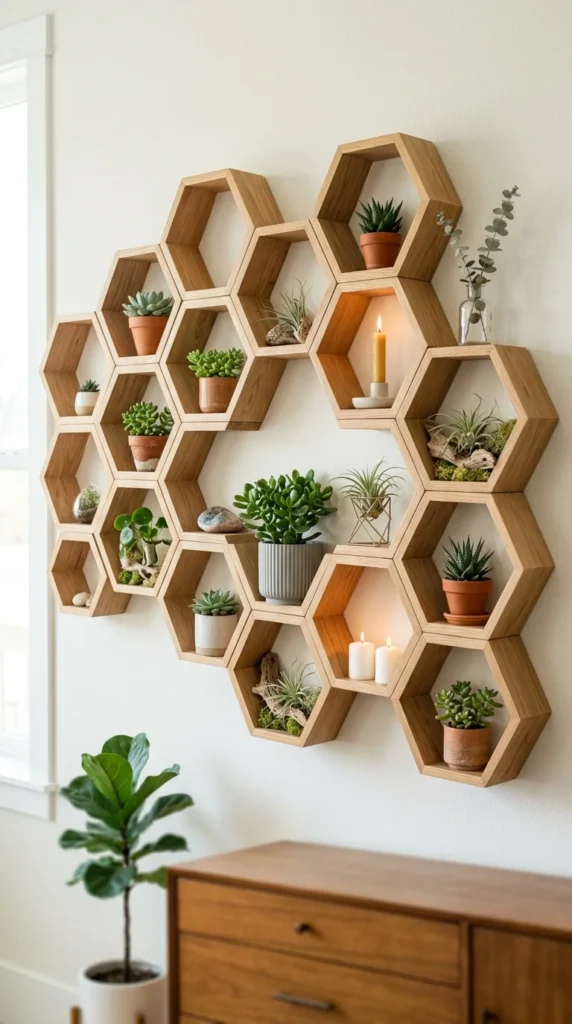
Honeycomb shelves are modular and artistic. You can start with three and keep adding as your storage needs grow. Their organic shape breaks up the straight lines often found in small furniture, making the living room feel more creative and less “cramped.”
20. Modular Cubes
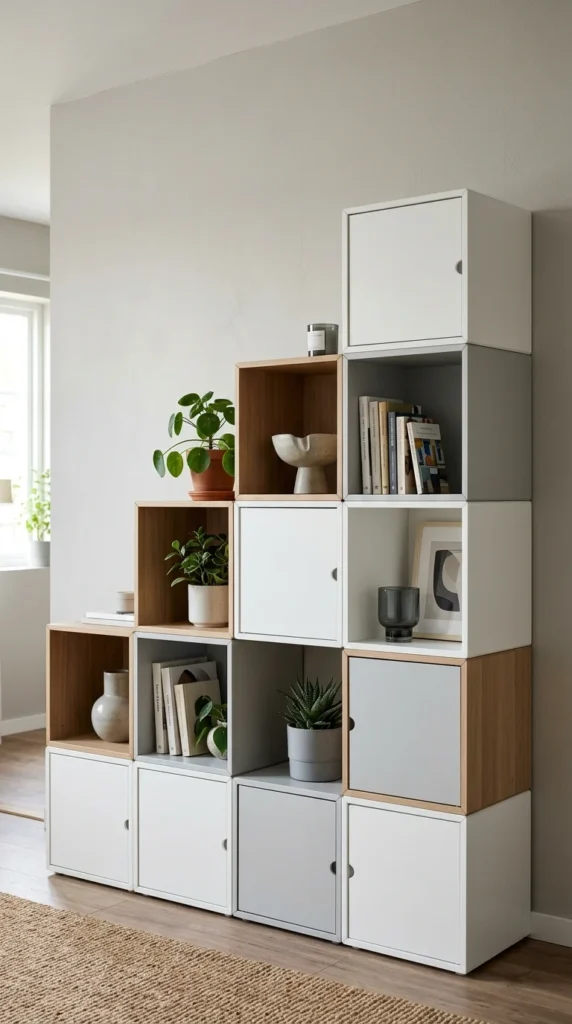
Modular cubes offer the ultimate flexibility. You can stack them high, spread them out low to act as a bench, or mount them individually on the wall. For a tiny home, choosing cubes with a mix of open and closed fronts allows you to hide the “ugly” stuff (cables, remotes) while displaying the “pretty” stuff.
21. Recessed Shelving
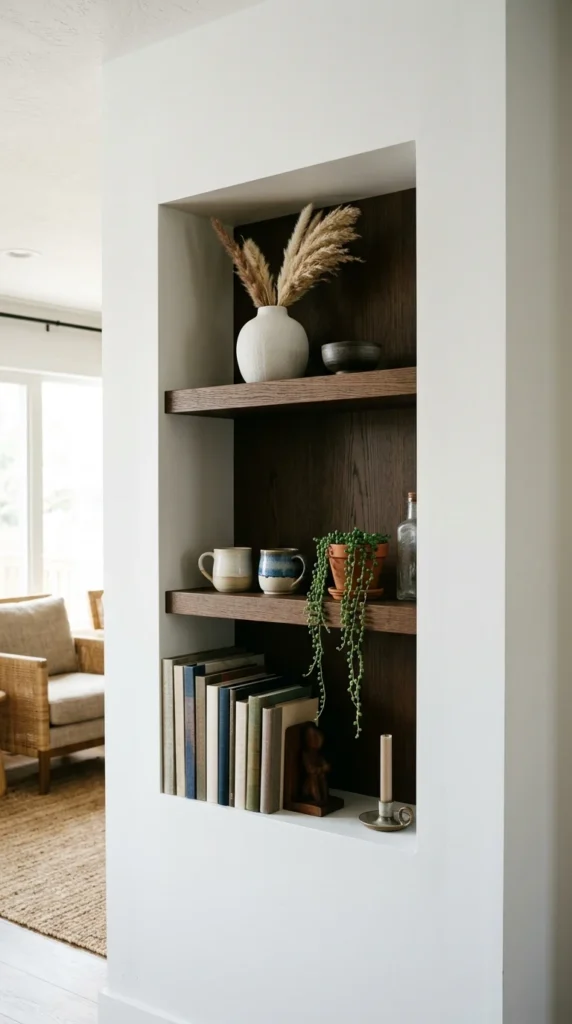
Similar to niches but on a larger scale, recessed shelving involves creating a cavity in a double-thick wall. This is a popular trick in “super-tiny” homes where every inch is planned. It provides deep storage for larger items without any part of the shelf protruding into the living space.
22. Swing-Arm Shelves
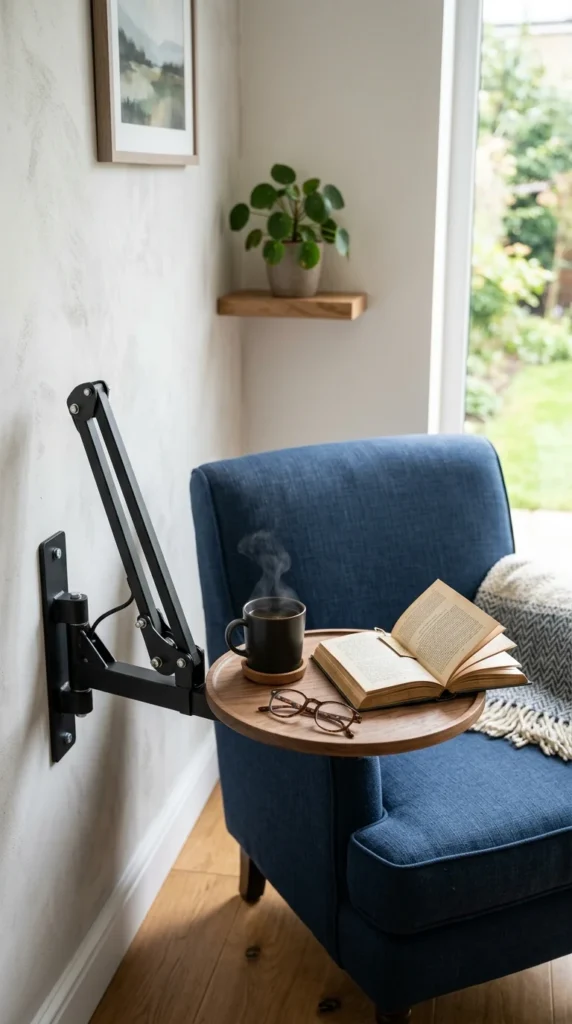
Swing-arm shelves (often used as bedside tables) are perfect for tiny living rooms. They can be pulled out when you need a surface for your coffee or laptop and pushed flat against the wall when you need the floor space for movement or exercise.
23. Staircase Storage
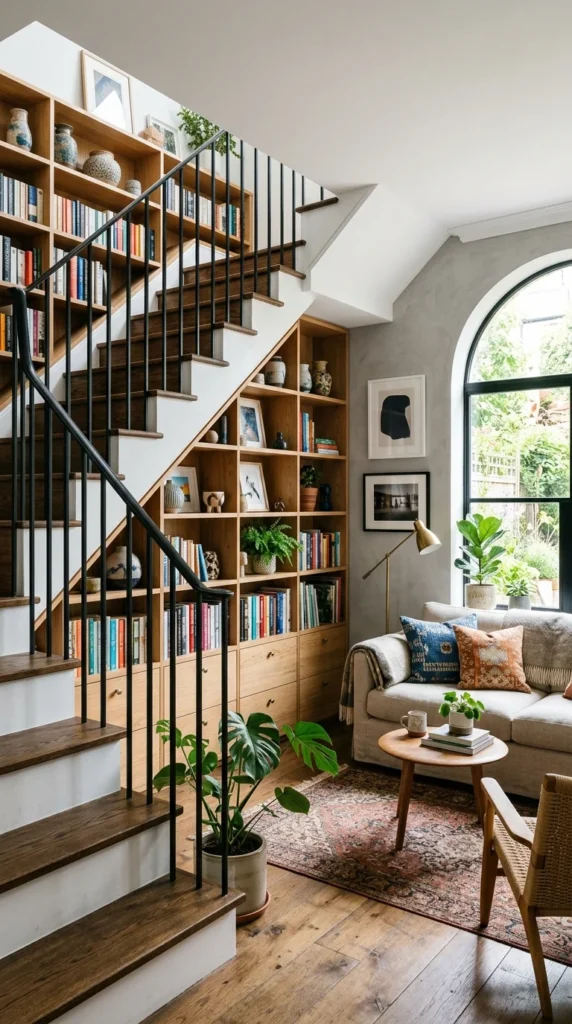
In many tiny houses, the living room is adjacent to the loft stairs. Using the “triangle” of space under the stairs for shelving is one of the most efficient storage hacks available. It turns structural necessity into a beautiful, functional library.
24. Room Divider Shelves
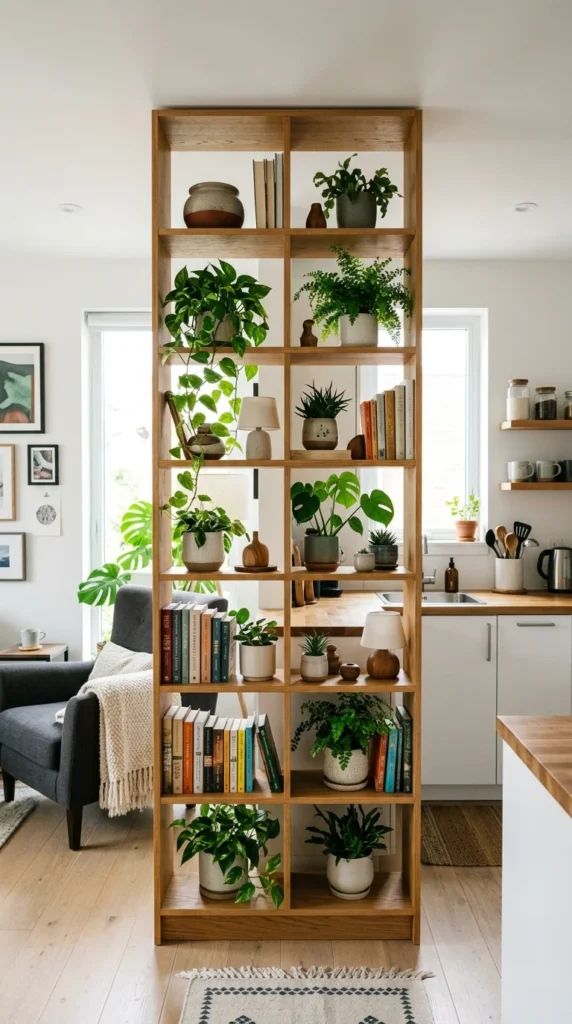
If your tiny home is one big room, use an open-backed shelving unit to define the living area. Because the shelf has no “back,” it lets light pass through and maintains sightlines, preventing the space from feeling partitioned or small while providing massive amounts of storage.
25. Fold-Down Desk Shelves
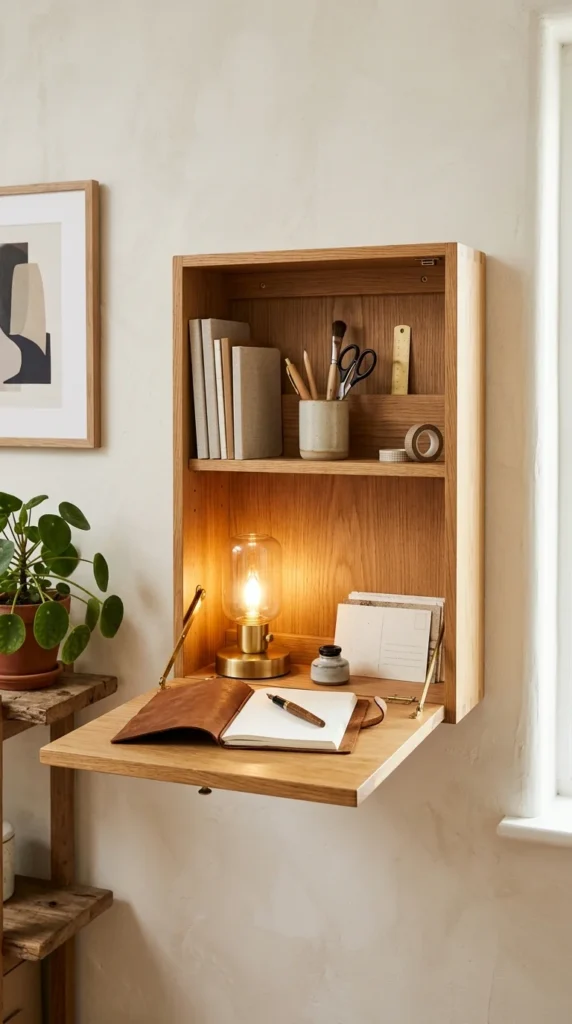
The “Murphy desk” or fold-down shelf is a lifesaver for those who work from home in a tiny space. When closed, it’s a slim wall shelf. When open, it’s a fully functional workstation. It’s the ultimate multi-purpose piece for a smart, modern living room.
Styling Your Small Shelves
Once you’ve chosen your shelving style, how you arrange your items matters. In a small living room, follow the “two-thirds rule”: leave about one-third of your shelf space empty. This “white space” prevents the room from feeling cluttered and allows the eye to rest.
Group items in odd numbers (threes and fives) and vary the heights of your objects. Use baskets for small, messy items to keep the visual look clean. By combining these smart shelving ideas with thoughtful styling, you can make your tiny living room feel organized, spacious, and perfectly tailored to your lifestyle.