
In an era where remote work has become the norm rather than the exception, the challenge for many urban dwellers and homeowners is finding the space to work efficiently. Not everyone has the luxury of a spare bedroom to convert into a sprawling executive suite. However, a lack of square footage shouldn’t equate to a lack of productivity or style. The “nook” has emerged as the ultimate solution for modern living.
Creating a small home office is about more than just plopping a laptop on a kitchen table. it’s about carving out a dedicated sanctuary that signals to your brain that it is time to focus. Whether you have a literal hole in the wall, an empty corner, or a few feet of hallway space, these 21 ideas will help you transform that neglected area into a powerhouse of creativity.
1. Closet Conversion
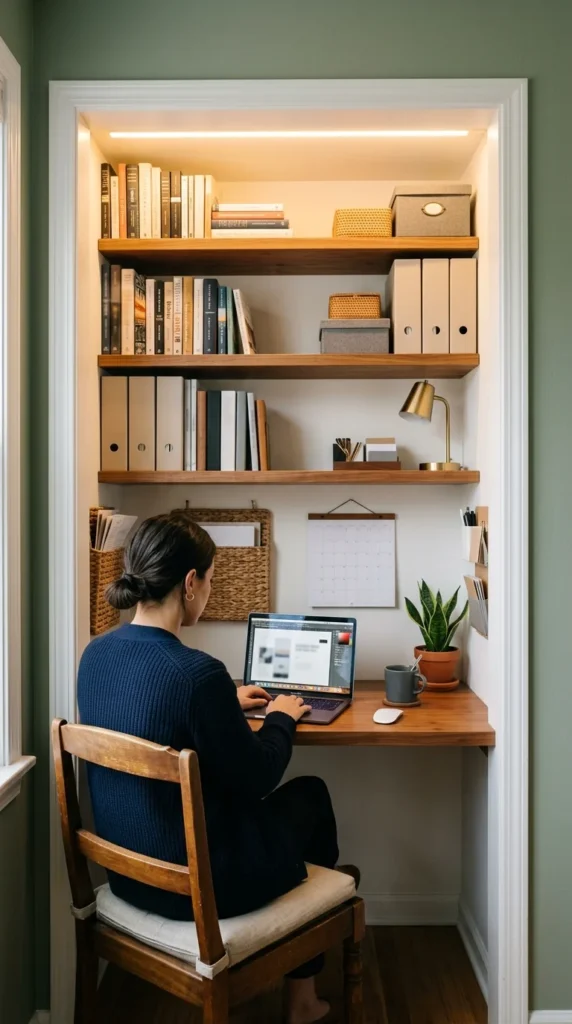
Commonly referred to as a “cloffice,” converting an unused or underutilized closet is the gold standard for small-space living. By removing the doors or replacing them with curtains, you can fit a standard-sized desk right into the recessed area. This setup is particularly effective because it naturally defines the workspace boundaries, and if you choose to keep the doors, you can literally “close the office” at the end of the day to maintain a healthy work-life balance.
2. Window View
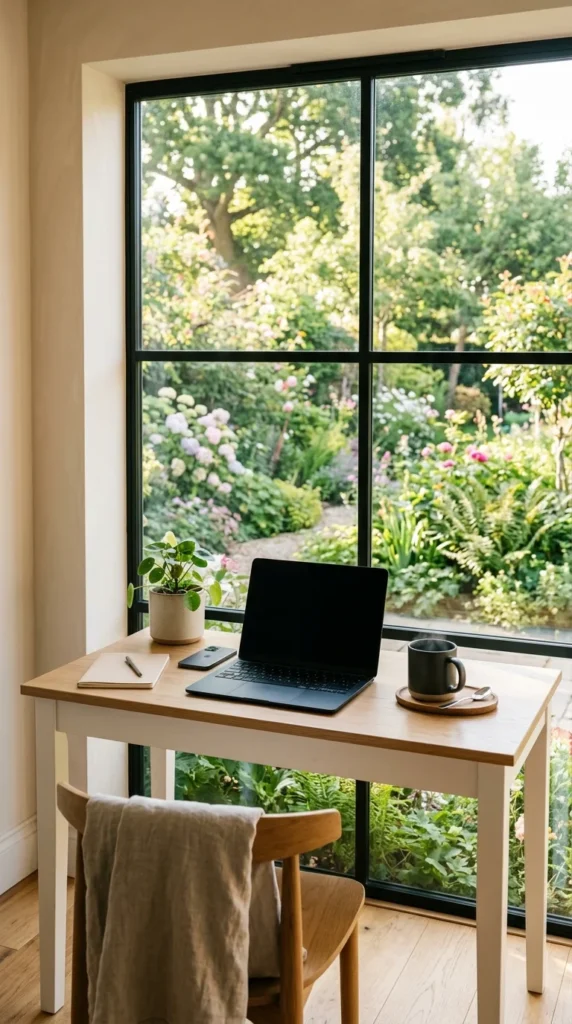
Positioning your desk directly in front of a window is one of the best ways to boost your mood and productivity. Natural light reduces eye strain and helps regulate your circadian rhythm. To make this work in a small nook, choose a desk with thin legs or a glass top to avoid blocking the view and keep the space feeling airy and open.
3. Floating Desk
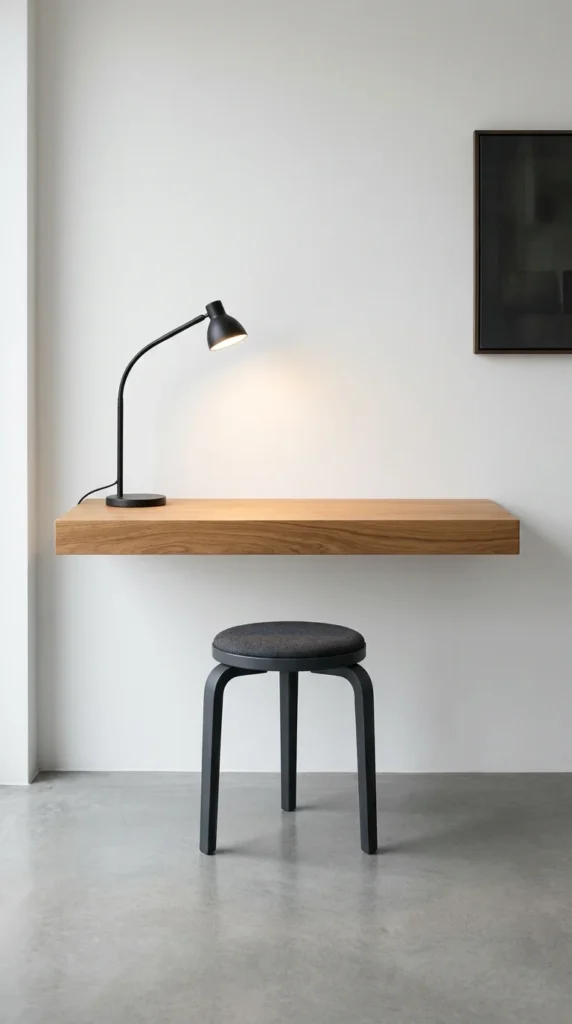
When floor space is at a premium, go legless. A floating desk is a wall-mounted surface that provides all the functionality of a traditional desk without the visual clutter of four legs. This creates an illusion of more space and allows you to tuck your chair or a small storage bin underneath without any obstacles. It is the ultimate choice for minimalist enthusiasts.
4. Under Stairs
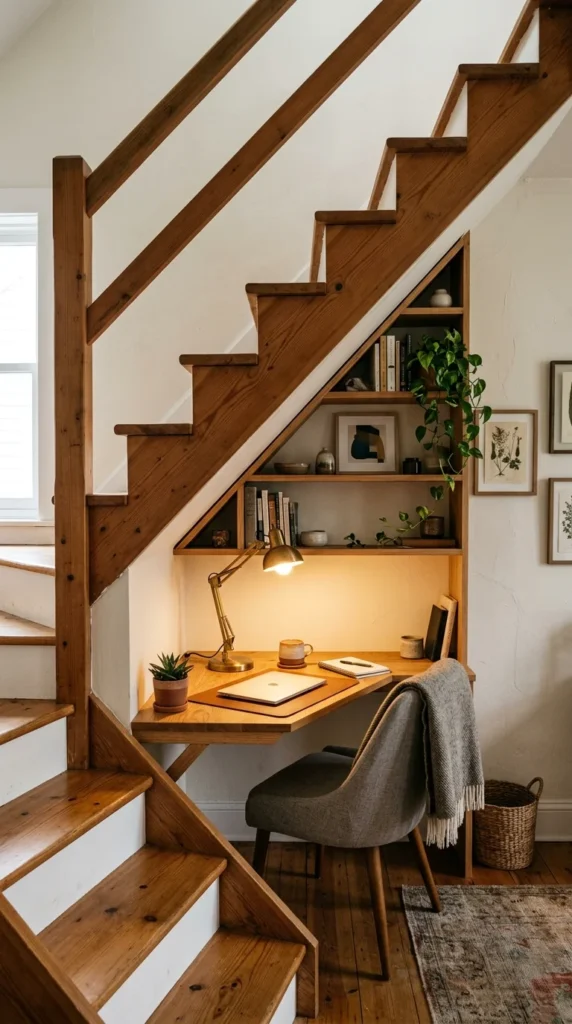
The space beneath a staircase is often wasted or used for cluttered storage. However, its unique architectural angles make it a perfect, secluded nook for a home office. Custom cabinetry can help you maximize every inch of the “triangle,” providing room for a computer, printer, and even a small library of reference books.
5. Ladder Desk
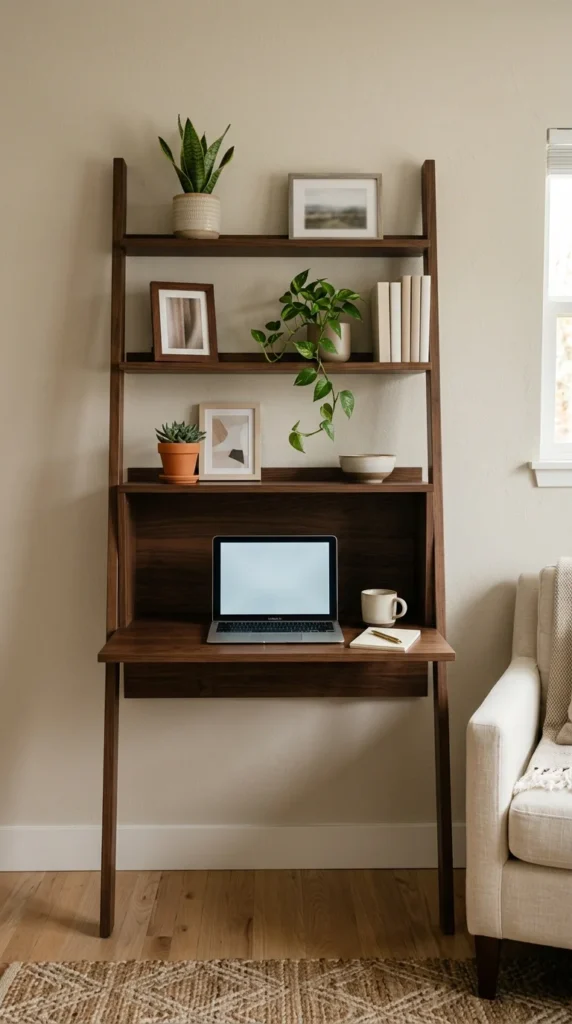
Ladder desks are excellent for narrow spaces because they utilize vertical height rather than horizontal width. These pieces of furniture lean against the wall and offer multiple tiers of storage above the primary work surface. They are portable, easy to assemble, and add a trendy, bohemian aesthetic to any room.
6. Kitchen Corner
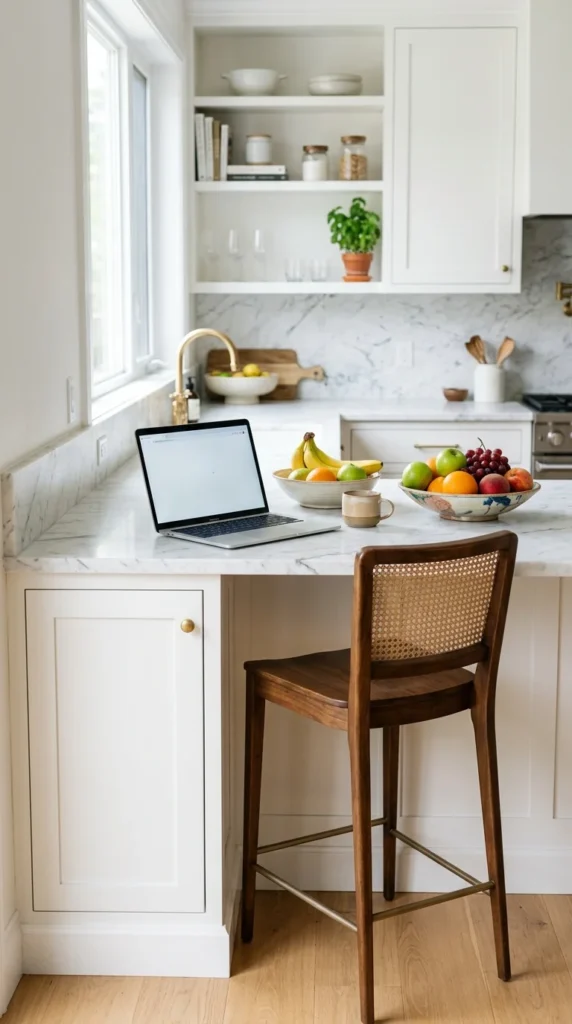
If you find yourself gravitating toward the heart of the home, consider a kitchen command center. Extending a countertop or utilizing the end of a kitchen island can provide a seamless transition from morning coffee to morning emails. This is ideal for those who need to multitask or keep an eye on things in the kitchen while they work.
7. Behind Sofa
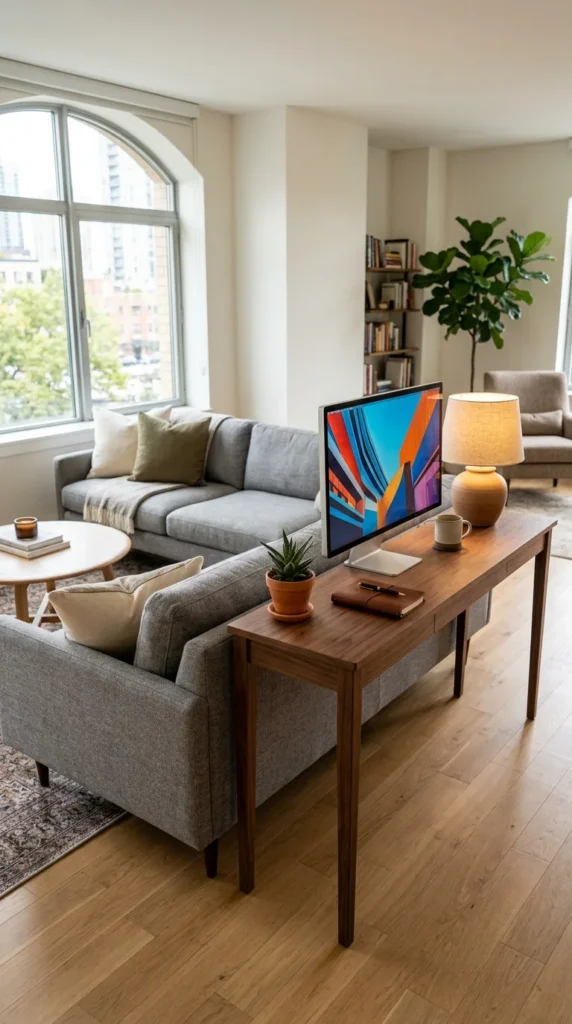
In open-concept layouts, the back of a sofa is often an overlooked “wall.” Placing a slim desk here creates a functional zone without requiring any additional wall space. This layout also allows you to stay connected with the rest of the household while still having a designated area to focus.
8. Hallway Nook
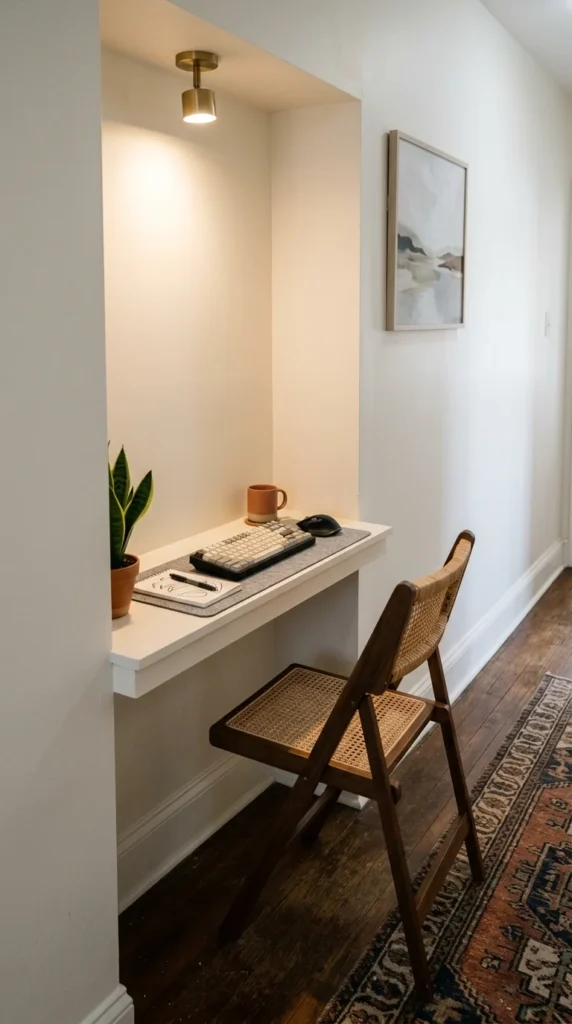
Wider hallways or landings at the top of stairs are prime real estate for a small office. Since these areas are typically transition zones, a low-profile desk won’t impede traffic flow. Use wall-mounted organizers to keep the desk surface clear and avoid a cluttered appearance in a high-traffic area.
9. Bedroom Vanity
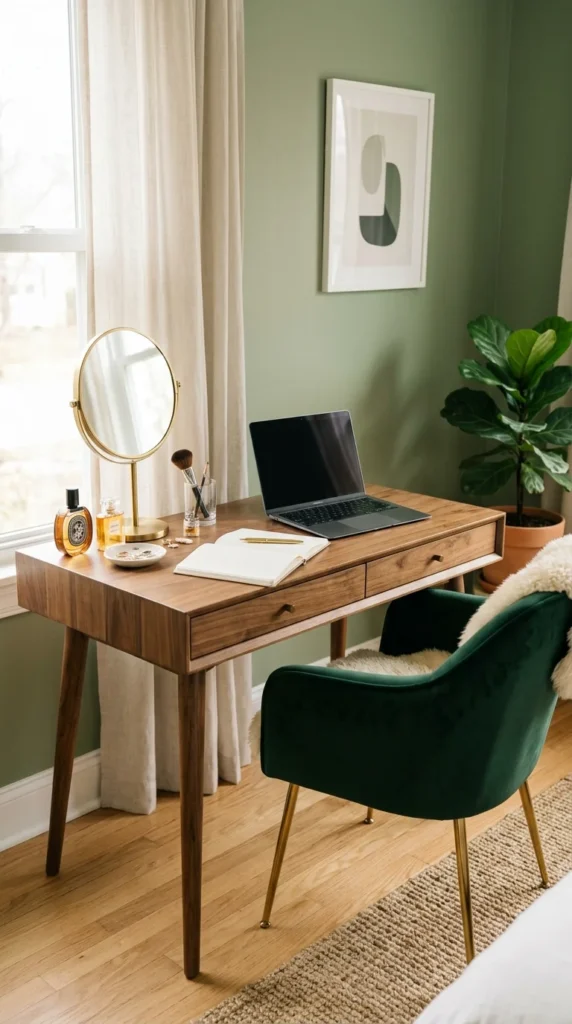
For those living in studio apartments or small one-bedroom flats, furniture must often serve dual purposes. A bedroom vanity can easily transition into a desk. By day, it’s your workstation; by night, it’s where you get ready. Opt for a piece with drawers to hide your office supplies when they are not in use.
10. Fold-down Desk
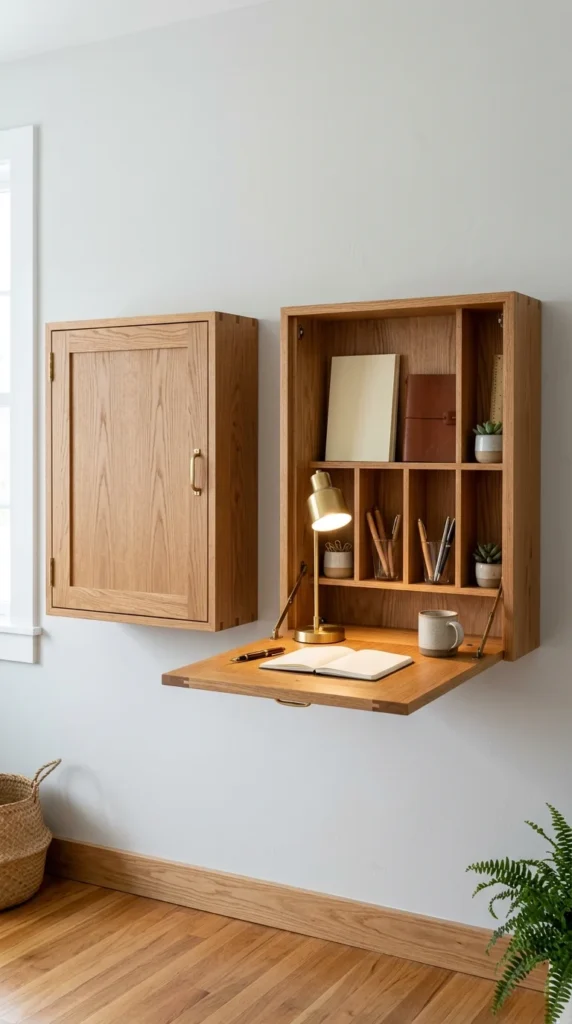
If you truly have no space for a permanent desk, a fold-down (or “Murphy”) desk is the answer. These units look like simple wall cabinets when closed. When it’s time to work, the front panel flips down to provide a sturdy surface. This is perfect for guest rooms or multipurpose spaces where you only need an office occasionally.
11. Pegboard Wall
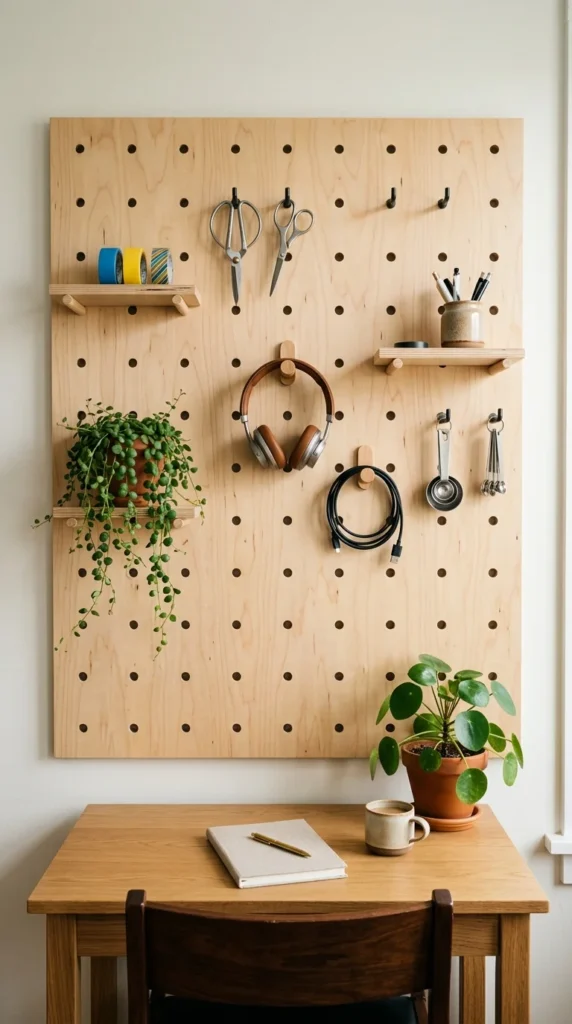
When your desk is small, your walls need to do the heavy lifting. A pegboard is a versatile and stylish way to keep your supplies within reach without cluttering your limited workspace. It adds a professional, “maker” vibe to the nook and allows you to rearrange your storage as your needs change.
12. Alcove Workspace
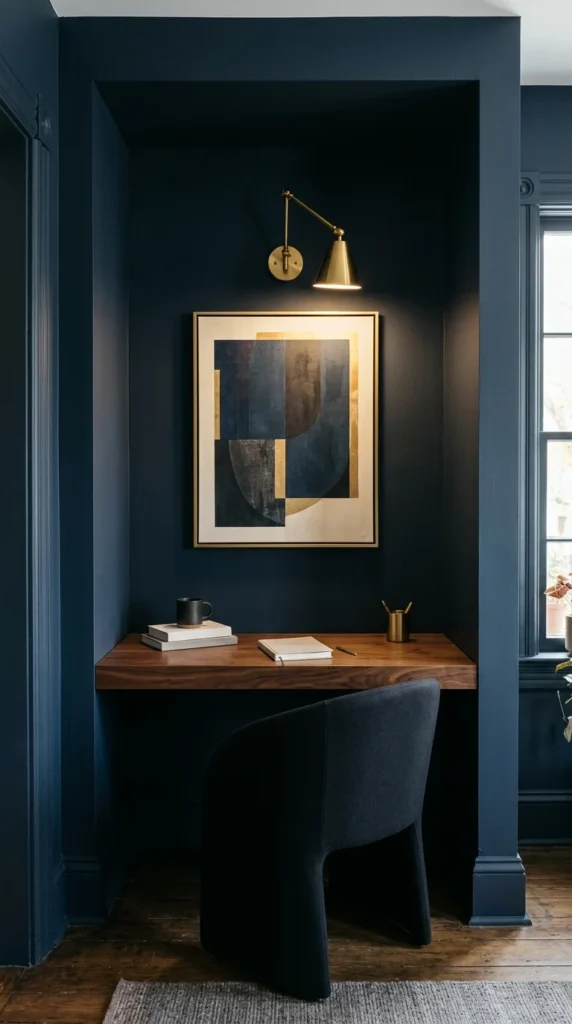
Many older homes have natural alcoves created by chimneys or structural pillars. These “dead spaces” are tailor-made for a built-in desk. Painting the interior of the alcove a different color than the surrounding room can make the office nook feel like its own distinct architectural feature.
13. Bold Wallpaper
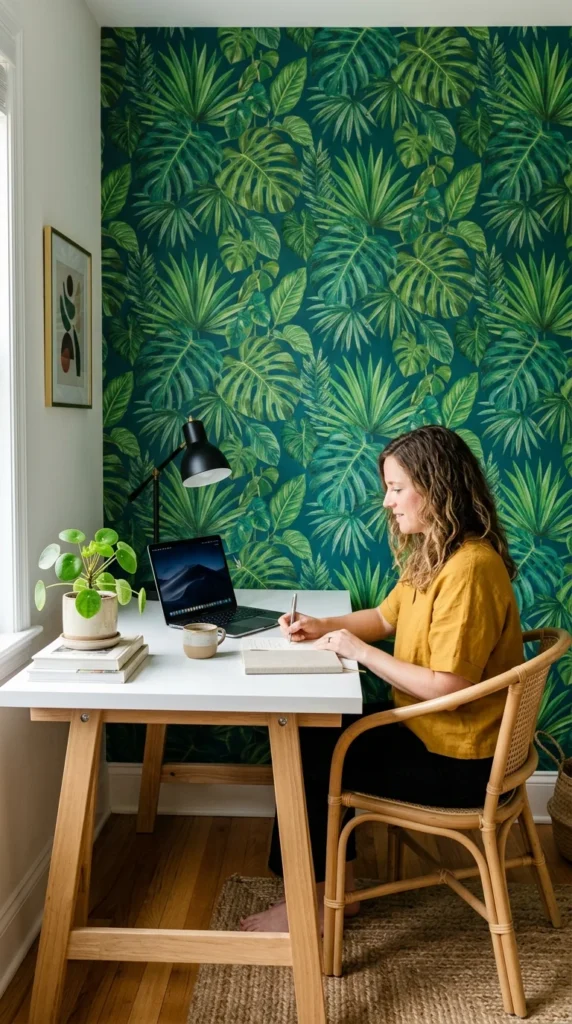
Small spaces are the perfect place to take design risks. Applying a bold, patterned wallpaper to the back of your office nook adds depth and personality. It defines the “zone” visually and can provide a shot of creative inspiration every time you sit down to work.
14. Monochrome Palette
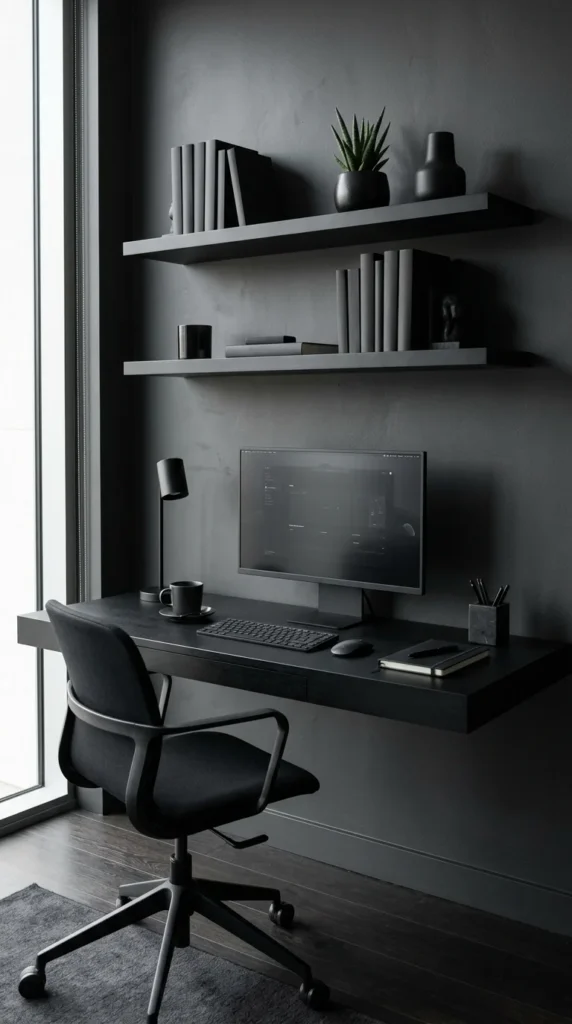
A monochrome color scheme can make a small nook feel more intentional and less like an afterthought. By matching the desk and shelving to the wall color, the furniture “disappears” into the room, reducing visual noise. This is a great strategy for minimalist or contemporary interiors.
15. Botanical Oasis
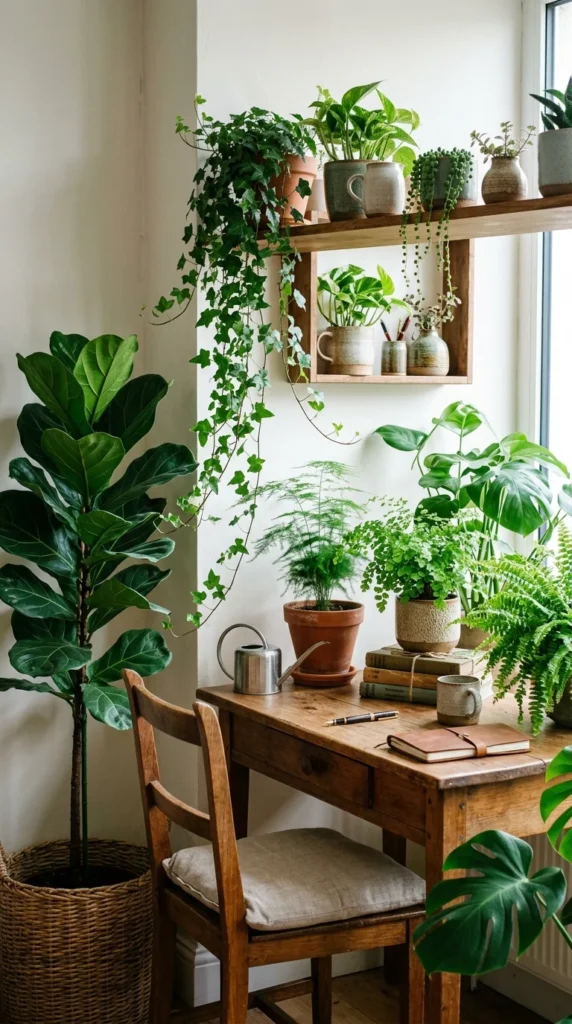
Bringing nature indoors is proven to reduce stress and increase focus. If your office nook is small, use plants to breathe life into the space. Use vertical space by hanging plants from the ceiling or placing them on high shelves to ensure you still have plenty of room for your computer and mouse.
16. Industrial Style
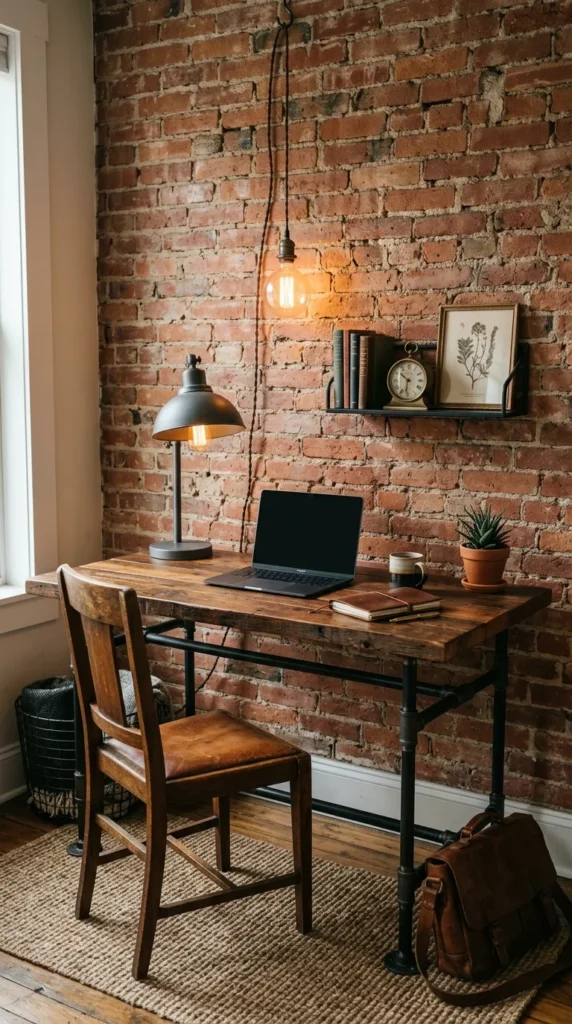
The industrial aesthetic is perfect for home offices because it emphasizes functionality and raw materials. A small desk with metal accents and a sturdy wooden top feels substantial without being bulky. Pair it with a metal mesh organizer to complete the look.
17. Vintage Desk
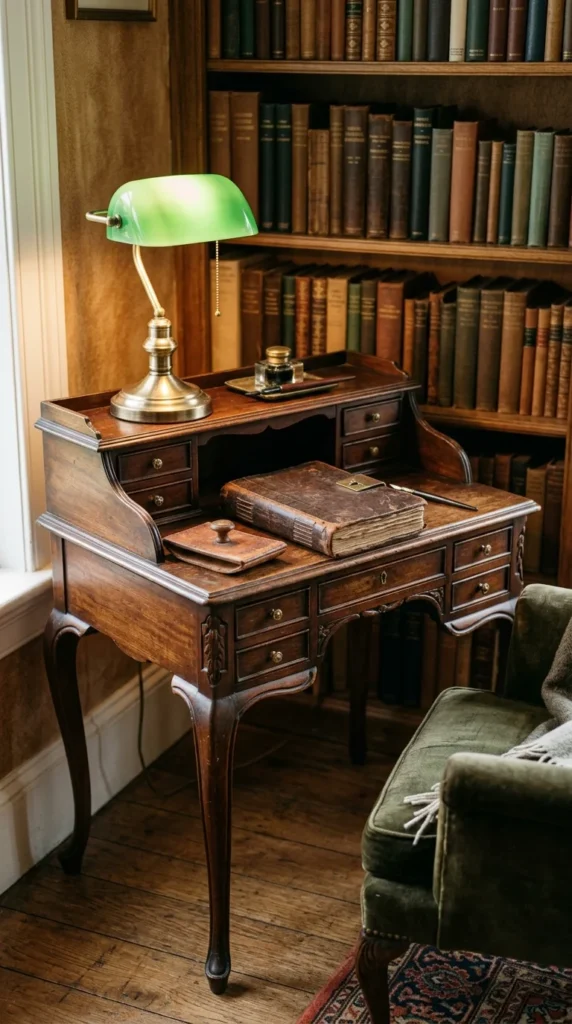
Sometimes the best way to fit an office into a stylish home is to use a piece of furniture that doesn’t look like an “office” desk at all. A vintage writing bureau or an antique secretary desk adds character and charm to a room while providing a dedicated spot for your laptop.
18. Attic Eaves
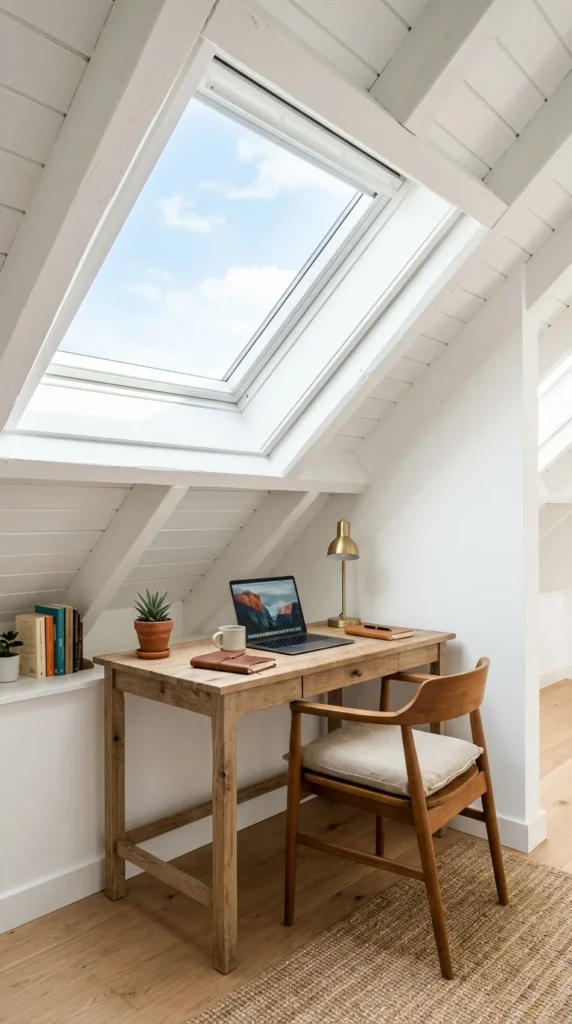
Don’t let slanted ceilings discourage you. The lowest part of an attic room is often perfect for a desk, as you are sitting down while using it anyway. This utilizes space that would otherwise be too low for standing, turning a challenging architectural feature into a cozy, private retreat.
19. Dual Workstation
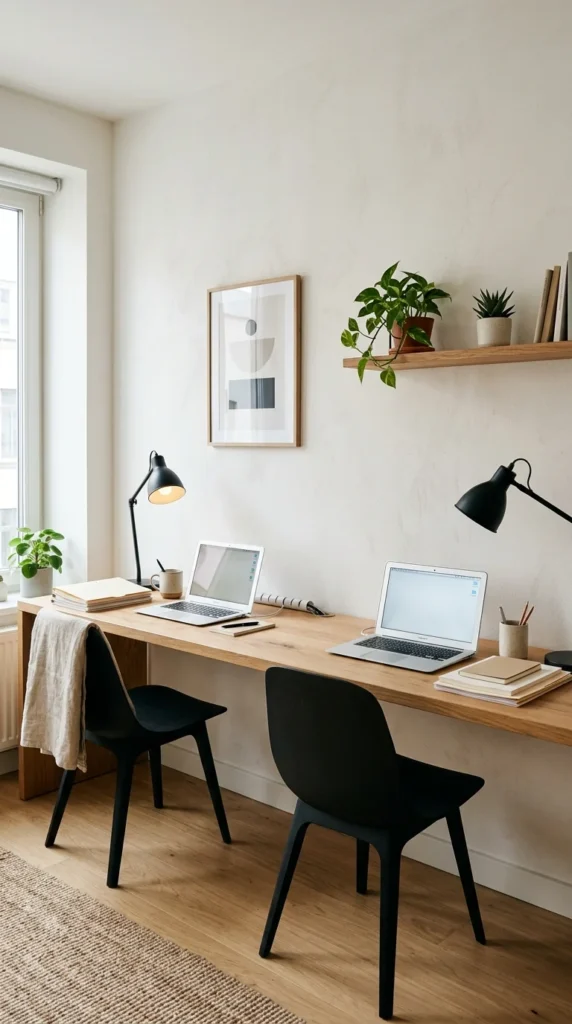
If you share your home with another remote worker, a dual workstation can be a lifesaver. By using a long, slim surface along one wall, you can accommodate two people in the space of one traditional office. Use matching chairs and lighting to keep the look cohesive and organized.
20. Minimalist Shelf
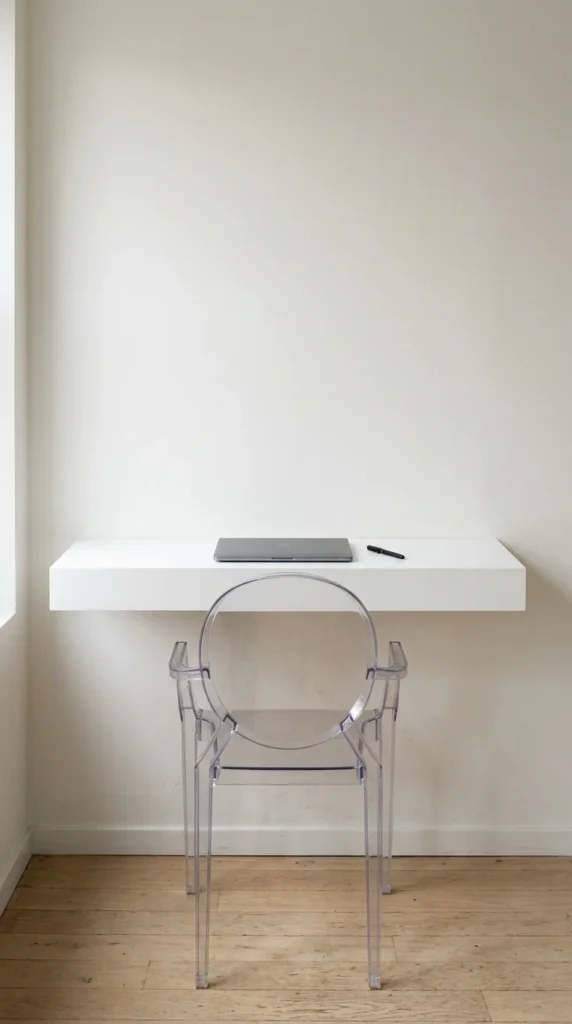
For the ultimate “now you see it, now you don’t” workspace, a single deep shelf is all you need. This is the most unobtrusive way to add a desk to a room. When paired with a transparent acrylic chair, the entire setup becomes almost invisible, making it perfect for tiny apartments.
21. Colorful Accents
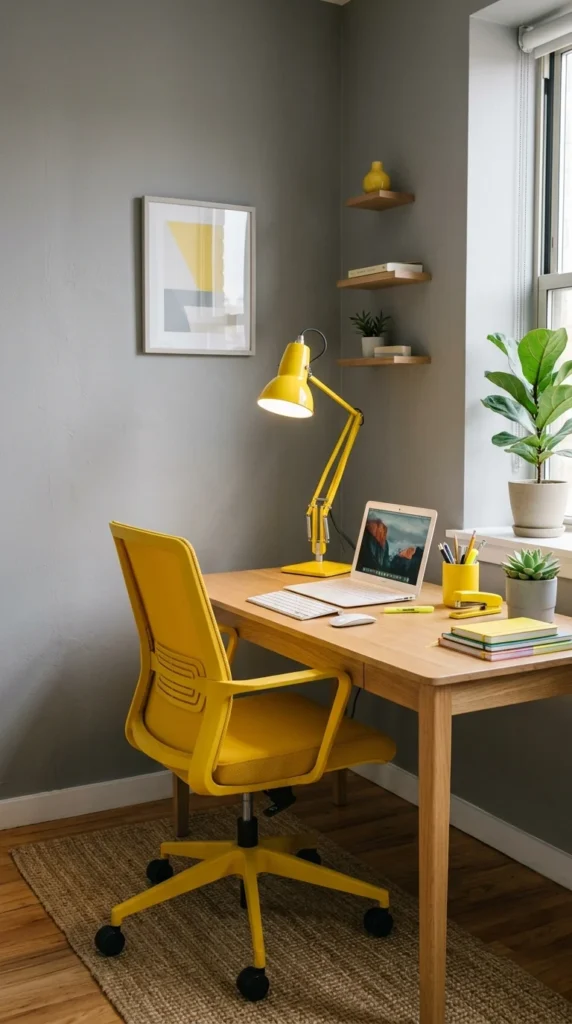
If you can’t change the structure of your nook, change the mood with color. Bright, energetic hues like yellow, orange, or teal can stimulate the brain and make a small space feel more inviting. Use colorful accessories or a vibrant chair to inject personality into your workspace without a full renovation.