
Living in a small apartment often feels like a constant battle for floor space. Between the sofa, the coffee table, and the occasional rug, there isn’t much room left for a sprawling indoor jungle. However, the solution lies not on the floor, but on the walls. Vertical gardening is the ultimate design hack for urban dwellers, allowing you to breathe life into your home without sacrificing a single square inch of walking space. From DIY installations to sleek, modern systems, here are 28 creative ways to transform your blank walls into a thriving botanical masterpiece.
1. Floating Shelves
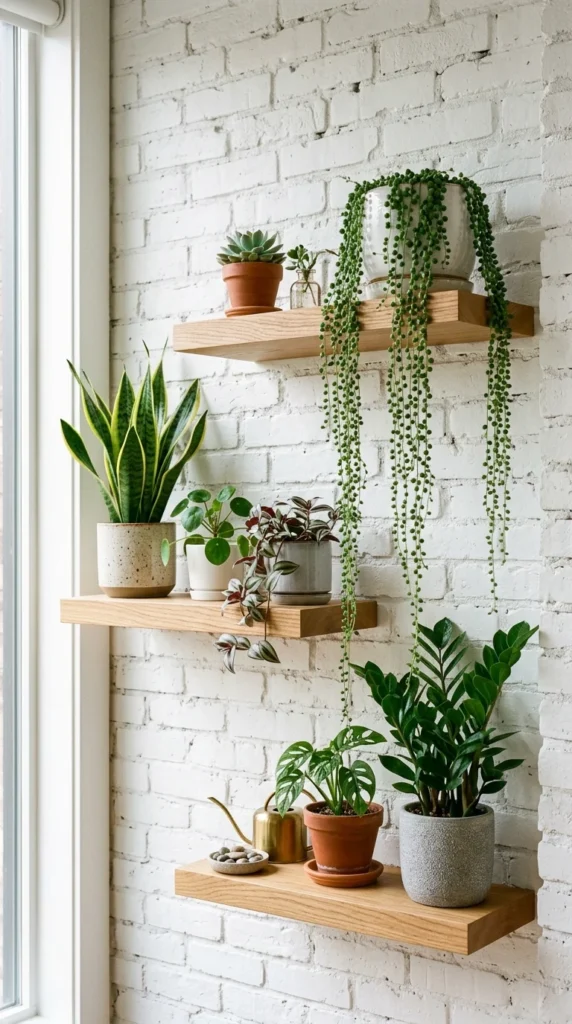
Floating shelves are a classic for a reason. They provide a clean, minimalist look that lets the foliage take center stage. By staggering the heights of the shelves, you create visual interest and allow longer, trailing plants like Pothos or Heartleaf Philodendrons to drape elegantly toward the floor. Use a mix of pot materials—ceramic, terracotta, and concrete—to add texture to the arrangement.
2. Macramé Hangers
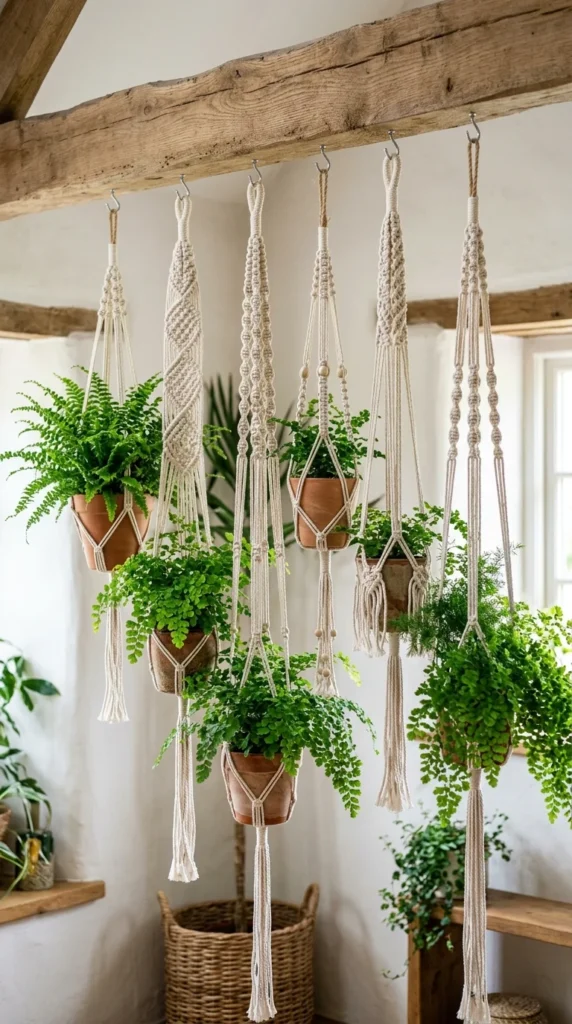
Bring a bohemian vibe to your apartment with macramé. These woven textile hangers can be suspended from ceiling hooks or a wall-mounted rod. Because they hang vertically, they utilize the “dead air” in corners or in front of windows. Grouping three to five hangers at varying lengths creates a curtain of greenery that feels organic and cozy.
3. Pegboard Paradise
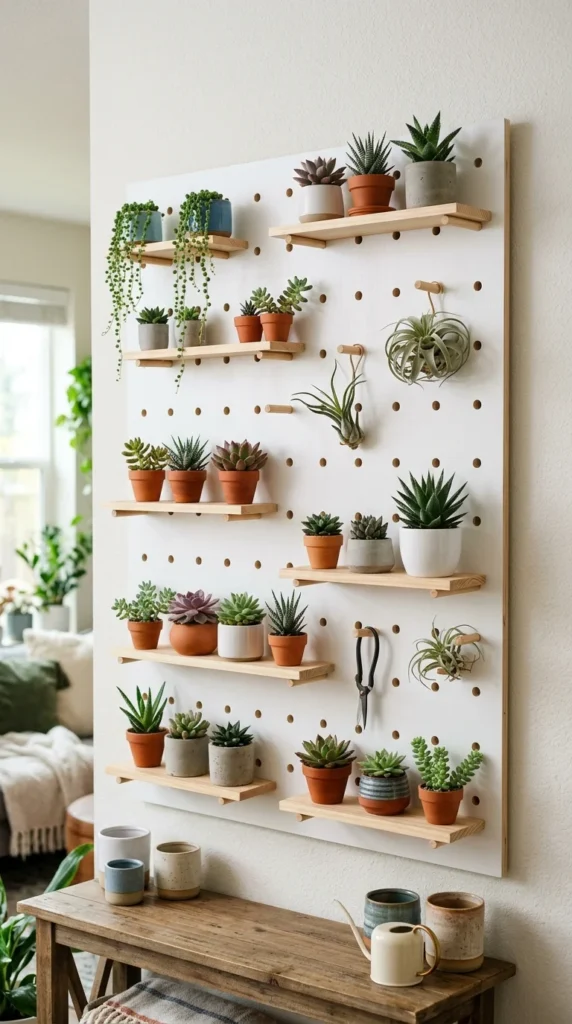
Pegboards aren’t just for tools anymore. A sturdy pegboard allows for total customization; you can move shelves, hooks, and clips whenever your plant collection grows or changes. This is an ideal solution for a “living gallery wall” where you can mix small plants with art prints or gardening tools.
4. Magnetic Pots
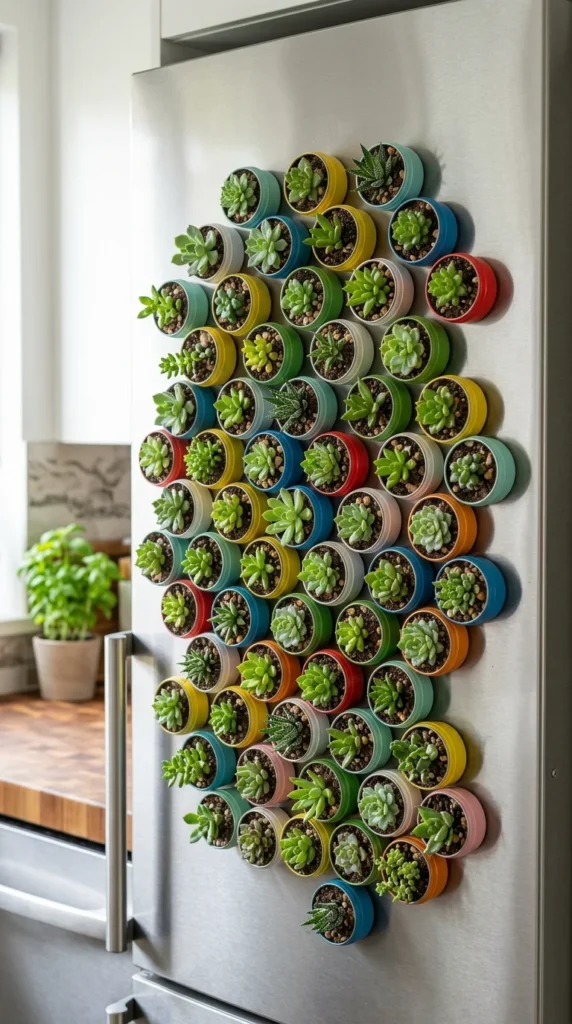
If you have a metal surface or want to install a magnetic strip, magnetic pots are a game-changer. These are perfect for the kitchen, where you can grow a vertical herb garden of basil, mint, and cilantro. They are lightweight and allow you to rearrange your “wall” in seconds.
5. Ladder Planters
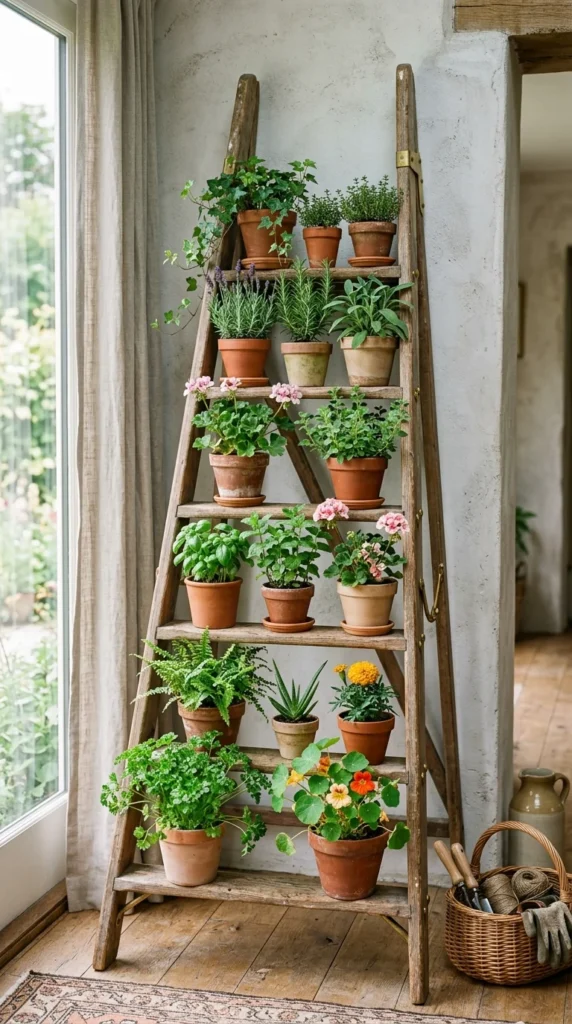
A leaning ladder is a fantastic way to create a plant wall without drilling holes—perfect for renters. The stepped design ensures that plants on the bottom levels still receive plenty of light. It’s an architectural piece that adds height and structure to a room.
6. Suction Windows
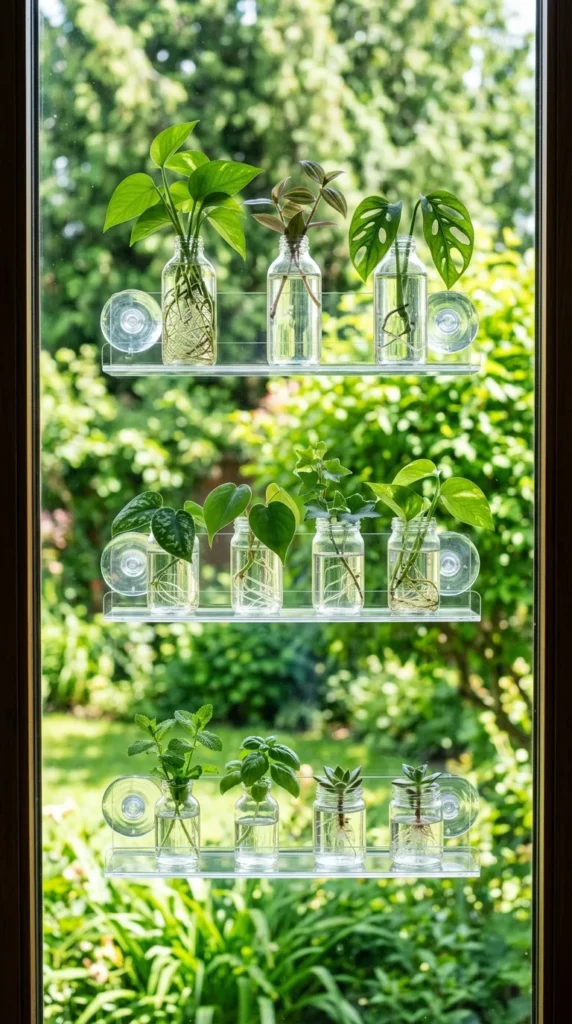
When wall space is limited but window light is abundant, look to the glass. Suction-cup shelves allow you to stack plants directly on your windows. This is particularly effective for light-hungry succulents or for starting “prop-stations” where you grow new plants from cuttings in water.
7. Felt Pockets
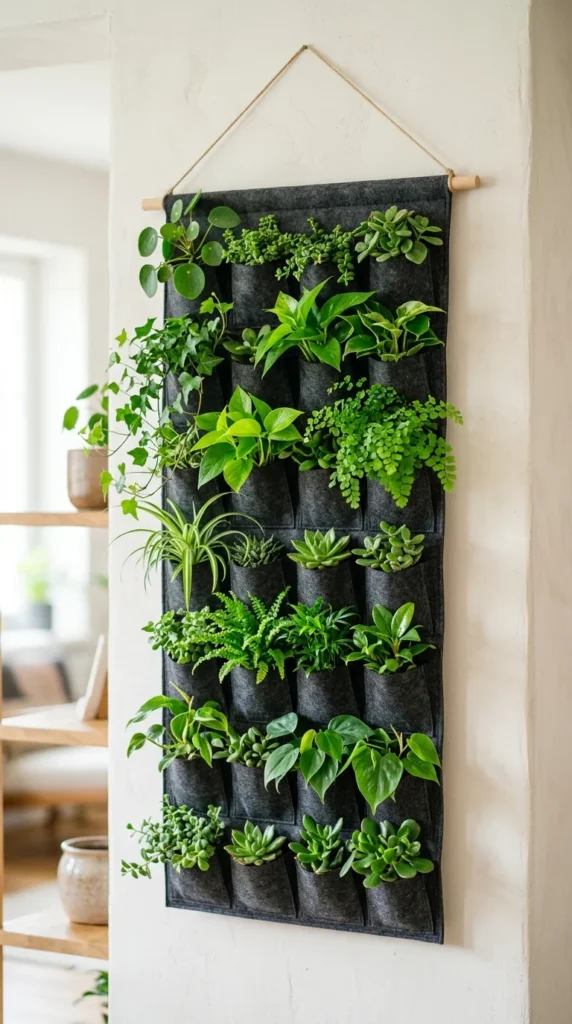
Modular felt pockets are designed specifically for vertical gardening. The breathable fabric allows for excellent drainage and aeration for the roots. When fully grown, the plants will completely cover the felt, creating the appearance of a solid “living wall” of moss and ferns.
8. Trellis Accents
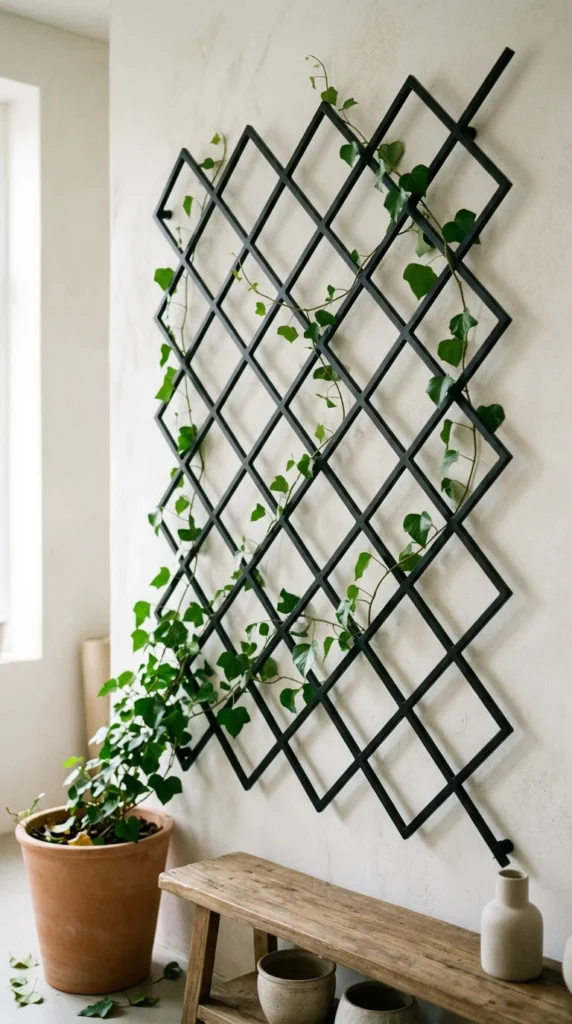
Indoor trellises aren’t just for support; they are a design statement. Mount a wooden or metal trellis to your wall and train climbing plants like Hoya or Monstera Adansonii to grow upward. Over time, the plant will map out a unique, natural pattern across your wall.
9. Picture Frames
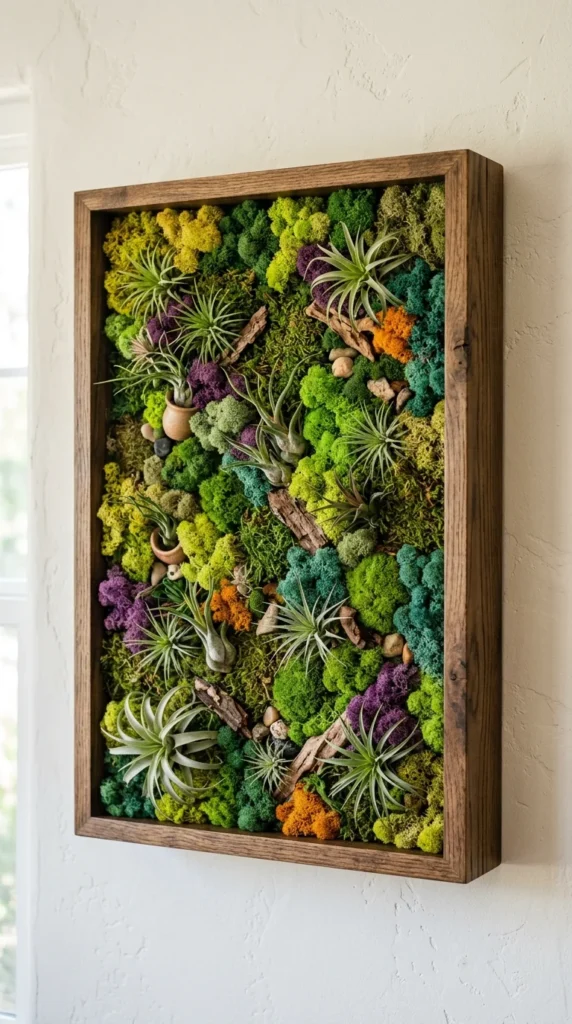
Transform your plants into literal art by using “living frames.” These are shallow boxes with a wire mesh front that hold soil and plants in place. Succulents work best here because of their low water needs and slow growth, allowing the “painting” to keep its shape for months.
10. Copper Pipes
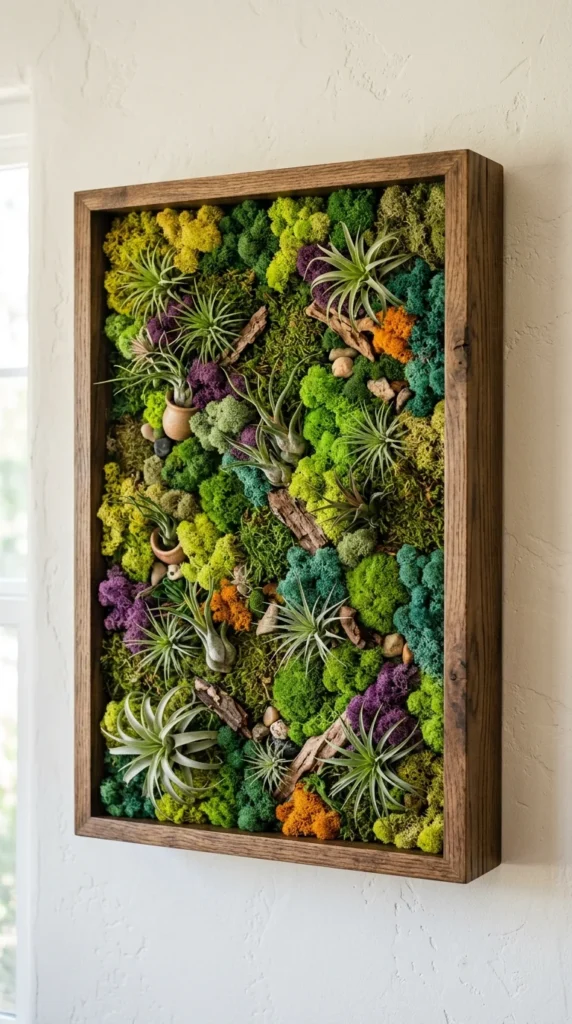
For an industrial or modern look, use copper piping as a mounting rail. It’s a chic way to hang a row of uniform pots. The warm metallic tones of the copper contrast beautifully with the deep greens of tropical foliage.
11. Minimalist Rails
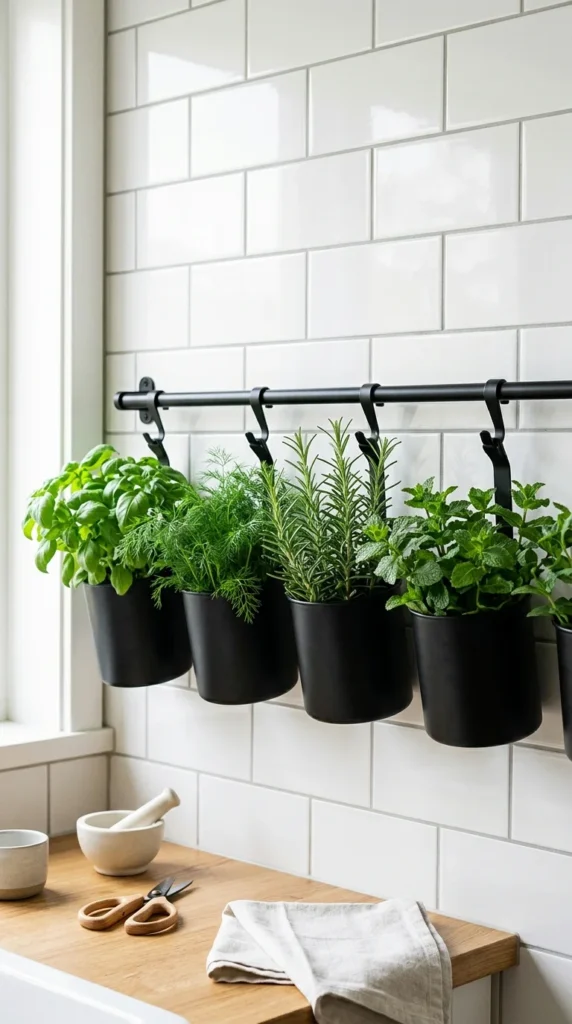
Similar to the copper pipe idea, a minimalist black rail (often found in kitchen organizational sections) provides a streamlined look. It’s an efficient way to line up small pots of herbs or air plants along a hallway or above a desk.
12. Corner Cascades
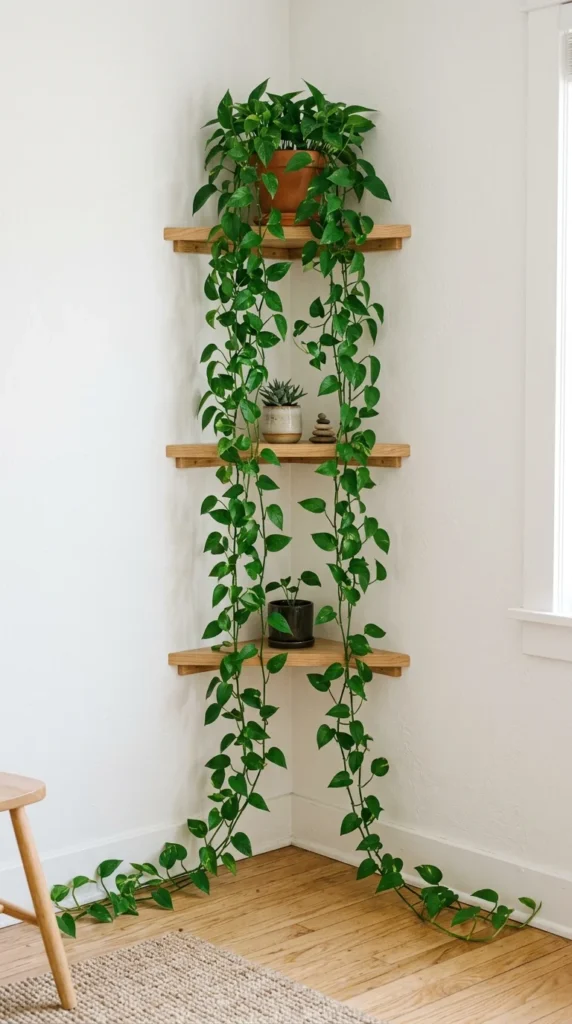
Don’t let your corners go to waste. Custom-fit triangular shelves can turn a neglected nook into a cascading waterfall of green. This is a great way to add depth to a small room and make the ceiling feel higher.
13. Geometric Terrariums

Glass terrariums shaped like dodecahedrons or pyramids add a sophisticated, modern touch. When hung against a wall, they act like floating jewels. These are best suited for air plants (Tillandsia), which don’t require soil and only need an occasional misting.
14. Rolling Racks
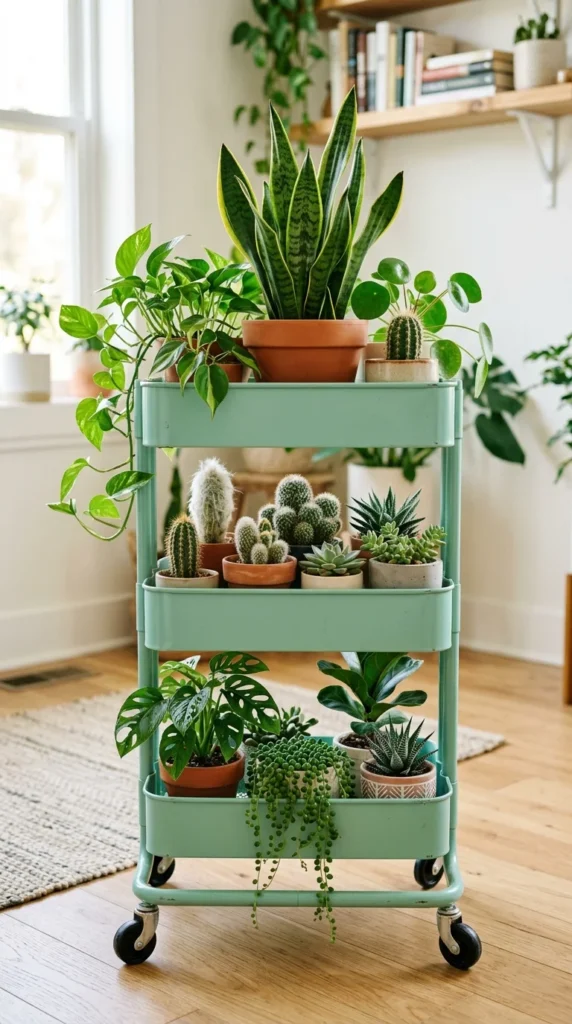
While technically “on wheels,” a rolling rack can be pushed flush against a wall to act as a mobile vertical garden. This is the perfect solution for apartments with inconsistent light; you can “chase the sun” by moving your entire plant wall from one side of the room to the other.
15. Slat Walls
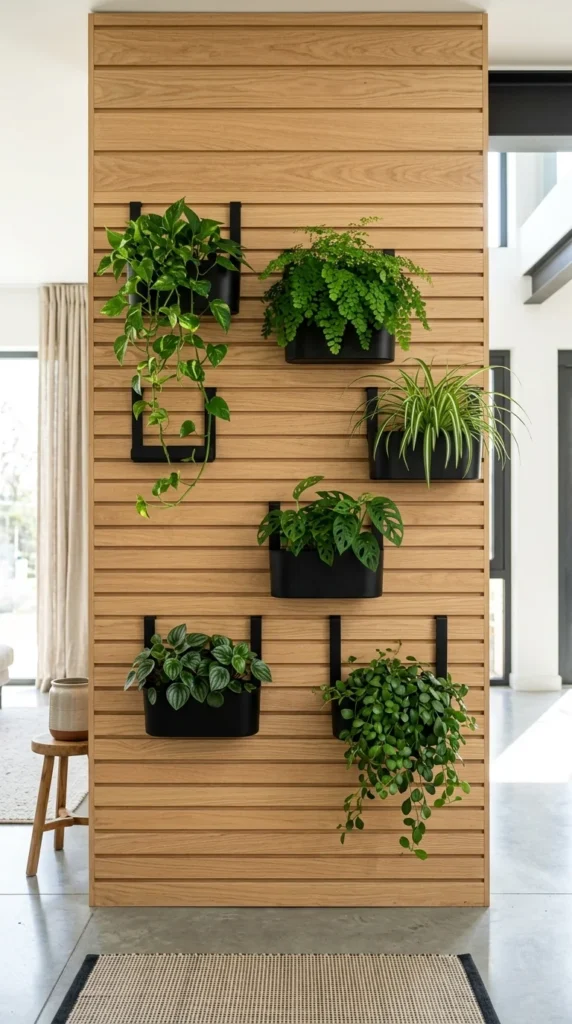
Slat walls provide an architectural, textured look. The horizontal grooves allow you to hook in various planters at any point, giving you the freedom to create a structured or random pattern of greenery.
16. Wire Grids
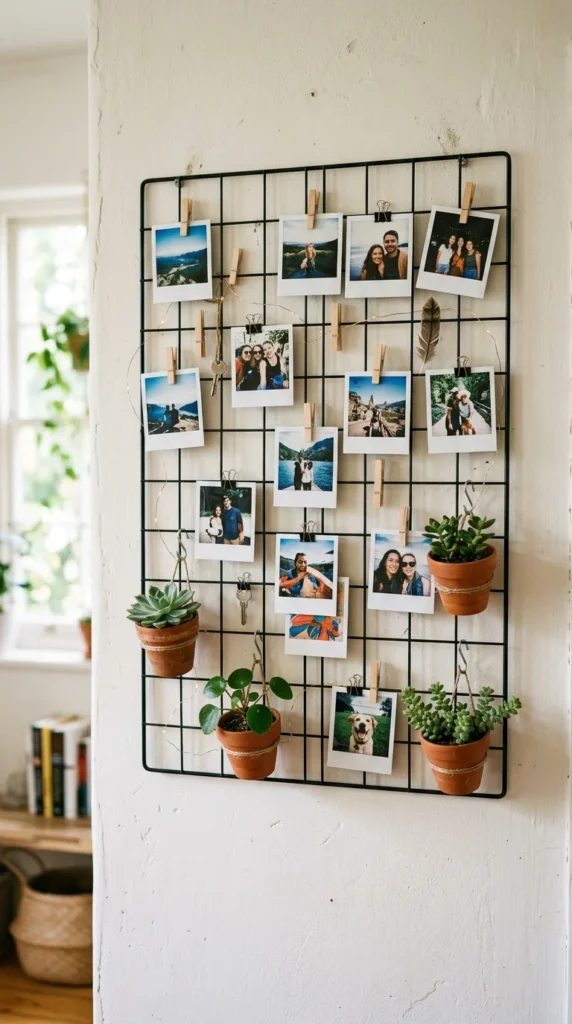
Wire grids are a favorite for home offices. They are inexpensive and highly functional. You can use simple “S” hooks or specialized grid-baskets to hold your plants, creating a mood board that literally breathes.
17. Repurposed Shutters
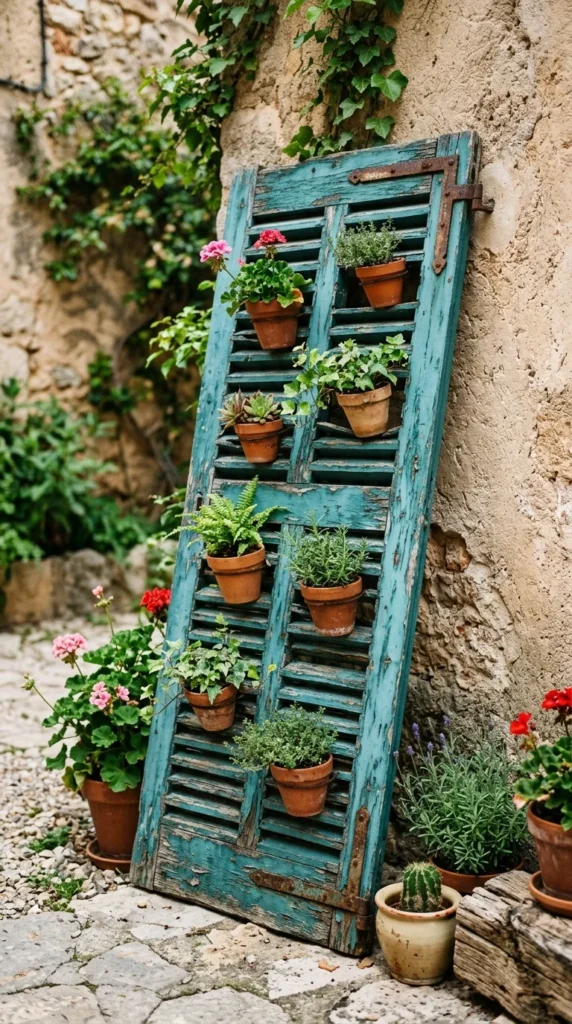
For a farmhouse or vintage aesthetic, find an old wooden shutter. The horizontal slats are the perfect size for hooking on small metal planters. It adds a sense of history and “shabby chic” charm to your apartment.
18. Hanging Branches
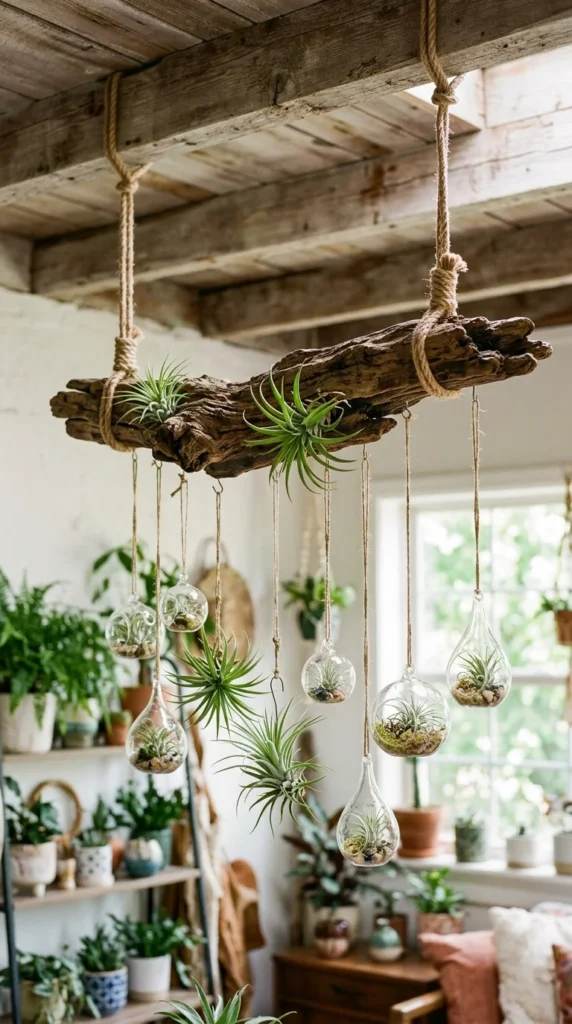
Bring a piece of the forest indoors by using a large, sturdy branch as a curtain rod for plants. Suspend it from the ceiling or mount it to the wall, then hang your plants from it using twine or fishing line for a floating, ethereal effect.
19. Vertical Pallets

The classic DIY plant wall. By adding a landscape fabric backing to the internal slats of a wooden pallet, you create deep pockets for soil. This allows you to plant a dense wall of flowers or vegetables in a very small footprint.
20. Cork Mounts
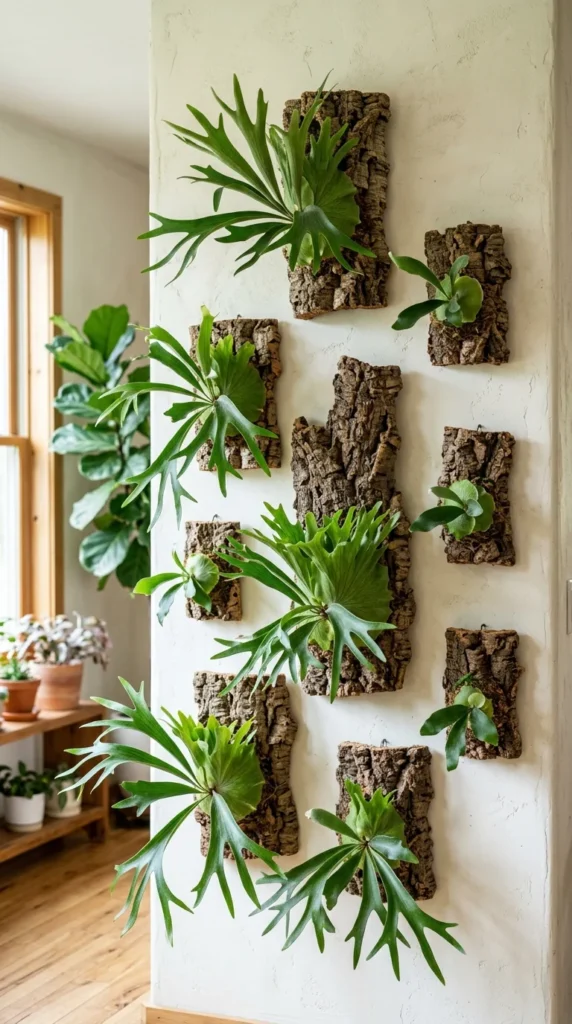
Epiphytic plants, like Staghorn ferns or certain orchids, don’t need soil—they grow on trees in the wild. You can mimic this by mounting them to pieces of cork bark or cedar planks and hanging them like plaques on your wall.
21. Ceiling Hooks
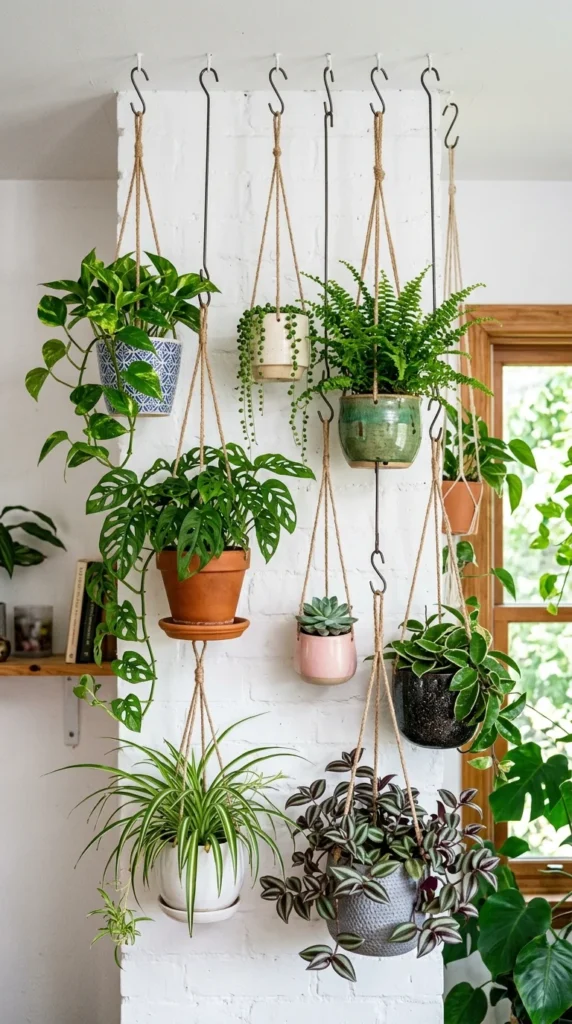
If you can’t mount anything to the wall, mount it next to the wall. Using the ceiling allows you to create a “wall” of plants that can also act as a room divider, separating your “office” from your “bedroom” in a studio apartment.
22. Moss Panels
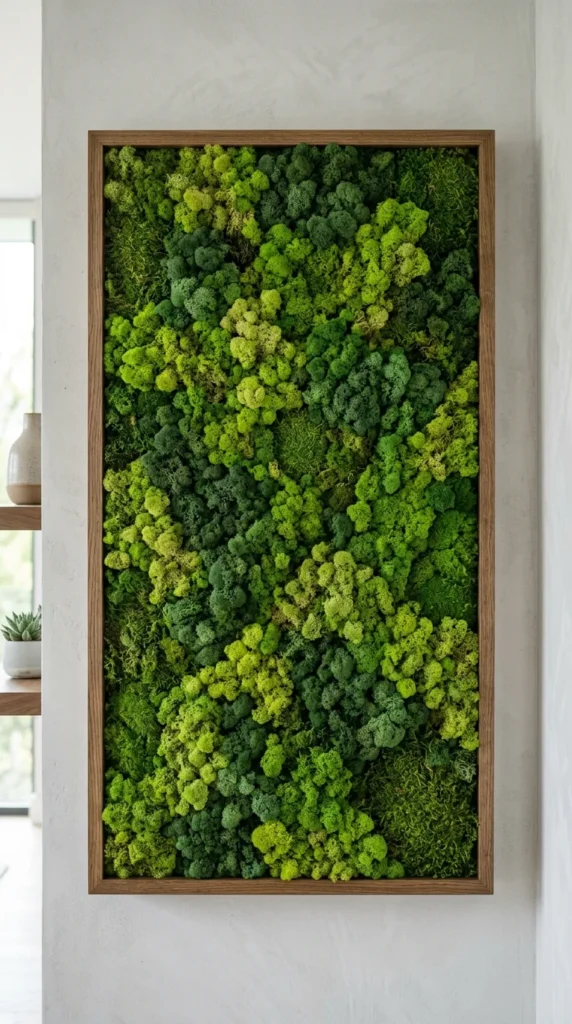
For those who want the look of a plant wall without the maintenance, preserved moss panels are the answer. They require no water, no light, and no soil. They add a soft, acoustic-dampening texture to the room and stay vibrant for years.
23. Staircase Greenery

If your apartment has a loft or a small staircase, use the vertical rise of the steps. Placing a small pot on the edge of each step creates a diagonal “wall” of plants that leads the eye upward.
24. Glass Tubes
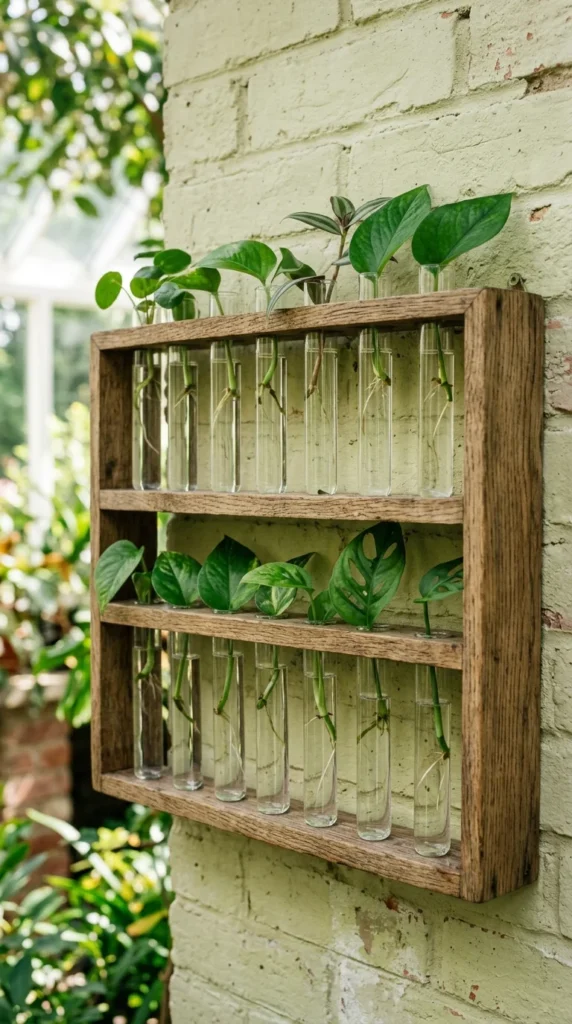
Propagation stations are a beautiful way to show off the science of growth. A row of glass tubes filled with water and single leaves creates a clean, laboratory-chic aesthetic that is both educational and decorative.
25. Hexagon Cubes
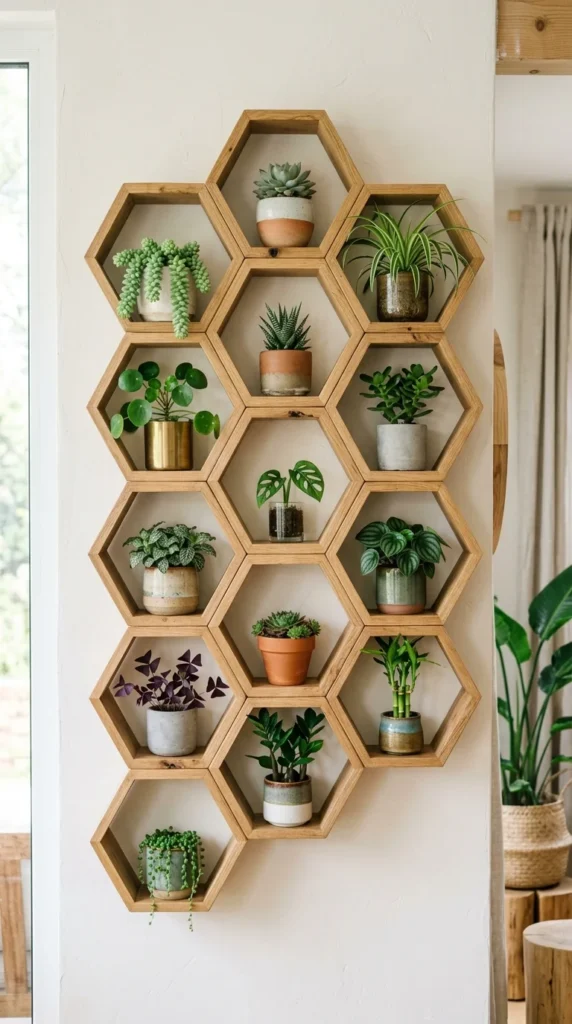
Hexagonal shelves (often called honeycomb shelves) allow you to create a geometric hive of greenery. You can grow the pattern over time by adding more “cells” as your plant collection expands.
26. Shower Walls
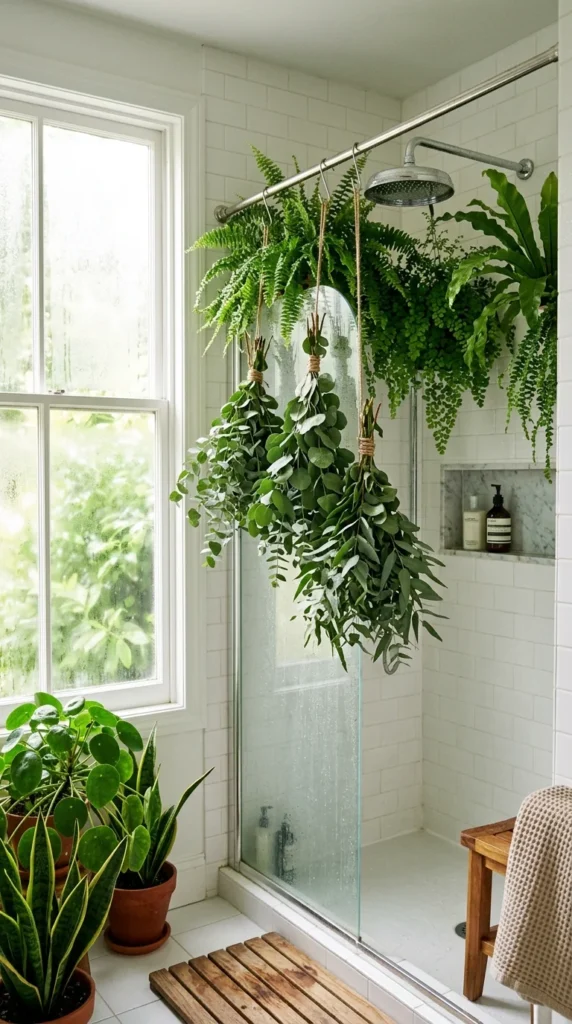
Turn your daily shower into a spa experience. Many plants, like Eucalyptus or Boston Ferns, thrive in the high humidity of a bathroom. Use suction hooks or over-the-door racks to turn your shower wall into a tropical oasis.
27. Kitchen Herb Bars
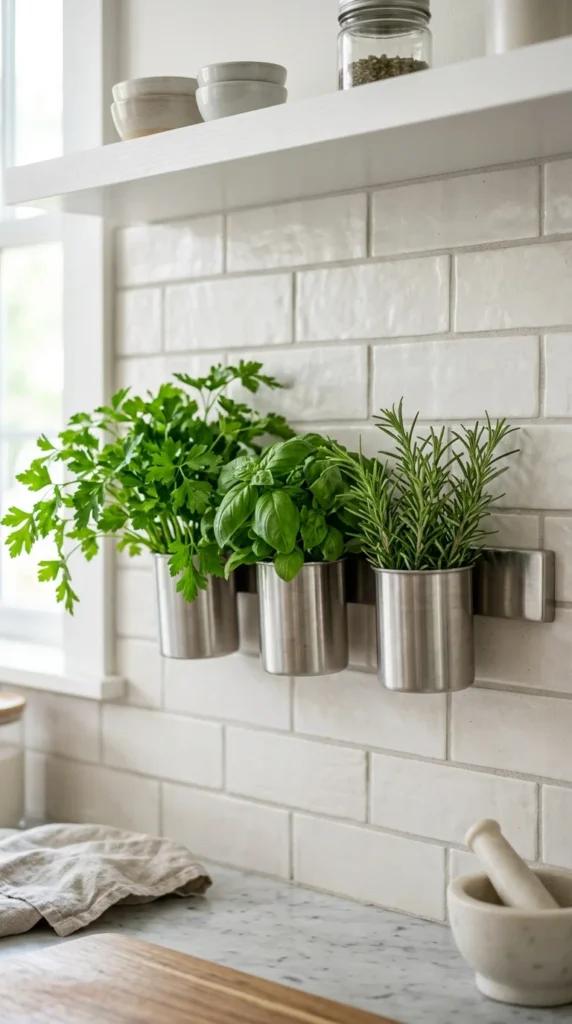
Maximize your culinary space by moving your herb garden to the wall. A dedicated herb bar ensures your favorite flavors are always within arm’s reach while keeping your countertops clear for meal prep.
28. Bookcase Integration
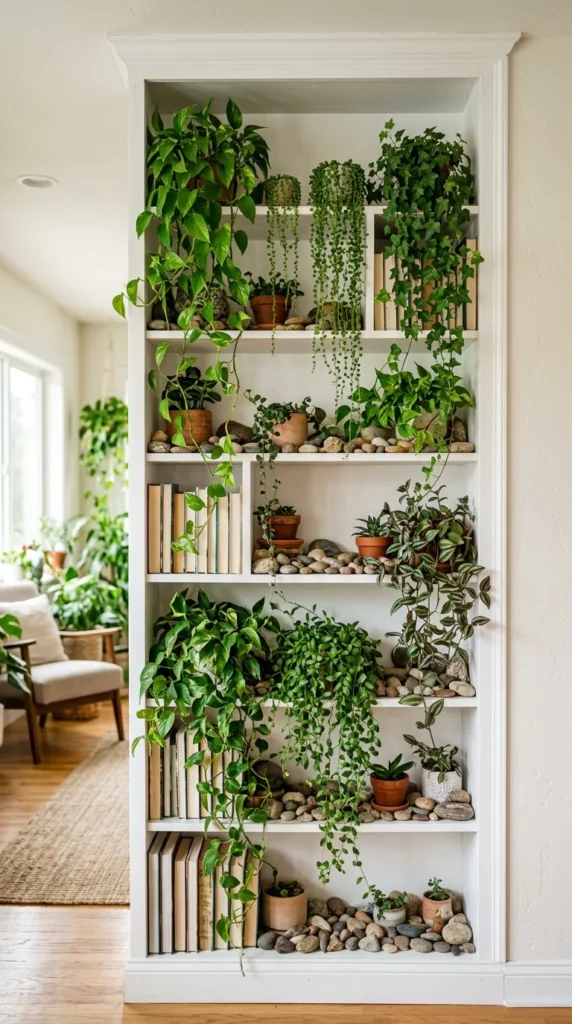
If you already have a large bookshelf, you have a plant wall ready to happen. By removing a few books and replacing them with trailing plants, you break up the visual weight of the library and add a refreshing pop of color and life to your storage.