
Mid-century modern (MCM) design is more than just a nostalgic trend; it is a masterclass in functional aesthetics. Originating in the mid-20th century, this style focuses on clean lines, organic shapes, and a “form follows function” philosophy—making it the ideal candidate for small-space living. Because MCM furniture often features “leggy” profiles and minimalist silhouettes, it creates an illusion of more floor space, allowing even the tightest apartments to feel breatheable and curated. Here are 22 transformative ideas to bring the timeless charm of mid-century modern design into your small home while maximizing every square inch.
1. Tapered Legs
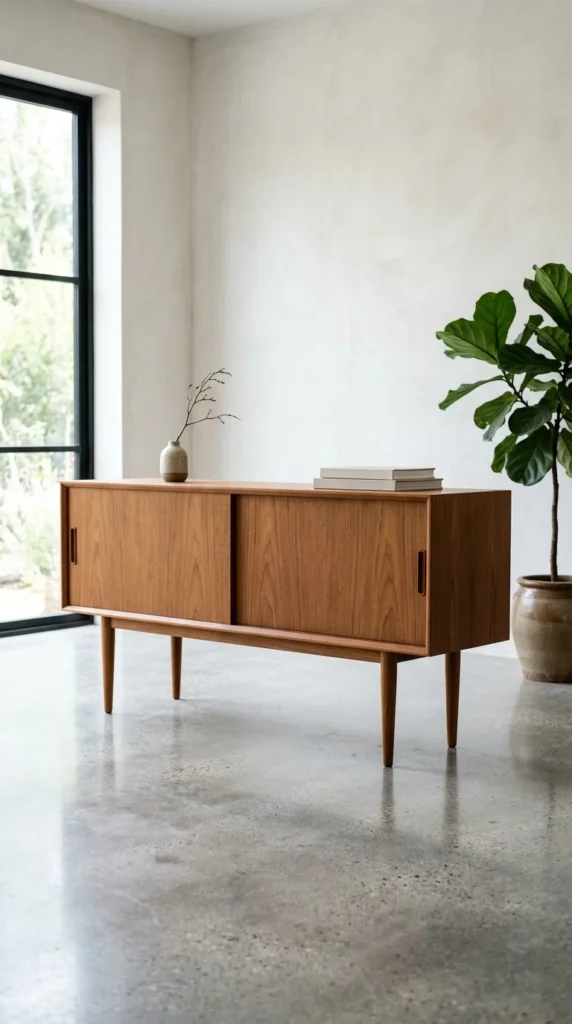
One of the most iconic hallmarks of mid-century modern design is the use of tapered, or “compass,” legs. In a small room, heavy, boxy furniture that sits flush against the floor can make the space feel cramped and stagnant. By choosing sofas, chairs, and sideboards with slim, angled legs, you expose more of the floor. This visual trick tricks the eye into perceiving the room as larger because the floor’s surface area remains visible, creating a sense of “airiness” that bulky contemporary furniture lacks.
2. Low-Profile Furniture
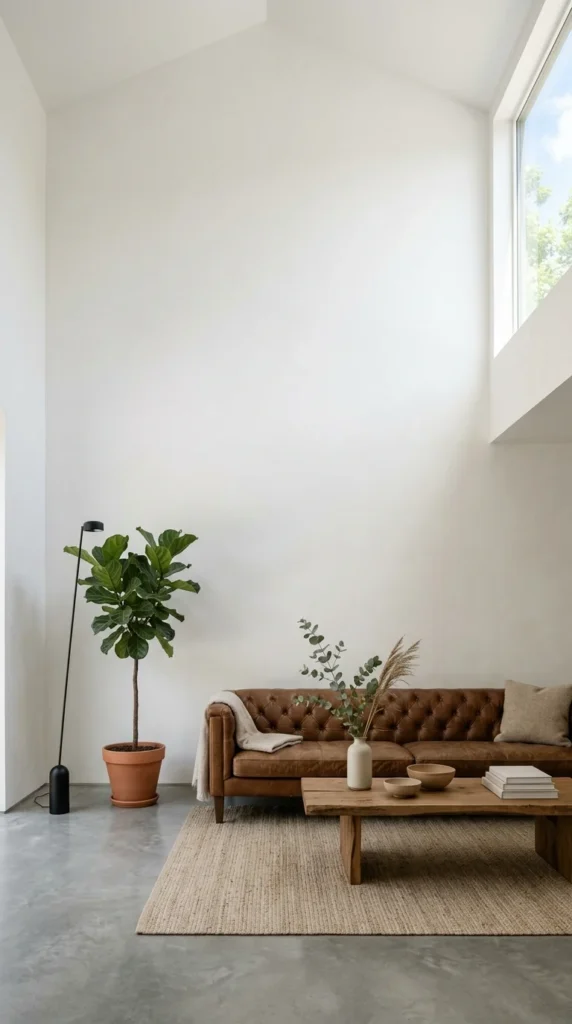
MCM furniture is famously low to the ground. Low-profile sofas and platform beds are essential for small spaces with standard or low ceilings. By keeping the “horizon line” of your furniture low, you leave more vertical space open on the walls. This emphasizes the height of the room rather than the footprint of the furniture, making the ceiling feel further away and the room feel significantly less cluttered.
3. String Shelving
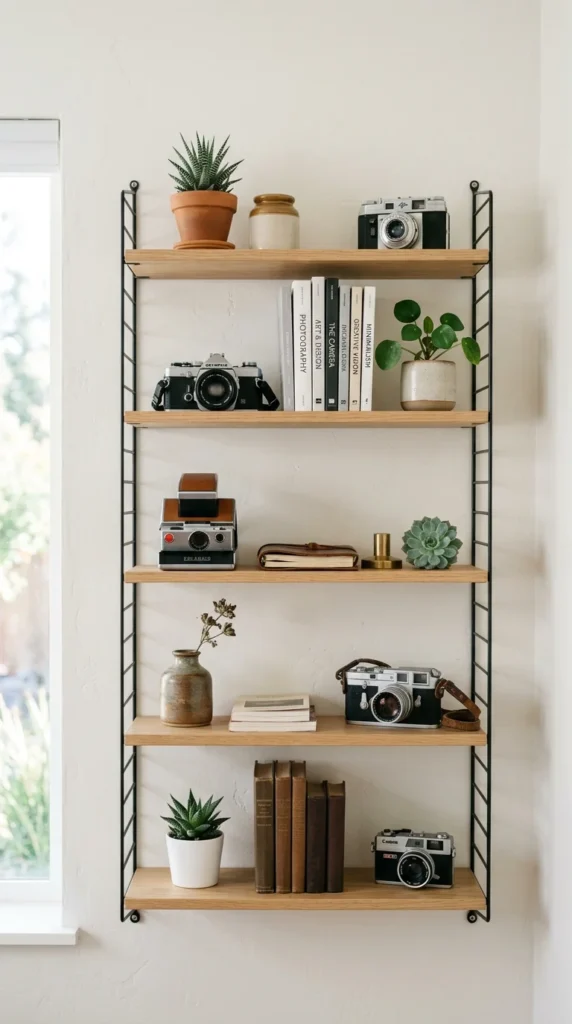
The “String” shelving system, designed by Nisse Strinning in 1949, is a staple of Scandinavian mid-century design. These systems are incredibly lightweight and wall-mounted, which saves precious floor space. Because they are modular, you can customize them to fit narrow alcoves or go all the way to the ceiling. Their thin wire frames provide a “see-through” quality that prevents the walls from feeling heavy or closed-in.
4. Nesting Tables
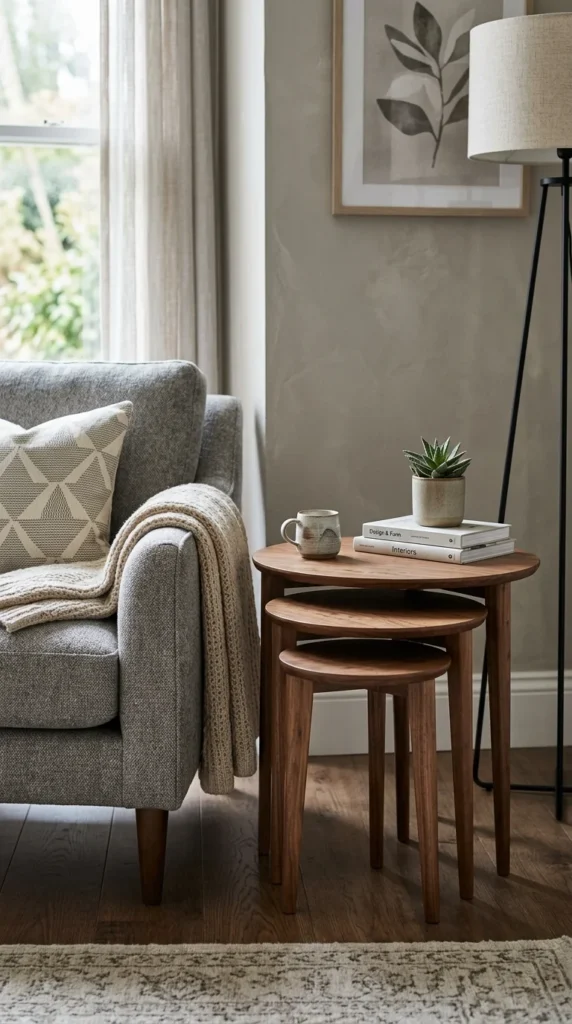
When you are dealing with a small living room, a massive coffee table can be a major obstacle. Nesting tables are the ultimate MCM solution for versatility. You can keep them stacked to save space during the day and pull them out when you have guests or need an extra surface for coffee. Look for sets in walnut or teak with organic, rounded edges to soften the sharp lines of a small room.
5. Sputnik Chandeliers
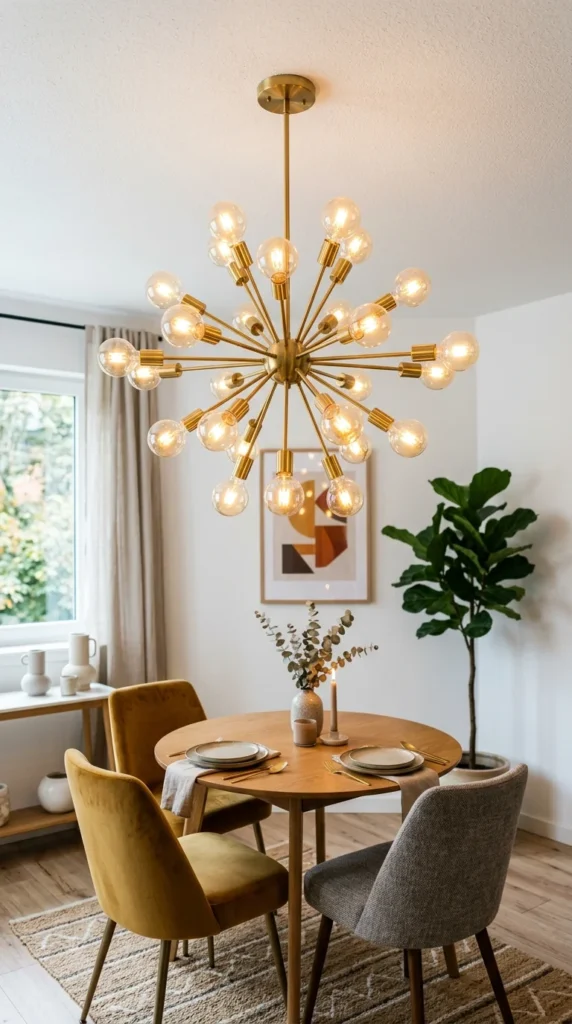
In a small space, you want your focal points to be intentional. A Sputnik chandelier provides a dramatic “starburst” effect that draws the eyes upward without taking up physical floor space. The radiating arms of the fixture fill the upper void of a room with light and architectural interest, acting as a piece of art that illuminates rather than a bulky lamp that requires a dedicated corner.
6. Mirror Placement
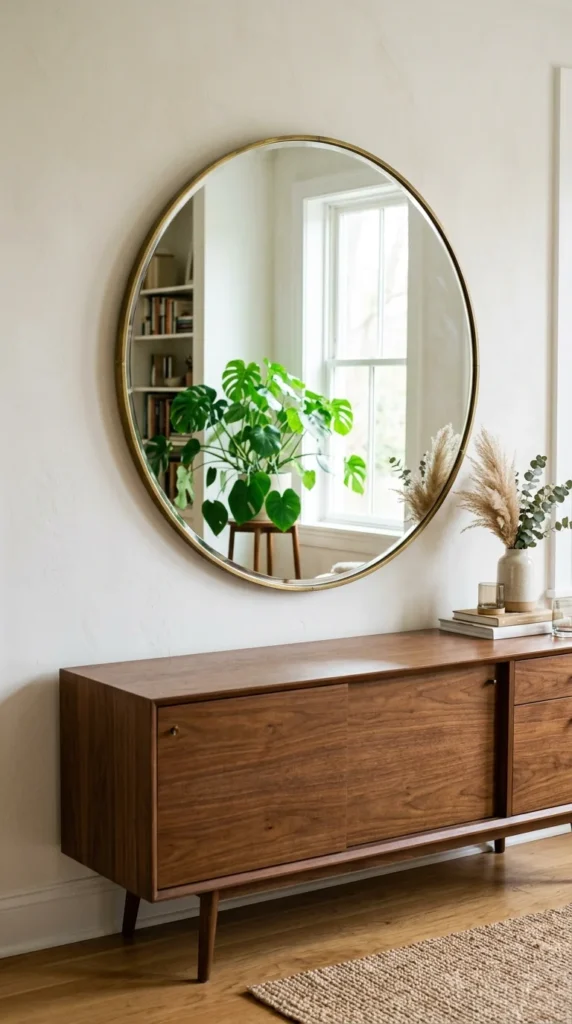
While not exclusive to MCM, the era’s love for geometric shapes makes circular or “kidney-shaped” mirrors a perfect fit. Placing a large, thin-framed mirror opposite a window is the oldest trick in the book for a reason: it bounces natural light throughout the room and creates a “window” effect where there isn’t one. An oversized MCM mirror can double the perceived depth of a narrow hallway or a small bedroom instantly.
7. Multipurpose Credenzas
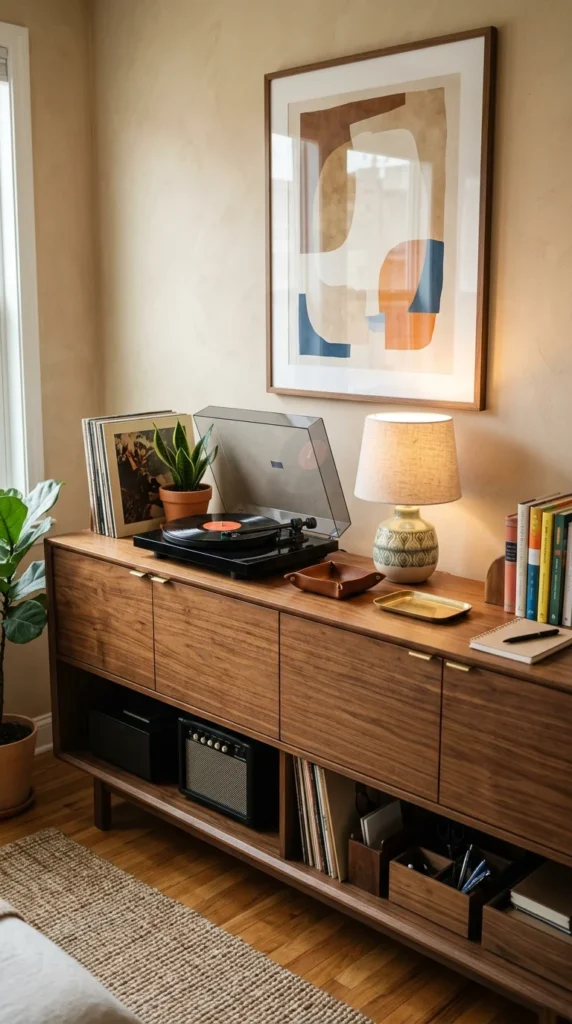
The mid-century sideboard or credenza is a powerhouse of storage. In a small home, a single well-chosen piece can serve multiple functions. A credenza in the living area can act as a TV stand, a bar cabinet, and a place to store linens or office supplies. Its long, horizontal lines draw the eye across the room, creating a sense of width, while the sliding doors (typical of the era) mean you don’t need extra clearance space to open them.
8. Bold Geometric Rugs
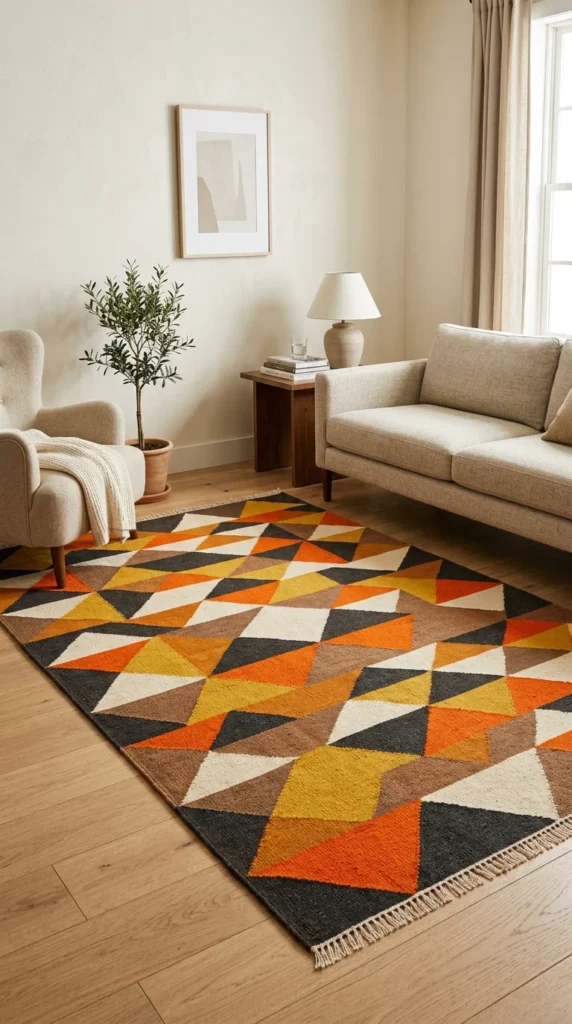
Small spaces often suffer from a lack of visual “zones.” A bold, geometric rug inspired by the 1950s and 60s can help define a specific area, such as a dining nook or a conversation circle. By grounding your furniture on a patterned rug, you create a dedicated “island” of style that keeps the rest of the room feeling organized rather than chaotic. Stick to low-pile rugs to keep the transition between the rug and floor seamless.
9. Transparent Materials
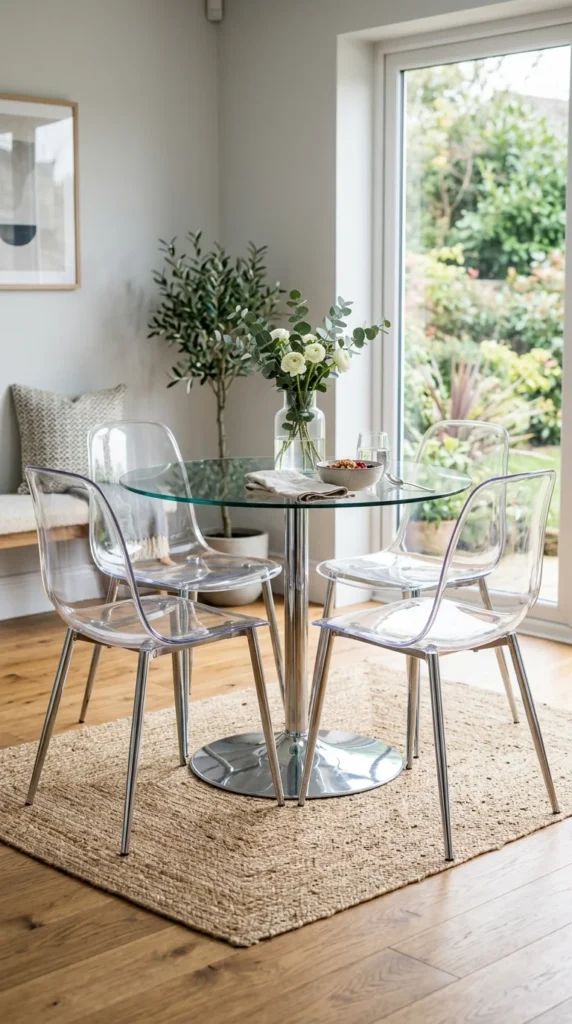
While wood is the primary material of MCM, the era also embraced the “Space Age” look with plastics and glass. Using acrylic “ghost” chairs or a glass-topped coffee table is a brilliant move for small apartments. These pieces provide the functionality you need without adding visual weight. They essentially disappear into the room, allowing the architecture and other key design elements to take center stage.
10. Vertical Gardening
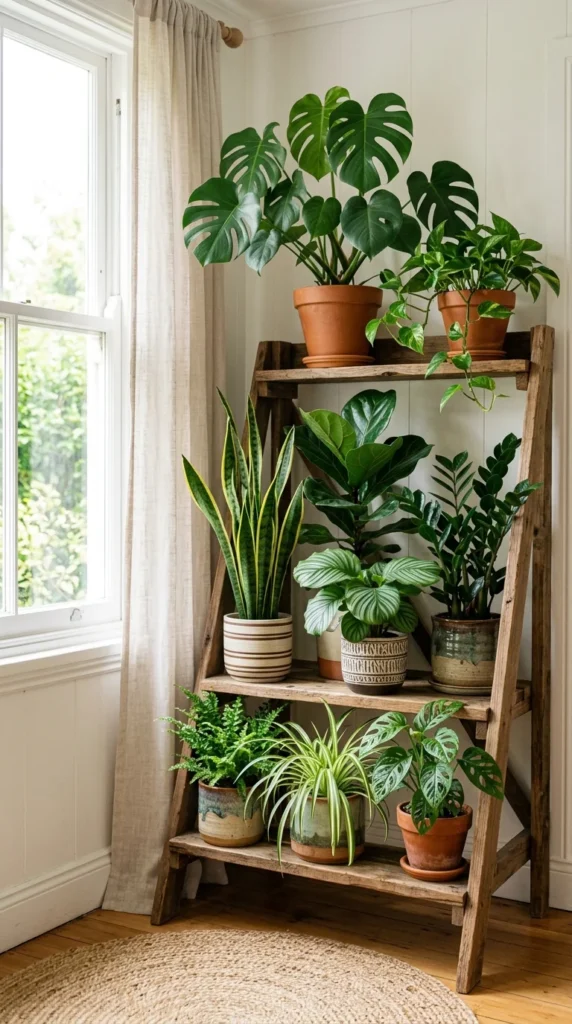
Plants were a vital component of mid-century interiors, bringing the “outdoors in.” However, floor space is limited in small homes. Utilize vertical plant stands or “tension pole” planters that go from floor to ceiling. This allows you to stack greenery vertically, adding life and texture to a corner without requiring a wide footprint. A tall Snake Plant (Sansevieria) is a classic MCM choice that takes up very little horizontal space.
11. Daybeds
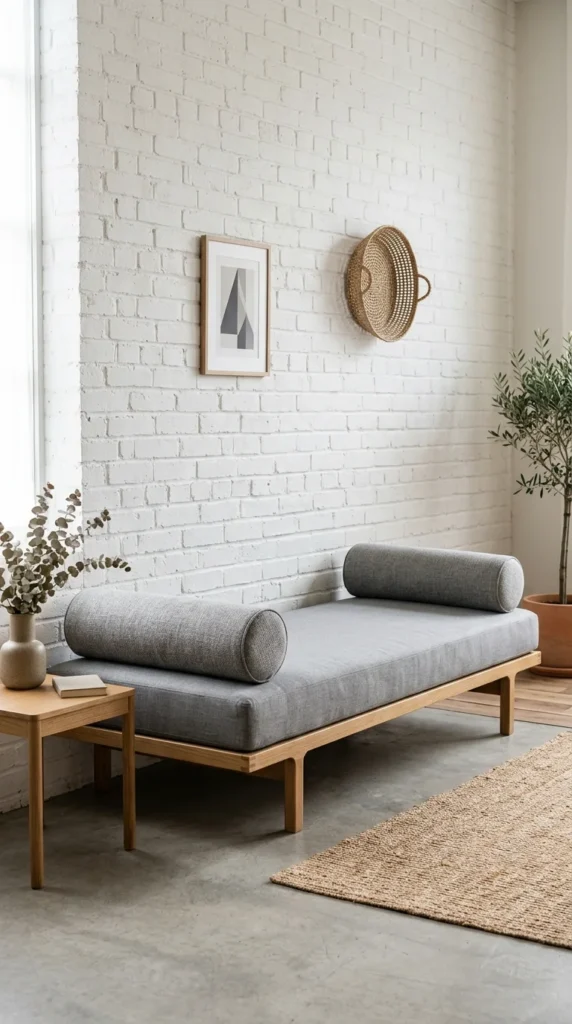
If your small space needs to function as both a living room and a guest room, the MCM daybed is your best friend. Unlike bulky sleeper sofas, a mid-century daybed has a slim, architectural profile. It functions as a chic sofa during the day and a comfortable twin bed at night. Its lack of high backrests or heavy arms makes it feel much more open and integrated into the room’s flow.
12. Sliding Barn Doors
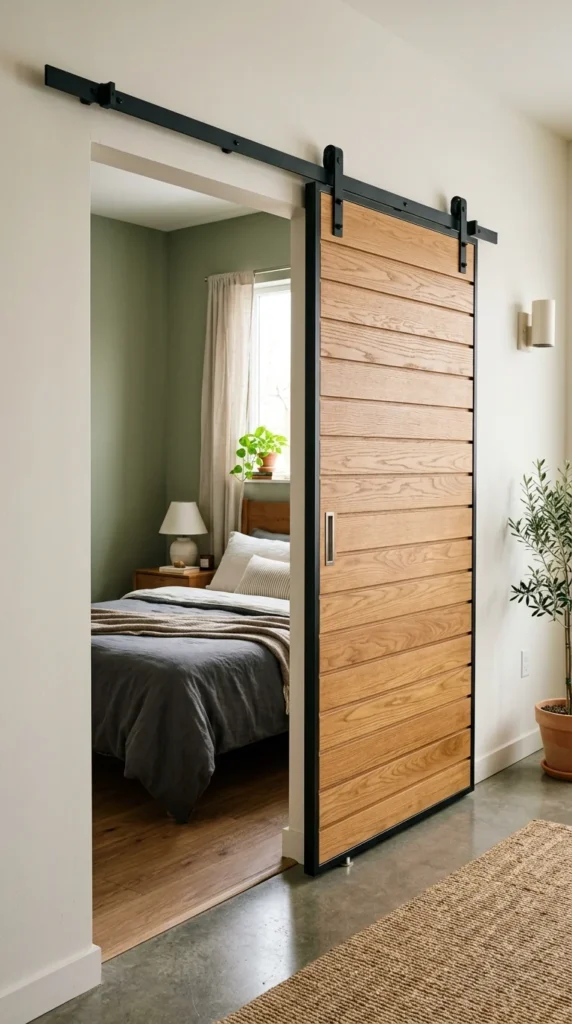
Traditional swinging doors require a “swing zone” that often eats up valuable floor space. While traditional barn doors might feel too “farmhouse,” a mid-century version featuring horizontal wooden slats or frosted glass inserts can save several square feet. This allows you to place furniture closer to the doorway and gives the transition between rooms a sleek, streamlined look.
13. Open Floor Plans
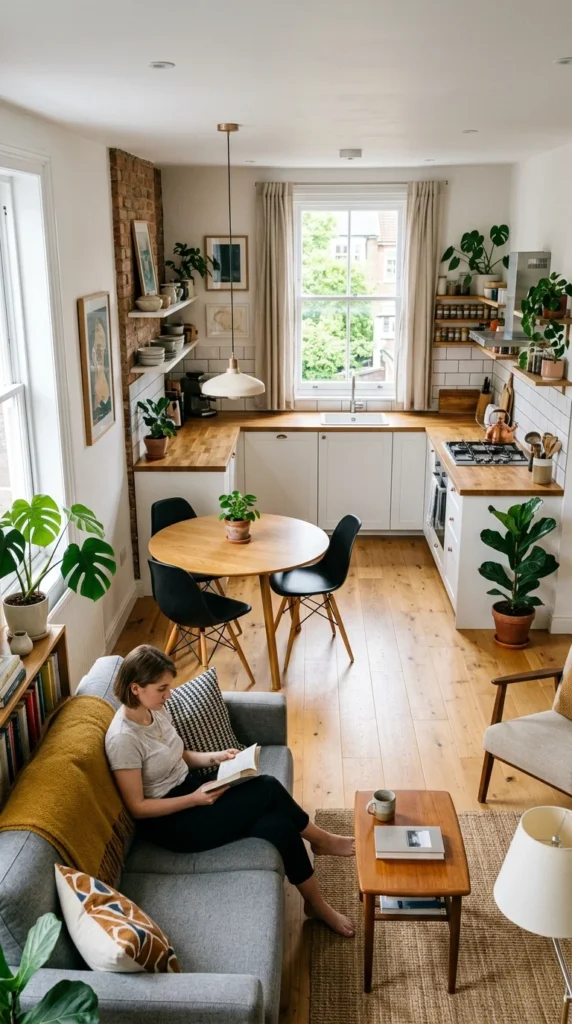
MCM architecture pioneered the open-concept floor plan. If you have the ability to renovate, removing non-structural walls can make a small home feel palatial. If you can’t renovate, mimic this by using low furniture to “suggest” divisions without blocking sightlines. Keeping the floor consistent throughout different “rooms” helps the eye travel without interruption, making the total square footage feel like one large, cohesive space.
14. Mustard & Teal Accents
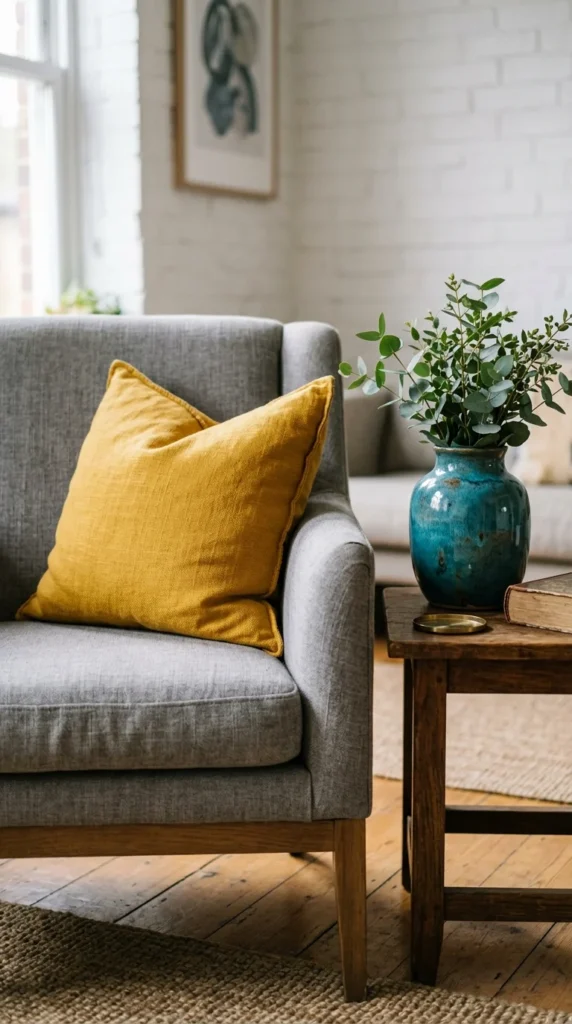
You don’t need a lot of color to make a statement in a small space. The MCM palette—featuring mustard yellow, teal, burnt orange, and avocado green—is perfect for adding personality without overwhelming the room. Use these colors in small doses, like on a single accent chair, a piece of art, or decorative pillows. This “pop” of color draws attention to specific design choices, making the space feel intentionally curated rather than small.
15. Built-in Nooks
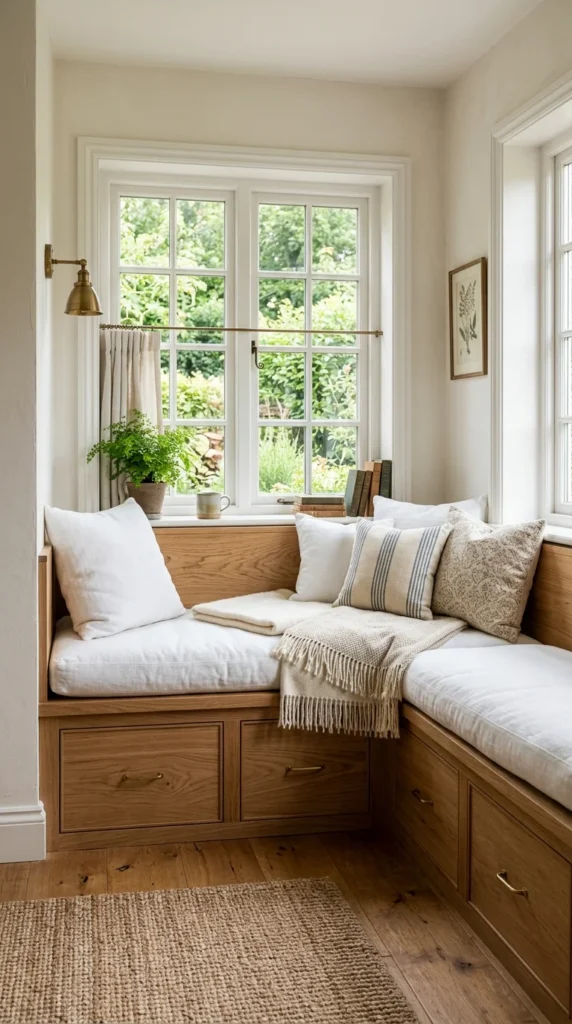
In the mid-century era, architects often built furniture directly into the house. In a small modern home, creating a built-in banquette for dining or a reading nook in a corner utilizes space that would otherwise be wasted. These “nooks” provide extra seating and often hidden storage, keeping the center of the room clear for movement.
16. Round Dining Tables
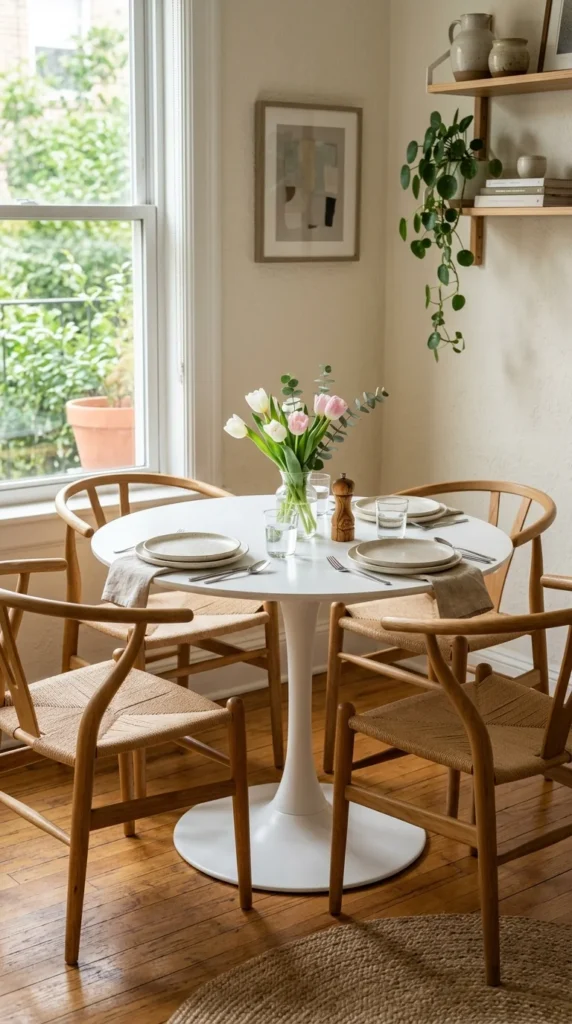
Sharp corners are the enemy of small spaces; they interrupt the flow of traffic and can make a room feel “blocked.” A round dining table, like the famous Saarinen Tulip table, is a classic MCM piece that works wonders in tight quarters. Because it has a central pedestal rather than four legs, it offers more legroom and allows you to tuck chairs in further, keeping walkways clear.
17. Armless Chairs
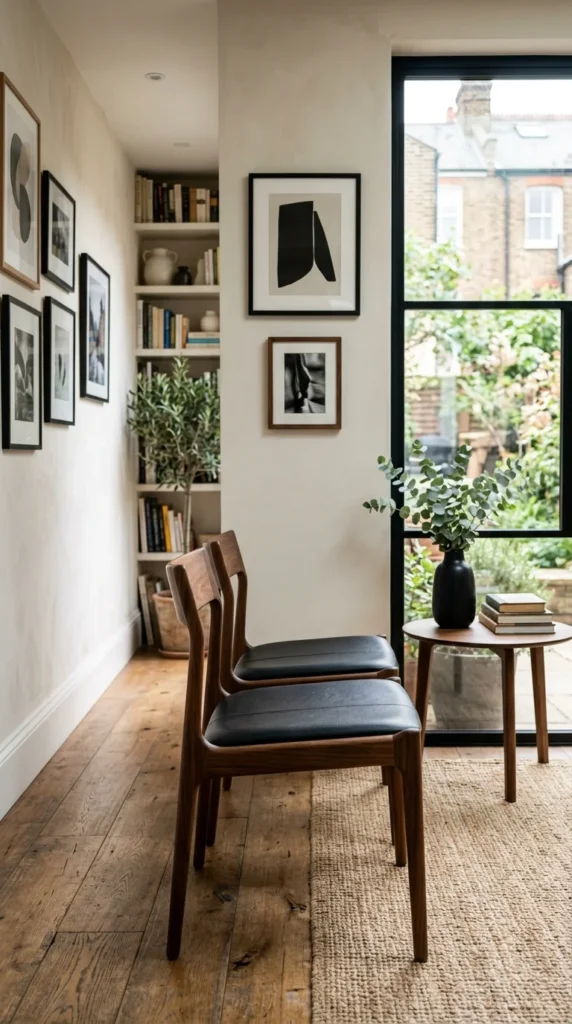
Chairs without arms take up less physical and visual space. Armless “slipper” chairs or side chairs can be tucked closer together and closer to walls. They maintain a slim profile while providing the necessary seating for guests. In an MCM context, look for armless chairs with interesting back details, like cane or slatted wood, to add texture to the room.
18. Pegboards
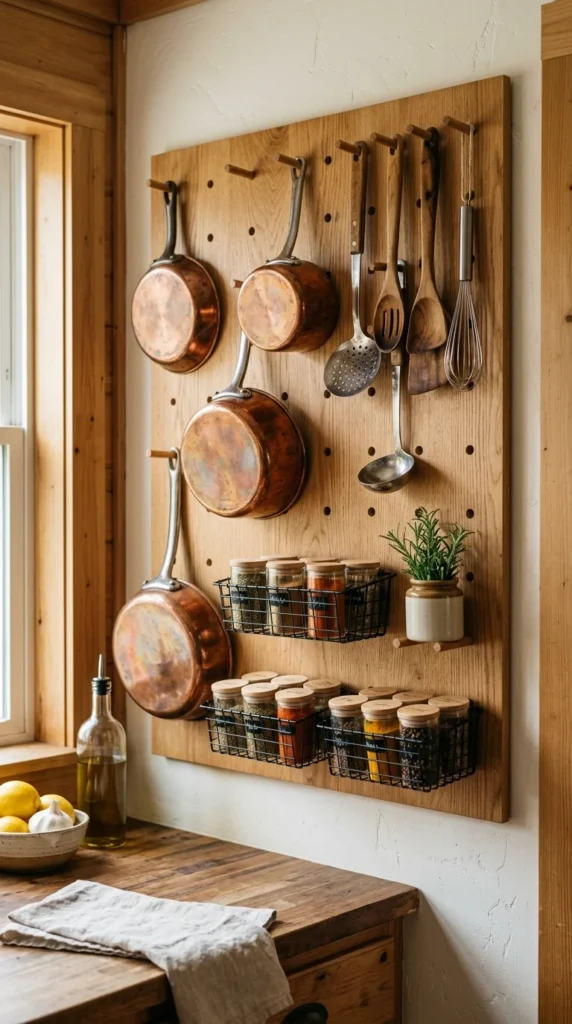
Modular storage was a key focus for mid-century designers like George Nelson. A wooden pegboard is a stylish way to get items off your counters and onto the walls. In a small kitchen or home office, this vertical storage solution keeps everything within reach while doubling as a customizable wall display. It’s functional art that evolves with your needs.
19. Sheer Window Treatments
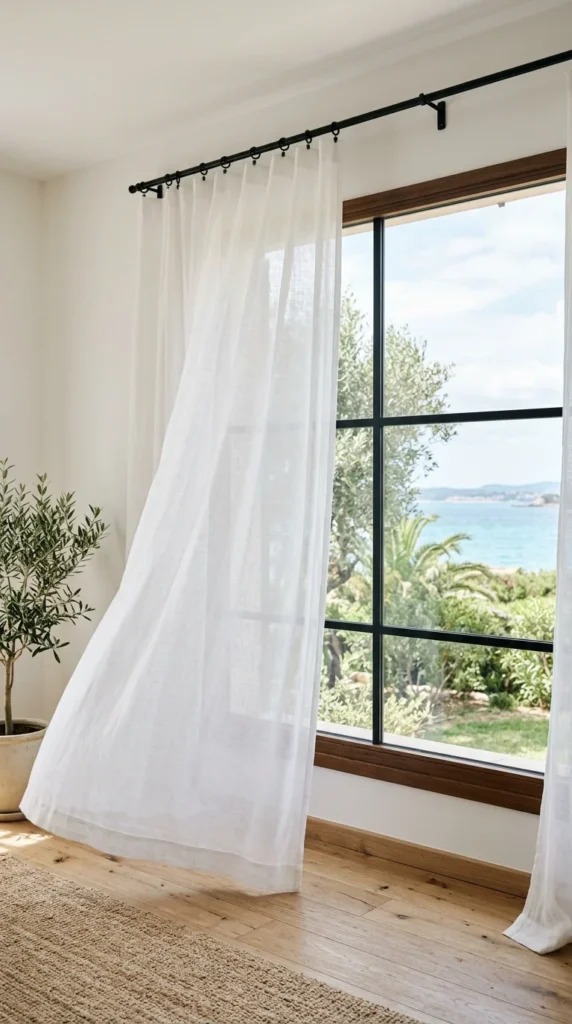
Mid-century modern homes often featured floor-to-ceiling glass to blur the line between inside and out. In a small apartment, you can replicate this by using sheer curtains or simple roller shades. Avoid heavy, dark drapes that close in the room. By letting in as much natural light as possible and showing off the view outside, you expand the visual boundaries of your interior space.
20. Platform Beds
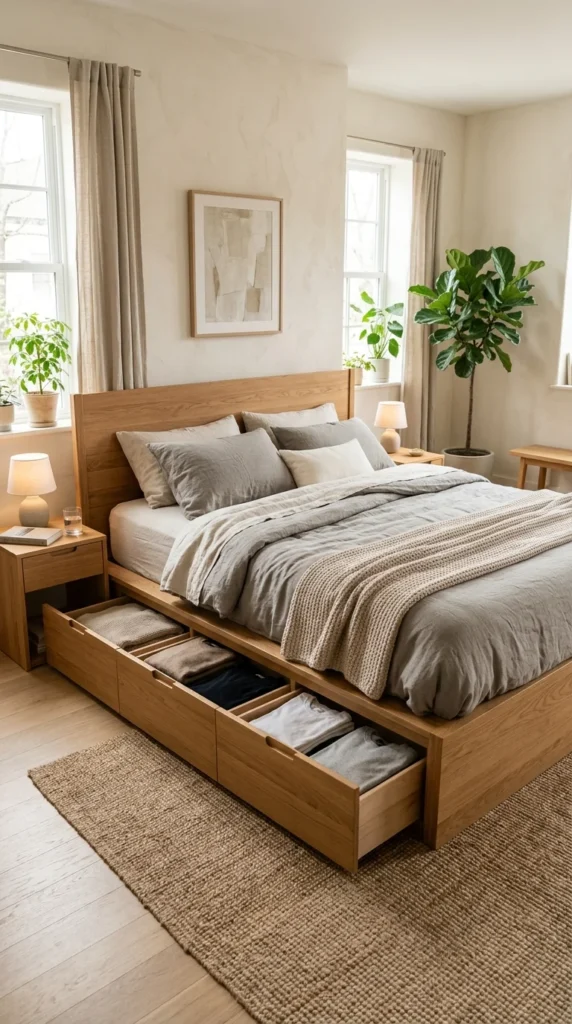
The platform bed is a staple of MCM bedrooms. By eliminating the need for a box spring, you lower the height of the bed, which—as mentioned before—makes the ceiling feel higher. Many modern MCM-style platform beds also come with integrated drawers underneath, providing a perfect spot for seasonal clothing or extra linens without the need for a separate, space-consuming dresser.
21. Walnut Finishes
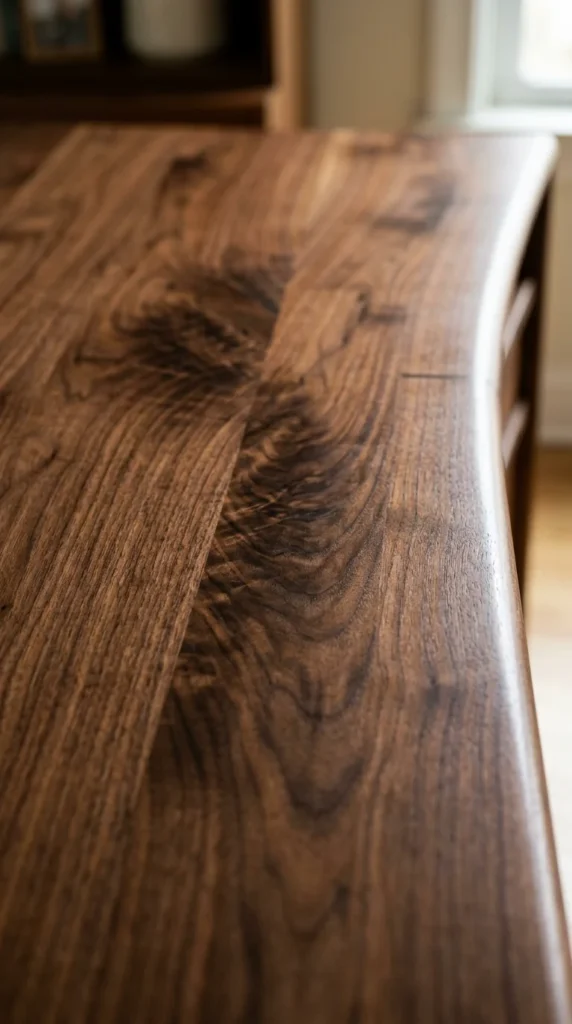
The choice of material matters. Walnut was the wood of choice for the mid-century era because of its rich grain and warm tone. In a small space, using consistent wood tones creates a sense of harmony. The warmth of walnut adds a “cozy” rather than “cramped” feeling to a room, making it feel high-end and grounded. When your furniture pieces share the same wood finish, the room looks unified and less “busy.”
22. Room Dividers
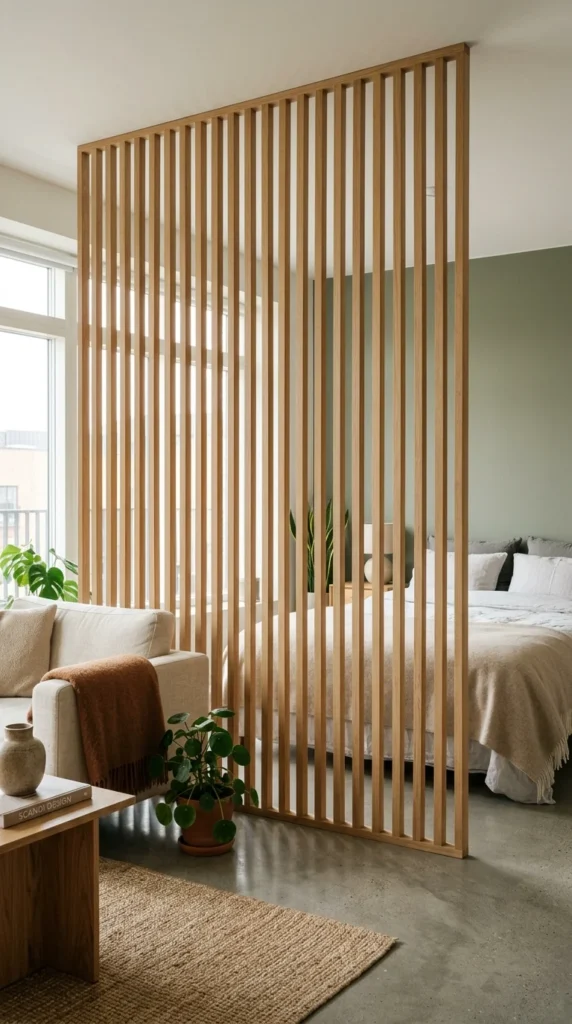
If you live in a studio, you need to separate your sleeping area from your living area without building a wall. Mid-century style room dividers—often made of vertical wooden slats or open shelving units—are the perfect solution. They provide a psychological boundary between spaces while allowing light and air to flow through. This preserves the “open” feel of the apartment while providing the privacy and organization you need.