Maintaining a clean and organized home often feels like a losing battle against the sheer volume of “stuff” we accumulate. From seasonal clothing and kitchen gadgets to spare linens and electronics, the struggle to find a place for everything is real. However, the secret to a minimalist aesthetic isn’t necessarily having fewer things—it’s having better places to hide them. Hidden storage solutions allow you to maintain functionality without sacrificing style. By utilizing “dead space” and furniture that pulls double duty, you can transform a chaotic house into a serene sanctuary.
1. Ottoman Benches
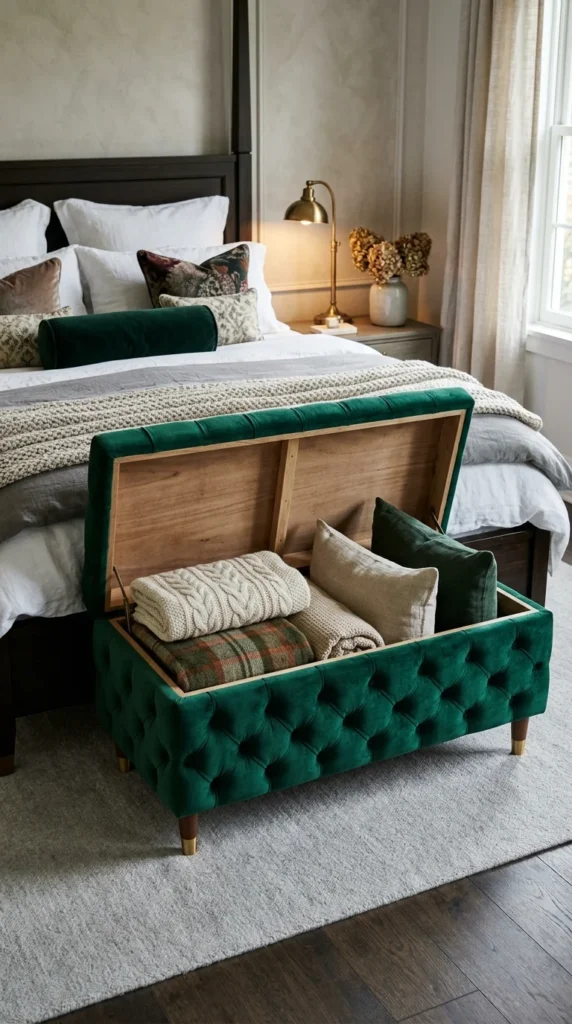
The ottoman bench is the undisputed king of multi-functional furniture. Not only does it provide extra seating or a place to rest your feet, but it also offers a massive hollow interior perfect for bulky items. It is the ideal solution for storing extra bedding, winter coats, or even board games that usually clutter up the living room. Because they come in various textures—from leather to linen—they blend seamlessly into any decor while acting as a secret vault for your clutter.
2. Stair Drawers
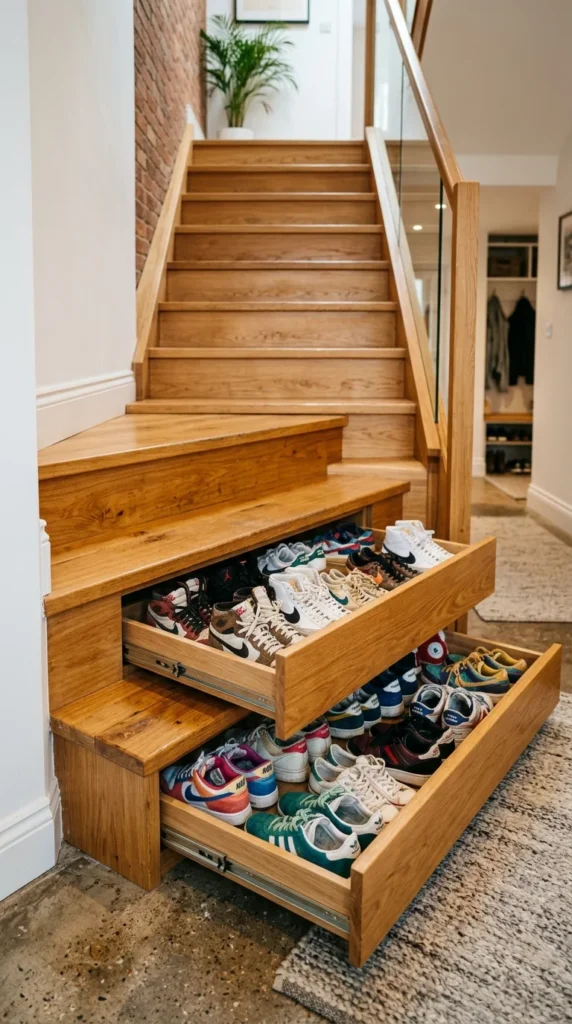
In many homes, the space beneath the staircase is a wasted void. Converting the risers of your stairs into pull-out drawers is a stroke of architectural genius. This “stealth” storage is perfect for entryways where shoes tend to pile up. Each family member can have their own designated step, ensuring that the hallway remains clear and the footwear stays out of sight but within easy reach.
3. Toe-Kick Drawers
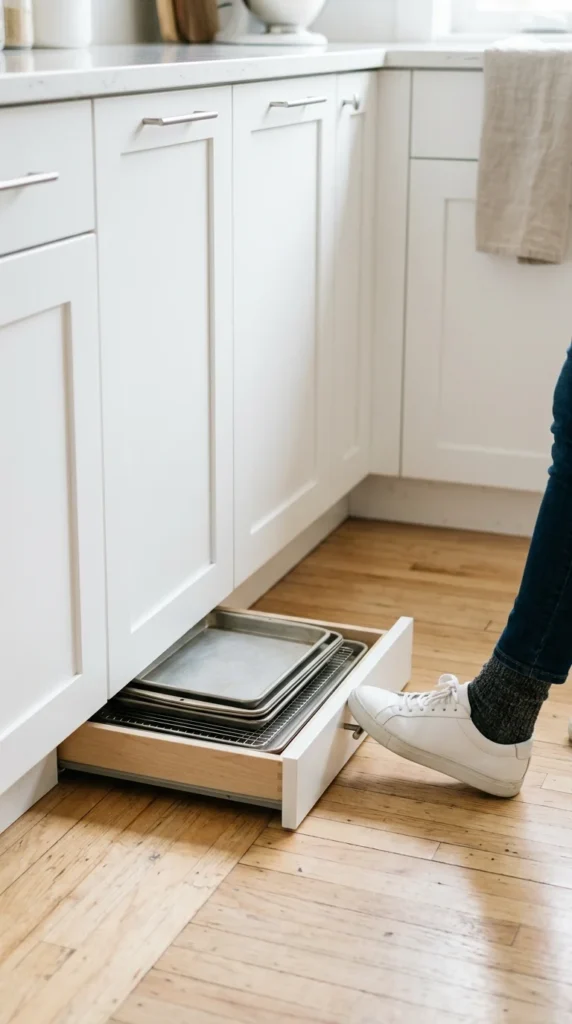
The “toe-kick” is that recessed space at the bottom of kitchen or bathroom cabinets. Usually, it’s just a decorative piece of wood, but it can easily be converted into shallow drawers. These are perfect for flat items that are difficult to stack, such as baking sheets, muffin tins, or even placemats. It utilizes a part of the kitchen that is otherwise 100% wasted space.
4. Mirror Cabinets
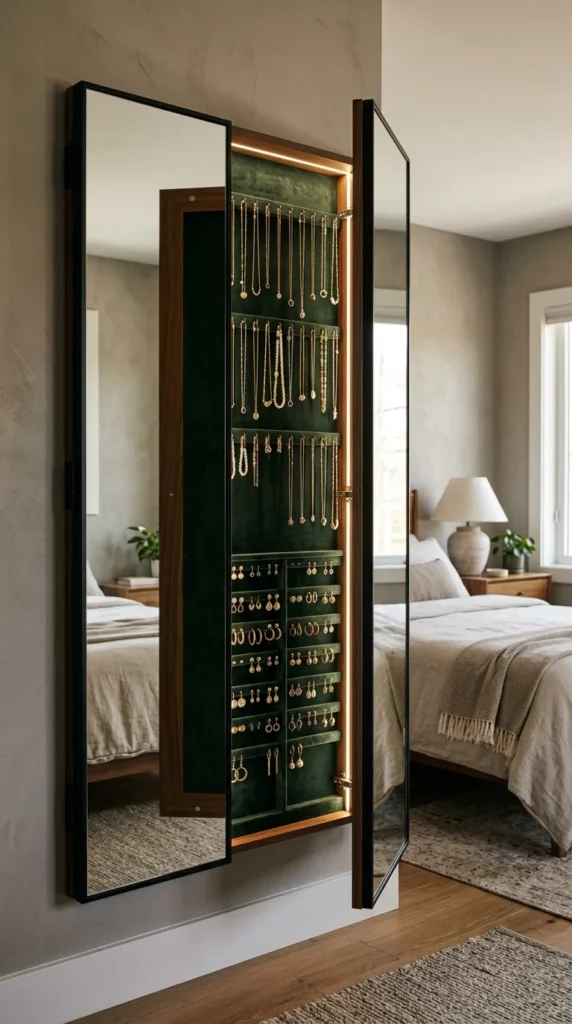
Wall-mounted mirrors are essential for checking your outfit, but they can also serve as a disguise for jewelry or medicine. A recessed mirror cabinet sits flush against the wall, looking like a standard decorative piece. When opened, it reveals organized racks for accessories or toiletries. This keeps your vanity tops clear of clutter and protects your valuables from dust and sunlight.
5. Under-Bed Drawers
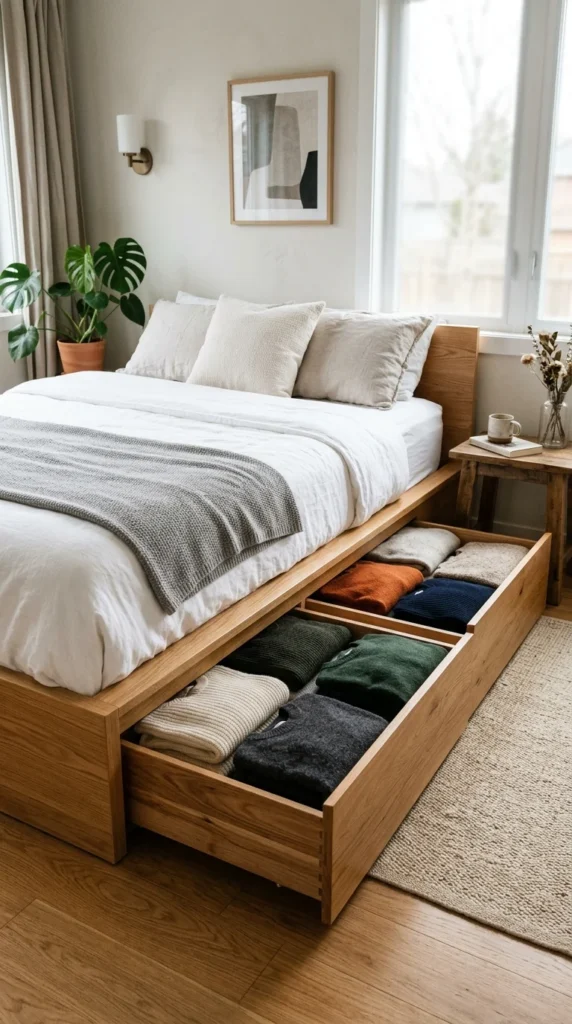
The space under the bed is notorious for collecting “dust bunnies” and haphazardly shoved boxes. Integrated under-bed storage turns this area into a high-capacity closet. Whether you choose a bed frame with built-in drawers or use sleek rolling bins that match your flooring, this area is perfect for seasonal clothing, extra towels, or luggage.
6. Hollow Books
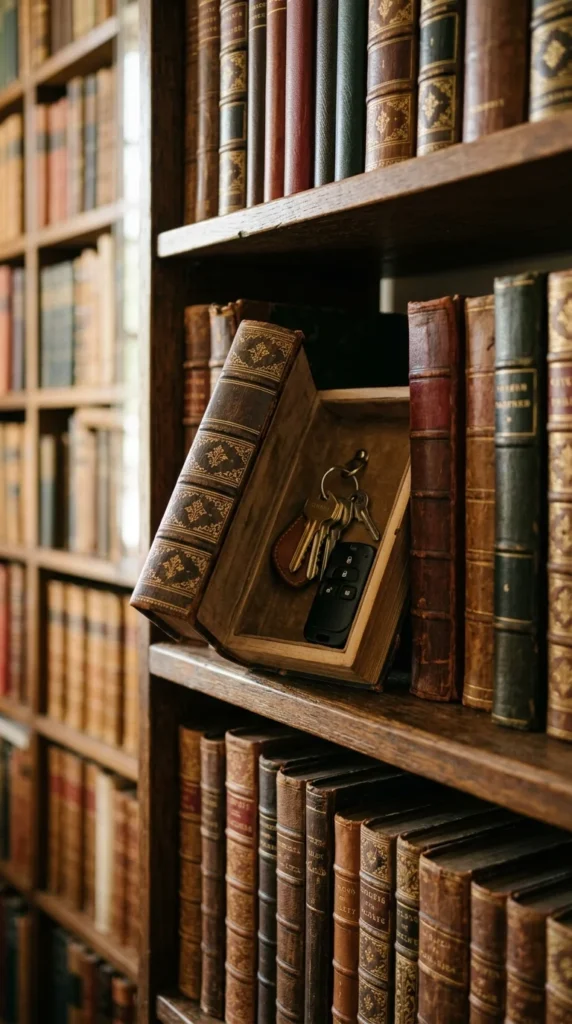
For small items like remote controls, spare keys, or emergency cash, hollowed-out books are a classic “spy” trick that works wonders for home organization. You can buy “book safes” or create your own by gluing the pages of an old thrift-store find and cutting out the center. They blend perfectly into your library while keeping small trinkets off the coffee table.
7. Radiator Covers
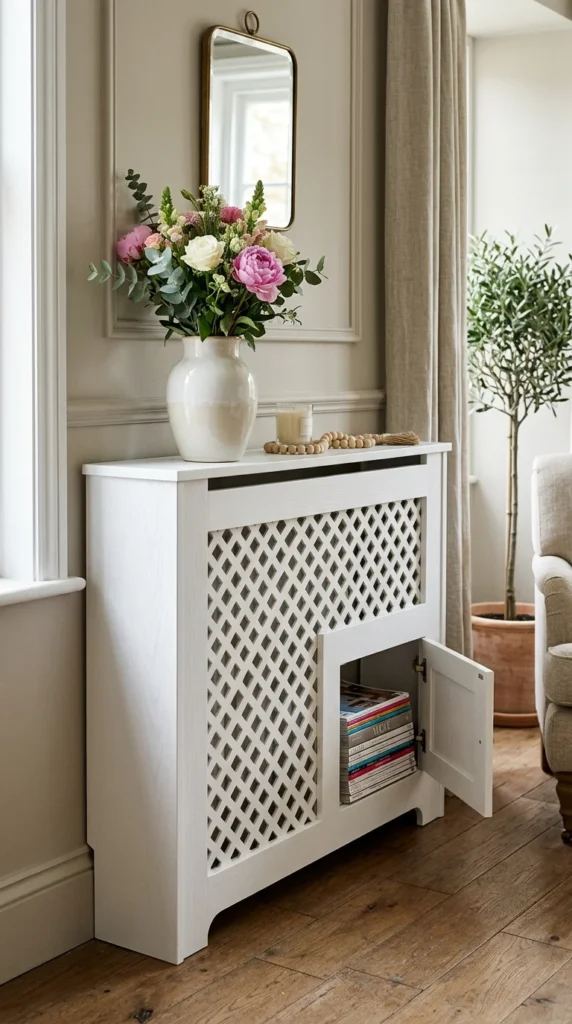
Radiators are often eyesores that take up valuable wall space. A custom-built radiator cover not only improves the look of the room but can also incorporate hidden shelves or cabinets. By building the cover slightly wider than the unit, you create vertical slots for magazines or a top surface that acts as a console table, all while masking the bulky metal heater.
8. Bathtub Panels
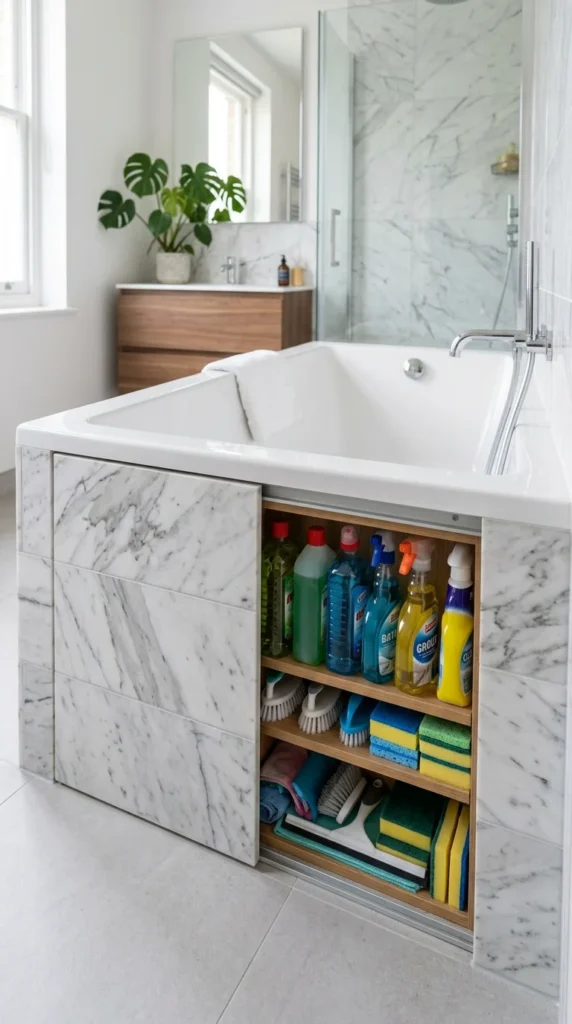
Most built-in bathtubs have a hollow space between the tub and the outer wall. By installing a removable or hinged panel, you can create a secret spot for cleaning supplies, bath toys, or extra bottles of shampoo. It’s a waterproof storage solution that keeps the perimeter of the tub looking clean and spa-like.
9. Hidden Doors
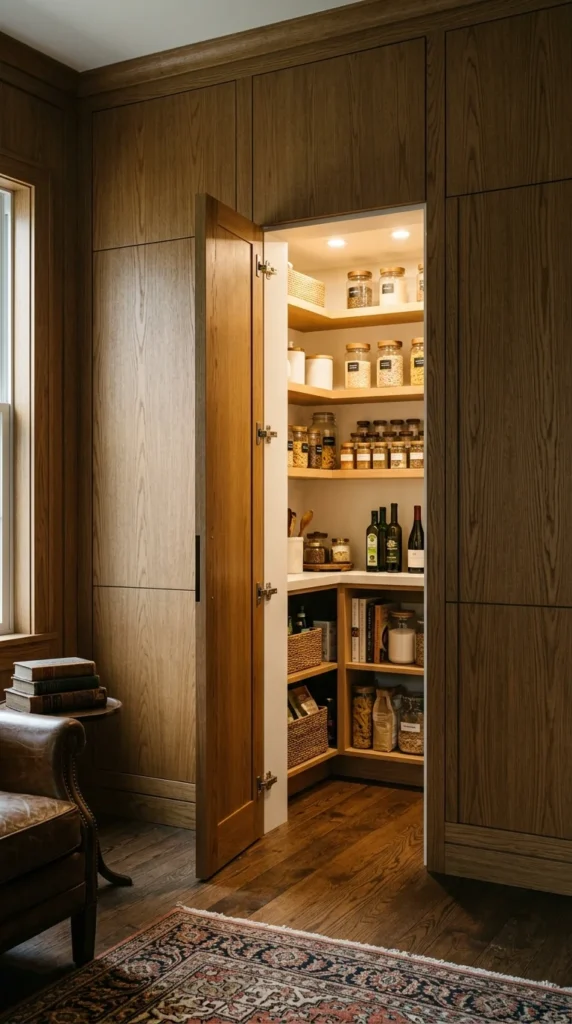
Hidden doors—or “jib doors”—are designed to be flush with the wall, often using the same trim or wallpaper to remain invisible. Behind these doors, you can hide anything from a pantry to a home office or a laundry room. This is a high-end architectural solution that eliminates the visual “noise” of multiple doors in a hallway.
10. Murphy Desks
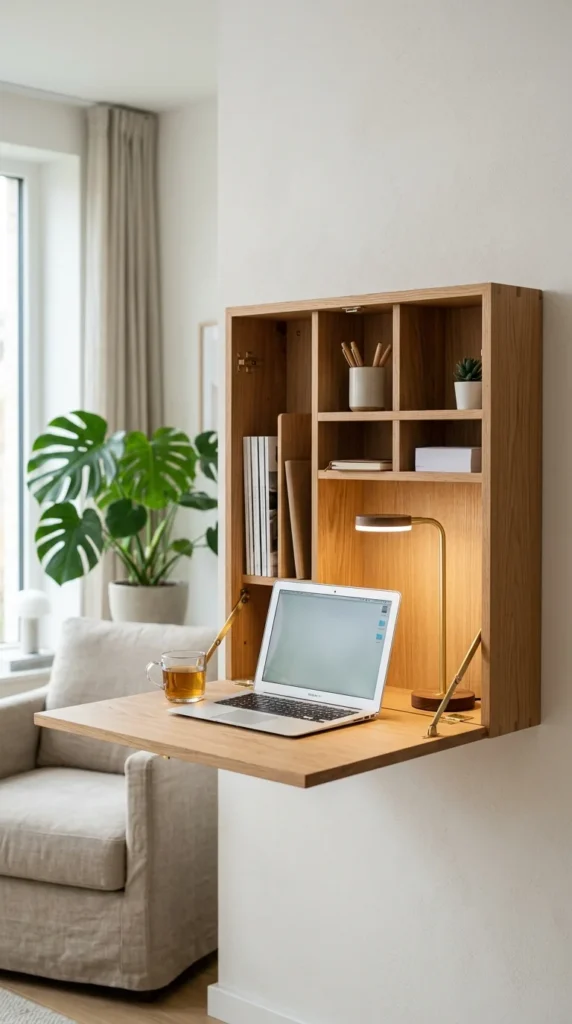
With the rise of remote work, not everyone has space for a permanent home office. A Murphy desk (or fold-down desk) looks like a simple wall cabinet when closed. When you’re ready to work, the front panel drops down to become a desktop, revealing organized slots for mail and stationery. When the workday is over, you simply fold it back up to reclaim your living space.
11. Window Seats
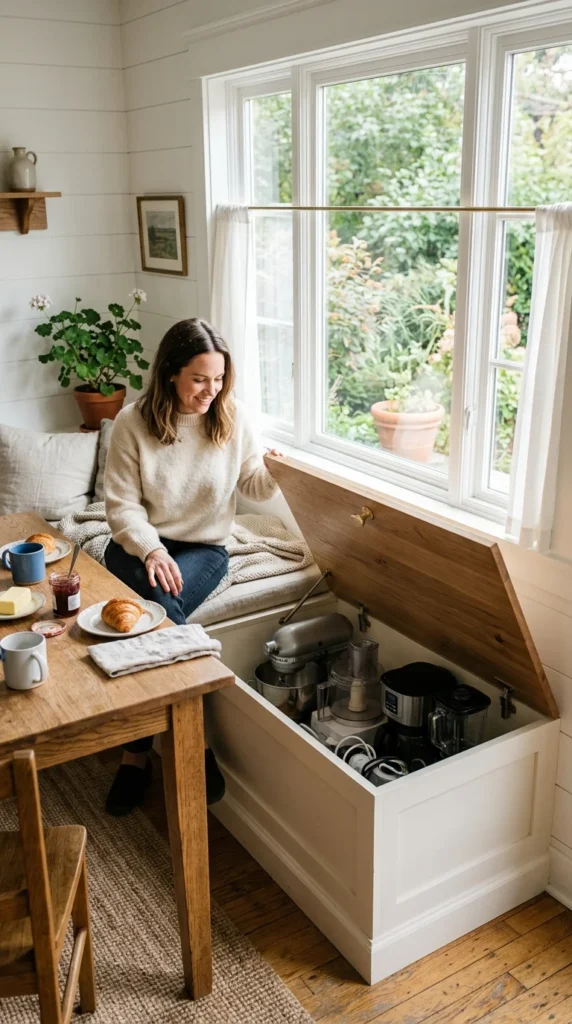
A window seat is the perfect place to curl up with a book, but the base of that seat is a prime storage opportunity. Instead of a solid base, use a flip-top lid or deep drawers. It’s an excellent spot for bulky items like slow cookers, large mixing bowls, or outdoor cushions that are only used during certain months.
12. Headboard Storage
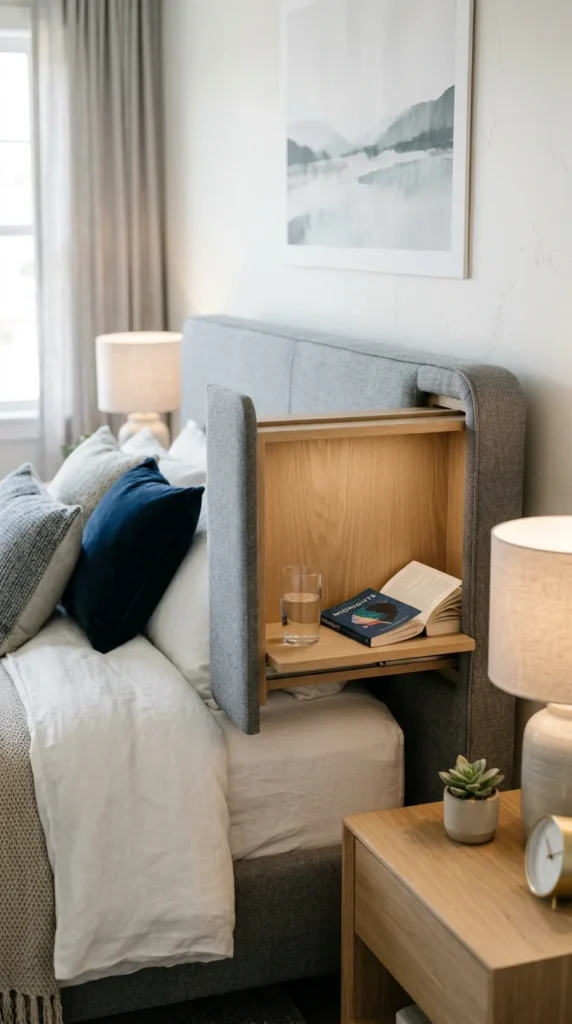
Headboards can do much more than just look pretty. Many modern designs incorporate “secret” side drawers or a flip-down top. This allows you to skip the bulky nightstands if you’re short on space. You can store your nighttime reading, charging cables, and eye masks right inside the headboard, keeping the area around your bed looking streamlined and airy.
13. Floating Shelves
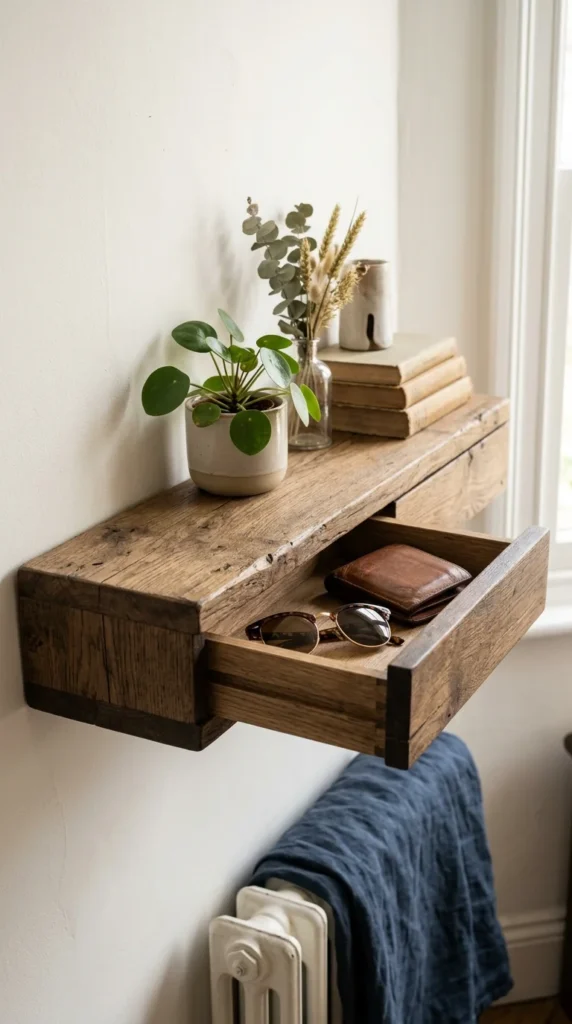
Floating shelves are popular for displaying decor, but “thick” versions can actually house hidden drawers. These are perfect for entryways or hallways where you need a place for “everyday carry” items like wallets and keys, but don’t want a cluttered console table. From the outside, it looks like a solid piece of timber; only you know there’s a drawer inside.
14. Kitchen Islands
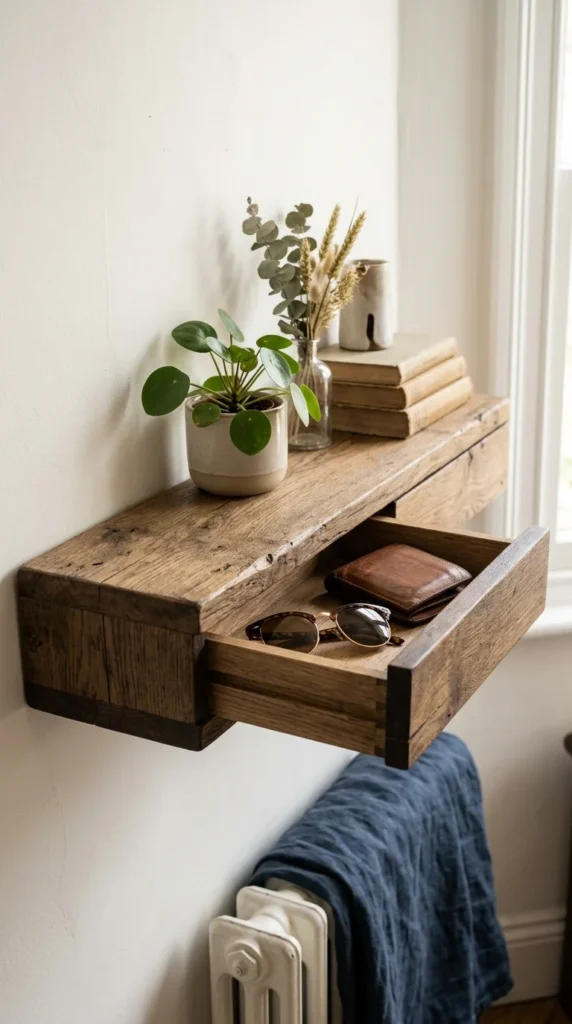
Kitchen islands are often utilized for drawers on the “work” side, but the “seating” side is usually just flat cabinetry or leg space. By adding touch-latch doors (doors without handles) to the back of the island, you create a massive storage area for items you don’t use every day, such as holiday platters or rarely used appliances.
15. False Bottoms
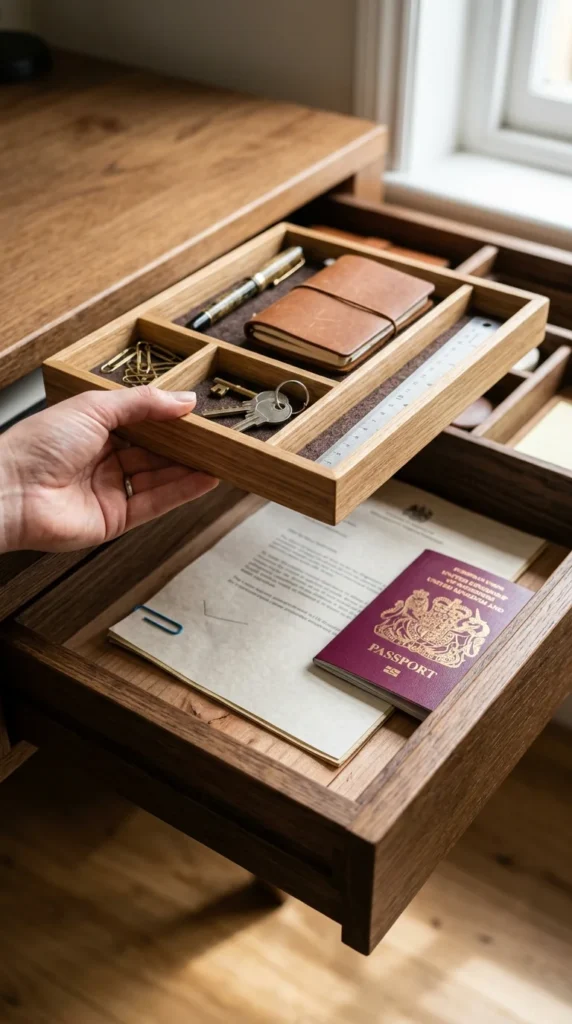
If you have a deep drawer, you can easily install a false bottom. This is a classic security measure for passports, extra cash, or sensitive documents. By creating a shallow tray that sits on small rails inside the drawer, you effectively double your organization while keeping your most important items out of plain sight.
16. Recessed Wall Niche
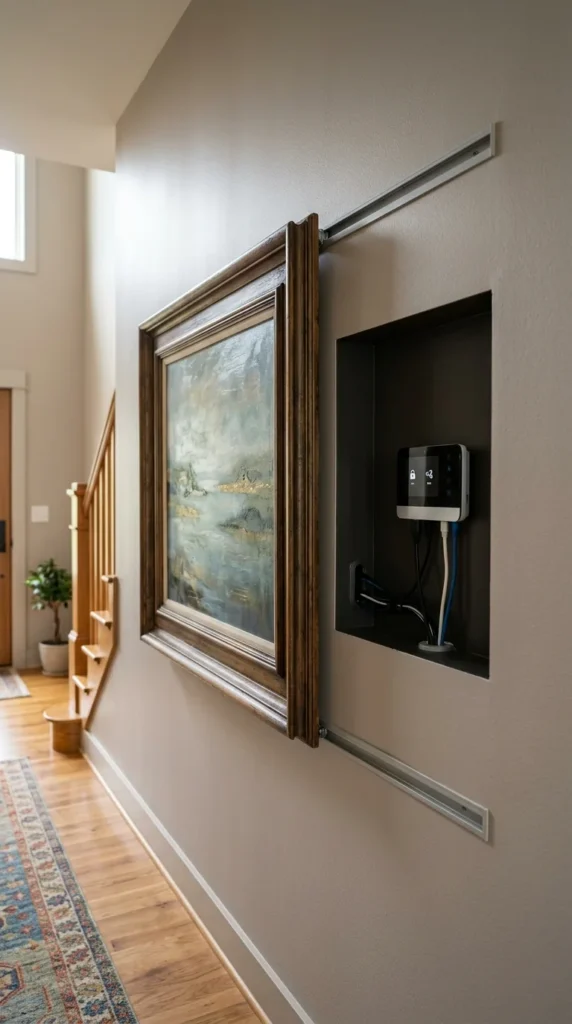
A recessed wall niche utilizes the space between the wall studs. You can hide these niches behind artwork or large mirrors. They are perfect for hiding unsightly but necessary items like thermostats, security panels, or even a small key rack. By using a sliding track for the artwork, you maintain easy access without the visual clutter.
17. Picture Frames
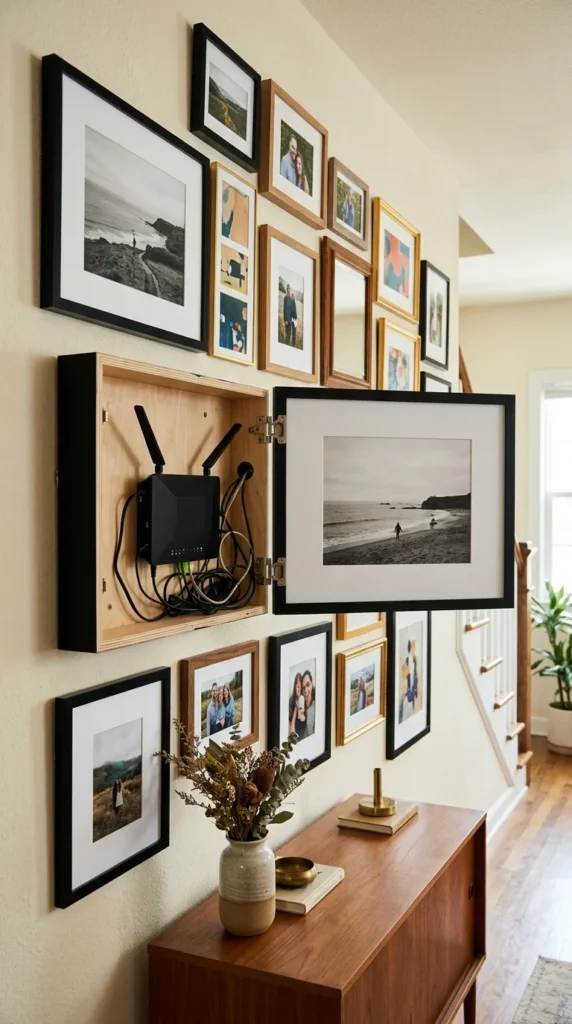
Wi-Fi routers and modems are notorious for their messy cables and blinking lights. You can buy or DIY a “shadow box” picture frame that is deep enough to house a router. The front remains a beautiful family photo, while the back hides the technology. Just ensure the frame allows for adequate ventilation and doesn’t block the signal.
18. Sofa Pockets
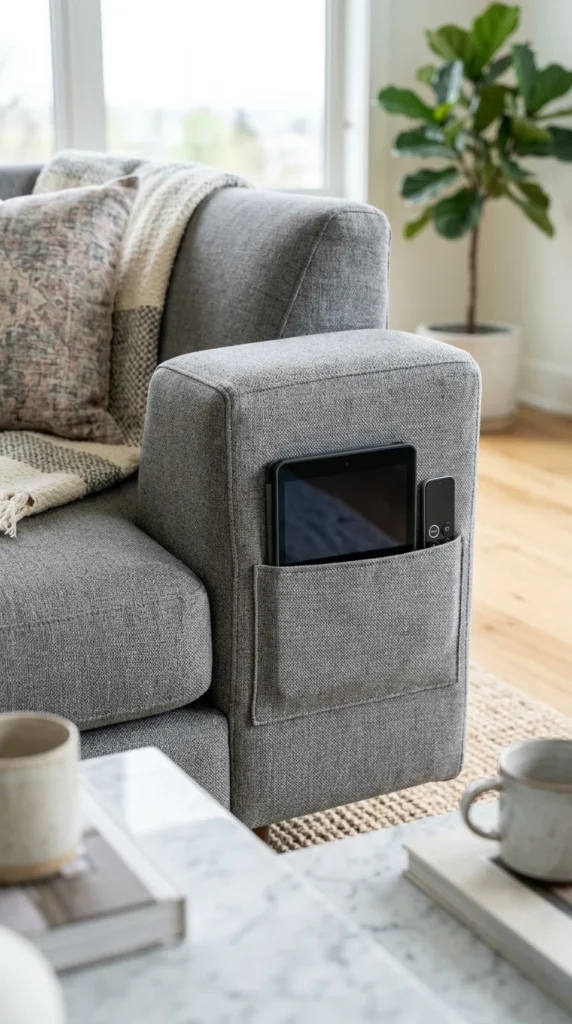
If you’re handy with a needle or buying a custom sofa, side pockets are a game-changer. Often tucked between the cushion and the armrest, or hidden under a decorative flap, these pockets keep remotes, magazines, and tablets off the cushions and off the floor. It keeps the living room looking “staged” and perfect at all times.
19. Stair Landing
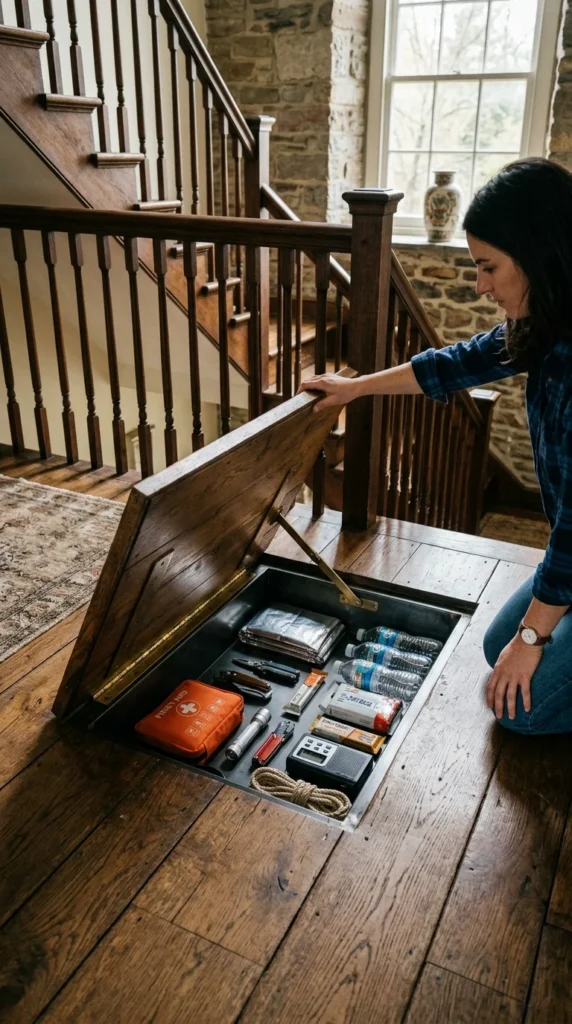
The landing of a staircase is a structural necessity that often hides a significant amount of empty space. By installing a trap-door style lid that sits flush with the flooring, you can create a “secret” floor safe. This is an excellent spot for heavy items like a fire extinguisher, emergency water, or a tool kit.
20. Coffee Tables
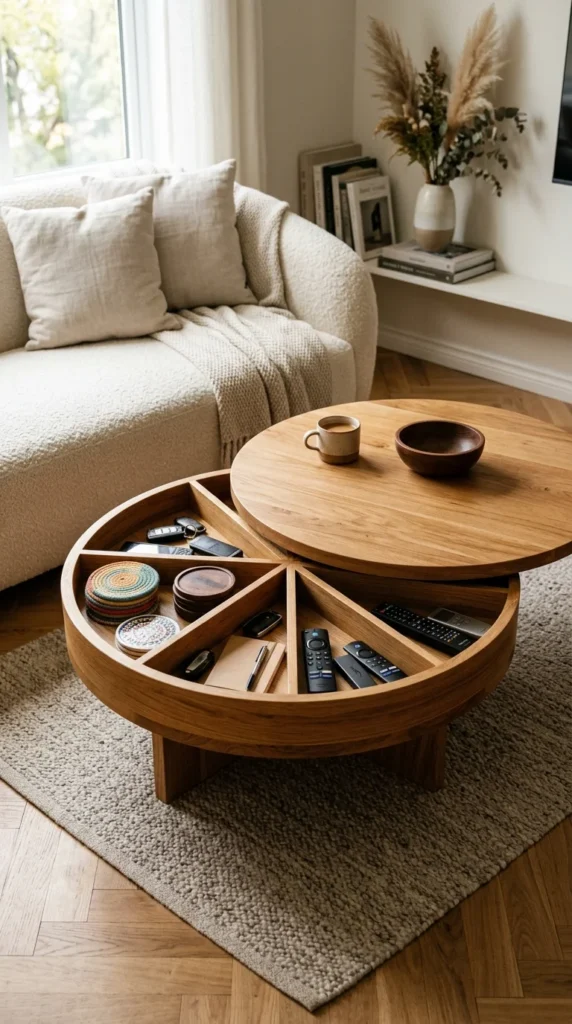
The coffee table is usually the centerpiece of the living room, making it the perfect candidate for hidden storage. Look for “lift-top” tables that rise up to desk height, revealing a storage bay underneath, or drum-style tables where the entire top removes or swivels. It’s the best way to hide the clutter that inevitably accumulates in the heart of the home.
21. Cabinet Risers
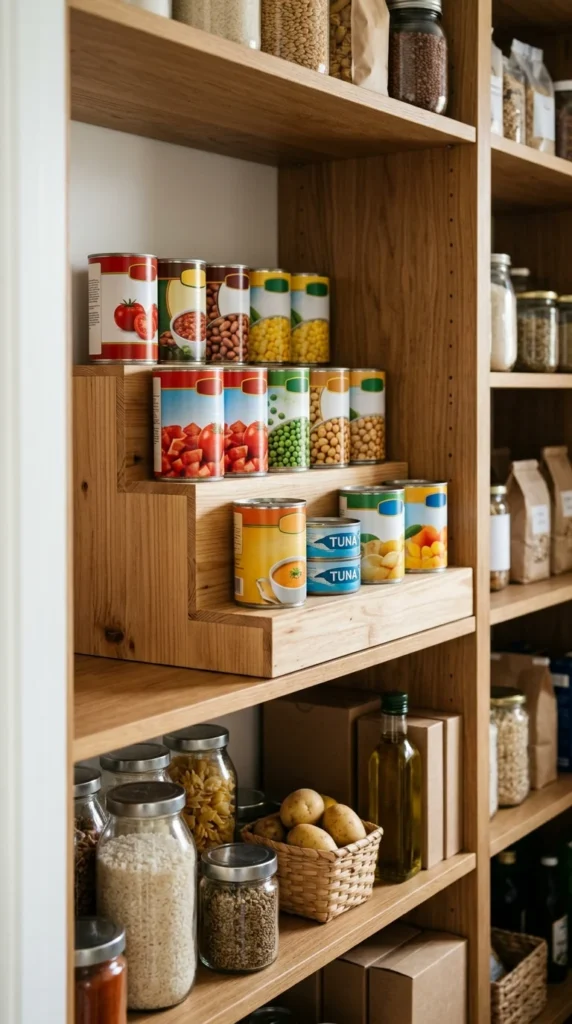
While not “hidden” in the sense of a secret door, cabinet risers hide clutter by organizing it vertically. By using tiered shelving inside deep cabinets, you prevent the “black hole” effect where items are lost at the back. It keeps everything visible and prevents you from buying duplicates of things you already have.
22. Spice Racks
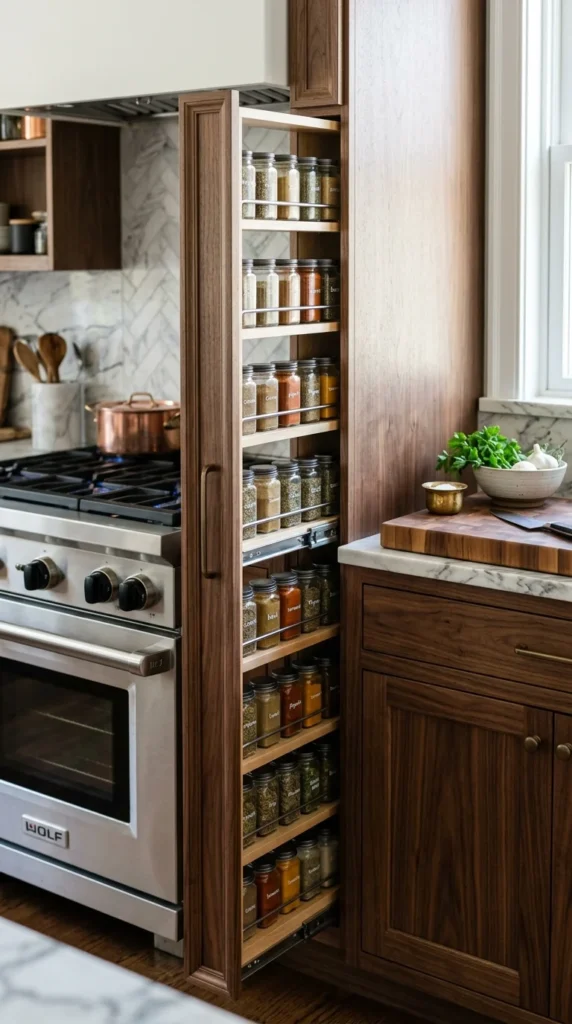
That tiny 3-to-6-inch gap between your appliances and your cabinets is the perfect spot for a pull-out spice rack. When closed, it looks like a simple vertical pillar or trim piece. When pulled out, it offers multiple tiers of storage for spices, oils, or cleaning sprays, keeping your countertops completely clear.
23. Cable Boxes
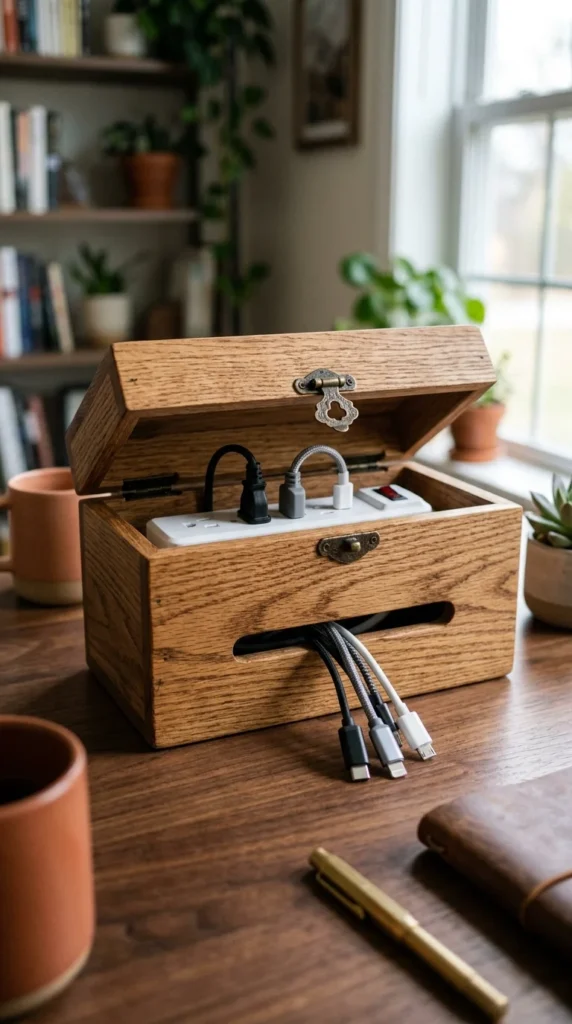
“Cable spaghetti” is one of the biggest contributors to visual clutter. Decorative cable management boxes allow you to house a power strip and all the messy excess cord length inside a stylish container. Whether it’s on your desk or behind the TV, it turns a mess of plastic wires into a clean, intentional design element.
24. Jewelry Armoires
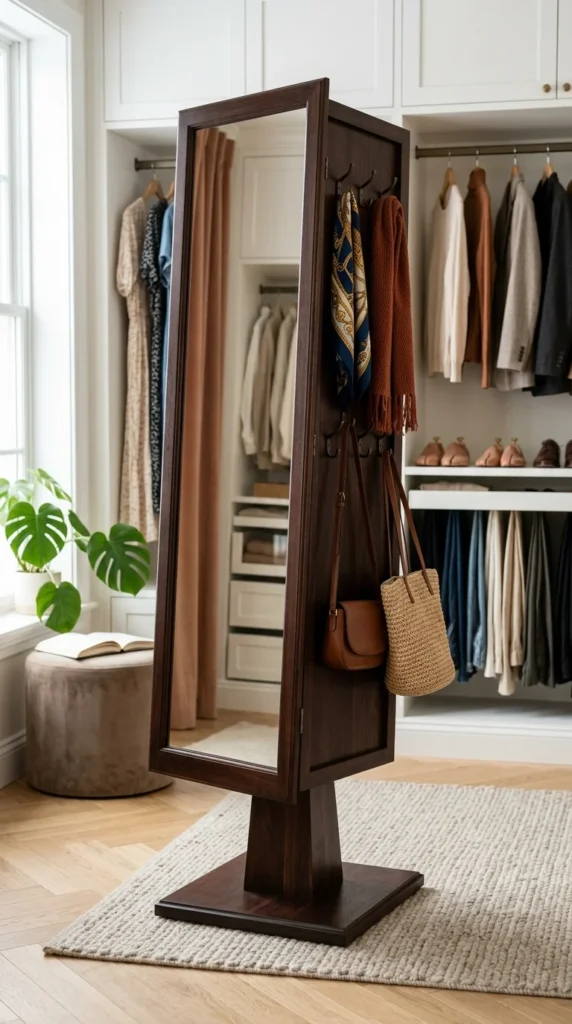
A swivel armoire is a brilliant invention for small bedrooms. One side is a full-length mirror, while the other side (and the interior) is dedicated to storage. You can rotate it to hide your accessories when guests come over, and spin it back when you’re getting ready in the morning. It uses vertical space efficiently while keeping items organized.
25. Bed Risers
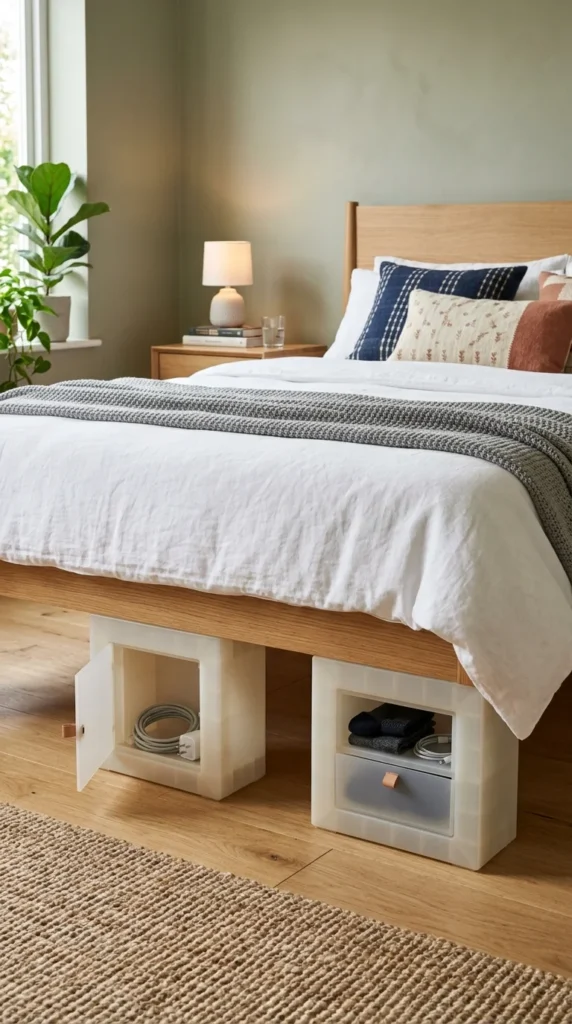
If you don’t have a bed with built-in drawers, you can use specialized bed risers that have built-in storage. Some modern risers feature integrated USB ports or small “pockets” for shoes. They provide that extra few inches of height needed to fit storage bins underneath while adding functionality to the legs of the bed themselves.
26. Vertical Slots
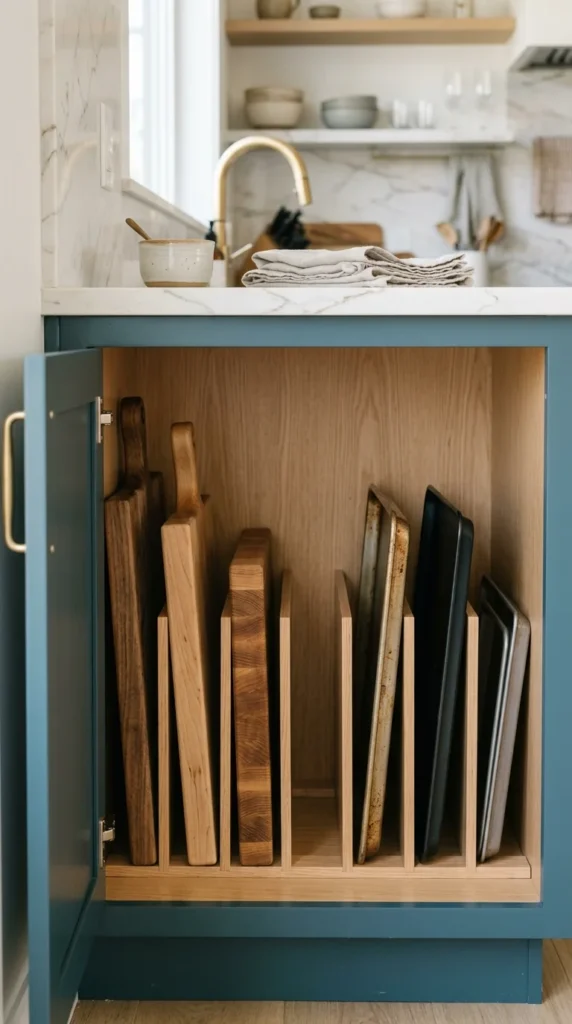
Standard cabinets are great for stacking plates, but terrible for thin, flat items. By installing vertical dividers—either in a cupboard or a deep drawer—you create “slots” for cutting boards, trays, and lids. This prevents the noisy, frustrating “avalanche” that happens when you try to pull a baking sheet from the bottom of a horizontal stack. It keeps your cabinets silent and perfectly organized.