
We’ve all been there: staring at a mountain of clothes, fighting with a stuck drawer, or watching a pile of shoes migrate across the floor like a slow-moving glacier. The truth is, most closets aren’t actually too small; they are simply under-utilized. By applying smart spatial hacks and professional organizing principles, you can effectively double your storage capacity without knocking down a single wall.
Whether you are dealing with a tiny reach-in or a sprawling walk-in that has lost its way, these 22 closet organization ideas will transform your chaos into a streamlined sanctuary.
1. Double Rods
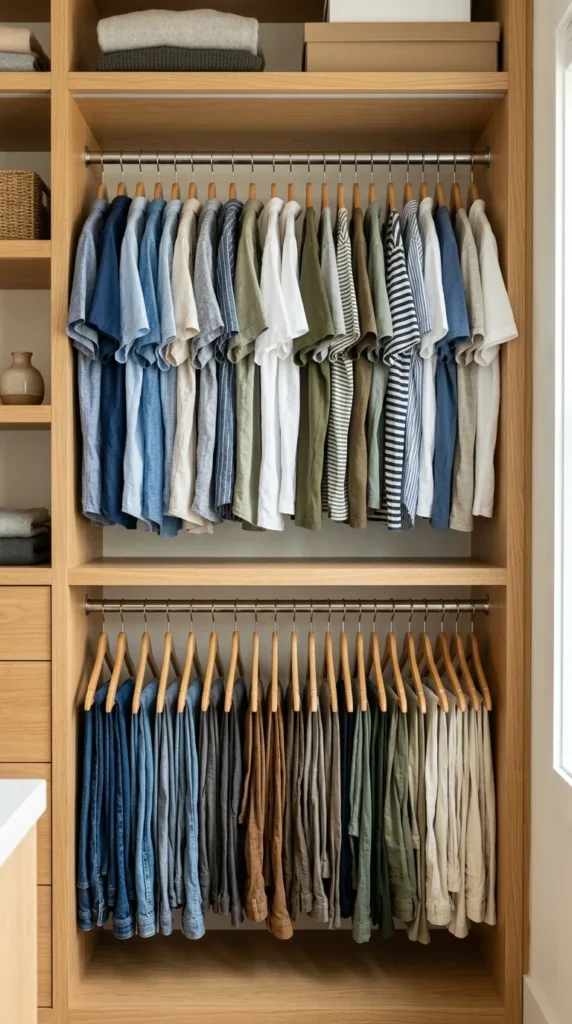
The simplest way to double your hanging space is to look up and down. Most standard closets have a single rod with several feet of wasted space underneath. By installing a second rod halfway down the wall, you can separate your wardrobe into tops and bottoms. This vertical stacking instantly doubles the number of items you can hang in the same footprint.
2. Shelf Dividers
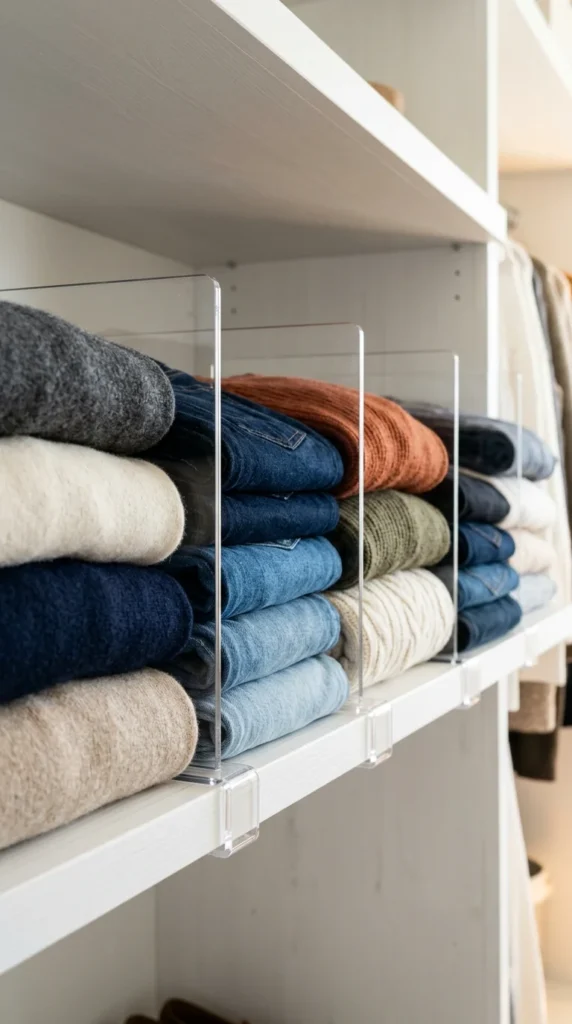
Folding your clothes is only half the battle; keeping them folded is the real challenge. Shelf dividers act as “bookends” for your wardrobe. They prevent stacks of sweaters or jeans from toppling over into one another. Clear acrylic versions are particularly popular because they provide a clean, invisible look that makes your closet feel like a high-end boutique.
3. Shoe Racks
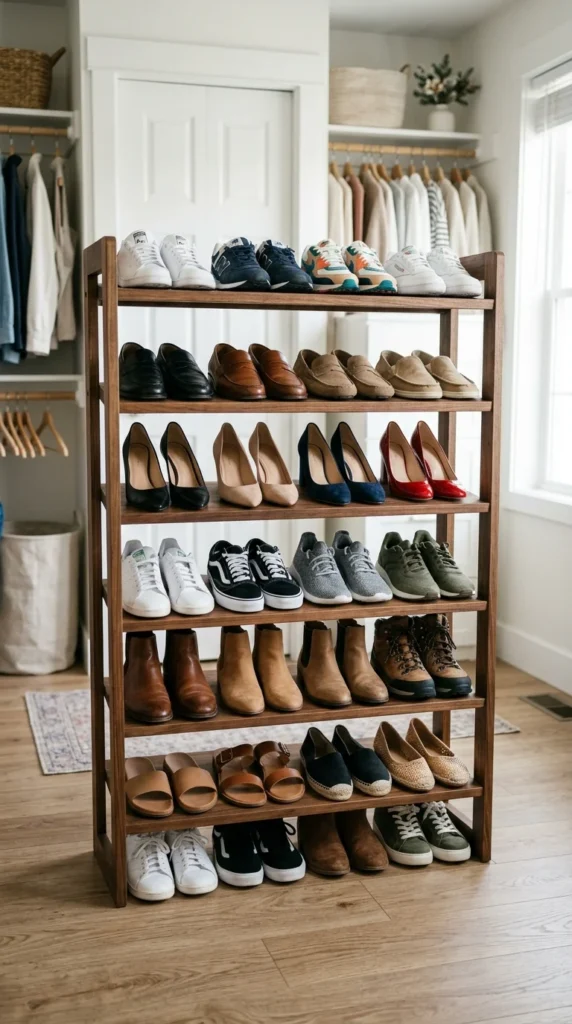
If your shoes are currently a “floor pile,” you are losing valuable square footage. A dedicated shoe rack—whether it’s a floor-standing unit, an expandable metal rack, or a wooden cubby system—keeps footwear organized and protected. Storing shoes “toe-to-heel” is a professional secret that allows you to fit more pairs on a single shelf.
4. Over-Door Organizers
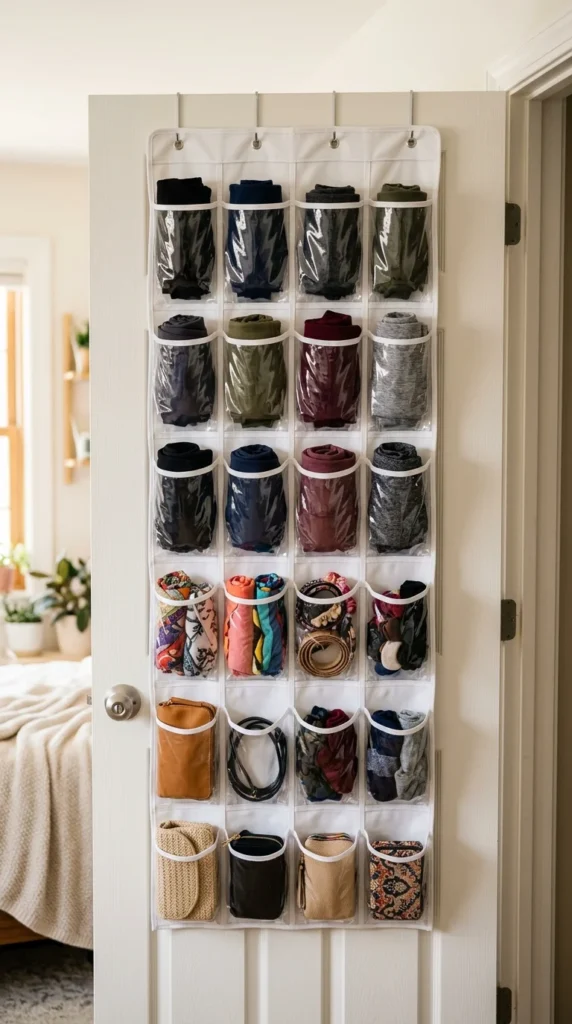
The back of your closet door is prime real estate that is often ignored. An over-the-door organizer with pockets or hooks can hold everything from flip-flops and rolled-up leggings to cleaning supplies and belts. It’s the perfect “hidden” storage solution for items that don’t have a natural home on a shelf.
5. Vacuum Bags
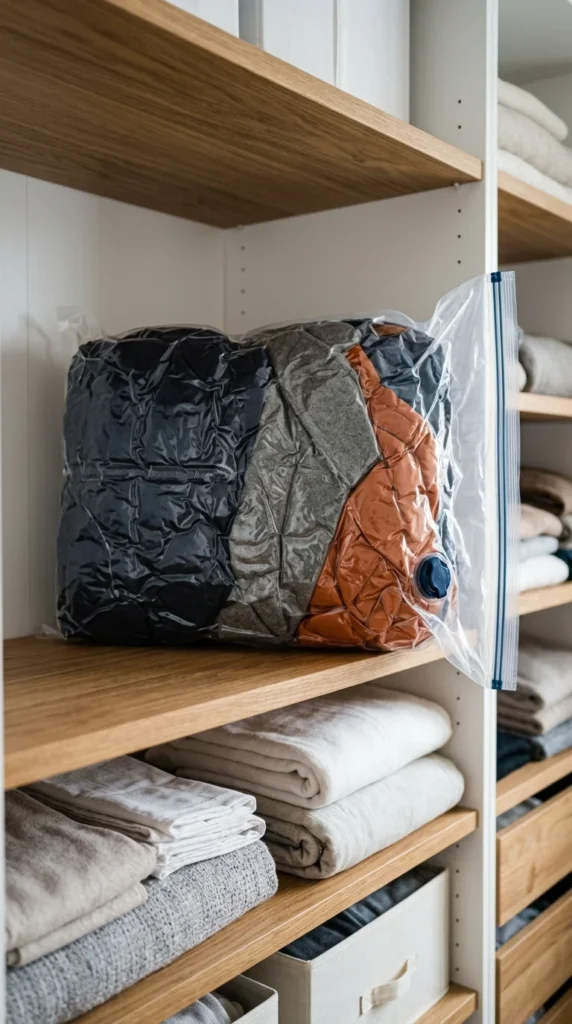
Seasonal items like heavy parkas, duvets, and ski gear shouldn’t take up daily-use space. Vacuum-sealed bags allow you to shrink these bulky items down to a fraction of their size. Once compressed, they can be tucked away under the bed or on the highest, hardest-to-reach shelves of your closet until the temperature drops.
6. Tiered Hangers
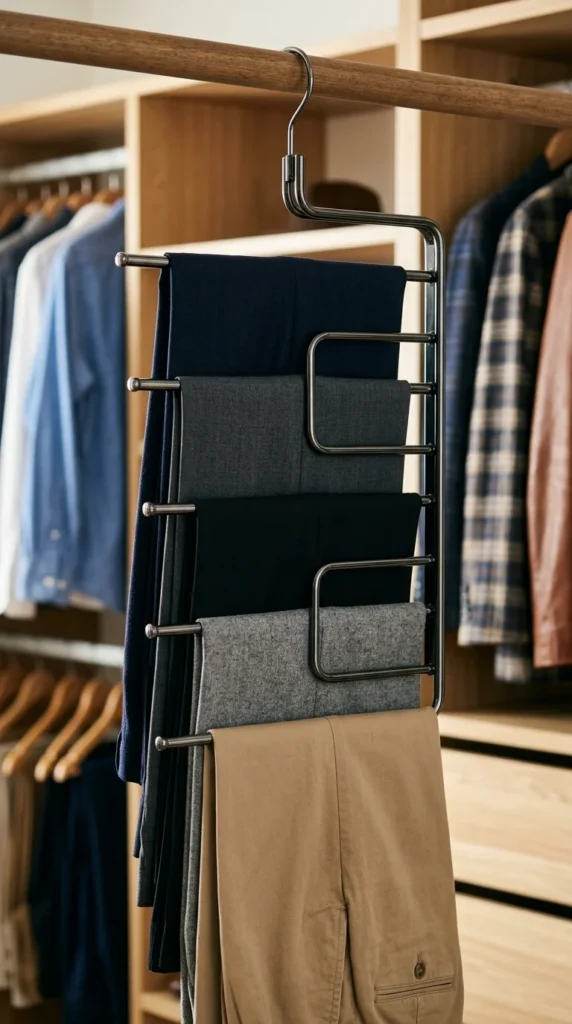
Standard hangers are horizontal space hogs. Tiered hangers (also known as “cascading hangers”) allow you to hang multiple garments—such as five pairs of pants or four camisoles—on a single hook. This utilizes the vertical depth of your closet and frees up inches of rod space for other items.
7. Drawer Inserts
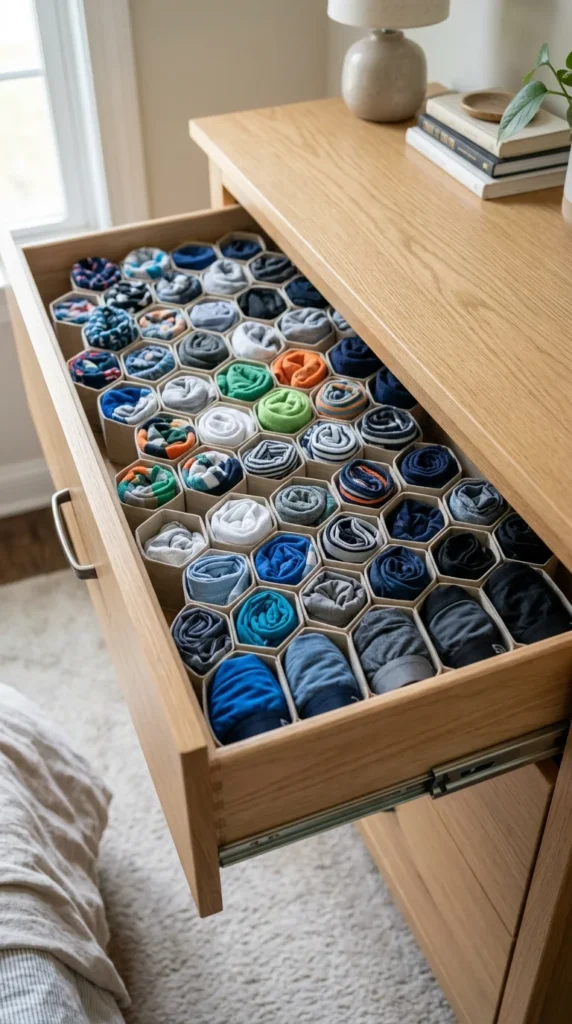
Deep drawers often become “black holes” where socks and underwear disappear. Modular drawer inserts or honeycomb dividers create a specific “home” for every small item. When every pair of socks has its own slot, you eliminate the need to rummage, which keeps the rest of the drawer neat.
8. Integrated Lighting
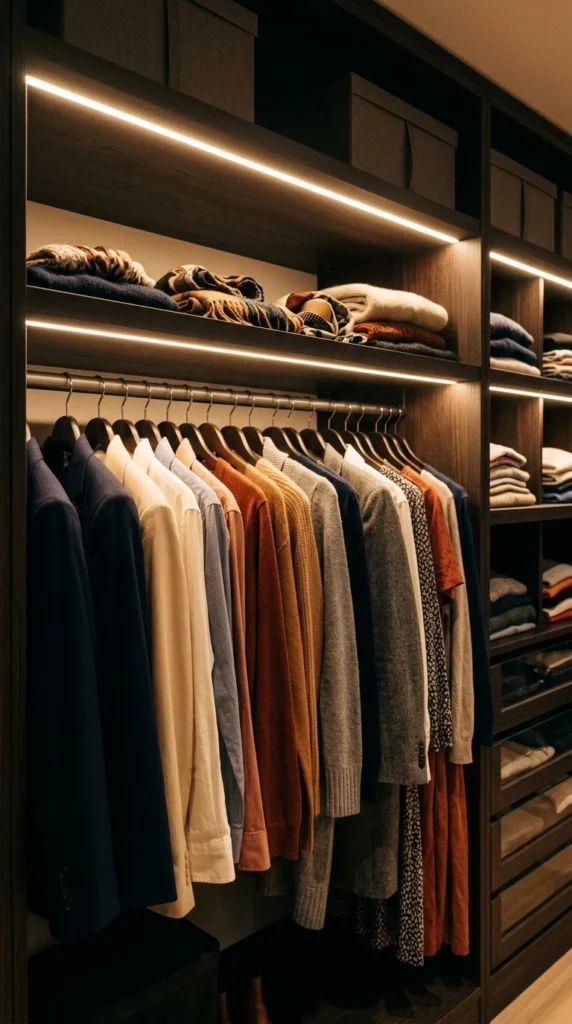
You can’t organize what you can’t see. Many closets suffer from poor lighting, leading to “lost” clothes in the corners. Battery-operated LED motion-sensor lights are an easy, no-wire solution. They brighten up dark corners and make the space feel larger and more inviting, encouraging you to maintain the organization.
9. Matching Hangers
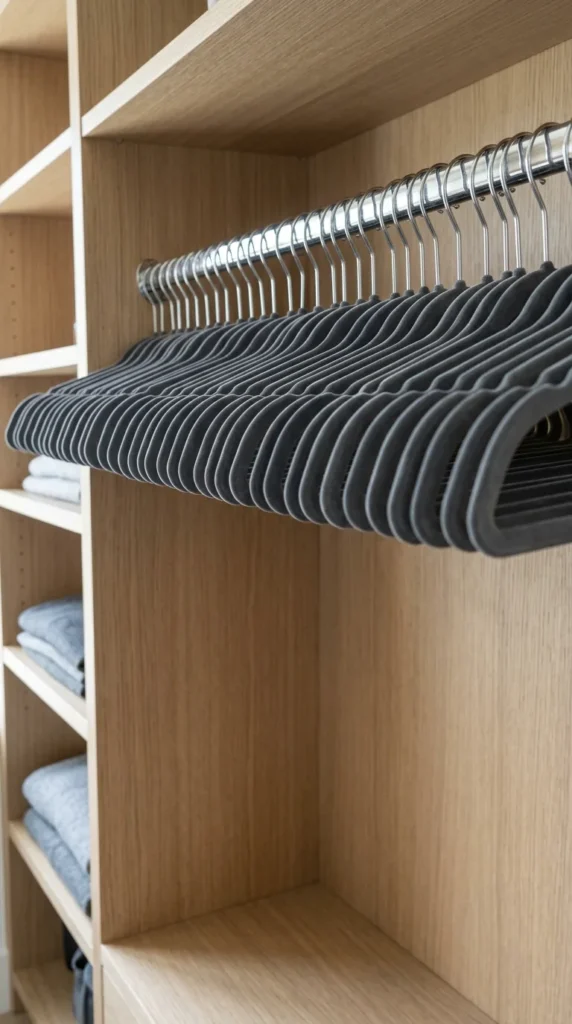
Mismatched plastic, wire, and wooden hangers create visual clutter and take up unnecessary space. Switching to slim-profile velvet hangers is one of the most effective aesthetic and functional upgrades you can make. They prevent clothes from slipping off and allow you to fit up to 30% more clothing on the same rod.
10. S-Hooks
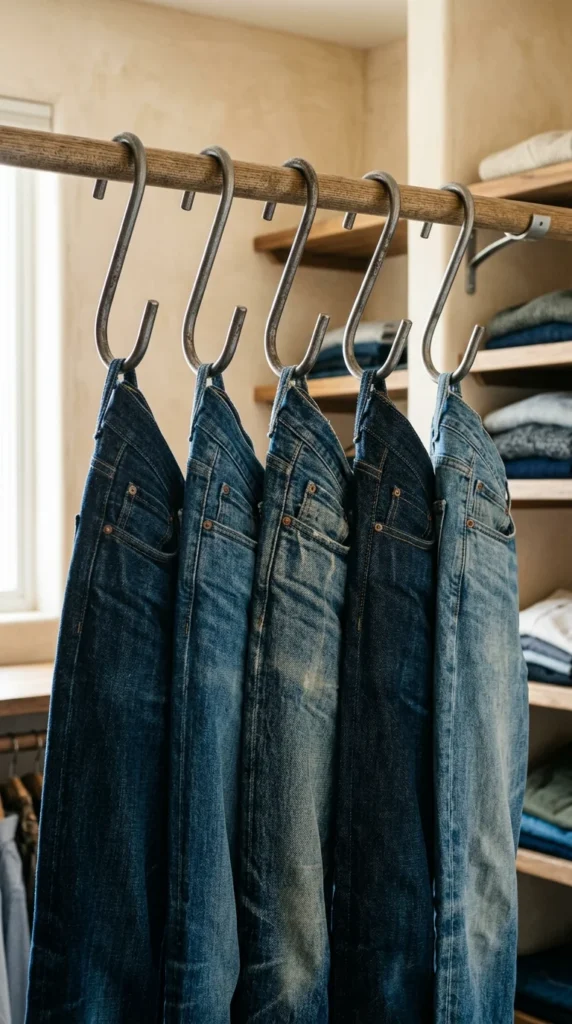
Jeans are bulky and difficult to fold perfectly. Using S-hooks to hang them by their belt loops is a game-changer. This method keeps them accessible, prevents wrinkles, and gives your closet a cool, industrial “denim bar” aesthetic. It also frees up shelf space for items that must be folded, like delicate knits.
11. Pull-out Baskets
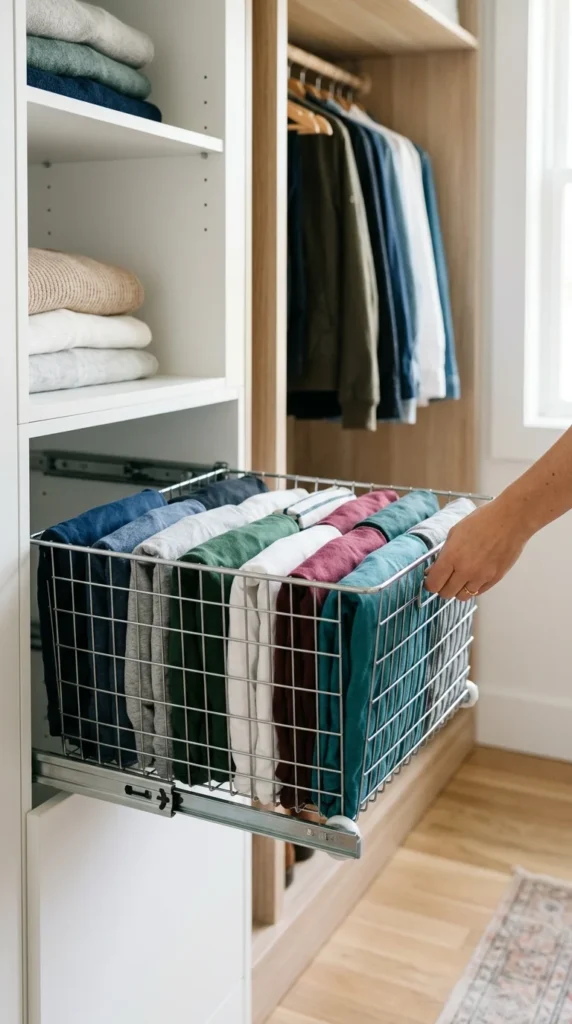
Lower shelves can be difficult to access, leading to wasted space at the back. Replacing stationary shelves with pull-out wire baskets or drawers ensures that nothing gets buried. You can easily see everything in the basket with one quick motion, making it ideal for gym clothes or accessories.
12. Corner Shelves
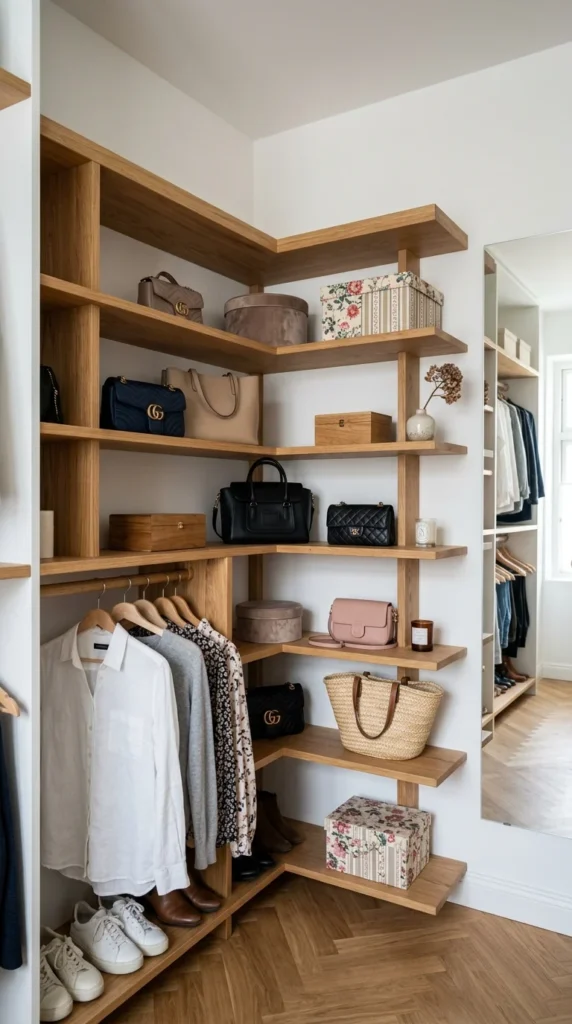
Corners are notoriously difficult to utilize in a closet, often resulting in “dead zones.” Installing curved or L-shaped corner shelving allows you to wrap your storage around the perimeter of the room. These are perfect spots for displaying handbags, hats, or bins of out-of-season accessories.
13. Valet Rods
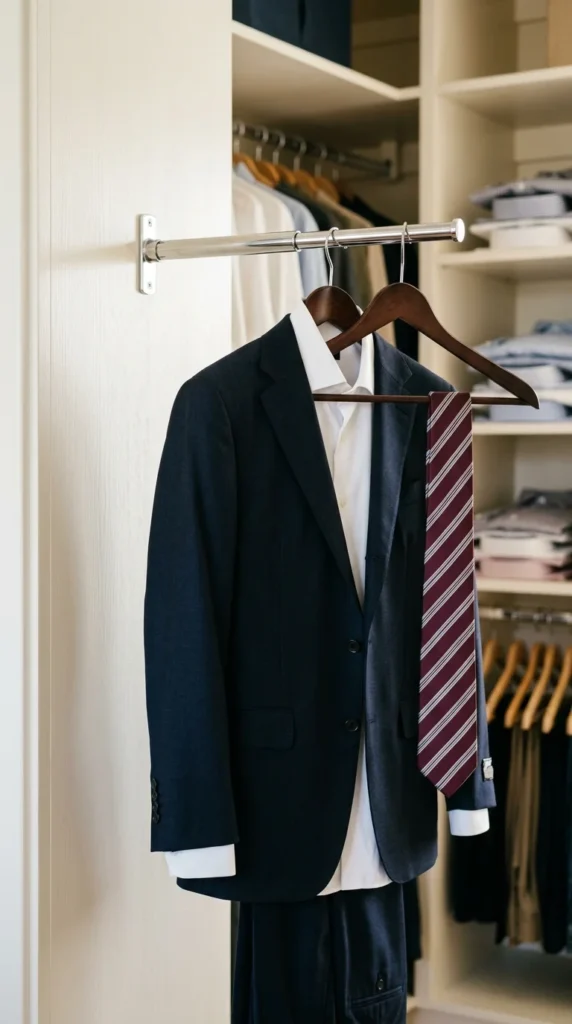
A valet rod is a small, retractable rod that pulls out to hold a few items. It is the ultimate tool for “pre-styling” your outfit for the next day or hanging clothes that need to be steamed. When not in use, it slides back into the cabinet, taking up almost zero space.
14. Jewelry Trays
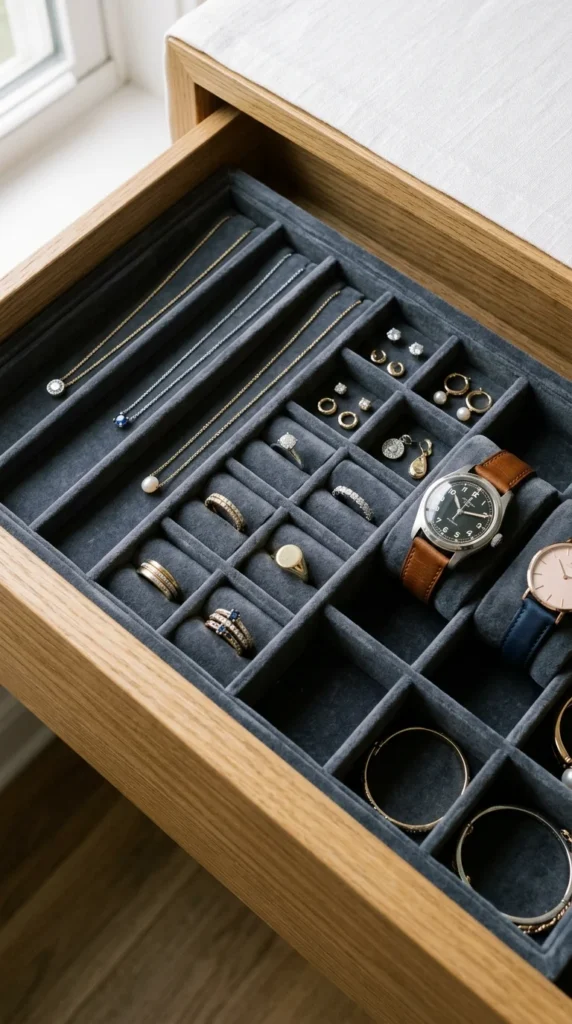
Stop tangling your necklaces in a jewelry box. A shallow drawer equipped with a velvet-lined jewelry tray keeps your accessories organized and protected. If you don’t have a drawer to spare, stackable acrylic jewelry trays can sit on a shelf, keeping your precious items visible and dust-free.
15. Clear Bins
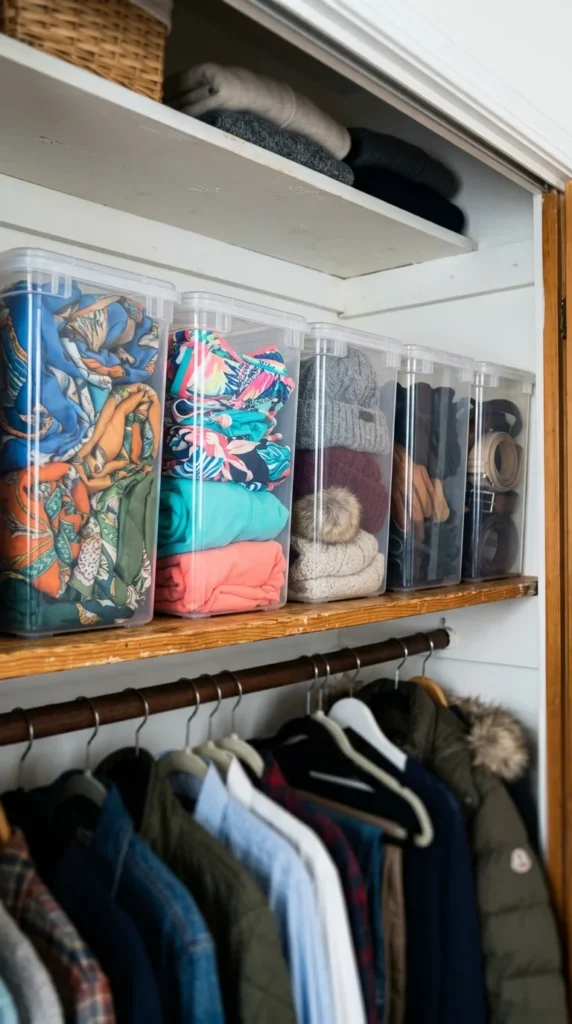
Opaque bins are where things go to be forgotten. Clear plastic bins, however, allow you to see exactly what is inside without having to pull them down and open them. They are perfect for top-shelf storage and ensure that you actually use the items you’ve stored away.
16. Scarf Hangers
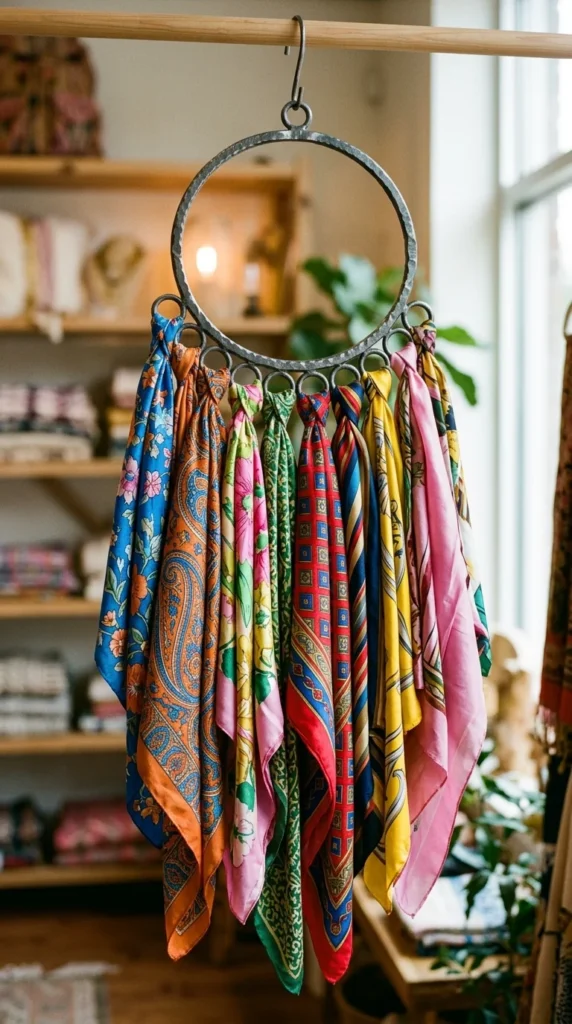
Scarves are notoriously slippery and difficult to stack. A dedicated scarf hanger with multiple loops allows you to display a dozen scarves in the horizontal space of one hanger. This keeps them wrinkle-free and makes it easy to coordinate them with your outfit as you get dressed.
17. Suitcase Storage
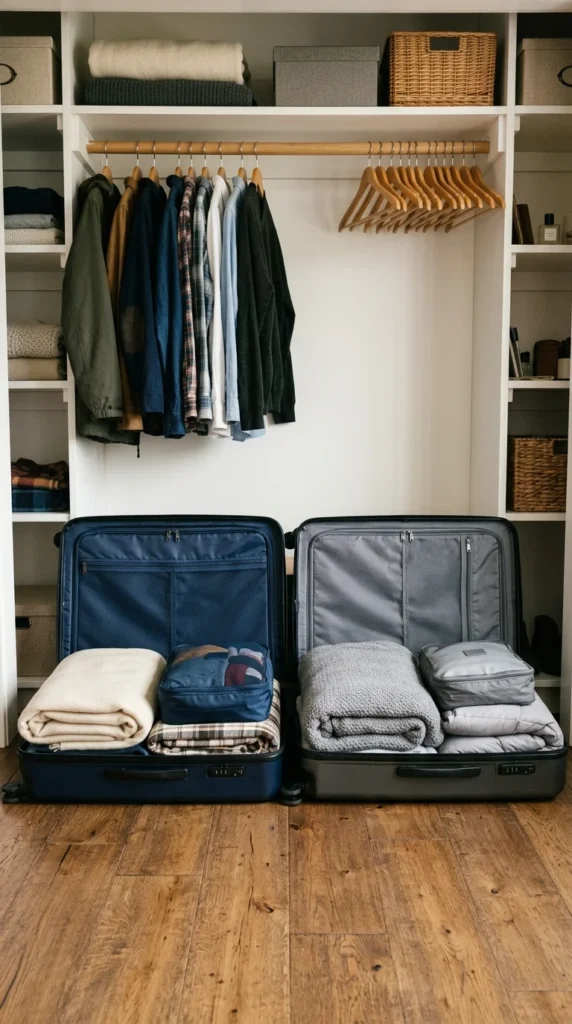
Suitcases are bulky and take up a lot of room. Since they are essentially empty boxes, use them to store other things! Use your luggage to hold out-of-season items, extra linens, or even your collection of travel-sized toiletries. It’s a “box within a box” strategy that maximizes every cubic inch.
18. Labeling
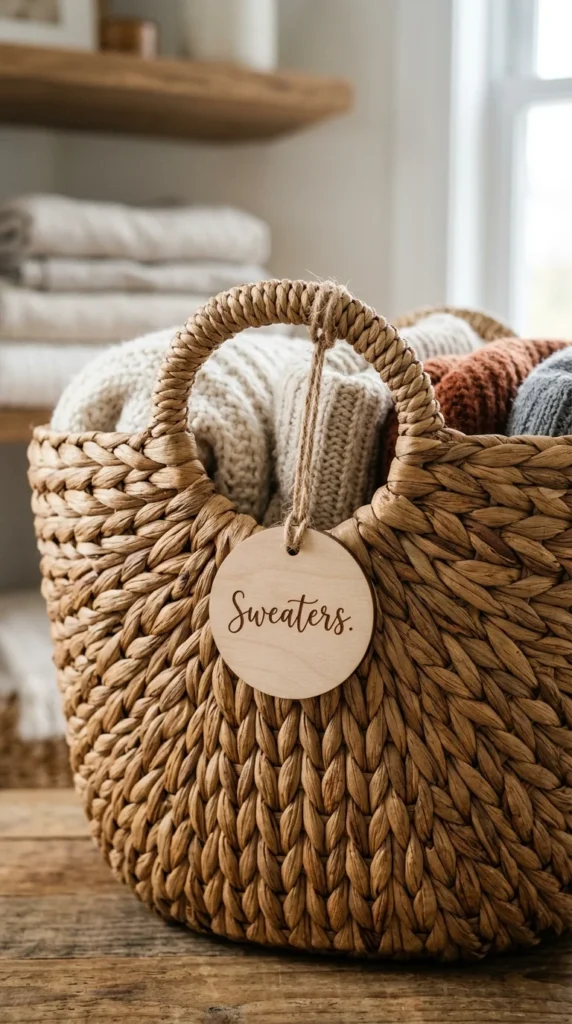
Even if you live alone, labels act as a mental contract to keep things in their place. Labeling bins and shelves prevents the “I’ll just put this here for now” habit that leads to clutter. Use a label maker or stylish hand-written tags to mark categories like “Workout Gear,” “Beach Wear,” or “T-shirts.”
19. Seasonal Rotation
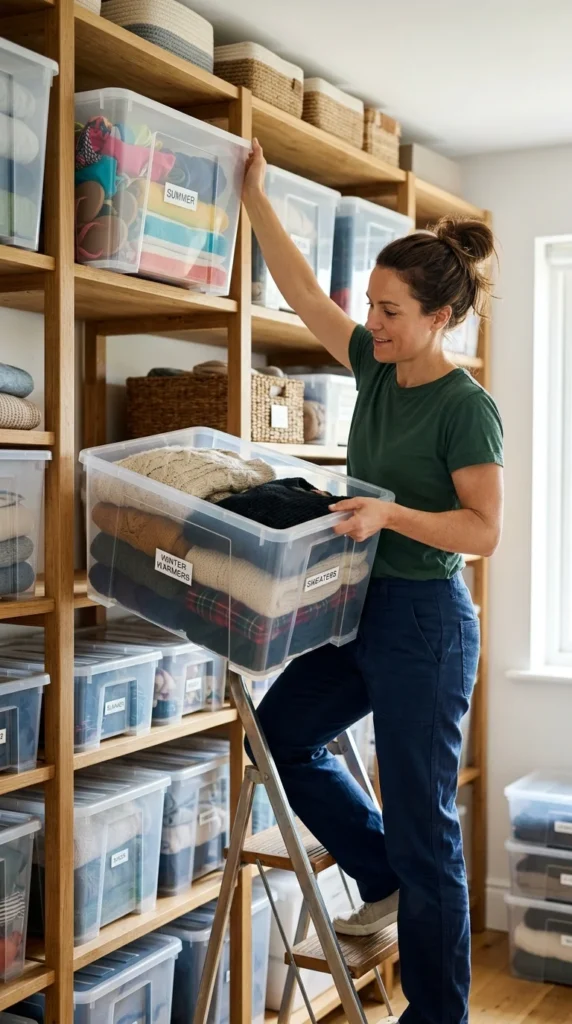
You don’t need access to your sundresses in January. A “working closet” should only contain what you can wear right now. Twice a year, rotate your wardrobe. Move the current season to the “prime” middle zone (between eye and waist level) and move the off-season items to the “secondary” zones (the very top and bottom of the closet).
20. Boot Shapers
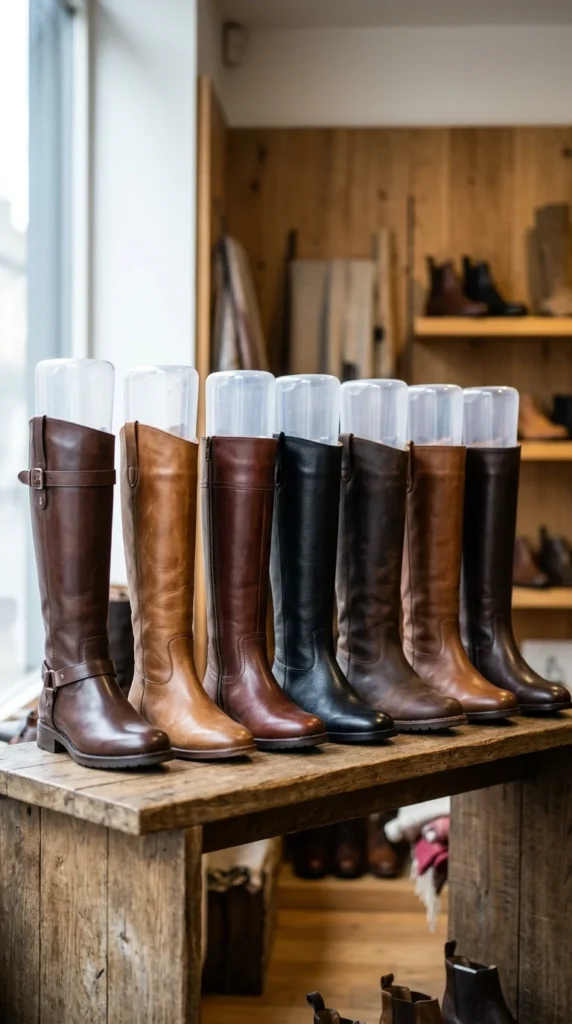
Tall boots have a tendency to flop over, which damages the leather and creates a messy appearance. Boot shapers (or even rolled-up magazines or pool noodles) keep your boots standing tall. This saves space by preventing them from sprawling over other shoes and keeps your closet looking tidy and professional.
21. Belt Racks
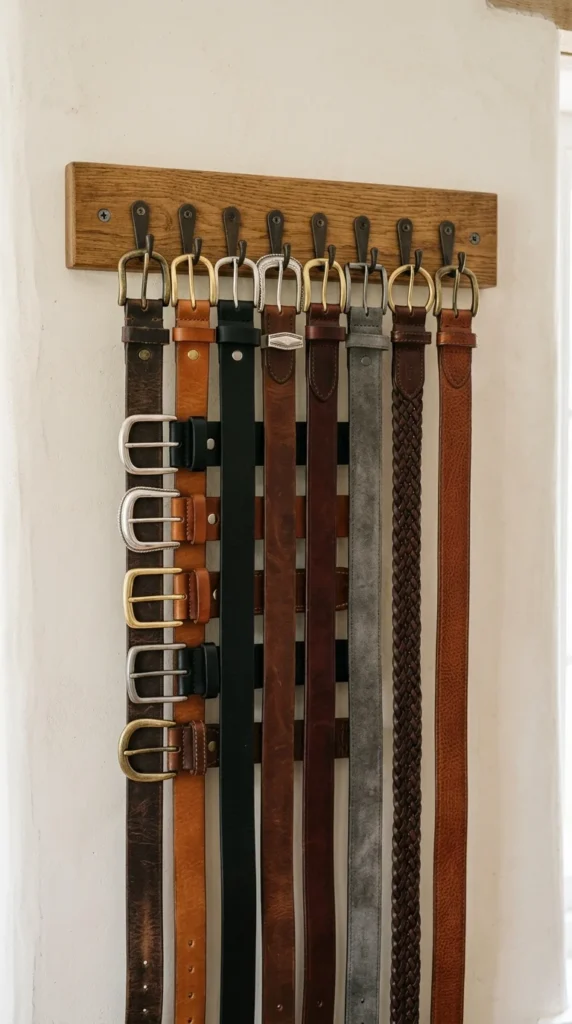
Belts often end up coiled in a drawer or hung haphazardly over a hanger. A wall-mounted belt rack takes up very little space on a side wall and allows you to see all your options at once. It also prevents the leather from cracking, which can happen when belts are tightly coiled for long periods.
22. Mirrored Doors
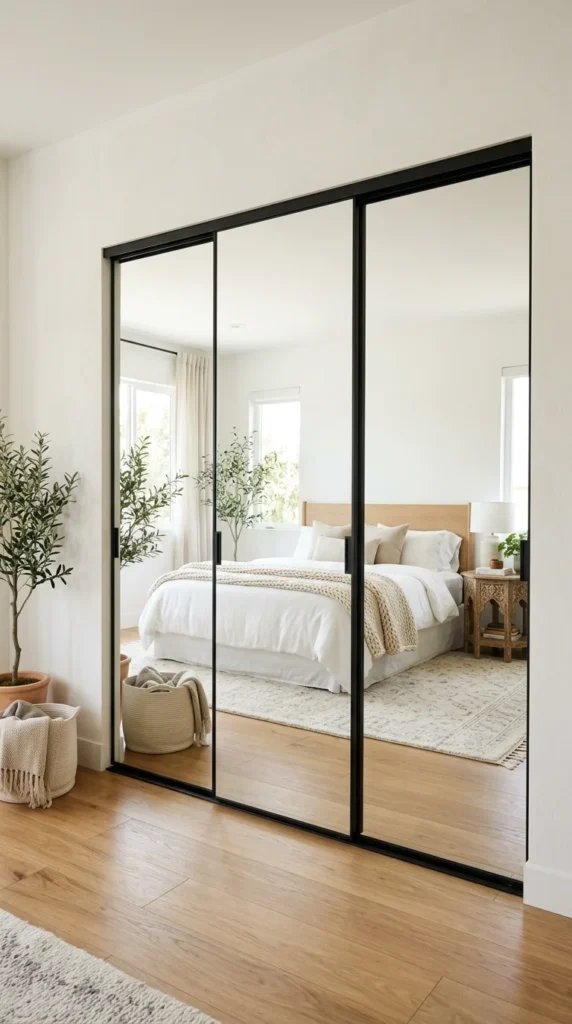
While not a direct “storage” hack, mirrored doors are a psychological space-doubler. They reflect light and make a small room feel twice as large. Furthermore, having a full-length mirror integrated into your closet doors saves you from having to find wall space for a separate mirror elsewhere in the room.