
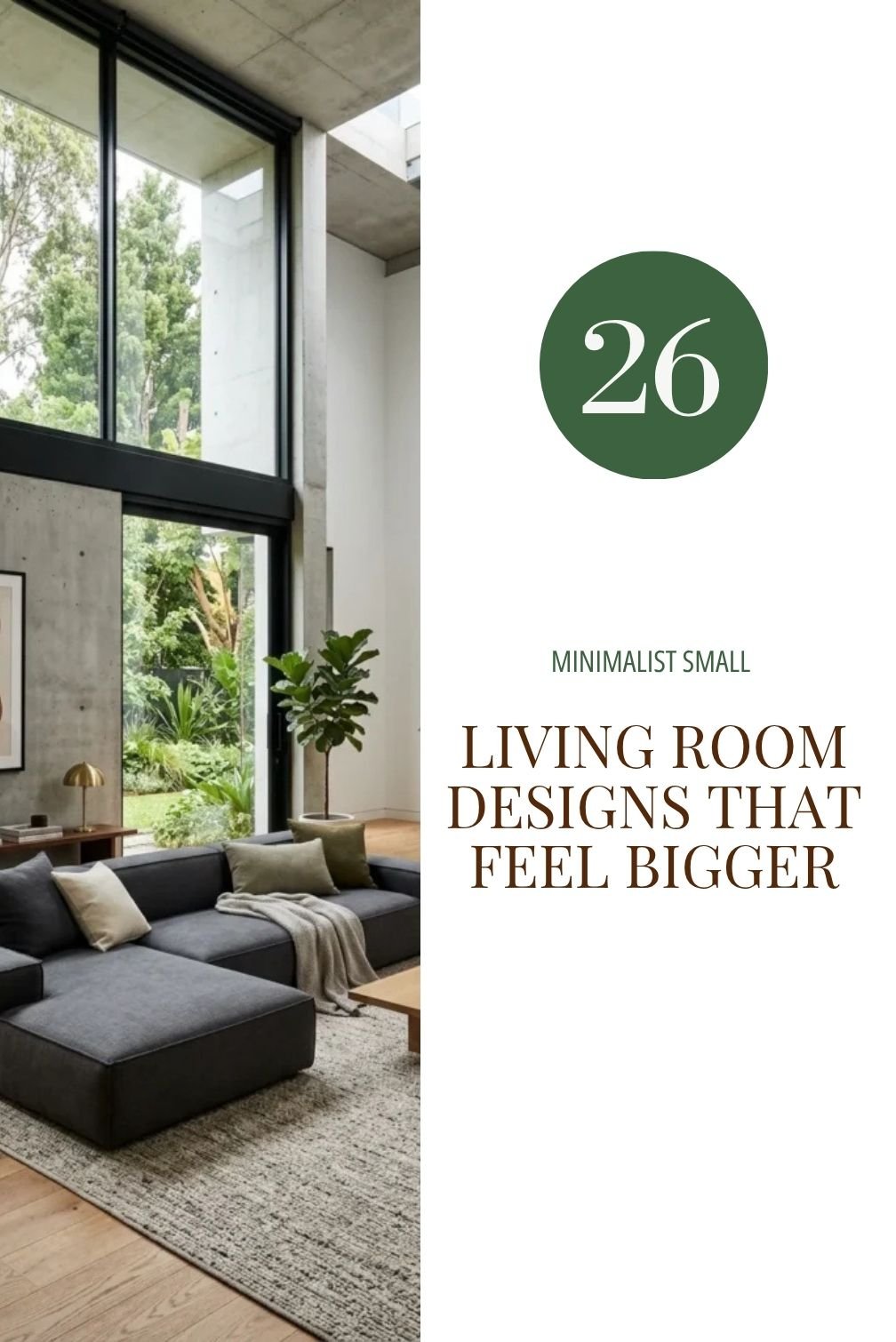
Living in a small space doesn’t mean you have to compromise on style or comfort. In fact, some of the most beautiful homes in the world are those that master the art of “less is more.” Minimalism is the perfect antidote to cramped quarters, focusing on functionality, clean lines, and an intentional lack of clutter to create an illusion of expansive breathing room.
By choosing the right furniture, playing with light, and being strategic with your color palette, you can transform even the tiniest studio living area into a sanctuary that feels open and inviting. Here are 26 minimalist design strategies to make your small living room feel significantly larger.
1. Neutral Palettes
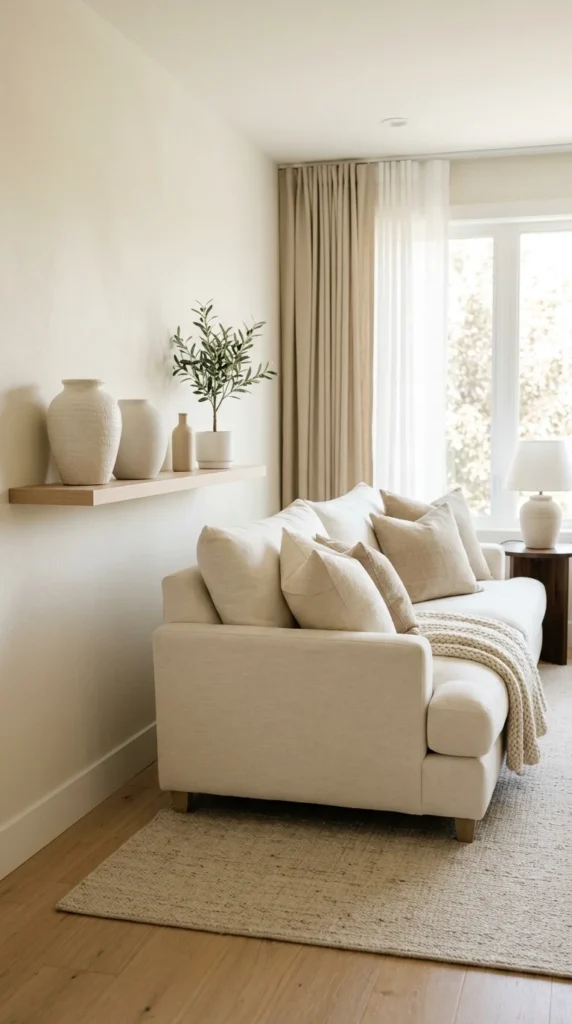
The oldest trick in the book remains the most effective: light colors reflect light. By sticking to a palette of whites, creams, and soft grays, you blur the boundaries between walls and ceiling. This lack of visual contrast prevents the eye from stopping at the corners, making the room feel like it extends forever.
2. Leggy Furniture
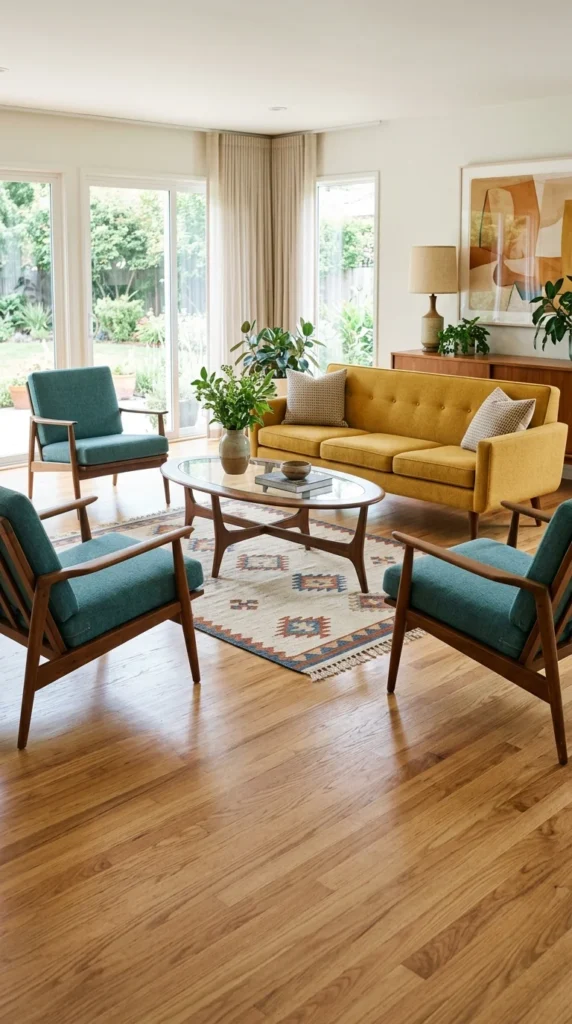
When you can see the floor underneath your furniture, the room automatically feels larger. “Heavy” furniture that sits flat on the ground acts like a visual block. Opting for pieces with slender legs—whether they are mid-century modern or contemporary metal—creates a sense of “airiness” and flow.
3. Large Mirrors
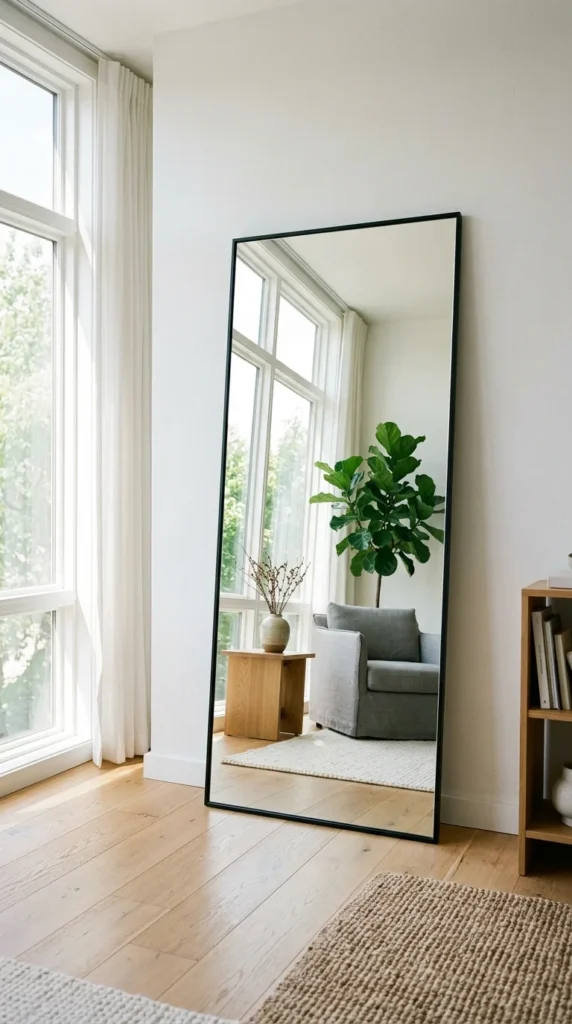
A well-placed mirror is essentially an extra window. Positioning a large mirror opposite a light source or a window doubles the depth of the room and bounces natural light into every dark corner. It’s a powerful optical illusion that fools the brain into thinking there is a second room beyond the glass.
4. Floating Shelves
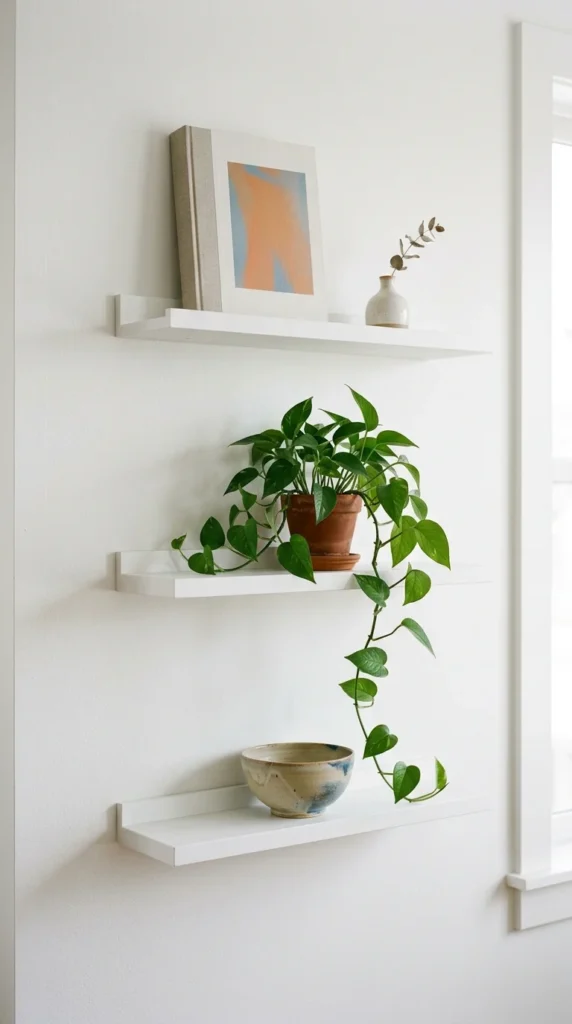
Floor space is precious. Instead of bulky bookcases that eat up square footage, use your walls. Floating shelves provide storage and display space without the footprint of traditional furniture. By keeping the floor clear, you maintain a sense of openness.
5. Lucite Accents
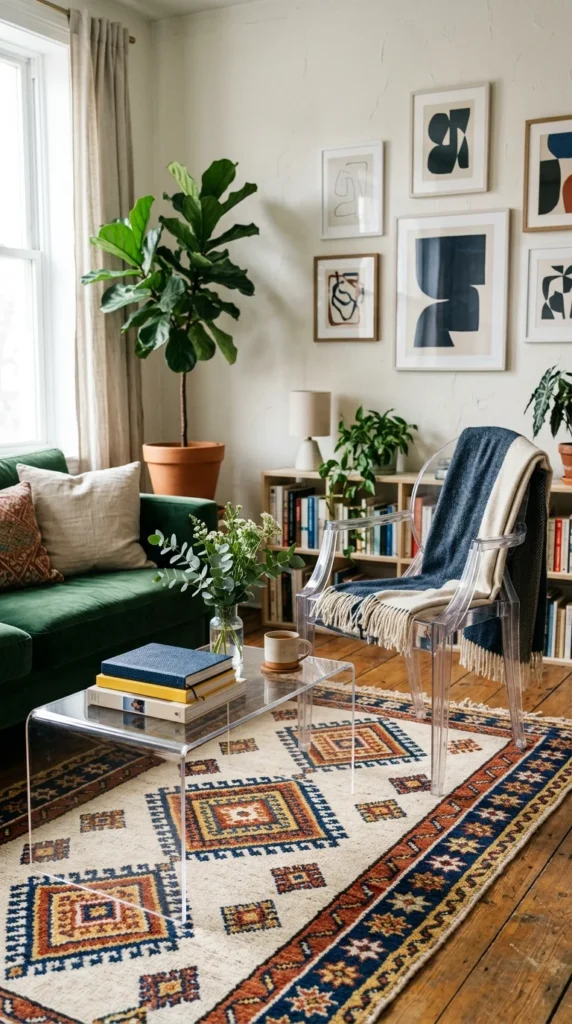
Transparent furniture, often made of Lucite or acrylic, is a minimalist’s secret weapon. Because these items are see-through, they don’t take up any “visual weight.” You get the functionality of a coffee table or a chair without the visual clutter of a solid object.
6. Low Profile
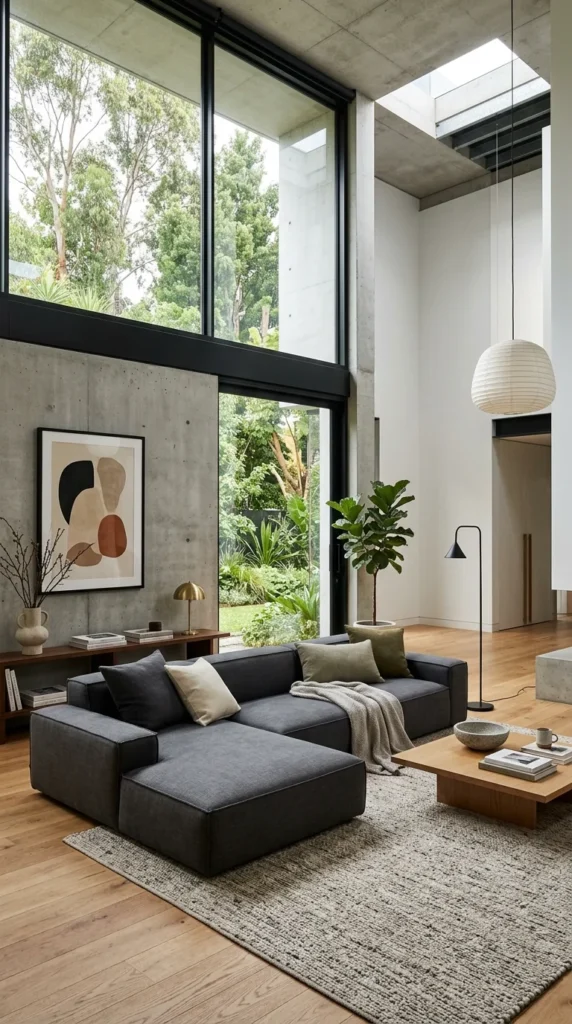
In rooms with low ceilings, every inch of vertical space counts. Choosing a low-profile sofa and coffee table increases the distance between the top of the furniture and the ceiling. This creates a loftier feel, making the architecture of the room feel more impressive.
7. Natural Light
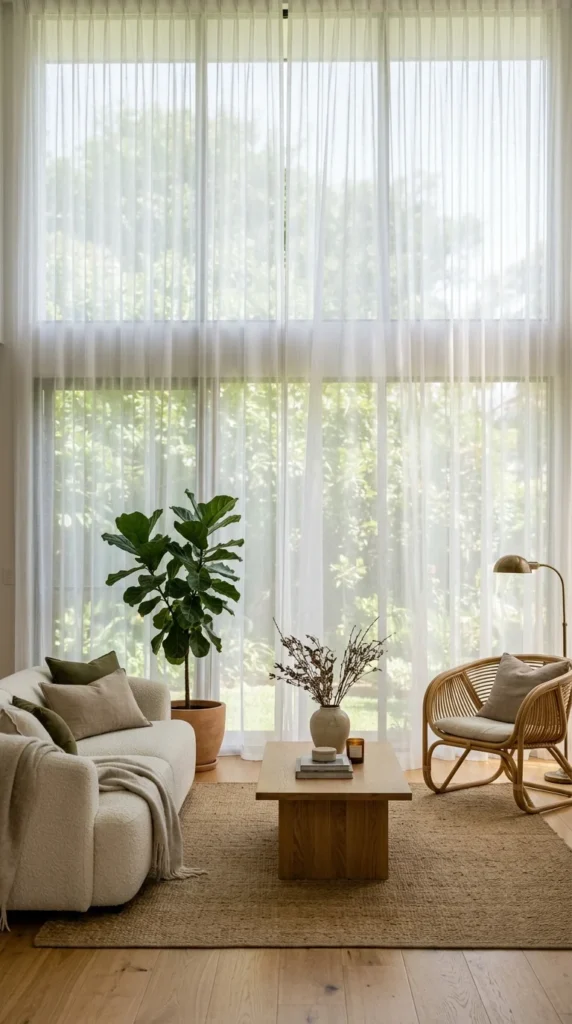
Clunky, heavy drapes are the enemy of small spaces. To make a room feel bigger, maximize the natural light. Use sheer fabrics or, if privacy allows, leave the windows completely bare. Connecting the indoors with the outdoors expands the visual horizon of the room.
8. Multifunctional Pieces
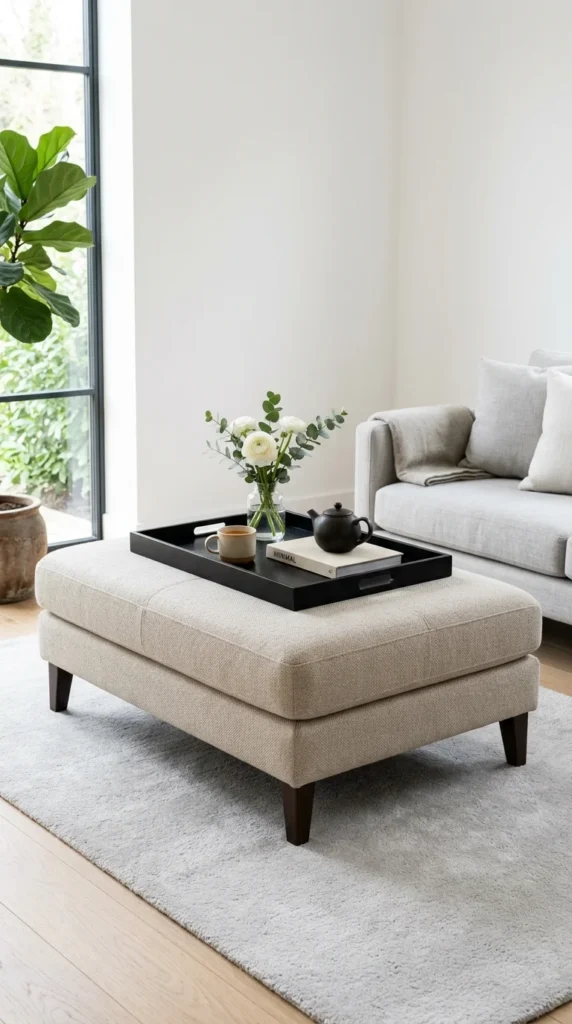
In a small living room, every piece of furniture must earn its keep. An ottoman that doubles as a coffee table or a bench with hidden storage inside reduces the need for multiple pieces of furniture. Fewer items mean less clutter and more room to move.
9. Monochromatic Rugs
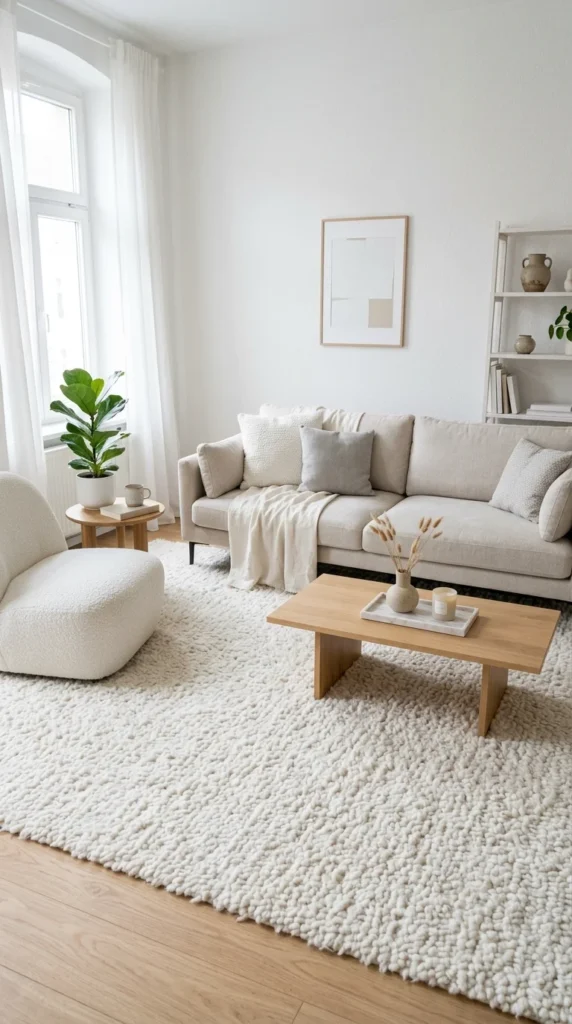
Small rugs can actually make a room look smaller by “chopping up” the floor space. A large, monochromatic rug that covers most of the floor creates a unified foundation. This continuity makes the floor plane appear much larger than it actually is.
10. Vertical Lines
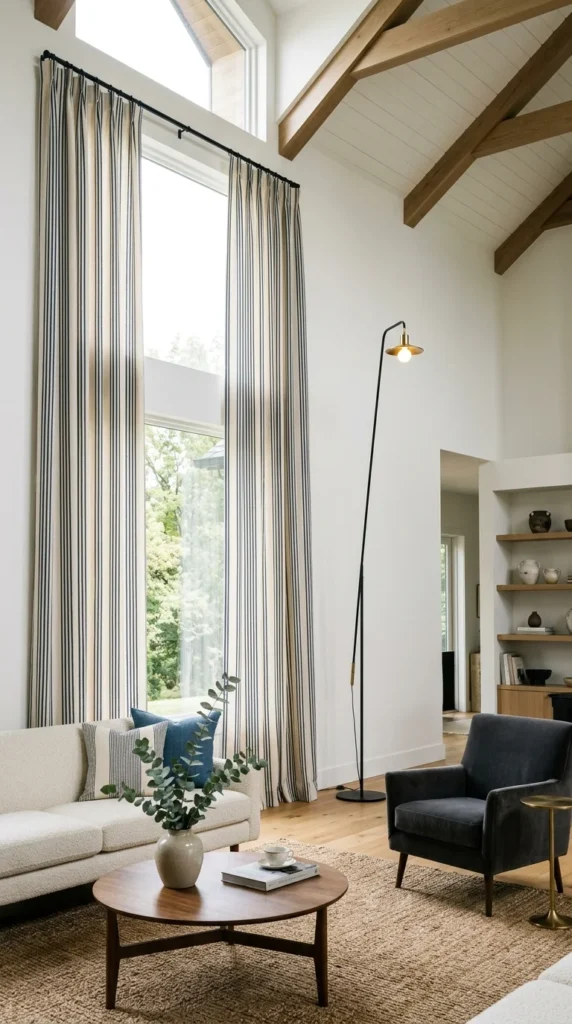
Draw the eye upward to emphasize the height of your space. Whether it’s through tall floor lamps, vertical wall paneling, or floor-to-ceiling drapes hung slightly above the window frame, emphasizing the vertical axis makes a small footprint feel grander.
11. Statement Art
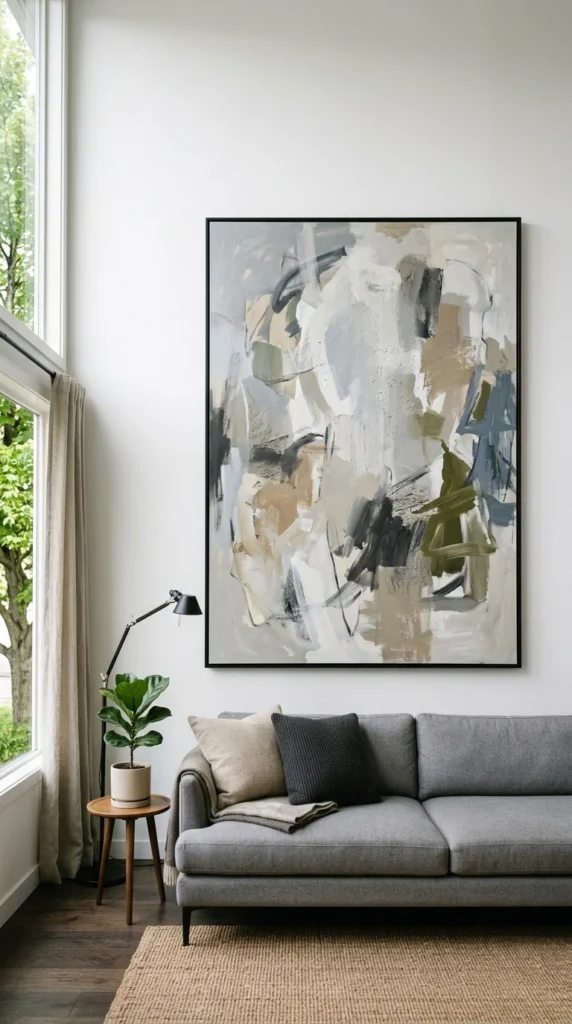
Many people think small rooms need small art, but the opposite is true. A gallery wall of tiny frames can look cluttered. One large, impactful piece of art creates a singular focal point, giving the room a sense of scale and intentionality.
12. Hidden Storage
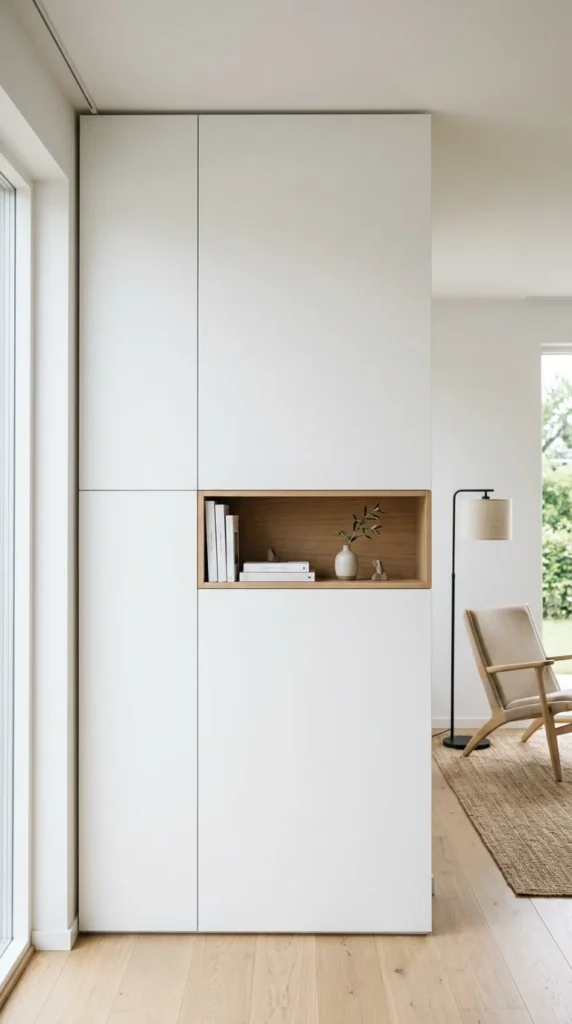
The key to minimalism is hiding the “stuff” of daily life. Built-in cabinets that match the wall color allow you to store everything from gaming consoles to extra blankets without adding visual noise. When the storage is “invisible,” the room feels serene.
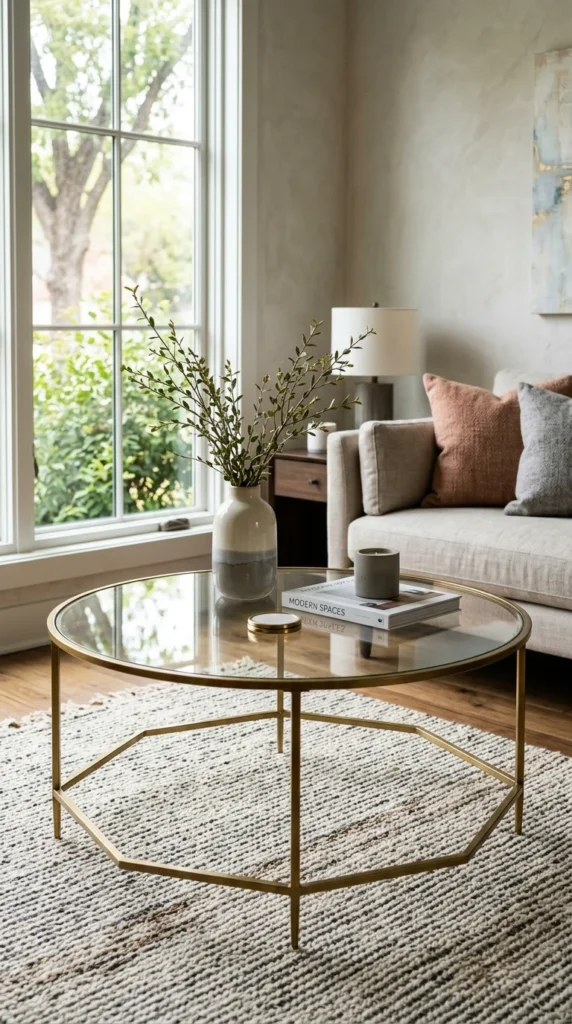
13. Glass Tables

Similar to acrylic furniture, glass tables allow light to pass through them. A glass coffee table provides a surface for your drinks and books but doesn’t “close off” the center of the room. This maintains a clear line of sight across the space.
14. Corner Utilization
Don’t be afraid to use your corners. A small sectional can often provide more seating and look cleaner than a sofa and two chairs. By pushing the seating into the corner, you open up the “traffic lane” of the room, making it easier to walk through.
15. Minimalist Greenery
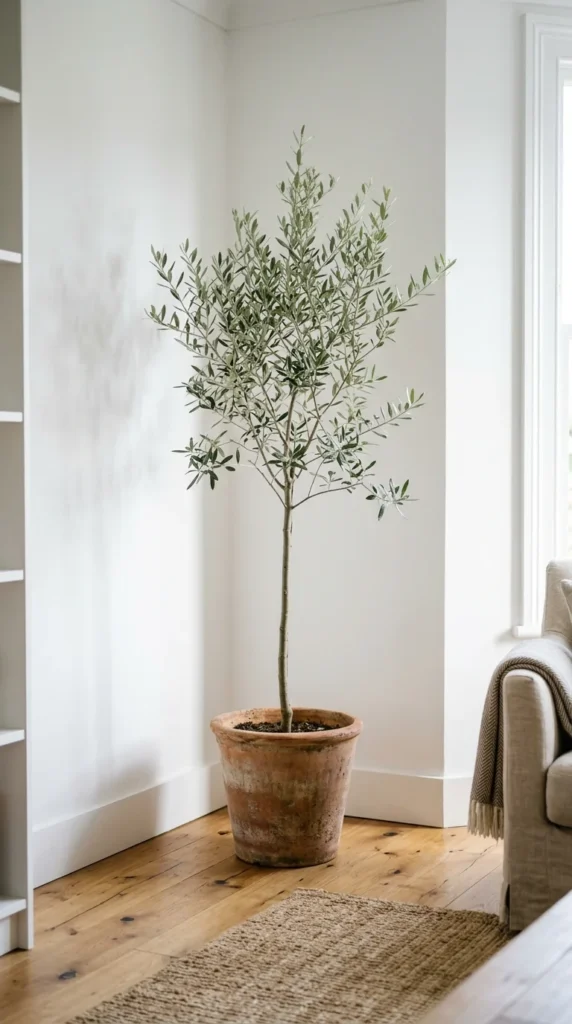
Plants bring life to a room, but too many small pots can feel like clutter. Choose one or two “statement” plants, like a tall Fiddle Leaf Fig or an Olive Tree. They add an organic element and height without overwhelming the surfaces of your tables.
16. Wall-Mounted TV
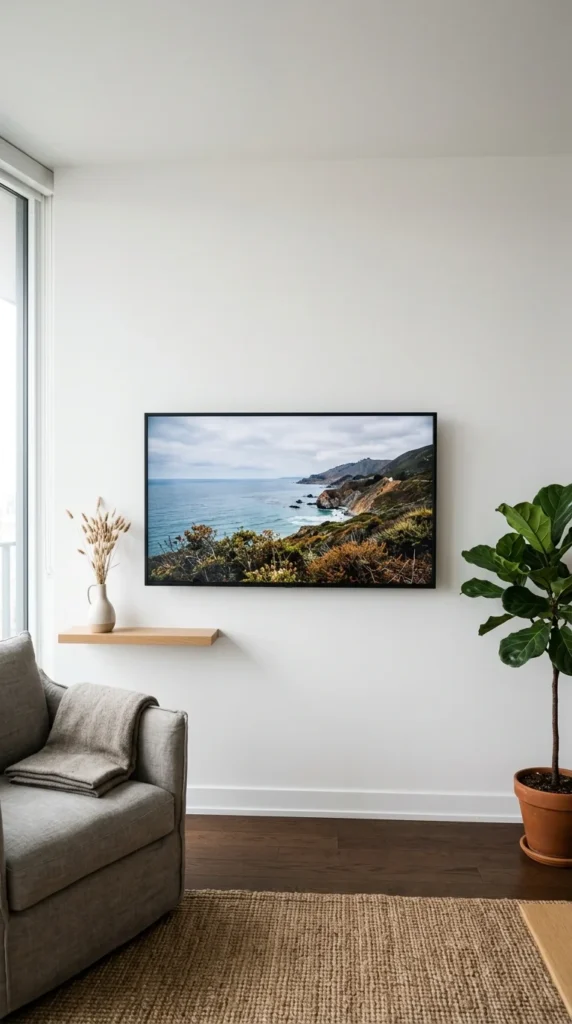
Get rid of the bulky TV stand. Mounting your television on the wall frees up floor space and gives the room a modern, streamlined look. If you need a place for components, a small floating shelf underneath keeps the look light and airy.
17. Cohesive Textures
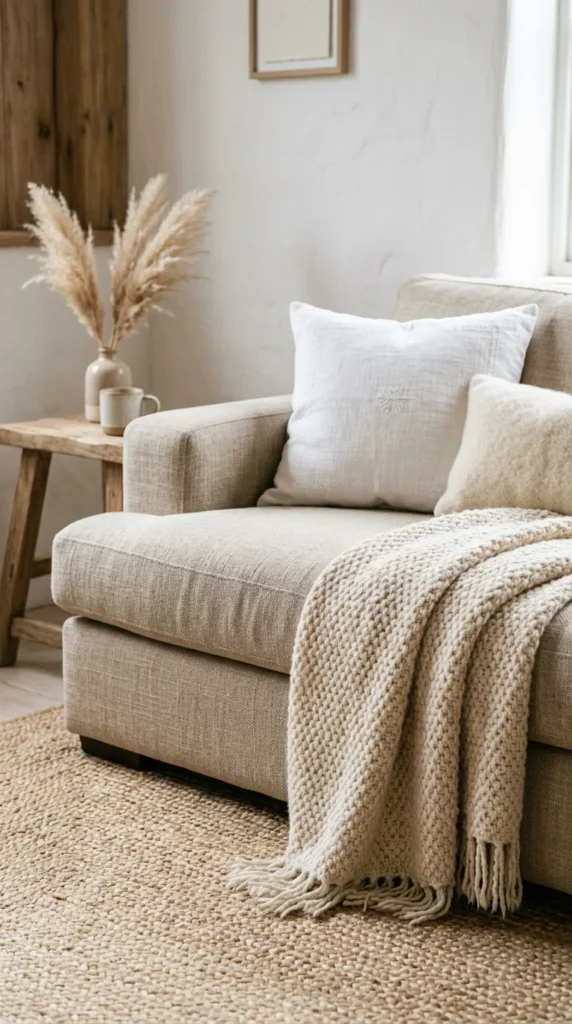
When you have a limited color palette, texture is how you add warmth. A mix of linen, wool, wood, and metal provides visual interest without the need for bright colors or busy patterns. This “quiet” complexity keeps the room feeling sophisticated and spacious.
18. Sliding Doors
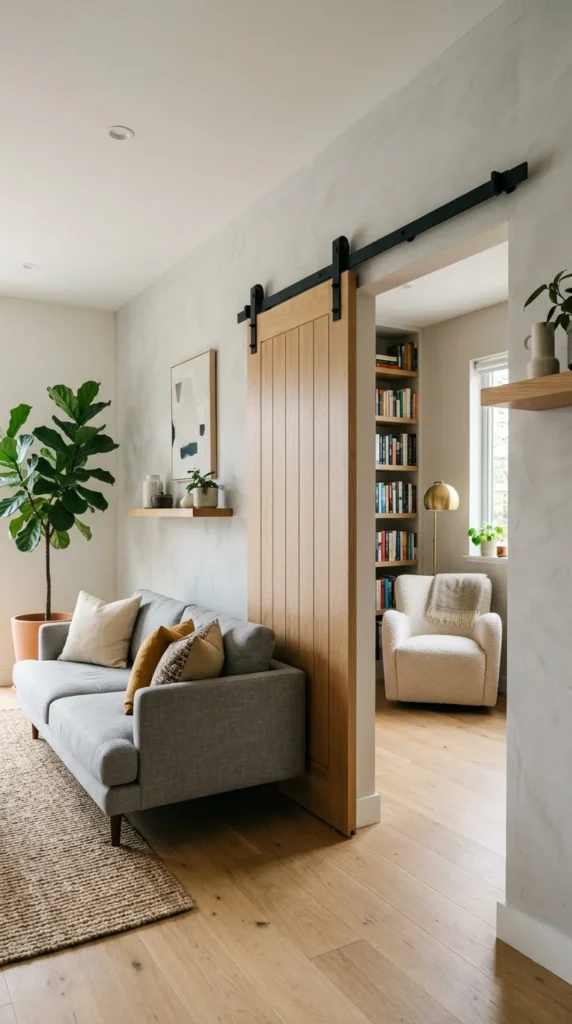
Traditional swing doors require a “clearance zone” that wastes space. Sliding doors or pocket doors are excellent for small homes because they operate on a single plane. They allow for a seamless transition between rooms without interfering with furniture placement.
19. Negative Space
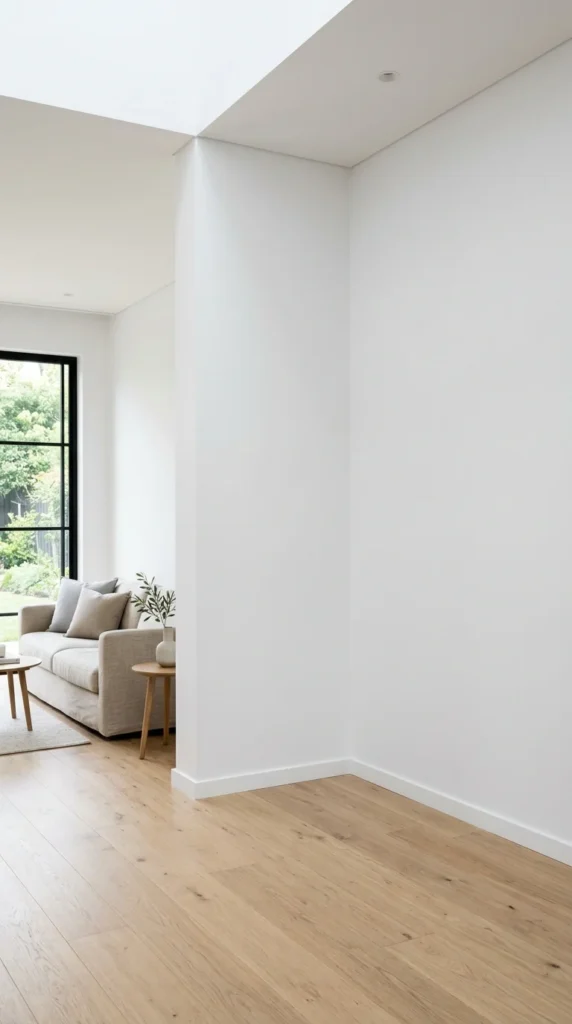
Don’t feel the need to fill every square inch. Negative space—or “white space”—is a design element in itself. Leaving a corner empty or a wall bare gives the eye a place to rest, which is essential for making a small room feel breathable.
20. Geometric Simplicity
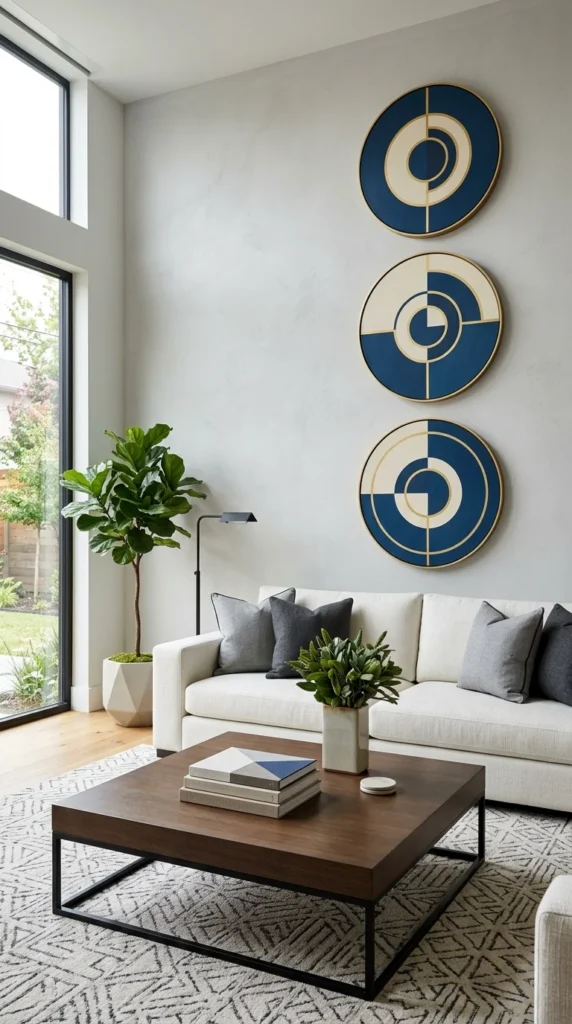
Minimalism thrives on geometry. By choosing furniture with clean, straight lines or perfect circles, you create an environment that feels organized and balanced. Busy, ornate shapes tend to “busy up” a small room and make it feel more confined.
21. Bare Windows
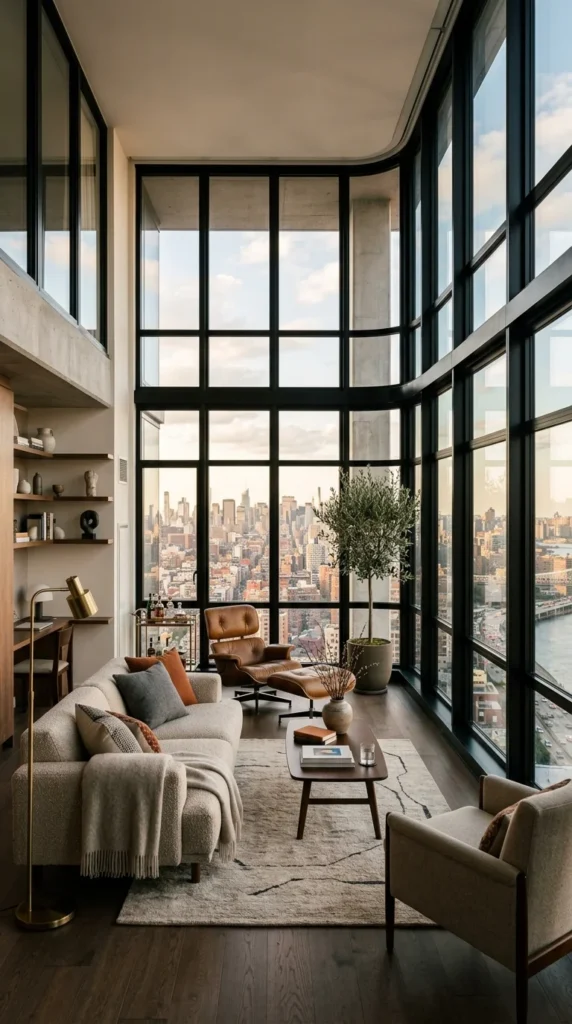
If you don’t have neighbors looking in, consider ditching window treatments altogether. Bare windows turn the outdoors into your wallpaper. It creates a seamless connection with the world outside, making your living room feel as large as the view it overlooks.
22. Built-in Benches
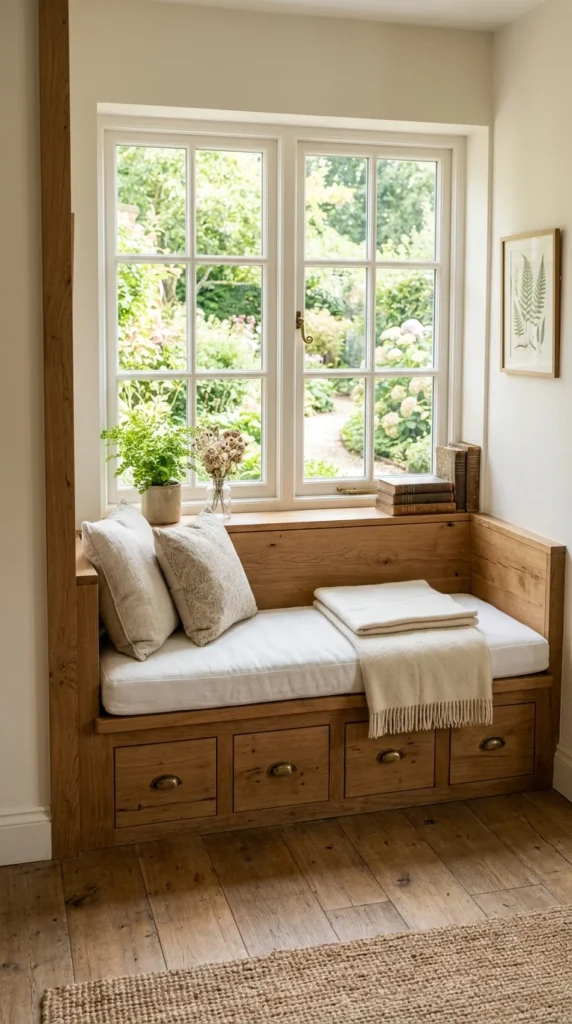
Built-in furniture is the ultimate space-saver. A window bench provides extra seating for guests and can include drawers for storage, all while taking up less space than a traditional sofa. It fits the architecture of the room perfectly.
23. Consistent Flooring
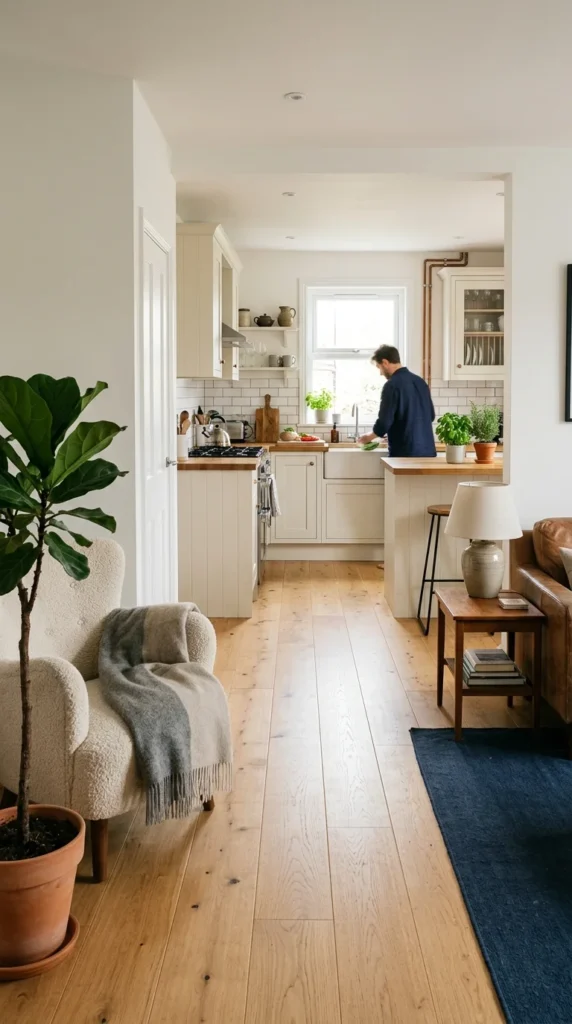
If your living room opens into a kitchen or hallway, use the same flooring throughout. Creating a continuous flow of material prevents the “chopping” effect of different thresholds. This unified floor makes the entire home feel like one large, cohesive space.
24. Symmetry
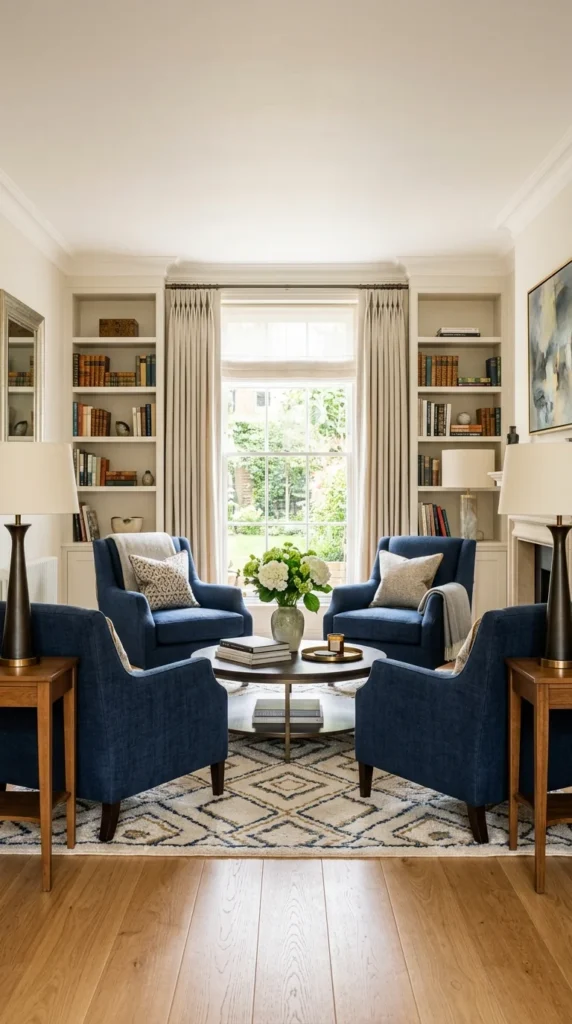
Symmetry is pleasing to the eye and creates an immediate sense of order. In a small room, an orderly layout prevents the space from feeling chaotic. Two matching chairs and a centered table feel much more “intentional” than a mismatched collection of furniture.
25. Soft Lighting
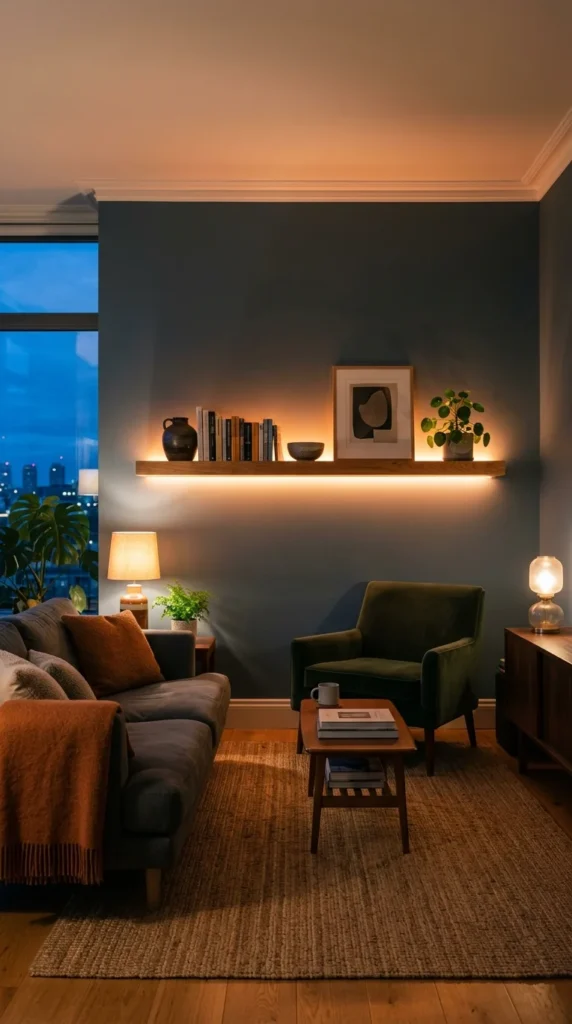
Avoid harsh overhead lighting, which can make a small room feel like a box. Instead, use multiple light sources—floor lamps, table lamps, and wall sconces—to create layers of light. This adds depth and makes the boundaries of the room feel softer and more expansive.
26. Armless Seating
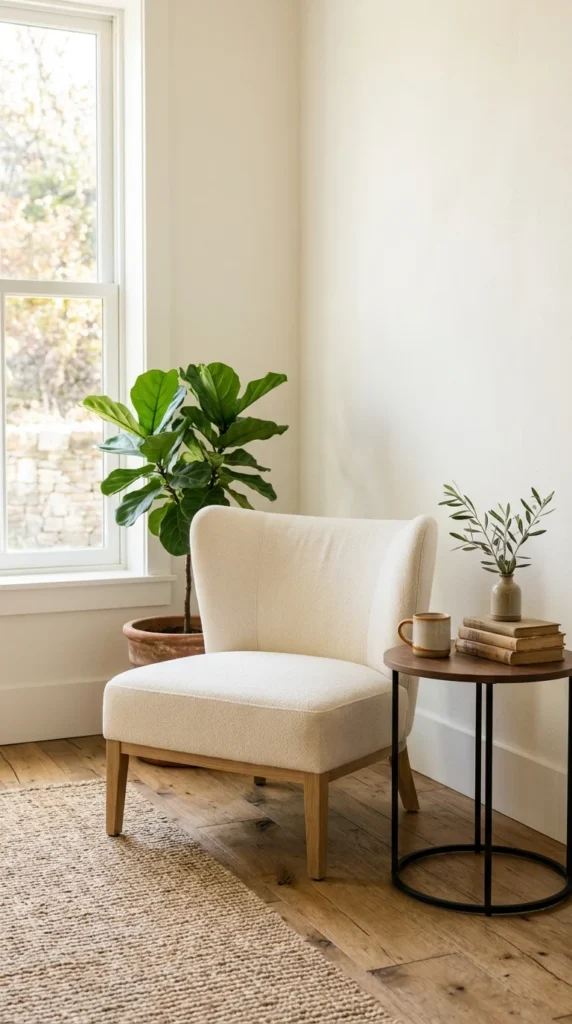
Sofas and chairs without arms take up less physical and visual space. They offer a “bench-like” feel that is much more open. Armless pieces allow you to sit from multiple angles and keep the sightlines of the room clear, which is vital for a minimalist aesthetic.